
Terri Sewell introduces bipartisan bill to ensure patients have access to home infusion services
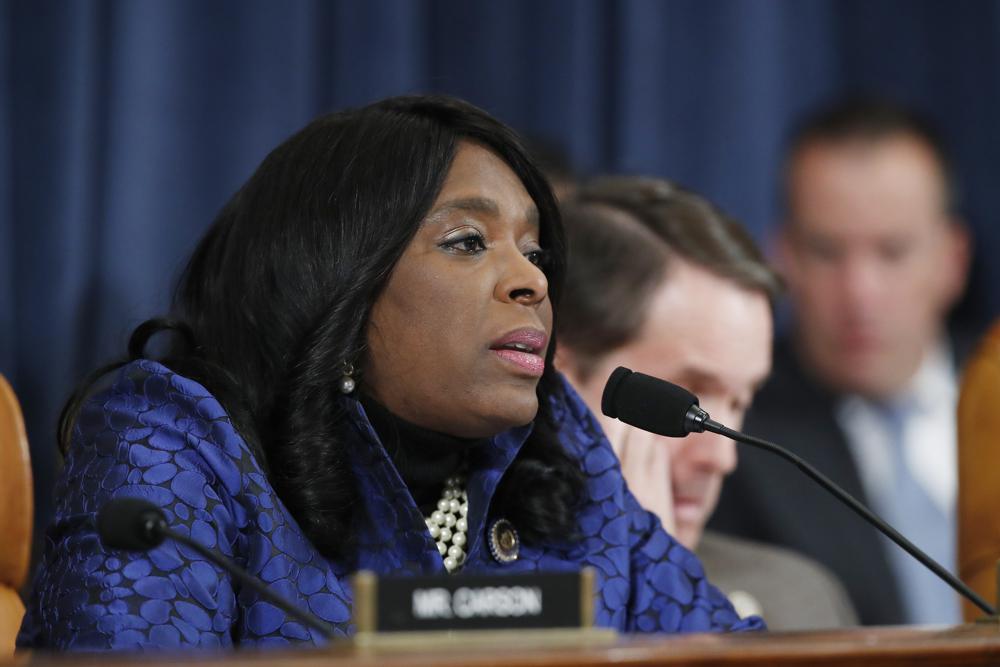
Rep. Terri Sewell joined legislators Fred Upton, Debbie Dingell, and Vern Buchanan to introduce H.R. 5067, the Preserving Patient Access to Home Infusion Act. This bipartisan bill would ensure patients with serious viral and fungal infections, heart failure, immune diseases, cancer, and other conditions receive IV medications they need while at home. Companion legislation was introduced in the U.S. Senate by Mark Warner and Tim Scott. Sewell stated, “Countless Alabamians, especially those in rural communities, rely on home infusion services for life-saving care. With the risks posed by the COVID-19 pandemic, it has never been more critical to ensure that patients continue to receive this care safely in their homes. I’m so proud to introduce this bipartisan bill and urge my colleagues on both sides of the aisle to give it their full support.” Rep. Upton commented, “While the COVID-19 pandemic certainly took so much from so many, it also gave us the opportunity to rethink the way that we care for the most vulnerable among us. Home infusion, in particular, is a perfect example of how we can bring healthcare services into folks’ homes while keeping both patients, their families, and medical professionals safe and healthy. I am proud to co-sponsor this important legislation and will continue to work with my colleagues on both sides of the aisle to expand access to quality, affordable healthcare.” “As we have learned from the coronavirus pandemic, home health services have proven to be invaluable for seniors in my district and across the country,” said Rep. Buchanan. “The aptly-named Preserving Patient Access to Home Infusion Act will ensure that Medicare recipients are able to continue to receive life-saving drugs in a safe and effective way from the comfort of their own home.” Patients with serious infections, cancer, heart failure, immune system diseases, and other conditions who need medications such as IV therapies can receive these medications in their homes rather than hospitals or nursing homes. Research shows that up to 95% of patients would prefer receiving their infusions at home. Congress included provisions for this in the 21st Century Cures Act and the Bipartisan Budget Act of 2018. However, the Centers for Medicare and Medicaid Services (CMS) didn’t implement the benefit properly. They required a nurse to be physically present in the patient’s home for providers to be reimbursed. As a result, provider participation has dropped sharply, and beneficiaries have experienced reduced access to home infusion over the last several years. The act provides technical clarifications that will remove the physical presence requirement, ensuring payment regardless of whether a health care professional is present in the patient’s home. The bill will save $93 million over 10 years. “Home-based infusion services stand out as high-value resources that improve patient quality of life and add capacity to the health care system while providing cost-savings for the Medicare program,” said NHIA President and CEO Connie Sullivan. “Passage of the Preserving Patient Access to Home Infusion Act is critical to ensuring the Medicare program maintains access to home infusion, allowing beneficiaries to safely receive treatment in the setting they overwhelmingly prefer: their homes.” “Providing IV medications in patients’ homes allows individuals to receive their treatments without major sacrifices in their quality of life and without having to rely on transportation to travel to a facility for their treatments,” said Logan Davis, MBA of Vital Care InfusionServices. “This legislation will ensure that the Medicare home infusion therapy benefit is accessible to patients, including many who are located in Alabama’s rural or historically underserved communities.”
Lynda Blanchard may switch gears and run for governor
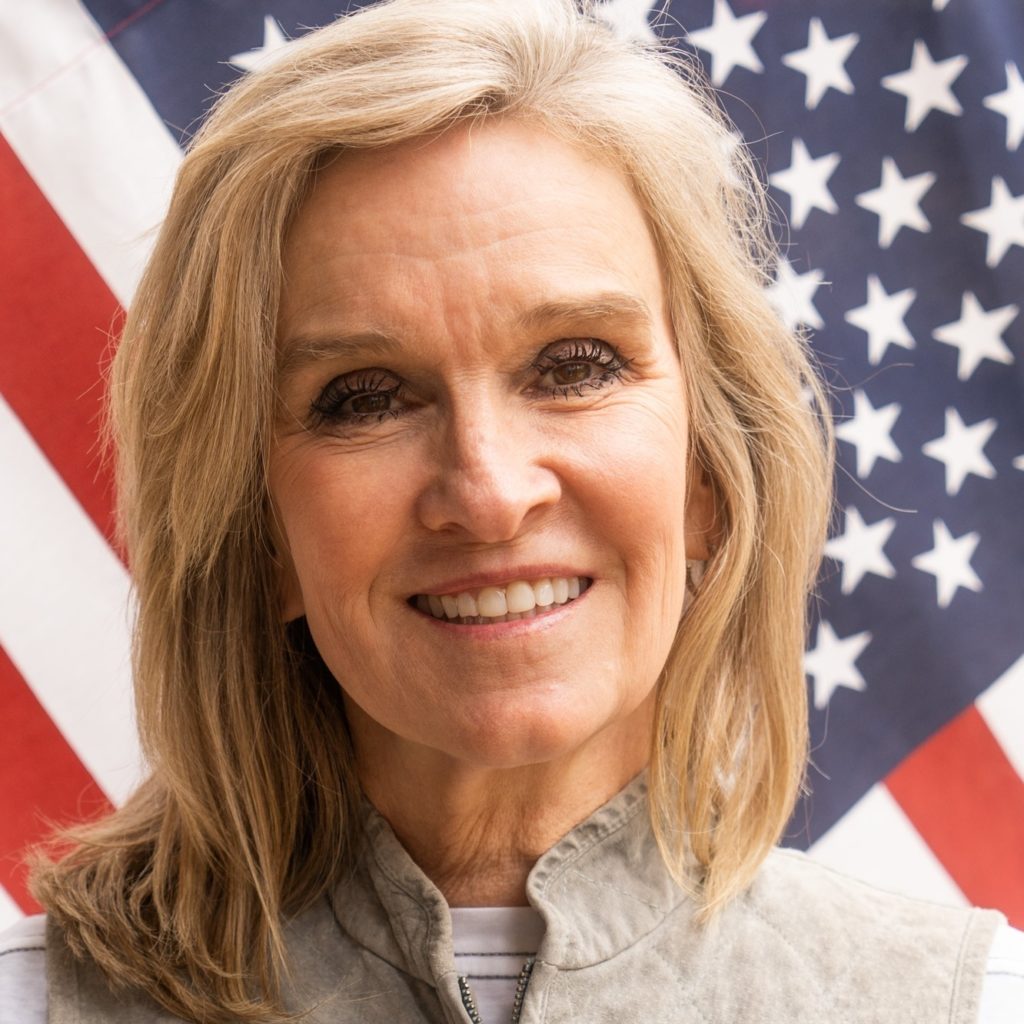
Lynda Blanchard was the first candidate to announce her intentions to run for the Senate seat being vacated by Richard Shelby. Blanchard announced her candidacy in February and her initial filing with the Federal Elections Commission showed she raised more than $300,000 in donations in the first six weeks of her campaign. Now there’s a possibility she might be dropping out of that race and gearing up to run against Gov. Kay Ivey in the 2022 GOP primary, Jeff Poor reported. The former Ambassador to Slovenia worked for the Trump administration, but Blanchard did not earn former President Donald Trump’s endorsement. That went to Rep. Mo Brooks. During an appearance on Mobile radio FM Talk 106.5’s “The Jeff Poor Show,” Blanchard discussed rumors. She didn’t confirm or deny the rumors, saying, “You know, I can tell you that I’ve been all over this state, and there are a lot of people that, you know, like we saw this weekend, want everything Trump. And they want a Trump governor, as well. So, I do have people reaching out to me. I’m praying about it, and you know, I’m in the race for U.S. Senate, and love the president and respect anything that he would like.” “Any way that I can support the president and support the Republican Party, I’m willing to do,” Blanchard added. “So, I’m praying about everything.” Other candidates running for the Senate seat are Katie Britt, Jessica Taylor, and Mo Brooks.
Barry Moore tests positive for COVID-19
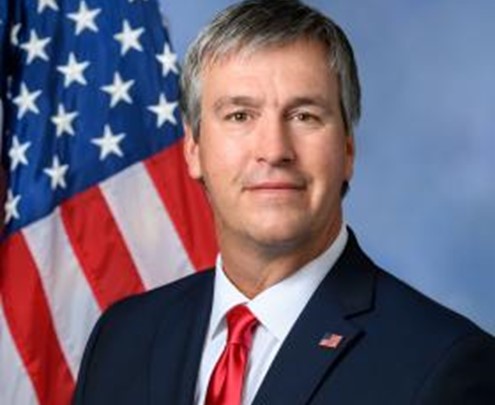
Rep. Barry Moore posted on social media Friday that he and his wife tested positive for Covid-19. Moore stated, “I’m sad to share that Heather and I have tested positive for Covid-19. To every extent possible, I will continue working virtually while recovering in quarantine. While I believe every American has the freedom to make their own health-related decisions, I encourage talking with your doctor about the different vaccines and therapies available and making an informed decision about the prevention and treatment that is best for you. Now is the time to act-don’t wait until you or someone you love is sick.” On Monday Moore told WDHN that within 24 hours of testing positive, he started to feel better. He said that he was treated with Ivermectin and Z-Packs which were given by his doctor. Moore stated, “We’re doing well actually,” Congressmen Moore said. “We are quarantining now for the sake of just making sure we don’t get anyone sick. Heather and I are feeling good we have our appetites, everything is going well. We have an infusion of antibodies a couple of days after the diagnosis. I think that was key for me, certainly.” Rep. Moore has been a vocal opponent of mandatory masking and recently released a statement speaking out against the military mandating the COVID-19 vaccine for all active-duty military members. “It is absolutely reckless that Secretary Austin is considering a blanket mandate for active-duty military to receive a vaccine approved only for emergency use to protect against a virus with well over a 99% survival rate,” said Moore. “Our fighting men and women are disproportionately younger, healthier, and significantly less at risk from the coronavirus than the general population, and recent reports show that almost 70% of our men and women in uniform have already voluntarily taken the vaccine. Our servicemembers shouldn’t be unnecessarily forced into taking the vaccine just because overreaching politicians want to continue intervening in the private lives of the American people.” Moore also protested when the Attending Physician of the United States Congress Attending, Brian Monahan, reinstituted the mask mandate in all House office buildings, meeting areas, and the chamber to prevent the spread of the coronavirus among members and staff. At the time, Moore blamed the reinstituted mask mandate on Nancy Pelosi.
U.S. troops surge evacuations out of Kabul but threats persist

The U.S. military reported its biggest day of evacuation flights out of Afghanistan by far on Monday, but deadly violence that has blocked many desperate evacuees from entering Kabul’s airport persisted, and the Taliban signaled they might soon seek to shut down the airlifts. Twenty-eight U.S. military flights ferried about 10,400 people to safety out of Taliban-held Afghanistan over 24 hours that ended early Monday morning, and 15 C-17 flights over the next 12 hours brought out another 6,660, White House officials said. The chief Pentagon spokesman, John Kirby, said the faster pace of evacuation was due in part to coordination with Taliban commanders on getting evacuees into the airport. “Thus far, and going forward, it does require constant coordination and deconfliction with the Taliban,” Kirby said. “What we’ve seen is, this deconfliction has worked well in terms of allowing access and flow as well as reducing the overall size of the crowds just outside the airport.” With access still difficult, the U.S. military went beyond the airport to carry out another helicopter retrieval of Americans. U.S. officials said a military helicopter picked up 16 American citizens Monday and brought them onto the airfield for evacuation. This was at least the second such rescue mission beyond the airport; Kirby said that last Thursday, three Army helicopters picked up 169 Americans near a hotel just beyond the airport gate and flew them onto the airfield. President Joe Biden’s national security adviser, Jake Sullivan, said at the White House that talks with the Taliban are continuing as the administration looks for additional ways to safely move more Americans and others into the Kabul airport. “We are in talks with the Taliban on a daily basis through both political and security channels,” he said, adding that ultimately it will be Biden’s decision alone whether to continue military-led evacuation operations beyond Aug. 31. In a reminder of the urgency felt amid a dizzying array of security threats to the evacuation effort, the Pentagon posted a video of a laser near the airport targeting a U.S. Air Force C-17 aircraft and apparently attempting to disrupt the pilot during landing. After more than a week of evacuations plagued by major obstacles, including Taliban forces and crushing crowds that are making approaching the airport difficult and dangerous, the number of people flown out met — and exceeded — U.S. projections for the first time. The count was more than twice the 3,900 flown out in the previous 24 hours on U.S. military planes. Army Gen. Stephen Lyons, head of U.S. Transportation Command, which manages the military aircraft that are executing the Kabul airlift, told a Pentagon news conference that more than 200 planes are involved, including aerial refueling planes, and that arriving planes are spending less than an hour on the tarmac at Kabul before loading and taking off. He said the nonstop mission is taking a toll on aircrews. “They’re tired,” Lyons said of the crews. “They’re probably exhausted in some cases.” On a more positive note, Lyons said that in addition to the widely reported case of an Afghan woman giving birth aboard a U.S. evacuation aircraft, two other babies have been born in similar circumstances. He did not provide details. The Pentagon said it has added a fourth U.S. military base, in New Jersey, to three others — in Virginia, Texas, and Wisconsin — that are prepared to temporarily house arriving Afghans. Maj. Gen. Hank Williams, the Joint Staff deputy director for regional operations, told reporters there are now about 1,200 Afghans at those military bases. The four bases combined are capable of housing up to 25,000 evacuees, Kirby said. Afghan evacuees continued to arrive at Dulles International Airport outside of Washington. A bus carried some of the latest arrivals from Dulles airport to another site for what would be one of many processing stops before they reach new homes in the United States. Exhaustion clouded the faces of many of the adults. How does it feel to be here, a journalist asked one man. “We are safe,” he answered. An older woman sank with relief into an offered wheelchair, and a little girl carried by an older boy shaded her eyes to look curiously around. It was an interim stop for what had been a grueling struggle over days for many to get flights out of what is now Taliban-ruled Afghanistan. The scramble to evacuate left many arrivals carrying only a book bag or purse or a plastic shopping bag of belongings. Some arrived for their new lives entirely empty-handed. Biden said Sunday he would not rule out extending the evacuation beyond Aug. 31, the date he had set for completing the withdrawal of troops. And British Prime Minister Boris Johnson plans to press Biden for an extension to get out the maximum number of foreigners and Afghan allies possible. Biden is to face the U.S.’s G-7 allies in a virtual summit on Afghanistan Tuesday. Taliban spokesman Suhail Shaheen, in an interview with Sky News, said that Aug. 31 is a “red line” the U.S. must not cross and that extending the American presence would “provoke a reaction.” Since the Taliban seized the capital on August 15, completing a stunning rout of the U.S.-backed Afghan government and military, the U.S. has been carrying out the evacuation in coordination with the Taliban, who have held off on attacking under a 2020 withdrawal deal with the Trump administration. Monday’s warning signaled the Taliban could insist on shutting down the airlifts out of the Kabul airport in just over a week. Lawmakers, refugee groups, veterans’ organizations, and U.S. allies have said ending the evacuation then could strand countless Afghans and foreigners still hoping for flights out. Since August 14, the U.S. has evacuated and facilitated the evacuation of about 37,000 people. A firefight just outside the airport killed at least one Afghan soldier early Monday, German officials said. It was the latest in days of often-lethal turmoil outside the airport. People coming in hopes of escaping Taliban
Retired Alabama sheriff’s deputy dies of COVID-19

A retired Alabama law enforcement officer has died of COVID-19. News outlets report that Buddy Hutchinson, a retired Blount County Sheriff’s Office deputy died Saturday. Hutchinson had remained active with the department after retiring as a deputy. He headed the office’s reserve program. Hutchinson had also served as a police officer in Oneonta and Snead. Sheriff Mark Moon’s Facebook page said Hutchinson is to be buried Friday at the Alabama National Cemetery in Montevallo. Republished with the permission of the Associated Press.
Kay Ivey announces military contractor expansion in Huntsville

Gov. Kay Ivey announced today that defense contractor KBR is planning to expand its operations in Huntsville with a new headquarters facility. The expansion will bring more than 160 additional jobs. KBR will consolidate its presence in Huntsville at two buildings being developed at Redstone Gateway by Corporate Office Properties Trust (COPT) in partnership with Jim Wilson & Associates as part of a $65 million project. The growth plans will allow KBR to retain its workforce of over 1,100 people in the city. Kay Ivey stated, “It’s always great to see a company like KBR that has a major presence in Alabama decide to expand its operation in the state, especially when the jobs being added are highly technical and well paying. KBR is a world-class company, and I look forward to seeing it grow and thrive in Huntsville’s dynamic economy.” Based out of Houston, Texas, KBR will provide engineering, scientific, and technical services to the defense and aerospace industries at its new location just outside Redstone Arsenal, a sprawling government installation. Set to be operational in early 2023, KBR has executed two leases with the real estate partners to occupy 90% of a 172,500-square-foot office building and roughly half of a 45,000 square-foot R&D facility at Redstone Gateway. “Recently named one of the ‘Best Places to Live in the U.S.,’ KBR is excited to enhance its presence in Huntsville, specifically at Redstone Gateway,” said Byron Bright, KBR Government Solutions president. “Whether we’re defending our nation or supporting the latest missions in space, we equip those on the frontline and those exploring a new frontier. As our capabilities in aerospace engineering, asset management, and spaceflight operations continue to evolve and grow, maintaining offices in close proximity to both existing and future customers is the right thing to do.” Huntsville officials have welcomed the expansion plans. Mayor Tommy Battle commented, “We’re glad to see KBR expanding in Huntsville where the company’s best and the brightest engineers and innovators contribute to aerospace and defense industries. Congratulations to KBR and to COPT on this exciting venture.” Thomas Birnbach, president and vice chairman of real estate firm Cresa, said, “This deal represents a consolidation and commitment for KBR in the Huntsville market that will allow KBR to take advantage of new workplace strategies and standards, maximize efficiency, while at the same time upgrade their facilities significantly for their workforce.”
Alabama ranks 4th in country for new virus cases
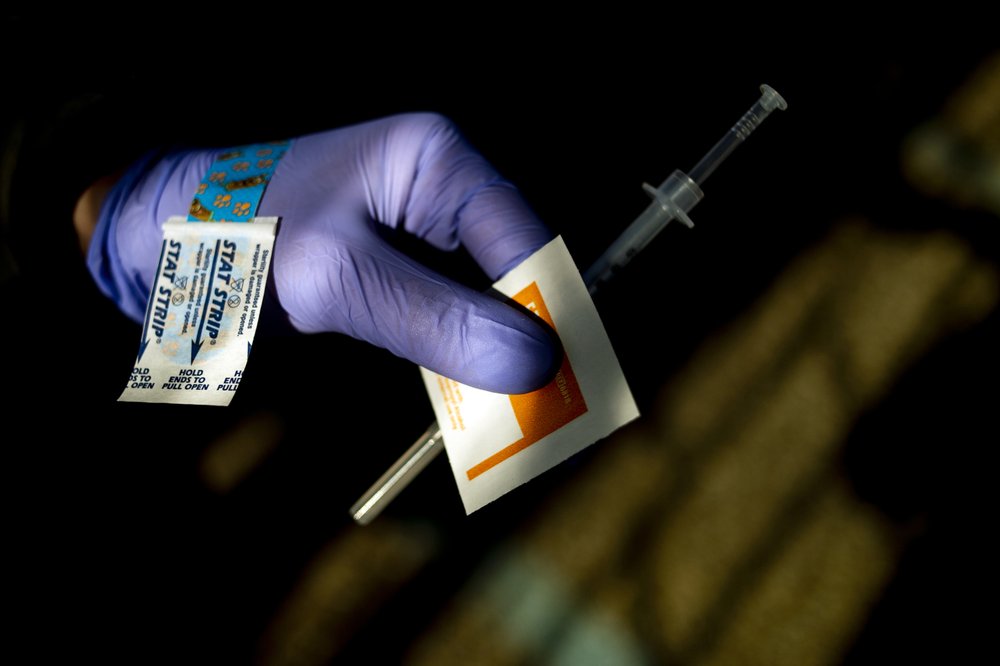
Alabama now ranks fourth in the country for the most new COVID-19 cases per capita, as medical officials hoped full federal approval of the Pfizer vaccine will persuade people to get vaccinated. According to numbers compiled by Johns Hopkins University, Alabama ranked behind Louisiana, Mississippi, and Florida for the most new cases per capita in the past 14 days. “The Gulf states are pretty much continuing to be on fire,” Dr. Jeanne Marrazzo, director of the Division of Infectious Diseases at the University of Alabama at Birmingham. The FDA gave full approval to Pfizer’s COVID-19 vaccine Monday, potentially boosting public confidence in the shots. Alabama has one of the lowest vaccinations rates in the country, ranking slightly below Mississippi in the percentage of people fully vaccinated. Dr. Paul Goepfert, director of the Alabama vaccine research clinic, said it will be hard to predict the impact of the approval but added it might improve the vaccination rates by a few percentage points. “People can no longer say with a straight face that they won’t take it because of lack of FDA approval,” Goepfert said. State health officials on Monday urged people to get vaccinated. “We have high levels of disease transmission in every county throughout the state. COVID-19 vaccination will help keep our communities safe and our children in school,” State Health Officer Scott Harris said in a statement Monday. The seven-day rolling average of daily new cases in Alabama has risen over the past two weeks from 2,829.14 new cases per day on Aug. 7 to 4,024.00 new cases per day on Aug. 21. The Alabama Hospital Association on Monday said that 84% of adults hospitalized for COVID-19 in the state are unvaccinated. Intensive care units, particularly in some areas of the state, are being stressed by the wave of mostly unvaccinated patients. A little more than half of all intensive care unit beds in the state are filled with someone with COVID-19. Hospital officials at Springhill Medical Center in Mobile last week told WKRG that out of 102 hospitalized patients, seven were vaccinated. “Between breaths, they beg me for the vaccine. They beg me to save them. I just have to look at them and say, ‘It’s too late right now. We can’t right now, but you keep fighting,’” nurse manager Abby Wilson told the station.
