
Terri Sewell gets no support from delegation on Voting Rights Act
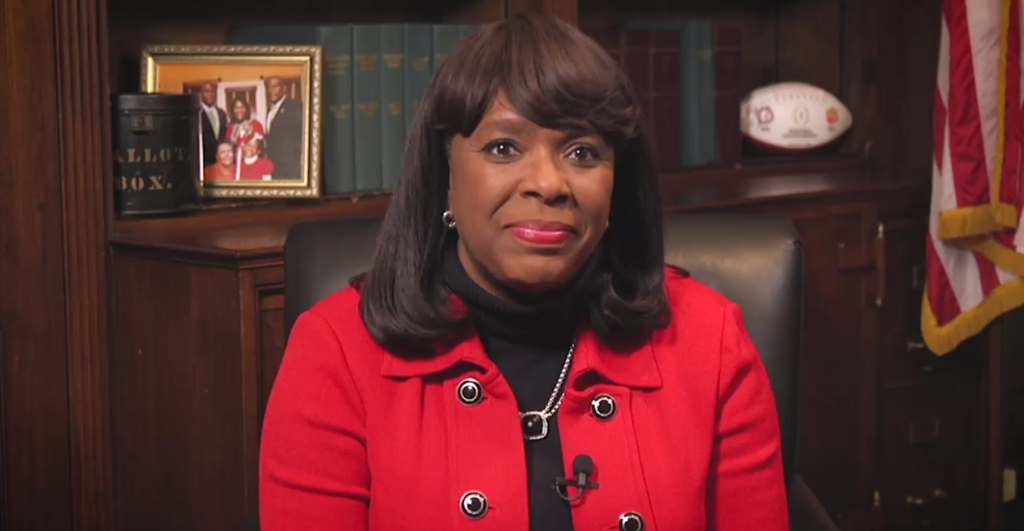
Reps. Mo Brooks and Barry Moore vowed to vote against H.R. 4, the John Lewis Voting Rights Advancement Act. Introduced by Alabama’s own Terri Sewell, the Act passed the House yesterday with no Republican support. Alabama Congressmen all voted Nay, except for Sewell. The bill now moves to the Senate, where it’s unlikely to pass. Democrats do not have enough votes to overcome the opposition from Senate Republicans who claim the bill is “unnecessary.” The bill seeks to restore a key provision of the federal law that compelled states with a history of discrimination to undergo a federal review of changes to voting and elections. The Supreme Court set aside the formula that decided which jurisdictions were subject to the requirement in a 2013 decision and weakened the law further in a ruling this summer, reported the Associated Press. In a press release, Brooks stated, “The Socialist Democrats were dealt a blow when the Senate voted down H.R 1, the ‘Socialist Democrat Election Fraud Enhancement Act.’ Now, they seek to again undermine America’s election systems with H.R. 4, a bill that eliminates state safeguards that protect honest and accurate elections.” On Twitter, Brooks commented, “I will vote against H.R. 4 because much like H.R. 1, it undermines America’s Republic and effectively turns our election results into what we so often see in North Korea, the old Soviet Union, Venezuela and any number of other pretend republics.” Rep. Moore said in a press release, “After failing to federalize our elections through H.R. 1, Pelosi’s deceitful sequel is yet another unconstitutional power grab intended to keep Democrats in power. Despite being named after a Civil Rights icon, the title only serves as a guise to hide Democrats’ true intentions of centralizing election power with the federal government. I cannot support this delusional attack on democracy, but I remain committed to strengthening election integrity for all Americans.” Sewell commented on Twitter, “This is my fourth time introducing a version of the Voting Rights Advancement Act but my first time doing it without John. As I cast my vote for #HR4 later today, I’ll be thinking of John. I know he’ll be watching over us as we get into #GoodTrouble and carry on his legacy.” On Wednesday, Brooks posted on Twitter, “Socialist Democrats seek to undermine America’s election systems with HR4, a bill that eliminates state safeguards that protect honest and accurate elections. I’m glad to stand with @RepBarryMoore and the rest of the Alabama delegation in opposing it.”
U.S. says 1,500 Americans may still await Kabul evacuation
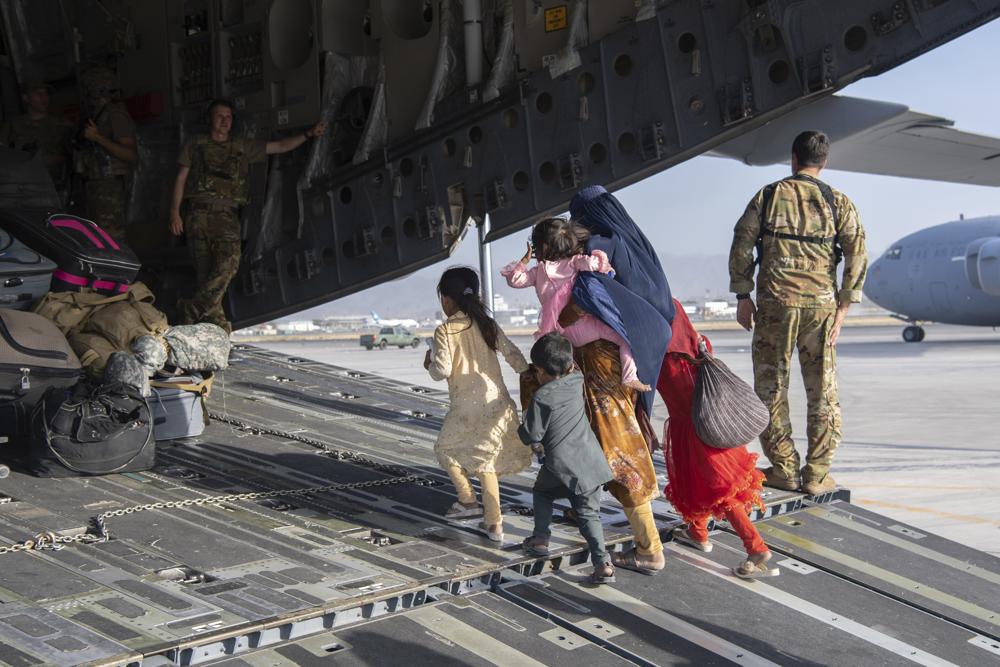
Secretary of State Antony Blinken said Wednesday that as many as 1,500 Americans may be awaiting evacuation from Afghanistan, a figure that suggests the U.S. may accomplish its highest priority for the Kabul airlift — rescuing U.S. citizens — ahead of President Joe Biden’s Tuesday deadline. Untold thousands of at-risk Afghans, however, still are struggling to get into the Kabul airport, while many thousands of other Afghans already have been flown to safety in 12 days of round-the-clock flights. On Wednesday, several of the Americans working phones and pulling strings to get out former Afghan colleagues, women’s advocates, journalists, and other vulnerable Afghans said they have seen little concrete U.S. action so far to get those Afghans past Taliban checkpoints and through U.S-controlled airport gates to promised evacuation flights. “It’s 100% up to the Afghans to take these risks and try to fight their way out,” said Sunil Varghese, policy director with the International Refugee Assistance Project. Blinken, echoing Biden’s earlier declarations during the now 12-day-old evacuation, emphasized at a State Department briefing that “evacuating Americans is our top priority. ” He added, “We’re also committed to getting out as many Afghans at-risk as we can before the 31st,” when Biden plans to pull out the last of thousands of American troops. Blinken said the State Department estimates there were about 6,000 Americans wanting to leave Afghanistan when the airlift began Aug. 14, as the Taliban took the capital after a stunning military conquest. About 4,500 Americans have been evacuated so far, Blinken said, and among the rest “some are understandably very scared.” The 6,000 figure is the first firm estimate by the State Department of how many Americans were seeking to get out. U.S. officials early in the evacuation estimated as many as 15,000, including dual citizens, lived in Afghanistan. The figure does not include U.S. Green Card holders. About 500 Americans have been contacted with instructions on when and how to get to the chaotic Kabul airport to catch evacuation flights. In addition, 1,000 or perhaps fewer are being contacted to determine whether they still want to leave. Blinken said some of these may already have left the country, some may want to remain and some may not actually be American citizens. “We are providing opportunity,” White House press secretary Jen Psaki said of those Afghans, who include dual Afghan-American citizens. “We are finding ways to get them to the airport and evacuate them, but it is also their personal decision on whether they want to depart.” On a lighter note, the U.S. military said an Afghan baby girl born on a C-17 military aircraft during the massive evacuation will carry that experience with her. Her parents named her after the plane’s call sign: Reach. She was born Saturday, and members of the 86th Medical Group helped in her birth aboard the plane that had taken the family from Kabul to Ramstein Air Base in Germany. Two other babies whose parents were evacuated from Afghanistan have been born over the past week at Landstuhl Regional Medical Center, the U.S. military hospital in Germany. In Washington on Wednesday, Blinken emphasized that the U.S. and other governments plan to continue assisting Afghans and Americans who want to leave after next Tuesday, the deadline for Biden’s planned end to the evacuation and the two-decade U.S. military role in Afghanistan. “That effort will continue, every day, past Aug. 31,” he said. Biden has cited what the U.S. says are rising security threats to U.S. forces, including from an affiliate of the Islamic State terror group, for his determination to stick with Tuesday’s withdrawal deadline. Germany has said Western officials are particularly concerned that suicide bombers may slip into the crowds surrounding the airport. On Wednesday, the U.S. Embassy in Kabul issued a security alert warning American citizens away from three specific airport gates but gave no further explanation. The U.S. Embassy has been evacuated; staff are operating from the Kabul airport and the last are to leave by Tuesday. Biden said this week he had asked his national security team for contingency plans in case he decides to extend the deadline. Taliban leaders who took control of Afghanistan this month say they will not tolerate any extensions to the Tuesday deadline. But Taliban spokesman Suhail Shaheen tweeted that “people with legal documents” will still be able to fly out via commercial flights after Tuesday. U.S. troops are anchoring a multinational evacuation from the airport. The White House says the airlift overall has flown out 82,300 Afghans, Americans, and others on a mix of U.S., international and private flights. The withdrawal comes under a 2020 deal negotiated by President Donald Trump with the Taliban. Refugee groups are describing a different picture than the Biden administration is when it comes to many Afghans: a disorganized, barely-there U.S. evacuation effort that leaves the most desperate to risk beatings and death at Taliban checkpoints. Some Afghans are reported being turned away from the Kabul airport by American forces controlling the gates, despite having approval for flights. U.S. military and diplomatic officials appear to still be compiling lists of eligible Afghans but have yet to disclose how many may be evacuated — and how — private Americans and American organizations said. “We still have 1,200 Afghans with visas that are outside the airport and haven’t got in,” said James Miervaldis with No One Left Behind, one of dozens of veterans groups working to get out Afghans who worked with the U.S. military during America’s nearly 20 years of combat in the country. “We’re waiting to hear from the US. government and haven’t heard yet.” Marina LeGree of Ascend, a U.S.-based nonprofit that worked to develop fitness and leadership in Afghan girls and young women, described getting calls from U.S. officials telling the group’s interns and staffers to go to the airport for evacuation flights, only to have them turned away by American forces keeping gates closed against the throngs outside. One Afghan intern who went to the airport
House panel probing 1/6 riot seeks host of Trump-era records
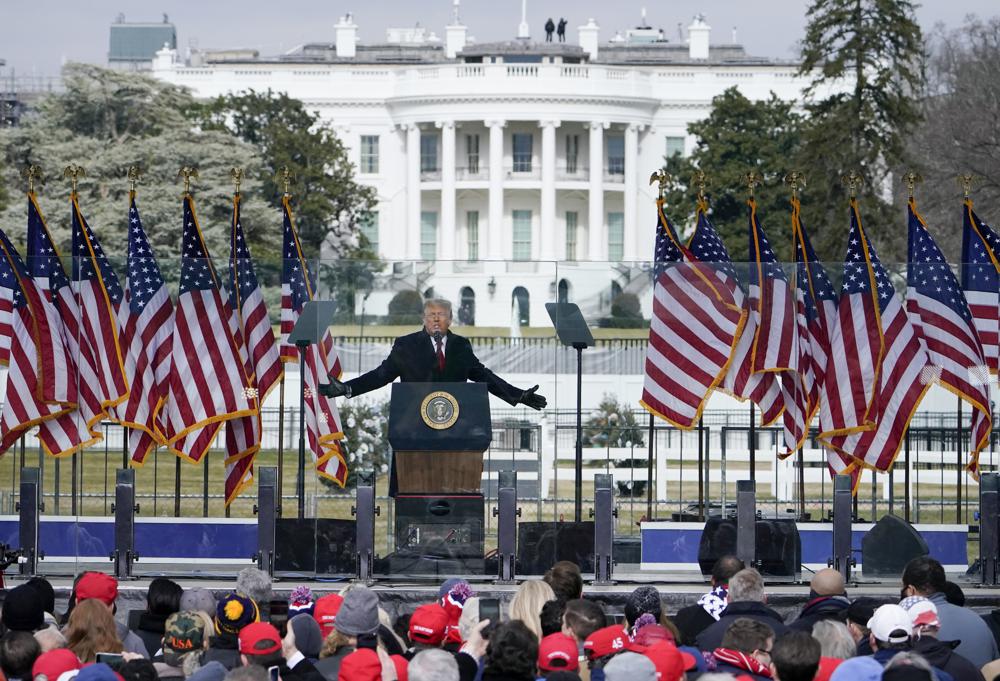
The House committee investigating the January insurrection at the U.S. Capitol is demanding a trove of records from federal intelligence and law enforcement agencies, showing the sweep of the lawmakers’ review of the deadly attack by a mob of Donald Trump supporters. The request Wednesday seeks information about events leading up to the Jan. 6 riot, including communication within the White House under then-President Trump and other agencies, and information about planning and funding for rallies held in Washington. Among them is an event at the Ellipse, near the White House, featuring remarks by Trump where he egged on a crowd of thousands before loyalists stormed the Capitol. The requested documents are just the beginning of what is expected to be a lengthy partisan and rancorous investigation into how the mob was able to infiltrate the Capitol and disrupt the certification of Democrat Joe Biden’s presidential victory, inflicting the most serious assault on Congress in two centuries. Committee members are also considering asking telecommunications companies to preserve phone records of several people, including members of Congress, to try to determine who knew what about the unfolding riot and when they knew it. With chants of “hang Mike Pence,” the rioters sent the then-vice president and members of Congress running for their lives and did more than $1 million in damage, and wounded dozens of police officers. Records requests are typically the starting point for investigations, and the committee is expected to conduct a wide-ranging review as it builds a public record detailing the chaos on Jan. 6. That inquiry could take more than a year, until the end of the congressional session. The demands are being made for White House records from the National Archives, along with material from the departments of Defense, Justice, Homeland Security and Interior, as well as the FBI and the Office of the Director of National Intelligence. The committee is also seeking information about efforts within the Trump administration to push the president’s baseless claims of election fraud and any efforts to try to overturn the results of November’s election or to “impede the peaceful transfer of power.” The request for the National Archives and Records Administration is 10 pages long. The committee is seeking “All documents and communications within the White House on January 6, 2021” related to Trump’s close advisers and family members, the rally at the Ellipse, and Trump’s Twitter feed. It asks for his specific movements on that day and communications, if any, from the White House Situation Room. Also sought are all documents related to the claims of election fraud, as well as Supreme Court decisions on the topic. Rep. Bennie Thompson, D-Miss., is heading the committee, appointed by House Speaker Nancy Pelosi, D-Calif., after all, but two Republicans opposed the creation of the 13-person panel. The committee so far has heard from police officers who were at the Capitol on Jan. 6. In emotional testimony, those officers spoke of how afraid and frustrated they were by the failure of law enforcement leaders to foresee the potential for violence and understand the scope of planning by the Trump backers. A Capitol Police officer who fatally shot protester Ashli Babbitt was cleared months ago of criminal wrongdoing and was cleared internally by the department this week, and was planning to reveal his identity in an NBC interview to air Thursday. Most in the GOP argued that the majority-Democratic committee would conduct a partisan inquiry. House Democrats originally attempted to create an evenly split, independent commission to investigate the insurrection, but that effort fell short when it was blocked by Senate Republicans. Thompson did not identify the lawmakers whose records the committee would seek, but he has said officials would be contacting communication companies, social media platforms, and other tech giants. House Republican leader Kevin McCarthy of California, who had been in touch with Trump from the besieged Capitol on Jan. 6, again dismissed the committee’s investigation as “so political.” When he was asked whether he would turn over his own phone logs from Jan. 6, he said Wednesday, “I told the American public who I talked to that day,” referring to his television news appearances that day. In a Fox News appearance Tuesday evening, Rep. Jim Banks, R-Ind., whose phone records may also be sought, said it was “an abuse of power” to investigate lawmakers. Thompson, in a written statement, said the committee’s work was rooted in apolitical fact-finding. “Our Constitution provides for a peaceful transfer of power, and this investigation seeks to evaluate threats to that process, identify lessons learned and recommend laws, policies, procedures, rules, or regulations necessary to protect our republic in the future,” he said. Republished with the permission of the Associated Press.
Mayors of Birmingham, Mobile win re-election
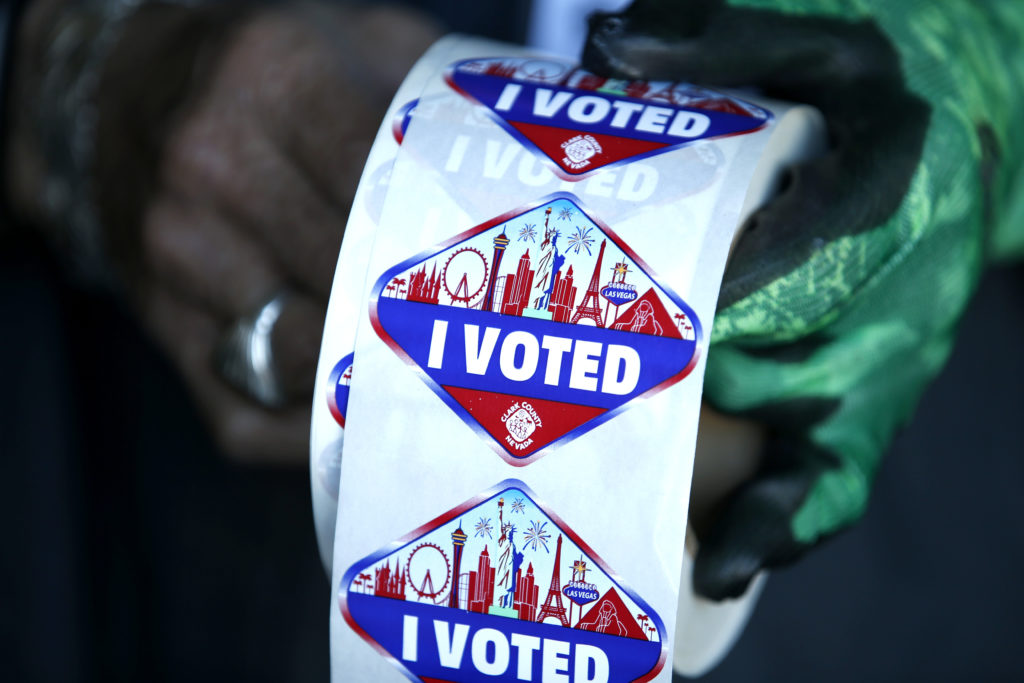
The mayors of two of Alabama’s largest cities have won re-election by wide margins. Birmingham Mayor Randall Woodfin outdistanced seven other candidates in balloting Tuesday to win a second four-year term with about 64% of the vote. The challengers included his predecessor as mayor, William Bell, and a Jefferson County commissioner, Lashunda Scales, who finished second. “You told us to invest in your neighborhoods and we did,” Woodfin told supporters after the votes were counted. “You told us to pave your streets and we did. …You told us to invest in the youngest generation and we did.” Mobile Mayor Sandy Stimpson won a third term by carrying 62% of the vote against two challengers who included a City Council member, Fred Richardson. Stimpson said he would concentrate on projects including the relocation of the city’s passenger airport to a site near downtown over the next four years. Republished with the permission of the Associated Press.
Federal team to help with COVID-19 surge at Dothan hospital
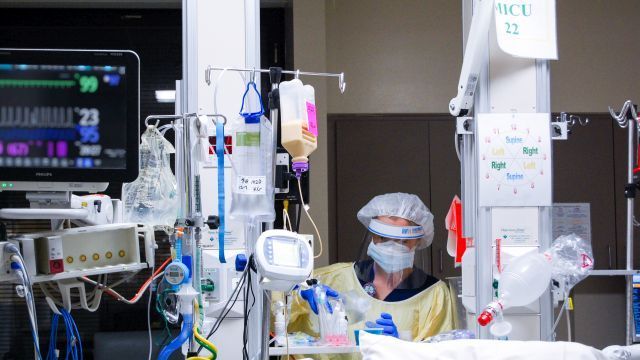
A federal team of health care workers is being sent to a southwest Alabama hospital seeing a surge in COVID-19 patients, the state health officer said Wednesday. State Health Officer Scott Harris said the U.S. Department of Health and Human Services is sending a task force team to Southeast Medical Center in Dothan. Sitting in the far southeast corner of the state, the hospital sees patients from Florida and Georgia. The hospital this month set a new pandemic high with 119 COVID-19 patients. Alabama is seeing a surge in COVID-19 cases that medical officials say is being fueled by low vaccination rates and the highly contagious delta variant. South Alabama hospitals have been particularly hard hit. The first team in the state was sent to South Baldwin Regional Medical Center in Foley. Similar teams have been sent to help in Louisiana and Mississippi. Between July 19 and Aug. 25, Alabama went from having 500 COVID-19 patients in state hospitals to 2,845. By comparison, the state had 3,087 patients in the hospital at the January peak of the pandemic. The state has more patients receiving intensive care across the state than there are designated intensive care beds in the state, according to the Alabama Hospital Association. While some hospitals have available ICU beds, other areas are over capacity and have converted other space to intensive care. Republished with the permission of the Associated Press.
