
Terri Sewell to host telephone town hall discussion
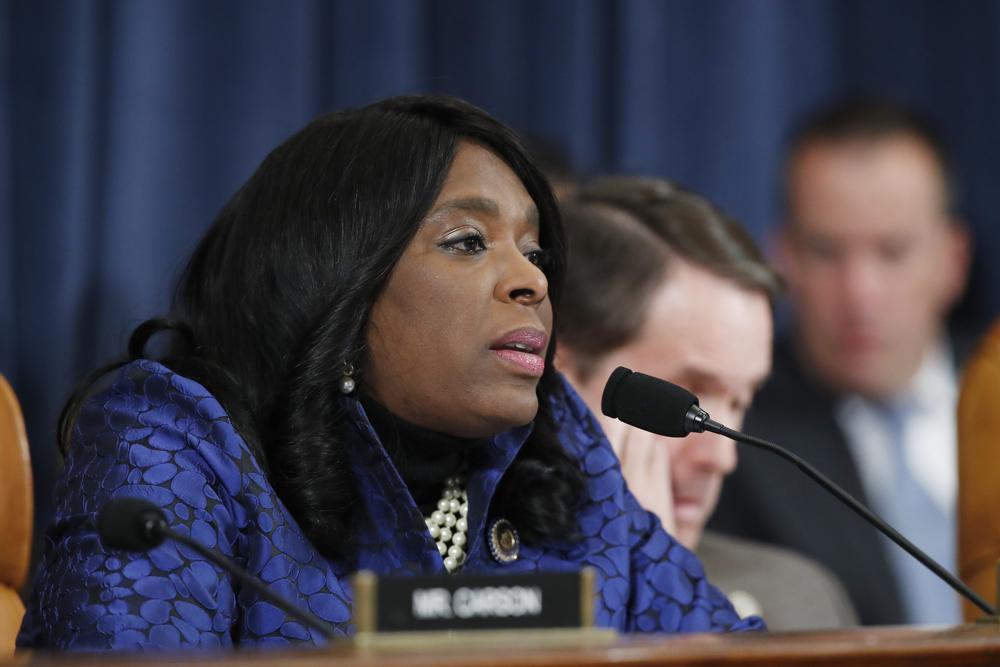
Congresswoman Terri Sewell will host a live telephone town hall today at 6:30 PM. The hour-long event includes time for Sewell to take questions directly from constituents. Special guests include Dr. David Hicks, Jefferson County Deputy Health Officer, Dr. Stephanie McClure, Assistant Professor at Auburn University, William Barnes, President of Birmingham Urban League, and David Young, Multifamily Housing Administrator for Alabama Housing and Finance Authority. Topics to be discussed will include President Joe Biden’s Build Back Better agenda, Covid-19, vaccinations, rental assistance, and the John R. Lewis Voting Rights Advancement Act. Constituents are encouraged to register in advance to receive a call. Constituents can also join by calling (877) 353-4701 at the time of the event.
Jim Zeigler calls for recall law in Alabama

The same day that Californians voted on whether to recall their governor, Alabama State Auditor Jim Zeigler proposed a recall law for Alabama. Zeigler made the recall proposal on the News and Views radio show with Joey Clark on Montgomery’s News Talk 93.1 FM Tuesday morning. Zeigler, who is running an exploratory campaign for governor in Alabama’s May 24, 2022 primary, says he would make recall part of his platform. “Nineteen states have recall laws for governors, but Alabama is not among them,” Zeigler stated. “If we had a recall law, Gov. Robert Bentley would have been recalled a year and a half before he finally was forced to resign.” Zeigler filed the initial ethics complaint against Bentley, alleging that Bentley misused his office. Thirteen months later, the ethics commission found probable cause that Bentley was in felony violation. It referred the case for prosecution. Five days later, Bentley resigned and pleaded guilty to misdemeanors. “If we had a recall law, I believe citizens would have started a recall petition against Gov. Kay Ivey after she rammed a 10-cents-a-gallon gas tax increase through. She had not run for re-election on a gas tax increase, but immediately after winning her election, she made the tax increase her top priority,” Zeiger commented. “If we had a recall law, citizens on Alabama’s Gulf Coast would have started a recall petition after Gov. Ivey tried to force a toll to cross Mobile Bay between Mobile and Baldwin counties. A recall law is a way for the citizens to have some accountability over the governor,” Zeigler said. Zeigler said he is working on three recall bills for the January 2021 regular session. One would have right of recall over the governor. A second would have recall over all state constitutional officers. A third would also include recall of the 140 legislators. “I have four months to get sponsors of the bills in the state House and state Senate. They would pre-file the bills and carry them in both houses. There would be a vote of the people on a recall proposal since it would be a constitutional amendment.” Zeigler pointed out one unusual aspect of his proposal. “If I run and am elected governor, I would become the first Alabama governor to serve under a recall law. That is fine with me and is just as it should be. You don’t see any other potential candidates out calling for a recall law.”
Democrats revise elections bill but face Senate headwinds
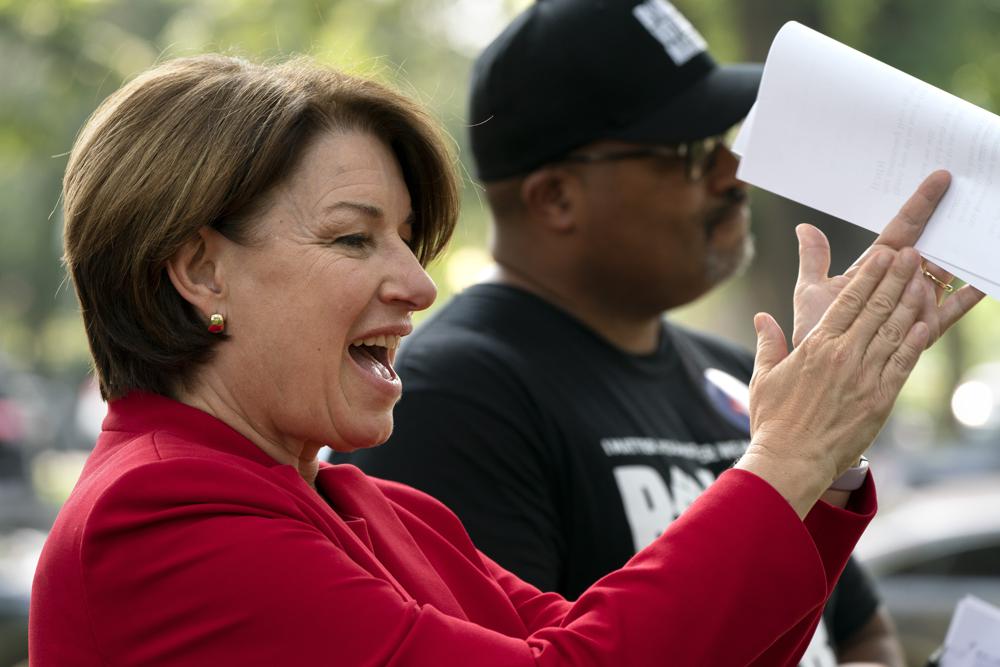
Senate Democrats unveiled a pared-back elections bill Tuesday in hopes of kickstarting their stalled push to counteract new laws in Republican states that could make it more difficult to cast a ballot. But the new compromise legislation is likely doomed to fail in the 50-50 Senate, facing the same lockstep Republican opposition that scuttled their previous attempts to pass an even more sweeping bill. The GOP blasted the earlier measure as “unnecessary” and a “partisan power grab.” Republican-controlled legislatures have enacted restrictions over the past year in the name of election security that will make it harder to vote and could make the administration of the elections more subject to partisan interference. Texas, which already has some of the country’s strictest voting rules, recently adopted a law that will further limit the ability to cast a ballot, empower party poll watchers and create new criminal penalties for those who run afoul of the rules — even if inadvertently. The spate of new voting laws — many inspired by former President Donald Trump’s false claims of a stolen election — have ratcheted up pressure on Democrats in Congress to pass legislation that could counteract the GOP push. Trump’s claims of election fraud were widely rejected in the courts, by state officials who certified the results and by his own attorney general. “We have seen unprecedented attacks on our democracy in states across the country. These attacks demand an immediate federal response,” said Sen. Amy Klobuchar, D-Minn., the lead sponsor of the new bill. The revised legislation was negotiated for weeks by a group of Democratic senators and includes many of the same provisions as the previous bill, known as the For the People Act. It would establish national rules for running elections, limit partisanship in the drawing of congressional districts and force the disclosure of many anonymous donors who spend big to influence elections, according to a summary obtained by The Associated Press. But it also includes a number of changes sought by West Virginia Sen. Joe Manchin, who is the chamber’s most conservative Democrat. That includes provisions that would limit, but not prohibit, state voter ID requirements, as well as the elimination of a proposed overhaul of the Federal Election Commission, which was intended to alleviate partisan gridlock at the election watchdog agency. The new measure also dumps language that would have created a public financing system for federal elections. It would instead establish a more limited financing system for House candidates that states could opt to participate in. Other provisions are aimed at alleviating concerns from local elections officials, who worried that that original bill would have been too difficult to implement. And some new additions are aimed at insulating nonpartisan election officials, who may be subject to greater partisan pressure under some of the new state laws. White House spokeswoman Karine Jean-Pierre said Tuesday that the administration was “encouraged by the momentum” and said President Joe Biden would “continue to work with Congress” to pass the bill. Yet despite the changes, Republicans are expected to uniformly oppose the measure, which they say amounts to a federal takeover of elections. That leaves Democrats well short of the 60 votes needed to advance the bill unless they change the Senate’s filibuster rules, which Manchin and other moderates have ruled out. Manchin has said Congress shouldn’t pass voting legislation unless it is bipartisan. He has shopped the revised bill to some Republican senators in recent weeks, seeking their support. But there are no indications of any signing on. Manchin told reporters Tuesday that the new bill “makes more sense, it’s more practical, more reasonable,” but said he “didn’t have anything to say” about making changes to the filibuster. “Now we have to sit down and work with our Republican colleagues,” he said. “I’m headed to do that right now,” Klobuchar said before walking onto the Senate floor. But moments later, Senate Minority Leader Mitch McConnell threw cold water on the bill, calling it “a solution in search of a problem” that “we will not be supporting.” “Let me say for the umpteenth time,” the Kentucky Republican said. “There is no rational basis for the federal government taking over how we conduct elections.” It all puts Democrats right back where they started. The lack of progress is likely to frustrate party activists, many of whom view voting rights as the Civil Rights issue of the era. Senate Majority Leader Chuck Schumer, D-N.Y., said the bill could be called for a vote as soon as next week when it will almost certainly fail. “Senator Manchin … believes that we should try to make it bipartisan, and we are giving him the opportunity to do that,” Schumer said. “If that doesn’t happen, we will cross that bridge when we come to it.” Activists and some Democratic senators say scrapping the filibuster is the only path forward. “The filibuster is the only thing standing in our way. It’s time for our senators to put Americans’ freedom to vote ahead of the Jim Crow filibuster,” said Sean Eldridge, president of the group Stand Up America. Republished with the permission of the Associated Press.
Former Alabama district attorney Brandon Hughes seeks to avoid prison
A former district attorney is asking a judge to keep him out of prison and allow him to serve his 10-month prison sentence on perjury and ethics charges in a community corrections program. Last week, attorneys for former Lee County District Attorney Brandon Hughes filed a motion seeking a placement in a community corrections program, arguing that it is a more appropriate setting for Hughes and would allow him to support his family. The Alabama attorney general’s office is opposing the request, saying that would be insufficient punishment for the former public official. Hughes, in June, pleaded guilty to perjury and using his public office for personal gain. Hughes had been accused of giving false statements to a grand jury and using $14,000 from the District Attorney’s Fund to litigate a settlement involving a sex discrimination claim filed against him by a former prosecutor in his office. A judge last month said Hughes could remain free on bond until the resolution of his application for community corrections. The judge has scheduled a Sept. 18 hearing on the request. “Mr. Hughes has not been convicted of a violent crime, nor does he have a criminal history. Therefore, Mr. Hughes does not pose a threat to the community in any form,” his attorney wrote in a motion seeking a placement in community corrections. Prosecutors from the Alabama attorney general’s office are opposing the request, likening it to a decision to “hang the petty thief while the corrupt public figure serves probation.” Prosecutors said a community corrections program would be little more than probation and allow Hughes to sleep at his home at night. “A CCP sentence, on the other hand, would be wholly inappropriate for the top prosecutor in Lee County who used his office for personal gain and lied to the grand jury about it,” prosecutors wrote. Republished with the permission of the Associated Press.
Steve Flower: Census results are revealing
Well, folks, the final census figures are in from last year’s 2020 nose count. The census is taken every 10 years to determine the lines and boundaries of congressional and legislative districts. However, the census reveals a lot more information about us as a state and nation than just how many of us there are. It paints a picture of who we are as people and what we look like. The most recent census unveils an America much different than those of us who were born in the 1950s and are referred to as the “Baby Boomer” generation. We are one diverse country. Indeed, we are a true melting pot. The United States is now less than 60% white/Caucasian – 57% to be exact. The black/African American population has basically remained the same at about 12% of the population. The most remarkable figure is that 20% of our population identifies as Hispanic. The Asian population has doubled over the 10 years from 3% to 6% percent. It is a new America. What do these numbers portend, and what is the story for Alabama? First of all, we did an amazing job on our count. The Census Bureau has remarked that Alabama was one of the five best states in America when it came to counting our people. We actually came up with 103,000 more people than what was projected. Gov. Kay Ivey’s efforts deserve some credit for this success. The most significant fact in our successful count is that we saved a congressional seat. It had been projected for the last five years that we were going to lose a congressional seat from seven to six in Congress. We will, fortunately, keep seven. This will make the legislature’s job much, much easier when they meet in about a month to draw the lines. After the reapportionment session, we will still probably have six Republican congressmen and one Democratic member of Congress. In fact, when the members of the legislature begin drawing the lines, they will begin with that lone Democratic seat of Congresswoman Terri Sewell. She and that district will come first when dividing up people for two reasons. One is that Alabama is still under the eye of the Justice Department by virtue of the 1965 Voting Rights Act, whereby we must have at least one majority-minority district. Because the Black Belt region of the state has lost significant population, she will have to take in a larger area. She will probably go all the way from Birmingham to Mobile. She will pick up a large chunk of Tuscaloosa and almost all of Montgomery, as well as at least three to five more sparsely populated Black Belt counties on the way between Birmingham and Mobile. As projected, the Black Belt counties lost population, and the growth in the state was in fast-growing Republican-leaning counties such as Baldwin, Shelby, Jefferson, Lee, and especially in the Huntsville / Madison / Limestone area. The second reason that Congresswoman Sewell will get deference is that she is our only Democratic congressperson. With the U.S. House of Representatives being majority Democratic, as well as the White House, Congresswoman Sewell is our only conduit to the majority party. In addition, she is on a fast leadership track in Congress and sits on the all-important House Ways and Means Committee. Huntsville’s amazing growth is the remarkable story of the census in Alabama. Huntsville is now Alabama’s largest city. It far surpasses Birmingham. In fact, Birmingham lost 5% of its population. There is essentially a tie between Montgomery and Birmingham as to who is second. Montgomery held its own. Huntsville city grew by 20%. The metro area by over 40%. The Birmingham/Hoover metro area is still by far the largest metropolitan area. The suburban cities of Hoover, Vestavia Hills, and Trussville grew substantially. Hoover itself grew by 13%. After the Madison (Huntsville) / Limestone area, the fastest growing county in the state is Baldwin County. While Daphne had significant growth, the darling in the group is Fairhope, which grew by 47%. Lee County and Auburn grew by whopping numbers. What does this mean politically? These growth counties of Baldwin, Madison, and Lee will see increased Republican representation in the legislature, and the Jefferson/Shelby suburbs will hold their own. It will be hard to not increase the supermajority Republican control of the Alabama Senate and House of Representatives. See you next week. Steve Flowers is Alabama’s leading political columnist. His weekly column appears in over 60 Alabama newspapers. He served 16 years in the legislature. Steve may be reached at www.steveflowers.us.
