
Katie Britt: Fighting for Alabama’s family farms
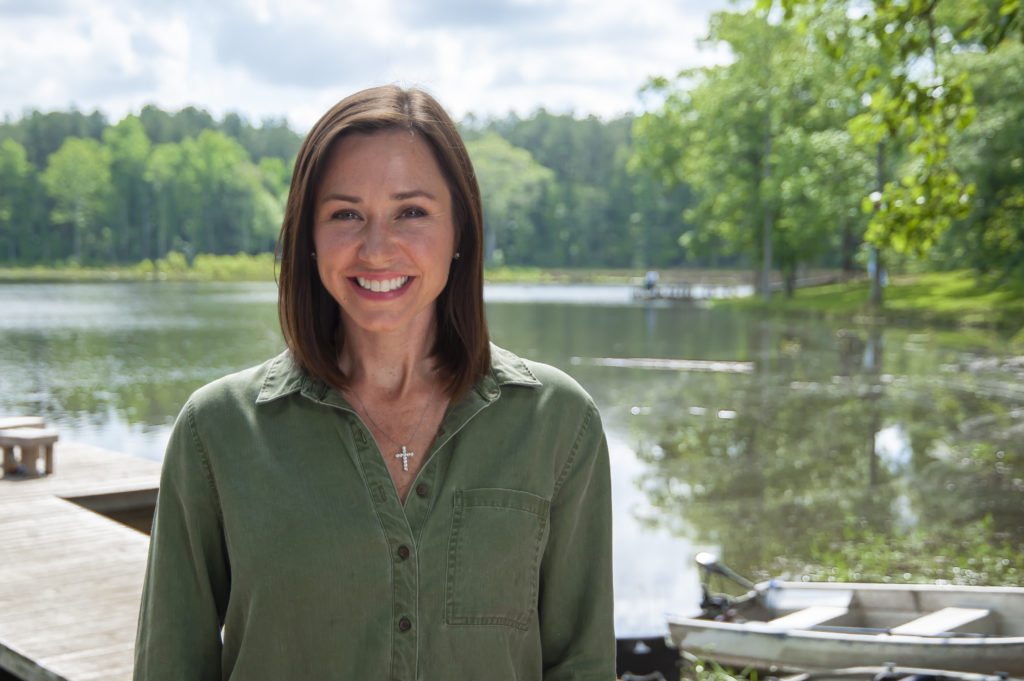
American family farms are under attack – both from within our very own country and from China. On top of the inherent uncertainty that they already have to deal with, our nation’s family farms are now being undercut by Chinese-owned farms located within our borders. Chinese agricultural investments abroad grew more than tenfold from 2009-2018, with the Chinese Communist Party supporting these investments in order to gain more control of the global food supply chain. Unfortunately, this trend was especially pronounced right here in the United States. At the beginning of 2020, China controlled about 192,000 agricultural acres in America, worth $1.9 billion. The problem goes beyond farmland, as well. Two of the four largest meat companies in the U.S. market are now foreign-owned: Smithfield and JBS. However, it is not just the Chinese Communist Party putting America’s farmers in their crosshairs. As Joe Biden continues to push Congress to pass his disastrous $3.5 trillion spending proposal, he is also trying to tax family farms across our nation into bankruptcy. Biden is proposing to make the existing Death Tax even worse, effectively turning it into a Death Knell Tax for American farm families. A study by Texas A&M recently found that Biden’s new estate tax proposals would affect 98% of U.S. family farms, with an average price tag of $1.4 million per farm. For the typical family farm in America and in Alabama, this would simply shutter their doors –or force them into the hands of Chinese investors. At a time when the federal government is ramping back up burdensome, overreaching regulations and red tape and inflation are on the rise, family farms cannot afford Biden’s tax-and-spend boondoggle to move forward. This is an issue especially important to Alabama, as agriculture is our state’s largest industry with an annual economic impact of over $70 billion. Born and raised in Coffee County, I saw firsthand that farming acts as the economic engine for communities in every corner of our state. More than 20% of Alabama jobs are related to agriculture, and Biden’s plan could cripple our state. I will be an unwavering champion for hardworking farmers, cattlemen, and everyone in the forestry sector as the next Senator for Alabama. I will fight senseless regulations and stand up for family farmers at every turn. Our farmers have been tending to Alabama’s land for generations, and they don’t need federal bureaucrats telling them how to earn their livelihood. Farmers also rely on exports for their livelihood, and I will work tirelessly to ensure all of Alabama’s industries are getting a truly fair shake in foreign trade. Additionally, modern precision agriculture requires advanced technology and equipment, some of which requires high-speed broadband internet service. Unfortunately, Alabama ranks nearly last in the nation when it comes to broadband connectivity. I will be a staunch supporter of efforts to expand affordable broadband service to all Alabamians, so zip codes don’t define opportunity for our citizens. The list of challenges and opportunities facing Alabama farmers runs much longer, from workforce issues to commodity nuances in the Farm Bill to stability at the USDA. Prioritizing these needs is key to Alabama’s future, and I will do just that in the Senate. Katie Britt is a Republican candidate to serve as the next U.S. Senator for Alabama. An Enterprise native, Katie resides in Montgomery with her husband, Wesley, and their two children, Bennett and Ridgeway.
U.S. has enough COVID-19 vaccines for boosters, kids’ shots
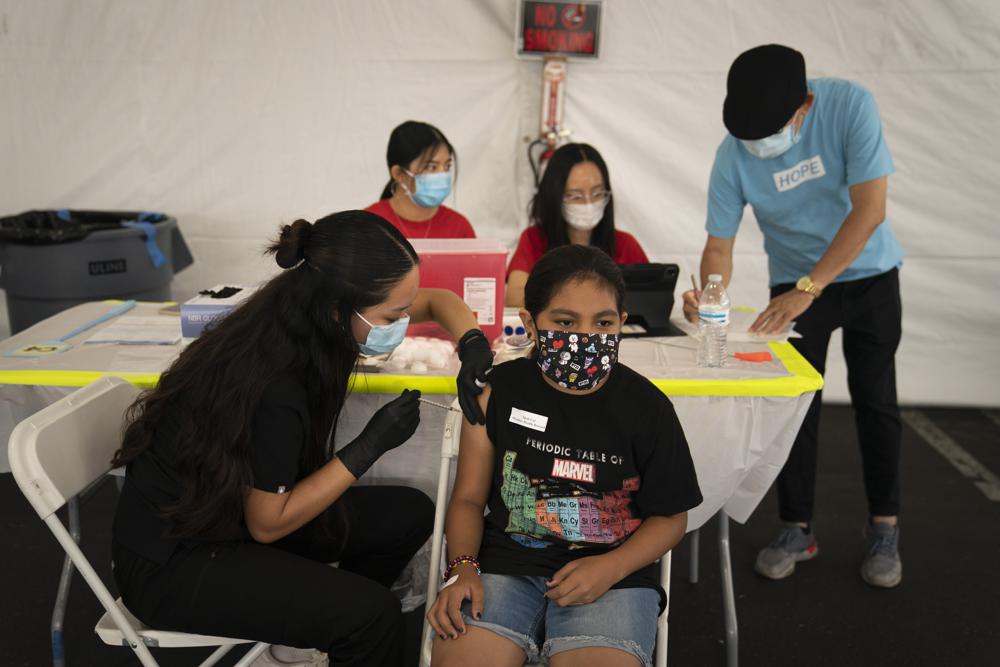
With more than 40 million doses of coronavirus vaccines available, U.S. health authorities said they’re confident there will be enough for both qualified older Americans seeking booster shots and the young children for whom initial vaccines are expected to be approved in the not-too-distant future. The spike in demand — expected following last week’s federal recommendation on booster shots — would be the first significant jump in months. More than 70 million Americans remain unvaccinated despite the enticement of lottery prizes, free food or gifts, and pleas from exhausted health care workers as the average number of deaths per day climbed to more than 1,900 in recent weeks. Federal and state health authorities said the current supply and steady production of more doses can easily accommodate those seeking boosters or initial vaccination, avoiding a repeat of the frustratingly slow rollout of COVID-19 vaccines across the country early this year. “I hope that we have the level of interest in the booster … that we need more vaccines,” Colorado Gov. Jared Polis said Tuesday. “That’s simply not where we are today. We have plenty of vaccines.” Robust supply in the U.S enabled President Joe Biden this week to promise an additional 500 million of Pfizer’s COVID-19 shots to share with the world, doubling the United States’ global contribution. Aid groups and health organizations have pushed the U.S. and other countries to improve vaccine access in countries where even the most vulnerable people haven’t had a shot. Among the challenges states face is not ordering too many doses and letting them go to waste. Several states with low vaccination rates, including Idaho and Kansas, have reported throwing away thousands of expired doses or are struggling to use vaccines nearing expiration this fall. While most vaccines can stay on the shelf unopened for months, once a vial is opened the clock starts ticking. Vaccines are only usable for six to 12 hours, depending on the manufacturer, according to the U.S. Food and Drug Administration. Moderna vaccines come in vials containing 11 to 15 doses. Pfizer vials contain up to six doses and Johnson & Johnson vials five doses. “We are going to see more doses that go unused over time,” said Wisconsin’s health secretary, Karen Timberlake. “They come in multidose files. They don’t come in nice, tidy individual single-serving packages.” State health officials said they have tried to request only what health care providers and pharmacies expect to need from the federal supply. Those numbers have dwindled since the vaccines became widely available in early spring. But U.S. officials — holding out hope that some of the unvaccinated will change their minds — are trying to keep enough vaccines in stock so all Americans can get them. That balancing act is tricky and can lead to consternation around the globe as the U.S. sits on unused vaccines while many countries in places such as Africa can’t get enough vaccines. “Somebody sitting in a country with few resources to access vaccines, seeing people in the U.S. able to walk into a pharmacy and get that vaccine and choosing not to, I’m sure that’s causing heartache,” said Jen Kates, senior vice president and director of global health and HIV policy for the Kaiser Family Foundation. Dr. Marcus Plescia, chief medical officer of the Association of State and Territorial Health Officials, which represents the public health agencies of all 50 U.S. states, the District of Columbia, and U.S. territories, said officials anticipate that on-hand doses of COVID-19 vaccines and manufacturers’ ability to supply more will meet needs across the country. “I think states have tried to plan as if everybody’s going to be offered a booster,” he said, suggesting they will be overprepared for the more narrow recommendations issued by the FDA and the Centers for Disease Control and Prevention. California, for example, estimated earlier this month that it would need to administer an extra 63 million doses by the end of 2022 — if initial shots for children under 12 were approved and boosters were open to everyone. U.S. health officials late Thursday endorsed booster shots of the Pfizer vaccine for all Americans 65 and older — along with tens of millions of younger people who are at higher risk from the coronavirus because of health conditions or their jobs. California, with nearly 40 million residents, has the lowest transmission rate of any state and nearly 70% of eligible residents are fully vaccinated. That leaves nearly 12 million people not vaccinated or not fully vaccinated. Dr. Mark Ghaly, California’s health secretary, said the state will rely largely on pharmacies and primary care providers to give boosters to seniors while some large counties and health care groups will use mass vaccination sites. In Pennsylvania, more than 67% of residents older than 18 are fully vaccinated. Alison Beam, acting secretary of health, said health authorities now have “two missions”: Continuing to persuade people to get vaccinated and serving those eager to receive a booster or initial shots. “Pennsylvania is going to be prepared,” Beam said. “And we’re going to have the right level of vaccine and vaccinators to be able to meet that demand.” Republished with the permission of the Associated Press.
Alabama lawmakers weigh using virus funds to build prisons
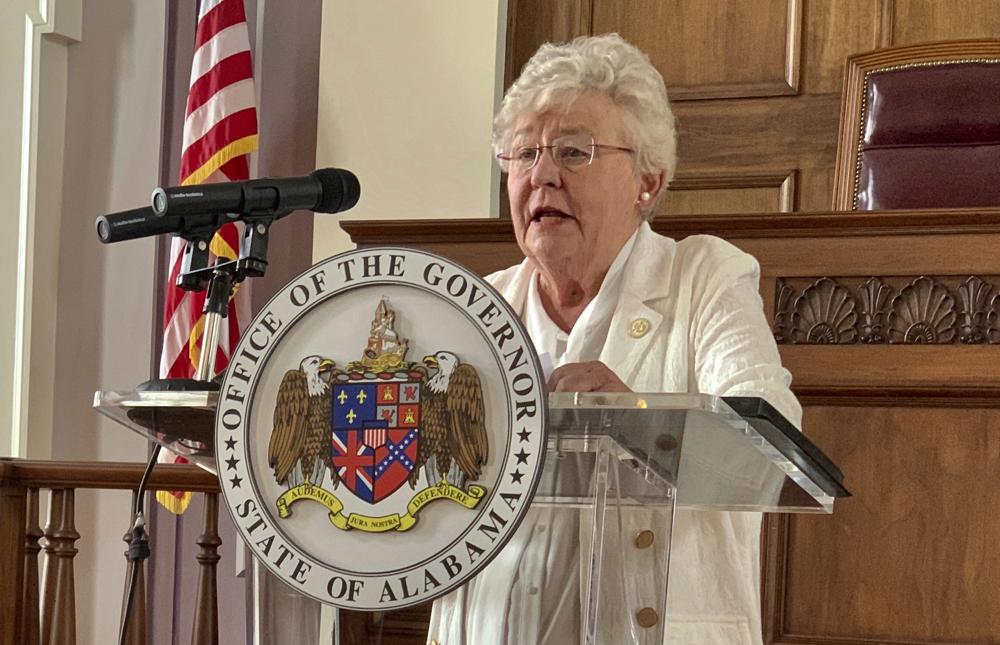
Alabama is weighing the use of $400 million in pandemic relief funds to build new prisons, a proposal that state Republican leaders say would save state taxpayer money but that critics argue is not the intended use of the federal aid. Lawmakers on Monday are scheduled to begin a special session focused on a $1.3 billion prison construction plan to build at least three new prisons and renovate others. The projects would be done in phases and funded with a $785 million bond issue, $150 million in general fund dollars, and $400 million from the state’s $2.2 billion share of American Rescue Plan funds. Gov. Kay Ivey and Republican legislative leaders have defended the use of the virus funds, saying it will enable the state to essentially “pay cash” for part of the construction and avoid using state dollars as well as paying interest on a loan. “We don’t have to borrow quite as much money and pay all that money back,” Ivey told reporters this week of why the virus funds should be used for prison construction. Republican Sen. Greg Albritton, who chairs the Senate general fund budget committee, said legislative leaders are comfortable they can legally use the money for prison construction. Albritton said part of the federal dollars are to replace revenue lost during the pandemic. He said that pot of funds “has many, many fewer restrictions” on how it is used. Dev Wakeley, a policy analyst with Alabama Arise, said while the state may be legally able to use the money for prison construction, the purpose was to do things that “will help everyday Alabamians in their lives, and to smooth out the recovery.” Alabama Arise is an advocacy organization for low-income families. He said the money could be used for items such as an expansion of the state’s Medicaid program to provide medical coverage to previously uninsured Alabamians and child care programs. “Congress surely did not contemplate, state governments, deciding that well, you know, we’re just not going to use this money to actually improve lives of people … instead we’re going to blow $400 million on building fancy new prisons that don’t even really get at the problems” of the state incarceration system. Rep. Chris England, D-Tuscaloosa, said there are “obviously better uses of the money.” President Joe Biden’s sweeping $1.9 trillion COVID-19 rescue package known as the American Rescue Plan was signed in March, providing a stream of funds to states and cities to recover from the pandemic. The program gives broad discretion to states and cities on how to use the money. The U.S. Department of Treasury has said the funds can be used to support COVID-19 response, support economic stabilization for households and businesses, address systemic public health and economic challenges, and to replace lost revenue to “strengthen support for vital public services and help retain jobs.” A spokesman said the U.S. Department of Treasury does not preapprove any specific uses of the funds and has not issued a final rule on usage. Treasury officials say the department is monitoring all proposed expenditures and expects any state or local government that uses state and local funds in violation of the eligible uses to repay the misused funds to the federal government. The Alabama prison construction proposal calls for at least three new prisons — at least a 4,000-bed prison in Elmore County with enhanced space for medical and mental health care needs; another at least 4,000-bed prison in Escambia County; and a women’s prison — as well as renovations to existing facilities. Republished with the permission of the Associated Press.
Judge dismisses execution lawsuit, reprimands AG’s office
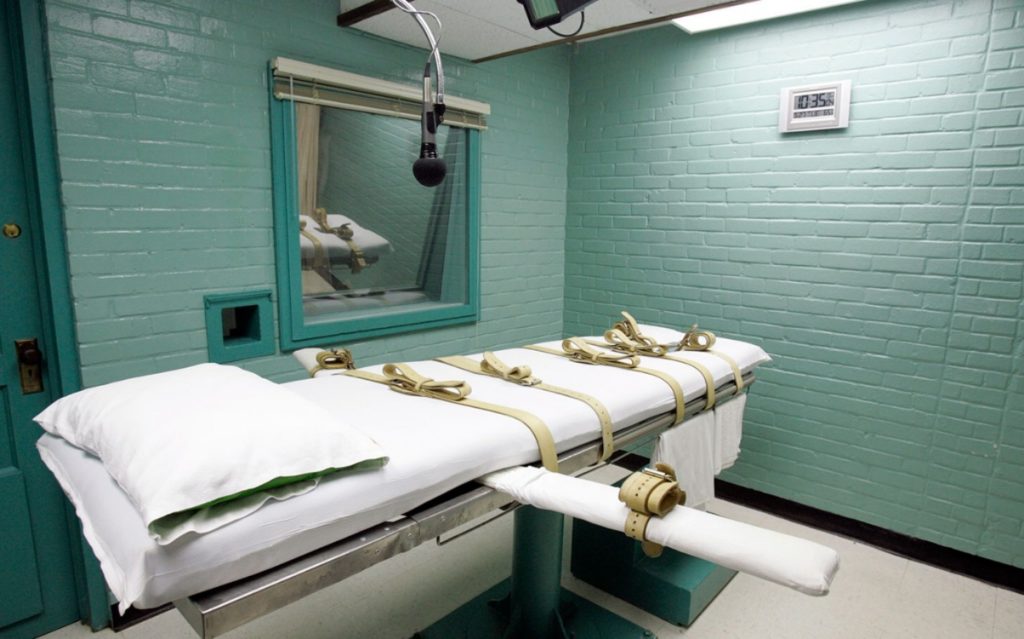
On Friday, a federal judge paved the way for Alabama to proceed with a lethal injection next month and reprimanded the state attorney general’s office for giving false information to the court during the litigation centered on forms given to death row inmates for selecting an execution method. Chief U.S. District Judge Emily C. Marks dismissed a lawsuit that argued the state failed to give Willie Smith, who has an IQ below 75, required help under the Americans with Disabilities Act in filling out forms that affected the timing of his execution. Smith is scheduled to be executed on Oct. 21 by lethal injection for the 1991 kidnapping and murder of 22-year-old Sharma Ruth Johnson in Birmingham. After Alabama authorized nitrogen hypoxia as an execution method, the state gave death row inmates a brief window to select that as their execution method. The state has not yet developed a protocol for using nitrogen hypoxia and is not setting execution dates for inmates who requested it. Smith did not turn in a form selecting nitrogen. His attorneys argued that the state was required by law to help intellectually disabled inmates like Smith with the form. Marks dismissed the claim, saying the form was not required by state law and that Smith could have written on his own to request nitrogen. Marks ruled that the “form was not required, directed, or sanctioned” by state law and “for the entire month of June 2018, both before and after this form was distributed, Smith had the ability to opt into execution by nitrogen hypoxia through any writing he chose.” Smith’s attorney indicated they will appeal. “The court’s dismissal of our complaint on jurisdictional grounds does not reject the merits of our claim, which is that the Department of Corrections, when it distributed an opt-in form for a method of execution, created a program without providing an accommodation to Mr. Smith, who is cognitively disabled. We are anticipating appealing this decision and continuing to fight for Mr. Smith,” federal defender John Palombi wrote in an email. Marks also issued an order formally reprimanding the Office of the Alabama Attorney General Steve Marshall and Assistant Attorney General Lauren Simpson over false information given to the court. Simpson had previously told the court that the warden of Holman Prison made the decision herself to hand out the forms. However, the judge noted that Warden Cynthia Stewart in 2018 testified that she was instructed to do so. “Although she could not recall who gave her the instruction, she acknowledged it would have been someone above her in the chain of command,” Marks wrote. Simpson was fined $1,500. Marks wrote that the misrepresentation was inexcusable, although she did not think Simpson acted maliciously. “The Court finds that the improper conduct here was reckless, particularly given that this is a case involving the death penalty; it was not an isolated event but rather occurred across two written filings and was stated orally at a hearing,” Marks wrote. Republished with the permission of the Associated Press.
Alabama city’s planning commission OKs renaming street
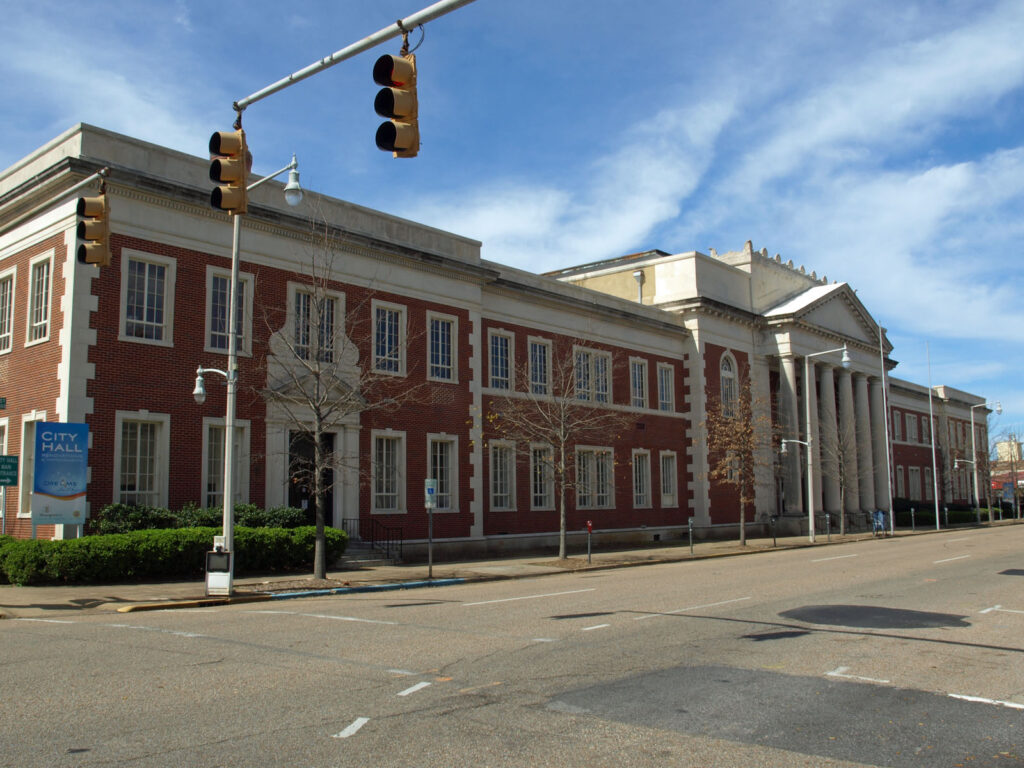
A city planning commission in Alabama’s capital city has unanimously passed a recommendation to rename one of its streets for a civil rights lawyer. The recommendation to rename Jeff Davis Avenue to Fred D. Gray Avenue was passed Thursday during a City of Montgomery Planning Commission meeting, WSFA-TV reported. Gray, a Montgomery native who grew up on the street, was one of Rosa Parks’ attorneys when she was arrested for refusing to move to a seat in the back of a public bus. He also represented Martin Luther King Jr. a number of times, and helped in the legal fight to allow African American students to learn at the University of Alabama. One business owner on Jeff Davis Avenue spoke against the recommended change said doing so will have a negative impact on him. “It’s gonna cost us about $2,500, $3,000 in time and money to contact and change stationery, invoices, contracts, contact suppliers,” said Robert Jehle, owner of Jehle Building & Tile Company. The recommendation next heads to the city council for approval. Republished with the permission of the Associated Press.
