
Katie Britt launches new campaign ads touting FarmPAC support

Katie Britt launched new radio and digital ads for her campaign for the U.S. Senate. The radio ad lasts 60 seconds and will be broadcast on a few dozen stations across Alabama. The digital ad lasts 30 seconds. The ad promotes her recent endorsement by the Alabama Farmers Federation’s political arm FarmPAC. This endorsement is widely viewed as the top grassroots endorsement available in the state of Alabama. Approximately 100 of the federation’s leaders, representing all 67 counties, gathered in Montgomery last Tuesday to hear from candidates and make endorsement recommendations. The Coffee county native has also received endorsements from the Home Builders Association. Senior senator Richard Shelby, who is retiring at the end of his term, has backed Britt as his successor. In the ad, Britt states, “The agriculture industry is the number one industry in the state. I will fight each and every day to make sure that they are in the best place possible. Next to our servicemen and women, there are no greater people in this country than our farmers. I’m inspired by what they do each and every day. That kind of dedication, that is what we need more of in this nation.” Britt released a statement recognizing the importance of the FarmPac endorsement. “I am proud and grateful to have earned the support of the Alabama Farmers Federation’s FarmPAC,” Britt stated. “Alabama’s farmers work tirelessly every day to feed and clothe America, and they are incredible examples of the type of work ethic and patriotism that have made the U.S. the country we know and love. I have travelled our state nonstop the past few months, and we’ve been blown away by the reception to our Alabama First message. It is clear that our state’s farmers not only know I will fight most effectively to defend our Christian conservative values in Washington, but that I will also work to grow opportunity and jobs in every local community in Alabama. Zip code should not define opportunity for Alabamians, and I will always be a champion for our farmers, cattlemen and everyone in the forestry sector as the next U.S. Senator for Alabama.”
Steve Marshall: Sergeant Nick Risner and the costliness of “reform”
With the death of Sergeant Nick Risner this weekend, our state has lost ten law enforcement officers in ten months and twenty-four officers in five years. Sergeant Nick Risner was killed by a man whose name isn’t worth mentioning. That man had killed before—in fact, he killed his own father. In 2013, the man was sentenced to ten years in prison for manslaughter. A mere two-and-a-half years after entering prison, he was given the benefit of a parole hearing. His parole was denied. While in prison, the man racked up a lengthy rap sheet. Records indicate that he got into a fight and seriously injured another inmate. He was disciplined for disobeying a correctional officer. He got caught with drugs in his possession, twice. Naturally, the man was awarded “good time,” provided for in statute, for this stellar behavior while incarcerated. As a result, the man served three years, two months, and fifteen days of his ten-year sentence. He was released from prison in May of 2016. Had he served the full length of his sentence, he would have been in prison, not in the Walmart parking lot, last Friday afternoon when Sergeant Risner was shot. When the news of Sergeant Risner hit the wires over the weekend, politician after politician tweeted their support for law enforcement and their sympathy for the victims. But only days before, at the end of a five-day legislative session, a new law was enacted mandating that all inmates—including violent ones with histories just like this shooter’s—be let out of prison up to one year early to be “supervised” before the formal end of their sentence. Twenty-three House members and only six senators thought this was a bad idea. Had this law been in effect when Sergeant Risner’s killer was initially sentenced, his ten-year sentence would have been reduced to a little over three years with automatic “good time,” and his paltry three years behind bars would’ve been further reduced to only two. Consider too that just six months ago, the legislature enacted yet another law that would reduce time served in prison under the “Education Incentive Time Act.” As introduced and passed unanimously by the Alabama Senate, rapists and murderers were to be considered for parole up to twelve months early for taking advantage of educational programming while in prison. Despite being publicly chided by a Republican member of the legislature for getting involved, my Office successfully fought to have most violent offenders removed from this legislation. Each time, the same tired rhetoric is used as justification for passage: our prisons are “overcrowded,” and the inmates “are eventually going to get out anyway.” The current population of Alabama’s prisons is 81 percent violent. The population that is non-violent does not serve any appreciable time inside the prison walls. As evidenced by the “reforms” pushed last week, we are at a point where any further “reforms” will benefit primarily violent offenders—there is simply nobody else to “reform.” I’m glad we’ve all agreed that we need to build prisons, but strangely, I seem to be alone in the view that most of our current prison population ought to stay locked up. The policymaking in this state is completely and utterly detached from what law enforcement and prosecutors see day in and day out. There must be a reckoning for the real-life consequences of these decisions. It is time that the Alabama public speak up and speak out about this dangerous and seemingly endless trajectory of “criminal justice reform.” Your state leaders are not listening. Steve Marshall is the 48th Attorney General of the State of Alabama.
U.S. unveils guidance for federal vaccine mandate, exemptions
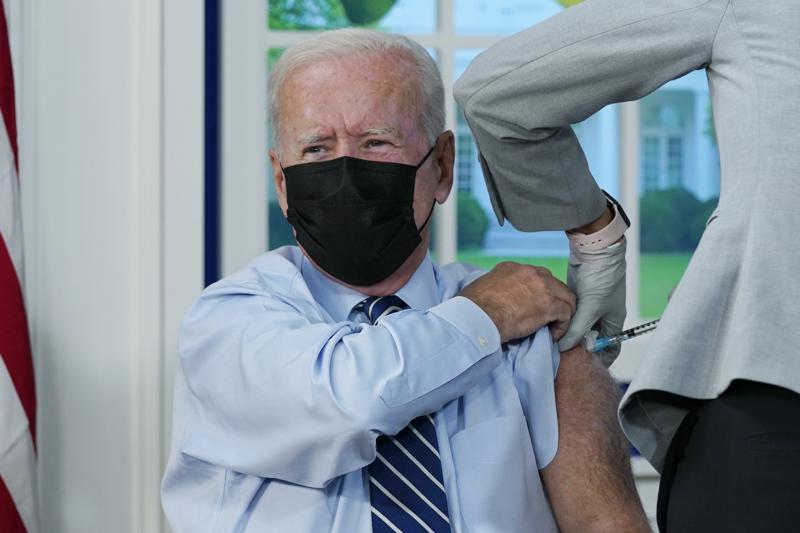
With just weeks remaining before federal workers must be vaccinated against COVID-19, the federal government on Monday outlined procedures for employees to request medical or religious exemptions from President Joe Biden’s mandate. The Office of Management and Budget released the new guidance Monday afternoon ahead of the Nov. 22 deadline for workers to be fully vaccinated, outlining specific medical conditions that would warrant an exemption. Under the guidelines, agencies are to direct workers to get their first shot within two weeks of an exemption request being denied or the resolution of a medical condition. They also make clear that federal agencies may deny medical or religious exemptions if they determine that no other safety protocol is adequate. The Biden administration is drawing on Centers for Disease Control and Prevention guidance to determine approved medical exemptions, including a history of allergic reaction to the vaccines. Other conditions, including being treated with monoclonal antibodies or having a history of multisystem inflammatory syndrome, warrant a 90-day delay in vaccination, in accordance with CDC advice. While the CDC recommends that women who are pregnant or are planning to become pregnant get vaccinated against COVID-19, the federal government will consider requests to delay vaccination while pregnant depending on the worker’s particular medical circumstances. Senior administration officials provided The Associated Press with a preview of the new guidance Monday before OMB posted it. Federal workers seeking exemptions will engage in what officials called an “interactive process” with their agencies, which will include being asked to provide documentation to support the exemption and potential accommodations. If an exemption request is rejected, workers will have two weeks to get a first shot or be subject to disciplinary proceedings in accordance with Biden’s order. Unvaccinated workers are required to wear masks and maintain social distancing and will have their ability to travel for work curtailed. New testing guidance for those who are granted exemptions is expected to be unveiled in the coming weeks. In some cases, agencies may deny even legitimate exemption requests if they determine “that no safety protocol other than vaccination is adequate” given the nature of the employee’s job. Under CDC guidelines, people are only considered fully vaccinated two weeks after their second dose of two-shot mRNA vaccines from Pfizer and Moderna or the one-dose Johnson & Johnson shot — meaning most federal workers have until Nov. 8, at the latest, to roll up their sleeves to comply with Biden’s order. According to the new federal guidance, neither past COVID-19 infection nor an antibody test can be substituted for vaccination. Meanwhile, private companies with more than 100 employees will be subject to a forthcoming rule from the Occupational Safety and Health Administration requiring all employees to be vaccinated or get tested weekly. Biden announced the regulation weeks ago, but the agency is still drafting the particulars. Republished with the permission of the Associated Press.
Joe Biden lifts abortion referral ban on family planning clinics
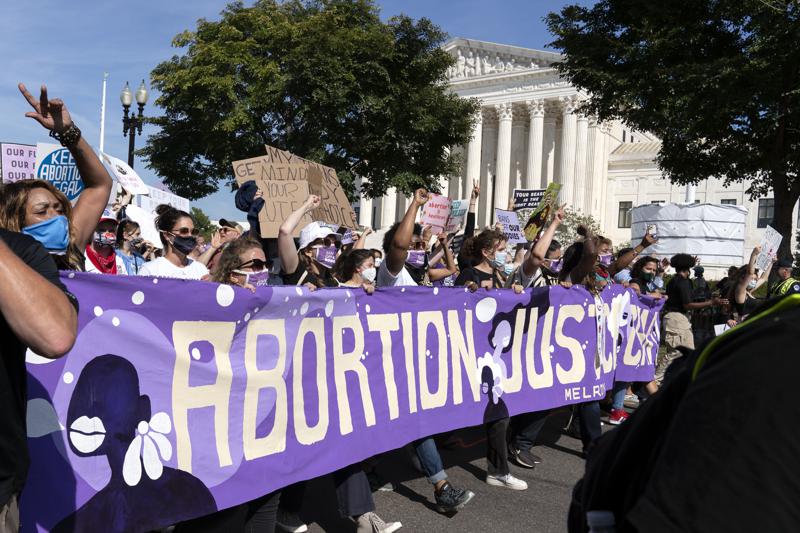
The Biden administration on Monday reversed a ban on abortion referrals by family planning clinics, lifting a Trump-era restriction as political and legal battles over abortion grow sharper from Texas to the U.S. Supreme Court. The Department of Health and Human Services said its new regulation will restore the federal family planning program to the way it ran under the Obama administration when clinics were able to refer women seeking abortions to a provider. The goal is to “strengthen and restore” services, said HHS Secretary Xavier Becerra. Groups representing the clinics said they hope the Biden administration action will lead some 1,300 local facilities that left in protest over Donald Trump’s policies to return, helping to stabilize a longstanding program shaken by the coronavirus pandemic on top of ideological battles. “I have heard that almost everywhere in the country people have made the decision that conditions will be good for them to return to the program,” Clare Coleman, president of the umbrella group National Family Planning & Reproductive Health Association, said in an interview. “My sense is that people have been waiting for the rule.” Planned Parenthood, the biggest service provider, said on Twitter its health centers look forward to returning. But the group criticized part of the Biden administration rule that allows individual clinicians who object to abortion not to provide referrals. The administration said that’s “in accordance with applicable federal law.” Known as Title X, the taxpayer-funded program makes available more than $250 million a year to clinics to provide birth control and basic health care services mainly to low-income women, many of them from minority communities. Under former President Donald Trump, clinics were barred from referring patients for abortions, prompting a mass exit by service providers affiliated with Planned Parenthood, as well as several states and other independent organizations. Women’s groups labeled the Trump policy a “gag rule,” and medical organizations called it a violation of the clinician-patient relationship. But religious and social conservatives praised the policy for imposing a strict separation between family planning services and abortion. Under federal law, clinics cannot use federal family planning money to pay for abortions. However, abortion opponents argue that birth control funding for organizations like Planned Parenthood, the leading provider of abortions, amounts to an indirect subsidy. On Monday, the National Right to Life Committee criticized the Biden administration for “supplementing the abortion industry through taxpayer funds.” Title X family planning clinics served about 3.9 million clients in 2018, but HHS estimates that number fell by nearly 40% after the Trump policy. The upheaval may have led to more than 180,000 unintended pregnancies, the agency said. In all, more than one-quarter of the clinics left the program. Although several states stepped up with their own no-strings-attached funding, women in some parts of the country still lost access. Combined with service disruptions due to COVID-19 shutdowns, “this has just been a massive one-two punch to the system,” said Coleman. Joe Biden campaigned on a promise to overturn the restrictions on family planning clinics, but abortion was not a central issue in the 2020 presidential race. It may become one in the 2022 midterm elections to determine who controls Congress. Restrictive state laws in Texas, Mississippi, and elsewhere have prompted a mobilization by abortion rights supporters, who fear a conservative-leaning Supreme Court will overturn the 1973 Roe v. Wade decision that legalized abortion nationally. Hundreds of abortion-themed protests were held around the country Saturday, including one that brought thousands of abortion rights supporters to the court’s steps. The Supreme Court has allowed the Texas law to take effect but has not ruled on the substantive legal questions behind that statute, which bans most abortions in the state. The justices will hear arguments on December 1 on the Mississippi law, which bans most abortions after 15 weeks of pregnancy. The court now tilts decidedly to the right after Trump appointed three conservative justices. Twelve states have passed laws that would ban abortion entirely if Roe is overturned. “Given the attacks on abortion in Texas and across the country, it’s more important than ever that patients can access their choice of birth control and other health care through Title X,” Planned Parenthood President Alexis McGill Johnson said in a statement. The new abortion referral policy for family planning clinics will take effect on November 8.
How violent crime rate in Alabama compares to other states

Violent crime — a broad category of offenses that includes rape, robbery, aggravated assault, and homicide — is on the rise in the United States. According to FBI data, there were a total of 1.3 million violent offenses reported in 2020, or 388 for every 100,000 people — a 5% increase from 2019. The uptick was led by a spike in homicide. The number of murders surged by nearly 30%, from 16,669 in 2019 to 21,570 in 2020, the largest year-over-year increase on record. The spike in murders came during a year of national turmoil marked by coronavirus lockdowns, mass protests against police misconduct, and a sharp rise in gun sales. These are the states buying the most guns. Despite the increase, the national violent crime rate remains well below the highs reported in the 1990s. Still, crime is ultimately a local phenomenon, and in some parts of the country, violence is much more common than in others. Alabama’s violent crime rate of 454 incidents for every 100,000 people is higher than that of most states. Though the majority of the 22,322 violent crimes committed in the state in 2020 — 75.7% — were aggravated assaults, Alabama’s murder rate was especially high. There were 471 murders in the state in 2020, or 9.6 for every 100,000 people, a higher murder rate than in all but six other states. In a break from the broader national trend, violence dipped substantially in Alabama in 2020. The overall violent crime rate in the state fell by 11.2% in 2020. All crime data used in this story is from the FBI and is for the year 2020. Samuel Stebbins, 24/7 Wall St. via The Center Square
Alabama bypasses bid process to move fast on prison builds
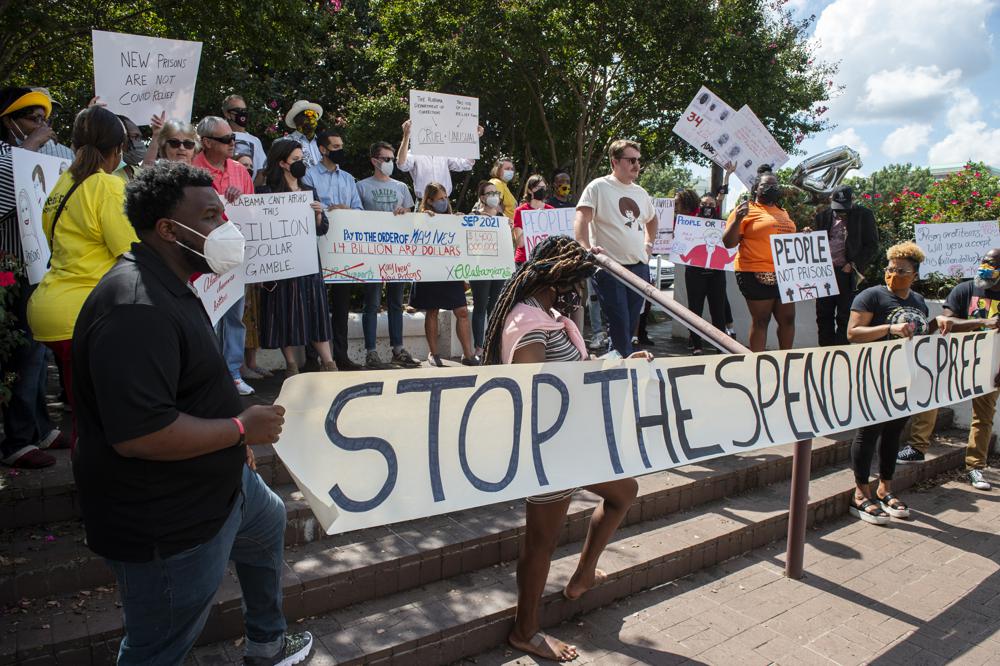
Alabama intends to move quickly on building new prisons under a plan that taps pandemic relief funds and could skip the normal bidding process for the construction of two supersize facilities. Alabama Gov. Kay Ivey Friday signed into law the $1.3 billion construction plan to build two 4,000-bed prisons and a new prison for women and renovate other facilities. The plan taps $400 million from the American Rescue Plan — money the state has already received — and could steer the construction contracts toward companies that previously qualified for the work. The construction bill signed into law bypasses the normal bidding process for the two 4,000-bed facilities. It specifies that the state instead can negotiate directly with entities that were part of development teams that qualified for the projects under a lease plan that Ivey’s administration had pursued but abandoned. Those entities include Birmingham-based construction giant BL Harbert International and Montgomery-based Caddell Construction. Caddell and BL are each expected to be the main contractors for one of the two prisons, Republican Sen. Greg Albritton said. Lawmakers said working with those companies will allow the state to incorporate the prior work, saving both time and money. “The main thing is time, and time is of the essence. This is going to enable us to start these projects 12 months in advance, and time is money,” said the bill’s sponsor, Republican Rep. Steve Clouse. House Speaker Mac McCutcheon, defending the selection language, said the companies previously went through a selection process under the lease plan. The law specifies that if the state doesn’t reach an agreement with one of those companies, officials will start over with a fresh selection process seeking bids on the work. Alabama officials will have the money to start construction after lawmakers approved $400 million in virus funds and another $150 million from the state’s general fund, in addition to agreeing to borrow $785 million through a bond issue. “We can start this construction now with the money we have on hand now … without having to wait to float bonds,” Albritton said. “I believe we’re going to see dirt flying in January.” The U.S. Department of Justice has sued Alabama over a prison system “riddled with prisoner-on-prisoner and guard-on-prisoner violence.” The Justice Department noted in an earlier report that dilapidated facilities were a contributing factor to the unconstitutional conditions but wrote “new facilities alone will not resolve” the matter because of problems in culture, management deficiencies, corruption, violence, and other problems. Dozens of advocacy groups objected to the prison construction plan. “We do not believe the issues facing Alabama’s prisons are about the buildings,” said Bryan Stevenson, executive director and founder of the Equal Justice Initiative. “We think it’s entirely about leadership, culture, and the practices,” Stevenson said. “I just think engaging in a costly effort around new prisons is not going to solve the problem and worse is distracting us from dealing with the prisons.” Republished with the permission of the Associated Press.
