
Mo Brooks takes a commanding lead in 2022 Senate race
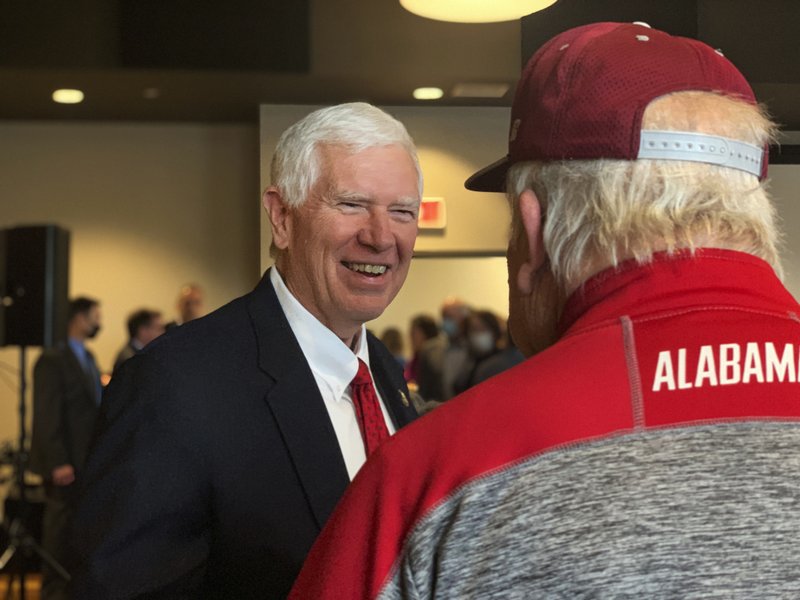
A new Club for Growth PAC poll of the Alabama Senate Republican Primary shows Mo Brooks has a 43 point lead over Katie Britt, Yellowhammer News reported. Other candidates, Jessica Taylor and Lynda Blanchard, came in tied at 5% each. Additionally, the poll showed 23% of voters were undecided. According to the poll, Mo Brooks has a significant name ID advantage. The poll also showed that Brooks’ lead expanded when voters were aware that Brooks is endorsed by Donald Trump. The WPA Intelligence poll was conducted on October 12-14 with a sample of 506 voters. “As more primary voters become aware that Donald Trump has endorsed Mo Brooks in the Senate primary, Brooks’ lead should expand substantially,” a release accompanying the poll’s release said. Once the voter knew Brooks was endorsed by Trump, the undecided group dropped to 9%, and Brooks took an even more commanding lead. According to their website, Club for Growth is a national network of over 500,000 pro-growth, limited government Americans who share in the belief that prosperity and opportunity come from economic freedom. Their three main goals include, reducing income tax rates and repealing the death tax, replacing the current tax code with a fair/flat tax, and repealing ObamaCare.
Mike Durant enters the ever-growing 2022 Senate race

Another candidate has joined the 2022 Senate race. Mike Durant has formally declared his candidacy to seek the Republican nomination for the U.S. Senate. Yellowhammer News first formally reported the news, which has been speculated by insiders for weeks. Durant, most famously known for his heroism during the 1993 “Black Hawk Down” incident, believes that the Biden Administration has failed. In a statement released today, he said, “The career politicians have ruined this country, and their leader Joe Biden is pushing us to the brink. Between ridiculous vaccine mandates, trillions in spending, and constant assaults on innocent life and the 2nd Amendment, it’s clear that we need to mobilize people from outside of politics to step forward and serve.” The Huntsville entrepreneur compared himself to Donald Trump, saying they are both ‘outsiders.’ “President Trump showed us what’s possible when outsiders step forward and take on the insiders and the politicians,” he commented. “I’ve spent my life either in service to my nation or focused on growing a successful business in Alabama. I’m not going to sit idly by while Joe Biden and the career politicians wreck the country I love. I’m signing up for one more tour of duty. I’m running for U.S. Senate.” Trump has been a centerpiece of this race, with his formal endorsement going to Congressman Mo Brooks, while his former appointee for Ambassador to his wife’s home country of Slovenia, Lynda Blanchard, touting her previous appointment by him. Blanchard is rumored to be eyeing switching to the governor’s race against incumbent Kay Ivey, though no formal announcement has yet been made. Katie Britt has been the subject of multiple negative statements by Trump all surrounding her time as the Chief of Staff for retiring Senator Richard Shelby. Britt has pointed out multiple times that she supported Donald Trump before Mo Brooks did. The Durant campaign released a video called “God Made a Soldier,” which tells the story of the candidate’s service and his inspiration to run for the U.S. Senate. On Facebook, Durant stated, “America doesn’t need another Career Politician – it needs a political outsider who’s ready to fight for conservative values. I’m a former Black Hawk pilot, a Pro-Trump conservative, a businessman, and a father. I’m running for United States Senate to protect Alabama and the rest of our nation from the threat of radical progressives. Will you join my fight?”
Alabama medical cannabis license dates to stay the same

An Alabama regulatory commission has plenty to do before people can apply for medical cannabis licenses, so it won’t push for a date that might allow sales next year, a commission official said. The Alabama Medical Cannabis Commission had said earlier that it might ask for the date to be moved up. It decided last week not to do so, the Montgomery Advertiser quoted commission Vice Chairman Rex Vaughn as saying. Before people can apply, the commission has to establish rules and train physicians, Vaughn noted. It also must create a central database to register patients by next September. Registration cards will cost up to $65 a year. Since would-be growers and distributors cannot apply for licenses before Sept. 1, 2022, the substance probably won’t be available before 2023, supporters of medical marijuana have said. But Vaughn noted that the legislature would have to change the date, and he said asking it to do so could open the way for those who want to weaken the law. “We could lose what we’ve got,” he said. The legislature approved the medical cannabis bill in May after hot debate in the House, which had blocked earlier bills. The commission must decide license applications within 60 days. “If you start looking at the timelines for what it’s going to take to get rules and regulations approved, and the growth cycle and the 60 days that people have to get in business after they get the license, it starts adding up,” John McMillian, the commission’s executive director, said after the commission’s meeting last week. Sen. Tim Melson, a Florence Republican and sponsor of a bill to move up the date, said he supported the commission’s decision because he is in favor of a program implemented in a “thoughtful and correct” manner. Once available, doctors will be able to prescribe cannabis for at least 16 conditions including cancer, post-traumatic stress disorder, and chronic pain. Cannabis would be available as tablets, capsules, gummies, lozenges, topical oils, suppositories, patches, and in nebulizers or oil to be vaporized. The law forbids smoking or vaping medical cannabis or baking it into food. The law also forbids the recreational use of marijuana. Republished with the permission of the Associated Press.
Judge denies request to block lethal injection in Alabama
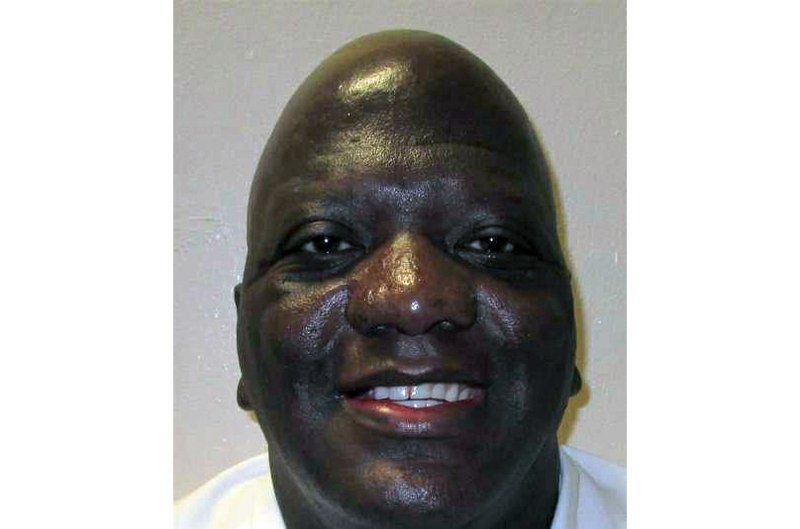
A federal judge has declined to block Thursday’s scheduled execution of an Alabama inmate convicted of the 1991 kidnap and murder of a woman abducted outside an automatic teller machine. U.S. Chief District Judge Emily Marks on Sunday denied a request for a preliminary injunction sought by lawyers for Willie B. Smith III. Smith is scheduled to receive a lethal injection on Thursday at a south Alabama prison. His lawyers argued that Smith, whose IQ has been measured in the 70s, should have been given help to understand prison paperwork related to the selection of an execution method. Marks was directed Friday by the 11th Circuit U.S. Court of Appeals to consider the injunction request. Marks denied the injunction request Sunday after ruling that Smith was not likely to prevail in the lawsuit brought under the Americans with Disabilities Act. Court records indicate his attorneys are appealing. Smith was convicted of the abduction and slaying of Sharma Ruth Johnson, 22. Prosecutors said Smith abducted Johnson at gunpoint from an ATM in Birmingham, stole $80 from her, and then took her to a cemetery where he shot her in the back of the head. Lethal injection is the main execution method used in Alabama. But after lawmakers authorized nitrogen hypoxia as an execution method in 2018, the new law gave death row inmates a 30-day window to select nitrogen hypoxia as their execution method. Smith did not turn in the form selecting nitrogen. That laid the groundwork for the state to carry out plans for his execution by lethal injection on Thursday. The state has not developed a system for executing inmates by nitrogen. Republished with the permission of the Associated Press.
College towns plan to challenge results of 2020 census

Some college towns plan to challenge the results of the 2020 census, claiming they were shortchanged because the pandemic forced students to leave campuses and complaining that the undercount could cost them federal money and prestige. College communities such as Bloomington, Indiana; Tuscaloosa, Alabama; and State College, Pennsylvania, are exploring their options for contesting the population counts, which they say do not accurately reflect how many people live there. When the pandemic struck the U.S. around spring break of 2020, it set off an exodus in college towns as classrooms went virtual almost overnight. The sudden departure of tens of thousands of students made it difficult to count them in the census, which began at almost the same time. Because universities were able to provide the Census Bureau with records for students living in dorms and other on-campus housing, off-campus students “ran the risk of being missed,” said Dudley Poston, a sociology professor at Texas A&M University. An Associated Press review of 75 metro areas with the largest share of residents between 20 and 24 showed that the census results fell well below population estimates in some cases but also exceeded them significantly in others. Officials in college towns are not sure why there was such variation, and they are reviewing whether it was due to the timing of spring breaks, outreach efforts, or the percentage of students living on campus versus off. Another variable is whether schools cooperated when the Census Bureau asked for records on off-campus students. Only about half of schools did so since many had privacy concerns or did not have the requested information. “You can kind of go crazy thinking about the variations,” said Douglas Shontz, a spokesman for the Borough of State College, home of Penn State University, where officials believe the census missed 4,000 to 5,800 residents. The AP review showed that the population counts were below estimates by about 5% to 7% in Mount Pleasant, Michigan; Greenville, North Carolina; and Bloomington, Indiana, metro areas, which are home to Central Michigan University, East Carolina University, and Indiana University, respectively. The 2020 census put the city of Bloomington at 79,168 residents, a decline from about 80,405 in 2010. City officials expected a 2020 count of 85,000 to 90,000 residents. The nation’s headcount was just beginning in March 2020 when schools, including Indiana University, told students not to return to campus in response to the spread of the coronavirus. Most of the university’s 48,000 students were on spring break. “It’s just not a credible number,” Bloomington Mayor John Hamilton said. “The simplest explanation is that the count was done after the university told students, ‘Don’t return to Bloomington and go back to your parents’ homes.′ I’m not blaming anybody. The university did the right thing to protect its students.” Counting university students has always been a difficult task, even before the pandemic. The Census Bureau’s rule of thumb was that students should be counted at their college addresses, even if the coronavirus temporarily sent them elsewhere on the April 1 date that provides a benchmark for the census. In State College, home to Penn State’s 39,000 students, the bureau’s message prior to the pandemic was that people should be counted “where they sleep most of the time,” which was confusing to students after they went home. As a result, neighborhoods dominated by students had the lowest census response rates in the borough, said State College Borough Manager Tom Fountaine in a memo to city officials. In Greenville, North Carolina, home to East Carolina University’s 29,000 students, the census figure fell more than 6% below estimates, and Mayor P.J. Connelly worries that could affect the city’s ability to get funding for its bus system and low-income housing. Connelly plans to challenge his city’s count of 87,521 residents. “We believe there were some miscalculations based off the college students,” Connelly said. Some metro areas, such as Tuscaloosa, Alabama, and Huntsville, Texas, had census counts that were 6% above their estimates, according to the AP review. The cities are respectively home to the University of Alabama and Sam Houston State University. Even so, Tuscaloosa Mayor Walt Maddox believes thousands of off-campus students were overlooked, and the city plans to challenge the numbers. The 2020 count put the city 400 people shy of 100,000 residents, which could cost it access to certain federal funding that is available only to cities with 100,000 residents or more. “In terms of economic development, the perception of being above 100,000 has a greater psychological impact in your recruiting and development,” Maddox said. Auburn, Alabama, home to Auburn University, had census numbers well above estimates, but city officials believe the strong count was just a correction for an undercount in 2010, city spokesman David Dorton said. Cities, states, and tribal nations can start contesting their numbers in January through the bureau’s Count Question Resolution program, but it looks only at number-crunching errors, such as an overlooked housing unit or incorrect boundaries. The program only revises figures used for population estimates over the next decade that help determine federal funding. The Census Bureau won’t revise the numbers used for determining how many congressional seats each state gets nor the redistricting data used for drawing congressional and legislative districts. “While we are anticipating more cases because of the many challenges the 2020 census went through, the scope is going to be limited, and the data products are going to be limited,” Census Bureau official Matthew Frates told Texas demographers and economists during a presentation last summer. There have been victories in the past, such as the city of Houston’s effort to get its population count revised from 2.09 million to 2.1 million residents after the 2010 census. The change triggered the addition of two city council seats. “It’s going to be an uphill battle, but it’s worth a try,” said Shontz in State College. Republished with the permission of the Associated Press.
Katie Britt dominates fundraising in Alabama Senate race
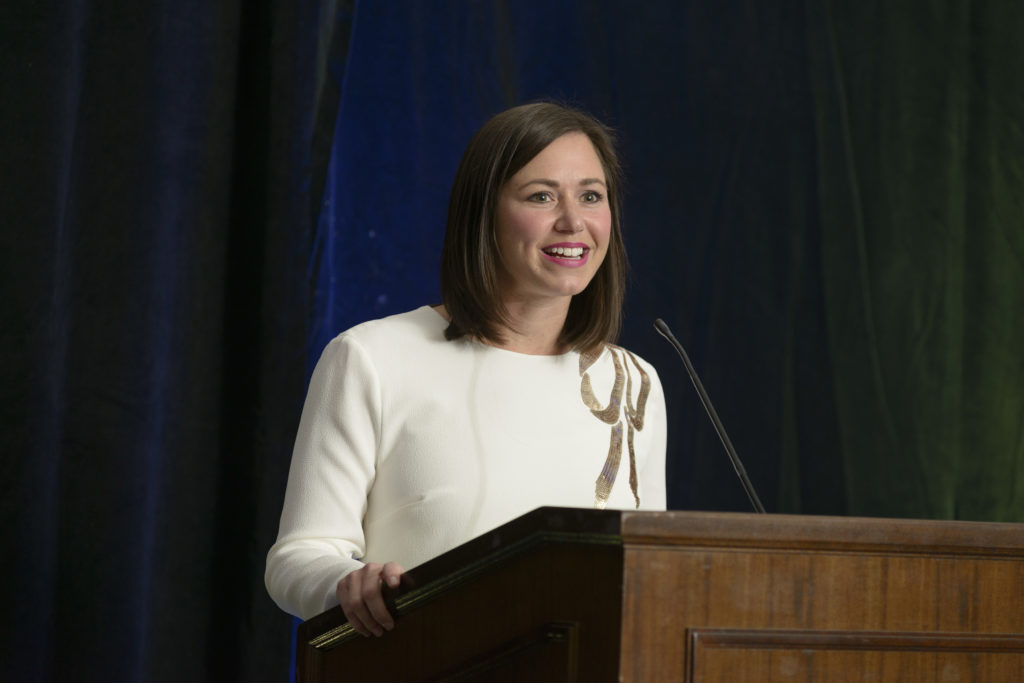
Katie Boyd Britt has piled up a significant cash advantage over Donald Trump-backed Rep. Mo Brooks and other candidates in the Alabama race for U.S. Senate. Britt, the former chief of staff to retiring Sen. Richard Shelby, is seeking to fill his seat in the 2022 election. Britt stepped down as head of the Business Council of Alabama to run for Senate and has so far dominated fundraising ahead of the June Republican primary. Britt has raised a total of $3.76 million for her campaign, including $1.5 million in the last quarter, according to reports filed with the Federal Election Commission. She has a $3.3 million campaign balance. Shelby, one of the Senate’s most senior members, announced earlier this year that he would not seek reelection in 2022, igniting what is expected to be a messy GOP primary in the red-leaning state. Shelby has called Britt the “best-qualified candidate to come along in a long time” but has not played any public role in her campaign. Brooks comes to the Republican primary armed with an endorsement from former President Donald Trump. Brooks has raised a total of $1.79 million for his campaign, including $663,074 in the last fundraising quarter. He entered the race with $1 million left from his last House of Representatives race and has $1.8 million on hand. Lynda Blanchard, a businesswoman who was Trump’s ambassador to Slovenia, has the most cash in the race, after taking out $5 million in loans earlier in the campaign season. Businesswoman Jessica Taylor reported raising $150,848. The other candidates in the race have raised nominal amounts. Republished with the permission of the Associated Press.
