
Alabama Senators fight against additional IRS surveillance
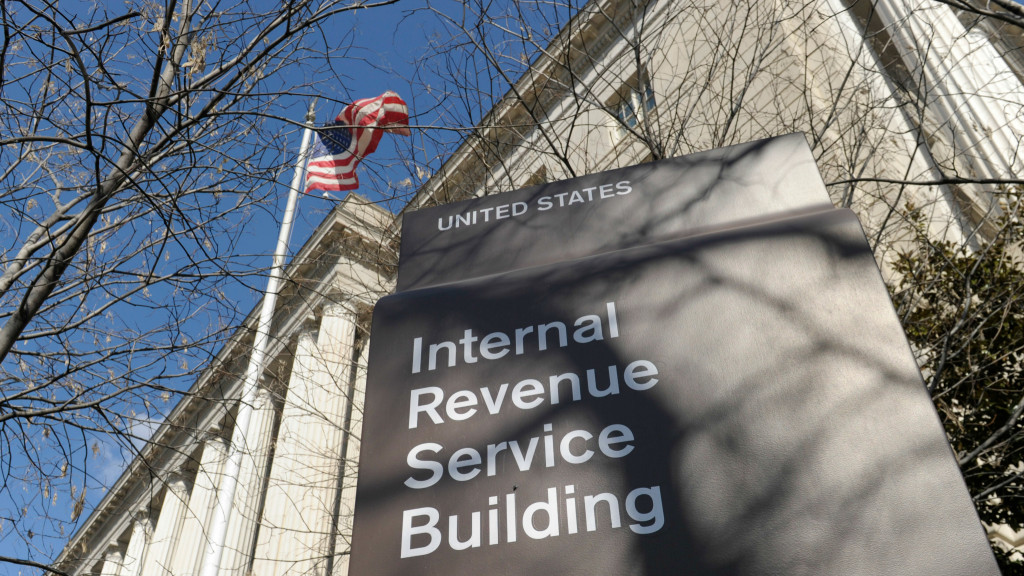
Sen. Richard Shelby and Senator Tommy Tuberville joined their Republican colleagues to introduce a second bill that aims to prevent the Internal Revenue Service (IRS) from getting access to American’s banking transaction information. Senator Tommy Tuberville introduced the first bill addressing the problem Protecting Financial Privacy Act; leading the charge in Congress as the first Member to sound the alarm about Democrats’ latest example of big brother government overreach at the expense of American’s financial privacy. A Tuberville spokesman pointed out that, “Since then, Democrats have been on the run as negative media coverage and outrage from everyday Americans dominate headlines. Senator Tuberville is glad to see his Republican colleagues in both the House and the Senate join efforts to block this expansion of the role of the IRS and looks forward to working with all involved to fight this radical policy.” Shelby, the former chairman of the Senate Banking Committee, supports the Prohibiting IRS Financial Surveillance Act, saying that the language of the current pending legislation pushed by democrats goes too far-reaching. The bill would block President Joe Biden’s proposal for financial institutions to report all transactions of $600 or greater to the IRS. Current regulations require financial institutions to report all cash transactions of $10,000 or more. Senator Shelby stated, “The Biden administration’s misguided plan to let the IRS monitor law-abiding citizens’ private financial information is dangerous and invasive, and will have far-reaching, adverse consequences. This should concern all Americans who value their privacy. I am proud to join many of my conservative colleagues in the fight to keep this deeply-flawed proposal from becoming law.” The sponsor of the bill second bill, Tim Scott believes Americans should be concerned about this surveillance plan. Scott stated, “The Democrats’ plan to allow the IRS to spy on the bank accounts of nearly every person in this country, even those below the poverty line, should be deeply concerning to anyone who values privacy and economic inclusion. Of the more than 7 million American households that are currently unbanked, the majority are low-income, rural, and minority Americans. Implementing the Biden reporting scheme will disproportionately harm those who need greater access to our financial institutions and people living paycheck to paycheck. My colleagues and I will not stop fighting the Democrats’ wrong-headed proposal to implement more federal government intrusion into our lives.” “Every American should be wary of giving the IRS more power and more tentacles into private financial transactions,” said Sen. Scott Crapo, ranking member of the Senate Finance Committee. “The IRS bank reporting proposal is one of the biggest expansions of the agency’s authority we’ve ever seen and is fundamentally flawed. I’m proud to support Senator Scott’s legislation to stop this proposal in its tracks and protect Americans’ personal, private financial information.” Sen. Tommy Tuberville also spoke out against giving the IRS more power, arguing that he believes most Americans disagree with . “I am sorry to see that my Democratic colleagues oppose protecting the financial privacy of American taxpayers. That’s a real shame. I think you would be hard-pressed to find a Member of the United States Senate who can honestly say that a majority of their constituents support President Biden’s proposal for the IRS to monitor a $600 or more transaction,” Tuberville stated. “We ought to be able to stand up together in a bipartisan fashion to reject this radical proposal. I’m confident that the American people will continue to put pressure on their elected representatives here in Washington to reject this plan.”
Terri Sewell votes to hold Steve Bannon in contempt of Congress

Rep. Terri Sewell voted to hold Steve Bannon in contempt of Congress for failing to comply with a congressional subpoena. The subpoena, which the Select Committee issued to Investigate the January 6th Attack on the United States Capitol, required Bannon to produce both documents and testimony relevant to the attack. The House found Bannon in contempt of Congress in a bipartisan 229 to 202 vote. On September 23rd, Chairman Thompson signed and transmitted a subpoena to Bannon, ordering the production of documents on October 7th and requiring his presence for deposition testimony on October 14th. Bannon failed to produce the documents on October 7th and failed to show up for the deposition on October 14th. “We need to make it clear that no person is above the law; we need to take a stand for the committee’s investigation and for the integrity of this body,” said the committee chair, Bennie Thompson. “Steve Bannon appears to have played a multi-faceted role in the events of the January 6th attack. The American people are entitled to hear his testimony,” stated Sewell in a press release. “His refusal to comply with a congressional subpoena is completely unacceptable and demonstrates that he believes he is above the law.” Sewell continued, “Today’s vote shows that the United States House of Representatives will not be intimidated or deterred. We have a responsibility to get to the bottom of this horrific attack in order to prevent future threats to our democracy, and that is exactly what we will do.” On Twitter, Sewell commented, “Steve Bannon is not above the law. The U.S. House of Representatives will not be intimidated or deterred. We have a responsibility to get to the bottom of the horrific Jan. 6th attack in order to prevent future threats to our democracy, and that is exactly what we will do.” The Justice Department will now decide what happens to Bannon. Attorney General Merrick Garland has not said whether he will move forward with charges. “We’ll apply the facts in the law and make a decision, consistent with the principles of prosecution,” he told the House Judiciary Committee during an oversight hearing on Thursday.
White House, Dems hurriedly reworking $2 trillion Joe Biden plan
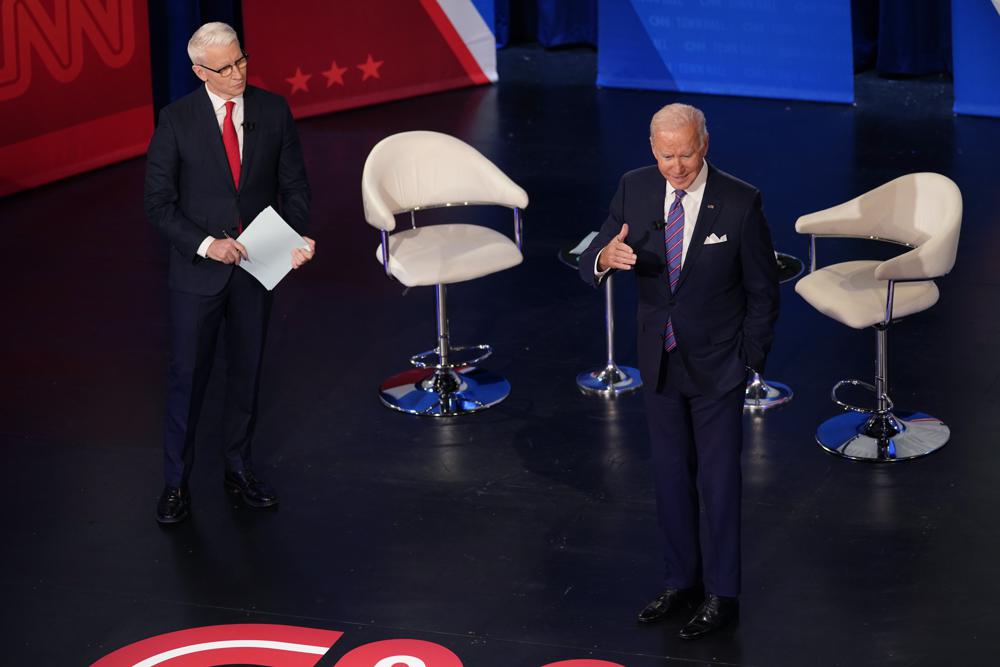
The White House and Democrats are hurriedly reworking key aspects of President Joe Biden’s $2 trillion domestic policy plan, trimming the social services and climate change programs and rethinking new taxes on corporations and the wealthy to pay for a scaled-back package. The changes come as Biden more forcefully appeals to the American public, including in a televised town hall Thursday, for what he says are the middle-class values at the heart of his proposal. Biden mentioned during the evening event the challenge he faces in wrangling the sharply divergent factions in the Democratic party to agree to the final contours of the bill. With an evenly divided Senate, he can’t afford to lose a single vote, and he is navigating the competing demands of progressives, who want major investments in social services, and centrists, who want to see the price tag on the package come down. “When you’re president of the United States, you have 50 Democrats — every one is a president. Every single one. So you gotta work things out,” he said during a CNN town hall. Still, he expressed optimism about the process, saying “I think so” when asked if Democrats were close to a deal. “It’s all about compromise. Compromise has become a dirty word, but bipartisanship and compromise still has to be possible,” he said. Biden later said the discussions are “down to four or five issues.” On one issue — the taxes to pay for the package — the White House idea seemed to be making headway with a new strategy of abandoning plans for reversing Trump-era tax cuts in favor of an approach that would involve taxing the investment incomes of billionaires to help finance the deal. Biden has faced resistance from key holdouts, in particular Sen. Kyrsten Sinema, D-Ariz., who has not been on board with her party’s plan to undo President Donald Trump’s tax breaks for big corporations or individuals earning more than $400,000 a year. The president was unusually forthcoming Thursday night about the sticking points in the negotiations with Sinema and another key Democrat, conservative Sen. Joe Manchin of West Virginia. While the president said Sinema “will not raise a single penny in taxes” on the wealthy or corporations, a White House official later clarified that the president was referring to raising the top tax rates, not the range of tax proposals, “which Senator Sinema supports.” Biden said Manchin doesn’t want to “rush” the transition to clean energy so quickly it will result in major job losses in his coal-producing state. Even as he seemed encouraged by progress, Biden acknowledged major reductions to his original vision. He signaled the final plan would no longer provide free community college but said he hoped to increase Pell Grants to compensate for the loss of the policy. “It’s not going to get us the whole thing, but it is a start,” he said. He also said that what had been envisioned as a federally paid, months-long family leave program would be just four weeks. As long-sought programs are adjusted or eliminated, Democratic leaders are working to swiftly wrap up talks, possibly in the days ahead. Talks between the White House and Democratic lawmakers are focused on reducing what had been a $3.5 trillion package to about $2 trillion in what would be an unprecedented federal effort to expand social services for millions and address the rising threat of climate change. “We have a goal. We have a timetable. We have milestones, and we’ve met them all,” said House Speaker Nancy Pelosi, D-Calif., who predicted Thursday, “It will pass soon.” An abrupt change, of course, came late Wednesday when the White House floated new ways to pay for parts of the proposal. Biden himself signaled flexibility on the tax provisions of the bill, as long as it’s paid for and it doesn’t increase taxes on those earning $400,000 or less. “I’m willing to make sure that we pay for everything,” he said when pressed on what tax proposal he’d support. The newly proposed tax provisions, though, are likely to sour progressives and even some moderate Democrats who have long campaigned on scrapping the Republican-backed 2017 tax cuts that many believe unduly reward the wealthy and cost the government untold sums in lost revenue at a time of gaping income inequality. Many are furious that perhaps a lone senator could stymie that goal. The chairman of the tax-writing Ways & Means Committee, Rep. Richard Neal, D-Mass., said he spoke for more than 30 minutes with the centrist Arizona senator, whose closely held views are a mystery to her colleagues. “I said, Kyrsten, you and I both know this has got to pass. She said: ‘I couldn’t agree more,’” Neal told reporters at the Capitol. Sinema’s office did not respond to a request for comment. Under existing law passed in 2017, the corporate tax rate is 21%. Democrats had proposed raising it to 26.5% for companies earning more than $5 million a year. The top individual income tax rate would go from 37% to 39.6% for those earning more than $400,000, or $450,000 for married couples. Under the changes being floated, the corporate rate would not change. But the revisions would not be all positive for big companies and the wealthy. The White House is reviving the idea of a minimum corporate tax rate, similar to the 15% rate Biden had proposed this year. That’s even for companies that say they had no taxable income — a frequent target of Biden, who complains they pay “zero” in taxes. The new tax on the wealthiest individuals would be modeled on legislation from Sen. Ron Wyden, D-Ore., chairman of the Senate Finance Committee. He has proposed taxing stock gains of people with more than $1 billion in assets — fewer than 1,000 Americans. Other tax options are also being considered, and Democrats are almost certain to include a provision to beef up the Internal Revenue Service to go after tax dodgers. Biden and his party are trying to shore up middle-class households, tackle climate
Mike Hubbard defense reiterates apology by former Alabama speaker

A former Alabama House speaker imprisoned for felony ethics convictions really is sorry for what he did and is not a danger to society, defense lawyers said in urging a judge to disregard prosecutors’ objections to an early release. Attorneys for one-time Republican leader Mike Hubbard told a court in legal arguments filed Wednesday that the state attorney general’s office was wrong to discount a letter Hubbard wrote last month apologizing for his actions and asking a judge for leniency. Prosecutors’ “veiled portrayal of (Hubbard’s) apology as crocodile tears or anything other than completely honest is conclusory, speculative, and simply erroneous,” the defense told Lee County Circuit Judge Jacob Walker. While the state compared Hubbard to an arsonist seeking forgiveness after a fire, they said, an arsonist is a danger to society and the 59-year-old Hubbard is not, they argued. Hubbard has served more than a year of a 28-month prison sentence after losing appeals that challenged his 2016 conviction for violating the state ethics law, including using his public office for personal financial gain. Prosecutors accused Hubbard of leveraging the Speaker’s office to obtain clients and investments for his businesses. Hubbard argued that contracts were legitimate work and unrelated to his position as House speaker, a post he held for nearly six years. Hubbard’s time in prison “has obviously given him the opportunity to reflect not only on his actions, but also on the broader implications that his convictions have had on his former constituents and the entire political system,” the defense said. Hubbard, who represented an east Alabama district in the Legislature, was automatically removed from office because of the conviction. He played a key role in engineering the Republican Party’s takeover of the Alabama Legislature in 2010. Barring an early release, Hubbard is scheduled to be released from prison in January 2023, records show. Republished with the permission of the Associated Press.
Bid to unionize Amazon workers in New York nears milestone
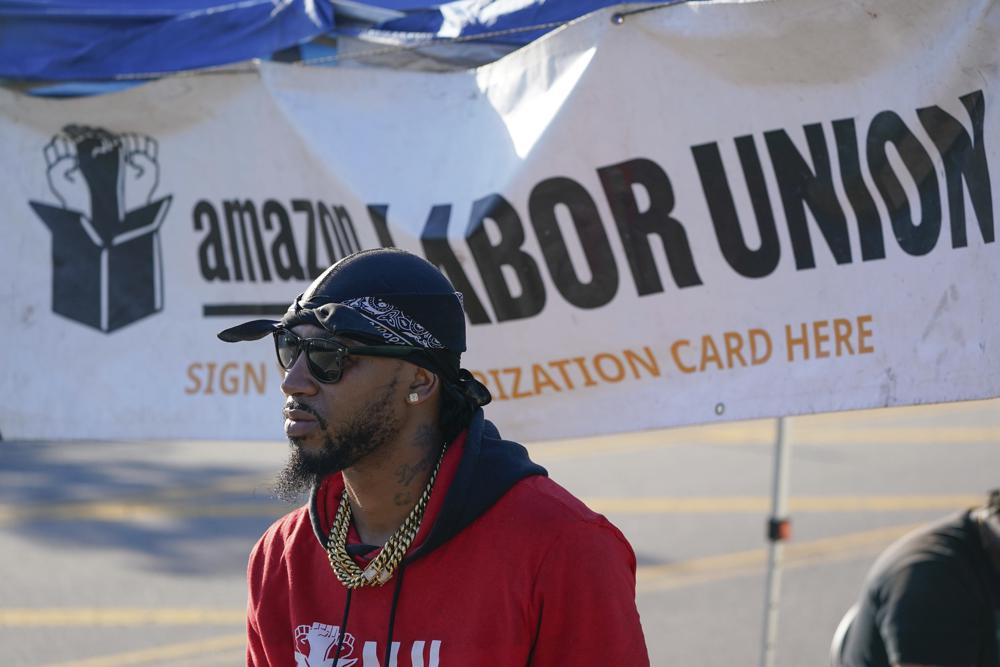
A bid to unionize Amazon workers at a distribution center in New York City neared an important milestone, as organizers prepared to deliver hundreds of signatures to the National Labor Relations Board as soon as Monday for authorization to hold a vote. Organizers say they have collected signatures from more than 2,000 employees at four Amazon facilities in Staten Island. The bid to establish the Amazon Labor Union in New York City is the second attempt in the past year to form a union at the nation’s largest online retailer. In April, workers at an Alabama facility overwhelmingly rejected forming a union in an effort led by the Retail, Wholesale and Department Store Union. The union drive in New York City is working without the help of a national sponsor and is being led by a former Amazon employee, Christian Smalls, who said he was fired just hours after he organized a walkout to protest working conditions last year at the outset of the pandemic. Organizers need to collect signatures from at least 30% of the workers — about 7,000 in four Staten Island warehouses — who would be covered by the resulting collective bargaining agreement. “We’ll have it by Monday. I’m going out there today, going out there tomorrow, the next day — until we get it,” said Smalls, who was elected Sunday as the nascent union’s president. Amazon spokesperson Kelly Nantel said the company’s employees have a choice of whether or not to join a union but “we don’t think unions are the best answer for our employees.” “Every day we empower people to find ways to improve their jobs, and when they do that we want to make those changes — quickly,” Nantel said. “That type of continuous improvement is harder to do quickly and nimbly with unions in the middle.” The union efforts in Staten Island come as Amazon is on a hiring binge. It announced in September it wants to hire 125,000 delivery and warehouse workers and is paying new recruits an average of $18 an hour in a tight job market. That’s in addition to the 150,000 seasonal workers it plans to bring on this season. The organizing drive is also happening during a moment of reckoning across Corporate America as the pandemic and ensuing labor shortage has given employees more leverage to fight for better working conditions and pay. Workers have staged strikes at Kellogg’s U.S. cereal plants as well as at Deere & Co., Frito-Lay, and Nabisco facilities nationwide. “Worker discontent goes far beyond Amazon,” said Kent Wong, the director of the UCLA Labor Center. ”Workers are feeling the pinch. They are feeling tremendous economic insecurity and they know that corporate leaders at Amazon are making record profits. There is a lot of discontent that may fuel support for this campaign.” Workers at other Amazon facilities are closely watching developments in New York City. Smalls said he’s been in discussions with other potential union organizers in about a dozen Amazon locations. Amazon employees have complained about long work hours, insufficient breaks, and safety, with Smalls and others likening working conditions to modern-day sweatshops. The employee turnover rate has also been a cause of concern. “That’s been our focus — creating a better working environment for Amazon employees,” said Derrick Palmer, another union organizer who has worked with Amazon for the past six years. “They’re working 10 to 12 hours a day and on their feet for 10 hours.” If the NLRB approves the signatures in Staten Island, it would mark the second unionization vote at an Amazon warehouse in less than a year. The first election, in Bessemer, Alabama, garnered nationwide attention and put a spotlight on how Amazon treats its workers. It was the biggest union push in Amazon’s 27-year history and only the second time that an organizing effort from within the company had come to a vote. However, there could be a do-over vote in Alabama. A hearing officer for the NLRB found in August that Amazon potentially interfered with the election. And the RWDSU is now waiting for a decision from an NLRB regional director to see whether the hearing officer’s guidance will be sanctioned. But even with a second election, labor experts say a union victory is a long shot. The unionizing effort in Staten Island differs from the one in Alabama in part because of who is leading the charge — and where. Wong noted that organizers in Staten Island face a less hostile union environment than Alabama — a right-to-work state that allows employees to decline union membership and not pay union dues. Moreover, there may be more sympathy and better response to the independent worker-run campaign that Smalls is spearheading versus the one led by the RWDSU. “There is a certain David and Goliath quality to this campaign,” Wong said. At the same time, there are downsides to going at it alone versus teaming up with a national retail labor union. “They don’t have the same staff and resources, and that makes it challenging,” Wong said of the Staten Island effort. “This is an uphill battle.” Already there is some friction starting to surface between the RWDSU and the independent effort in Staten Island. Smalls has been openly critical of national retail unions, calling them “a third party.” Stuart Applebaum, president of the RWDSU, said he takes issue with that. “Unions are not third parties, and if you listen to Chris Smalls’ logic, it calls for the elimination of all organized labor in the United States, and that is just a mistake,” Applebaum said, adding, “Amazon is such an extraordinary force with inconceivable power and wealth. You need to have an organized effort with sufficient resources.” Smalls counters: “Amazon’s been here 27 years now — if established unions were so great at organizing, wouldn’t they have done it already?” “We’re trying something different,” Smalls went on to say. “And that’s the problem that I have with everybody who expect us to just join forces with these established unions. Why can’t we lead the
Alabama man faces 2nd execution date this year for killing
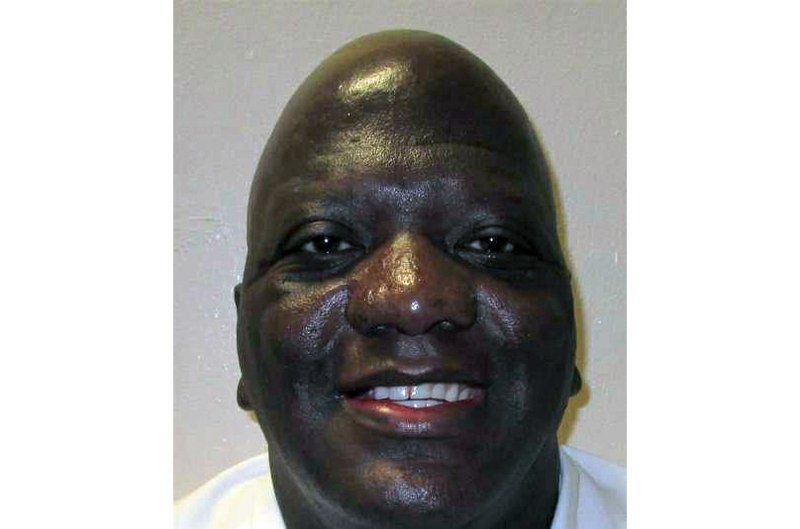
An Alabama man who avoided execution in February was scheduled to be put to death Thursday for the 1991 killing of a woman taken at gunpoint from an ATM location and shot in a cemetery. Willie B. Smith III, 52, was scheduled to receive a lethal injection at a southwest Alabama prison for his conviction in the kidnapping and murder of 22-year-old Sharma Ruth Johnson. The state prepared to carry out the execution Thursday evening after the U.S. Supreme Court denied a request to halt the plan. Prosecutors said Smith had a shotgun when he abducted Johnson in October 1991 from an ATM location in Birmingham. He withdrew money using her bank card and then took her to a cemetery and shot her in the back of the head. Johnson was the sister of a Birmingham police officer. This is Smith’s second execution date this year. Last Feb. 11 — while Smith was in a holding cell near Alabama’s death chamber — the state called off a lethal injection when the U.S. Supreme Court upheld an injunction affirming he could not be executed unless allowed to have his pastor by his side. The Alabama prison system has now said Smith will be able to have his pastor with him Thursday in the death chamber. Smith’s lawyers had argued he has an intellectual disability that prevented him from understanding the prison paperwork related to selection of an execution method. They asked justices to stop the lethal injection. Experts have estimated Smith’s IQ from 64 on the low end and 75 on the high end, but courts have ruled he is eligible for the death penalty. A defense expert in a post-trial appeal said while Smith’s IQ was measured at 64, his language, reading, and mathematics skills, and that these particular results were inconsistent with a diagnosis of intellectual disability. The Supreme Court ruled in 2002 that executing intellectually disabled people is unconstitutional. In reviewing Smith’s case in 2019, the 11th U.S. Circuit Court of Appeals ruled that a later Supreme Court decision that “states may not weigh a defendant’s adaptive strengths against his adaptive deficits” in determining disability did not retroactively apply to Smith. Last-minute court filings centered on whether Smith should have been given assistance to understand the form distributed to death row inmates in 2018 regarding the selection of an execution method. After adopting nitrogen hypoxia as an execution method, state law gave inmates a 30-day window to request that as their preferred execution method. If Smith had requested nitrogen hypoxia, his death sentence could not be carried out to date because the state has not yet developed a system for using nitrogen to execute inmates. Smith’s attorneys had unsuccessfuly asked the Supreme Court to stay the execution by lethal injection until a trial could be held in his ongoing lawsuit arguing that the Americans with Disabilities Act required him to have assistance in understanding the form. While the 11th Circuit denied the stay request, one member of the three-judge panel sharply criticized Alabama. Circuit Judge Jill Pryor wrote in a concurring opinion the state has acknowledged Smith has “significantly subaverage intellectual functioning” and that Smith said he received no explanation of the form related to execution method selection. “It disturbs me that ADOC, which took on the responsibility to inform prisoners about their right to elect death by nitrogen hypoxia within 30 days, did so in such a feckless way,” Pryor wrote. The state of Alabama argued that Smith had access to his lawyers for help in requesting nitrogen. The Department of Corrections changed some procedures in the face of the COVID-19 pandemic. The prison system limited media witnesses to the execution to one journalist, a representative from The Associated Press. Republished with the permission of the Associated Press.
