
Governor awards $4.8 million in grants for innovation and research in Alabama
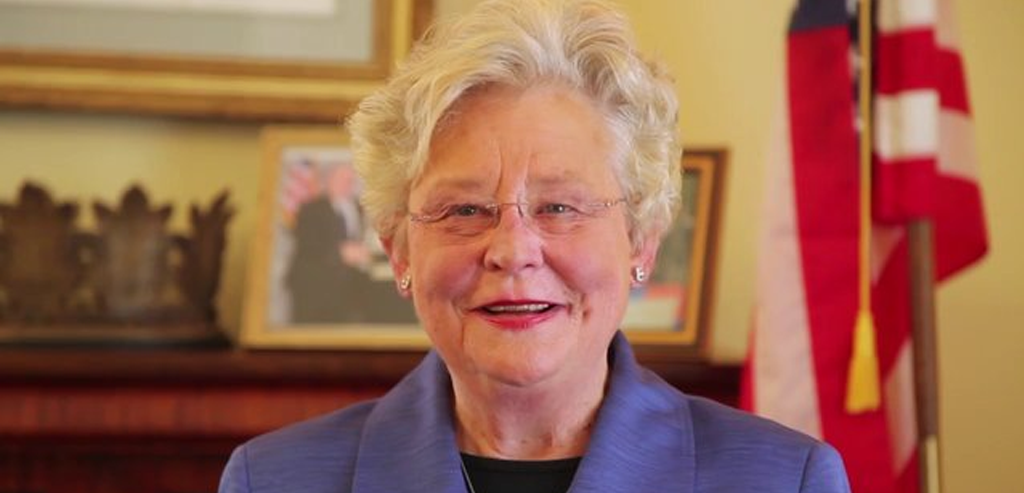
The Alabama Department of Economic and Community Affairs (ADECA) announced that Gov. Kay Ivey has awarded $4.85 million in funding to continue innovative research for ways to improve the lives of Alabamans. The grants were awarded to five Alabama universities and a research institution. The funding comes from the Alabama Research and Development Enhancement Fund, a state-funded program created in 2019 under the Alabama Innovation Act. Gov. Ivey commended the investment, hoping the innovations would improve the state of Alabama. “Our universities and research institutions in Alabama truly impact the world, and I am proud to continue investing in the important work they are doing,” Gov. Ivey said. “This $4.85 million is an investment in the future of Alabama and the future of research.” ADECA administers the grants and funds a wide range of programs that support law enforcement, victim programs, economic development, water resource management, energy conservation, and recreation. ADECA Director Kenneth Boswell applauded the funding and Ivey’s commitment to funding. “ADECA joins with Gov. Ivey in encouraging research and innovation in Alabama’s universities and research centers,” Boswell stated. “Often, what comes out of the research labs and fields has far-reaching and life-changing effects. We look forward to seeing the fruits of these research projects in the future.” The awarded grants are: The University of Alabama in Huntsville $603,206 – To train students on advanced manufacturing processes. HudsonAlpha Institute for Biotechnology (Huntsville) $968,365 – To develop better agriculture seed varieties to produce healthier and more productive crops. HudsonAlpha is collaborating with Alabama A&M University and Auburn University on the project. University of North Alabama $10,353- To research the development of an ultra-sensitive biosensor with the outcome resulting in improvements in the food and health-care industries. The University of Alabama at Birmingham $700,000 – To develop a process to improve the effectiveness of a procedure used to help amputees. $635,927 – To develop more effective pneumococcal vaccines. Auburn University $727,677 – To research producing jet and diesel fuels from woody biomass and waste plastics. $294,008 – To research and access the economic feasibility of converting organic wastes into bioplastics. $268,353 – To conduct research involving polymer smart machines. $300,432- To develop soybean hulls as a means to keep aquaculture feed pellets in mass resulting in less waste and more intake by farm-raised fish and shellfish. The University of Alabama $341,679 – To conduct research to improve building and transportation infrastructure.
Jerry Carl supports bill to allow flexibility in spending COVID-19 funds
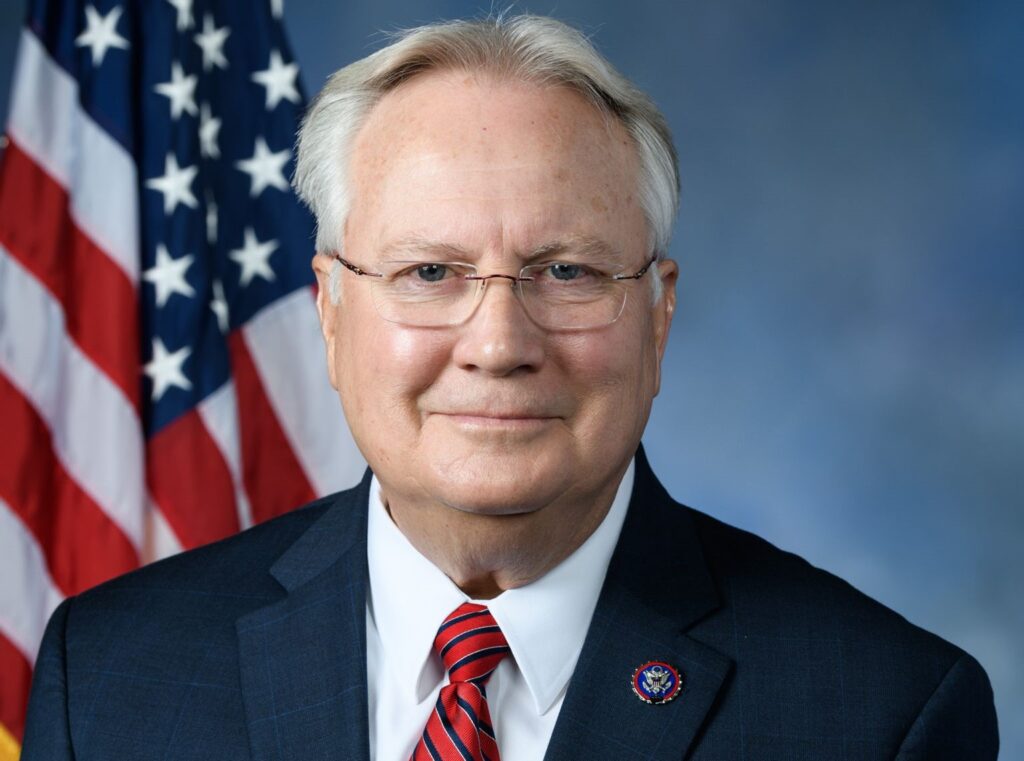
Congressman Jerry Carl announced he has co-sponsored a bipartisan bill to give state and local officials flexibility and time to spend the remainder of COVID-19 relief dollars. The State, Local, Tribal, and Territorial Fiscal Recovery, Infrastructure, and Disaster Relief Flexibility Act, introduced by Reps. Dusty Johnson and Carolyn Bourdeaux, aims to make various infrastructure investments eligible for payment with these funds. The legislation recently passed the U.S. Senate unanimously. Under the CARES Act, Congress did provide some flexibility for how COVID-19 funds could be spent, but the funds were not able to be used for infrastructure projects. This bill will give state and local officials additional flexibility and time to spend the remaining COVID-19 relief dollars responsibly. Carl supports the effort to add infrastructure spending as part of the COVID funding. Carl said in a statement, “South Alabama has a desperate need for investments in true infrastructure such as roads, bridges, ports, waterways, and broadband. As a former county commissioner, investing in our nation’s infrastructure is a top priority for me, so I’m proud to cosponsor this bipartisan bill to give states like Alabama the flexibility they need to spend unused COVID-19 relief dollars on critical investments in our nation’s infrastructure. “Unfortunately, Nancy Pelosi is holding the American people hostage by blocking this bill from being considered on the House floor. Despite passing the U.S. Senate unanimously and being introduced in the House by a large, bipartisan group, Nancy Pelosi is focused on raising our taxes, bankrupting America, and playing political games. It’s time to put the American people first and pass this bipartisan, commonsense bill.” South Dakota congressman Dusty Johnson posted on Twitter, “We need to cut the federal red tape. State governments need flexibility to administer remaining COVID-19 relief funds for critical infrastructure. Our bill would make that a reality & it’s already passed the Senate. Congress can get it done.” This legislation is cosponsored by Reps. Steve Scalise, Henry Cuellar, Rick Allen, Suzan DelBene, David Rouzer, Marilyn Strickland, Randy K. Weber, Jared Huffman, Steven Palazzo, Sanford D. Bishop, Jr., Andy Barr, Joseph Morelle, Dan Meuser, Albio Sires, Carlos A. Gimenez, Antonio Delgado, David B. McKinley, Kim Schrier, Peter Meijer, Darren Soto, Chris Pappas, Rick Crawford, Betty McCollum, William Timmons, Josh Gottheimer, Brad Wenstrup, Derek Kilmer, Don Young, and Tom O’Halleran.
Jim Zeigler: Leave AU coach alone — along with all employees

President Joe Biden has decreed that employers of over 100 and those with federal contracts must mandate that their employees get the COVID vaccination. Alabama Gov. Kay Ivey has said that she is against the mandate but failed to ban it in a weak executive order. She also failed to include a mandate bill in her call for a special session on redistricting. Auburn head football coach Bryan Harsin contracted COVID in August. He recovered. That likely means he is immune. Harsin is being asked if he is vaccinated. He has exercised his right to make no comment. If the vaccine mandate winds up interfering with SEC football right at the climax of the season, there will be an uprising like you never saw. Can you imagine if they fire coaches and staff right before the Iron Bowl, traditional rivalry games, and the SEC championship game? No one should be threatened with losing their job if they make a personal decision about their own healthcare. This mandate is now putting thousands of Alabama workers at risk for their livelihood, retirement benefits, and insurance. Gov. Ivey needs to quickly look at what is being done by Gov. Ron DeSantis in Florida and Gov. Greg Abbott in Texas. She needs to simply ban vaccine mandates in Alabama. If the Feds take Alabama to court, we can fight it there while our workers remain on the job. Jim Zeigler, Alabama State Auditor
Steve Flowers: Redistricting session underway
Every 10 years the nation has a census count. There is a reason for that dissemination of our population. The United States and concurrently the Alabama Constitution require a census to determine how many Congressional seats each state will have. Then you also have to determine how those districts are designed to reflect that each congressional district is properly and equally apportioned. On the state level, the legislative districts have to be dealt with the same way. The state legislature of each state is given the inherent constitutional power to draw the congressional lines as well as their own legislative lines. This is one of the most important and powerful tools granted by legislatures throughout the nation. There is one prevailing immovable constitutional provision that legislatures have to make paramount – every district must be equal in population. The one man, one vote constitutional mandate must be adhered to because after all, that is the reason for the census in the first place. Our legislature is poised to tackle the much-anticipated reapportionment issue in the current special session. The states are late dealing with redistricting because of an inexplicable delay from the U.S. Census Bureau, probably COVID-related. The final numbers were just released about a month ago. They are usually available in January, soon after the census count ends. The Census Bureau is now a large U.S. governmental department that makes and releases census projections throughout the 10-year span of drawing new districts. Their projections are fairly accurate. We in Alabama were very concerned that we would lose a congressional seat from projections beginning five years ago. The actual figures gave us a reprieve. Alabama learned that our population grew by over five million. Therefore, we will keep our seven seats in Congress. We saved the seat by the skin of our teeth. We were right on the cusp. Many of you will be glad to know that the seat we saved was lost by New York. This tells me that the Census Bureau figures are unbiased nor affected by politics. If they were, they would have showed the count to give the seat to New York. If given to New York, it would be a blue democratic seat, in Alabama, it will be a red republican seat. However, when it comes to drawing the actual congressional and legislative lines, it is all political and the Courts have consistently said it is a political issue. Those that have the pen can draw the lines they want, as long as they are equal in population. For that reason, the Republican Party has placed a priority on controlling the state legislatures around the country. That is a wise political move given that the legislatures control their own and more importantly the congressional districts in the nation’s capital. Like most legislation, the real work and decision-making is done in Committee. Therefore, the redistricting lines are being designed in a large part by members of the Reapportionment Committee. In fact, the members of this committee have been working on the lines of the entire quadrennium. It is a plum and powerful, although tedious assignment. The Chairmen of the committees are Senator Jim McClendon (R-St. Clair) and Representative Chris Pringle (R-Mobile). The upcoming session will result in new lines for Alabama’s seven congressional districts, 105 House districts, 35 Senate districts, and eight State Board of Education districts. Since it is a political process, you will see the Alabama Republican super-majority House and Senate remain a super two-to-one Republican majority. In fact, it will be difficult to not add more Republican districts because the population growth has been in the Republican enclaves of our fastest-growing counties. The growth counties of Baldwin, Madison, Lee, Shelby, and Limestone may indeed get new seats in the legislature. Currently, there are 77 Republicans in the House and only 28 Democrats. In the Senate, the numbers are even more amazingly favorable to Republicans. There are 27 Republicans and only 8 Democrats. These super-majority numbers could be easily drawn to add three more House seats and one more Republican Senate seat. However, they are reluctant to add more Republican seats because the U.S. Justice Department looks leerily at regressing in the number of majority–minority districts. It will be an interesting political process. It only happens every 10 years. We will keep you posted. Steve Flowers is Alabama’s leading political columnist. His weekly column appears in over 60 Alabama newspapers. Steve served 16 years in the state legislature. Steve may be reached at: www.steveflowers.us.
Joe Biden urges bill over ‘finish line’ as Dems eye new surtax
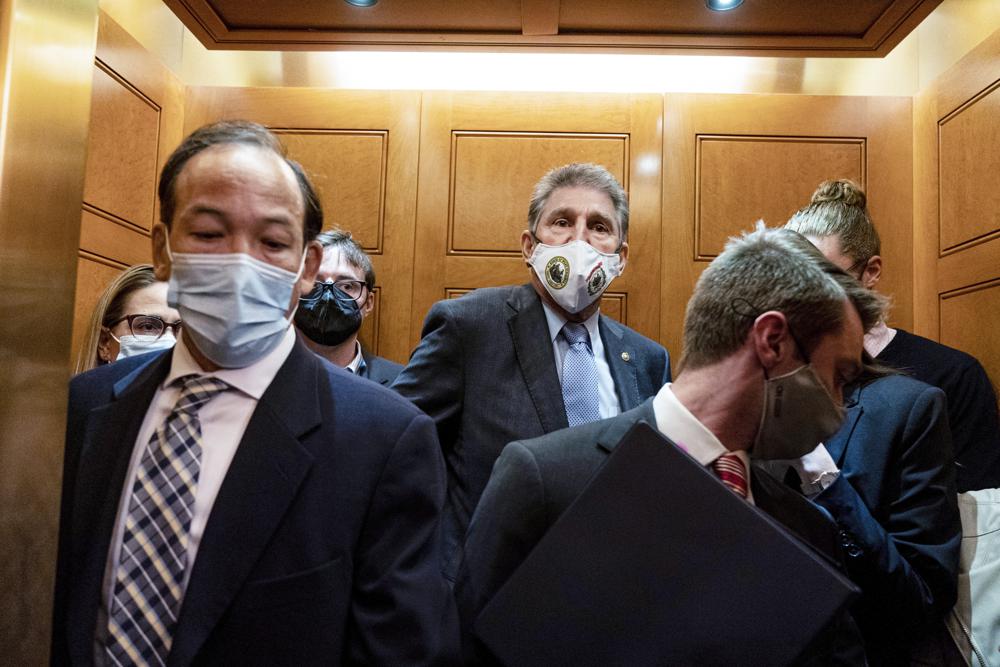
With his signature domestic initiative at stake, President Joe Biden is urging Democrats to wrap up talks and bring the social services and climate change bill “over the finish line” before he departs Thursday for global summits overseas. Top Democratic leaders are signaling a deal is within reach even though momentum fizzled and tempers flared late Wednesday after a billionaires’ tax and a paid family leave program fell out of the Democrats’ sweeping bill, mostly to satisfy a pivotal senator in the 50-50 Senate. But expanded health care programs, free pre-kindergarten, and some $500 billion to tackle climate change remain in the mix in what’s now at least a $1.75 trillion package. And Democrats are eyeing a new surcharge on the wealthy — 5% on incomes above $10 million and an additional 3% on those beyond $25 million — to help pay for it, according to a person who requested anonymity to discuss the private talks. “They’re all within our reach. Let’s bring these bills over the finish line.” Biden tweeted late Wednesday. Biden could yet visit Capitol Hill before traveling abroad, and House Democrats were set to meet in the morning. Besides pressing for important party priorities, the president was hoping to show foreign leaders the U.S. was getting things done under his administration. The administration is assessing the situation “hour by hour,” White House press secretary Jen Psaki said. It was a fast-moving day on Capitol Hill that started upbeat as House Speaker Nancy Pelosi declared that Democrats were in “pretty good shape.” But hopes quickly faded as Biden’s big proposal ran into stubborn new setbacks, chief among them how to pay for it all. A just-proposed tax on billionaires could be scrapped after Democratic Sen. Joe Manchin of West Virginia objected, according to a senior party aide, who requested anonymity to discuss the private talks. The billionaires’ tax proposal had been designed to win over another Democratic holdout, Sen. Kyrsten Sinema of Arizona, but Manchin panned it as unfairly targeting the wealthy, leaving Democrats at odds. “People in the stratosphere, rather than trying to penalize, we ought to be pleased that this country is able to produce the wealth,” Manchin told reporters. Manchin said he prefers a minimum 15% flat “patriotic tax” to ensure the wealthiest Americans don’t skip out on paying any taxes. Nevertheless, he said: “We need to move forward.” Next to fall was a proposed paid family leave program that was already being chiseled back from 12 to four weeks to satisfy Manchin. But with his objections, it was unlikely to be included in the bill, the person said. Sen. Kirsten Gillibrand, D-N.Y., had devised several new options for Manchin’s review and told reporters late in the evening, “It’s not over until it’s over.” Together, Manchin’s and Sinema’s objections packed a one-two punch, throwing Biden’s overall plan into flux, halving what had been a $3.5 trillion package, and infuriating colleagues along the way. In the evenly divided Senate, Biden needs all Democrats’ support with no votes to spare. White House officials met at the Capitol with Manchin and Sinema, two senators who now hold enormous power, essentially deciding whether or not Biden will be able to deliver on the Democrats’ major campaign promises. “Making progress,” Sinema said as she dashed into an elevator. A Sunday deadline loomed for approving a smaller, bipartisan roads-and-bridges infrastructure bill or risk allowing funds for routine transportation programs to expire. But that $1 trillion bill has been held up by progressive lawmakers who are refusing to give their support without the bigger Biden deal. Despite a series of deadlines, Democrats have been unable to close the deal among themselves, and Republicans overwhelmingly oppose the package. At best, Democrats could potentially reach a framework Thursday that could send Biden overseas with a deal in hand and unlock the process while the final details were sewn up. Applying pressure, Pelosi announced a Thursday committee hearing to spur the Biden package along toward a full House vote, though the timing remained uncertain. Democrats had hoped the unveiling of the billionaires tax Wednesday could help resolve the revenue side of the equation after Sinema rejected the party’s earlier idea of reversing Donald Trump-era tax breaks on corporations and the wealthy, those earning more than $400,000. The new billionaires’ proposal would tax the gains of those with more than $1 billion in assets or incomes of more than $100 million over three consecutive years — fewer than 800 people — requiring them to pay taxes on the gains of stocks and other tradeable assets, rather than waiting until holdings are sold. The billionaires’ tax rate would align with the capital gains rate, now 23.8%. Democrats have said it could raise $200 billion in revenue that could help fund Biden’s package over ten years. Republicans have derided the billionaires’ tax as “harebrained,” and some have suggested it would face a legal challenge. But Democratic Sen. Ron Wyden of Oregon, chairman of the Senate Finance Committee, insisted the billionaires tax remains on the table. “I’ve not heard a single United States senator — not one — get up and say, ‘Gee, I think it’s just fun that billionaires pay little or nothing for years on end,’” Wyden said. More likely in the mix was the companion proposal, a new 15% corporate minimum tax, as well as the new surtax being proposed on higher incomes above $10 million. Together they are designed to fulfill Biden’s desire for the wealthy and big business to pay their “fair share.” They also fit his promise that no new taxes hit those earning less than $400,000 a year, or $450,000 for couples. Biden wants his package fully paid for without piling on debt. Resolving the revenue side has been crucial, as lawmakers figure out how much money will be available to spend on the new health, child care, and climate change programs in Biden’s big plan. Among Democrats, Rep. Richard Neal of Massachusetts, the chairman of the Ways and Means Committee, said he told Wyden
Kay Ivey directs agencies to resist COVID vaccination mandate
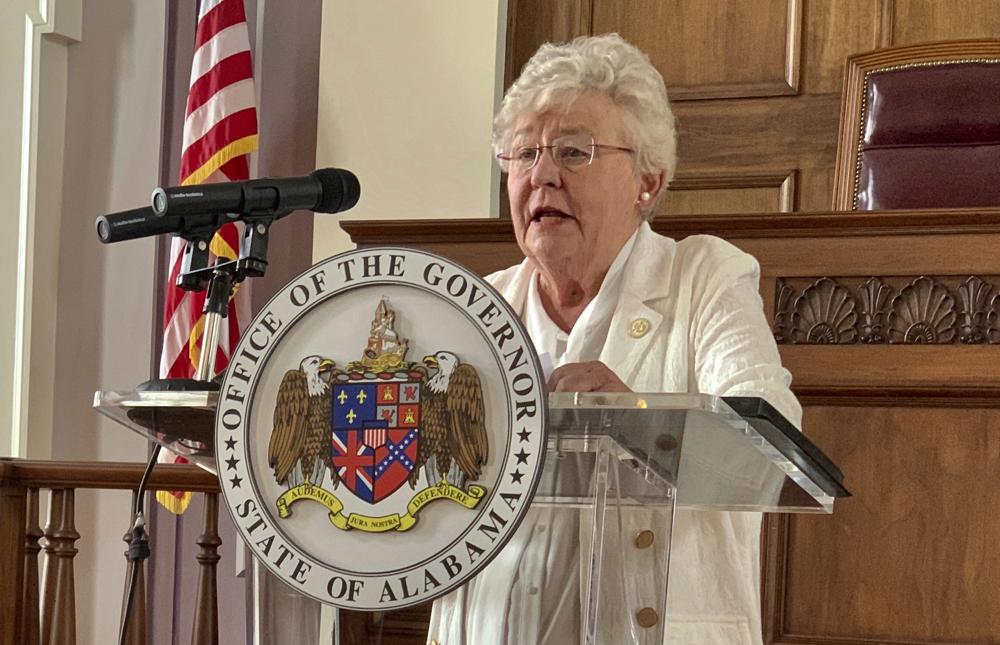
Alabama Gov. Kay Ivey on Monday directed state agencies not to cooperate with the federal COVID-19 vaccine mandate, where possible, and instead help with the state’s efforts to file a lawsuit challenging the vaccination requirements. The directive is part of Republican officials’ efforts to resist the Biden administration’s vaccine mandate, but the impact of the Alabama order is unclear since it can only cover state executive branch agencies. Ivey signed an executive order forbidding executive branch agencies — which include agencies such as Medicaid, Mental Health and Human Resources — from penalizing employees or businesses for non-compliance with the federal vaccine mandate. If federal law requires the penalty, Ivey directed the state entity to take steps to notify the affected business or individual that Alabama does not condone the penalty. Gina Maiola, a spokesperson for Ivey, said the governor issued the executive order because some state agencies could potentially fall under the federal vaccine mandate or have enforcement duties. Maiola did not immediately respond to an email seeking examples. “The federal government’s outrageous overreach has simply given us no other option, but to begin taking action, which is why I am issuing this executive order to fight these egregious COVID-19 vaccine mandates,” Ivey said in a statement. The executive order comes three days after the state’s largest universities announced employees must get vaccinated because of the federal mandate. However, Ivey’s executive order would not impact those plans announced by the University of Alabama System and Auburn University to require employees to be vaccinated for COVID-19 by Dec. 8. The universities were created by the Alabama Constitution and are under the management and control of a board of trustees. The schools said the Alabama campuses in Tuscaloosa, Birmingham, Huntsville, and Auburn all are federal contractors, so they have to comply with an executive order signed last month by President Joe Biden. Ryan Easterling, a spokesperson for the Alabama Department of Public Health said that agency is still investigating how it is affected by the federal mandate, but wrote in an email that, “we intend to comply with (the) Governor’s order.” Biden in September ordered sweeping new federal vaccine requirements for as many as 100 million Americans. The expansive rules mandate that all employers with more than 100 workers require them to be vaccinated or test for the virus weekly. Roughly 17 million workers at health facilities that receive federal Medicare or Medicaid also will have to be fully vaccinated. Biden is also requiring vaccination for federal employees of the executive branch and contractors who do business with the federal government. Conservative Republican in several states have vowed resistance to the mandate, calling it a federal overreach, but so far have limited options in trying to undercut the requirements. The issue is likely bound for court after GOP attorneys general vowed to sue. The White House has previously accused Republican officials to putting politics ahead of safety, noting the effectiveness of vaccines at preventing people from dying from a virus that has already killed more than 730,000 Americans. Alabama Attorney General Steve Marshall said earlier this month that his office is preparing to challenge the mandate on employers once the rule is unveiled. Ivey’s executive order directed executive agencies to cooperate with Marshall’s office in “furtherance of litigation brought by the State to challenge any federally imposed COVID-19 vaccination requirement.” In a statement Monday, the Alabama Democratic Party said vaccine mandates are “nothing new,” noting that states and the federal governments mandate a number of things to protect people — including seat belts, restaurant inspections and numerous other vaccinations that are required to go to school or join the military. “What’s wrong with a mandate that protects public health and keeps our hospitals from overcrowding?” the party stated. Republished with the permission of the Associated Press.
Stacey Abrams group donates $1.34M to wipe out medical debts
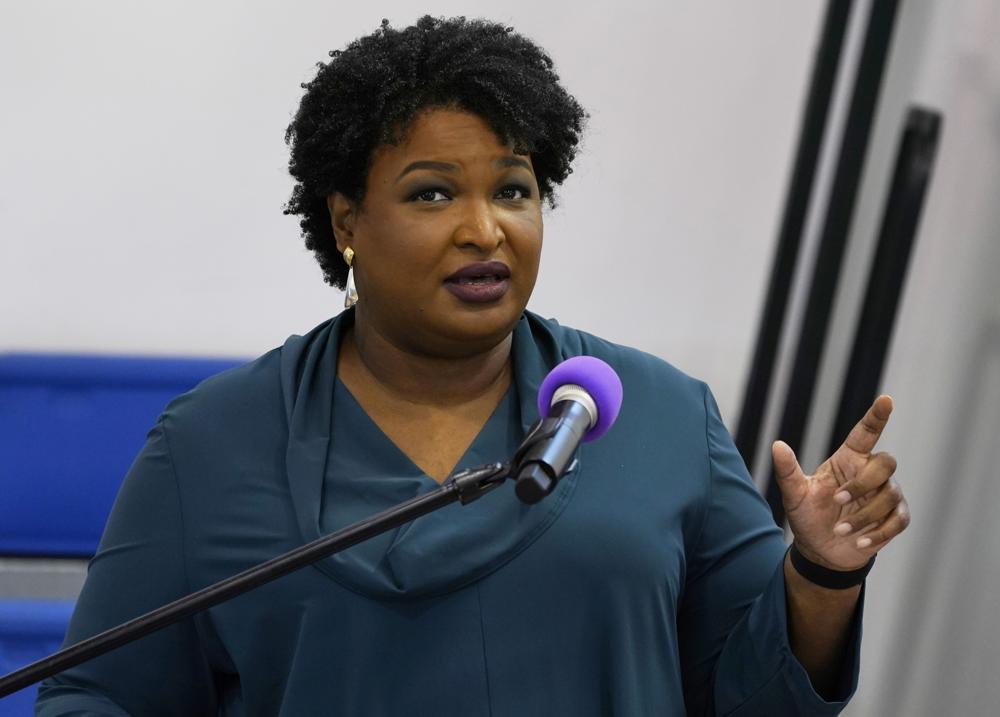
The political organization led by prominent Democrat Stacey Abrams is branching out into paying off medical debts. The Fair Fight Political Action Committee on Wednesday told The Associated Press it has donated $1.34 million from its political action committee to the nonprofit organization RIP Medical Debt to wipe out debt with a face value of $212 million that is owed by 108,000 people in Georgia, Arizona, Louisiana, Mississippi, and Alabama. Lauren Groh-Wargo, CEO of allied group Fair Fight Action and senior adviser to the PAC, said paying off medical debt is another facet of the group’s advocacy seeking expansion of Medicaid coverage in the 12 states that have refused to expand the health insurance to all poorer adults. “What is so important about this is the tie between Medicaid expansion and just crushing medical debt,” Groh-Wargo said. Of the states targeted, Arizona and Louisiana have expanded Medicaid. Fair Fight said letters will be sent to those whose debts have been absolved to notify them. The purchase will forgive the debt of nearly 69,000 people in Georgia, more than 27,000 people in Arizona, more than 8,000 people in Louisiana, and about 2,000 people apiece in Mississippi and Alabama. The group has raised more than $100 million since Abrams founded it after her 2018 loss in the Georgia governor’s race. Fair Fight has been most noted for its advocacy of voting rights but has also been pushing for broader health care. The group launched ads last week demanding that Georgia Republican Gov. Brian Kemp add Medicaid expansion to the list of topics that Georgia lawmakers will consider in a special session starting next week to redraw electoral districts. Democrats are hoping Abrams will run against Kemp again in 2022. A narrow loss to Kemp in 2018 launched Abrams into political stardom. “I know firsthand how medical costs and a broken healthcare system put families further and further in debt,” Abrams said in a statement. “Across the sunbelt and in the South, this problem is exacerbated in states like Georgia where failed leaders have callously refused to expand Medicaid, even during a pandemic.” RIP Medical Debt said Fair Fight is giving the third-largest donation in its history. Philanthropist MacKenzie Scott gave the group $50 million last year. The group has aided more than 3 million people since it was founded in 2014, typically buying bundles of medical debt at steep discounts from the face value. The bills often are purchased from collection agencies that have been trying to get debtors to pay for years. The group has wiped out debt with a face value of more than $5.3 billion. Allison Sesso, executive director of RIP Medical Debt, said such liabilities often drive people into bankruptcy, can deter people from seeking needed medical care, and can lead to wages being garnished or liens filed on property. “I wouldn’t underestimate the mental anguish that people have from medical debt,” Sesso said. Sesso said her group is not just pursuing debt abolishment “but thinking about how we can improve the system nationwide,” trying to advocate that hospitals should do more to make charity care available. She also said research shows states that expanded Medicaid have lower rates of medical debt. “We are not the permanent solution,” Sesso said. “There does need to be a larger solution around what we do about medical debt.” Groh-Wargo said the money was given by donors for political action but said the money represents “only a small percentage” of what Fair Fight has raised. “I think of this as politically tithing to help the community we are advocating for and with,” Groh-Wargo said, saying the group has done smaller scale charitable efforts. Republished with the permission of the Associated Press.
