
Richard Shelby takes stance against vaccine mandates

Senator Richard Shelby has publicly expressed his views on the Biden Administration’s vaccine mandate. The mandate states that all employers with more than 100 workers require them to be vaccinated or test for the virus weekly. Alabama lawmakers have spent months fighting, this arguing it is government overreach. Gov. Kay Ivey called the mandates “outrageous” and also argued that vaccine mandates are “not the role of the government.” Last week, congressman Gary Palmer and several colleagues sent a letter to Doug Parker, the Assistant Secretary of Labor for Occupational Safety and Health, opposing the mandate. Attorney General Steve Marshall also filed a lawsuit last Friday challenging the federal-contractor vaccination mandate. Last week, state senator Arthur Orr spoke to Yellowhammer News, expressing his surprise that Shelby hadn’t already joined efforts to stop the mandate. In an interview, Orr stated, “[W]hat I also find interesting, Dale, is Senator Shelby has not signed on with a letter from Senator Lankford from the Midwest to be against the Biden mandate,” Orr said. “Senator Tuberville did. And I was surprised not to see Senator Shelby join his Republican Senate colleagues fighting back against these Biden mandates.” While other lawmakers have openly expressed their disdain for the mandates, Shelby had been relatively tight-lipped about his views until now. On Monday, Richard cleared up any misunderstandings, stating on Twitter, “Last week I proudly joined @SenatorBraun and other @SenateGOP colleagues in officially challenging President Biden’s vaccine mandate under the Congressional Review Act. This mandate violates our constitutional liberties and is federal overreach at its finest.” Shelby stressed the importance of vaccinations but emphasized individual choice. “While I urge people to consult with their doctor about getting vaccinated, I believe our individual freedoms and rights are of the utmost importance,” Shelby commented.
Will Sellers: Avoiding Saigon’s quagmire in Manila

Seventy years ago, the Philippines came within a whisper of being the pre-game for Vietnam. But much like the dog that didn’t bark or the accident that didn’t happen, few people appreciate how close the Philippines came to communist domination. That this didn’t happen is testimony to the effective combination of American soft power and ethical local leaders who captured the hearts and minds of the people. As in many countries during World War II, all sorts and conditions of indigenous resistance fighters challenged the occupying Axis powers. Included among these patriotic guerrilla fighters were committed communists who saw the fascists as another hurdle in the struggle to achieve the workers’ paradise. Once the war ended, these various revolutionary movements became the spawning ground for political leaders. As is so often the case, most pro-western groups quickly declare victory and move forward to cash their peace dividend while forgetting the need for eternal vigilance and continuous engagement. The communists never do this because their version of peace is only a steppingstone toward total control and ultimate domination of the political machinery of government. The Philippines had been an American territory and, prior to the war, was well on its way to independence. The Japanese occupation delayed this, but once American forces liberated the country, civil government was restored. In fact, General Douglas MacArthur insisted that civilian administration, as opposed to military governance, be returned immediately to avoid any appearance of imperialism. Ultimately on July 4, 1946, the Philippines became a sovereign state and no longer a U.S. commonwealth. Regrettably, several political factions that had proven so effective in fighting the Japanese refused to lay down their arms and participate in a constitutional government. And as the Philippines was recovering from the devastation of war, aid of all sorts flooded into the country to begin the process of reconstruction. As critical as this foreign aid was to revive the economy, the magnitude of the funding created an environment of political corruption as many in the ruling party personally benefited from the largess. As a war-torn, third-world country with limited experience in self-government, the leadership of the Philippines on many levels became abusive as position, power, and pesos were used to maintain control. Somewhere along the way, the constitutional ideas about popular elections and consent of the governed gave way to fraudulent elections and a power structure that forgot about the people. And as the citizenry witnessed rampant corruption, they lost faith in the government and were easily swayed to revolutionary ideas which promised the usual equity and equality for all. Into this deadly combination stepped the communist guerrilla leader Luis Taruc, who used his military skills and personal charisma to charm the peasants into joining his revolution to end their exploitation. Because of corruption, the Philippine army was as ineffective as it was demoralized. Given the amount of military assistance, the armed forces became an employment agency such that maintaining national security and fighting the revolutionaries took a back seat to graft, corruption, and social engineering. Those who had fought the Japanese and wanted to maintain their independence saw their army overrun by Taruc’s Huk insurgents. The army had the resources it needed, but with low morale, it was difficult to maintain the discipline necessary to win. But some leaders of the Philippines understood the threat and realized their country was on the brink of disaster that would send them backwards, gutting their independence and voiding their constitution. Sensing this clear and present danger, Congressman Ramon Magsaysay developed a plan to fight the communists. He realized that corruption, especially within the army, had to be stopped. Initially, the ruling government would not listen to his ideas, but once the success of the insurgents carried them to the outskirts of Manila, the leadership changed tack, and Magsaysay was appointed defense minister. In this position, he very quickly reformed the armed forces and rooted out corruption. Using skills learned as an insurgent against the Japanese, he realized that winning the countryside and making the peasants his allies was critical to successfully defeating the communists. His efforts to both defeat communism and embrace the peasants were aided by an American Air Force Colonel, Edward Lansdale. Rather than have American aid siphoned off to line the pockets of corrupt officials, Lansdale used funds to help the peasantry with food, advocated land reform, and provided the people with the means to sustain themselves. Using psychological warfare tactics, he reduced the effectiveness of communist forces by not only cutting off rural support but also re-educating captured terrorists to secure their acceptance of Magsaysay’s reforms. The team of Magsaysay and Lansdale was wildly successful. By restoring the people’s confidence in a constitutional government and standing against corruption, they paved the way for a reform movement that started in November 1951, with the elections of an anti-corruption and reformist Philippine senate. This election became a referendum on Filipino leadership and was significant in sweeping in a government that would fully support Magsaysay’s plans for development. This election marked a turning point as national support receded against corrupt officials in both the government and the armed services. Once the army was restored as a fighting force and not a social benefit organization, the communist Huk’s days were numbered. When the government showed respect for the peasants by giving them ownership of their land and not abusing them, they gained allies and eliminated the fertile ground which nurtured and sustained the communist threat. This combination of government reforms and military action allowed the Philippines to avoid the terrors of internal revolution that could further devastate their developing country. The success of Magsaysay’s plans to provide for the people and defeat the communists made him so popular that two years later, he would be elected president. That the Philippines did not become a communist quagmire is a testament to Magsaysay’s success in respecting the people, eliminating the prestige of corruption, and establishing the foundation for a strong democratic republic. Will Sellers
Joe Biden hails infrastructure win as ‘monumental step forward’
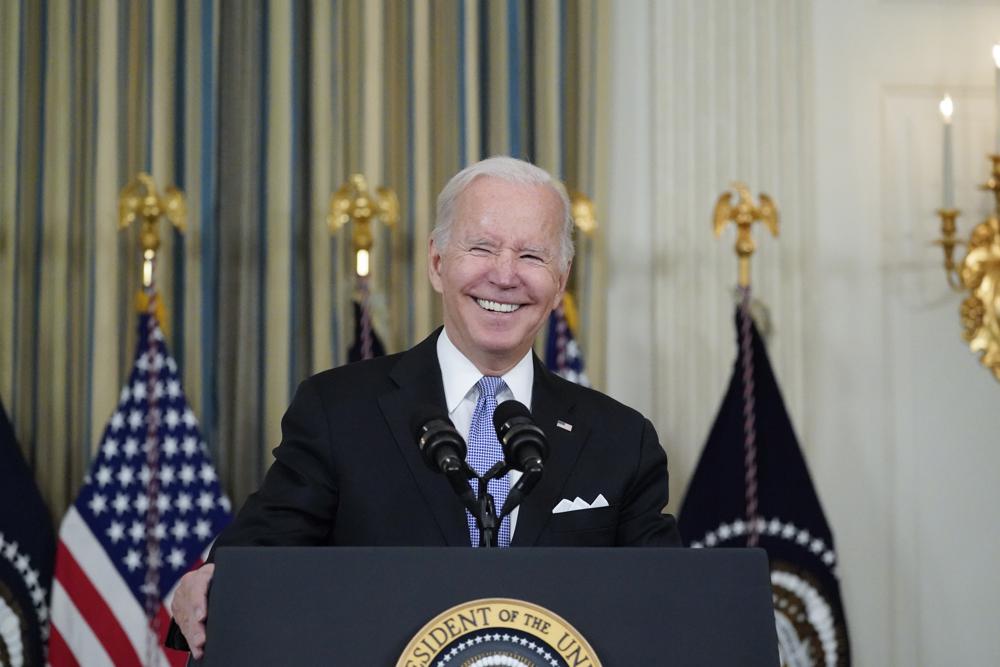
President Joe Biden on Saturday hailed Congress’ passage of his $1 trillion infrastructure package as a “monumental step forward for the nation” after fractious fellow Democrats resolved a months-long standoff in their ranks to seal the deal. “Finally, infrastructure week,” a beaming Biden told reporters. “I’m so happy to say that: infrastructure week.” The House passed the measure 228-206 late Friday, prompting prolonged cheers from the relieved Democratic side of the chamber. Thirteen Republicans, mostly moderates, supported the legislation, while six of Democrats’ farthest left members opposed it. Approval of the bill, which promises to create legions of jobs and improve broadband, water supplies, and other public works, sends it to the desk of a president whose approval ratings have dropped and whose nervous party got a cold shoulder from voters in this past week’s off-year elections. Democratic candidates for governor were defeated in Virginia and squeaked through in New Jersey, two blue-leaning states. Those setbacks made party leaders — and moderates and liberals alike — impatient to produce impactful legislation and demonstrate they know how to govern. Democrats can ill afford to seem in disarray a year before midterm elections that could give Republicans congressional control. Voters “want us to deliver,” Biden said, and Friday’s vote “proved we can.” “On one big item, we delivered,” he added. The infrastructure package is a historic investment by any measure, one that Biden compares in its breadth to the building of the interstate highway system in the last century or the transcontinental railroad the century before. He called it a “blue-collar blueprint to rebuilding America.” His reference to infrastructure week was a jab at his predecessor, Donald Trump, whose White House declared several times that “infrastructure week” had arrived, only for nothing to happen. Simply freeing up the infrastructure measure for final congressional approval was like a burst of adrenaline for Democrats. Yet despite the win, Democrats endured a setback when they postponed a vote on a second, even larger bill until later this month. That 10-year, $1.85 trillion measure bolstering health, family, and climate change programs was sidetracked after moderates demanded a cost estimate on the measure from the nonpartisan Congressional Budget Office. The postponement dashed hopes that the day would produce a double-barreled win for Biden with passage of both bills. But in an evening breakthrough brokered by Biden and House leaders, five moderates agreed to back that bill if the budget office’s estimates are consistent with preliminary numbers that White House and congressional tax analysts have provided. The agreement, in which lawmakers promised to vote on the social and environment bill by the week of Nov. 15, was a significant step toward a House vote that could ultimately ship it to the Senate. Elated by the bill’s passage, Biden held forth with reporters for over a half-hour Saturday morning, joking that his chances of getting the bill done had been written off multiple times, only for him to be able to salvage it. He said he would wait to hold a signing ceremony until lawmakers — Democrats and Republicans who voted for it — return to Washington after a week’s recess. The president acknowledged uncertainty surrounding his larger social and environmental spending package, saying “time will tell” whether he can keep popular provisions like universal paid family leave in the final version. He wouldn’t say whether he has private assurances from moderate Democrats in the House and Senate to pass the nearly $2 trillion bill, but said he was “confident” he would get the votes. Biden predicted Americans would begin to feel the impact of the infrastructure bill “probably starting within the next two to three months as we get shovels in the ground.” But the full impact will probably take decades to be fully realized. He added that he would visit some ports that would benefit from the legislation in the next week, as his administration tries frantically to ease supply chain disruptions that are raising prices on consumer goods before the holidays. Transportation Secretary Pete Buttigieg said there’s a pent-up demand to get going on public works. He told CNN he’s already got $10 billion worth of applications for a certain program that’s only got $1 billion in it. “This is not just a short-term stimulus bill.” Biden said the investment would be viewed in 50 years as “When America decided to win the competition of the 21st century” with a rising China. The president and first lady Jill Biden delayed plans to travel Friday evening to their house in Rehoboth Beach, Delaware. Instead, Biden spoke to House leaders, moderates, and progressives. Rep. Pramila Jayapal, D-Wash., leader of the Congressional Progressive Caucus, said Biden even called her mother in India, though it was unclear why. “This was not to bribe me — this is when it was all done,” Jayapal told reporters. The lawmaker said her mother told her she “just kept screaming like a little girl.” In a statement, five moderates said that if the fiscal estimates on the social and environment bill raise problems, “we remain committed to working to resolve any discrepancies” to pass it. In exchange, liberals agreed to back the infrastructure measure, which they’d spent months holding hostage in an effort to press moderates to back the larger bill. The day marked a rare detente between Democrats’ moderate and liberal wings that party leaders hope will continue. The rival factions had spent weeks accusing each other of jeopardizing Biden’s and the party’s success by overplaying their hands. But Friday night, Jayapal suggested they would work together moving forward. Democrats have struggled for months to take advantage of their control of the White House and Congress by advancing their priorities. That’s been hard, in part because of Democrats’ slender majorities and bitter internal divisions. “Welcome to my world,” House Speaker Nancy Pelosi told reporters. “We are not a lockstep party.” Democrats’ day turned tumultuous early after a half-dozen moderates demanded the budget office’s cost estimate of the sprawling package of health, education, family, and climate change
Kay Ivey signs protections for unvaccinated workers
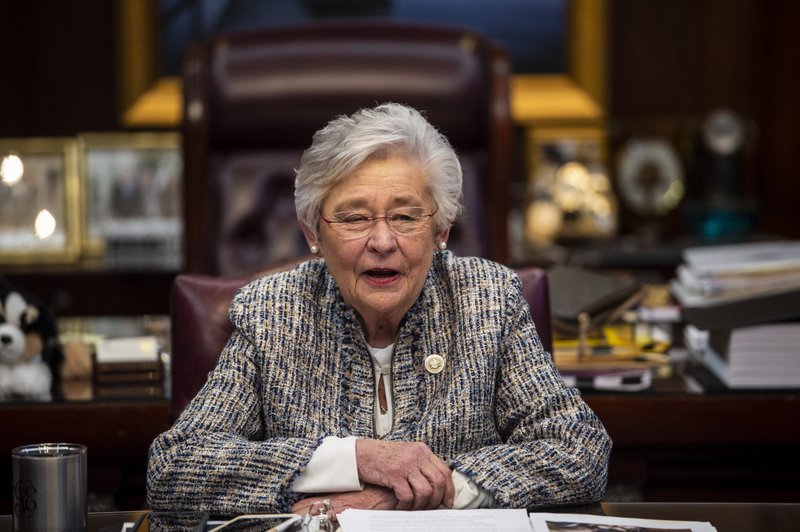
Alabama Gov. Kay Ivey on Friday signed employment protections for workers who claim a religious or health reason for not getting vaccinated against COVID-19. The Republican governor signed the legislation a day after it was approved by the Alabama Legislature as GOP-led states turn to lawsuits and legislation to fight the federal vaccine requirements they call an infringement on personal liberties. Ivey also signed into law a separate bill requiring parental consent for minors to get vaccinated for COVID-19. The new law says state employers can’t fire workers for being unvaccinated against COVID-19 if the employee returns a new standardized state form to claim a religious, medical exemption. “From the moment the White House rolled out their scare tactic plans to try to force this vaccine on Americans, I called it for what it is: an un-American, outrageous overreach. Alabamians – including those like myself who are pro-vaccine – are adamantly against this weaponization of the federal government, which is why we simply must fight this any way we know how,” Ivey said in a statement. President Joe Biden in September announced contractors who do business with the federal government must have workforces vaccinated — with no option to test out. The Alabama law will also affect companies, such as medical providers, who wanted to independently place vaccination requirements on workers. The bill drew opposition from the Business Council of Alabama, which said it would put federal contractors in a no-win situation. Democrats said Republicans were putting both jobs and public health in jeopardy for the sake of scoring political points. “After supporting a bill like that, I don’t think they can say they are pro-business or pro-growth. Hopefully, the business community will remember that House Democrats support their interests,” House Minority Leader Anthony Daniels of Huntsville said. Under the legislation, employees would check a box in a new standardized form for the reason they couldn’t get vaccinated — such as a religion, certain qualifying medical conditions, or a health provider’s signed recommendation. There would be no requirement to provide proof of the reason. An employee denied an exemption can appeal to the state Department of Labor. The new process and job protections will end automatically on May 1, 2023, unless extended by lawmakers. The legislation is a carve-out from existing law that allows companies to fire workers at will and specifies that it wouldn’t alter the ability of an employer to terminate an employee for reasons other than the employee’s COVID-19 vaccination status. Republicans argued that the federal government already allows exemptions for medical and religious reasons, and lawmakers are trying to provide an easy way for employees to claim those exemptions. “They’re fearful of losing jobs they’ve had for 20 years, very good jobs that they had with federal contractors,” Republican Rep. Mike Jones of Andalusia said. Some Democrats said the GOP proposal would create a wide-open portal for people to fraudulently claim an exemption without truly having a valid reason. “You know and I know, everybody, even atheists, is going to come up and say it’s because of their religious beliefs,” Democratic Rep. Pebblin Warren of Tuskegee said. Alabama has had at least 15,629 COVID-19 related deaths and has the second-highest per capita death rate from COVID-19 among states, according to researchers from Johns Hopkins University. Republished with the permission of the Associated Press.
Lawsuit challenges new Alabama congressional districts
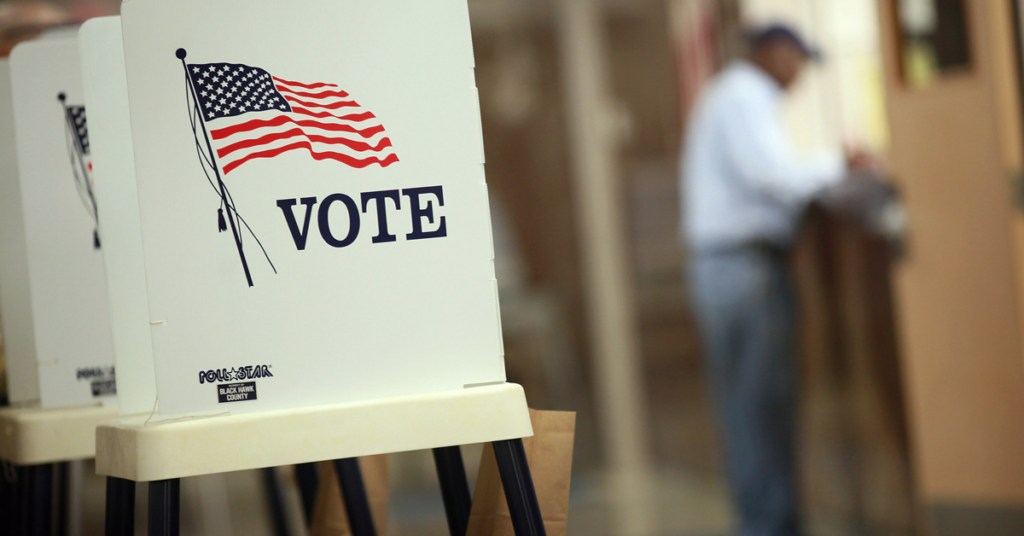
Two lawsuits are challenging Alabama’s newly approved congressional map, arguing it unlawfully dilutes the voting strength of African Americans with one majority-minority district out of seven. An organization announced a lawsuit Thursday on the same day that Alabama Gov. Kay Ivey signed the new congressional, legislative, and school board districts into law. A previously filed lawsuit by two state senators and several voters was also updated Thursday to challenge the new map. Alabama lawmakers this week approved a congressional map expected to maintain the current partisan balance: the seven-member congressional delegation with six Republicans elected from heavily white districts and one Democrat elected from the only majority-white district. Alabama has a population that is about 26% Black. A lawsuit backed by an organization aligned with a Democratic group says the plan violates the Voting Rights Act “because it strategically cracks and packs Alabama’s Black communities, diluting Black voting strength and confining Black voting power to one majority-Black district.” The lawsuit was supported by the National Redistricting Foundation, a nonprofit affiliate of the National Democratic Redistricting Committee, which is led by Eric Holder, who was attorney general under President Barack Obama. It is the second lawsuit filed over the issue. A pending lawsuit filed by two lawmakers and four voters argues the state should have two districts, where Black voters might have an opportunity “to elect candidates of their choice.” “Today, the Voting Rights Act no longer requires maintenance of a majority-black Congressional District in Alabama. To the contrary, the state cannot rely on the Voting Rights Act to justify splitting county boundaries when Districts drawn without racial gerrymandering provide Black voters constituting less than a majority, combined with reliably supportive white voters, an opportunity to elect candidates of their choice,” lawyers wrote in an amended complaint. During the recent special session, Republicans voted down Democratic efforts to create one swing congressional district with a significant centered in Birmingham that would be competitive between Republicans and Democrats. The swing district would have a population that is 40% Black. Republicans have maintained the approved maps comply with the Voting Rights Act and related court rulings. “I’m ready to defend these maps in court,” said Republican Sen. Jim McClendon, the co-chairman of the redistricting committee. McClendon argued the maps could not be drawn with two majority Black districts Republican Rep. Chris Pringle, the other co-chair of the redistricting committee, argued that having two districts — where African Americans were a significant portion of the population but under 50% — could do the opposite of what Democrats want by making them more competitive for Republicans. Republished with the permission of the Associated Press.
Alabama hospitals face severe blood shortage, need donations

Alabama hospitals are facing a severe blood shortage and have a critical need for donations, an organization of state hospitals said. The Alabama Hospital Association said the state is facing a blood supply crisis after the number of people donating blood has declined during the COVID-19 pandemic. “The shortage of blood has reached a crisis level. We have critical shortages now throughout the health system,” said Dr. Don Williamson, the president of the Alabama Hospital Association. The Hospital Association said LifeSouth, the donation center that supplies blood to the majority of Alabama’s hospitals, has listed the statewide blood supply at “critical” levels. That means, on average, there is less than two days’ supply of blood on their shelves. Williamson said some hospitals would have difficulty handling a major trauma event as a result. That is particularly concerning with the holiday travel season approaching, he said. While it’s not uncommon to see occasional blood shortages on a local level, Williamson said, “It’s pretty rare for us to see this level of blood shortage on a statewide basis.” The hospital organization said donations are urgently needed. The group also encouraged schools, colleges, churches, businesses, and other organizations to host a local blood drive as soon as possible. “We are strongly encouraging people who can donate, to please go donate,” Williamson said. Republished with the permission of the Associated Press.
