
Terri Sewell secures $17 million for Tuscaloosa’s University Boulevard corridor
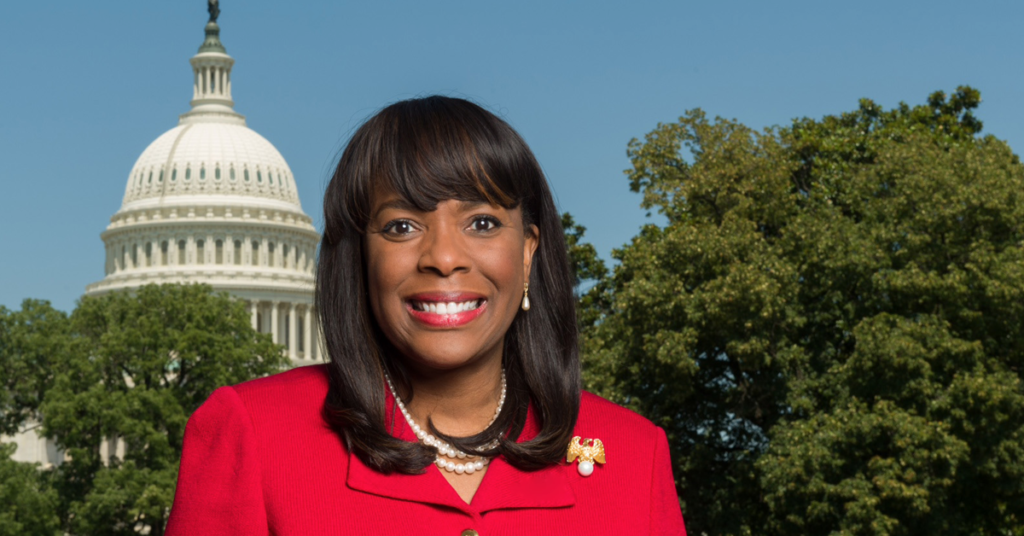
Congresswoman Terri Sewell announced the City of Tuscaloosa has received $17,149,167 in funding from the U.S. Department of Transportation’s(DOT) Federal Rebuilding American Infrastructure with Sustainability and Equity (RAISE) grant program. The funding will be used to support the city’s Tuscaloosa University Boulevard Corridor project for infrastructure improvements. In a press release, Sewell commented, “This is great news for the City of Tuscaloosa and its partners! Investing in our infrastructure provides cities with the revenue they need to not only rebuild but modernize and make room for new innovative development. I applaud the City of Tuscaloosa, the University of Alabama, and the Alabama Department of Transportation for working together to rebuild and revitalize this community. These are the types of funding opportunities that will ensure that the 7th Congressional District can build back better!” According to the DOT website, the program selection criteria for the grants included safety, environmental sustainability, quality of life, economic competitiveness, state of good repair, innovation, and partnerships with a broad range of stakeholders. The grants also wanted to ensure each project would create good-paying jobs, improve safety, apply transformative technology, and address climate change and advance racial equity. The RAISE funding will help with technology upgrades, stormwater drainage improvements, and expand pedestrian access from residential areas to institutional and retail areas in Tuscaloosa. Tuscaloosa Mayor Walt Maddox expressed excitement about the new project. “The City of Tuscaloosa could not be more thrilled to be among the recipients of the Department of Transportation’s RAISE Grant. These funds will give us the opportunity to make improvements to one of the major arteries connecting all of Tuscaloosa and will provide better connectivity across our community,” said stated Maddox. “The enhancements that will be made to the University Blvd corridor will include increased storm drain capacity, streetscape enhancements, advancements in security and safety measures, and the inclusion of bike lanes and underground utilities in several locations.” The RAISE grant program was previously known as the Better Utilizing Investments to Leverage Development (BUILD) and Transportation Investment Generating Economic Recovery (TIGER) Discretionary Grants. Congress has dedicated nearly $8.9 billion for twelve rounds of National Infrastructure Investments to fund projects that have a significant local or regional impact.
Donald Trump endorses Paul Gosar one day after House censure
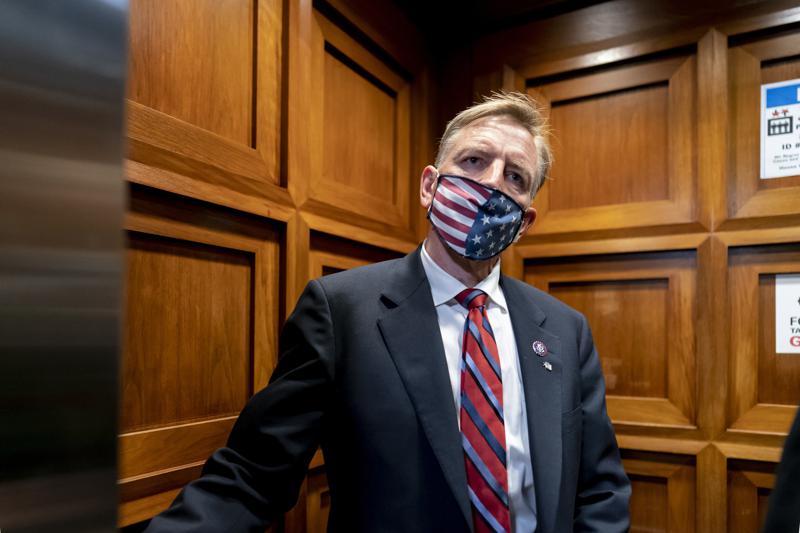
Former President Donald Trump is endorsing Rep. Paul Gosar one day after the Arizona Republican was censured by the House of Representatives for posting a violent cartoon video that depicted a character with his face killing one with New York Rep. Alexandria Ocasio-Cortez’s. Trump, in a statement, hailed Gosar as “a loyal supporter of our America First agenda” and “highly respected in Arizona,” and said he “has my Complete and Total Endorsement!” The statement made no mention of the House’s rare rebuke — just the fourth in nearly 40 years — which also stripped Gosar of his two committee assignments on the Natural Resources and the Oversight and Reform panels. Gosar has said the video, which was produced by his taxpayer-funded office, had been mischaracterized and was not intended to be a threat. In addition to Ocasio-Cortez, the video also depicted Gosar’s character attacking President Joe Biden with swords. Gosar is no stranger to controversy. He’s made appearances at fringe right-wing events, including a gathering in Florida last February hosted by a man who has promoted white supremacist beliefs, and earlier this year looked to form an America First Caucus with other hard-line Republican House members that aimed to promote “Anglo-Saxon political traditions.” Republican Minority Leader Kevin McCarthy, meanwhile, has called the censure an “abuse of power” by Democrats and signaled payback should Republicans retake the House majority next year. Republished with the permission of the Associated Press.
January execution date for Alabama man convicted in slaying
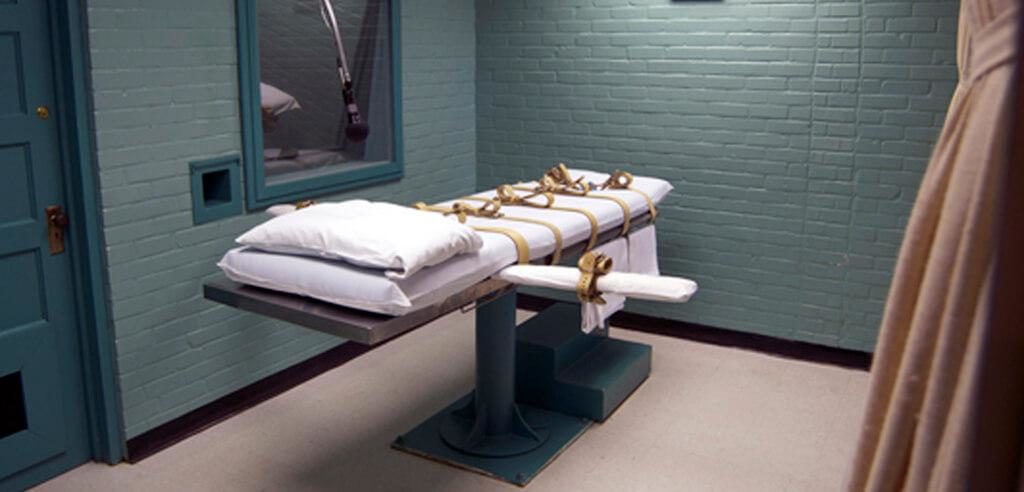
Alabama has set a January execution date for an inmate convicted in the 1996 shotgun killing of a man who towed his car after it broke down. The Alabama Supreme Court on Thursday set a January 27 lethal injection date for Matthew Reeves. Reeves was sentenced to death for the November 27, 1996 murder of Willie Johnson in Dallas County, Alabama. In earlier court filings, Reeves’ attorneys have argued he has an IQ in the 60s and that his trial counsel failed to do enough to show he is intellectually disabled and should therefore be spared a death sentence. In July, the U.S. Supreme Court reversed an 11th U.S. Circuit Court of Appeals finding that said that a state court had correctly rejected claims that Reeves had ineffective counsel at trial because they did not hire a neuropsychologist to present evidence that he is intellectually disabled. The decision was issued as an unsigned 6-3 opinion. Prosecutors said on the day of the slaying that Reeves, then 18, had gone with friends looking for people to rob, but their car broke down. Johnson came by in his pickup truck and offered to give them a ride and tow their car to Reeves’ house. Prosecutors said Reeves, who was riding in the bed of the truck, stuck a shotgun through the rear window of the cab and fatally shot Johnson in the neck. “In payment for this act of kindness, Reeves murdered Johnson, stole his money, and mocked his dying spasms,” justices wrote in the majority opinion in July. The trial judge sentenced Reeves to death on the recommendation of the jury. Defense lawyers at Reeves’ trial had funds to hire a neuropsychologist, Dr. John Goff, but ultimately did not do so. At a hearing on his post-conviction appeal in state court, Goff testified he believed Reeves was intellectually disabled and that Reeves’ IQ score should be adjusted down into the 60s. A state expert disputed that and pointed to the money that Reeves made from dealing drugs. Republished with the permission of the Associated Press.
New laws steer some teachers away from race-related topics
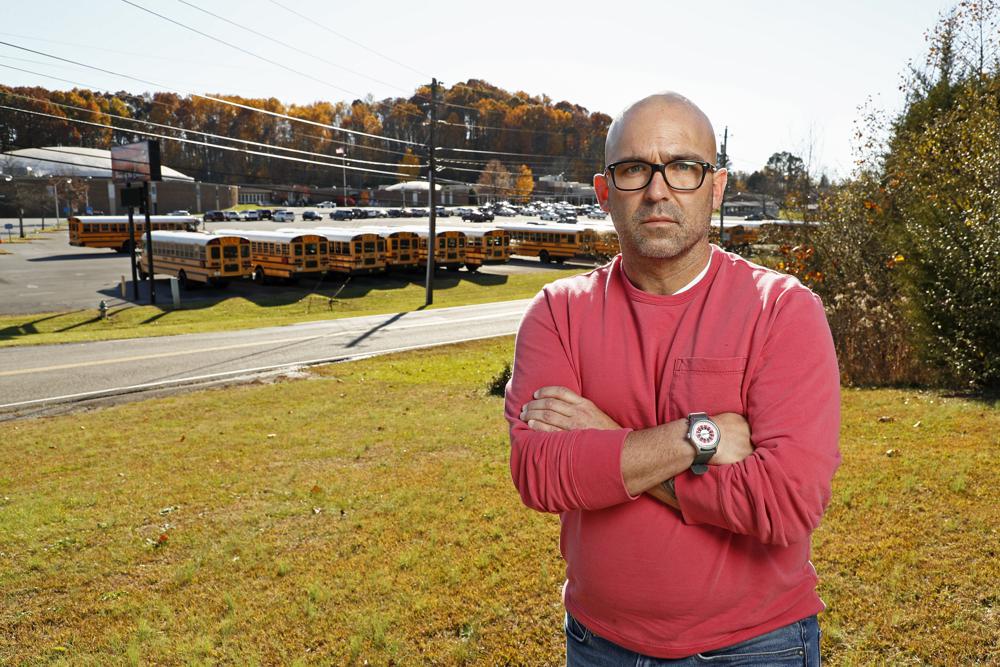
New measures that restrict how race is addressed in classrooms have spread confusion and anxiety among many educators, who, in some cases, have begun pulling books and canceling lessons for fear of being penalized. Education officials have nixed a contemporary issues class in a Tennessee district, removed Frederick Douglass’ autobiography from reading lists in an Oklahoma school system, and, in one Texas case, advised teachers to present “opposing” views of the Holocaust. At least a dozen states have passed measures this year restricting how schools teach about racism, sexism, and other topics. While educators are still waiting to see how they will be enforced, the vagueness of some of the measures, coupled with stiff penalties, including the potential loss of teaching licenses, already are chilling conversations on race in schools and, in some cases, having consequences that likely go well beyond the intent of those approving the measures. Matt Hawn, a high school social studies teacher in Tennessee, said he has heard from teachers concerned about how they will teach controversial topics since he was fired himself this spring as state lawmakers were finalizing new teaching restrictions. “It’s certainly giving them caution, like, ‘What’s going to happen if I teach this?’ — because the penalty is so steep,’” Hawn said. Hawn was dismissed after school officials said he used materials with offensive language and failed to provide a conservative viewpoint during discussions of white privilege in his contemporary issues class, which has since been eliminated. Teaching around race and diversity has been on the rise alongside a broader acknowledgment that racial injustice didn’t end in America with the passage of the 1964 Civil Rights Act. Those efforts have spurred a backlash, particularly among Republican voters. In Virginia, Republican Glenn Youngkin won the governor’s race this month promising to ban critical race theory, a term has become a stand-in for concepts like systemic racism and implicit bias. His Democratic opponent faced criticism for saying parents shouldn’t tell schools what to teach. Some sections of the new laws would seem unobjectionable. Tennessee’s law bars the teaching that one race or sex is inherently superior to another race or sex. But other sections are murkier, barring teaching that promotes division or causes children to feel psychological distress because of their race or sex. Those vague prohibitions have left teachers worried that any instruction on difficult topics like slavery or contemporary racism could be construed by parents as violating the law, said Alice O’Brien, general counsel for the National Education Association. “These measures are problematic because it is unclear what they mean and very much in the eye of the beholder,” O’Brien said. “I think it is worth understanding that every state already has pretty comprehensive rules in place for K-12 about what teachers have to teach. And they’re required to teach the whole history of the United States … not just the parts that we can feel celebratory about.” Some have cited the new laws in pushing to eliminate instructional material. In Tennessee, a conservative group of mothers in the Nashville suburb of Williamson County, Moms for Liberty, has challenged how schools teach the civil rights movement to second graders. In a letter to the Department of Education, Robin Steenman complained that the texts and accompanying teachers manual imply that “people of color continue to be oppressed by an oppressive ‘angry, vicious, scary, mean, loud, violent, (rude), and (hateful)’ white population.” The books Steenman cited include “Ruby Bridges Goes to School” and “Martin Luther King Jr. and the March on Washington.” In Oklahoma, teachers in the Edmond Public Schools said books by authors of color were struck from a list of anchor texts around which English teachers build their curriculum. A lawsuit filed by teachers, students, and parents said the district also removed commonly taught texts by Black authors from the curriculum, including the autobiography of Frederick Douglass. A spokesperson for the school system, Susan Parks-Schlepp, said some reading assignments were made optional as part of an annual review to ensure they align with state guidelines. In Texas, one Republican lawmaker directed a committee he chairs to seek information on the use of at least 850 books on topics ranging from racism to abortion. State Rep. Matt Krause, who is running for state attorney general, said five Texas school districts had removed books “after receiving objections from students, parents, and taxpayers.” Two of the districts confirmed that they had received copies of the letter and were looking into the matter, but they did not comment further. Clay Robinson, a spokesperson for the Texas State Teachers Association, said the letter only adds to the confusion teachers have dealt with since the state passed a bill requiring educators to teach “both sides” of topics. “Teachers are already feeling like Big Brother is looking over their shoulders,” Robinson said. The racial divide in support for these measures was obvious at an Alabama School Board meeting in August where the two Black members voted against a resolution denouncing “instruction intended to indoctrinate students” in ideologies promoting a particular race or sex, while the seven white members voted in favor. Speaking against the measure, school board member Tonya Chestnut said all children deserve to be in an environment where they feel safe and can appreciate their heritage, but the resolution could “put teachers in a position where they feel uncomfortable, even fearful, to teach the truth.” James Copland, director of legal policy at the conservative Manhattan Institute, said that chilling effects are real, but that appropriately tailored new laws are needed to show schools what is and isn’t appropriate. He pointed to some episodes including a Cupertino, California, teacher who directed elementary school students to “deconstruct” their racial identities, and a Philadelphia elementary school that had students appear on an auditorium stage with signs that read “Jail Trump” and “Black Power Matters.” “We don’t want to chill genuine discussion and clear-minded study of history,” Copland said. But he said students should not be forced to subscribe to a set of
No settlement for separated migrant families amid criticism

Migrants whose children were taken from them under former President Donald Trump’s zero-tolerance border policy have not reached a settlement agreement with the U.S. government, a lawyer for the families said Thursday as he and other advocates pushed back at increasing criticism of a proposal to pay compensation to them. Attorney Lee Gelernt of the American Civil Liberties Union would not discuss details of the talks nor confirm a previously reported settlement proposal of several hundred thousand dollars to each affected person. He did, however, hold out the possibility of a trial, featuring parents separated from children as young as six months as witnesses, if there’s no agreement to end the litigation. “All I can say is there’s no deal on the table, and we have no timeframe necessarily,” Gelernt said in a conference call with reporters. The settlement talks, which would typically be private until an agreement is finalized, have instead become a new line of attack for Biden administration critics seeking to tie the issue to the increasing number of migrants seeking to cross the U.S.-Mexico border over the past year. Republicans grilled Homeland Security Secretary Alejandro Mayorkas about it this week when he appeared before the Senate Judiciary Committee. “As you can imagine, many Americans think it’s a pretty outrageous idea to offer massive taxpayer-funded payments to illegal immigrants who broke our laws, particularly in the middle of a record-shattering border crisis that this administration has created,” Sen. Chuck Grassley, a Republican from Iowa, said at the hearing Tuesday. Mayorkas referred questions from the senators to the Department of Justice, which is handling the negotiations, though at one point, he disputed the suggestion that a settlement would encourage future migrants to seek to come to the U.S. About 5,500 children were forcibly removed from their parents under Trump’s zero-tolerance policy in which parents were separated from their children as the administration sought to discourage people from crossing the border, even if they were presenting themselves to authorities to seek asylum. Trump halted the practice in June 2018 amid widespread outrage, including from many Republicans, just six days before a judge ordered an end to the program in response to a lawsuit filed by the ACLU. In addition to negotiating a potential settlement, the Biden administration has also been working to reunite some of the families. There are believed to be hundreds, and perhaps as many as 1,000-2,000, parents who were separated from their children and still haven’t been located. The settlement talks had been going on quietly for months when The Wall Street Journal reported in October that the Justice Department was considering paying about $450,000 to each person affected. The Associated Press later confirmed the figure had been under consideration. In addition to the payment, settlement talks have also included a discussion of granting the families legal U.S. residency and providing counseling services. Asked about the amount on Nov. 3, Joe Biden appeared to misunderstand the question and said a payment of about $450,000 per person was “not going to happen.” He later said he supported a settlement without specifying an amount. “If, in fact, because of the outrageous behavior of the last administration, you coming across the border, whether it was legally or illegally, and you lost your child — You lost your child. It’s gone — you deserve some kind of compensation, no matter what the circumstance,” Biden said. “What that will be, I have no idea. I have no idea.” Migrant advocates say the amount of the settlement and the legal status of the families misses the point. “What’s really an issue is the question of whether we as a country are OK with ripping babies out of the arms of their parents,” said Conchita Cruz, co-executive director of the Asylum Seeker Advocacy Project. Gelernt noted in the call with reporters that many of the separated families were not entering the country illegally, as critics claim because they were presenting themselves to authorities to seek asylum, which is legal under U.S. law. He also pointed out that even non-citizens can sue the U.S. government, regardless of their immigration status. “The truth is that lawyers always settle cases, and it’s usually because it’s in their financial interest to do so,” he said. The advocates gave a sense of what a trial might entail, bringing a woman to the call who gave her name only as Leticia and tearfully described having her son taken from her as she sought asylum in 2017. It was 2 1/2 years before they were reunited, and she said the boy showed signs of psychological trauma from the separation. “Even now, after being reunited together, we live in fear a day that we could still be separated,” she said. “I could not imagine living through this pain again.” Republished with the permission of the Associated Press.
