
Club for Growth launches long-anticipated opposition of Katie Britt
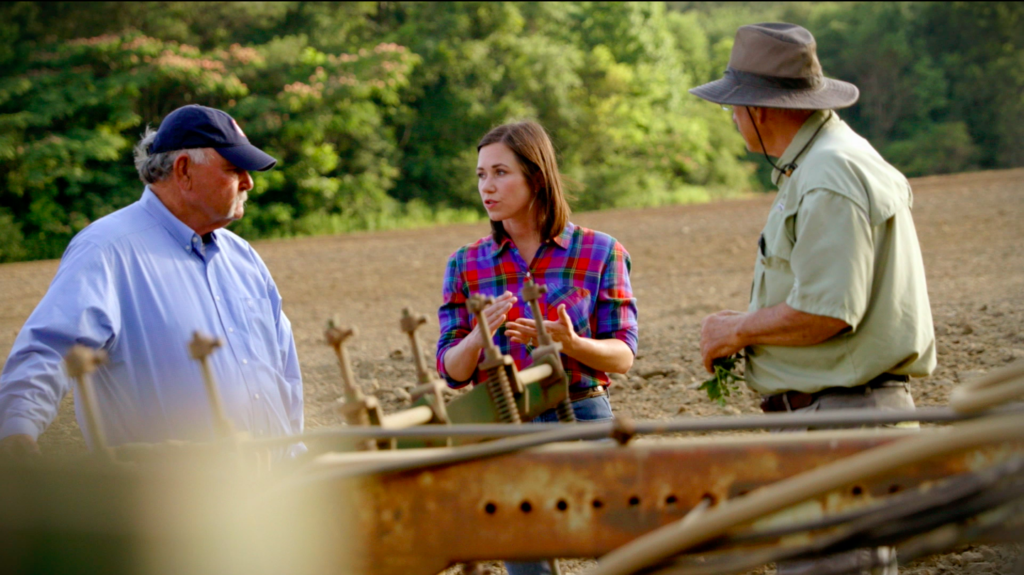
Club for Growth has finally joined the fight for the Alabama U.S. Senate seat. The 2022 election, still months away, is looking to be a long and hard-fought battle, with major players vying to take the seat now held by long-time senator Richard Shelby. Club for Growth Action, the federal super PAC, has endorsed U.S. Rep. Mo Brooks. Now the group is taking aim at Katie Britt. A Club for Growth spokesman told Yellowhammer News that it has a new ad that will run after the Iron Bowl in the Montgomery media market. The 30-second ad targets Britt for her association with Democrat Mayor Steven Reed and for her supporting the 2019 Rebuild Alabama Act, which included a fuel tax increase. The ad states, “Wouldn’t it be nice if politics had clear lines like football? Look at Katie Britt. Whose side is she on? Britt worked for Democrat mayor Steve Reed’s transition team when he took over in Montgomery that pushed a ton of liberal policies, including massive tax increases. And Britt backed a $300 million, 10-cent-a-gallon gas tax hike. Katie Britt: If you’re a Trump conservative, she’s not on your team.”
Katie Britt now accepts Bitcoin and other cryptocurrency for campaign contributions

U.S. Senate candidate Katie Britt announced today that her campaign will now accept contributions via BitPay.Through the BitPay plug-in on Britt’s campaign website, eligible individuals can now contribute via various forms of cryptocurrency to her campaign. Any contributions made via BitPay must abide by all federal laws and regulations regarding political donations. The total market cap of these accepted cryptocurrencies exceeds $1.4 trillion, which accounts for nearly 70% of the global crypto market cap. “I’m excited to announce that our campaign now accepts cryptocurrency contributions, including Bitcoin, Ethereum, and Dogecoin,” said Britt. “This is merely a small token of my overall staunch support for the digital asset ecosystem, blockchain technology, proof of work, cryptocurrency, and Bitcoin in particular.” “We need fresh blood in the Senate to keep America at the forefront of innovation and technology, not the same-old ineffective career politicians who are stuck in the past,” she continued. “Supporting Bitcoin means supporting personal freedom, American competitiveness, and national security. I will be an advocate for commonsense policies that provide appropriate consumer protections while fostering innovation, entrepreneurship, and investment here at home rather than driving the digital asseteconomy overseas to places like China.” Britt supports the digital asset economy. She has advocated for Congress to fix a provision in the new infrastructure bill that uses an antiquated, anti-innovation definition of what it means to be a digital asset broker. U.S. Senators Pat Toomey, Ron Wyden, and Sen. Cynthia Lummis filed an amendment clarifying the definition of “broker” with respect to digital asset third-party reporting requirements. Britt also noted that when elected, she plans to work closely with longtime cryptocurrency advocate U.S. Sen. Cynthia Lummis of Wyoming. Britt believes Wyoming’s approach to regulating digital assets is a good roadmap for the nation to take. U.S. Senators Pat Toomey, Ron Wyden, and Cynthia Lummis filed an amendment clarifying the definition of “broker” with respect to digital asset third-party reporting requirements. “I support American innovation and entrepreneurship, including in the crypto space, and want to see the digital asset broker issue clarified in a way that ensures that the federal government is not putting their thumb on the scale,” Britt stated. “We should be encouraging competition here in America, not driving economic activity overseas.” Britt is currently endorsed by the Home Builders Association of Alabama, the Alabama Farmers Federation’s FarmPAC, and the Alabama Retail Association’s federal political action committee.
Democrats call on Joe Biden to lower gas prices, support tax hikes, other regulations on the industry

Eleven U.S. Senate Democrats have called on President Joe Biden to do something about rising gas prices while also expressing support for policies that energy industry says are contributing to seven-year high costs at the pump, including oil and gas tax increases embedded in the Build Back Better Act. The 11 senators wrote this month that they support the president’s commitment to the development of “clean, renewable energy” but “must ensure that Americans are able to afford to fill up their cars at the pump in the meantime.” The average cost for a gallon of gasoline Friday was $3.41 a gallon, according to AAA. That’s $1.20 more a gallon than this time last year. Under the Donald Trump administration, the U.S. led the world in oil production and was energy independent. Under the Biden administration, gas prices are the highest they’ve been since 2014 within eleven months of him taking office. In their home states, the Democratic senators write, “high gasoline prices have placed an undue burden on families and small businesses trying to make ends meet, and have proven especially burdensome as our constituents continue to recover from the economic fallout of the COVID-19 pandemic.” They blame rising gas prices “on the Organization of the Petroleum Exporting Countries (OPEC) and others to purposefully manipulate gas prices by constraining supply, as well as the choice of domestic leaseholders and producers to continue to export U.S. petroleum.” They asked Biden to consider “all tools available” at his disposal to lower U.S. gasoline prices, including releasing oil from the Strategic Petroleum Reserve and banning crude oil exports. Biden instead responded by calling on the Federal Trade Commission to look into possible illegal conduct in the oil and gas industry that could be causing gas prices to rise. Those in the oil and gas industry say the reason for increasing prices is because of lower supply due to restrictions imposed on the industry by the Biden administration, including canceling the Keystone Pipeline, halting new leases for existing operations on federal lands, among other policies. American Petroleum Institute SVP Frank Macchiarola told The Center Square that Biden’s call was a distraction from his own energy policies, including restricting access to America’s energy supply and canceling important infrastructure projects. “Rather than launching investigations on markets that are regulated and closely monitored on a daily basis or pleading with OPEC to increase supply, we should be encouraging the safe and responsible development of American-made oil and natural gas,” Macchiarola said. Todd Staples, president of the Texas Oil and Gas Association, agrees, arguing, “The solution,” he says, “is not to disrupt energy opportunities that have been a driver to more economic gains for our state and nation.” Instead, all Americans, “should ask their elected officials to support the abundance of affordable, reliable energy available here at home.” U.S. energy policy “shouldn’t forfeit energy freedom for energy dependence,” Staples added. Instead, it must “encourage smart, science-based policies that advocate for homegrown production, domestic jobs, and economic advancement that benefit all Texans and every American. Unfortunately, we are feeling the repercussions of misguided policies that have encouraged foreign energy instead of encouraging American pipeline projects, domestic production, and trade opportunities.” One policy includes the “Methane Emission Reduction Act of 2021,” embedded in the BBBA, which imposes new taxes on all oil and gas producers for “ambient methane emissions.” Costs would be passed onto the consumer, the industry says, making gas prices even higher for the foreseeable future. Ed Cross, president of the Kansas Independent Oil and Gas Producers Association, said the plan requires the industry to measure “ambient methane emissions,” using technology that doesn’t currently exist or be taxed. “The tax is based on ambient methane emissions measurements,” Cross wrote in an op-ed published by the Kansas City Star. “The measurements would have to distinguish between oil and natural gas production, agricultural emissions – about a third of U.S. methane emissions – and landfill emissions – about a third of U.S. methane emissions. “And the measurements would have to be continuous – 24 hours/day every day. No such system exists and cannot be created in the foreseeable future.” Methane emissions are already highly regulated. Because of American technological innovation, natural gas production in the U.S. has lowered emissions, making the U.S. the world leader in emission reductions, industry leaders point out. The Texas Independent Producers and Royalty Owners Association argue the proposed taxes and fees on the industry “could cripple small Texas oil and gas operators and severely burden American taxpayers.” Additional taxes would “have a ripple effect through the entire U.S. economy, negatively impacting American jobs, domestic energy production, household energy bills and the cost of goods and services, including the price of gasoline,” TIPRO President Ed Longanecker said. “The U.S. oil and natural gas industry has demonstrated its commitment to reducing emissions through innovation, collaboration, and investment of hundreds of billions of dollars in greenhouse gas mitigating technologies throughout the value chain, and with quantifiable success. “Turning back the clock on carbon dioxide emissions and every other major air pollutant, natural gas leads the way,” he added. Increased natural gas production “through innovation and efficient practices brought back manufacturing jobs and saved American families $204 billion a year through lower electricity, oil, and natural gas prices. That’s the equivalent of $2,500 a year for a family of four.” During the statewide shutdown in 2020, when the oil and gas industry experienced a “bloodbath” of losses, Texas companies still produced 43% of the nation’s crude oil and 26% of its marketed natural gas. Nearly one-fourth of the nation’s operable refineries and one-third of the U.S. total refining capacity are in Texas, the Energy Information Administration (EIA) reports, with 31 petroleum refineries processing a combined total of almost 5.9 million barrels of crude oil per day. Texas also produces more electricity than any other state, EIA notes, generating nearly twice as much as Florida, the second-highest electricity-producing state. Roughly one-fourth of U.S. dry natural gas reserves and three-tenths of the 100
TV station donates thousands of items to Alabama Archives

A television station has donated thousands of items including historic footage from the civil rights era to the Alabama Department of Archives and History, which will make the material available to the public. WSFA-TV in Montgomery announced it had given the agency materials dating to the 1950s, including footage from news conferences by the Rev. Martin Luther King Jr., coverage of the Freedom Riders in 1961, and original film from the “Stand in the School House Door” by then-Gov. George C. Wallace in 1963. The video also includes scenes from a visit to the NASA center in Huntsville by President John F. Kennedy and Vice President Lyndon Johnson in 1962 and special reports on the death of former University of Alabama football coach Paul “Bear” Bryant in 1983. While the TV station was planning to switch locations, managers determined it wasn’t practical to move the large numbers of delicate film reels and boxes full of video and other items. Steve Murray, the Archives director, said archivists had long suspected the WSFA studios held valuable content for historical preservation, and his department jumped at the opportunity to add to its collection when a phone call came in late 2019. “It was one of those kind of chilling moments … where the hair stands up on the back of your neck when you see these closets after closets of tapes and films,” Murray explained. “Just the opportunity to take something off the shelf and see a label … related to the civil rights movement or to other major public events and Alabama’s life and history really made you, made me appreciate the value of what was there.” The donation includes more than 7,000 audiovisual items in a variety of formats, plus WSFA-TV scrapbooks, photographs, negatives, correspondence with viewers and officials, and newsletters. “We are intimidated by this collection, to be honest with you, because it is huge,” said Meredith McDonough, digital assets director for Archives and History, “and because it is unlike anything we have.” Under the terms of the donation agreement, the department will use the material to benefit state citizens through museum exhibitions, K-12 classrooms, and other educational products. WSFA-TV will be able to broadcast and publish the content of the collection after it is digitized. The agency is processing “test batches” of film and it will take years to fully process the boxes. So far, about 15 hours of film has been digitized, which represents only 30 items in the collection. No payment was made for the collection, WSFA-TV reported. Republished with the permission of the Associated Press.
Indian tribes seek return of remains, artifacts from Alabama

Seven tribes are asking an Alabama university to return the remains of nearly 6,000 people excavated over the years from what once was one of the largest Native American settlements in North America. The Oklahoma-based Muscogee Nation, Choctaw Nation of Oklahoma, and five other tribes have filed a petition under a federal law for the return of 5,982 “human remains of our ancestors” and funerary objects now held by the University of Alabama and its Moundville Archaeological Park. “These are human beings. We consider them to be our grandparents,” Raelynn Butler, the Muscogee Nation’s historic and cultural preservation manager, said in an interview. Butler said tribes are seeking the return so the remains can be reburied with the funerary objects. In a Friday letter to tribal officials, James T. Dalton, Executive Vice President and Provost of the University of Alabama, said that the university hopes to work with the tribes. The Alabama site, simply known as Moundville because of the large earthen mounds constructed there, once housed what was believed to be a large and thriving settlement. While its ancient name is unknown, the city was founded around 1120 and, at its peak, was one of the largest Native American settlements in North America, according to the university. The site included a great plaza and 26 earthen mounds. It later fell into decline, although it was used as a ceremonial site and burial ground. It was largely abandoned by the 1500s. The site and museum run by the University of Alabama is now a regular stop for elementary school students on field trips. Tens of thousands of indigenous peoples, including the Muscogee Nation, were forcibly removed from their ancestral homelands by the U.S. government between 1830 and 1850 during the devastating Trail of Tears. Muskogee Nation officials came to Alabama this week to meet with university representatives and deliver a letter to the governor. “The remains held by the University were left behind when our ancestors were forced from our ancestral homes in the Southeastern United States and into other states through the nene estvmerkv or ‘road of misery’ also known as the “Trail of Tears,” David W. Hill, Principal Chief of the Muscogee Nation and Chief Gary Batton wrote in letters to Gov. Kay Ivey. “While no one can change the past, it is our hope that you will help encourage others to do what is right in the present,” they added. The 1990 federal Native American Graves Protection and Repatriation Act requires federally funded institutions, such as universities, to return Native American remains and cultural items to lineal descendants, Indian Tribes, and Native Hawaiian organizations. However, the return has been slow to happen. While nearly 83,000 remains in the U.S. had been returned to descendants, the National Park Service indicates remains of about 116,000 Native Americans are still held by institutions around the country. Many of them have not been linked to a particular tribe — a designation called “culturally affiliated” — that allows return. The settlement at Moundville predates the modern tribes, but the seven tribes argue they are linked by lineage and language. Tribal officials are asking the Native American Graves Protection and Repatriation Review Committee to declare the site culturally affiliated with the tribes to pave the way for the return of the remains. A hearing is scheduled for next week. “We still have a lot of work to do in the Southeast. Only 26% of remains of ancestors that have been dug up or excavated from the Southeastern states have been returned or repatriated to tribes through the NAGPR process,” Butler said. Dalton said the University of Alabama will be providing more suggestions on the “most productive and efficient manner to address the pending joint request.” “It is our hope that, in joining with the tribes in consultation, all parties can reaffirm their shared goals of honoring and preserving the cultural heritage of the Moundville civilization,” Dalton wrote. The tribe has been seeking the return of the remains and objects taken from Moundville since 2018 and have “thus far been unsuccessful in obtaining rightful return,” they wrote. “We are hopeful the university does the right thing. We are hopeful the state urges the university to do the right thing,” Muskogee Creek ambassador Jonodev O. Chaudhuri said.
Mo Brooks and Barry Moore vote “No” on Build Back Better ‘monstrosity’
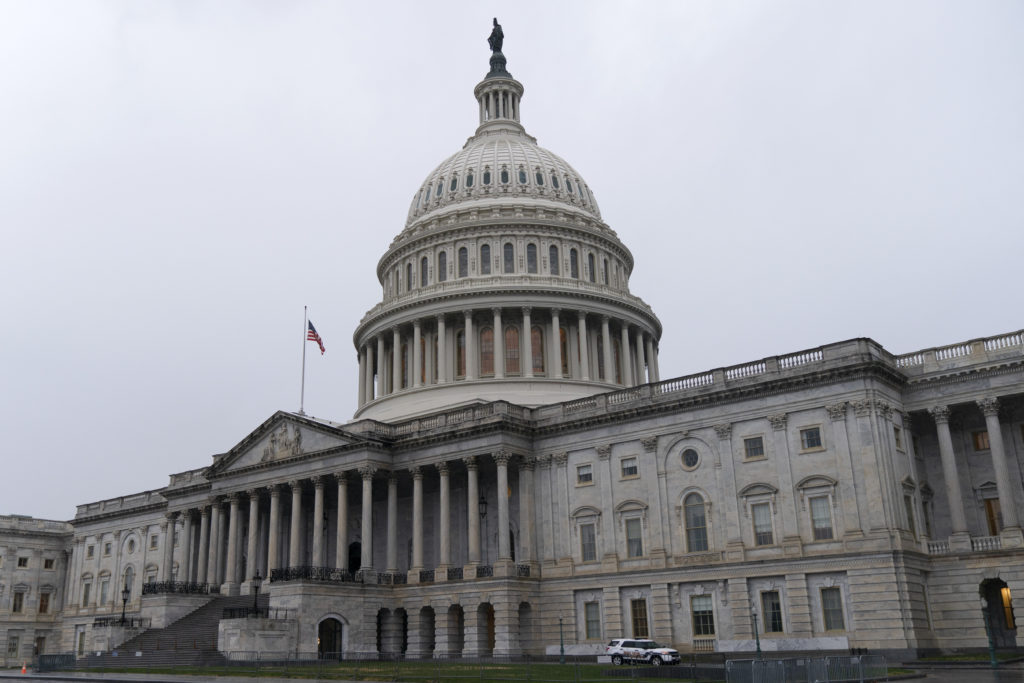
Congressmen Mo Brooks and Barry Moore have announced they will vote “No” on H.R. 5376, the Build Back Better bill. In a press release, Brooks argued that Build Back Better bill was a “monstrosity” that raises “taxes, increases welfare, grants amnesty for illegal aliens, and authorizes a federal takeover of local public schools.” He also argued that the bill has been pushed through the House without proper review. Congressman Brooks said, “Socialist Democrats display their true colors and arrogance by pushing a massive unpaid-for multi-trillion-dollar spending bill that raises taxes, increases welfare, grants amnesty for illegal aliens, and authorizes even more federal takeover of local public schools, among other terrible policy provisions. The only thing Socialist Democrats are for is spend, spend, spend— grow government, takeover local control, order the American people around— until a formerly-great America is broke and discarded to the dustbin of history.” Brooks continued, “Inflation is at a 30-year high, and Socialist Democrats care not one twit. They ignore the economic reality of massive government spending and welfare give-a-way programs that encourage welfare recipients to mooch off the hard work of others and cause inflation that ravages working American citizen pocketbooks. The economics are simple: when you print money out of thin air that money becomes less valuable. Socialist Democrats are ignorant and clueless of basic economics.” Congressman Moore argued that the bill will threaten America’s prosperity. Moore stated in a press release, “The most serious threat to our representative democracy is the betrayal of the values that empowered us to become the freest, most prosperous nation in the history of the free world. The dangerous bill advanced by House Democrats today would bring our nation alarmingly closer to the repressive socialist utopia envisioned by power hungry globalists who abhor American exceptionalism and the rights of all individuals. This transformative legislation seeks to elevate government to the all-powerful role of provider of our livelihoods and our liberties, not the protector of our God-given rights that our brilliant Founders created. This battle now goes to the Senate, and I pray that freedom and reason prevail.”
