
Georgia jury finds 3 men guilty in Ahmaud Arbery killing

A jury convicted three Georgia men of felony murder Wednesday for the killing of Ahmaud Arbery in a case that led to historic legislative reform in the state. Travis McMichael, who was seen on viral video wrestling with Arbery over his shotgun before Arbery was killed, was found guilty on nine charges that range from malice murder, felony murder, aggravated assault, false imprisonment, and criminal attempt to commit a felony. McMichael’s father, Gregory McMichael, who started the pursuit of Arbery that led to his death, was absolved from one of the nine charges. Their neighbor, William “Roddie” Bryan, who also chased Arbery and recorded a video of the event, was found guilty of felony murder, aggravated assault and, false imprisonment. All three men face life sentences without parole. “The loss of Ahmaud Arbery was a tragedy that should have never occurred,” Georgia Attorney General Chris Carr said. “Today’s verdict brings us one step closer to justice, healing, and reconciliation for Ahmaud’s family, the community, the state, and the nation.” Attorneys for the McMichaels, who are white, argued the pair tried to detain Arbery, who is Black, under Georgia’s preexisting citizen’s arrest law in February 2020. The father and son followed Arbery after seeing him running from a house under construction in a neighborhood near Brunswick. The men had seen video footage of Arbery on the property before and suspected him of burglary. The McMichaels, however, told the court they never saw Arbery take anything from the property. The state prosecutor said they had no grounds to detain Arbery since the law required them to witness a crime or reasonably believe a crime was committed. “Ahmaud Arbery was the victim of a vigilantism that has no place in Georgia,” Gov. Brian Kemp said. “As legal efforts continue to hold accountable all who may be responsible, we hope the Arbery family, the Brunswick community, our state, and those around the nation who have been following his case can now move forward down a path of healing and reconciliation.” Kemp signed legislation in May that revamped Georgia’s citizen’s arrest law. The measure had received unanimous support in the House and overwhelming support in the Senate. The new law eliminates the right for civilians to arrest other people except for retail business owners and restaurant owners in certain situations. Weight inspectors, licensed private security guards, and private investigators can detain someone while on duty, and law enforcement officers can make the arrests outside of their jurisdiction. The measure allows Georgians to retain their right to protect their home and property. It allows a private person to defend themselves against someone in the home or to “prevent the commission of a forcible felony.” The Arbery case also led to a new hate crime law, which enhanced sentencing for crimes that target victims based on race, religion, national origin, sexual orientation, gender, mental disability, or physical disability. While the three men convicted in Arbery’s death won’t face the new hate crime sentencing in Georgia, they were indicted on federal hate crime charges. The federal trial is set for February. Republished with the permission of the Associated Press.
DOJ: Alabama prisons unimproved, remain violent and deadly
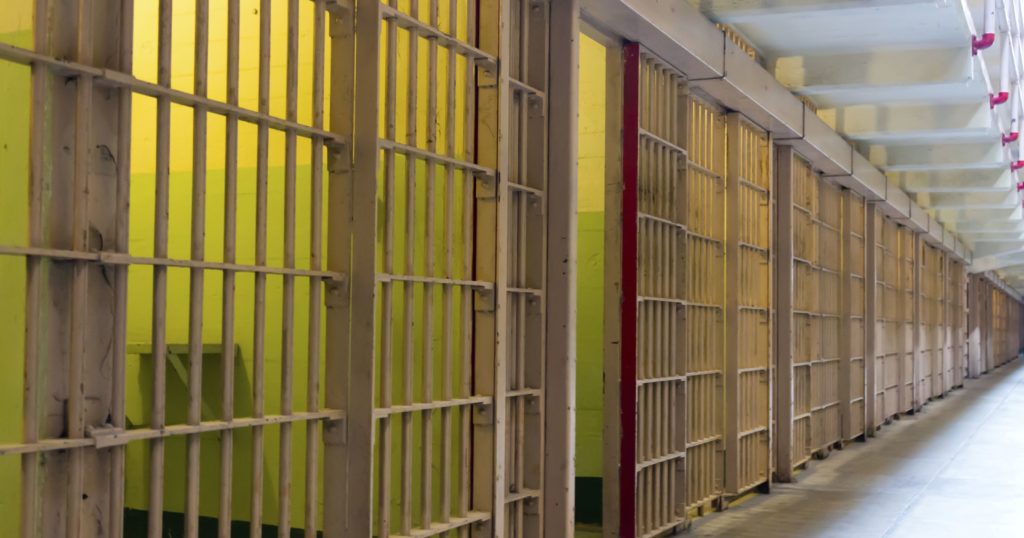
The U.S. Department of Justice says conditions in Alabama prisons have not improved since the federal government warned the state of unconstitutional conditions three years ago and that male inmates continue to live in deadly and dangerous conditions. The Justice Department last Friday filed an updated complaint in their ongoing lawsuit against Alabama over prison conditions. Justice Department officials wrote that violence remains unabated in facilities that are both overcrowded and “dangerously” understaffed. “In the two and a half years following the United States’ original notification to the State of Alabama of unconstitutional conditions of confinement, prisoners at Alabama’s Prisons for Men have continued daily to endure a high risk of death, physical violence, and sexual abuse at the hands of other prisoners,” the Justice Department wrote in the complaint signed by U.S. Attorney General Merrick Garland. The lawsuit accuses the state of operating prisons where conditions are so poor they violate the U.S. Constitution’s ban on cruel and unusual punishment and accuses state officials of being deliberately indifferent to the situation. While Alabama has acknowledged problems in state prisons, the state is disputing the Justice Department’s allegations of unconstitutional conditions and is fighting the lawsuit in court. The Justice Department’s latest filing came after a federal judge directed the department to be more specific about its accusations. The filing said dozens of inmates had been killed by other inmates in recent years and listed some of the specific incidents. In one case, a 53-year-old prisoner at Donaldson died after being strangled, and a note was found on the prisoner indicating he feared for his life because another prisoner had ordered a “hit” on him, officials wrote. The filing says at least 33 inmates were killed behind bars in 2018, 2019, and 2020. While the department reported no 2021 homicides in monthly reports, at least ten prisoner-on-prisoner homicides “have been reported by the media and advocates in the calendar year 2021,” officials wrote. The prison system does not include in its numbers deaths that are still under investigation. The Justice Department listed seven inmate homicides in 2021 where prisoners were stabbed, smothered, or choked to death. The Associated Press in September sent a records request asking for the number of inmate deaths under investigation as a potential homicide. The department responded on November 2 that it did “not label any death investigation as a ‘potential homicide,’ so we cannot provide that information.” The Justice Department wrote there is a pattern of excessive force by prison guards that is fueled by a dangerous mix of overcrowded prisons and too few officers. “Overworked security staff in the overcrowded prisons lack sufficient backup and support to manage prison security, which results in officers’ increased fear of prisoner threats and excessive force,” the department wrote. The department said, “most of Alabama’s prisons had correctional staff vacancy rates of over 50%” in the first quarter of 2021. The Justice Department also described a litany of safety and sanitation problems with buildings, including that “not one of the 13 Alabama’s prisons for men has a functional fire alarm system.” A state lawmaker, who has called for the firing of Corrections Commissioner Jeff Dunn, said Wednesday that the prison system is in crisis. “I’ve said it a million times. There is no leadership over there,” said Rep. Chris England, a Democrat from Tuscaloosa. Alabama Gov. Kay Ivey this fall signed into law a plan to use $400 million in pandemic relief funds to help build two 4,000-bed prisons and a new prison for women and renovate other facilities. Ivey and GOP legislative leaders touted the construction plan as a partial solution to the state’s longstanding problems in corrections. Critics argued buildings alone will not remedy the prison problems and said the state has needs in health care and education that could be helped by the $400 million. Republished with the permission of the Associated Press.
