Members of Congress vote no on bill to keep government temporarily open
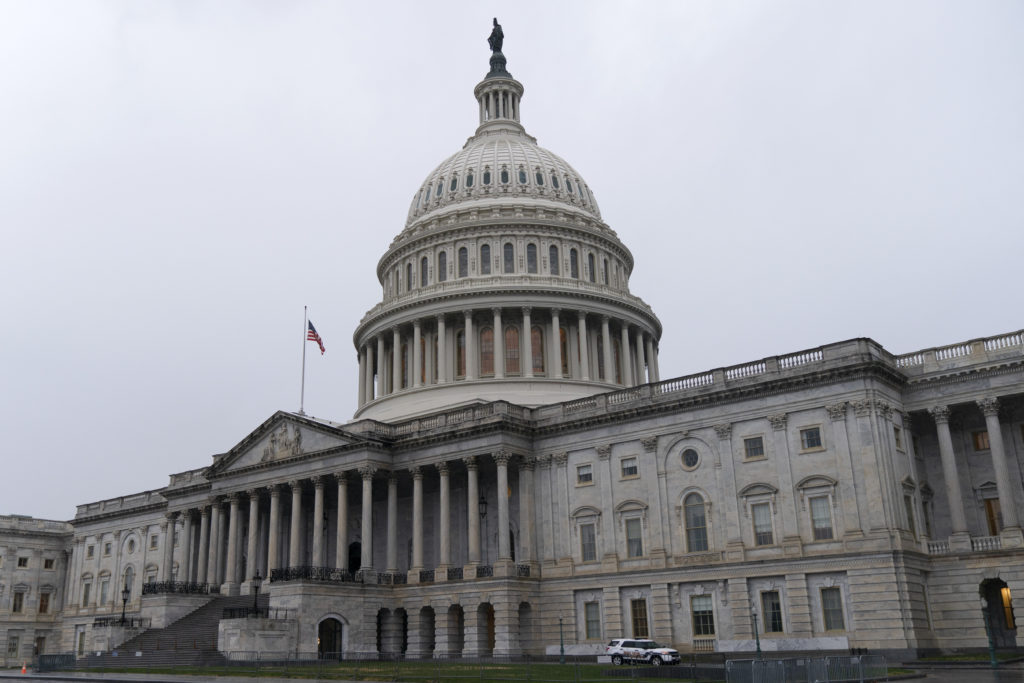
Reps. Barry Moore, Mike Rogers, and Mo Brooks have voted against H.R. 6119, a short-term spending bill extending current government spending levels through February 18, 2022. The bill passed the House and now goes to the Senate for consideration. Rep. Moore previously opposed continuing resolutions (CRs), arguing that they damage the military’s critical long-term planning ability and fail to address evolving issues addressing the nation. The government is currently being funded by a CR passed by Congress in September. Moore stated in a press release, “Democrats have been so focused on sticking the American people with their radical tax-and-spend agenda that they have once again neglected to perform the basic role of government. Not only does this spending bill represent another fundamental failure by this Democrat-led Congress to do its job, but it allows the Biden administration’s reckless and dangerous vaccine mandates to be funded. Instead of forcing her radical agenda on America through constant manufactured financial cliff brinksmanship, Speaker Pelosi needs to address the multiple real crises facing American families, like rising crime, increasing inflation, our broken supply chain, and the worsening border fiasco.” Rep. Rogers released a statement defending his vote against the bill, stating, “Today, I voted against the Continuing Resolution that just kicks the can further down the road. One thing I hear from leaders across all Services is that multiple CRs are actively damaging military readiness. Continuing our current levels of Defense funding until February 18 is inexcusable in the face of threats from China and other enemies, especially after the Biden Administration has proven they are unwilling to fully fund our military. House Democrats chose to spend the past year bickering over their socialist spending spree instead of performing one of our most basic constitutional duties. This CR is another example of Democrats’ inability to govern.” Brooks also voted against the bill and believes CRs hurt the military. “Continuing Resolutions, by their very nature, hurt national security, NASA, and countless private sector contractors and businesses. Temporary funding deprives agencies and contractors of the ability to plan long-term, make sound financial decisions, and hire new employees,” Brooks stated in a press release. “Under a continuing resolution, agencies cannot begin new programs, thus trapping research and development in the past and hindering government agencies’ use of the latest technological innovations. Congress should fund the government through annual appropriations bills that give departments certainty of funding so that they can operate as efficiently as possible.” H.R. 6119 continues appropriations at current levels until February 18, 2022, with limited exceptions. The legislation also provides $7 billion to assist in the resettlement of Afghan refugees.
As Kay Ivey attempts to re-write history, Donald Trump supporters see through it and a path to her defeat
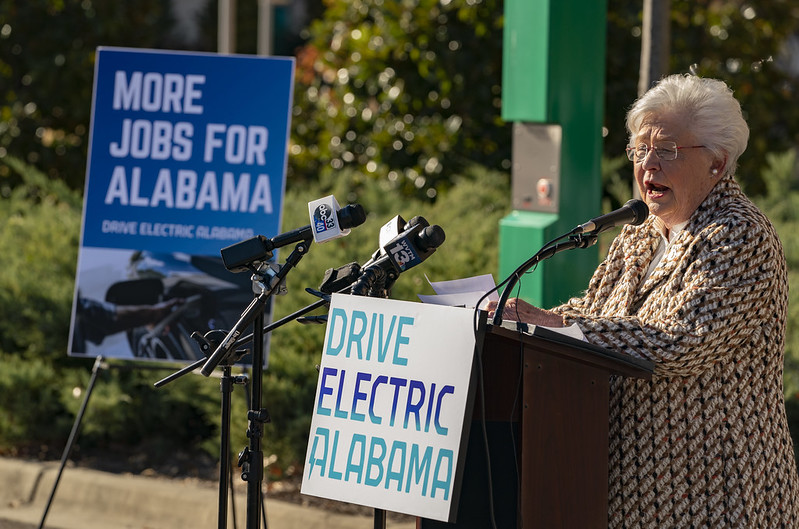
Governor Kay Ivey’s supporters will tell you that the governor is untouchable based on favorability numbers that don’t paint a full picture of the current state of collapsing support for her election. State Auditor Jim Zeigler, one of the state’s most prolific campaigners, will tell you, “Governor Ivey’s support is a mile wide and an inch deep.” This is why she’s drawing primary opponents who are confident that she is beatable, not just for what she’s done, but for what they are quick to point out she hasn’t done: Pushed a Donald Trump agenda or stood by him strongly enough. In stark contrast to other supportive elected officials, specifically governors around the nation have done, Ivey’s official website reflects that she has put out only three formal statements in support of Trump through her official office. There is no record of a formal statement in support of him during his second impeachment hearings. As a matter of fact, rather than defending the President, according to AL.Com, “Ivey did not answer the question about whether Trump was to blame” for the events of January 6 at the U.S. Capitol. In her response to questions, instead of taking the opportunity to voice her support for Trump and his supporters, she echoed the chorus of their opponents who blamed them for the events that day, stating, “All Americans need to press pause on divisive rhetoric, take a step back and do some deep soul-searching on how we got to this point of pain, ugliness, and loss of life.” In the same interview, Governor Ivey gave a tepid response to Nancy Pelosi and Never Trumpers pushing for Vice President Mike Pence to invoke the 25th Amendment to remove Donald Trump from office. She stated, “One of the hallmarks of our system of government is the orderly transition of power after an election. Vice President Pence has stated that he has no intention of invoking the 25th Amendment, and I do not believe a partisan impeachment would do anything other than further divide our nation. Invoking the 25th Amendment would create more chaos and would only incite further violence.” Trump was not the only person Ivey refused to support outright, telling the outlet in response to U.S. Congressman Mo Brooks’s fiery speech that day, “Everyone should be held accountable for the words they use,” Ivey said. “I’ve long believed that as elected officials, we should be held to a higher level of accountability. If the people of the 5th District believe their views are not being properly represented, then they need to express their disappointment directly to Congressman Brooks and, if necessary, hold him accountable at the ballot box. Moreover, it should be noted, he does not speak for all Republicans, much less all Alabamians.” While Ivey has been cagey in her history of Trump support, rarely mentioning his name or supporting his policies before heading back into campaign season, she was quick to celebrate Joe Biden publicly and directly. In fact, Ivey has praised Joe Biden and celebrated his election. Pledging to work with him, a promise she has made good on this week by joining Joe Biden, Pete Buttigieg, and Vice President Kamala Harris in pushing electric vehicles, a key component of Biden’s big-government agenda Build Back Better. As Alabama Today reported in August, in a matchup of possible gubernatorial candidates, Ivey had only 41.5%, well below the threshold to win without a runoff at 50% plus one vote. Incumbents below 50% are considered vulnerable. The independent poll was conducted by Montgomery-based Cygnal August 17-18 among 600 likely Republican primary voters. It has a margin of error of +/- 4.0%. It was paid for by Alabama Daily News. Zeigler, who has filed to run for governor, says his campaign against Ivey would be “Zeigler and the Taxpayers vs. Ivey and the Insiders.” Though he’s one of the most vocal opponents, Zeigler has publicly hedged on getting into the race himself, citing his inability to finance the endeavor saying, “If I could keep the campaign about common sense and not about the millions of dollars and cents raised for Gov. Ivey by the Montgomery Insiders, I could win.” Tim James is rumored to be announcing a run for governor as well, a position he ran for in 2002 and 2010, when he narrowly missed making the GOP runoff. When asked about the difficulty of taking on an incumbent, James commented, “Look, I’ve lost. It didn’t kill me. But I think if we do it, I think I’ll win it.” When asked about a possible run for governor, Lynda Blanchard told Alabama Today exclusively, “I’ve been all over this state and the one thing I hear repeatedly is that the people want a conservative fighter like President Donald Trump at every level of government; someone who will not just talk the talk but has shown loyalty to President Trump’s agenda to make our nation the strongest it can be for America’s families and businesses. The America First agenda has been the cornerstone of my race for the U.S. Senate and will continue to be on the forefront of my mind as I prayerfully consider the options before me to serve the people of our state in the best capacity. I have great respect for President Trump and his supporters and will not let them down.” Don Wallace, President of the Alabama Republican Assembly, believes that Ivey can be beaten, even as an incumbent. “I do believe Kay Ivey is beatable based on the encouragement others are getting to run. Many people are looking for stronger leadership to push back against the very liberal Biden Administration,” Wallace commented. When asked if voters support Ivey, Wallace mentioned the I-10 plan, the prison plan, and other controversial issues that have shown a willingness of the people and elected officials to break ranks with her and push back against her plans or goals. “Many have also been concerned about Ivey’s governing decisions when it comes to the original I-10 plan, the faulty prison plan, and efforts to take
Sources confirm Donald Trump appointee, Ambassador Lynda Blanchard plan to announce run for governor of Alabama
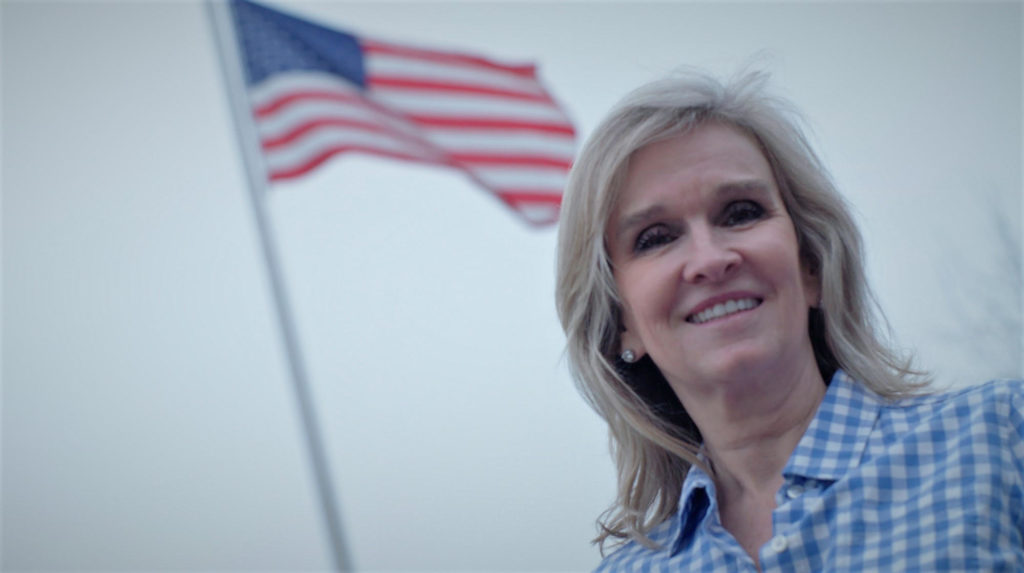
After months of speculation on a reported switch in campaigns for Lynda Blanchard, it looks like the rumors are true. According to insiders, Blanchard is planning to end her campaign for the U.S. Senate seat and run for governor of Alabama, according to a CNN report. She is expected to announce her campaign against Governor Kay Ivey next week. The former ambassador to Slovenia, Blanchard was a major donor to the Trump campaign but never received his endorsement for her run in the Senate. That endorsement went to Mo Brooks, a long-time Trump supporter. CNN reported that Trump met with Blanchard, and she was receptive to the prospect of her running for governor. In an August interview on FM Talk 106.5’s Jeff Poor Show, Blanchard commented, “You know, I can tell you that I’ve been all over this state, and there are a lot of people that, you know, like we saw this weekend, want everything Trump. And they want a Trump governor, as well.” According to a Rolling Stone report, Trump blames Gov. Ivey for canceling one of his rallies in Alabama this summer. The rally in question was a July 3 “Freedom Rally” at the USS Alabama Battleship Memorial Park in Mobile. Defenders of Ivey note that the rally was canceled by the Battleship Commission, not the governor herself though the commission is stacked with appointees she chose. Without Trump’s endorsement, Blanchard’s Senate campaign has lagged behind Mo Brooks and Katie Boyd Britt.
Dan Sutter: Should policy views disqualify a nominee?

The nomination of Cornell University law professor Saule Omarova to head the Office of the Comptroller of the Currency (OCC) has drawn criticism for views offered in the professor’s research. Should expounding extreme ideas disqualify someone from government service? One of Professor Omarova’s papers proposed shifting bank deposits to the Federal Reserve. Banks would continue to accept deposits but instead of making loans themselves, their funds would be turned over to the Fed. Essentially this would let the Fed allocate credit and represents a radical departure from our private credit markets. The OCC regulates some of America’s banks. Should an advocate of “putting banks out of business,” as described by some pundits, have regulatory authority over banks? Bankers’ groups certainly think not. The president of the American Bankers Association said, “We have serious concerns about her ideas for fundamentally restructuring the nation’s banking system which remains the most diverse and competitive in the world.” Liberals, however, contend that the OCC has been lax in regulating America’s largest banks and applaud the nomination of an industry critic. Let’s first consider two immediate responses. The first is the nature of academic research. Research frequently involves imagining alternatives to existing institutions and working through potential advantages and disadvantages; it is frequently speculative, not a blueprint. Professor Omarova’s paper “The People’s Ledger” clearly fits this mold, so describing this as “advocating” the elimination of private banking is misleading. The second is the limits to government powers. Agencies’ authority derives from Congressional legislation. A regulation issued without legal basis can be challenged in court, as is currently occurring with the Biden Administration’s workplace vaccine mandate. Bankers need not fear Professor Omarova implementing any restructuring she has written about. Regulators do, however, possess discretion. Agencies formulate the details of many regulations and offer compliance guidance or instructions on how to follow their rules. And regulators decide about pursuing enforcement actions. Small actions can accumulate, just as tiny snowflakes form massive snowdrifts. I find calls to give the Federal government more control over economic activity highly problematic. Research convincingly demonstrates a link between economic freedom and prosperity. Government control means decisions benefiting politically favored causes and groups. Numerous elected officials – including Presidents Bill Clinton and George Bush and Congressman Barney Frank – pushed banks to issue subprime mortgages. A minimum proportion of mortgages purchased by Fannie Mae and Freddie Mac had to be subprime mortgages. In a market economy consumers decide which businesses succeed or fail. But to start a business, an entrepreneur must first access financial capital. Today many independent banks make their own decisions about loans. Ten loan denials do not prevent an entrepreneur from getting a loan from a bank that finds her idea promising. Banks risk their own money when making loans. This incentivizes banks to both fund promising business ideas and pull the plug on failing ventures. Would bureaucrats lose their own money or their jobs for wasting Americans’ savings on worthless ventures? The Biden Administration is aggressively using financial regulations to push investment in Green New Deal ventures. Pursuing policy through finance causes two harms. First, bureaucrats will do worse on average than investors investing their money. Second, voters have difficulty attributing poor investment returns to political demands. Effective government requires accountability and financial subterfuge make it difficult for people to hold politicians accountable. I question whether any expert supporting greater political controls over banks truly understands the enormous societal benefits from financial markets. This is my concern with this nomination. Periodically the research of professors nominated for executive branch positions turns out to be controversial. Normally these nominations get quickly withdrawn. Dozens of other equally qualified individuals would implement the President’s left-leaning policies at the OCC without so angering bankers. I will let political pundits postulate why President Joe Biden proceeded with the professor’s nomination. Daniel Sutter is the Charles G. Koch Professor of Economics with the Manuel H. Johnson Center for Political Economy at Troy University and host of Econversations on TrojanVision. The opinions expressed in this column are the author’s and do not necessarily reflect the views of Troy University.
Jim Zeigler: Pearl Harbor and Alabama 80 years later

Eighty years ago, in the sneak attack on Pearl Harbor, Japanese forces surprised and killed 2,403 Americans and wounded more than 1,100. In a speech to Congress the next day, President Franklin Roosevelt referred to December 7, 1941, as “a date which will live in infamy.” That prediction remains true on this 80th observance of Pearl Harbor Day, 2021. In December 1941, the people of Alabama, and indeed of most of the then-48 states, did not know where Pearl Harbor was. They learned very quickly and have never forgotten. The Pearl Harbor attack ignited American determination to disable the Japanese war machine. Americans were filled with patriotism, and individuals sought to aid in victory. Many enlisted in the military and fought for our country. My own father, Bloise Zeigler, was already working in a defense-support job at Huntsville Arsenal (now Redstone Arsenal). Two days after Pearl Harbor, Dad went down and enlisted. The next day, management pulled him into the Huntsville office and told him they had gotten his enlistment canceled because he was needed in the defense effort right where he was, in a vital defense job. He served his country right here in Alabama. For other Americans, their role in the war effort consisted of rationing their use of items such as gasoline, sugar, butter, and canned goods. A war was to be won, and Americans were willing to do their parts to win it. As we remember those who lost their lives in the Pearl Harbor attack, let us be mindful of the privilege of living in America. After World War II, America became a world superpower. Today America is blessed with abundant wealth and resources, as well as global influence. Most of all, America is blessed with citizens who face adversity with resilience and determination. Jim Zeigler is the State Auditor of Alabama.
Pushing COVID-19 boosters, Joe Biden says ‘we need to be ready’
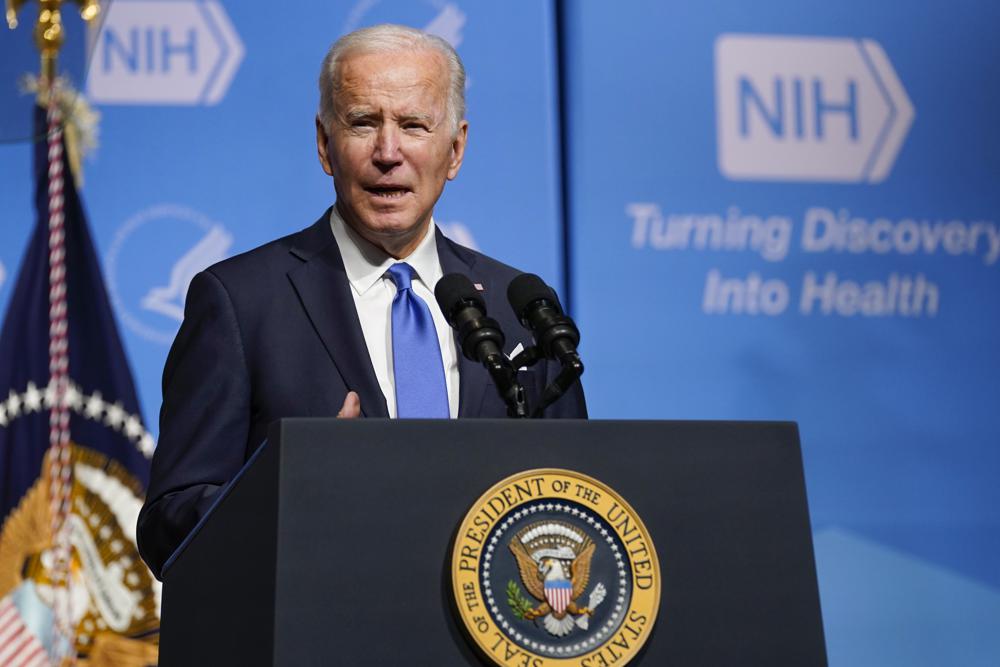
With rising numbers of COVID-19 cases predicted this winter, President Joe Biden on Thursday appealed for Americans to get their boosters and get behind his plan to tackle the new omicron variant through wider availability of vaccines and shots, but without new major restrictions on daily life. Biden wants to require private insurers to cover the cost of at-home COVID-19 tests, and he is tightening testing requirements for people entering the United States, regardless of their vaccination status. While some other countries are closing their borders or reinstituting lockdowns, the president said he would not at this time impose additional clampdowns beyond his recommendation that Americans wear masks indoors in public settings. “Experts say the COVID-19 cases will continue to rise in the weeks ahead this winter, so we need to be ready,” Biden said during a visit to the National Institutes of Health in suburban Maryland after a briefing with scientific advisers. He said his new strategy “doesn’t include shutdowns and lockdowns,” and he hoped for bipartisan backing. “My plan I’m announcing today pulls no punches in the fight against COVID-19, and it’s a plan that I think should unite us,” he Biden said. Legal challenges have held up Biden’s vaccination-or-testing requirement for workers at larger employers, and that’s led the president to urge businesses to impose their own mandates so companies can stay open without outbreaks. His administration has come to view widespread adoption of booster shots as its most effective tool for combating COVID-19 this winter. Medical experts say boosters provide enhanced and more enduring protection, including against new variants. Much remains unknown about the omicron variant, such as whether it is more contagious, makes people more seriously ill, and can thwart the vaccines. Officials said Thursday that a second case of the variant had been confirmed in the United States. About 100 million Americans are eligible for boosters under current U.S. policy, with more becoming eligible every day. Officials believe that persuading the vaccinated to get another dose will be easier than vaccinating the roughly 43 million adult Americans who haven’t gotten a shot. “Go get your booster now,” Biden said. Seniors are in the population most vulnerable to the virus, and the Centers for Medicare & Medicaid Services will send a notice to all 63 million Medicare beneficiaries encouraging them to get booster doses, the White House said. The AARP will work with the administration on education campaigns for seniors. So far, about 42 million Americans, about half of them seniors, have received a booster dose. The Centers for Disease Control and Prevention this week broadened its booster dose recommendation to cover all Americans at least age 18, starting six months after their second dose of the mRNA vaccines from Pfizer or Moderna. Biden said the CDC is developing new guidance for schools in an effort to reduce or eliminate current quarantine requirements for those not fully vaccinated and exposed to the virus. That could include “test-to-stay” policies, in which those considered close contacts can continue to go to school but wear masks and undergo serial testing in an effort to minimize learning loss and disruption. The rule that private insurers cover at-home testing is being drafted, and details remain to be worked out, officials said. People insured by Medicare and Medicaid would not be eligible, but the White House said as many as 150 million people with private insurance would see easier and cheaper access to the at-home tests. The administration said it is making 50 million COVID-19 tests free for older people and other vulnerable groups for pickup at senior centers and community sites. Beginning next week, Biden said, all travelers to the U.S., regardless of nationality or vaccination status, will need to provide proof of a negative COVID-19 test within one day of boarding flights. That compares with three days now for those who have been vaccinated. The White House has shelved tougher options such as requiring post-arrival testing or requiring quarantines upon arrival in the U.S. The White House has not yet acted to require domestic U.S. travelers to be vaccinated or get tested. Officials believe such a requirement would be mired in litigation. “We base our decisions on the advice of the health and medical experts, what’s going to be most effective and what we can implement,” press secretary Jen Psaki said Thursday. Biden is extending his directive requiring masks on airplanes and other public transit, which had been set to expire in January, through at least the middle of March, the White House said. The administration is informing states that it has more than 60 teams available to help them or their municipalities address surges in cases and public health shortages heading into the winter. Republished with the permission of the Associated Press.
House votes to avert shutdown, but quick Senate approval in doubt
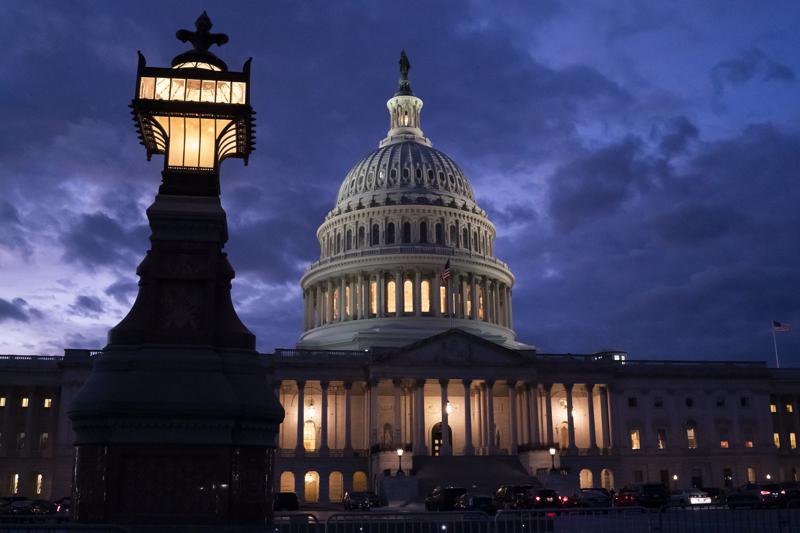
The House passed a bill Thursday that funds the government through February 18 and avoids a short-term shutdown after midnight Friday, but quick Senate approval was in doubt because of a fight over President Joe Biden’s COVID-19 vaccine mandates. An agreement among congressional leaders announced earlier in the day would keep the government running for 11 more weeks, generally at current spending levels, while adding $7 billion to aid Afghanistan evacuees. The Democratic-led House passed the measure by a 221-212 vote. The Republican leadership urged members to vote no; the lone GOP vote for the bill came from Illinois Rep. Adam Kinzinger. Lawmakers bemoaned the short-term fix and blamed the opposing party for the lack of progress on this year’s spending bills. Rep. Rosa DeLauro, chair of the House Appropriations Committee, said the measure would, however, allow for negotiations on a package covering the remainder of the budget year through September. “Make no mistake, a vote against this continuing resolution is a vote to shut government down,” DeLauro said during the House debate. Before the House acted, President Joe Biden said he had spoken with Senate leaders, and he played down fears of a shutdown. “There is a plan in place unless somebody decides to be totally erratic, and I don’t think that will happen,” Biden said. Conservative Republicans opposed to Biden’s vaccine rules want Congress to take a hard stand against the mandated shots for workers at larger businesses, even if that means shutting down federal offices over the weekend. It was just the latest instance of the brinkmanship around government funding that has triggered several costly shutdowns and partial closures over the past two decades. The longest shutdown in history happened under President Donald Trump — 35 days stretching into January 2019, when Democrats refused to approve money for his U.S-Mexico border wall. Both parties agree the stoppages are irresponsible, yet few deadlines pass without a late scramble to avoid them. Republicans said during the debate that they had made it clear in the summer that they would not support spending bills that include “irresponsible spending increases and extreme policies.” “Unfortunately, that is exactly where we find ourselves,” said Rep. Kay Granger, R-Texas. Democrats were able to use their majority to advance the spending bill. They have a more difficult task in the 50-50 Senate, where objections by just one senator can slow a final vote past Friday’s midnight deadline. That could mean a short-term shutdown into the weekend. Sen. Mike Lee, R-Utah, said Democrats knew last month from a letter that several Republicans would use all means at their disposal to oppose legislation that funds or allows the enforcement of the employer vaccine mandate. He blamed Senate Majority Leader Chuck Schumer, D-N.Y., for not negotiating and for ignoring their position. If the choice is between “suspending nonessential functions” or standing idle while Americans lose their ability to work, “I’ll stand with American workers every time,” Lee said. GOP senators said the idea is to vote on stripping money that the Occupational Safety and Health Administration would use to implement the requirement that private employers with 100 or more workers ensure they are vaccinated or regularly tested. “This is a chance to correct a wrong,” said Sen. Roger Marshall, R-Kan., who undertook a similar effort against vaccine mandates during the last government funding standoff. Schumer said it was “not easy to reach this deal” and that while most Republicans do not want a shutdown, a “few individual Republican senators appear determined to derail this important legislation because of their opposition to the president’s lifesaving vaccine guidelines.” “Let’s be clear, if there is a shutdown, it will be a Republican, anti-vaccine shutdown,” Schumer said. The White House sees vaccinations as the quickest way to end a pandemic that has killed more than 780,000 people in the United States and is still evolving, as seen Wednesday with the country’s first detected case of a troubling new variant. Courts have knocked back against the mandates, including a ruling this week blocking enforcement of a requirement for some health care workers. For some Republicans, the court cases and lawmakers’ fears about a potentially disruptive shutdown are factors against engaging in a high-stakes shutdown. “One of the things I’m a little concerned about is: Why would we make ourselves the object of public attention by creating the specter of a government shutdown?” said Texas Sen. John Cornyn, a GOP leader. “There’s too much chaos in our country right now, too much concern about omicron. The last thing we need is more confusion and fear,” said Sen. Mitt Romney, R-Utah. Senate Minority Leader Mitch McConnell, R-Ky., reiterated that there will be no shutdown. “We’re not going to do that,” he said Thursday. The administration has pursued vaccine requirements for several groups of workers, but the effort is facing legal setbacks. A federal judge this week blocked the administration from enforcing a vaccine mandate on thousands of health care workers in 10 states. Earlier, a federal appeals court temporarily halted the OSHA requirement affecting employers with 100 or more workers. The administration has also put in place policies requiring millions of federal employees and federal contractors, including military troops, to be fully vaccinated. Those efforts are also under challenge. Polling from The Associated Press shows Americans are divided over Biden’s effort to vaccinate workers, with Democrats overwhelmingly for it while most Republicans are against. Some Republicans prefer an effort from Sen. Mike Braun, R-Ind., to vote to reject the administration’s mandates in a congressional review action expected next week, separate from the funding fight. Separately, some health care providers protested the stopgap spending measure. Hospitals say it does nothing to shield them from Medicare payment cuts scheduled to go into effect amid uncertainty about the new omicron variant. Republished with the permission of the Associated Press.
Troubled Alabama antipoverty group reverses closure plan

An antipoverty agency that planned to close because of financial problems linked to alleged mismanagement reversed itself will remain open with a smaller staff, a leader said. Gary Richardson, board chairman for the Jefferson County Committee for Economic Opportunity, announced the new plan Wednesday less than a day after he said the organization would shut down, news outlets reported. The organization provides home weatherization, rental assistance, adult daycare, and other services for the needy in Alabama’s most populous area. It used to run Head Start programs but lost the contract amid claims of financial improprieties. The board complied with a state request to return some $1.3 million in grant money, but Richardson said it would continue to operate. Most of the remaining 58 employees will lose their jobs, he said. “We are not going to dissolve. We keep hope alive. This agency has been around since 1964,” Richardson said. The agency fired executive director Sharon Myles on November 1 after a report alleged financial inconsistencies in contracts. Republished with the permission of the Associated Press.