
Lynda Blanchard to announce 2022 run for governor of Alabama
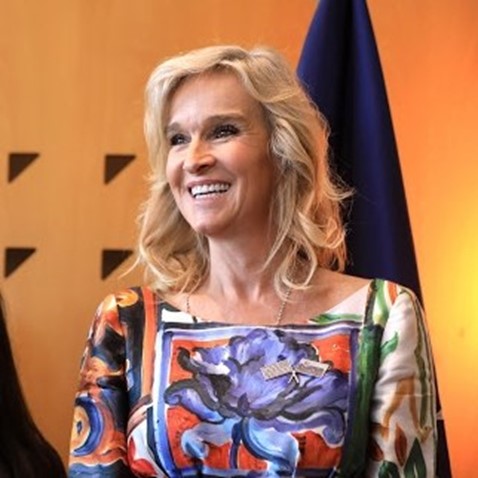
Senate hopeful Lynda Blanchard today announced a campaign event happening tomorrow in her hometown, Wetumpka, Alabama, at the historic Bibb Graves Bridge. Blanchard will officially switch races and announce her candidacy for governor. Blanchard is currently running for U.S. Senate. It has been rumored for months that she would run for governor of Alabama, challenging incumbent Kay Ivey. The former ambassador to Slovenia, Blanchard was a major donor to the Donald Trump campaign but never received his endorsement for her run in the Senate. CNN reported that Trump met with Blanchard, and she was receptive to the prospect of her running for governor. Blanchard, who has previously used her full name, Lynda, in campaign material, is using the name Lindy, a name used by friends and family. Todd Stacy from Alabama Daily News reported that Susie Wiles will be the lead consultant for her campaign. Wiles is a Florida-based political consultant tasked with overseeing Trump’s fundraising operation and creating a system for issuing endorsements from the former president. According to a Politico report, Wiles previously managed the campaigns of Florida Sen. Rick Scott and Gov. Ron Desantis. As Alabama Today reported in August, in a matchup of possible gubernatorial candidates, Ivey had only 41.5%, well below the threshold to win without a runoff at 50% plus one vote. Incumbents below 50% are considered vulnerable. Ivey’s perceived silence on personal support for Trump and his policies now has Ivey scrambling for his approval. Blanchard posted on Twitter, “I’m excited to announce a campaign event tomorrow! If you believe in the constitution and are committed to protecting our freedoms, then we share common goals. I look forward to meeting you!”
Anthony Fauci says early reports encouraging about omicron variant
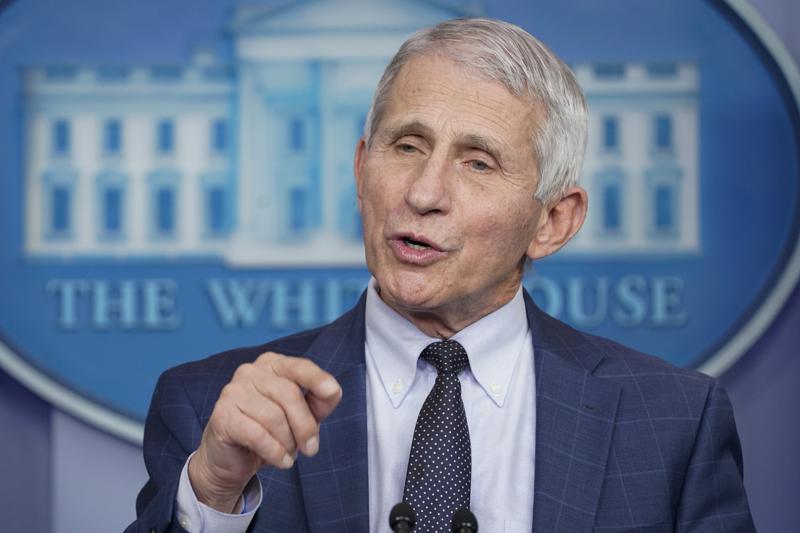
U.S. health officials said Sunday that while the omicron variant of the coronavirus is rapidly spreading throughout the country, early indications suggest it may be less dangerous than delta, which continues to drive a surge of hospitalizations. President Joe Biden’s chief medical adviser, Dr. Anthony Fauci, told CNN’s “State of the Union” that scientists need more information before drawing conclusions about omicron’s severity. Reports from South Africa, where it emerged and is becoming the dominant strain, suggest that hospitalization rates have not increased alarmingly. “Thus far, it does not look like there’s a great degree of severity to it,” Fauci said. “But we have really got to be careful before we make any determinations that it is less severe or it really doesn’t cause any severe illness, comparable to delta.” Fauci said the Biden administration is considering lifting travel restrictions against non-citizens entering the United States from several African countries. They were imposed as the omicron variant exploded in the region, but U.N. Secretary-General Antonio Guterres has blasted such measures as “travel apartheid.” “Hopefully, we’ll be able to lift that ban in a quite reasonable period of time,” Fauci said. “We all feel very badly about the hardship that has been put on not only on South Africa but the other African countries.” Omicron had been detected in about a third of U.S. states by Sunday, including in the Northeast, the South, the Great Plains, and the West Coast. Wisconsin, Missouri, and Louisiana were among the latest states to confirm cases. But delta remains the dominant variant, making up more than 99% of cases and driving a surge of hospitalizations in the north. National Guard teams have been sent to help overwhelmed hospitals in western New York, and Massachusetts Gov. Charlie Baker issued an emergency order requiring any hospitals facing limited patient capacity to reduce scheduled procedures that are not urgent. U.S. officials continued urging people to get vaccinated and to receive booster shots, as well as take precautions such as wearing masks when among strangers indoors, saying anything that helps protect against delta will also help protect against other variants. Even if omicron proves less dangerous than delta, it remains problematic, World Health Organization epidemiologist Dr. Maria Van Kerkhove told CBS “Face The Nation.” “Even if we have a large number of cases that are mild, some of those individuals will need hospitalizations,” she said. “They will need to go into ICU, and some people will die. … We don’t want to see that happen on top of an already difficult situation with delta circulating globally.” Two years into the outbreak, COVID-19 has killed over 780,000 Americans, and deaths are running at about 860 per day. More than 6,600 new hospital admissions are being reported daily, according to tracking data from the U.S. Centers for Disease Control and Prevention. COVID-19 cases and deaths in the U.S. have dropped by about half since the delta peak in August and September, but at more than 86,000 new infections per day, the numbers are still high, especially heading into the holidays, when people travel and gather with family. Republished with the permission of the Associated Press.
Senate leader, presidential candidate Bob Dole dies at 98
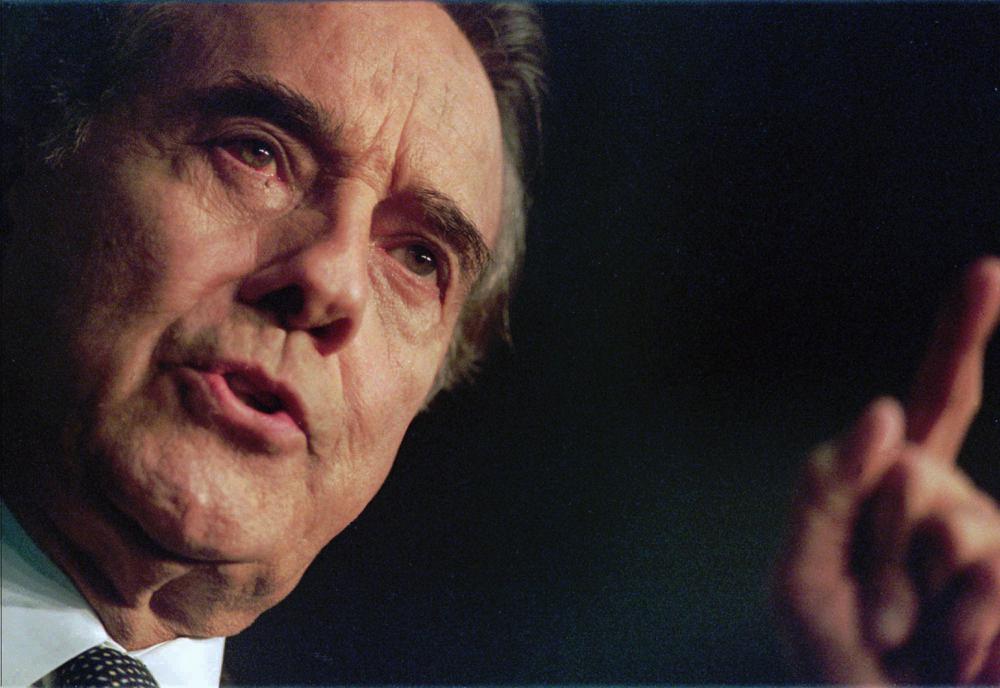
Bob Dole, who overcame disabling war wounds to become a sharp-tongued Senate leader from Kansas, a Republican presidential candidate and then a symbol and celebrant of his dwindling generation of World War II veterans, died Sunday. He was 98. His wife, Elizabeth Dole, said in an announcement posted on social media that he died in his sleep. Dole announced in February 2021 that he’d been diagnosed with stage 4 lung cancer. During his 36-year career on Capitol Hill, Dole became one of the most influential legislators and party leaders in the Senate, combining a talent for compromise with a caustic wit, which he often turned on himself but didn’t hesitate to turn on others, too. He shaped tax policy, foreign policy, farm and nutrition programs, and rights for the disabled, enshrining protections against discrimination in employment, education, and public services in the Americans with Disabilities Act. Today’s accessible government offices and national parks, sidewalk ramps, and the sign-language interpreters at official local events are just some of the more visible hallmarks of his legacy and that of the fellow lawmakers he rounded up for that sweeping civil rights legislation 30 years ago. Dole devoted his later years to the cause of wounded veterans, their fallen comrades at Arlington National Cemetery, and remembrance of the fading generation of World War II vets. Thousands of old soldiers massed on the National Mall in 2004 for what Dole, speaking at the dedication of the World War II Memorial there, called “our final reunion.” He’d been a driving force in its creation. “Our ranks have dwindled,” he said then. “Yet if we gather in the twilight, it is brightened by the knowledge that we have kept faith with our comrades.” Long gone from Kansas, Dole made his life in the capital, at the center of power and then in its shadow upon his retirement, living all the while at the storied Watergate complex. When he left politics and joined a law firm staffed by prominent Democrats, he joked that he brought his dog to work so he would have another Republican to talk to. He tried three times to become president. The last was in 1996 when he won the Republican nomination only to see President Bill Clinton reelected. He sought his party’s presidential nomination in 1980 and 1988 and was the 1976 GOP vice presidential candidate on the losing ticket with President Gerald Ford. Through all of that, he carried the mark of war. Charging a German position in northern Italy in 1945, Dole was hit by a shell fragment that crushed two vertebrae and paralyzed his arms and legs. The young Army platoon leader spent three years recovering in a hospital and never regained use of his right hand. To avoid embarrassing those trying to shake his right hand, Dole always clutched a pen in it and reached out with his left. Dole could be merciless with his rivals, whether Democrat or Republican. When George H.W. Bush defeated him in the 1988 New Hampshire Republican primary, Dole snapped: “Stop lying about my record.” If that pales next to the scorching insults in today’s political arena, it was shocking at the time. But when Bush died in December 2018, old rivalries were forgotten as Dole appeared before Bush’s casket in the Capitol Rotunda. As an aide lifted him from his wheelchair, Dole slowly steadied himself and saluted his one-time nemesis with his left hand, his chin quivering. In a vice presidential debate two decades earlier with Walter Mondale, Dole had famously and audaciously branded all of America’s wars that century “Democrat wars.” Mondale shot back that Dole had just “richly earned his reputation as a hatchet man.” Dole at first denied saying what he had just said on that very public stage, then backed down and eventually acknowledged he’d gone too far. “I was supposed to go for the jugular,” he said, “and I did — my own.” For all of his bare-knuckle ways, he was a deep believer in the Senate as an institution and commanded respect and even affection from many Democrats. Just days after Dole announced his dire cancer diagnosis, President Joe Biden visited him at his home to wish him well. The White House said the two were close friends from their days in the Senate. Biden recalled in a statement Sunday that one of his first meetings outside the White House after being sworn-in as president was with the Doles at their Washington home. “Like all true friendships, regardless of how much time has passed, we picked up right where we left off, as though it were only yesterday that we were sharing a laugh in the Senate dining room or debating the great issues of the day, often against each other, on the Senate floor,” Biden said. “I saw in his eyes the same light, bravery, and determination I’ve seen so many times before.” Biden ordered that U.S. flags be flown at half-staff at the White House and all public buildings and grounds until sunset Thursday. Dole won a seat in Congress in 1960, representing a western Kansas House district. He moved up to the Senate eight years later when Republican incumbent Frank Carlson retired. There, he antagonized his Senate colleagues with fiercely partisan and sarcastic rhetoric, delivered at the behest of President Richard Nixon. The Kansan was rewarded for his loyalty with the chairmanship of the Republican National Committee in 1971 before Nixon’s presidency collapsed in the Watergate scandal. He served as a committee chairman, majority leader, and minority leader in the Senate during the 1980s and ’90s. Altogether, he was the Republicans’ leader in the Senate for nearly 11½ years, a record until Kentucky Sen. Mitch McConnell broke it in 2018. It was during this period that he earned a reputation as a shrewd, pragmatic legislator, tireless in fashioning compromises. After Republicans won Senate control, Dole became chairman of the tax-writing Finance Committee and won acclaim from deficit hawks and others for his handling of a 1982 tax
BP oil spill fund: $103M to projects in 3 Gulf states
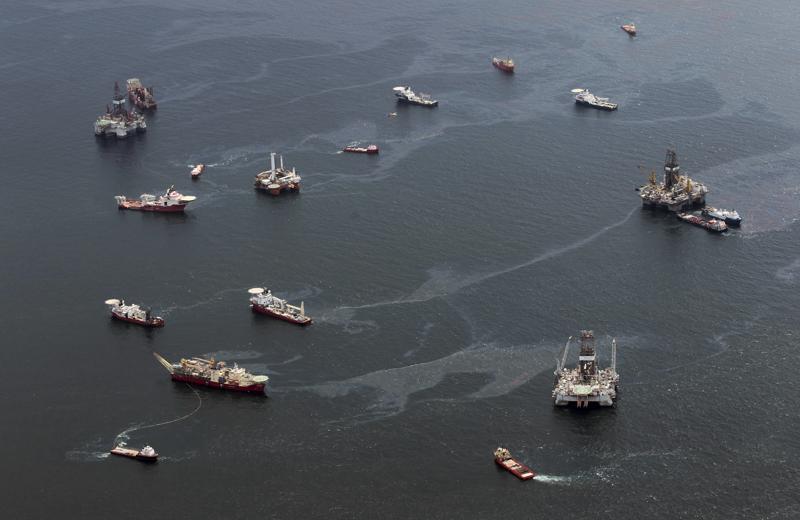
Alabama, Florida, and Mississippi are receiving more than $103 million in BP oil spill settlement money for new and continued coastal projects. “These projects, combined with existing investments, continue to advance our goal of protecting and restoring species and habitats impacted by the 2010 Deepwater Horizon oil spill,” Jeff Trandahl, executive director and CEO of the National Fish and Wildlife Foundation, said Thursday. The 11 new projects and two extensions from the foundation’s Gulf Environmental Benefit Fund bring its total allocations across the five Gulf states to $1.6 billion, a news release said. Alabama is getting more than $43 million for four new projects, the foundation said. Florida is getting nearly $33 million for one new project. The remaining $27 million will support six new projects and continue two others in Mississippi. The Gulf Environmental Benefit Fund received $2.5 billion in settlement money from criminal charges against BP and its codefendants. The fund is for work to fix damage and reduce risks of future damage to natural resources affected by the 2010 Deepwater Horizon oil spill. State and national agencies work to identify potential projects to ensure coordination with activities under two other programs that received money from spill settlements or fines. Three of the new projects in Alabama are designed to stabilize eroding shorelines and restore coastal marsh in Mobile County and on the north side of Dauphin Island. Previous grants covered engineering, design, and permitting for those projects. The fourth grant will pay for engineering and design of beach and dune restoration on Dauphin Island’s west end. Florida plans to use its award to acquire and manage about 32,000 acres (13,000 hectares) of wetland and floodplain habitat in the Apalachicola watershed. That’s aimed at ensuring sufficient freshwater and nutrient flow to Apalachicola Bay and the Gulf of Mexico to support oysters and marine fishes. Mississippi’s new projects will expand and plan for future enhancements of artificial reefs across the Mississippi Sound and restore and protect vulnerable coastal habitats along the Mississippi Gulf Coast. “The health of our natural resources is intertwined with the strength of the economy of south Mississippi,” said Chris Wells, head of the Mississippi Department of Environmental Quality. “These projects, in addition to the others announced for this year, will continue the essential work necessary to enhance the coastal habitat so vital for marine life.” Mississippi has received about $192 million from the fund. Alabama has received about $300 million; Florida, about $290 million; Louisiana, $603 million; and Texas, $203 million. About $940 million remains to be allocated. The plea agreements for BP and other defendants set out the percentage of the total for projects in each state. Texas has reached its limit. Louisiana, which suffered the most damage, will ultimately get nearly $1.3 billion for barrier island and river diversion projects, and Alabama, Florida, and Mississippi will get $356 million each. Republished with the permission of the Associated Press.
Alabama Farmers Federation marking 100th anniversary
The Alabama Farmers Federation, a statewide force in agriculture, lobbying, and insurance, will mark its 100th anniversary at its two-day annual meeting, which begins Sunday. Almost 1,200 farmers from each of Alabama’s 67 counties are expected for the meeting, which will include the election of state leaders of the organization and a program honoring the group’s history. The program also will mark the 75th anniversary of the founding of Alfa Insurance Co., which was started by the organization in 1946. The company now provides coverage for more than 1 million farms, homes, cars, and businesses. “The centennial is a time to reflect on the past, remember those who came before us, and rejoice in our accomplishments,” Federation President Jimmy Parnell said in a statement. “It’s also a time for recommitment to our values and visions.” The president of the American Farm Bureau Federation, Zippy Duvall, is among the speakers at the gathering. Republished with the permission of the Associated Press.
