
AG Steve Marshall fights to protect Alabama land from Biden administration ‘overreach’
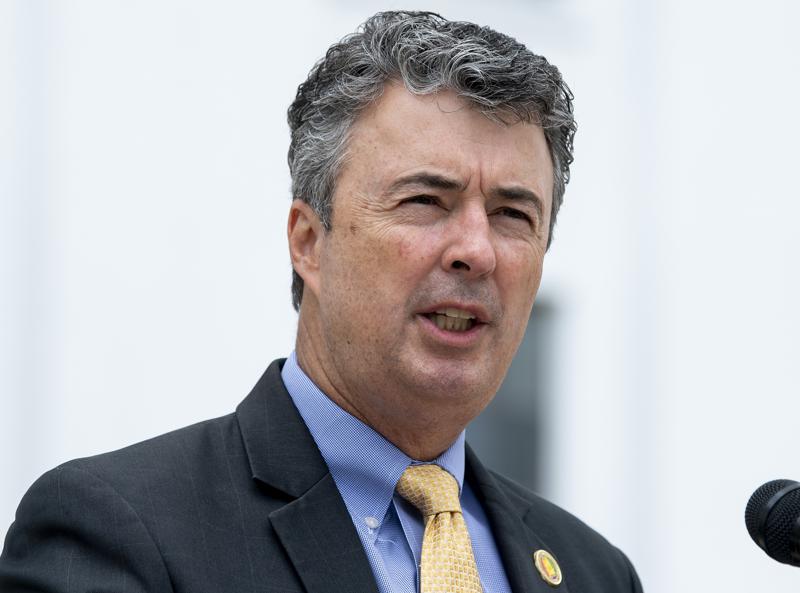
Attorney General Steve Marshall announced he is leading a national coalition of 18 attorneys general urging the Biden administration not to reverse Trump era definitions of “critical habitat” that may affect property use and value. Marshall’s letter to the U.S. Fish and Wildlife Service and the National Marine Fisheries Service was cosigned by the attorneys general of Alaska, Arizona, Arkansas, Indiana, Kansas, Kentucky, Louisiana, Mississippi, Montana, Nebraska, Ohio, Oklahoma, South Carolina, Texas, Utah, West Virginia, and Wyoming. The issue involves the Endangered Species Act and the federal government’s authority to designate land or water as a “critical habitat” for species the government considers endangered. Property that receives this designation is often subject to strict restrictions which can affect property value and use. In 2017, the Obama administration argued that an area could be a “critical habitat” for a species even if the species could not survive there. In response, Marshall led a group of states opposing that approach, and the Supreme Court held that the Obama administration had overreached. Marshall supported Trump administration reforms that protected species without crippling the rights of landowners. The Biden administration is now considering changing the Trump administration’s definition of “habitat” for use in “critical habitat” designation. In the letter, the group urged the agencies to reject the Biden administration’s efforts to roll back the reformed regulations. Under current rules, an area may be designated as critical habitat only if it currently or periodically has the conditions and resources to support a species, and not just because such conditions could be developed in the future. Furthermore, current rules provide an important balance, providing analysis of the economic impact and whether excluding an area from critical habitat would result in the extinction of a species. Marshall stated, “I will not allow the Biden administration’s misplaced priorities and overreach to destroy the vital progress we have made. If federal bureaucrats are allowed to designate land as critical habitat for species even though that species does not and cannot live there, then there is no limit to the areas they can claim. The results could be devastating for Alabama’s farms, loggers, and miners as well as for landowners throughout our nation.”
Governor Kay Ivey touts $7 million in National Highway Traffic Safety Administration grants

Governor Kay Ivey announced nearly $7 million in grants, in order to make Alabama roads safer. The state’s four regional traffic safety offices and the Alabama Law Enforcement Agency will use the funds to cover overtime for local police officers, sheriff’s deputies, and state troopers conducting extra patrols. It will also help provide more checkpoints during peak travel times, like major holidays, targeting speeding, seat belt violations, and impaired driving. Funding will cover major enforcement details like “Click It or Ticket” and “Drive Sober or Get Pulled Over.” According to Drive Safe Alabama, in 2019, there were 930 people killed in 851 fatal crashes. In Alabama, a traffic crash is reported every 3 minutes and 18 seconds. Ivey stated in a press release, “In Alabama, we are funding our law enforcement community to ensure their efforts to protect our communities are supported. These grants will go a long way in reinforcing highway safety across our state. As we head into another peak travel time, that will be even more important. Ensuring public safety is one of the primary responsibilities of government and is a top priority for the Ivey Administration.” ADECA Director Kenneth Boswell applauded the funding and efforts to make Alabama roads safer. “ADECA stands with Governor Ivey, the four highway safety offices, and local law enforcement agencies who are helping make Alabama’s roads safer for everyone traveling in our state,” Boswell stated. Governor Ivey awarded the following grants: $1.39 million to the Franklin County Commission for the North Central Alabama Highway Safety Office. The office serves Colbert, Cullman, DeKalb, Fayette, Franklin, Lamar, Lauderdale, Lawrence, Limestone, Jackson, Madison, Marshall, Marion, Morgan, Pickens, Walker and Winston counties. $1.66 million to the city of Opelika for the East Central Alabama Highway Safety Office which serves Blount, Calhoun, Chambers, Cherokee, Chilton, Clay, Cleburne, Coosa, Elmore, Etowah, Jefferson, Lee, Macon, Randolph, St. Clair, Shelby, Talladega and Tallapoosa counties. $1.21 million for the Southeast Alabama Regional Highway Safety Office at Enterprise State Community College. The office serves Autauga, Barbour, Bibb, Bullock, Butler, Coffee, Covington, Crenshaw, Dale, Geneva, Henry, Houston, Lowndes, Montgomery, Pike, Russell and Tuscaloosa counties. $957,369 to the Mobile County Commission for the Southwest Regional Highway Safety Office which serves Baldwin, Choctaw, Clarke, Conecuh, Dallas, Escambia, Greene, Hale, Marengo, Mobile, Monroe, Perry, Sumter, Washington and Wilcox counties. $1.54 million to ALEA cover overtime for state troopers who are working extra shifts during periods and in locations that have high numbers of speeding and impaired driving violations. $183,106 to the Office of Prosecution Services to provide local prosecutors and local law enforcement with a veteran statewide prosecutor that will provide training, education, legal research and technical assistance on traffic safety related issues.
Dan Sutter: The economics of the coaching carousel
As the college football regular season winds down, the coaching carousel heats up. So far in 2021, 28 of 130 FBS programs have had coaching changes. Coaching decisions illustrate some elements of economic and business decisions generally. Perhaps unexpectedly, imagination plays an outsized role. I will focus on coaching vacancies from firing, not retirements or successful coaches leaving for another job. And I will consider terminations related to team performance, not personal misconduct. ADs fire coaches because they decide the program would do better with new leadership. To reach this conclusion, an AD must envision the program’s performance with another coach; we will never see what Florida, LSU, or Troy might have achieved in 2021 with a different coach. Economists similarly compare economic performance to alternatives we never observe. Imagination is crucial in all such comparisons. Two rationales are often offered for firing: the team has not won enough, or the coach is unlikely to deliver in the future. Economists label these retrospective and prospective evaluations, respectively. All job performances can be evaluated retrospectively or prospectively. In my line of work, we might hear when a professor goes up for tenure, “Smith’s record merits tenure,” (retrospective) or “Smith will contribute to the University for years to come” (prospective). Imagining a perfect world – one where our team goes undefeated every year – is easy. Yet unrealistic expectations can doom a football program, as even Nick Saban cannot achieve such perfection. Economists call this the Nirvana Fallacy. Our imagination must be realistic. Economists build models – and argue extensively among ourselves about their details – to discipline our imaginations. Entrepreneurs start new businesses and are fonts of imagination. They must imagine a new product or service and how people will use it. The preparation of business plans for startups is the disciplining of entrepreneurs’ imagination. In business, profit gives entrepreneurs, managers, and investors the incentive to engage in and act upon disciplined imagination. Profits are a residual: they are the dollars left over (if any) from sales after paying all bills. Here is a difference between college football and business; football-playing universities are all non-profits. Furthermore, athletics departments are part of a university. Football revenues increase when the team wins, but the AD will not keep this extra revenue. Economists recognize the lack of a profit motive – or a residual claimant – as dramatically affecting an organization’s performance. The lack of a profit motive, however, does not keep football coaches from being axed. In college football and sports generally, winning is a motive. And it is powerful: coaches work late nights, and players spend more hours practicing and working out than college students do studying. Failing to hire a coach who wins can get an AD fired. Winning substitutes adequately for profit. Economists differentiate between the “hard” budget constraints of private businesses and the soft budget constraints of government-owned enterprises, like the U.S. Postal Service. Businesses must pay for labor, materials, and tools out of sales revenue. Government enterprises can always turn to taxes. Soft budget constraints contribute to the inefficiency of government enterprises. Yet as the coaching carousel hints, constraints are never as hard as some economists believe. A coach who goes 1-11 can get another year (or two). Businesses can continue to operate even if they lose money. Suppose partners put up $500,000 to open a restaurant. If the restaurant has burned through the $500,000 and is still struggling, the partners can always invest more. Consequently, a firing or business closure is always a result of a decision. And the decision can always be criticized as excessively harsh. We should respect the exercise of such responsibility. And remember, disciplined imagination might sometimes council retaining a coach. Many thought Michigan’s Jim Harbaugh would be fired after a 2-4 season in 2020 and not winning the Big Ten East in six seasons. Coach Harbaugh was retained, and Michigan made the College Football Playoff this year. Sometimes our best moves are ones we never make. Daniel Sutter is the Charles G. Koch Professor of Economics with the Manuel H. Johnson Center for Political Economy at Troy University and host of Econversations on TrojanVision. The opinions expressed in this column are the author’s and do not necessarily reflect the views of Troy University.
Bob Dole honored in Kansas as tough but compassionate statesman
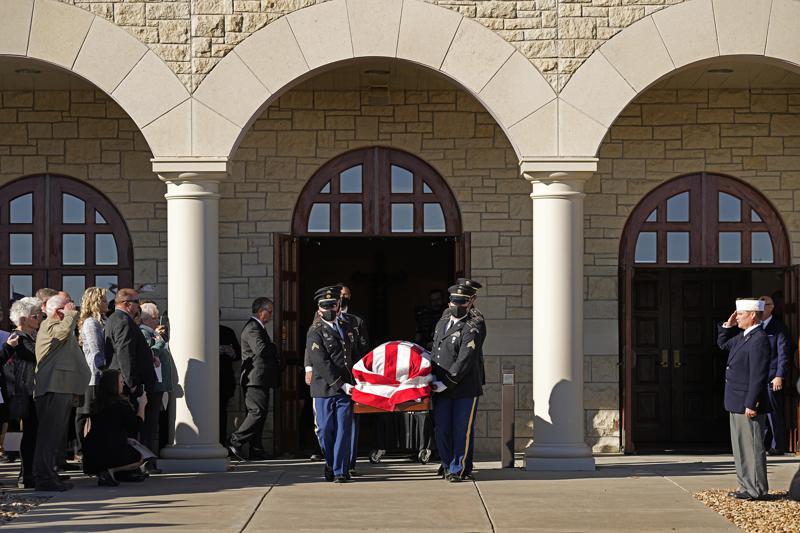
Fellow Kansans on Saturday celebrated Bob Dole as a tough but compassionate patriot shaped by small-town values, a strong partisan leader who could nevertheless work with political opponents, and a war hero who ultimately became “the greatest of the Greatest Generation.” Dole made his last journey to his prairie state for memorial services in his western Kansas hometown of Russell and at the Statehouse in Topeka. He was honored for the military service during World War II that left him severely wounded and the distinguished political career that followed his recovery. Elected officials and former elected officials from both parties said Dole embodied the state’s motto, “To the stars through difficulties,” and never stopped trying to help others. “He did not hide in a time of crisis. He looked for solutions,” former U.S. Rep. Jim Slattery, a Kansas Democrat, said during the Statehouse event. ”I often told Bob he was the toughest man I ever knew, both physically and mentally, but he had a tender heart.” Dole died Sunday at the age of 98 after a lifetime of service that included nearly 36 years in Congress and running as the GOP nominee for president in 1996. U.S. Senate Minority Leader Mitch McConnell, who served more than a decade with Dole in the Senate and later surpassed Dole as the longest-serving GOP leader there, attended both Kansas events as well. Saturday’s events began with a public viewing of his casket and a memorial service at a Roman Catholic church in Russell, the small town some 240 miles (386 kilometers) west of Kansas City where he grew up during the Great Depression. Speakers for the state capital event Saturday afternoon noted that Dole’s career in elective office began in the Kansas House in the early 1950s. The dignitaries at both events included Democratic Gov. Laura Kelly, Kansas’ two Republican U.S. senators, Roger Marshall and Jerry Moran, and former GOP U.S. Sens. Pat Roberts and Nancy Kassebaum Baker. Kelly said in remarks in Dole’s hometown that Russell was “where his roots run deepest.” Dignitaries in dark, formal business attire mixed in the congregation with local residents dressed in less formal farm and work clothes, a KWCH-TV live stream showed. “As we gather here today to come together to salute our state’s most favorite of favorite sons and the greatest of the Greatest Generation, we pause to reflect with immense gratitude on all that Bob Dole’s life meant to Kansas and to Kansans, to our nation and to the world,” Kelly said. Dole — known for a caustic wit that he sometimes turned on himself — also was honored Friday during a service at Washington National Cathedral. President Joe Biden was among the speakers there. Another tribute followed at the World War II Memorial in Washington — a monument to Dole’s generation that he worked to get built. Dole became known as a congressional leader who could bridge partisan divides to pass legislation such as the landmark Americans with Disabilities Act aimed at preventing discrimination on the basis of disability. In Russell, Moran attributed that ability to Dole’s ties to a small town, where people who disagree on politics still mix in their daily lives. Speakers also pleaded for more civility in politics, with Kelly calling on her Statehouse audience to “pledge ourselves to be more like Bob Dole.” Moran added: “Think of all the things he’s been through and how hope had to be so important to his life to get through the day.” Dole will be buried in Arlington National Cemetery, but his casket was flown Friday evening to Salina, Kansas, then transported 70 miles (113 kilometers) west to his boyhood hometown, which now has about 4,400 residents. Oil production allowed Russell to boom when Dole was growing up, even during the Great Depression, with the first local well drilled in 1923, the year he was born. In Russell, Moran quoted Dole’s speech accepting the 1996 presidential nomination, in which Dole said, “the first thing you learn on the prairie is the relative size of a man compared to the lay of the land.” “His family and this community endured the Dust Bowl of the Great Depression,” Moran said. “In Russell, you could feel and see the challenges, the obstacles, the barriers that were put in people’s lives. Nothing was easy.” Republished with the permission of the Associated Press.
Jefferson County judge removed from bench for behavior

An Alabama judge who handles domestic relations cases was removed from office Friday after being accused of inappropriate behavior that included making derogatory comments about other judges and using fake social media accounts to communicate with people in a case. The Alabama Court of the Judiciary issued the order removing Nakita Blocton from her position as a circuit judge in Jefferson County. The court ruled Blocton had demonstrated a pattern of inappropriate behavior and comments as well as a pattern of deception and dishonesty. Blocton’s attorney, Emory Anthony, told al.com Friday that Blocton could choose to appeal the ruling. “We were trying to keep her on the bench, and we were disappointed they removed her from the bench,” Anthony said. The nine-member court said Blocton had engaged in a pattern of being abusive toward staff, including ordering them to show her their cell phones so information related to the disciplinary investigation against her could be deleted. The court said Blocton had a pattern of inappropriate remarks such as calling one judge an “Uncle Tom” and calling an employee a “heifer.” The court said that Blocton used Facebook aliases to communicate with litigants in a domestic violence case in an “effort to affect the outcome of the case.” She also failed to promptly dispose of cases on her docket or remedy a case backlog, the court found. The Judicial Inquiry Commission filed a complaint against Blocton in May. The Court of the Judiciary rejected commission allegations that Blocton was mentally unstable, saying that had not been proven. Republished with the permission of the Associated Press.
Texas-like abortion bill would let citizen sue providers
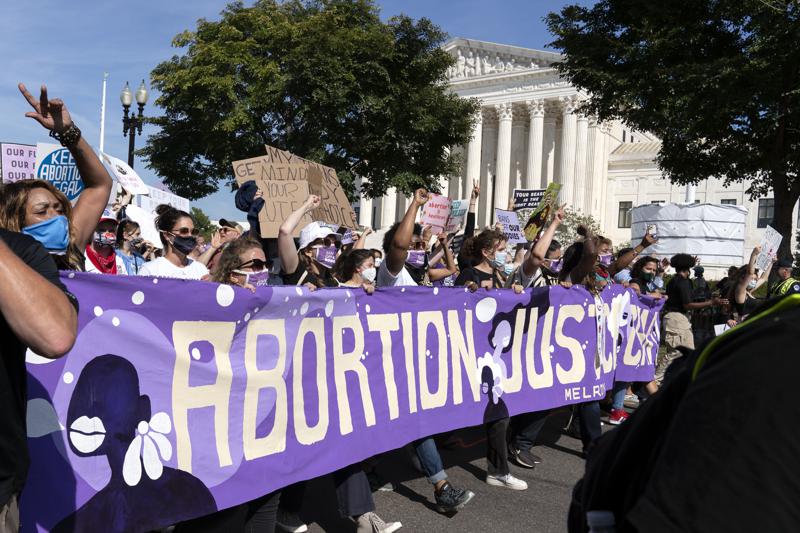
A group of Alabama lawmakers have proposed legislation similar to a Texas law that would ban most abortions and allow anyone to file civil lawsuits against violators and collect damages. Alabama is the latest GOP-led state to see lawmakers propose legislation to mimic the Texas law and its novel citizen-enforcement provision. The U.S. Supreme Court on Friday left in place Texas’ ban on most abortions but said providers could sue to challenge the ban. A Texas judge on Thursday ruled the citizen enforcement mechanism is unconstitutional but left the near-total ban on abortions in place. The bill titled the “Alabama Heartbeat Act” was filed ahead of the 2022 legislative session. It would prohibit medical providers from performing an abortion once cardiac activity is detected, usually around six weeks and before some women know they are even pregnant. The measure would allow private citizens to file civil lawsuits against anyone who “aids or abets” an abortion and to collect at least $10,000 in damages for each performed abortion. Providers in Texas say abortions have become virtually inaccessible since the law was signed. Republican Rep. Jamie Kiel of Russellville, the primary sponsor of the legislation, said the bill mirrors the Texas law, noting that it has not been struck down yet. “A recent (National Public Radio) article reported that in the 101 days since the law was enacted, 75-100 babies are now being saved every day in Texas. That’s what I want for Alabama. To protect the right to life of the 16 babies who are murdered here daily,” Kiel said. Twenty-three Republicans in the 105-member House of Representatives have signed on as sponsors of the bill. Kaitlin Welborn, a reproductive rights attorney with the American Civil Liberties Union of Alabama, urged lawmakers to reject the proposal and said it will be quickly challenged if it passes. “Alabama legislators have filed a bill that bans abortion at 6 weeks of pregnancy and pits neighbor against neighbor in an illegal bounty-hunting scheme. HB 23 mirrors the anti-abortion legislation that most recently passed in Texas, even though their abortion ban is deeply unpopular and blatantly unconstitutional,” Welborn said in a statement. Alabama Gov. Kay Ivey in 2019 signed into law a near-total ban on abortion in the state, with no exceptions for rape and incest, but the law was blocked from taking effect by a federal judge. The legislative session begins January 11. Republished with the permission of the Associated Press.
