
What they’re saying: Lawmakers react to raising debt limit
On Tuesday the Senate approved legislation to lift the nation’s debt limit by $2.5 trillion. The 50-49 party-line vote came just one day shy of a deadline set by Treasury Secretary Janet Yellen, who warned that she was running out of maneuvering room to avoid the nation’s first-ever default. A default of the nation’s debt would have consequences to global financial markets, and government payments to Social Security beneficiaries, disabled veterans, and active-duty military personnel would also be called into question. Alabama lawmakers are reacting to the vote. Congressman Gary Palmer voted against raising the debt limit, calling it wasteful. “It seems that the Democrats still can’t accept any limit on wasteful spending, even as we watch inflation inflict financial hardship on American families across the country,” Palmer said in a press release. “The Congressional Budget Office (CBO) also just published the true cost of the Democrats’ massive spending bill, and it would add over $3 trillion to our national debt. The U.S. debt is already 25 percent bigger than the entire economy, and the CBO projects that our debt-to-GDP will be over 200 percent by 2051. That means our debt will be twice as big as our entire economy. Such debt levels will ensure long-term inflation and possibly the loss of the U.S. dollar as the world’s reserve currency. We must recognize the threat to America’s future that such debt levels pose and take action to reduce our debt. We can start by eliminating wasteful spending, eliminating obsolete and unnecessary federal programs, reopening federal lands for oil and natural gas production and increase our exports, eliminating improper payments, and simplifying the federal tax code.” Rep. Terri Sewell voted in favor of raising the debt limit and pointed out that the U.S. has raised the debt limit before, including during the Trump administration. Sewell also emphasized that raising the debt limit doesn’t authorize future spending. It meets obligations the government has already made. “Members of Congress should never play politics with the full faith and credit of the United States,” said Rep. Sewell in a press release. “We have an obligation to pay our bills that have piled up under previous administrations including President Trump’s. Addressing the debt limit is the responsible thing to do, and I was proud to join my Democratic colleagues to protect families from catastrophe and pay our bills.” Senator Richard Shelby voted against the measure, refusing to fund the democrat “liberal wish list”. “Today I voted against a procedure that would allow Democrats to raise the debt ceiling. If Democrats want to continue spending trillions of dollars to fund their liberal wish list, they should do so alone and not with the help of Republicans. I am disappointed that some of my GOP colleagues have assisted them in this process. We said before that we wouldn’t help Democrats increase the debt ceiling again, and we are only as good as our word.” The current debt ceiling is $28.4 trillion.
Steve Flowers: State Senate will have little turnover in 2022
2022 was anticipated to be an exciting competitive election year. However, it is going to be a yawn of a political year. If you thought there was no competition for the constitutional offices and the House of Representatives seats in next year’s elections, then you have not seen anything like the lack of turnover in the Alabama State Senate. Incumbency will prevail. In fact, the power of incumbency in the Alabama State Senate is on par with the incumbent return percentage for Congress, which is probably comparable to the Russian Communist Politburo. There are 35 state Senate seats; 27 of the 35 are held by Republicans. Out of the 27 Republican state senators, 24 are running for reelection, and all 24 probably will be reelected. Almost all of them have no opposition. The Democratic minority has just as high a reelection bar. Of the eight Democrats, seven probably will be running unopposed. The only Democrat not running will be Priscilla Dunn, who has not been to the Senate this entire four-year term. Most of the first-term State Senators have never met her. According to rumors, she is in poor health and cannot attend. The 150,000 people in Senate District 19 in Jefferson County have been without a voice or vote in the Alabama Senate for four years. The three retiring Republican State Senators are giants. Del Marsh, Jimmy Holley, and Jim McClendon’s shoes will be hard to fill. These three seats will be filled by new Republicans. The 27-8 super Republican majority will continue. State Senator Del Marsh (R-Anniston) has been a leader in the Senate for 23 years. He served as President Pro Tempore of the Senate most of that time. He ran a very effective ship of state. State Senator Jimmy Holley (R-Elba/Coffee) is an icon. He was a master of Senate rules. He also was a mentor to a good many young senators. State Senator Jim McClendon (R-St. Clair) will be sorely missed in the state senate. The gentleman from St. Clair served with honor and distinction for eight years in the State Senate and 12 years before that in the House of Representatives. This freshman class of senators has bonded and work cohesively with the veteran leaders. The Freshman Class includes Will Barfoot (R-Pike Road), Tom Butler (R-Huntsville), Sam Givhan (R-Huntsville), Dan Roberts (R-Jefferson), Garlan Gudger (R-Cullman), Randy Price (R-Lee), Donnie Chesteen (R-Geneva/Houston), David Sessions (R-Mobile), Jack Williams (R-Mobile), Chris Elliott (R-Baldwin) and Andrew Jones (R-Cherokee/Etowah). Senator April Weaver (R-Shelby/Bibb) won her seat recently when Cam Ward left to become head of Pardons and Paroles. April Weaver previously served in the House of Representatives. She is the only female GOP Senator. She has a bright future. All twelve of these new senators have done an excellent job, and all will be reelected. Ten of the twelve will probably run unopposed. There are some exceptionally talented and dedicated veterans in the Senate that will coast to reelection. Most, if not all, will be unopposed. This stellar group of legislative leaders includes President Pro Tem Greg Reed (R-Jasper/Walker), Senate Majority Leader Clay Scofield (R-Guntersville), Senator Clyde Chambliss (R-Autauga/Elmore), Senator Steve Livingston (R-Scottsboro/Jackson), Senator Shay Shelnutt (R-Jefferson), Senator Tom Whatley (R-Auburn/Lee), Senator Gerald Allen (R-Tuscaloosa), Senator Greg Albritton (R-Escambia) the Chairman of the Senate Finance General Fund, Senator Arthur Orr (R-Decatur) Chairman of Senate Finance Education, and last but certainly not least, the legendary Jabo Waggoner (R-Vestavia), who chairs the Senate Rules Committee. There will be some outstanding veteran Democrats returning to the State Senate. There are several giants, who include Senator Bobby Singleton (D-Greene), Senator Vivian Figures (D-Mobile), Senator Rodger Smitherman (D-Birmingham), and Senator Billy Beasley (D-Barbour). Senator Kirk Hatcher (D-Montgomery) is new to the senate. However, he bears watching. He is gregarious, likable, and a quick study. He will be effective for Capitol City. The senate abounds with outstanding leadership on both sides of the aisle. The lack of competition the members are garnering is a testament to their good work. This returning group of leaders could well portend for a successful future quadrennium. With this kind of experience and leadership, they will also be an independent group. They will not be a rubber stamp for the governor. See you next week. Steve Flowers is Alabama’s leading political columnist. His weekly column appears in over 60 Alabama newspapers. He served 16 years in the state legislature. Steve may be reached at www.steveflowers.us.
Kay Ivey awards two grants to ALEA to update sex offender tracking system
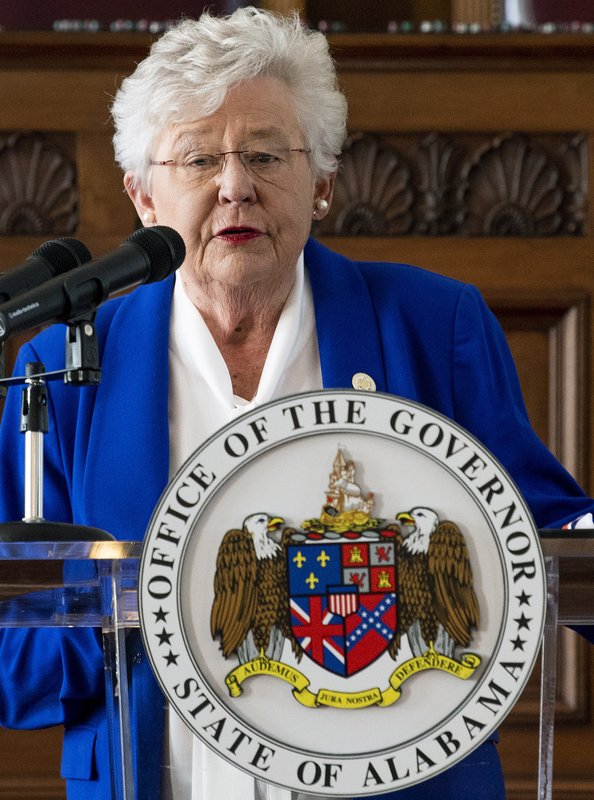
Gov. Kay Ivey has awarded two grants, totaling $143,192, to enhance public safety in Alabama. The Alabama Law Enforcement Agency received the grants that will help keep track of sex offenders and ensure that the state is up to date on a new federal crime reporting method. The Alabama Sex Offender Registration and Community Notification Act assists law enforcement agencies in keeping track of sex offenders. The National Incident-Based Reporting Summary (NIBRS) is a new national crime reporting system that is more comprehensive and all-encompassing than the current system it is replacing. According to the FBI website, the NIBRS was implemented to improve the overall quality of crime data collected by law enforcement. The system captures details on each single crime incident—as well as on separate offenses within the same incident—including information on victims, known offenders, relationships between victims and offenders, arrestees, and property involved in crimes. “ALEA and our local law enforcement agencies throughout Alabama do a superb, yet often unappreciated job of maintaining law and order in our state,” Gov. Ivey stated. “This funding will help provide the needed financial resources to maintain and update registries as required by federal and state laws.” The Alabama Department of Economic and Community Affairs (ADECA) is administering the grants from funds made available by the U.S. Department of Justice. “ADECA is pleased to partner with Gov. Ivey and the Alabama Law Enforcement Agency in these measures to improve public safety,” ADECA Director Kenneth Boswell stated. ADECA administers an array of programs supporting law enforcement and traffic safety, economic development, energy conservation, water resource management, and recreation development.
Kay Ivey awards $4.8 million grant to help child victims of abuse
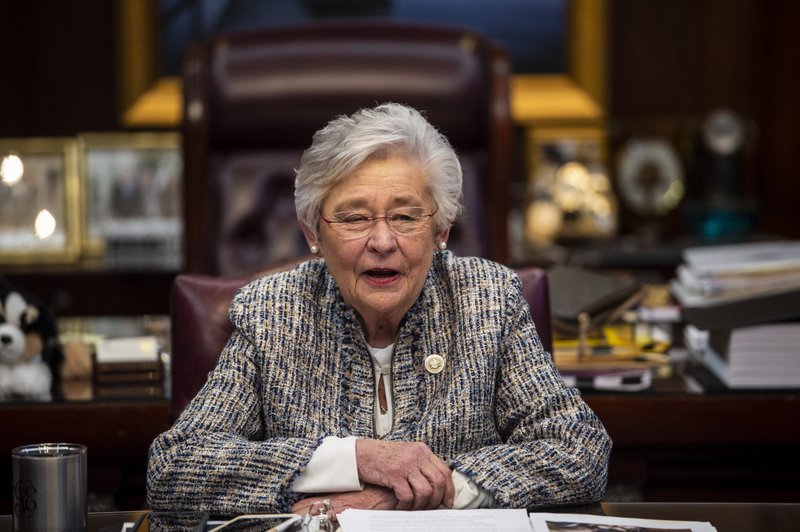
Gov. Kay Ivey has awarded grants totaling $4.8 million to help provide services to child victims of abuse, neglect, and sexual assault. The grants will provide training and resources to local law enforcement and nonprofit agencies and help many nonprofit organizations provide services including forensic interviews, mental health services, medical services referrals, advocacy, community education, and prevention services. “Young victims deserve to have the same professional services and help given to them as adult victims,” Gov. Ivey said. “I commend these agencies that work daily to help those who have been harmed and work to prevent further abuse.” The Alabama Department of Economic and Community Affairs (ADECA) will administer the grants from funds made available by the U.S. Department of Justice. ADECA administers a wide range of programs that support law enforcement, economic development, infrastructure upgrades, recreation, energy conservation, and water resources management. “ADECA shares Gov. Ivey’s dedication to protecting the most vulnerable among us by making sure child victims have the resources they need and that those helping the children are trained to provide the best assistance possible,” ADECA Director Kenneth Boswell stated. The following grants were awarded to various local and state agencies that provide direct services to victims and providers: Russell County Child Advocacy Center (Russell County): $66,240. Pike Regional Child Advocacy Center (Barbour, Bullock, Coffee, Pike): $109,440. Morgan County Child Advocacy Center (Morgan County): $229,440. The Children’s Advocacy Center of Cherokee County (Cherokee County): $140,160. Walker County Children’s Advocacy Center (Walker, Marion): $217,920. Escambia County Regional Child Advocacy Center, Inc. (Conecuh, Escambia, Monroe): $67,200. Family Counseling Center of Mobile, Inc. (Mobile County): $347,650. West Alabama Children’s Advocacy Center (Fayette, Lamar, Pickens): $83,520. Covington County Child Advocacy Center, Inc. (Covington County): $91,200. The Child Advocacy Center of Marshall County (Marshall County): $144,000. Talladega County Child Advocacy Center, Inc. (Clay, Coosa, Talladega): $82,560. DeKalb County Children’s Advocacy Center, Inc. (DeKalb County): $270,487. Cramer Children’s Center (Colbert, Franklin, Lauderdale, Lawrence, Winston): $583,680. James M. Barrie Center for Children, Inc. (Etowah County): $260,160. St. Clair Children’s Advocacy Center (St. Clair County): $65,280. Butterfly Bridge Children’s Advocacy Center, Inc. (Autauga, Chilton, Elmore): $270,720. CARE House, Inc. (Baldwin County): $116,160. Prescott House Child Advocacy Center (Jefferson County): $242,880. Calhoun/Cleburne Children’s Center, Inc. (Calhoun, Cleburne): $130,560. National Children’s Advocacy Center (DeKalb, Jackson, Madison, Marshall, Morgan): $597,983. Central Alabama Regional Child Advocacy Center (Bibb, Dallas, Hale, Perry, Wilcox): $105,600. Child Protect Inc. (Montgomery County): $131,520. The Child Advocacy Center of Cullman, Inc. (Cullman County): $234,477. Shelby County Children’s Advocacy Center, Inc. (Shelby County): $281,280.
Senate votes to raise debt limit by $2.5T, avoiding default
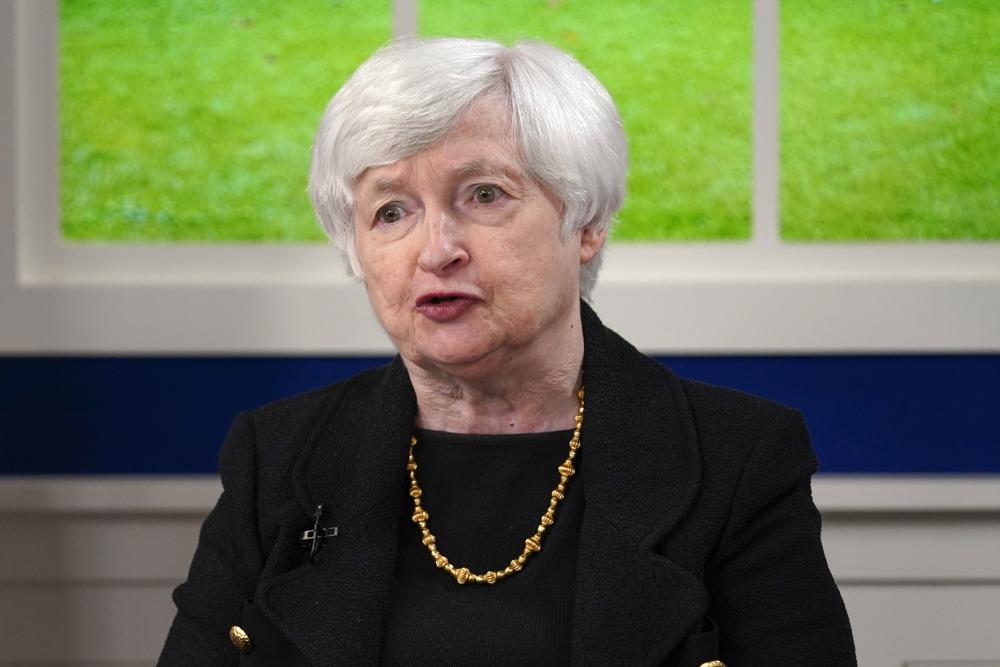
The Senate approved legislation Tuesday to lift the nation’s debt limit by $2.5 trillion under a deal struck between party leaders, defusing a volatile issue until after next year’s midterm elections while saddling majority Democrats with a tough vote. The 50-49 party-line vote came just one day shy of a deadline set by Treasury Secretary Janet Yellen, who warned last month that she was running out of maneuvering room to avoid the nation’s first-ever default. The measure now moves to the House where a vote could come as early as Tuesday night, sending it to President Joe Biden’s desk. “This is about paying debt accumulated by both parties, so I’m pleased Republicans and Democrats came together,” Senate Majority Leader Chuck Schumer, D-N.Y., said of the agreement, which created a workaround that allowed Democrats to avoid a Republican filibuster. Despite a seemingly straightforward name, the nation’s debt limit does little to curtail future debt. Established in 1917, it instead serves as a brake on spending decisions already approved by Congress and the White House — some decades ago — that if left unpaid, could cripple markets, send the economy into a tailspin and shake global confidence in the U.S. That hasn’t stopped Republican saber-rattling. For months, they’ve used the debt limit to attack Democrats’ big-spending social and environmental agenda while pledging to staunchly oppose the current effort to increase the threshold. As recently as October, Senate Minority Leader Mitch McConnell said he would not “be a party to any future effort to mitigate the consequences of Democratic mismanagement.” In striking a deal, McConnell backtracked on his word. But he also got much of what he wanted: Democrats taking a politically difficult vote without Republican support while increasing the limit by a staggering dollar figure that is sure to appear in future attack ads. “If they jam through another taxing and spending spree, this massive debt increase will just be the beginning,” the Kentucky Republican said Tuesday. The decision, however, has proven unpopular with some Republicans, particularly Donald Trump. The former president has railed against the deal repeatedly, calling McConnell a “Broken Old Crow” who “didn’t have the guts to play the Debt Ceiling card, which would have given the Republicans a complete victory on virtually everything.” “GET RID OF MITCH!” Trump said in a statement issued Sunday. Republican Sen. Mike Lee of Utah also criticized the intricate process Schumer and McConnell agreed to, which he warned could be used in the future to “launder” potentially unpopular votes while bypassing the Senate’s normal mode of operation. Under the agreement, an amendment was made to an unrelated Medicare bill that passed last week with Republican votes. It created a one-time, fast-track process for raising the debt limit that allowed Democrats to do so with a simple majority, bypassing the 60 vote threshold to avoid a GOP filibuster. Lee said the process was intended to make the Republican votes last week “appear as something other than helping Democrats raise the debt ceiling,” which he said Republican leadership “committed, in writing no less, not to do.” Yet Republican arguments against debt limit increases often ignore inconvenient facts. The nation’s current debt load of $28.9 trillion has been racking up for decades. Major drivers include popular spending programs like Social Security and Medicare, interest on the debt, and recent COVID-19 relief packages. But taxation is also a major factor, and a series of tax cuts enacted by Republican presidents in recent decades has added to it, too. The national debt includes $7.8 trillion heaped onto the pile during Trump’s four-year presidency, an analysis of Treasury records shows. The GOP-championed 2017 tax cut is projected to add between $1 trillion and $2 trillion to the debt, according to the nonpartisan Tax Policy Center. Republished with the permission of the Associated Press.
