
Two Alabama judges tapped to serve on election council

Secretary of State John Merrill announced that two Alabamians had been named to the U.S. Election Assistance Commission’s Local Leadership Council (LLC). James Tatum, Probate Judge of Bullock County, and Andrea LeCroy, Probate Judge of Marshall County, will serve as Alabama’s representatives on the LLC. The LLC is a federal advisory board that will focus almost exclusively on the responsibilities of local election officials. The council will consist of two members from each state to ensure geographic diversity, objectivity, and balance. According to the U.S. Election Assistance Commission (EAC) website, the EAC established the Local Leadership Council on June 8, 2021. The board is comprised up of 100 local election officials who are current or former officers in each state’s local election official association. The advisory board gives recommendations to the EAC on topics like voter registration and voter list maintenance, voting system user practices, ballot administration, processing, accounting, canvassing, auditing and testing of ballots, and certification of results.
Dan Sutter: Why are Americans avoiding work?

Inflation is currently America’s most pressing economic concern, but I believe that our disappearing workers pose a greater long-term challenge. Almost four million fewer Americans are working now than in February 2020 despite record job openings. Yet, the decline in work participation predates COVID-19 and is explored in a new Congressional Joint Economic Committee (JEC) report, “Reconnecting Americans to the Benefits of Work.” The starkest decline has been among men between the ages of 25 and 54. In 1955, nearly 98 percent of prime working-age men were employed or seeking work; by 2020, this stood at 88 percent. These age ranges should exclude impacts from increased college attendance or earlier retirement. As the report notes, this “represents a tremendous loss of economic potential.” The reasons for the decline matter because we may not have a problem here. If the AWOL men want to be homemakers or retire early, not working makes them better off. Statistics show, however, that only about 15 percent of disconnected men fit these categories. Economists explain market activity using supply and demand. We can distinguish then demand and supply side explanations for work disconnection. Employers are the demanders of labor, so demand factors include declining wages, the elimination of jobs through automation and international trade, and an education and skills mismatch. With a demand problem, businesses no longer want to hire the men who have dropped out. Although demand side explanations have received much attention, the JEC argues that they are not the main drivers. Wages adjusted for inflation were higher in 2019 than in 1973. Wages fell between 1973 and 1994, but the work exodus has continued with rising real wages. Jobs have been lost due to automation and trade, but other jobs have been created as a result. Jobs with better pay and benefits than fifty years ago still exist for lower-skilled workers. The disconnected men offer evidence against demand side explanations: “Three out of four disconnected men say they do not want a job.” Work participation declines have been concentrated among the less well educated (especially those with no high school degree), the native-born as opposed to immigrants, and individuals on disability (the SSI and SSDI programs). The formerly incarcerated account for about one-third of disconnected men. I fully support imprisoning persons for criminal acts, but not every felony should result in a life sentence. Gainful employment enormously affects recidivism, the likelihood of former prisoners committing additional crimes. Failing to employ ex-cons costs society their productive labor and the ensuing crime. The JEC blames government programs for disconnecting Americans from work. Policies create two impediments: artificial barriers to people working legally and public assistance, making work less attractive. The enormous work disincentives of safety net programs are well documented. Decreased assistance reduces take-home pay, just like high-income tax rates. The marginal tax rate, the amount of tax paid on the next $1,000 one earns, affects decisions to work more hours or pursue a raise. The top federal income tax rate is currently 37 percent; the effective tax rate for low-income Americans can exceed 100 percent. The report details legal and regulatory barriers to work. Occupational licensing and zoning receive particular attention. Licensing sets minimum criteria for people to work in a profession. Acquiring costly training or a college degree burdens low-income Americans. Zoning frequently restricts home-based businesses, which comprise a majority of all businesses with no employees. Perhaps the report’s most powerful takeaway concerns the many benefits of work. Work is the best anti-poverty program. Few workers make the minimum wage for long because businesses will train and promote dependable, reliable employees. Work has psychological benefits, like earned accomplishment, a sense of control over life, and greater happiness; not working produces depression. Working men have more social connections and are more eligible marriage partners. America’s AWOL workers should concern us all. We do not understand all the forces involved, but I think the government should do no harm here. Given the economic and psychological value of work, politicians who care about well-being should eliminate government-created barriers to work. Daniel Sutter is the Charles G. Koch Professor of Economics with the Manuel H. Johnson Center for Political Economy at Troy University and host of Econversations on TrojanVision. The opinions expressed in this column are the author’s and do not necessarily reflect the views of Troy University.
Gambling legislation again before lawmakers in ’22 session

Lottery and casino legislation will again be introduced in Alabama’s upcoming legislative session — with the goal of getting the measure before voters in November — but the outlook for the proposal is unclear as lawmakers face primaries this spring. Republican Sen. Greg Albritton of Range said he plans to introduce a proposed constitutional amendment that would include a state lottery, a compact with the Poarch Band of Creek Indians, and a yet-to-be-determined number of other gambling sites. “This simply needs to get off our plate, off the table. We need to deal with this, and waiting another year is not going to help us. That would just be revenue thrown aside or thrown away,” Albritton said. The Alabama Senate last year approved a proposed constitutional amendment that would establish a state lottery as well as allow nine casino sites in the state, but the measure stalled in the House of Representatives. “My goal is to find a path to get the votes that we need,” Albritton said of ongoing discussions. However, some members of the Republican leadership are doubtful about the outlook for any gambling legislation. Lawmakers face primaries in May, which brings both election concerns and time constraints in the 2022 session, a key member said. “I would be very surprised if it would pass in a regular session in an election year,” Republican Rep. Steve Clouse, chairman of the House general fund budget committee, said. “By the time we get toward to end of March, first of April, people are going to be antsy to get out of there.” Robbie McGhee, vice chairman of the Poarch Band of Creek Indians Tribal Council, said lawmakers would be giving the final decision to voters since the measure would have to be approved in a statewide vote. Albritton said his goal is to get the measure before voters in November. “I think this is the perfect opportunity to say, ‘That I’m going to give the power to people to make this decision,’” McGhee said. Gambling legislation in the past has failed under a mix of opposition from conservative lawmakers and turf wars over who would get lucrative casino licenses. Owners of dog tracks and other electronic bingo operations have argued the Poarch Creeks should not have a monopoly. Last year’s Senate-passed bill, in addition to authorizing casinos operated by the tribe, would have given existing dog tracks and electronic bingo operations, such as Greenetrack and VictoryLand dog tracks, an advantage in trying to win the other casino licenses. It is unclear what this year’s bill would mean for those sites. Albritton said he expected the sites would initially have an interim license to continue gaming. Albritton said he plans to propose that gambling revenue partly be used to fund mental health care and facilities. “That seems to be one major gap that we have in our state,” he said. Republished with the permission of the Associated Press.
Groups seek probe of Alabama use of virus funds for prisons
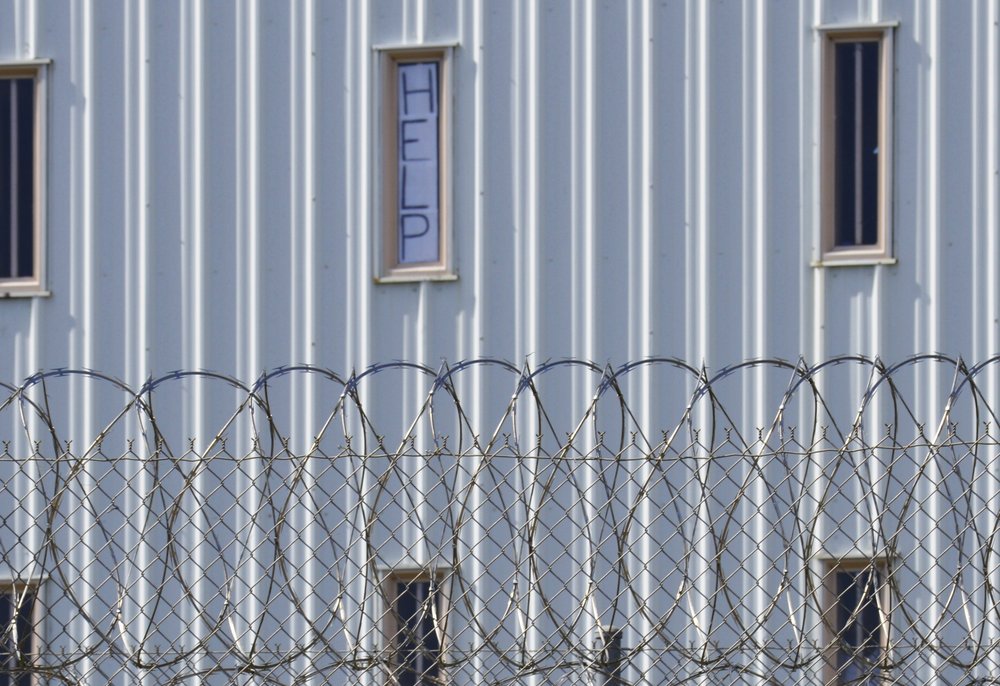
Nearly two dozen organizations have sent a letter asking the U.S. House Financial Services Committee to investigate Alabama’s plan to use $400 million in coronavirus pandemic relief funds to build two super-size prisons. The American Civil Liberties Union of Alabama, The Sentencing Project, and others signed on to a letter arguing that prison construction is an improper use of COVID-19 relief dollars from the American Rescue Plan. It asks Chairwoman Rep. Maxine Waters to hold hearings on the matter. “Directing COVID relief funds to a massive prison construction plan that long predates the pandemic is an absurd and inappropriate use of (American Rescue Plan) funds,” the organizations wrote. Alabama Gov. Kay Ivey signed legislation in October to tap $400 million of the state’s money from the federal plan to help build two super-size prisons. The Republican governor at the time called the construction plan “a major step forward” for the prison system, which faces various federal court orders and a lawsuit from the U.S. Department of Justice. The Alabama prison construction proposal calls for three new prisons — one north of Montgomery in Elmore County with at least 4,000 beds and enhanced space for medical and mental health care needs; another prison with at least 4,000 beds in south Alabama’s Escambia County and to replace the current women’s prison in Elmore — as well as renovations to existing facilities. Many existing facilities would close. Republican legislative leaders and Ivey have said they are confident that they can use the pandemic money for prison construction because the American Rescue Plan, in addition to authorizing the dollars for economic and health care programs, says states can use the money to replace revenue lost during the pandemic to strengthen support for vital public services and help retain jobs. But the opposed organizations argued that was not the intent of the money. “Building more prisons is a gross misuse of funds that were sent to help the people of Alabama, not punish them,” said JaTaune Bosby, executive director of ACLU of Alabama, in a statement. Bosby added that, “There seems to be no urgency from elected officials to provide relief to the people incarcerated in their facilities.” The U.S. Department of Justice has sued Alabama over a prison system “riddled with prisoner-on-prisoner and guard-on-prisoner violence.” The Justice Department noted in an earlier report that dilapidated facilities were a contributing factor to the unconstitutional conditions but wrote “new facilities alone will not resolve” the matter because of culture, management deficiencies, corruption and violence. The department updated its complaint this year, saying conditions in Alabama prisons have not improved since the federal government warned of unconstitutional conditions earlier and that male inmates continue to live in deadly and dangerous conditions. Ivey’s office did not immediately respond to an email seeking comment.
Hearing set on bid to dismiss suit over Confederate memorial
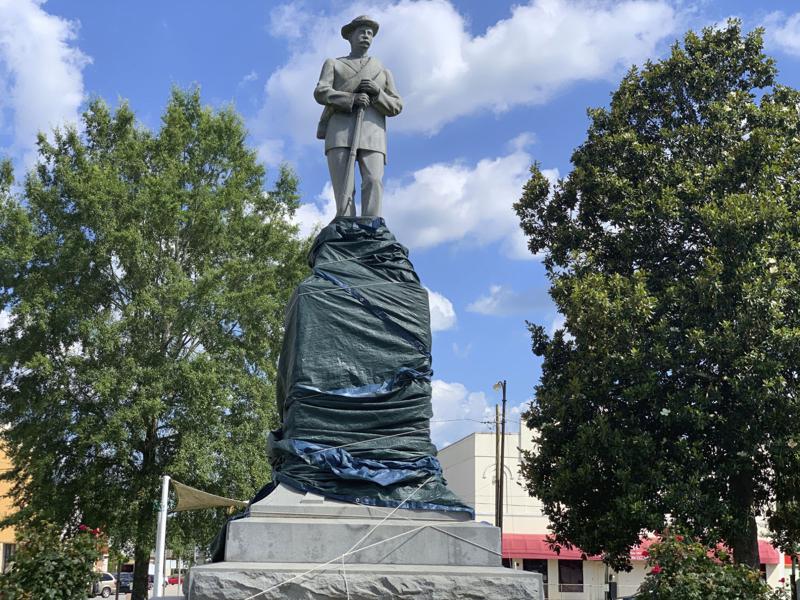
A hearing is set for early next year on a bid by a Confederate heritage group to dismiss a lawsuit over the land where a rebel monument stands in the middle of mostly black Tuskegee, Alabama. Court records show Macon County Circuit Judge Steven Perryman has scheduled a session for Feb. 3 on the dispute. The Tuskegee chapter of the United Daughters of the Confederacy is opposing a lawsuit filed earlier this year that could lead to the removal of a Confederate monument that’s stood in the heart of Tuskegee for 115 years. A lawsuit filed by the county and Tuskegee residents argues the county wrongfully gave land to the Confederate group for the statue in 1906. A decision in favor of the county could lead to removal of the monument, which has been the subject of on-and-off opposition for decades. But the United Daughters of the Confederacy says it owns the square legally, and an attorney for the group says members want the monument to remain. An order from the judge said he will consider the group’s request to throw out the lawsuit during the hearing in February. The monument was erected in Tuskegee at a time when groups all over the South were erecting Civil War memorials to honor rebel troops and portray the cause of the slave-holding Confederacy as noble. Hundreds of rebel monuments have been taken down in recent years as they came to be seen as symbols of racial oppression against Black people. Former Mayor Johnny Ford, now a Tuskegee City Council member, used a saw to damage the statue in July in hopes it would topple over, but it didn’t, and the county subsequently filed suit. The United Daughters of the Confederacy has since spent several thousand dollars on repairs, its lawyer said. Republished with the permission of the Associated Press.
