
Kay Ivey appoints Casey Rogers to external affairs director
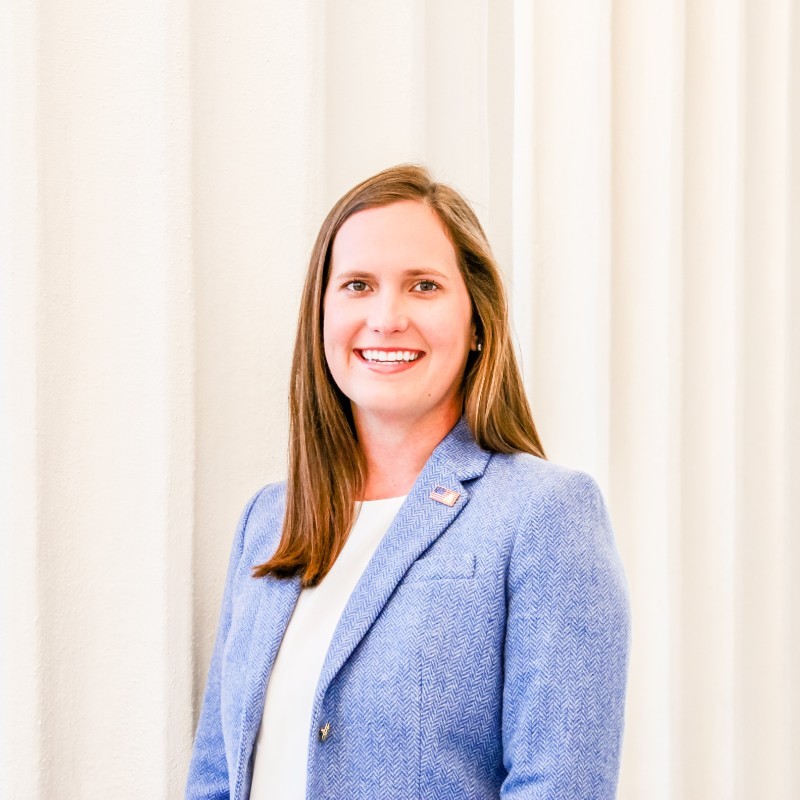
Gov. Kay Ivey announced she has appointed Casey Rogers to serve as her external affairs director. Rogers has been the director of state legislative programs for the Alabama Farmers Federation. As external affairs director, Rogers will serve as a staff contact for federal government offices and Alabama constitutional offices, cities, counties, and other organizations. “The Ivey Administration will always be committed to being the most open governor’s administration, and I am glad to have Casey on board to help further that mission,” said Governor Ivey. “Every member of my cabinet and staff are here to be resources for the people of Alabama, and I am confident in them as we work every day to make Alabama a great place to live, work and raise a family.” Prior to her time at the Alabama Farmers Federation, Rogers served as a field representative in the U.S. House of Representatives for Martha Roby. The Greenville native graduated from the University of Alabama in 2013 and worked as a communications specialist for Pioneer Electric Cooperative for four years. She was communications director for Public Service Commissioner Jeremy Oden’s 2014 campaign.
Omicron sweeps across nation, now 73% of new U.S. COVID cases
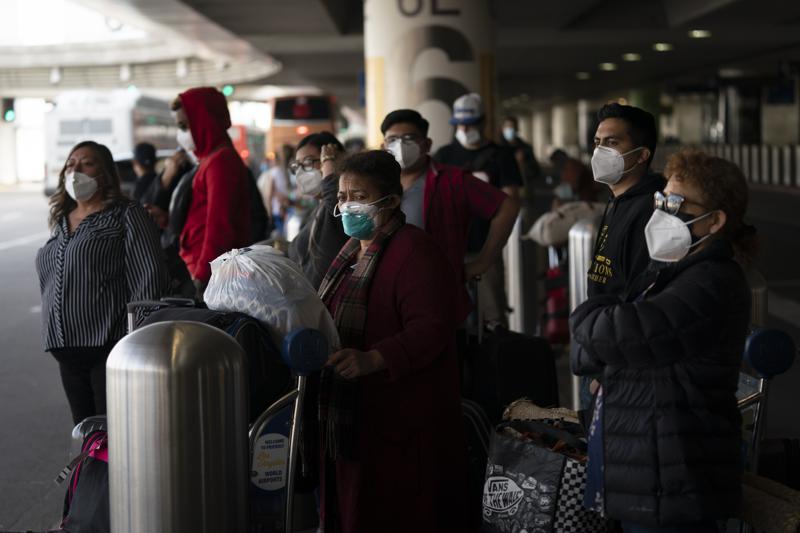
Omicron has raced ahead of other variants and is now the dominant version of the coronavirus in the U.S., accounting for 73% of new infections last week, federal health officials said Monday. The Centers for Disease Control and Prevention numbers showed nearly a six-fold increase in omicron’s share of infections in only one week. In much of the country, it’s even higher. Omicron is responsible for an estimated 90% or more of new infections in the New York area, the Southeast, the industrial Midwest, and the Pacific Northwest. The national rate suggests that more than 650,000 omicron infections occurred in the U.S. last week. Since the end of June, the delta variant had been the main version causing U.S. infections. As recently as the end of November, more than 99.5% of coronaviruses were delta, according to CDC data. CDC Director Dr. Rochelle Walensky said the new numbers reflect the kind of growth seen in other countries. “These numbers are stark, but they’re not surprising,” she said. Scientists in Africa first sounded the alarm about omicron less than a month ago, and on November 26, the World Health Organization designated it as a “variant of concern.” The mutant has since shown up in about 90 countries. Much about the omicron variant remains unknown, including whether it causes more or less severe illness. Early studies suggest the vaccinated will need a booster shot for the best chance at preventing omicron infection, but even without the extra dose, vaccination still should offer strong protection against severe illness and death. “All of us have a date with omicron,” said Dr. Amesh Adalja, a senior scholar at the Johns Hopkins Center for Health Security. “If you’re going to interact with society, if you’re going to have any type of life, omicron will be something you encounter, and the best way you can encounter this is to be fully vaccinated.” Adalja said he was not surprised by the CDC data showing omicron overtaking delta in the U.S., given what was seen in South Africa, the U.K., and Denmark. He predicted spread over the holidays, including breakthrough infections among the vaccinated and serious complications among the unvaccinated that could stress hospitals already burdened by delta. Dr. Eric Topol, head of the Scripps Research Translational Institute, said other countries had seen omicron’s fast growth, but the U.S. data showed “a remarkable jump in such a short time.” Topol also said it’s unclear how much milder omicron really is compared with other variants. “That’s the big uncertainty now,” Topol said. “We have to count on it being a lot of hospitalizations and a lot of severe disease from omicron.” CDC’s estimates are based on thousands of coronavirus specimens collected each week through university and commercial laboratories and state and local health departments. Scientists analyze their genetic sequences to determine which versions of the COVID-19 viruses are most abundant. On Monday, the CDC revised its estimate for omicron cases for the week that ended December 11, after analyzing more samples. About 13% of the cases that week were from omicron, not the 3% previously reported. The week before, omicron accounted for just 0.4% of cases. CDC officials said they do not yet have estimates of how many hospitalizations or deaths are due to omicron. Though there remain a lot of new infections caused by the delta variant, “I anticipate that over time that delta will be crowded out by omicron,” Walensky said. Republished with the permission of the Associated Press.
Steve Marshall: Vaccine mandate pushback necessary until ‘victory is secured’
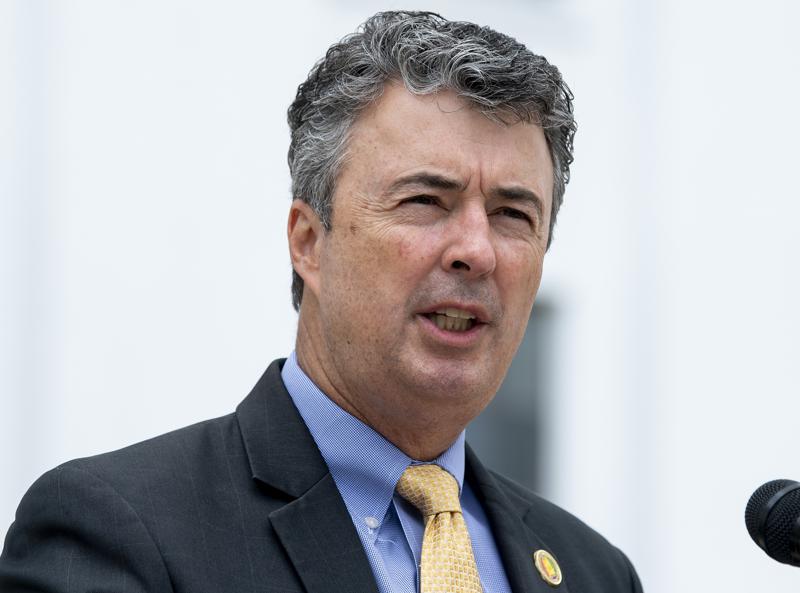
Attorney General Steve Marshall issued a statement on the status of the State’s legal challenges to President Joe Biden’s vaccine mandates. In early December, Marshall announced victory over Biden’s federal-contractor vaccine mandate. A federal court granted Alabama’s motion for an injunction against the vaccination requirement. Marshall stated, “On Friday evening, the U.S. Court of Appeals for the Sixth Circuit reinstated Biden’s private-employer vaccine mandate. Within hours of that decision, the State of Alabama—along with dozens of other state and private parties—filed an emergency application with the U.S. Supreme Court, asking the Court to immediately halt the mandate until the Court fully hears the case and issues a final ruling. “At the same time, the U.S. Department of Justice has asked the Supreme Court to take up the healthcare-worker vaccine mandate. Previously, as announced on November 30, the State of Alabama was successful in winning a nationwide injunction against the mandate from a federal district court, which was upheld as to the plaintiff states by the U.S. Court of Appeals for the Fifth Circuit,” Marshall continued. “We are optimistic that the Supreme Court will act swiftly in both cases and agree with the State of Alabama that these vaccine mandates plainly exceed any power given to the federal government by the Congress or the Constitution. “While the private-employer and healthcare-worker vaccine mandates head to the Supreme Court, the State of Alabama has won another victory against the federal-contractor vaccine mandate. Over the weekend, the U.S. Court of Appeals for the Eleventh Circuit denied the Department of Justice’s motion to reinstate the mandate pending appeal, leaving it blocked in Alabama and all other states that are parties in the case. “My office recognizes and fully appreciates the real-life challenges that employees and employers alike are experiencing given the shifting circumstances surrounding these mandates. Rest assured that my team and I will not let up until a full and final victory is secured against them for the people of Alabama,” he concluded.
Stacey Abrams seeks national voting rights action before 2022 race
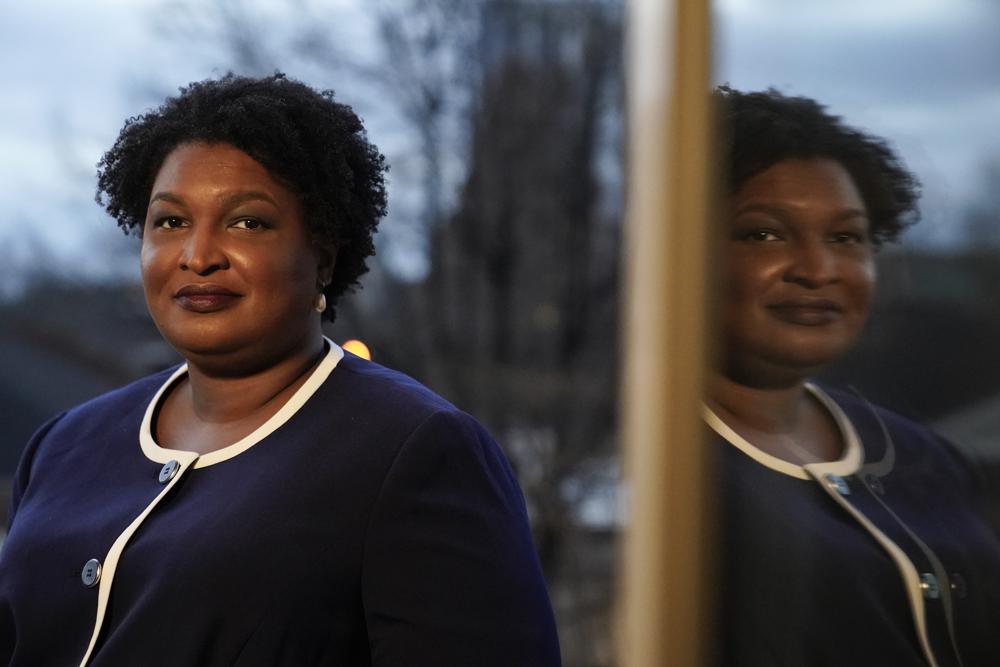
Stacey Abrams, who built her national reputation by advocating for voting rights, is calling on Congress to take action on federal voting rules as the Democrat launches a second bid to become Georgia’s governor. Senators, including Georgia Democrat Raphael Warnock, Abrams’ close ally, have been arguing in recent days that the Senate must try again on federal voting standards, despite earlier setbacks. In an interview Thursday with The Associated Press, Abrams said senators need to override Republican opposition to new federal voting guarantees by weakening the legislation-blocking filibuster to allow the Democrats’ bare majority to pass new rules. Otherwise, Abrams said, more Republican-dominated state legislatures nationwide will adopt voting restrictions like Georgia did this year. “Starting in January, when legislators come back into session in 2022, we’re going to see a maelstrom of voter suppression laws. I understand the resistance to completely dismantling the filibuster. But I do believe there’s a way to restore the Senate to a working body so that things like defending democracy can actually take place.” Abrams lost narrowly to Republican Brian Kemp in 2018 after becoming the first Black woman to ever become a major party’s nominee for governor. She maintains that Kemp used his position as secretary of state to unfairly tip the scales in his favor by doing things like purging voters from the rolls. Kemp denies wrongdoing. Abrams’ loss and her response, including forming a new voting group called Fair Fight, vaulted her to national prominence among Democrats. This year, Republicans pushed through a new voting law in Georgia, which, among other things, cuts days for requesting an absentee ballot, shortens early voting before runoff elections, and limits drop boxes. Democrats fear it will chip away at their gathering strength in Georgia, where President Joe Biden won the state’s 16 electoral votes, and then Warnock and fellow Democrat Jon Ossoff won runoffs in January, delivering control of the U.S. Senate to their party. Republicans argue the law is fair to all and was necessary to restore confidence in the state’s elections after claims of fraud by then-President Donald Trump inflamed many GOP voters. Those claims have been debunked and repeatedly rejected by courts. Abrams insists she can still win the election in Georgia next year even if there are no changes to its new law. “I will do everything in my power to make certain that these new onerous voter suppression laws do not effectively block voters from their right to vote,” she said. “And so yes, there’s absolutely a pathway to win.” Abrams said that pathway leads in a different direction than the traditional approach to policy taken by Southern Republicans, instead seeking to improve the prospects of those who don’t get a fair shot today. “This is a state that is on the cusp of greatness. But we have high income inequality; we have low graduation rates relative to our capacity; we have a broken public health infrastructure system,” Abrams said. “But we also have the ability, if we had good leadership, to invest in our communities, in all of our communities across the state.” Republicans are mobilizing against that approach, saying it would undermine freedom and the economy in Georgia and that Abrams is just using Georgia as a stepping stone to run for president. Although she said she’d like to be president one day, Abrams pledges to serve a full term as governor. In a lacerating attack on Kemp, Abrams argued he failed to recognize the severity of the COVID-19 pandemic and has been callous in his refusal to expand the Medicaid health insurance program to poor adults. “Leadership is about leading. It’s not about guessing, and more importantly, it’s not about abdicating responsibility by saying everyone just figure it out,” Abrams said. “If we wanted a system where everyone could figure it out, we wouldn’t need to elect the governor.” Kemp maintains he’s struck the right balance between health and the economy during the pandemic. He noted that he avoided unpopular lockdowns and that Georgia has a record-low unemployment rate right now. But with former Sen. David Perdue challenging Kemp in the Republican primary, Georgia’s 2022 governor’s contest might not be an Abrams-Kemp rematch. Abrams said Thursday that she would focus on her campaign, saying she didn’t know enough about Perdue to evaluate his record. “I don’t really know what it is, and I’m someone who’s paid very close attention to politics,” Abrams said. In a year where national public opinion has turned sour on Biden and Democrats, Abrams believes she can still win. She said that’s in part because Georgia is different, with a population on the cusp of becoming majority nonwhite, and because her approach is different, with a focus on “one Georgia” where she says, “I’m going to talk to every community, and I’m going to have plans for every community.” Republicans, though, maintain that Abrams will never overcome the tide of anti-Democratic sentiment and hope to lure wayward white suburbanites home, as well as pry away some African American, Latino and Asian voters. Abrams is preaching patience to those communities. “Winning an election isn’t about magic,” she said. “Voting isn’t magic. It is medicine. It takes time; it takes effort; it takes continued investment.” The terrain that Abrams is campaigning on could change in other ways in coming months. Congress is considering creating a workaround to give health insurance to more people in states that have refused to expand Medicaid to poor adults. Extending Medicaid benefits has been the central focus of Democratic campaigns in Georgia for a decade. Abrams said she would celebrate if Congress expanded Medicaid, but said Georgia would still have a high uninsured rate and a troubled public health system. The U.S. Supreme Court could clear the way for Georgia to ban abortions after six weeks of pregnancy. Passed in 2019, the law is currently on hold before an appeals court. Abrams called it a “forced pregnancy bill.” “I’m going to do everything in my power to ensure that no woman is forced to put her family, herself, or her
Sheriff, House member clash over ending Alabama gun permits

A southwest Alabama sheriff and a state House member are again jousting over whether the state should abolish permits to carry concealed handguns. AL.com reports that Mobile County Sheriff Sam Cochran spoke before the Mobile County Commission last week endorsing a resolution to keep permits. But state Rep. Shane Stringer, a Citronelle Republican who plans to sponsor a bill in next year’s legislative session abolishing the state’s permit requirement, urged commissioners to reject the resolution. A vote on the resolution could come on December 28. Stringer is a former Mobile County sheriff’s captain who was fired by Cochran because the two disagree on gun permits. Stringer argues for “constitutional carry,” the view that the Second Amendment to the U.S. Constitution bars states from requiring permits or collecting fees for people to carry guns. Most sheriffs statewide lobbied against a similar bill last year. Cochran argues the permit process is akin to a background check, noting Mobile County turned down 700 of 63,000 applicants for a concealed weapons permit last year over concerns about an applicant’s criminal history. “There are those who do not need to be carrying concealed weapons in our restaurants, clubs, and sports bars,” Cochran told the commission. “The biggest thing is safety of our citizens and officers.” Stringer says a database being developed by the Alabama Law Enforcement Agency will monitor for people who can’t legally possess a gun because of a criminal conviction or a finding of mental illness by a court. Stringer said the new system will “give law enforcement the tools they need to take the criminals off the street.” The database was mandated by lawmakers last year when they allowed people to buy a lifetime pistol permit for $300. Stringer argues sheriffs are trying to hold onto the fees that come with concealed carry permits but says people shouldn’t have to pay to exercise a constitutional right. “I don’t think we should be taxing people for carrying a gun,” Stringer said. He said some gun owners will still buy a permit in Alabama, so they will be allowed to travel to other states that require them. AL.com reports the dispute spilled over to the sheriff’s office Facebook page, which said Stringer’s proposal would lead to the “wild west” and urged people to call his statehouse office to oppose it. That post attracted many responses from gun rights proponents disagreeing with Cochran’s position. Republished with the permission of the Associated Press.
