
U.S. officials recommend shorter COVID isolation, quarantine
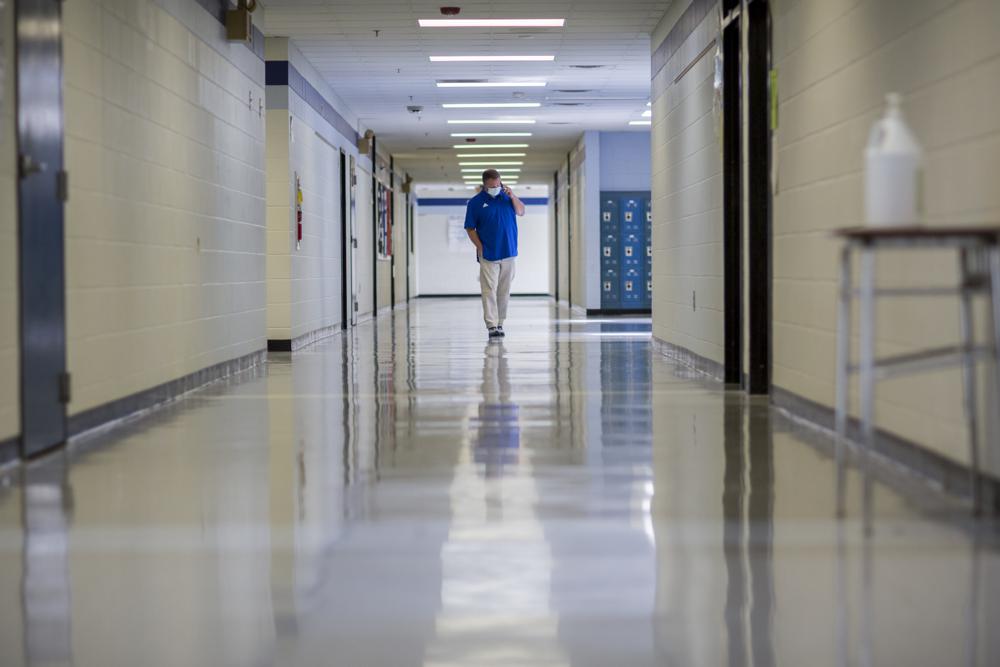
U.S. health officials on Monday cut isolation restrictions for Americans who catch the coronavirus from 10 to five days and similarly shortened the time that close contacts need to quarantine. Centers for Disease Control and Prevention officials said the guidance is in keeping with growing evidence that people with the coronavirus are most infectious in the two days before and three days after symptoms develop. The decision also was driven by a recent surge in COVID-19 cases, propelled by the omicron variant. Early research suggests omicron may cause milder illnesses than earlier versions of the coronavirus. But the sheer number of people becoming infected — and therefore having to isolate or quarantine — threatens to crush the ability of hospitals, airlines, and other businesses to stay open, experts say. CDC Director Rochelle Walensky said the country is about to see a lot of omicron cases. “Not all of those cases are going to be severe. In fact, many are going to be asymptomatic,” she told The Associated Press on Monday. “We want to make sure there is a mechanism by which we can safely continue to keep society functioning while following the science.” Last week, the agency loosened rules that previously called on health care workers to stay out of work for ten days if they test positive. The new recommendations said workers could go back to work after seven days if they test negative and don’t have symptoms. And the agency said isolation time could be cut to five days, or even fewer if there are severe staffing shortages. Now, the CDC is changing the isolation and quarantine guidance for the general public to be even less stringent. The change is aimed at people who are not experiencing symptoms. People with symptoms during isolation or who develop symptoms during quarantine are encouraged to stay home. The CDC’s isolation and quarantine guidance has confused the public, and the new recommendations are “happening at a time when more people are testing positive for the first time and looking for guidance,” said Lindsay Wiley, an American University public health law expert. Nevertheless, the guidance continues to be complex. ISOLATION The isolation rules are for people who are infected. They are the same for people who are unvaccinated, partly vaccinated, fully vaccinated, or boosted. They say: —The clock starts the day you test positive. —An infected person should go into isolation for five days, instead of the previously recommended 10. —At the end of five days, if you have no symptoms, you can return to normal activities but must wear a mask everywhere — even at home around others — for at least five more days. —If you still have symptoms after isolating for five days, stay home until you feel better and then start your five days of wearing a mask at all times. QUARANTINE The quarantine rules are for people who were in close contact with an infected person but not infected themselves. For quarantine, the clock starts the day someone is alerted they may have been exposed to the virus. Previously, the CDC said people who were not fully vaccinated and who came in close contact with an infected person should stay home for at least 10 days. Now the agency is saying only people who got booster shots can skip quarantine if they wear masks in all settings for at least 10 days. That’s a change. Previously, people who were fully vaccinated — which the CDC has defined as having two doses of the Pfizer or Moderna vaccines or one dose of the Johnson & Johnson vaccine — could be exempt from quarantine. Now, people who got their initial shots but not boosters are in the same situation as those who are partly vaccinated or are not vaccinated at all: They can stop quarantine after five days if they wear masks in all settings for five days afterward. FIVE DAYS Suspending both isolation and quarantine after five days is not without risk. A lot of people get tested when they first feel symptoms, but many Americans get tested for others reasons, like to see if they can visit family or for work. That means a positive test result may not reveal exactly when a person was infected or give a clear picture of when they are most contagious, experts say. When people get infected, the risk of spread drops substantially after five days, but it does not disappear for everyone, said Dr. Aaron Glatt, a New York physician who is a spokesman for the Infectious Diseases Society of America. “If you decrease it to five days, you’re still going to have a small but significant number of people who are contagious,” he said. That’s why wearing masks is a critical part of the CDC guidance, Walensky said. VARYING RECOMMENDATIONS The new CDC guidance is not a mandate; it’s a recommendation to employers and state and local officials. Last week, New York state said it would expand on the CDC’s guidance for health care workers to include employees who have other critical jobs that are facing a severe staffing shortage. It’s possible other states will seek to shorten their isolation and quarantine policies, and CDC is trying to get out ahead of the shift. “It would be helpful to have uniform CDC guidance” that others could draw from, rather than a mishmash of policies, Walensky said. Given the timing with surging case counts, the update “is going to be perceived as coming in response to pressure from business interests,” Wiley said. But some experts have been calling for the change for months because shorter isolation and quarantine periods appeared to be sufficient to slow the spread, she said. The move by CDC follows a decision last week by U.K. officials to reduce the self-isolation period for vaccinated people who test positive for COVID-19. Republished with the permission of the Associated Press.
Bidens mark Christmas with holiday calls to service members
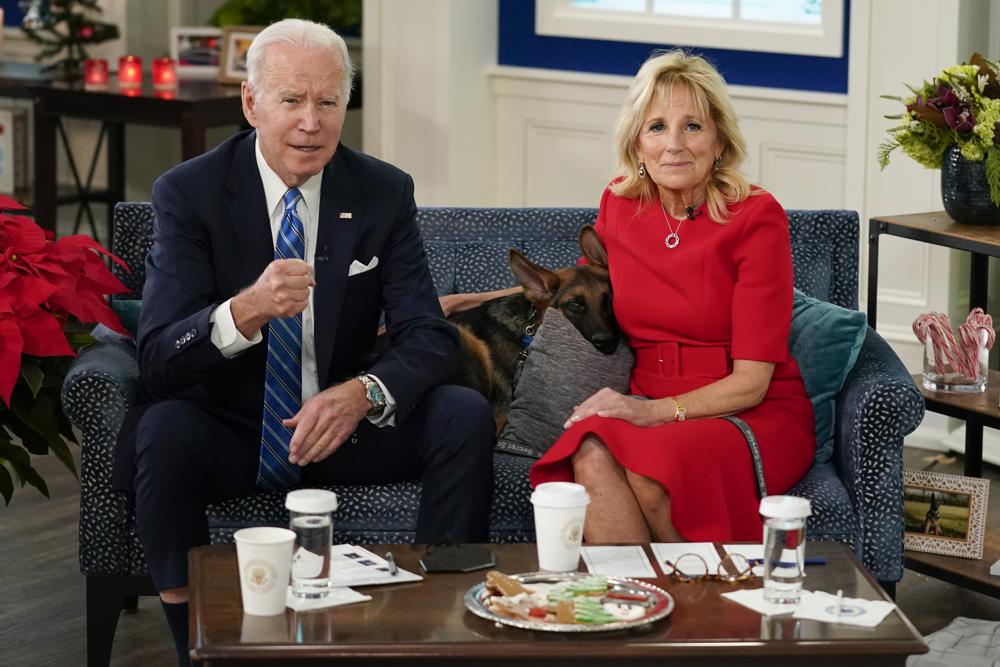
President Joe Biden marked his first Christmas in office by making calls to military service members stationed around the world, offering them holiday wishes and gratitude for their service and sacrifice for the nation. Joined by his wife, Jill, and their new puppy, Commander, the president on Saturday spoke via video to service members representing the Army, Marine Corps, Navy, Air Force, Space Force, and Coast Guard, stationed at bases in Qatar, Romania, Bahrain, and the U.S. “As your commander in chief, I wanted to take this opportunity to say thank you, thank you, thank you,” he told the service members. “We’re grateful for your courage, your sacrifice, not only your sacrifice but your family’s sacrifice.” Speaking from a studio set up at the White House, Biden told them they’re “the solid steel spine of the nation,” and emphasized the “truly sacred obligation” the nation has to care for soldiers and their families. Jill Biden expressed empathy for the difficulties their families experience spending the holidays away from their loved ones, noting that the Bidens experienced the same when their son Beau, who served as a major in the Delaware Army National Guard, was deployed to Iraq. The Bidens planned a relatively quiet Christmas at the White House with family. On Friday night, the president and the first lady participated in Holy Trinity’s Christmas Eve Mass virtually in the East Room, according to the White House, and held a pasta dinner and sleepover with their children and grandchildren, a Biden family tradition. As the coronavirus pandemic surges anew, driven by the highly infectious omicron variant, the Bidens sought with their public appearances and statements to offer a sense of unity and normalcy in an otherwise challenging season for many. In a Christmas statement, the Bidens praised the “enormous courage, character, resilience, and resolve” of the American people in the face of the pandemic and offered prayers that the nation would find “light in the darkness” during a difficult season. “During this season of joy, we are inspired by the countless Americans who are a reminder that the things we hold sacred unite us and transcend distance, time, and even the constraints of a pandemic,” the Bidens said in their statement. And the call to soldiers was just the latest Christmas tradition the two participated in after spending Christmas eve spreading holiday cheer around Washington. On Friday morning, they visited Children’s National Hospital to offer holiday greetings to young patients and their families. The president showed off photos of their new puppy, and Jill read a children’s book to patients. Later, the two stopped by a Jill Biden-themed Christmas tree in the Dupont Circle neighborhood. The president hung the 2021 White House Christmas ornament amid branches decked out with photos of his wife’s face, apples, and small chalkboards, in homage to her teaching career. Both answered calls to the North American Aerospace Defense Command’s Santa-tracking service, speaking to parents and children about their Christmas wishlists. Republished with the permission of the Associated Press.
Paul DeMarco: 2021 A Difficult Year for Alabama, Hope for 2022
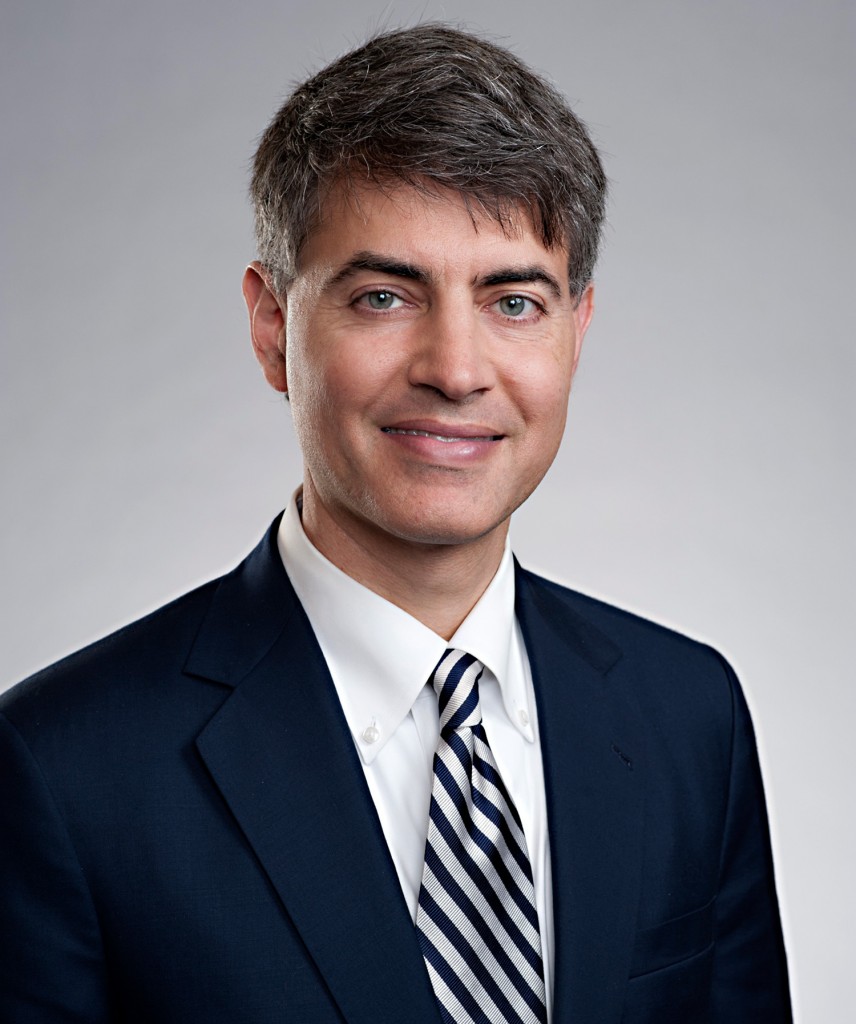
When we look back at this past year, there will be a lot of headlines that we will remember about this year in Alabama. Obviously, the pandemic and its effect on the state’s citizens is what we will remember most about 2021. The virus took its toll on Alabama with over 16,000 Alabamians who passed away and many more who suffered from infection with the virus. And state leaders debated on how best to move the state forward while the virus was spreading. It had a large impact on the state’s economy. Workers dealt with the crushing blows of rising inflation and a higher cost of living, while businesses struggled to keep or hire new employees after months of government benefits disincentivized some people from returning to work. In addition to the pandemic, we also had soaring numbers of drug overdoses and a sharp spike in crime around the country and our state. Mother nature struck the state earlier this year in June when Tropical Storm Claudette hit Alabama hard spinning off tornadoes and resulting in flooding that led to deaths, injuries, and property damages. Yet, despite the difficulties we have faced this past year, Alabama is still attracting new companies to open their doors in the state. And touristS are returning in record numbers to enjoy our natural attractions from the beaches to the Mountains. There are more treatments today that are available to fight COVID-19 and its variants so hopefully, we will see a return to pre-pandemic life in the new year. And those that have advocated to defund the police and weaken the criminal justice system are seeing strong push back now from citizens that will carry over into the next year. Yes, 2021 has been a difficult one in our state, but there are reasons to be hopeful for 2022 as the new year approaches. Paul DeMarco is a native of Alabama and is a former member of the Alabama House of Representatives.
Federal program offers cash to cover COVID-19 funeral costs
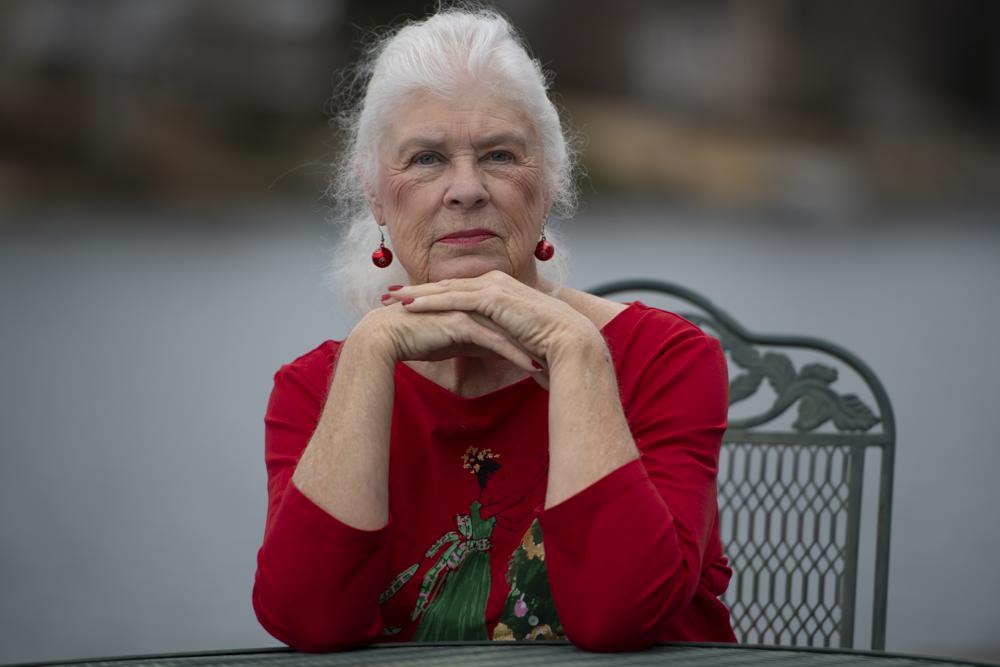
When Wanda Olson’s son-in-law died in March after contracting COVID-19, she and her daughter had to grapple with more than just their sudden grief. They had to come up with the money for cremation. Even without a funeral, the bill came to nearly $2,000, a hefty sum that Olson initially covered. She and her daughter then learned of a federal program that reimburses families up to $9,000 for funeral costs for loved ones who died of COVID-19. Olson’s daughter submitted an application to the Federal Emergency Management Agency, received a deposit by June, and was able to reimburse her mother the $1,974. “Had this not been available, we would have been paying the money ourselves,” said Olson, 80, of Villa Rica, Georgia. “There wasn’t any red tape. This was a very easy, well-handled process.” As of December 6, about 226,000 people had shared in the nearly $1.5 billion that FEMA has spent on funeral costs that occurred after January 20, 2020, the date of the first confirmed case of COVID-19 in the U.S. With the nation’s coronavirus death toll topping 800,000, it’s clear that many families who are eligible for reimbursement have yet to take advantage of the funeral benefit. Her son-in-law was traveling a lot, working on air conditioning systems in theaters, restaurants, and businesses, when he began feeling ill, Olson said. After a few days at home, he went to the hospital and was put on a ventilator. He died several weeks later. “He could never overcome it,” she said. To be eligible for reimbursement, death certificates for those who died after May 16, 2020, must indicate that the death was attributed to COVID-19. For deaths that occurred in the early months of the pandemic — from January 20 to May 16, 2020 — death certificates must be accompanied with a signed statement from a medical examiner, coroner, or the certifying official listed on the certificate indicating that COVID-19 was the cause or a contributing cause of death. The percentage of individuals who have been reimbursed varies dramatically from state to state — from nearly 40% in North Carolina and Maryland to fewer than 15% in Idaho and Oregon, according to state-by-state data compiled by FEMA. While the reimbursement must go directly to individuals, some funeral directors have taken on the task of informing grieving families of the benefit. After the benefit was first announced, David Shipper, owner of the Sunset Funeral Home, Cremation Center & Cemetery in Evansville, Indiana, took out ads to let people know that help was available if they qualified. “Nine thousand dollars — that’s a lot of money. We wanted to find a way to tell people about it,” he said. “We stopped advertising some time ago, but when we have a new family with a death from COVID, we tell them about the program.” Workers at the home will sit down with families, gather the needed paperwork, contact FEMA on the phone and help walk them through the process if they ask, he said. Many families may simply be unaware of the benefit, but others may opt against seeking the cash out of reluctance to revisit the pain of the death, Shipper said. He said the better time to seek help is when planning the funeral. “They’re much more likely to take advantage right then than if they’ve already spent the money and don’t want to open it up again,” Shipper said. The largest states account for some of the biggest shares of the FEMA reimbursement money. The program has paid out more than 21,000 reimbursements in California and Texas, which have both reported more than 74,000 COVID-19 deaths. Residents applied for more than $141 million in each state. The fewest number of reimbursements have occurred in Vermont, where 123 people were awarded a total of about $704,000. Expenses covered under the FEMA program include funeral services, cremation, and interment, as well as the costs for caskets or urns, burial plots or cremation niches, markers or headstones, transportation or transfer of remains, clergy or officiant services, and the use of funeral home equipment or staff. The program has been funded using federal stimulus funds, and money remains available. No online applications are allowed. After all required documents are received and verified, it typically takes fewer than 30 days to determine if an individual is eligible, according to FEMA. Once eligibility is confirmed, applicants who request direct deposit may receive the money in a matter of days. It may take longer for applicants who request a check. The reimbursement is one way of helping ease the emotional and financial burden that the pandemic has wreaked on communities across the country, according to Ellen Wynn McBrayer, president of Jones-Wynn Funeral Homes & Crematory in Villa Rica, Georgia. She recalled one woman who lost her mother, husband, and one of her children to the disease in the span of six months. One of the workers at the funeral home also succumbed to the virus. “To have to help a grieving family is hard on a normal day, but to see so many deaths,” she said. “COVID has just broken a lot of hearts and taken a lot of lives.” Republished with the permission of the Associated Press.
Mountain Brook resident Jessica Garrison named one of ‘Washington’s most powerful women’

Mountain Brook, Alabama, seems a long way from Washington, D.C., but one resident is making her name known in the tech world. Jessica Medeiros Garrison was recently listed on the “Washingtonian” magazine’s list of “Washington’s Most Powerful Women,” Village Living reported. Garrison works as vice president of government affairs for Clearview AI, a facial recognition tech company. She was recognized under the category of lobbying and advocacy for her role in helping to sell Clearview AI’s technology. Clearview AI is based out of New York City. The company has a database of more than 10 billion images taken from social media, websites, news articles, criminal databases, and other public sources. The company uses its search engine technology to help law enforcement and government agencies identify suspects, solve crimes and provide justice to victims. Clearview AI was named to Time magazine’s inaugural list of the “100 Most Influential Companies” in 2021. “We are now recognized as the most accurate algorithm in the Western world,” Garrison said. “There are trillions of publicly available images on the Internet, which provide a tremendous capability for identifying investigative leads and clues to solve crimes and save victims,” she said. “This resonates with me on such a deep level — that this broad and wide-sweeping technology can actually provide a path to setting wrongs right.” When asked about being named one of Washington’s most powerful women, Garrison stated, “I was completely surprised when a friend forwarded me a photo of the announcement article,” she said. “I am humbled, and a bit overwhelmed.” “The fact that my work and my calling are making a difference fuels me to work even harder,” she said. “When you are fortunate enough to be in a position to effect change, you assume a certain measure of responsibility,” she said. “I take my opportunities to influence opinions and to help shape outcomes seriously, envisioning the outcome for the people who will be most impacted.” After graduating from the University of Alabama in 1997, Garrison served as director of legislative affairs and public information in the office of Bill Pryor while he was Alabama Attorney General. She graduated from the University of Alabama School of Law in 2000. Garrison also served as executive director of the Republican Attorneys General Association and managed Luther Strange’s 2010 campaign for Alabama Attorney General. Although originally born in Rhode Island, Garrison loves Mountain Brook. “I feel like Mountain Brook is home, and I love it,” Garrison said. “Mountain Brook is all about the people. Not only are they kind and caring, but also these are people who achieve in the world. They’re in medicine and business, in law and entrepreneurship. They constantly inspire me as leaders and visionaries who aim to make the world a better place.”
Atlanta Fed Head: Workplace diversity will boost U.S. economy

The head of the Federal Reserve Bank in Atlanta says workplace diversity is not only a moral issue but will boost the U.S. economy. Raphael Bostic spoke to the Atlanta Journal-Constitution in a story published on Saturday. He’s been named the 2022 chair of the Metro Atlanta Chamber of Commerce. Bostic four years ago became the first Black and the first openly gay person to head a regional bank. The Atlanta Federal Reserve district is made up of Alabama, Florida, Georgia, and parts of Louisiana, Mississippi, and Tennessee. His role there includes talking to local business leaders, and Bostic — a Stanford University-trained economist — said he’s found not all executives see diversity as a priority. Some also struggle to measure or improve their performance in that area. But Bostic said he believes diversity will improve the economy. “In my role, my focus is on economics, the health of the U.S. economy, and getting us to a place where we can experience the full potential of everyone,” he told the AJC. “It’s my view that, when we have more fulsome participation of everyone in the U.S. economy, the economy is actually going to grow faster. It’s going to be stronger. It’s going to be more resilient.” The value of diversity was apparent to him as a research economist at the Federal Reserve in Washington — his first job after graduate school. His team was very diverse, and that helped flush out any hidden biases, so “the final product was actually stronger and more objectively articulated and characterized than it would have if any two of us, or any one of us, had been on the team,” he said. He said the country is making progress toward equity, but he worries about maintaining focus on the issue. “We didn’t get to this place in just a handful of days, so it’s going to take a while and a longer-term commitment in order to see change along these dimensions,” he said. “That is going to require perseverance and patience, and these are things that are harder to maintain and sustain. I’m hopeful we can find ways to allow ourselves not to be distracted as we try to build a better United States and a better economy, one that works for everyone.” Republished with the permission of the Associated Press.
