
Steve Flowers: U.S. Senate race is our 2022 election year premier contest
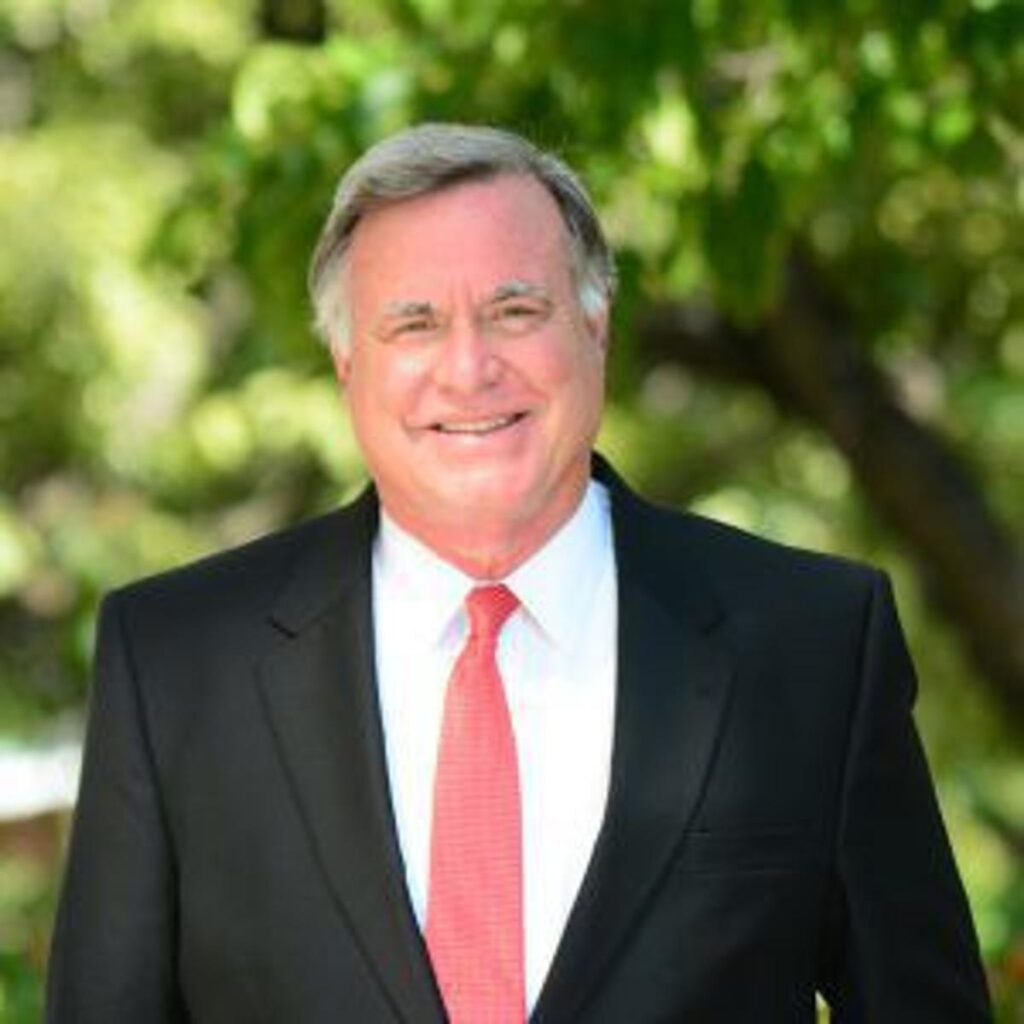
This year’s midterm congressional elections will be the political story of the year in American politics. The U.S. House of Representatives will be in play big time. Whichever party has the majority has all the power. Currently, the Democrats have a very small majority. Polling and history reveal that Republicans are poised to pick up a large number of seats and gain back a majority in the House and will more than likely gain a slim majority in the U.S. Senate where there is currently an even 50 to 50 split, with Democratic Vice President Kamala Harris having the tie-breaking vote that gives the teetering majority to the Democrats. History has portended without deviation to a clear historical political fact that the party that wins the White House and concurrently House seats loses those seats in the next midterm elections. It is usually a significant pickup, especially when there is a Democratic president. Early polling indicates this will happen this year. President Joe Biden’s approval ratings are abysmal, which will spill over into the swing House districts throughout the country. The first revealing salvo occurred in November in the Democratic State of Virginia when voters elected a Republican Governor, Lt. Governor, Attorney General, and the majority of Virginia House delegates. A Republican takeover of the U.S. House will affect Alabama favorably because our House delegation is made up of six Republicans and one lone Democrat. The marquee event for this year, politically, in Alabama will be for the open seat of retiring Senior Senator Richard Shelby. The race has been ongoing for almost a year and will be decided in a few short months from now. The election is on May 24. The runoff will be June 21. The winner of that runoff will be our next U.S. Senator. The favorites to capture the seat are either Katie Britt or Mo Brooks. Recent reliable polling reveals a close dead even contest between Brooks and Britt. Mo Brooks is the current congressman from the 5th Congressional District, which encompasses Huntsville and the Tennessee Valley. There is probably not a congressional district in the entire country that has benefited more from federal spending than the Huntsville Redstone Arsenal. Brooks has not been helpful in this attraction of federal dollars to his district. The heavy lifting towards Huntsville’s growth has fallen onto the shoulders of Senator Richard Shelby. Brooks has been an obstacle to Huntsville’s federally funded prosperity. Brooks is seen in Washington as a right-wing gadfly nut that is more interested in finding a Fox News camera than helping his District or State. His claim to fame is that he is currently the endorsed candidate of former President Donald Trump. Katie Boyd Britt is the mainstream, rational, conservative candidate. She is the choice of the pro-business, pro-growth Republican establishment in the state. She is the former CEO of the Business Council in the state. She has received the endorsement of most business groups as well as the coveted Alabama Farmers Federation. The business community sees her as a stable, reliable, and youthful successor to Shelby. Katie Britt and Mo Brooks will both be well funded. Britt has outdistanced Brooks in fundraising. However, Brooks will be bolstered by the right-wing Washington conglomerate Club for Growth and may be able to match Britt dollar for dollar. It will be an expensive race. The wildcard in the contest is the entry of one Mike Durant. He announced his entry about two months ago and immediately began a bombardment of excellent television and radio ads. Durant is a decorated war hero and POW who came to Huntsville from New Hampshire and built his own successful business from scratch. He has a real story that, if told well, will sell. In fact, it already has begun to sell. The hidden fact in the recent polling, which shows Britt and Brooks knotted at about 30 percent each, reveals that Durant is polling at 15 percent after only one month in the race. Durant is the wildcard in this race. Katie Britt’s polling numbers are good. They show her trending upward. She is also the only candidate with a grassroots organization. She has campaigned in every county in the state, while Brooks’ handlers have worked to keep him off the campaign trail in fear that he will go off script and implode, which he has tendency to do. It would not surprise me that if Durant can sustain his ads for four months, which will be a heavy lift of his personal assets, that when the votes are counted on May 24, you may have a Katie Britt vs. Mike Durant runoff on June 21. It will be a fun race to watch. See you next week. Steve Flowers is Alabama’s leading political columnist. His weekly column appears in over 60 Alabama newspapers. He served 16 years in the state legislature. Steve may be reached at www.steveflowers.us.
Barry Moore warns Congress of Chronic Wasting Disease threat, cosponsors CWD legislation
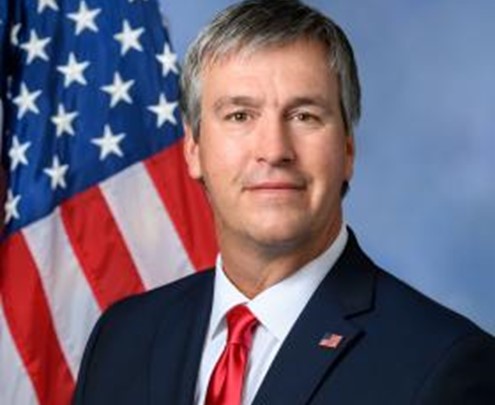
Today, Rep. Barry Moore spoke on the floor of the House of Representatives to warn of the threat Chronic Wasting Disease (CWD) poses to deer populations in Alabama. The Florida Fish and Wildlife Conservation Commission announced it recently found Chronic Wasting Disease (CWD) in a hunter-harvested deer in northwestern Alabama. This is the first case of CWD detected in Alabama’s deer herd and the first time it has been detected in a state that borders Florida. Moore is a co-sponsor of H.R. 5608, the Chronic Wasting Disease Research and Management Act, which passed the House of Representatives last month. According to Congress.gov, the bill “directs USDA to establish a program to research and manage the disease. Under the program, USDA must offer to enter into agreements with state or tribal wildlife agencies and departments of agriculture, institutions of higher education, and research centers to support research on the transmission of, resistance to, and diagnosis of the disease. In addition, USDA must offer to enter into agreements with such agencies and departments to support state and tribal efforts to develop and implement management strategies that address the disease.” Moore stated on the House floor, “Madam Speaker, I rise today to discuss an important issue in Alabama and across the nation. Chronic Wasting Disease is a neurological disease that affects deer, moose, and elk and is 100 percent fatal. Unfortunately, there is no known cure. CWD could absolutely devastate deer hunting in Alabama and the revenue it brings in each year.” “I am proud to co-sponsor H.R. 5608, the Chronic Wasting Disease Research and Management Act, which passed the House of Representatives last month. This bill will help research and prevent Chronic Wasting Disease from spreading further, protecting Alabama’s deer herds, outdoor economy, and traditions. “Last week, the first case of Chronic Wasting Disease was reported in Alabama. While it is currently only one case, it is important that we do what we can to prevent this terrible disease from spreading even further. I’m hopeful the Senate will answer the call and take up this legislation so important to Alabama and our nation. “I’ll do whatever I can in Washington to help prevent Chronic Wasting Disease from taking hold in Alabama. And with that, I yield back,” Moore concluded. Chris Blankenship, Commissioner of the Alabama Department of Conservation and Natural Resources (ADCNR), stated, “CWD was first detected in Tennessee and Mississippi in 2018 and has been moving slowly toward Alabama. The Department has implemented multiple proactive regulations to combat the spread into Alabama. Compliance from the public on those measures helped delay the spread into the state for several years.”
Alabama lawmakers begin session amid COVID surge, elections
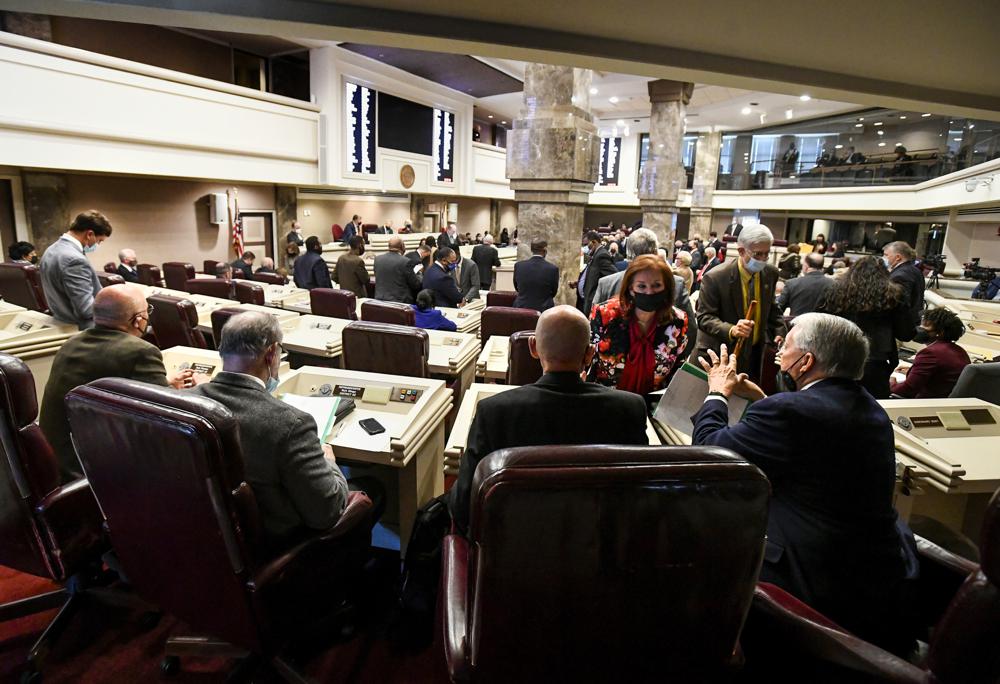
Alabama lawmakers returned to Montgomery on Tuesday to begin the 2022 legislative session against a backdrop of rising coronavirus cases and looming elections, faced with major decisions, including how to use the state’s remaining pandemic relief funds. Congress allocated $2.12 billion for Alabama through the American Rescue Plan. The state received the first half in June and has $580 million remaining after steering $80 million to hospitals and nursing homes and $400 million on a controversial prison construction plan. A key topic for the session will be how to use those remaining pandemic dollars. “We’re going to be looking at major priorities such as water and sewer grants for the state. Broadband will be an issue and health care,” House Speaker Mac McCutcheon said. Senate President Pro Tem Greg Reed agreed those will be funding priorities and said it is important lawmakers spend the money on projects that will have lasting effects. “We talked about water and sewer projects. These are things that we can spend the resources on that are beneficial for the people of Alabama for many, many years in the future,” Reed said. House Minority Leader Anthony Daniels, a Democrat from Huntsville, said that in addition to needs like broadband, Democrats would like to see health care, child care, affordable housing, and pandemic recovery for businesses addressed. “COVID-19 is not going away. In fact, the numbers are at their highest right now with this new variant,” said Daniels, who just recovered from his second bout with the coronavirus. “We just have to think through where our investments will be more well-spent and yield the returns that we need long term.” Key lawmakers said there are discussions with Gov. Kay Ivey about holding a special session to focus on the pandemic relief funds. A spokesperson for Ivey said last week that the governor “wants this to be an early priority for the Legislature.” Unlike previous years, state budgets are seeing significant growth because of increases in sales and income tax collections. Lawmakers are expected to approve a pay raise for teachers and state employees. Key lawmakers, including Sen. Greg Albritton, chairman of the Senate General Fund budget committee, said raises up to 4% are under discussion for both teachers and state employees. Lawmakers are coming to the Statehouse as Alabama experiences a record jump in COVID-19 cases fueled by the highly contagious omicron variant. The Statehouse is open to the public, but some safety precautions have been put in place. The 105-member Alabama House of Representatives is requiring masks in common areas such as hallways. Seating will be limited at Ivey’s State of the State address. Representatives can choose to vote from an overflow room if they feel unsafe in the crowded chamber. House Republicans this year are pushing what they have dubbed the “Standing Tall for Alabama” agenda, which includes legislation to do away with the requirement to get a permit to carry a concealed handgun in public. The backing increases the chances of approval for the proposal that has failed for several years in Montgomery. However, the proposal continues to face opposition from state sheriffs who say it will undermine public safety. The House GOP agenda also includes anti-critical race theory legislation and the creation of a felony crime for assaulting a first-responder. Daniels called the GOP agenda a “waste of time” as the state continues to deal with the ongoing COVID-19 pandemic. Lawmakers face primaries on May 24. An election-year session traditionally brings a flurry of legislation and resolutions that lawmakers believe will appeal to their voters. However, legislators also will feel pressure to finish up the session quickly in order to hit the campaign trail. Republished with the permission of the Associated Press.
2nd election for Amazon workers in Alabama will be by mail

A federal labor board said that Amazon workers in Bessemer, Alabama, will vote by mail next month in a re-run election to decide whether or not to unionize. The National Labor Relations Board said Tuesday that the ballots will be mailed out on February 4 and must be returned before the counting starts on March 28. The move comes roughly a month and a half after the board ordered a new union election for Amazon workers based on objections by the Retail, Wholesale and Department Store Union to the first vote that took place in April. The move was a blow to Amazon.com Inc., which spent about a year aggressively campaigning for warehouse workers in Bessemer to reject the union, which they ultimately did by a wide margin. In a 20-page decision, the regional director for the NLRB, Lisa Henderson, focused much attention on Amazon’s installation of a U.S. Postal Service mailbox at the main employee entrance, which may have created the false impression that the company was the one conducting the election process. Henderson also rejected Amazon’s argument that it was making voting easier and was trying to encourage as high a turnout as possible. “Our employees have always had the choice of whether or not to join a union, and they overwhelmingly chose not to join the RWDSU last year,” said Amazon spokeswoman Barbara Agrait in an emailed statement Tuesday, adding that she looks forward to having its team in Bessemer “having their voices heard again.” Meanwhile, the RWDSU took issue with NLRB’s decision to hold an election by mail. “We are deeply concerned that the decision fails to adequately prevent Amazon from continuing its objectionable behavior in a new election,” said the union in a statement. The union is pushing for in-person elections, which it feels could make the process fairer to workers. RWDSU faces an uphill battle to unionize workers given such high quit rates, but Amazon did reach a settlement with the NLRB last month to allow its employees to freely organize — and without retaliation. According to the settlement, the online behemoth said it would reach out to its warehouse workers — former and current — via email who were on the job anytime from March 22 of last year to notify them of their organizing rights. The settlement outlined that Amazon workers, which number 750,000 in the U.S., have more room to organize within the buildings. For example, Amazon pledged it will not threaten workers with discipline or call the police when they are engaging in union activity in exterior non-work areas during non-work time. Republished with the permission of the Associated Press.
