
Relative of arrested Tallassee mayor, PSC candidate John Hammock seeks protection order, says he choked her
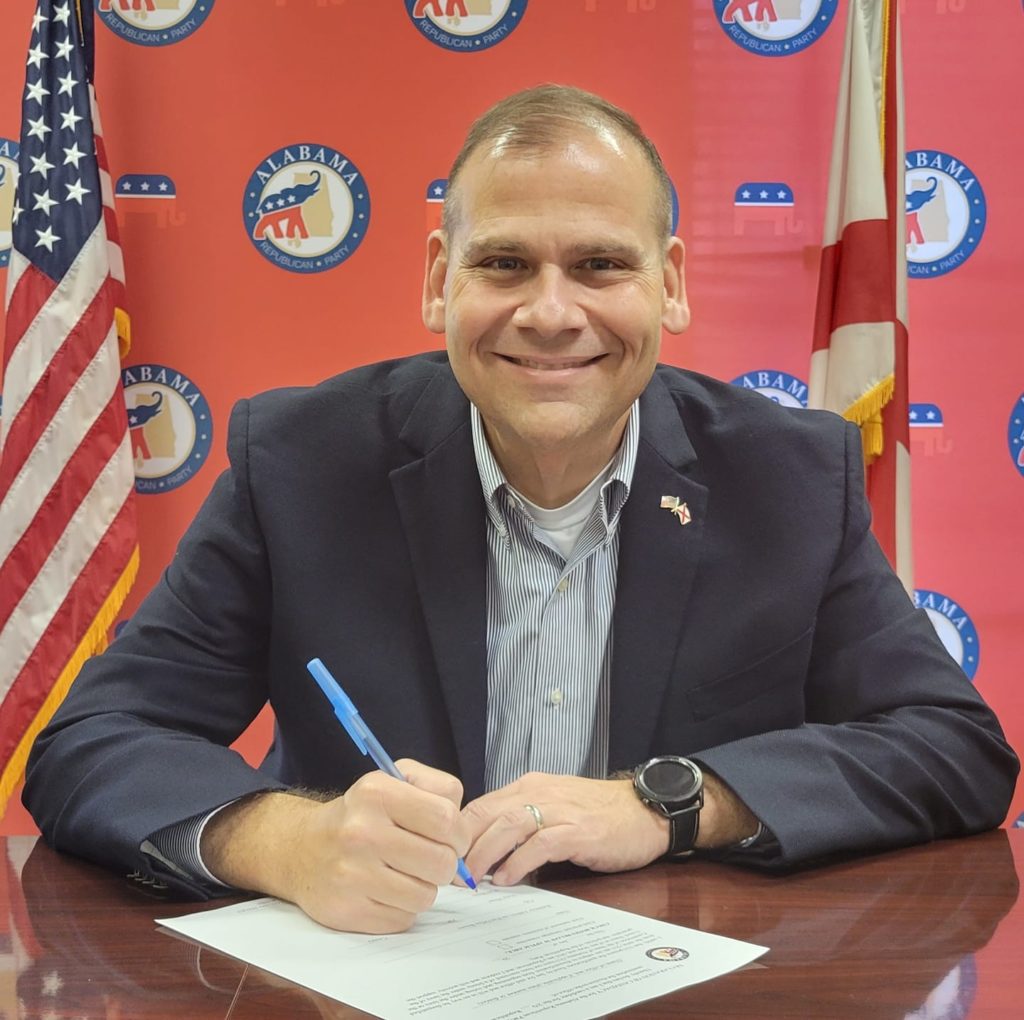
A female relative of an Alabama mayor jailed on a domestic violence charge while campaigning for statewide office asked a court for protection, claiming he choked and threatened to kill her, court records show. The woman filed the request in Elmore County on Tuesday following the arrest over the weekend of Tallassee Mayor John Randal Hammock on a charge of domestic violence with strangulation in Baldwin County. Elected to his second term as mayor of the central Alabama town of 4,700 in 2020, Hammock is campaigning as a Republican for a seat on the utility-regulating Alabama Public Service Commission. The Associated Press is not using the woman’s name because it does not identify victims of domestic violence. The motion said Hammock, 47, assaulted the woman with his fists and feet while wearing boots and pushed her against a wall of a condominium in Orange Beach, choking her and threatening to kill her, court documents show. A judge granted the request without a hearing, ordering Hammock not to contact the person. Hammock remained in the Baldwin County Jail with bail set at $20,000 following his arrest Saturday morning by Orange Beach police on a charge of domestic violence with strangulation, jail records showed. A booking photo showed he had what appeared to be a black eye. Court records were not available to show whether Hammock had an attorney who could speak on his behalf. Republished with the permission of the Associated Press.
Steve Flowers: Annual Legislative Session underway
The 2022 annual regular session of the legislature has begun. It began January 11, and constitutionally can last three and one-half months, which would have it ending at the end of April. This is the last year of the quadrennium and an election year. Therefore, the legislature will not address any controversial or substantive issues. This has always been the case in Alabama politics. This rule will ring true this year as it has in past years. They will come into session, pass the budgets, then go home to campaign. They may even adjourn early this year, probably the first part of April. It will be an easy year, budget-wise. The General Fund and Special Education Trust Fund will again have growth in revenue. The economy is still percolating from the COVID recovery, especially because of the influx of federal dollars. Alabama will have received over four billion dollars from the Federal American Rescue Plan (ARP) COVID relief money. Almost half has been earmarked and given to schools, counties, and cities and will not be allocated by the legislature. The state received over $500 million in 2021. Most of that, over $400 million, went to build new prisons, which was the most significant achievement last year. There will be approximately $560 million of ARP money coming into Alabama for this year. The legislature will be able to play Santa Claus in an election year. The General Fund Chairmen, Steve Clouse (R-Ozark) in the House and Greg Albritton (R-Escambia) in the Senate, are being lobbied heavily as might be expected. They will be looking at several ways to disburse these federal dollars. The feds like the states to focus on rural broadband expansion, water and sewage projects, and hospitals and nursing homes. It will be a short and successful and non-controversial session. Governor Ivey will miss her right arm, Jo Bonner. He has served as a quasi-governor for the past three years. Kay Ivey and Jo Bonner have a lifetime bond. They are both from Wilcox County, and like family. This remote rural black belt, southwest Alabama county has spawned Jeff Sessions, Kay Ivey, Judy Bonner, and Jo Bonner. Jeff, Kay, and Judy are all about the same age. Jo is about 15 years younger and like Kay’s little brother. Kay has never not known Jo Bonner. He has been the most influential Chief of Staff to a governor in state history. In November 2021, it was announced that Jo Bonner will become President of the University of South Alabama. He will be the fourth president of the University of South Alabama, which is the third largest university in the state. Jo Bonner is perfect for this position. His decade as a congressman from Mobile and his prowess as an economic developer and civic leader coupled with his winning personality will propel the university in Mobile to a regional educational and medical center for Alabama, Mississippi, and Northwest Florida. He is revered in Washington. His political connections and persona will make the University of South Alabama a politically powerful institution. The governor made a wise and prudent move to fill the void left by Jo Bonner’s departure from the governor’s office. She made her loyal, dedicated, and extremely qualified ally, Liz Filmore, Chief of Staff. Liz had already been functioning as a quasi-Chief of Staff to Ivey and Bonner. A few months ago, Ivey adroitly convinced State Representative Bill Poole of Tuscaloosa to become her finance director. Poole is immensely and uniquely qualified for finance director. He served over a decade in the House of Representatives. Eight of those years he chaired the Education Budget Committee and wrote the State Education budget. He was and still is one of the most universally well-liked and respected legislators in the state. Bill will remain finance director and Liz will be Chief of Staff. They will be part of what Governor Ivey will rely on as her leadership team. The other two members of the four-person team will be Brooks McClendon and Nathan Lindsey, who will be elevated to Deputy Chief of Staff. Governor Ivey along with Jo Bonner has run an exemplary Ship of State administratively. See you next week. Steve Flowers is Alabama’s leading political columnist. His weekly column appears in over 60 Alabama newspapers. He served 16 years in the state legislature. Steve may be reached at: www.steveflowers.us.
White House soft-launches COVID-19 test request website
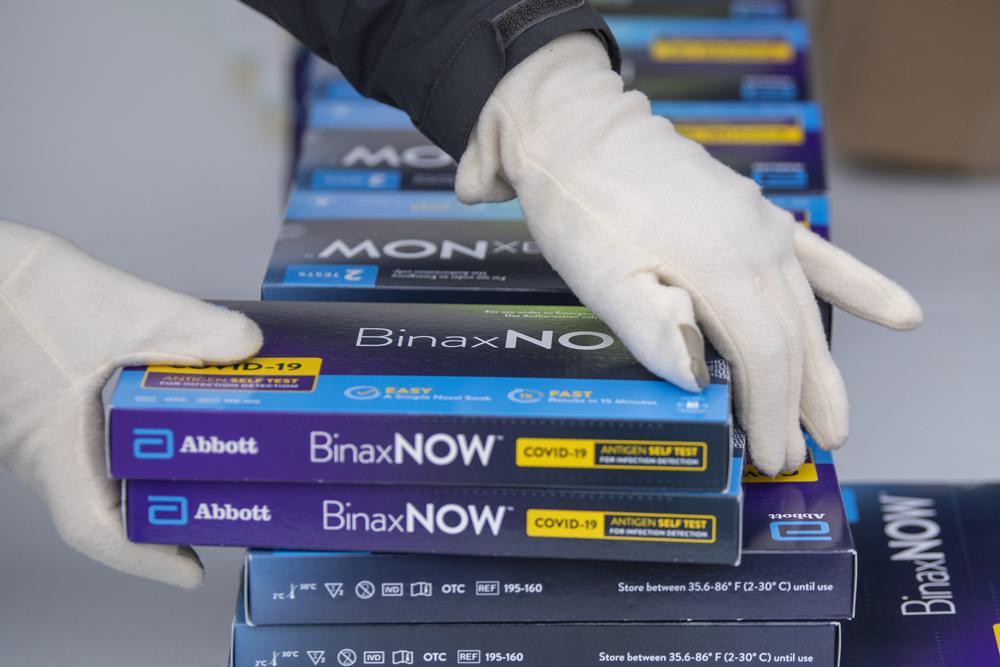
The Biden administration on Tuesday quietly launched its website for Americans to request free at-home COVID-19 tests, a day before the site was scheduled to officially go online. The website, COVIDTests.gov, now includes a link for Americans to access an order form run by the U.S. Postal Service. People can order four at-home tests per residential address to be delivered by the Postal Service. It marks the latest step by President Joe Biden to address criticism of low inventory and long lines for testing during a nationwide surge in COVID-19 cases due to the omicron variant. White House press secretary Jen Psaki said the website was in “beta testing” and operating at a “limited capacity” ahead of its official launch. The website will officially launch mid-morning Wednesday, Psaki said. There were isolated reports Tuesday afternoon of issues relating to the website’s address verification tool erroneously enforcing the four-per-household cap on apartment buildings and other multi-unit dwellings, but it was not immediately clear how widespread the issue was. At points Tuesday, more than 750,000 people were accessing the website at the same time, according to public government tracking data, but it was not immediately known how many orders were placed. She added that the administration was anticipating a “bug or two,” but had IT experts from across the government working to get the site ready. Biden announced last month that the U.S. would purchase 500 million at-home tests to launch the program, and on Thursday, the president announced that he was doubling the order to 1 billion tests. But Americans shouldn’t expect a rapid turnaround on the orders, and they will have to plan ahead and request the tests well before they meet federal guidelines for when to use a test. The White House said “tests will typically ship within 7- 12 days of ordering” through USPS, which reports shipping times of 1-3 days for its first-class package service in the continental United States. Officials emphasized that the federal website is just one way for people to procure COVID-19 tests, and shortages of at-home test kits have shown signs of easing as more supply has hit the market. Since Saturday, private insurance companies have been required to cover the cost of at-home rapid tests, allowing Americans to be reimbursed for tests they purchase at pharmacies and online retailers. That covers up to eight tests per month. The technical bugs that embarrassed President Barack Obama’s administration with the 2013 rollout of the HealthCare.gov website should not be a problem for the COVID-19 test kit website in part because it is so much simpler, said Alex Howard, director of the Digital Democracy Project, an open government watchdog group. Howard said the new website is also simpler than the Vaccines.gov website – for finding nearby vaccine clinics and pharmacies – that was already successfully launched by the Biden administration last year. Howard said the task of requesting someone’s address is a straightforward one, especially when compared with the Obama-era health insurance website that involved shopping for different health plans and authenticating a secure transaction. The challenge of hosting a website application under high demand is also a “solved problem” in the private sector, he said. “My expectation is the U.S. Digital Service, and any vendors they work with will be able to pull this off,” he said. “It’s the least hard part of this.” Two tech companies that frequently work with the federal government – Microsoft and Accenture – on Tuesday referred questions about the website to the Postal Service. Amazon, a major cloud provider for U.S. agencies, didn’t respond to requests for comment. Howard said the trickiest part of the project is not the website but the physical distribution of kits. “I don’t recall the last time the federal government sent something like this to everyone that wasn’t a tax document,” he said. Likely challenges include multiple people ordering from the same apartment building address or how to handle people who try to game the system and order extra. “I would like my fellow Americans to be a more trustworthy lot,” said Howard, but given other debates over COVID-19 protocols and response, “that’s not going to fly very well.” Republished with the permission of the Associated Press.
House Democrats Jim Langevin and Jerry McNerney say they will not seek reelection
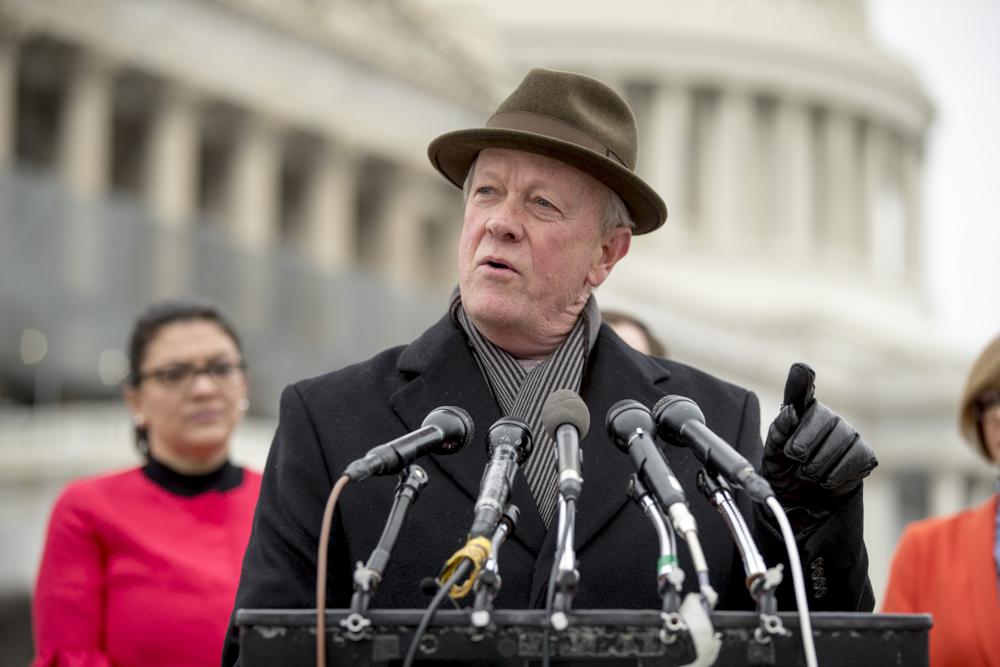
Two more House Democrats announced Tuesday they won’t seek reelection in November, bringing the party’s total retirements to 28 ahead of what is expected to be a difficult midterm election year. Reps. Jim Langevin of Rhode Island and Jerry McNerney of California both said in separate announcements that they will not run for another term. Neither gave a specific reason or disclosed any firm plans for the future. The 57-year-old Langevin, chair of the House Armed Services subcommittee handling cyber issues, has represented a district covering western Rhode Island since 2001. He is the first quadriplegic to serve in the U.S. House of Representatives. “I have not come to this decision lightly, but it’s time — time for me to chart a new course which I hope will keep me closer to home and allow me to spend more time with family and friends,” Langevin said in a video. The 70-year-old McNerney, who represents a district in California’s Central Valley that includes Stockton, has served eight terms in the House, beginning in 2007. “I will keep working for the people of my district throughout the remainder of my term and look forward to new opportunities to continue to serve,” McNerney said on Twitter. The 2022 midterms are expected to be unfavorable for Democrats, putting their majorities in the House and Senate at risk. Historical trends are working against them, as party that holds the White House almost always loses seats in Congress during the next election. President Joe Biden’s declining poll numbers add to the challenge. In addition to the 28 House Democrats who have said they’re not seeking reelection, 13 House Republicans have also said they will not run. McNerney and Langevin both touted their accomplishments in their announcements. McNerney cited the creation of a veterans health care facility in San Joaquin County, as well as the major investments he said he had helped secure in infrastructure, public safety, broadband, education, child care, and health care. In a statement, House Speaker Nancy Pelosi lauded McNerney’s commitment to veterans, which she said was “driven by a sense of patriotic duty and inspired by his son’s military service.” She said he fought for clean energy sources and brought a “valued and knowledgeable voice” to Congress with his doctoral degree in mathematics. Langevin said that he’s most proud of voting for the Affordable Care Act but that he also worked to strengthen national security and cybersecurity, protect and advance the rights of people with disabilities, invest in job training, and fulfill promises to veterans. Pelosi noted his “unrelenting voice on issues of national security,” particularly through his work to fight against cyber threats. She called Langevin a “force for Americans with disabilities” through his work to boost the Americans with Disabilities Act’s protections. “It was a moment of great pride and progress for our nation when he became the first wheelchair user to serve as Speaker Pro Tempore, presiding over the House as we celebrated twenty years of the ADA,” she wrote in a statement. “This was only possible because of his inspiration and determination.” Langevin was 16 when he was injured while working with the Warwick Police Department in the Boy Scout Explorer program. A gun accidentally discharged, and a bullet struck him, leaving him paralyzed. Langevin has said the accident that left him disabled is what motivated him to run for office. Republished with the permission of the Associated Press.
Rudy Giuliani among Donald Trump allies subpoenaed by January 6 panel
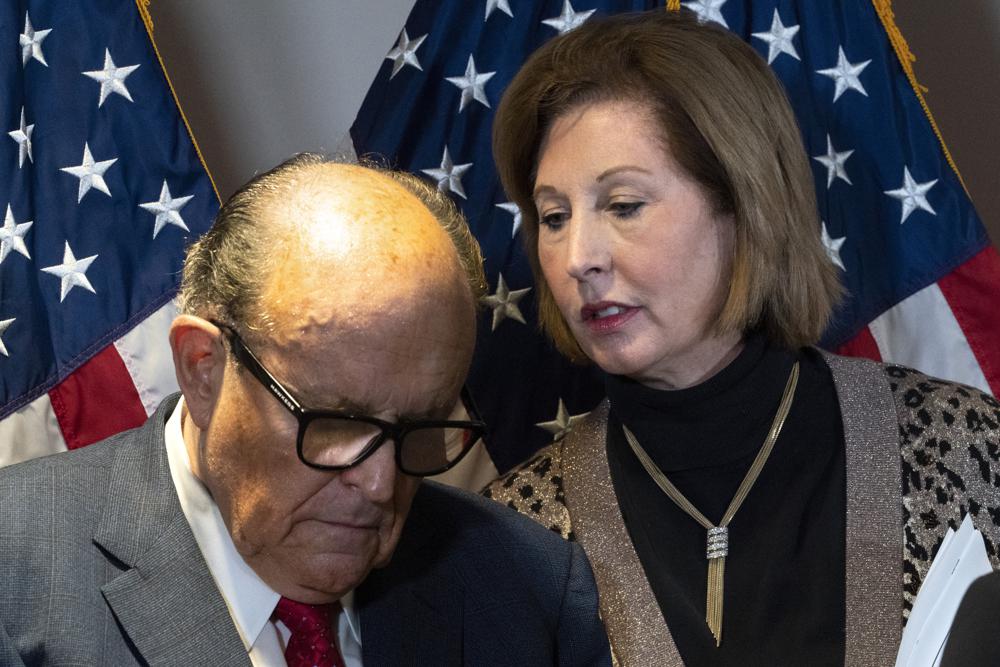
The House committee investigating the Capitol insurrection issued subpoenas Tuesday to Rudy Giuliani and other members of Donald Trump’s post-election legal team who filed multiple lawsuits claiming election fraud that were roundly rejected by the courts but gave rise to the lie that Trump did not really lose the 2020 presidential contest. The committee is continuing to widen its scope into Trump’s orbit, this time demanding information and testimony from Giuliani, Jenna Ellis, Sidney Powell, and Boris Epshteyn. All four publicly defended the president and his baseless voter fraud claims in the months after the election. “The four individuals we’ve subpoenaed today advanced unsupported theories about election fraud, pushed efforts to overturn the election results, or were in direct contact with the former President about attempts to stop the counting of electoral votes,” Mississippi Rep. Bennie Thompson, Democratic chairman of the panel, said in a statement. The committee said it is seeking records and deposition testimony from Giuliani, the 76-year-old former New York City mayor once celebrated for his leadership after 9/11, in connection to his promotion of election fraud claims on behalf of Trump. The panel is also seeking information about Giuliani’s reported efforts to persuade state legislators to take steps to overturn the election results. A lawyer for Giuliani did not immediately return a phone message seeking comment. Giuliani took on a leading role in disputing the election results on Trump’s behalf after the 2020 presidential election, even visiting states like Michigan and Pennsylvania, where he claimed ballots “looked suspicious” and Biden’s electoral win was a fraud. To this day, not a single court has found merit in the core legal claims made by Trump, Giuliani, and the other three subpoenaed Tuesday. The nine-member panel is also demanding information from Trump legal adviser Ellis, who the lawmakers say reportedly prepared and circulated two memos that analyzed the constitutional authority for then-Vice President Mike Pence to reject or delay counting the electoral votes from states that had submitted alternate slates of electors. Besides Giuliani, Sidney Powell was the most public face of Trump’s attempts to contest the election, routinely making appearances on behalf of the president. In numerous interviews and appearances post-election, Powell continued to make misleading statements about the voting process, unfurled unsupported and complex conspiracy theories involving communist regimes, and vowed to “blow up” Georgia with a “biblical” court filing. Ellis and Powell appeared with Giuliani at press conferences, pushing false claims of election fraud. Powell was eventually removed from the team after she said in an interview she was going to release “the Kraken” of lawsuits that would prove the election had been stolen. Powell did not immediately return an email seeking comment. The last person subpoenaed Tuesday by the committee is Boris Epshteyn, a former Trump campaign strategic adviser, who reportedly attended meetings at the Willard Hotel in the days leading up to the insurrection. The committee said Epshteyn had a call with Trump on the morning of January 6, 2021, to discuss options to delay the certification of election results in the event of Pence’s unwillingness to deny or delay the process. Republished with the permission of the Associated Press.
