
$47 million in grants awarded to assist low-income families with utility costs
The Alabama Department of Economic and Community Affairs (ADECA) announced that Gov. Kay Ivey has awarded grants totaling nearly $47 million to help low-income households with utility costs during the cold winter and hot summer months. The grants will enable 18 community service agencies to provide emergency funding to help low-income families heat and cool their homes in 2022. “Alabama’s coldest and hottest times of the year hit many low-income residents particularly hard when they can struggle to pay their utility bills,” Gov. Ivey said. “These grants will provide extra funding to assist in lowering the costs for many of them so that they can stay warm in the winter and cool in the summer.” ADECA will administer the grants from funds made available by the U.S. Department of Health and Human Services. ADECA administers an array of programs supporting law enforcement and traffic safety, economic development, energy conservation, water resource management, and recreation development. “ADECA stands with Gov. Ivey in supporting those who need help most during our hottest and coldest months,” ADECA Director Kenneth Boswell said. “These partnerships with local community agencies ensure that those who truly need assistance will receive emergency help with heating and cooling their homes.” Below is a list of each grant, the recipient agency, counties served, and the agency telephone number: $1.34 million to Community Action Agency of Northwest Alabama Inc. (Colbert, Franklin and Lauderdale) 256-766-4330 $2.46 million to Community Action Partnership of Middle Alabama Inc. (Autauga, Chilton, Elmore and Shelby) 205-755-1204 $1.24 million to Community Action Committee Inc. of Chambers-Tallapoosa-Coosa (Chambers, Coosa and Tallapoosa) 256-825-4287 $1.39 million to Alabama Council on Human Relations Inc. (Lee) 334-821-8336 $3.62 million to Community Action Partnership of Huntsville-Madison and Limestone Counties Inc. (Madison and Limestone) 256-851-9800 $5.12 million to Mobile Community Action Inc. (Mobile and Washington) 251-457-5700 $2.57 million to Montgomery Community Action Committee and Community Development Corporation Inc. (Montgomery) 334-263-3474 $3.22 million to Community Action Partnership of North Alabama Inc. (Cullman, Lawrence, Marion, Morgan and Winston) 256-355-7843 $3.9 million to Community Action Agency of Northeast Alabama Inc. (Blount, Cherokee, DeKalb, Jackson, Marshall and St. Clair) 256-638-4430 $3.12 million to Organized Community Action Program Inc. (Bullock, Butler, Covington, Crenshaw, Dale, Lowndes and Pike) 334-566-1712 $3.31 million to Community Action Agency of South Alabama (Baldwin, Clarke, Conecuh, Escambia, Marengo, Monroe and Wilcox) 251-626-2646 $2.28 million to Community Action Agency of Talladega, Clay, Randolph, Calhoun and Cleburne (Calhoun, Clay, Cleburne, Randolph and Talladega) 256-362-6611 $5.97 million to Community Service Programs of West Alabama Inc. (Bibb, Choctaw, Dallas, Fayette, Greene, Hale, Lamar, Perry, Sumter and Tuscaloosa) 205-752-5429 $1 million to Walker County Community Action Agency Inc. (Walker County) 205-221-4010 $3.06 million to Southeast Alabama Community Action Partnership Inc. (Barbour, Coffee, Geneva, Henry and Houston) 334-347-0881 $510,922 to Pickens County Community Action Committee and Community Development Corporation Inc. (Pickens) 205-367-1283 $1.2 million to Macon-Russell Community Action Agency Inc. (Macon and Russell) 334-727-6100 $1.47 million to Community Action of Etowah County Inc. (Etowah) 256-546-9271
Kay Ivey awards $18 million in grants to improve public water services
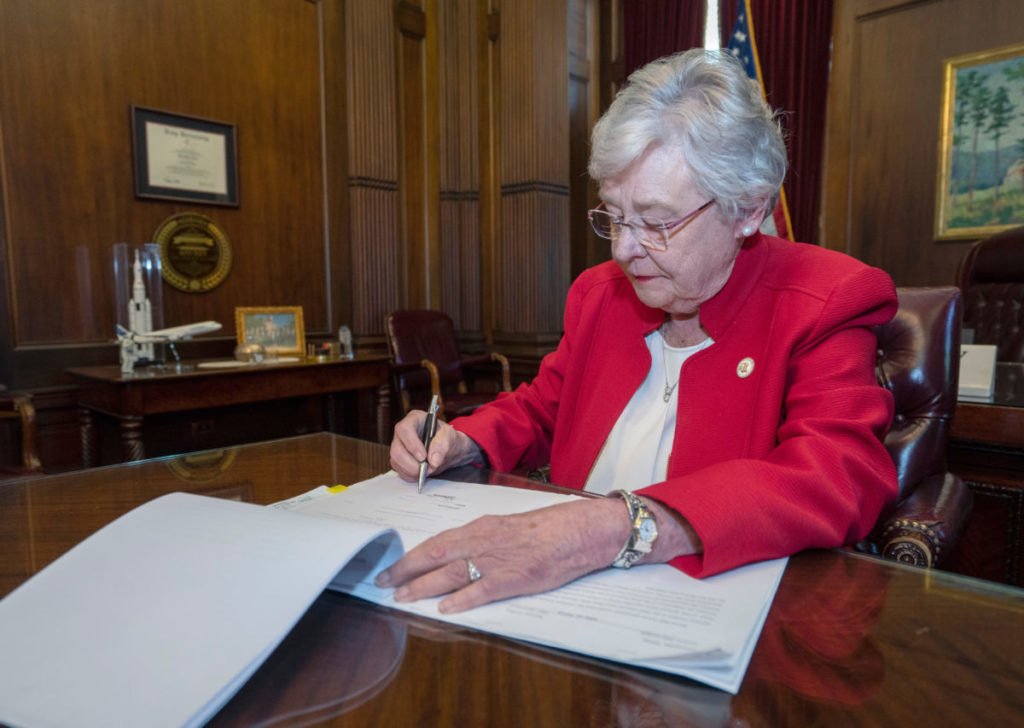
Gov. Kay Ivey has awarded $18.2 million to provide improvements in more than 50 Alabama towns, cities, and counties. The Community Development Block Grants (CDBG) will help local governments provide public water service to households, repair damaged streets and roads, improve sewer systems, and more. The governor awarded the grants at a ceremony Thursday afternoon in the State Capitol. “Community Development Block Grants are a means in which local governments can address some of their more pressing needs,” stated Ivey. “I am pleased to award these grants, and I commend those local officials who recognized those needs and took the time and effort to seek an answer through this grant program.” The CDBG program in Alabama is awarded annually on a competitive basis in several categories: small city (population 2,999 or less), large city (population 3,000 or more), county and community enhancement. Additionally, planning grants are awarded to help local governments examine and address needs. The Alabama Department of Economic and Community Affairs (ADECA) will administer the grants from funds made available by the U.S. Department of Housing and Urban Development. ADECA administers an array of programs supporting law enforcement and traffic safety, economic development, energy conservation, water resource management, and recreation development. “ADECA is pleased to join with Gov. Ivey in this grant program that annually helps Alabama towns, cities and counties obtain financial assistance for projects that benefit their communities,” ADECA Director Kenneth Boswell said. “We look forward to seeing the positive impacts that these projects have on the quality of life for residents of these communities.” Grants awarded and projects (grouped by geographical region) are: North Alabama Altoona (Etowah County) – $293,024 to replace a city water line that because of frequent breakages is responsible for most of the major disruptions in city water service. Altoona (Etowah County) – $25,000 for a planning grant to outline the city’s goals and future needs. Athens (Limestone County) – $500,000 for drainage and street improvements and dilapidated-building demolition in the neighborhood around Vine Street. Attalla (Etowah County)- $500,000 to replace or rehabilitate several sections of the town’s sewer lines. Blount County – $300,000 for street and drainage improvements along Philadelphia, Lehigh, and Reid Schoolhouse roads southwest of Locust Fork. Brilliant (Marion County) – $349,900 to upgrade sewer lines and pump stations to improve service. Crossville (DeKalb County) – $40,000 for a planning grant to update mapping of the town’s water system. Cullman (Cullman County)- $500,000 for street and drainage improvements in the Warnke Road neighborhoods. Cullman County – $400,000 to resurface and provide drainage improvements along Cullman County Road 18 near the Bremen community. Douglas (Marshall County)- $350,000 for improvements to the town’s water system and street and drainage improvements along Plunkett Drive, Moon Road and part of Otinger Drive. Falkville (Morgan County) -$350,000 for drainage improvements in an area bounded by East Pike Road, East Pine Street, Patton Street and Douglas Road. Gurley (Madison County) – $350,000 to replace or rehabilitate nearly 160 manhole components in the town’s sewer system. Hillsboro (Lawrence County) – $350,000 for drainage improvements along Oakdale Avenue and its spur roads. Jasper (Walker County) – $500,000 for water, sewer, and street improvements along multiple streets in the 19th Street neighborhood. Littleville (Colbert County) – $350,000 to replace or rehabilitate sewer lines and manholes along U.S. Highway 43. New Hope (Madison County) – $350,000 to repair and replace city sewer lines and some household lines along Spring, Ellett, and Whitt streets, West Avenue, and a part of College Avenue. Owens Cross Roads (Madison County) – $350,000 for sewer improvements in the neighborhood along Brockway Road. Parrish (Walker County) – $300,000 for street and drainage improvements involving Atkins-Edison Street and New Baltimore and Shady Grove roads. Powell (DeKalb County) – $148,000 to replace a dilapidated play area with new playground equipment. Russellville (Franklin County) – $300,000 to demolish 11 dilapidated structures and remove debris. Sylvania (DeKalb County) – $300,000 to repair and resurface Delta, Spear, and Horizon streets in the Sylvania Estates neighborhood. Walker County – $260,000 for handicap access improvements for the Walker County Courthouse in Jasper. North Central Alabama Fruithurst (Cleburne County) – $217,006 to resurface all or part of School Street, Third Street West, and Northeast Avenue. Fruithurst (Cleburne County) – $12,000 for a planning grant. Heflin (Cleburne County) – $500,000 to rehabilitate the town’s main sewer line which is responsible for transporting sewage to the city’s wastewater plant. Wedowee (Randolph County) – $350,000 to replace sewer lines to better control sewage inflow. South Central Alabama Alexander City (Tallapoosa County) – $500,000 to replace antiquated water lines to improve flow and pressure and add fire hydrants. Bullock County – $400,000 to resurface multiple streets in the Ponderosa community. Camden (Wilcox County) – $350,000 to upgrade sewer lines in the Westgate community. Choctaw County – $400,000 to rehabilitate and resurface 5.1 miles of Bailey Road southwest of Butler. Dadeville (Tallapoosa County) – $500,000 for dismantling and clearing 18 dilapidated buildings. Eclectic (Elmore County) – $300,000 to construct a new playground, adult fitness area, and amenities at the site of Panther Palace Playground. Epes (Sumter County) – $343,773 for sewer improvements along Clark Miller Lane and Martin Luther King Drive (U.S. Highway 11). Faunsdale (Marengo County) – $300,000 to rehabilitate sidewalks including handicap accessibility modifications and add lighting in the town’s commercial district. Goodwater (Coosa County)- $300,000 to raze and remove debris of four dilapidated commercial buildings. LaFayette (Chambers County) – $450,000 for upgrades at the town’s water treatment plant. Lowndes County – $400,000 to resurface seven county roads. Macon County -$396,040 to resurface at least parts of 19 county roads. Perry County – $400,000 to extend public water availability in the Medline community. Wilcox County – $400,000 to improve drainage along four streets in the Meadowbrook Subdivision area. South Alabama Andalusia (Covington County) – $500,000 to replace water lines along North Cotton Street and Eighth Avenue and resurface those streets. Chatom (Washington County) -$350,000 to upgrade its wastewater treatment facility to ensure reliable service for residents. Enterprise (Coffee County) – $272,900 to demolish and clear 45 dilapidated buildings throughout the city. Evergreen (Conecuh County) – $500,000 to improve the town’s sewer system, including replacing an outdated lift station and inadequate sewer line. Flomaton (Escambia County) – $350,000 to renovate and upgrade the town’s
Alabama unemployment rate remains stable at 3.1%

Alabama’s monthly unemployment rate was unchanged at 3.1%, the state said Friday, holding steady for the fifth straight month. The December rate was below the level of a year before, 4.7%, and better than the national jobless rate of 3.9%. Total weekly wages from private employers were $973.14 for the month, representing a yearly hike of $26.65. Labor Secretary Fitzgerald Washington said most of the challenges facing the state workforce were related to the COVID-19 pandemic. An additional 7,000 people were employed compared to the month before, he said in a statement. Wilcox County in western Alabama had the state’s highest unemployment rate at 10.3%, while Shelby County in suburban Birmingham and Cullman County in north Alabama were lowest at 1.8%. Republished with the permission of the Associated Press.
Some schools go remote as thousands of virus reported cases

Alabama public schools reported more than 26,000 cases of COVID-19 this week, and the outbreaks have prompted some of the state’s largest systems to make a temporary switch to remote learning. The Alabama Department of Health dashboard on Thursday showed 26,260 virus cases reported this week in public schools. That compares to 16,035 the previous week. The Jefferson, Shelby, Mobile, and Tuscaloosa County school systems each reported more than 1,000 cases. In announcing the switch to remote learning, administrators in two large systems cited the difficulty in staffing schools because of the large number of teachers and staff members who are out sick. Shelby County schools on Thursday announced a switch to remote learning beginning Friday and lasting through Tuesday. System administrators wrote that the switch was, “due to the high number of faculty, students, and staff who have tested positive for COVID-19 and the inability to staff schools effectively.” Madison County schools announced Wednesday that students would be doing remote learning through Jan. 28 after a high number of COVID cases. “The staffing shortage, including substitutes, is hampering our ability to operate schools safely and effectively,” administrators said in an announcement. Mobile and Montgomery County schools had already switched to virtual instruction this week with plans to resume in-person class on Monday. Several other school systems announced students would be at home on Friday because of the threat of winter weather. Republished with the permission of the Associated Press.
Lawmakers advance spending plan for pandemic funds
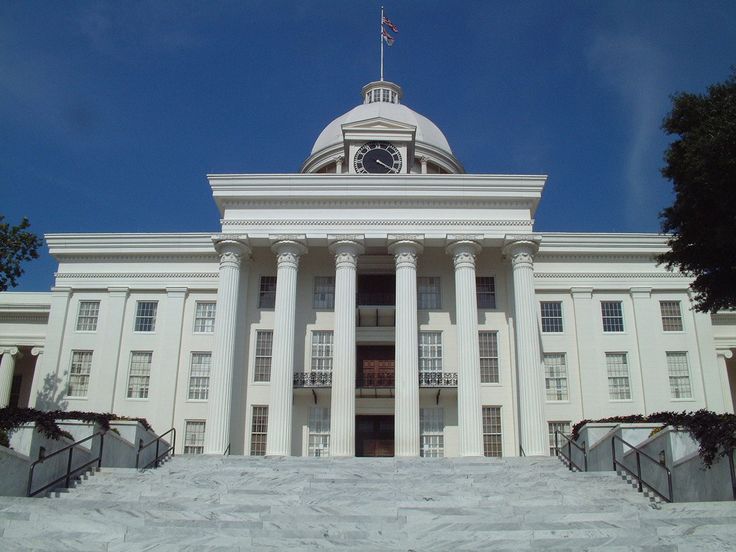
Legislative committees on Thursday advanced plans to spend more than half of the state’s available $772 million in pandemic relief funds for broadband expansion and water and sewer projects. The two budget committees approved identical spending plans for using available funds from the American Rescue Plan. The approval, which came after almost no debate, puts the bills in line for floor votes on Tuesday. The proposed spending plan so far appears to have support from Republicans and Democrats. The vote comes after Alabama faced criticism last year for using $400 million — nearly 20% of the state’s total $2.1 billion allocation from the American Rescue Plan — for prison construction. The massive $1.9 trillion American Rescue Plan is providing aid to state and local governments to shore up finances, pay pandemic-related costs, and invest in longer-term projects to strengthen communities. Alabama lawmakers are meeting in special session on how to spend the $580 million remaining from the state’s first $1.1 billion installment, as well as $191 million allocated through the America Rescue Plan’s Capital Projects Fund. The proposed spending plan would use almost 36% of the money, about $276 million on broadband expansion. Broadband expansion in the mostly rural state has long been a goal for policymakers, but the cost has been prohibitive. And officials with the Alabama Department of Economic and Community Affairs cautioned lawmakers earlier this week that the federal funds are only a fraction of the estimated $4.6 billion it would take to provide “border to border broadband.” The spending proposal would also use about $225 million on water and sewer projects. Lance LeFleur, director of the Alabama Department of Environmental Management, told lawmakers that his agency will work with the governor’s office on distributing the funds under a “needs-based approach.” “We will be looking at disadvantaged communities. Oftentimes these are in the Black Belt,” LeFleur said, referencing a high-poverty region of the state. The proposal would also provide $146 million, to health care providers, including hospitals and nursing homes. The spending plan would also steer $79.5 million to shore up the state’s unemployment fund; $20 million to emergency responders including volunteer fire departments; $11 million to reimburse counties for housing state inmates during the pandemic; $7.8 million for the cost of reporting and auditing the use of the funds and $5 million for telemedicine. While the committees advanced the bills with almost no debate, some have urged the state to address other needs. Robyn Hyden, executive director of Alabama Arise, a nonprofit focused on poverty-related issues, on Wednesday urged lawmakers to consider investing money in the Alabama House Trust Fund “to expand everyone’s access to safe affordable homes especially during this global pandemic” as well as money in rural transportation. Hyden said the organization applauded the use of the money for water and sewer projects. “We urge you to provide these funds with as few barriers and as little red tape as possible so the communities most in need can benefit,” she said. The state is expected to receive the second $1 billion installment later this year. “We will have to redo this at some point after the other $1 billion comes in,” Sen. Greg Albritton, who chairs the Senate General Fund budget committee, said after Thursday’s vote. Republished with the permission of the Associated Press.
January 6 committee requests interview with Ivanka Trump

The House committee investigating the U.S. Capitol insurrection is asking Ivanka Trump, daughter of former President Donald Trump, to voluntarily cooperate as lawmakers make their first public attempt to arrange an interview with a Trump family member. The committee sent a letter Thursday requesting a meeting in February with Ivanka Trump, a White House adviser to her father. In the letter, the committee chairman, Rep. Bennie Thompson, D-Miss., said Ivanka Trump was in direct contact with her father during key moments on January 6, 2021, when Trump supporters stormed the Capitol in an effort to halt the congressional certification of Joe Biden’s presidential win. The riot followed a rally near the White House where Donald Trump had urged his supporters to “fight like hell” as Congress convened to certify the 2020 election results. The committee says it wants to discuss what Ivanka Trump knew about her father’s efforts, including a telephone call they say she witnessed, to pressure then-Vice President Mike Pence to reject those results, as well as concerns she may have heard from Pence’s staff, members of Congress and the White House counsel’s office about those efforts. “Ivanka Trump just learned that the January 6 Committee issued a public letter asking her to appear,” her spokesperson said. “As the Committee already knows, Ivanka did not speak at the January 6 rally.” The committee cited testimony that Ivanka Trump implored her father to quell the violence by his supporters, and investigators want to ask about her actions while the insurrection was underway. “Testimony obtained by the Committee indicates that members of the White House staff requested your assistance on multiple occasions to intervene in an attempt to persuade President Trump to address the ongoing lawlessness and violence on Capitol Hill,” Thompson wrote. The letter is the committee’s first attempt to seek information from inside the Trump family. Earlier this week, it issued subpoenas to lawyer Rudy Giuliani and other members of Trump’s legal team who filed meritless court challenges to the election that fueled the lie that the race had been stolen from Trump. The committee is narrowing in on three requests to Ivanka Trump, starting with a conversation alleged to have taken place between Donald Trump and Pence on the morning of the attack. The committee said Keith Kellogg, who was Pence’s national security adviser, was also in the room and testified to investigators that Trump questioned whether Pence had the courage to delay the congressional counting of the electoral votes. The Constitution makes clear that a vice president’s role is largely ceremonial in the certification process, and Pence had issued a statement before the congressional session that laid out his conclusion that a vice president could not claim “unilateral authority” to reject states’ electoral votes. “You were present in the Oval Office and observed at least one side of that telephone conversation,” the letter to Ivanka Trump said, adding that the committee “wishes to discuss the part of the conversation you observed” between the then-president and Pence. The letter also mentioned a message, in the days before the scheduled vote certification on January 6, 2021, between an unidentified member of the House Freedom Caucus to then-White House chief of staff Mark Meadows with an explicit warning: “If POTUS allows this to occur … we’re driving a stake in the heart of the federal republic.” POTUS is an abbreviation for President of the United States. The other requests in the letter to Ivanka Trump concern conversations after Donald Trump’s tweeted, “Mike Pence didn’t have the courage to do what should have been done to protect our Country and our Constitution.” The committee said White House staff and even members of Congress requested Ivanka Trump’s help in trying to convince her father that he should address the violence and tell rioters to go home. “We are particularly interested in this question: Why didn’t White House staff simply ask the President to walk to the briefing room and appear on live television — to ask the crowd to leave the capital?” Besides the subpoenas issued this week, the committee had a victory Wednesday when the Supreme Court rejected a bid by Trump to block the release of White House records sought by lawmakers. The National Archives began to turn over the hundreds of pages of records to the nine-member committee almost immediately. They include presidential diaries, visitor logs, speech drafts, and handwritten notes dealing with January 6 from the Meadows’ files. The committee’s investigation has touched nearly every corner of Trump’s orbit in the nearly seven months since it was created, from strategist Steve Bannon to media companies such as Twitter, Meta, and Reddit. The committee says it has interviewed nearly 400 people and issued dozens of subpoenas as it prepares a report set for release before the November elections. Still, the committee has run into roadblocks from some of Trump’s allies, including Bannon and Meadows, who have refused to fully cooperate. Their resistance has led the committee to file charges of contempt of Congress. The seven Democrats and two Republicans on the committee have also faced defiance from fellow lawmakers. House Minority Leader Kevin McCarthy, R-Calif., and GOP Reps. Scott Perry of Pennsylvania and Jim Jordan of Ohio have denied the committee’s requests for voluntary cooperation. While the committee has considered subpoenaing fellow lawmakers, that would be an extraordinary move and could run up against legal and political challenges. The committee says the extraordinary trove of material it has collected — 35,000 pages of records so far, including texts, emails, and phone records from people close to Trump — is fleshing out critical details of the worst attack on the Capitol in two centuries. The next phase of the investigation will include a series of public hearings in the coming months. Republished with the permission of the Associated Press.
Supreme Court won’t speed challenge to Texas abortion limits
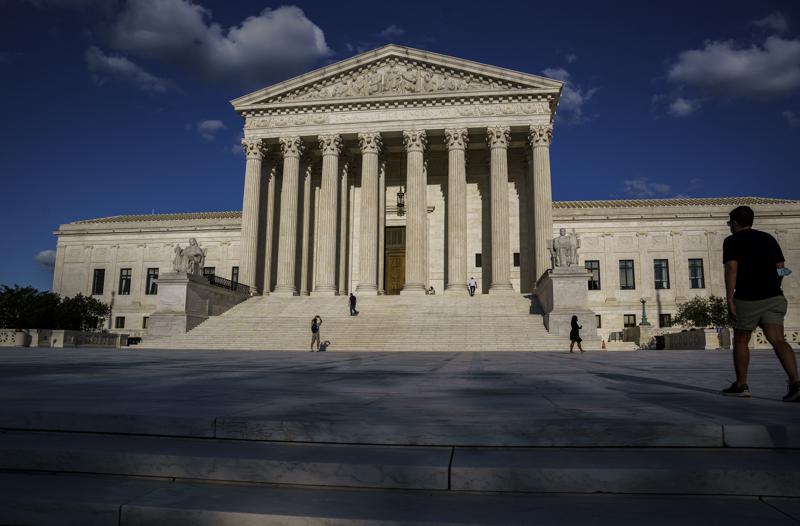
In the latest setback for abortion rights in Texas, the Supreme Court on Thursday refused to speed up the ongoing court case over the state’s ban on most abortions. Over dissents from the three liberal justices, the court declined to order a federal appeals court to return the case to a federal judge who had temporarily blocked the law’s enforcement. The court offered no explanation for its action. The Texas ban is thus likely to remain in effect for the foreseeable future, following a decision by the 5th U.S. Circuit Court of Appeals in New Orleans to send the case to the Texas Supreme Court, which is entirely controlled by Republican justices and does not have to act immediately. Abortion providers had asked the high court to countermand the appellate order, which they said in court papers has no purpose other than to delay legal proceedings and prevent clinics from offering abortions beyond around six weeks of pregnancy. The law has devastated abortion care in Texas, Justice Sonia Sotomayor wrote. “Instead of stopping a Fifth Circuit panel from indulging Texas’ newest delay tactics, the Court allows the State yet again to extend the deprivation of the federal constitutional rights of its citizens through procedural manipulation,” Sotomayor wrote, joined by Justices Stephen Breyer and Elena Kagan. “The Court may look the other way, but I cannot.” Chief Justice John Roberts joined the three liberals in December in a dissent that called for allowing a broader challenge to the law and a quick return to the lower federal court. Roberts did not note his position on Thursday. Clinics fear that their challenge to the law might not be resolved before the justices rule in a Mississippi case that could roll back abortion rights across the country. That decision, which could overrule the landmark Roe v. Wade case from 1973, is expected by late June. The Texas law that bans abortion once cardiac activity is detected — usually around six weeks, before some women know they are pregnant — has been in effect since September. Last month, the high court kept the law in place and allowed only a narrow challenge against the restrictions to proceed. The providers thought their best chance for a favorable outcome was before U.S. District Judge Robert Pitman in Austin. Pitman issued an order in October blocking the law, though the appeals court put his ruling on hold just a couple of days later. Republished with the permission of the Associated Press.
