
Omicron wave leaves U.S. food banks scrambling for volunteers
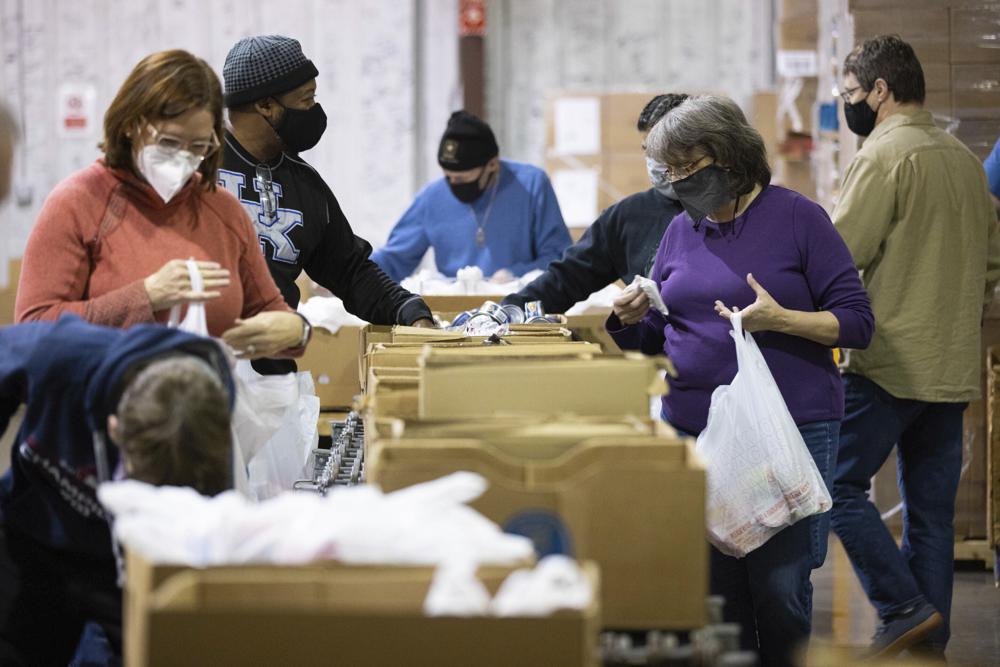
Food banks across the country are experiencing a critical shortage of volunteers as the omicron variant frightens people away from their usual shifts, and companies and schools that regularly supply large groups of volunteers are canceling their participation over virus fears. The end result, in many cases, has been a serious increase in spending by the food banks at a time when they are already dealing with higher food costs due to inflation and supply chain issues. “Food banks rely on volunteers. That’s how we keep the costs low,” said Shirley Schofield, CEO of the Food Bank of North Alabama. “The work still gets done but at a much higher expense.” The extent of the problem was highlighted this past week during the national holiday for Martin Luther King Jr. Day when many food banks have traditionally organized mass volunteer drives as part of a day of service. Michael Altfest, director of community engagement for the Alameda County Community Food Bank in Oakland, California, called it “without fail, our biggest volunteer event of the year.” But many food banks chose to cancel their plans this year or continued with radically lower numbers than pre-pandemic years. Altfest said his food bank’s King Day event drew 73 people spread out over two shifts when previous years had drawn more than 200 people, with all volunteer slots booked up before New Year’s Day. The food bank did not attempt an event last year. In Tallahassee, Florida, plans for a volunteer-driven event on the holiday were abruptly canceled when all the volunteers dropped out. Schofield said executives at her food bank in Huntsville, Alabama, are debating whether to cut back on their mobile food pantry distributions because they simply do not have enough volunteer-packed food boxes to hand out. The shortage of volunteers is not universal. Michael Manning of the Greater Baton Rouge Food Bank in Louisiana said his volunteer numbers have remained strong, and his MLK Day event proceeded normally with two shifts of more than 50 people. But several food banks have reported a similar dynamic: minimal volunteers for most of 2021, then a surge last fall through November and December before falling off a cliff in January. Food banks generally use volunteers to sort through donations and to pack ready-made boxes of goods for distribution. It is common practice to arrange for local companies or schools to send over large groups of volunteers, but that has left the system vulnerable to those institutions pulling out all at once. At the Second Harvest of the Big Bend food bank in Tallahassee, Florida, the volunteer numbers have remained solid through the omicron surge. But CEO Monique Van Pelt said she was forced to cancel her MLK Day plans because the volunteers all came from a single corporate partner that “didn’t think it was safe for them to gathering as a group in such tight quarters.” Jamie Sizemore had planned for 54 volunteers from three corporate groups at the Feeding America, Kentucky’s Heartland food bank in Elizabethtown, Kentucky. But two groups canceled, and the third sent less than half its promised number. “We did manage to pick up some last-minute individuals for a total of 12 volunteers for the day,” said Sizemore, the executive director. She added that a long-term contingent of eight assigned Kentucky National Guardsmen frequently help fill the volunteer gaps. Even outdoor volunteer work, with seemingly less exposure risk than warehouse work, has suffered. In Irvine, California, the Second Harvest Food Bank of Orange County has launched an ambitious farm project on 45 acres of land provided by the University of California. So far, 22 acres have been planted with cabbage and broccoli, and it’s harvest time. The plan was conceived with the intention of using up to 300 volunteers per week, organized in groups from corporate partners such as Disney. But most of the partnering organizations have suspended their volunteer drives amid the omicron surge. “It’s a bummer because it’s a great outdoor experience,” said Claudia Keller, the food bank’s CEO. “We’re crossing our fingers that this is a short-term thing. We know many of the volunteers are chomping at the bit to get out there.” The sudden absence of volunteer labor forces most food banks into more expensive choices. When the farm runs short of volunteers, paid laborers are employed. At the Capital Area Food Bank in Washington, D.C., CEO Radha Muthiah has to order truckloads of prepackaged boxes of mixed goods to distribute because there aren’t enough volunteers to pack. “When it’s prepackaged, that tends to increase the price significantly,” Muthiah said. A truckload of produce on pallets costs about $9,000, but a truckload of ready-to-distribute care packages can cost between $13,000 and $18,000, she said. In addition to the financial costs, some executives point out a more subtle impact. “Volunteerism is about more than just getting the boxes packed,” said Schofield from the Alabama food bank. “It builds camaraderie and a sense of community. It’s a sign of a healthy community at large.” Vince Hall, government relations officer for Feeding America, which coordinates the work of more than 200 food banks, said the volunteer numbers are partially a reflection of long-term emotional fatigue and burnout. As the nation endures a second pandemic winter and the omicron variant rolls back some of the progress people expected from the vaccine, long-time volunteers are wearing down. “These people who are really part of the bedrock of our volunteer workforce, They’ve been doing this since March of 2020,” Hall said. “It takes an emotional toll on people.” Republished with the permission of the Associated Press.
Jim Zeigler will not run for Governor

State Auditor Jim Zeigler said Sunday he will not run for Governor this year. Zeigler set up an exploratory campaign in August 2021, and says he received support and encouragement to run instead for a down-ballot state office to remain in state government. He must decide and qualify by January 28. “Even though I get a lot more bang for the buck,” Zeigler remarked, “the Governor’s race has attracted a massive amount of money from well-funded challengers. Three candidates alone have already raised in excess of $10M.” Zeigler has served two terms as State Auditor and is limited by the state constitution from running for a third consecutive term. While serving as State Auditor, Zeigler formed a citizen’s group in 2019 to oppose the plan by ALDOT to charge a $6 toll each way between Mobile and Baldwin counties over the I-10 Bayway. The group grew to 51,000 members and successfully blocked the toll plan. Zeigler says he has always been an advocate for the people of Alabama and will keep fighting in whatever capacity they elect him to serve. “Alabama taxpayers need a consistent voice in state government to defend our constitutional rights and fight government overreach.” Official reports on the Secretary of State’s site shows campaign cash on hand of gubernatorial candidates: Kay Ivey $2.8 million Lindy Blanchard $6.3 million Tim James $1.66 million Jim Zeigler $22,000 Other candidates for governor are former Morgan County Commissioner Stacy George; King’s Home exec Lew Burdette; Rev. Dean Odle who heads a Lee County Church and school; and Springville Mayor Dave Thomas. Zeigler is now starting his final year as auditor.
Dan Sutter: The organ shortage
Over 100,000 Americans await organ transplants and over 6,000 die annually while waiting. From an economic perspective the decades-long organ shortage has a simple cause: paying organ donors is illegal. Price controls predictably produce shortages. Payment for organs has been outlawed since at least 1948. The 1984 National Organ Transplant Act established the Organ Procurement and Transplantation Network to allocate donations by uniform criteria. Around 40,000 transplants occur annually, with over 80 percent of organs coming from deceased donors. A price ceiling is a legal maximum price imposed by government on a market. Selling for more than the set price becomes illegal. If the control is less than the market price (called the equilibrium price) and the law is enforced (price ceilings often produce black markets), a shortage ensues. Rent control is an example of a price ceiling. Prohibiting sales sets the price to zero, which must be less than the equilibrium price. The waiting lists and deaths are real-life results of the shortage. Lifting the ban on payment should increase the number of organs available for transplant. Buying and selling organs has been illegal and deviating from customary practice can make people cringe. This discomfort, though, is temporary; we should require a better reason to continue a deadly prohibition. Harvard’s Michael Sandel in What Money Can’t Buy notes two objections to “commodification,” or converting something into a good to be bought and sold. The first is fairness, or concern over being forced to transact due to necessity: “A peasant may agree to sell his kidney or cornea to feed his starving family, but … he may be unfairly coerced … by the necessities of his situation.” Fairness also involves whether only the rich could afford organs. The second objection is corruption, which holds that, “certain moral and civic goods are diminished if bought and sold.” Donation is no longer a noble sacrifice but a cash transaction. And monetary payment could crowd out voluntary donations. Whether desperate acts are voluntary is debatable. We sometimes do things because we “have” to, even if we acknowledge that no one pointed a gun at us. True voluntariness may require more than an absence of coercion. Yet money often improves desperate circumstances. Imagine a 35-year-old man providing sole support for a family dying suddenly and unexpectedly without life insurance. In addition to the emotional toll, the family likely faces financial hardship. Payment for the man’s organs could help support the family. Is making the family rely on charity better? Would only the rich get transplants with payments? Not necessarily. The Organ Network could make payments and still use the current criteria for allocating organs. But any wealthy persons buying organs for themselves would be off the waiting list. The corruption argument is based, I think, on a view of money as inherently corrupt. But money is just a medium of exchange, letting people buy whatever they choose. Money is a tool of voluntary market exchange, and exchange respects the moral value of all persons. I could try to obtain a kidney for transplant in three different ways. First, I could say, “I need a kidney, you have one to spare, let me have one.” I could cry, beg, and guilt the person into donating. Second, I could try to take one by force. Third, I could offer to give or do something in exchange. Beg, steal, or trade. Personally, I think that trade is the best way to proceed. Money just helps people reach mutually agreeable exchanges. If you oppose payment for organs, remember that simply prohibiting payment saves no lives. Suppose a person’s next of kin will not allow organ donation but would agree if offered payment. Without payment the organs go to the grave and persons awaiting transplant remain desperately ill. Opponents should offer a solution to the shortage, not merely block one they dislike. Marketing campaigns for organ donation have not worked. Should the government compel the harvesting of organs from the deceased? I think that paying donors provides a great solution to the shortage. Daniel Sutter is the Charles G. Koch Professor of Economics with the Manuel H. Johnson Center for Political Economy at Troy University and host of Econversations on TrojanVision. The opinions expressed in this column are the author’s and do not necessarily reflect the views of Troy University.
Alabama Power to pay state fine, stop coal burning at plant
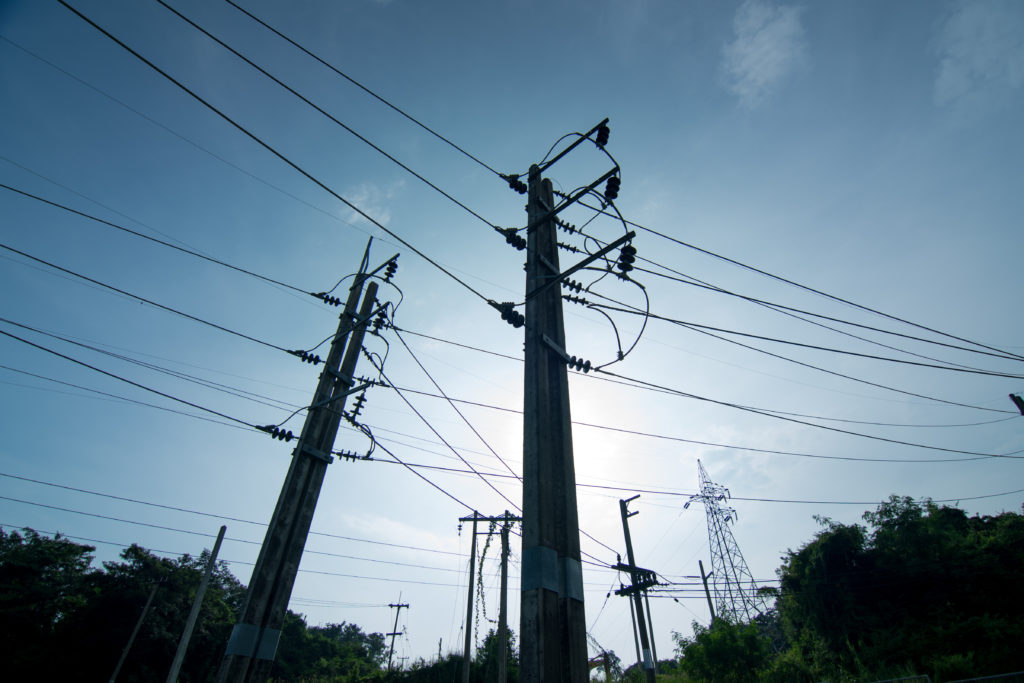
Alabama Power Co. will pay $75,000 in fines and stop burning coal in a unit that released too much hydrochloric acid at a generating plant north of Mobile under an agreement with state environmental regulators. The settlement came as the utility agreed to a consent order from the Alabama Department of Environmental Management following a violation at the Barry Steam Electric Generating Plant in Mobile County in August, al.com reported. Under the agreement, the company must stop burning coal in the plant’s Unit 4 by 2028. Alabama Power already had announced plans to convert the unit to burn natural gas, but now it must do so to comply. Testing showed emissions of hydrochloric acid slightly above allowed levels, according to a statement from the company. Alabama Power said it reported the problem to the state and agreed to an order proposed by the agency. State regulators said they considered the release a “serious violation” that was considered a repeat problem since the plant also exceeded the limit in 2020. Republished with the permission of the Associated Press.
Alabama trial delayed for New Orleans man in monument theft

A judge has delayed the trial of a New Orleans man charged with stealing a chair-shaped Confederate monument from an Alabama cemetery in a bizarre ransom scheme. Jason Warnick had been scheduled to stand trial next month in Selma on charges of theft and receiving stolen property, but Dallas County Circuit Judge Collins Pettaway Jr. recently rescheduled the case until May 9 at the request of the defense, court documents show. One of Warnick’s attorneys underwent surgery after being injured in a motorcycle crash and would have a difficult time traveling for the trial, the defense said in its request. Warnick, 33, was charged last year following the theft of a chair-shaped memorial that was taken from a cemetery in Selma. Warnick is innocent, his attorney has said. The case began last spring when news outlets began receiving emails with an unusual ransom demand involving a chair-shaped monument honoring Confederate President Jefferson Davis. The memorial was placed in the cemetery by the United Daughters of the Confederacy about 130 years ago. A message claiming to be from a group called White Lies Matter said the chair would be returned only if the heritage group agreed to display a banner at its Virginia headquarters bearing a quote from a Black Liberation Army activist. The email also included images of a fake chair with a hole cut in the seat like a toilet and a man dressed as a Confederate soldier. New Orleans police said they found the real chair undamaged and arrested Warnick, who has a tattoo shop in New Orleans, and two others. Louisiana prosecutors dropped a charge of possession of stolen property against Warnick and the others, but Alabama prosecutors are moving ahead with the case against Warnick. The chair has since been returned to Live Oak Cemetery in Selma, where it was secured to its base with glue. Republished with the permission of the Associated Press.
