
Joe Biden administration officially withdraws vaccine rule
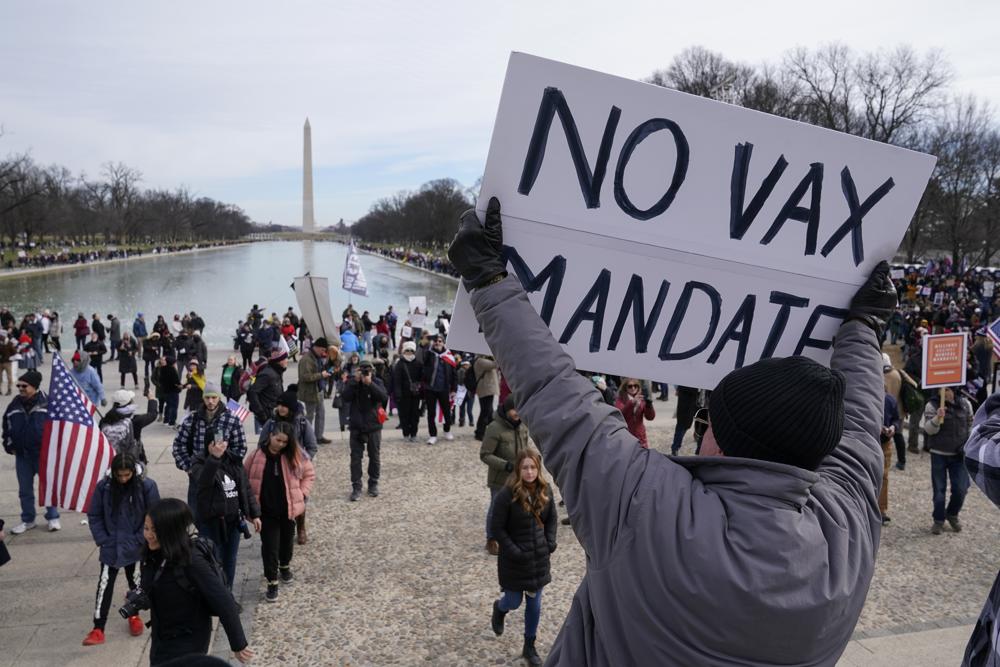
The Biden administration has officially withdrawn a rule that would have required workers at big companies to get vaccinated or face regular COVID testing requirements. The Occupational Safety and Health Administration confirmed the withdrawal Tuesday. But the agency said it still strongly encourages workers to get vaccinated. In early November, OSHA announced a vaccine-or-test mandate for companies with at least 100 employees. The rule __ which would have impacted more than 80 million U.S. workers __ was originally set to go into effect on January 4. But numerous states and business groups challenged the rule in court. On January 13, the Supreme Court halted the plan. In a 6-3 ruling, the court’s conservative majority concluded that OSHA had overstepped its authority. “OSHA has never before imposed such a mandate. Nor has Congress,″ the court’s majority wrote. ”Indeed, although Congress has enacted significant legislation addressing the COVID-19 pandemic, it has declined to enact any measure similar to what OSHA has promulgated here.” The justices left in place a vaccine mandate for health care providers who receive federal Medicare or Medicaid funding. That rule affects 10.4 million workers. U.S. corporations have been split over whether to mandate employee vaccinations. United Airlines began requiring vaccines in August; the company says 99% of its workers have been vaccinated or have requested medical or religious exemptions. Tyson Foods, which also announced a mandate in August, says 96% of its workers were vaccinated by a November 1 deadline. But other big businesses, including Starbucks and General Electric, scrapped previously announced vaccine mandates for their employees after the Supreme Court’s ruling. OSHA indicated that the rule could return in some form. While it is no longer an enforceable standard, it remains a proposed rule, OSHA said. For now, the agency said it will prioritize the health care mandate. David Michaels, an epidemiologist and former OSHA administrator who now teaches at George Washington University, said the agency could consider a new rule that would include other measures designed to prevent the spread of COVID-19 in workplaces, such as requiring face masks, distancing, and better ventilation systems.
Ron DeSantis blasts FDA for halting drugs ineffective on omicron

Florida Gov. Ron DeSantis pushed Tuesday for coronavirus patients to continue receiving antibody treatments deemed ineffective against the omicron variant, vowing to fight White House health regulators in his latest feud with President Joe Biden. The Republican governor’s comments came a day after the U.S. Food and Drug Administration pulled its emergency authorization for the antibody drugs from Regeneron and Eli Lilly. DeSantis, who made the drugs a centerpiece of his virus response while resisting vaccine mandates and other safety measures, did not outline how he would fight the FDA decision and it is legally unclear how he would do so. His office did not immediately return an email seeking further clarification. The FDA has sole authority over drug regulation in the U.S. The FDA announcement was expected, as both drugmakers have said for weeks that the treatments are less able to target omicron because of its mutations. In updated drug labeling released Monday, the FDA said omicron appears 1,000-fold less vulnerable to Regeneron’s drug and nearly 3,000-fold less vulnerable to Lilly’s drug. DeSantis has risen to prominence within the Republican Party through his constant criticism of Biden and White House virus policy. The governor, who is running for reelection and considered to be eyeing a 2024 presidential run, has heavily promoted the monoclonal antibody treatments. At a news conference Tuesday, DeSantis referenced anecdotal cases in which people were helped by the monoclonal antibody treatments and said it was “reckless” to block the drugs. “People have a right to access these treatments, and to revoke it on this basis is just fundamentally wrong and we’re going to fight back,” DeSantis said at a news conference. Asked about DeSantis’ opposition to the FDA decision, White House press secretary Jen Psaki said, “Let’s just take a step back here to realize how crazy this is.” “They are still advocating for treatments that don’t work,” she said of DeSantis. A spokeswoman for the U.S. Department of Health and Human Services confirmed Tuesday that the U.S. government has halted shipments of the two antibodies. She added that the federal government continues to distribute a GlaxoSmithKline antibody and two antiviral pills that are effective against omicron. However, supplies of those drugs are limited. “The Administration is focused on making sure that, if an American gets sick with COVID-19, they get a treatment that actually works,” HHS’ Kirsten Allen said in a statement. Hours after the FDA announced its decision Monday, the Florida Department of Health said it would shutter all monoclonal antibody state sites until further notice. DeSantis, in a statement Monday night, warned of the repercussions to “Biden’s medical authoritarianism.” Federal officials said the FDA decision was supported by several independent studies, including a peer-reviewed paper published in the journal Nature last month. In that study, a consortium of European researchers tested the ability of several antibody drugs to neutralize a live sample of the virus, concluding that Lilly and Regeneron’s antibodies “were inactive against omicron.” The American Medical Association, the nation’s largest physician group, said it agreed with the FDA decision, issuing a statement that read: “Limiting the use of these treatments will help ensure patients receive the best available therapy.” The federal government in late December temporarily stopped distributing the drugs to states as omicron began to become the dominant coronavirus strain but resumed shipments after complaints from Republican governors, including DeSantis. The U.S. government has shipped enough doses of the two antibodies to treat more than 300,000 patients since early January. The DeSantis administration last week announced it was opening five new monoclonal antibody treatment sites, to “facilitate the distribution of life-saving therapeutics.” The FDA says omicron is responsible for more than 99% of U.S. infections, making it “highly unlikely” that the antibodies would be effective for people seeking treatment. The drugs are not a substitute for vaccination and are generally reserved for people who are the most vulnerable, including seniors, transplant recipients, and those with conditions like heart disease and diabetes. Republished with the permission of the Associated Press.
Steve Flowers: Will gambling be addressed in 2022?
As the final regular legislative session of the quadrennium evolves, it is apparent that the legislature will not touch any substantive or controversial issues, but simply pass the budgets and go home to campaign. It is election year in the Heart of Dixie. If legislators are listening to their constituents, they are hearing one thing – Alabamians want their legislators to allow them the right to vote on receiving their fair share of the money from gambling in Alabama. They are simply sick and tired of their money going to Georgia, Mississippi, Florida, and Tennessee while Alabamians are paying for those states’ schools, roads, and bridges. You can bet your bottom dollar that if a clean lottery/sports betting referendum were to be placed on this November’s ballot, it would pass in a New York minute. Even the most conservative folks in our state would vote for it, if for only one reason – they want their money to stay in state. Every time there is one of these high-dollar Powerball national drawings, every convenience store on our border in the aforementioned bordering sister states’ parking lots are jammed with Alabamians clamoring to buy a lottery ticket. Governor Kay Ivey has had a very accomplished five-year reign as Governor. The Rebuild Alabama road, bridge, and infrastructure program was big and much needed. Most of her successes have been housekeeping chores that required a governor, who was willing to put the state first and get these necessary projects accomplished instead of kicking the can down the road like some of her predecessors. However, these accomplishments will not give her a legacy issue that 50 to 100 years from now folks can point to and say Kay Ivey has a legacy. The legacy awaiting Governor Ivey is the creation of a Constitutional Amendment that garners the tremendous amount of money spent on gambling in Alabama and also a Gambling Regulatory Commission to monitor and police gaming. You are talking about some real money for Alabama. Conservative estimates are $700 million a year to the state. In addition, there would be 12,000 new jobs. The legislature and governor by themselves cannot achieve this reaping of the gambling gold mine. It would have to be approved by you – the voters of Alabama – in a Constitutional Amendment. If polling is correct, it would pass 65-35. With it being a constitutional amendment, it needs a three-fifths vote in the legislature to place the initiative on the ballot. The issue was discussed, extensively, and voted on in the 2021 session. It passed in the Senate but never was never put to a vote in the House. The Senate would pass it again. There were 23 votes for the Constitutional Amendment and only 21 were needed for passage. There needs to be 63 votes in the 105 member House to place the amendment on the ballot in this year’s November General Election. Therefore, the question is will it be placed on the ballot this year for Alabamians to vote to reap this financial bonanza? In order to pass the Constitutional Amendment to allow Alabamians to vote on a lottery and expanded gambling, Governor Ivey probably will need to weigh in with both feet and promote the issue in a Special Session. Because it is an election year, the legislature probably will not want to deal with the issue until after the elections. The primary election is May 24. The current regular session will end in April, so gambling probably will not be dealt with in this regular session. Therefore, the best way to get the amendment on the ballot is a special session during the month of June because it has to be done by the first of July to get on the November ballot. However, with most legislators being unopposed they may take the bull by the horns and pass the constitutional amendment for you to vote on in November without the need for a special session. In observing the legislature, it is bittersweet seeing Speaker of the House Mac McCutcheon presiding over probably his last session as Speaker. He has done an excellent job as Speaker. He is a kind, even-tempered gentleman, who exudes integrity. He is decisive and fair, and you can tell he is a man of faith who truly cares about the House members, both Republicans, and Democrats. See you next week. Steve Flowers is Alabama’s leading political columnist. His weekly column appears in over 60 Alabama newspapers. He served 16 years in the state legislature. Steve may be reached at www.steveflowers.us.
Drive-thru Covid-19 testing clinics still available throughout Alabama
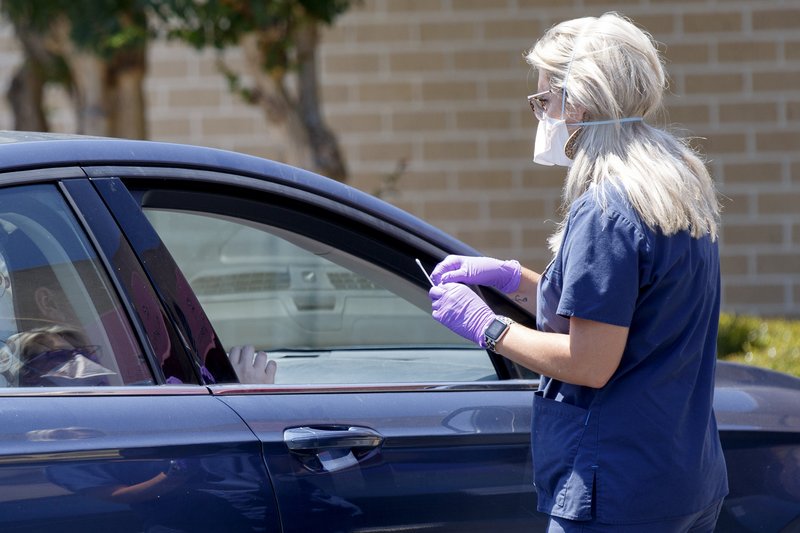
The Alabama Department of Public Health released information, reminding the public that drive-thru COVID-19 testing clinics are available at four sites in the state. There are no out-of-pocket charges, and both insured and uninsured are welcome. Easy Testing has operated similar testing sites in Baldwin and Monroe counties since the beginning of 2021. The testing utilizes a Yale saliva PCR test with results returned in 24 – 48 hours. While pre-registration is not required, it is requested that you pre-register at the Easy Testing website. According to a recent interview with WTVY, State Health Officer Dr. Scott Harris commented, “We are almost at that peak,” when discussing the number of people hospitalized now for covid compared to the numbers last year. Harris did say that some positive covid cases are “incidental” meaning patients are found to be covid positive while in the hospital for other issues. Harris believes the state has reached the peak, or is close to its peak, and will decline soon. He’s hopeful Alabama covid numbers will decline soon, but that it’s “hard to predict the future.” Every home in the U.S. is eligible to order four free at-home COVID-19 tests. The tests are completely free. Orders will usually ship in 7-12 days. According to the Alabama Department of Public Health Covid Dashboard, there have been over 1.1 million positive covid cases in Alabama and 16,826 deaths. The overall level of community transmission is high for all counties in Alabama, meaning more than 10% of people who are tested are covid positive. COVID-19 Easy Testing Sites Baldwin County Central Annex22251 Palmer St.Robertsdale, Ala. 36567Monday – Friday8 a.m. – 6 p.m. Eastdale Mall1000 Eastdale MallMontgomery, Ala. 36117Tuesday – Saturday10 a.m. – 6 p.m. Enterprise State Community College600 Plaza DriveEnterprise, Ala. 36330Monday – Friday8 a.m. – 5 p.m. Hoover Metropolitan Complex5508 Stadium Trace ParkwayHoover, Ala. 35244Monday – Saturday9 a.m. – 5 p.m.
Hank Sanders running again for longtime Senate seat
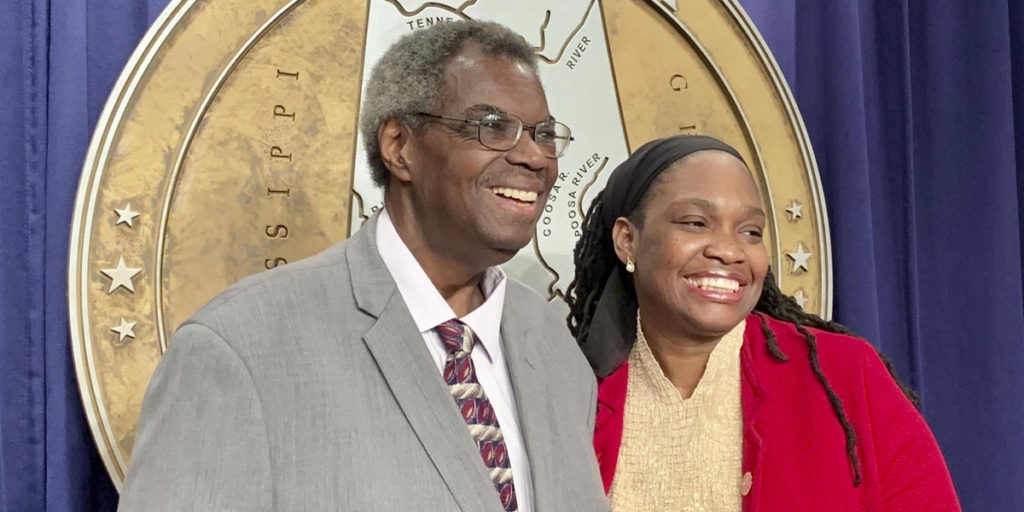
Former state legislator Hank Sanders announced Tuesday he is once again running for the Alabama Seat he held for nearly 40 years. The Senate seat is currently held by Sanders’ daughter, Malika Sanders Fortier, who has decided she is not running again, Sanders said. Sanders announced his retirement in 2018, paving the way for his daughter to run for the seat that represents Selma and surrounding areas. But Sanders said in a statement he has “unfinished business” in Montgomery, including pushing for Alabama to expand its Medicaid program to provide health care coverage to more people. “When I served in the Alabama Senate expansion of Medicaid was a critical focus for me. … I will work on this and other critical issues from elected office if I am elected again,” Sanders said. Sanders filed qualifying paperwork Tuesday with the Alabama Democratic Party, and the primary is in May. Sanders grew up in poverty as one of 13 children. He is a graduate of Harvard Law School who was first elected to the Alabama Senate in 1983. Republished with the permission of the Associated Press.
Taxpayers could experience major refund delays this year from backlogged IRS

Americans around the country will begin filing their income taxes as the filing period opened this week, but many could experience major delays from the Internal Revenue Service, which still has millions of unprocessed returns from last year. The IRS warned Americans this week with an “urgent reminder” to file electronically “to help speed refunds.” The IRS cited “several critical tax law changes that took place in 2021 and ongoing challenges related to the pandemic” for the delays. Americans hoping to receive tax refunds also could see delays, especially if they do not file electronically. “None of this is new, with the IRS admitting last year that returns which previously took three weeks to process were taking up to four months,” tax expert at the American Enterprise Institute Matt Weidinger wrote. “….Record child tax credit payments are pending in the coming tax season, payable to a record number of recipients, even without the passage of further legislation.” Some have argued the IRS needs more funding to handle the returns, but others point out that the shift toward e-filing should have more than lifted the load for the federal tax-collecting agency. “In the 1980s, the IRS was processing paper returns, today 81% of returns are e-filed. With the technology and tools available today, the IRS should be far more efficient,” Heritage Foundation economic and tax experts Rachel Greszler and Preston Brashers said in a joint statement. The National Taxpayer Advocate released its federally commissioned report in mid-December, which said the IRS had 6.2 million unprocessed individual returns, 2.8 million unprocessed business returns, 2.4 million unprocessed amended individual returns, as well as 427,000 amended business returns. For those corresponding with the IRS, their messages are awaiting processing along with 4.75 million pieces of correspondence from taxpayers around the country. “The IRS is in crisis and needs to apply resources to its core mission – processing returns and paying the corresponding refunds,” the group said. Another factor for the backlogs is that Congress expanded the IRS’ power and responsibilities significantly in recent months. That expansion included a monthly child tax credit program that handed out funds to millions of American families based on income and the number of children they have. Critics say this expansion, and the ensuing backlogs, are evidence the IRS has gone beyond its bounds. “As part of the American Rescue Plan, during 2021, the IRS issued monthly checks to the families of roughly 60 million children,” Greszler and Brashers said. “More generally, Congress has continued to expand ‘refundable’ tax credits, payments from the IRS to individuals who pay no income tax. Because they offer checks in the mail, refundable tax credit programs are rife with fraud, as well as improper payments through no fault of the recipient. These programs are extremely costly to implement while ensuring checks are going out to whom they were intended. If Congress wants to eliminate backlogs going forward, it should focus on simplifying the tax code, and it should stop expanding the scope of what the IRS does.” The backlogs are fueling Congressional Republicans, who have been demanding answers from the Biden administration for months on mismanaged and wasted tax dollars. Republicans sent letters to the IRS in April and November last year, pressing these same questions. Members sent a letter again in December raising questions about the backlog. “This massive backlog is causing significant and unnecessary burdens for families and small businesses who can’t get answers from the IRS about why their returns have not been processed,” the letter said. “The IRS is in danger of falling into a vicious backlog cycle that will harm millions of taxpayers. “As the Internal Revenue Service (IRS) prepares for the 2022 tax filing season, we write with great concern regarding the backlog of unprocessed returns from the current 2021 and 2020 filing seasons,” the letter adds. By Casey Harper | The Center Square Republished with the permission of The Center Square.
