
Jury: No defamation from Roy Moore or woman who accused him

A jury on Wednesday found that no defamation occurred between former U.S. Senate candidate Roy Moore and the woman who accused him of molesting her when she was 14. In allegations that roiled the 2017 Senate race in Alabama, Leigh Corfman said Moore sexually touched her in 1979 when she was a teen, and he was a 32-year-old assistant district attorney. Corfman filed suit alleging Moore defamed her by branding her a liar when he denied the accusations. Moore countersued, claiming Corfman injured his reputation with false allegations meant to hurt him politically. The jury deliberated for about three hours before ruling that neither party had prevailed in their claim against the other. Moore said afterward that the decision was vindication for him, and a “very heavy burden” had been lifted. “There is no other way to interpret this but a victory,” Moore said, with his wife, Kayla, standing beside him. “I’ve always said these allegations were false and malicious. I mean that today. I’ll say that today very clearly. There were meant to overturn a very successful election in 2017 to the United States Senate, and they did exactly that,” Moore said. Corfman’s attorneys rubbed her back, seemingly to comfort her after the verdict was read. Corfman attorney Neil Roman said the decision was not what they had hoped for but noted that jurors must have given credibility to her claim because they didn’t rule Corfman defamed Moore when she told The Washington Post he molested her. “This is not a victory for Roy Moore. It is not a vindication of him. Although we are disappointed that the jury did not find that Mr. Moore’s statements about Leigh rose to the level of defamation, we are gratified that the jury necessarily found Leigh was telling the truth about her experiences with Mr. Moore in 1979,” Roman said. Roman maintained the jury “believed Leigh.” “And that’s important,” Corfman interjected. Asked about her reaction to the verdict, Corfman said the trial was somewhat emotional for her. “I’ve lived with this for over 40 years. And to have it once again brought out in this manner is difficult for me,” Corfman said. After meeting for about an hour Tuesday, the jury asked to view videos when they returned Wednesday of statements Moore made at campaign events and in media interviews denying the accusations. Jurors also asked for a definition of defamation under state law. Circuit Judge John Rochester repeated instructions on the law, including that to find defamation, jurors must determine that Moore or Corfman made false public statements — either knowingly or with reckless disregard for the truth — that damaged the reputation of the other. Although Corfman was seeking only a declaration that she was defamed, Moore was asking for money. Corfman’s allegations, first reported by The Washington Post, upended Moore’s Republican campaign in 2017, and he lost to Doug Jones, a former federal prosecutor who became the first Alabama Democrat elected to the Senate in 25 years. Jones lost the next election to Republican Tommy Tuberville, who now holds the Senate seat. Moore, a conservative Christian known as the “Ten Commandment judge” for displaying the Old Testament laws in courthouses, was twice removed as chief justice of the Alabama Supreme Court for violating judicial ethics rules. Republished with the permission of the Associated Press.
Katie Britt raises historic $5 million for U.S. Senate campaign
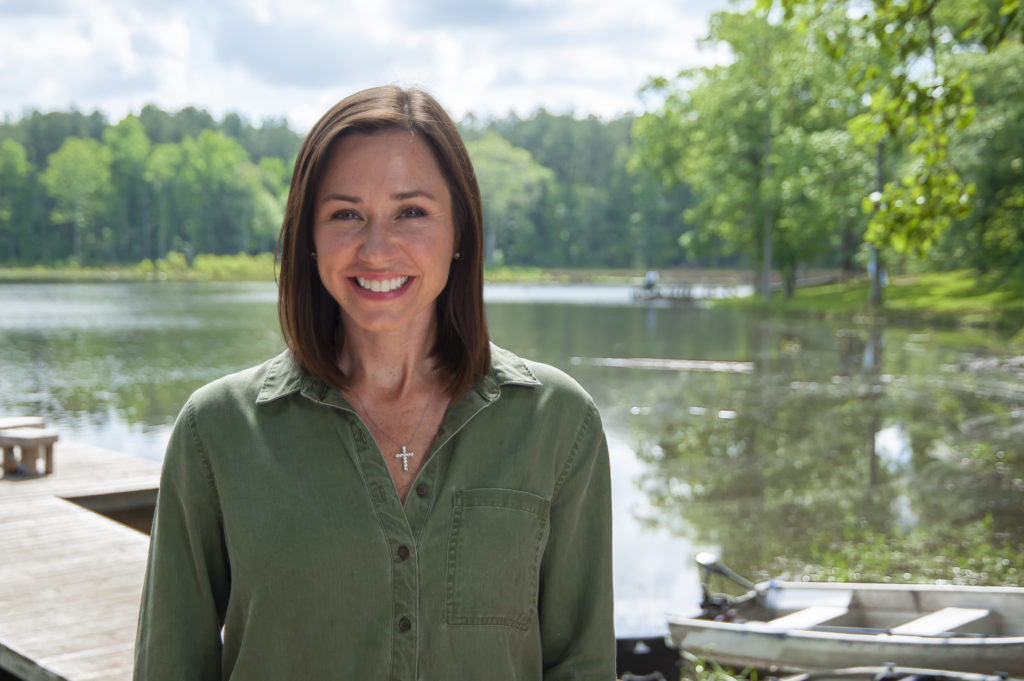
U.S. Senate hopeful Katie Britt announced that her campaign has raised a record-breaking $5 million in just six months in 2021. Britt has raised more money in a single year than any Republican candidate in Alabama history, and most of the donations are from Alabama donors. Britt raised over $1.2 million in Q4 of 2021, with 99% of those funds coming from individuals and 85% coming from Alabama. Britt’s fundraising total does not include any loans, self-funding, or campaign-committee-to-campaign-committee transfers. “I am excited and honored that so many hardworking Alabamians are joining our grassroots campaign and this movement to preserve the American Dream,” stated Britt. “It is clear that families in every corner of our state know that I will always put Alabama first, which is why our campaign is the only one in this race seeing its support coming from Alabama. We completed our first 67-county tour on the campaign trail in December, and we are working nonstop to complete our second such tour before either of my opponents make a dent in their first. The first-time candidate expressed her drive to continue her grassroots campaign. “I am proud of the grassroots momentum we continue to build and look forward to visiting even more local communities across Alabama as the May 24 Republican primary approaches. As the next Senator for Alabama, I will fight tirelessly to defend our Christian conservative values, safeguard our constitutional liberties and God-given rights, and save the country we know and love for our children and our children’s children,” Britt said. Britt has endorsements from the Alabama Farmers Federation’s FarmPAC, the Home Builders Association of Alabama, the Alabama Retail Association, Manufacture Alabama, the Automobile Dealers Association of Alabama, and the Alabama Forestry Association. Rep. Mo Brooks’ funding has been driven by out-of-state contributions and funds transferred from his preexisting U.S. House campaign account. According to FEC filings, Mike Durant’s campaign has been partially funded by a California-financed super PAC. Additionally, Durant’s company received a $6 million, fully-forgiven PPP loan from the federal government in 2020. Durant loaned his campaign $4.15 million from October through December 2021. Britt is a native of Coffee County, and her husband, Wesley, is from Cullman County. They now live in Montgomery with their two children, Bennett and Ridgeway.
Steve Flowers: Groundhog Day
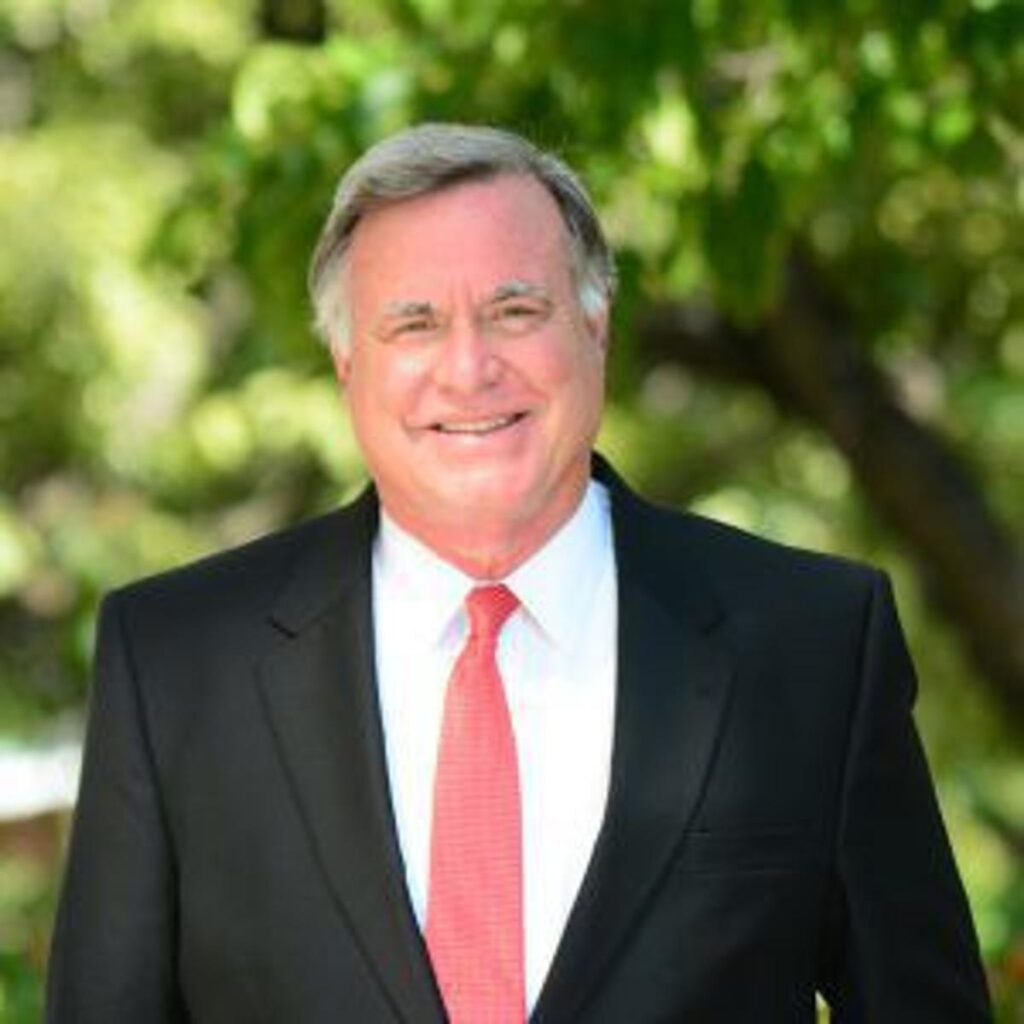
Happy Groundhog Day. It is an ironic juxtaposition that the State of the Union address by the president and Groundhog Day occur on the same day. One involves a meaningless ritual in which a doddering octogenarian who is as outdated as the State of the Union event stumbles through some scripted predictions. The other involves an outdated mythical tradition celebrating a prediction by a rodent. Both prognostications by Biden and the Groundhog are insignificant and irrelevant. Our marquee race for 2022 in the State of Alabama is the race to replace our retiring U.S. Senator, Richard Shelby. Before I delve into the rivalry to follow Shelby and sit in his seat, allow me to say that his junior counterpart in our current Senate tandem, Coach Tommy Tuberville, is doing a good job after his first year as our junior U. S. Senator. There was some speculation regarding his effectiveness, given his lack of governmental experience. Tuberville has put together an excellent staff. He did a good day’s work when he secured Stephen Boyd as his Chief of Staff. Tuberville and his staff are doing an excellent job with constituent service, which is an integral part of a senator’s job when you want to be an effective senator for your state. Tuberville’s staff is especially interested in helping veterans in Alabama. He has a full-time staff member who is assigned to helping Alabama veterans get their deserved benefits for their service to our country. You could tell Tuberville was driven to making sure that military veterans and current servicemen and women were taken care of when he was running. His father was a career military man, and Tuberville revered him. Coach Tuberville has not sought the spotlight and tried to become a Fox News darling and be a right wing ideologue. He has taken on a workhorse mentality and has voted consistently conservative and been a team player within the GOP Senate caucus. Tuberville realizes that he will never be a Richard Shelby because he got there later in life after his career as a college football coach. He has learned that seniority counts. Arriving in the U. S. Senate at age 66 is not conducive to being a senate giant. Seniority is king in Washington. Tuberville also understands the importance that defense spending and agriculture are to Alabama. He is applying himself to protecting these two vital concerns as any senator from Alabama should strive to accomplish. It is all about seniority in the U.S. Senate. It will be at least 15 years before anybody we elect to this senate seat has any real power to bring home the bacon. Katie Britt is 40, and Mo Brooks is 68. You can do the math as to which one has the potential to be effective for Alabama and build seniority and power. Katie Britt not only has the youthfulness to gain seniority, but she also possesses the ability, acumen, and more importantly, she wants to be an effective senator for Alabama and protect our military bases and jobs. Mo Brooks has shown over his 40-year political career and, more recently, his 10-year congressional tenure that he does not want to be effective for Alabama. He is more interested in bomb throwing than doing anything for his district or Alabama. Brooks could not be effective, even if he wanted to. He will be 69, and the Republican leadership would dismiss him as a rightwing gadfly and an old one at that. The wildcard in the Senate race is one Mike Durant. He came out of the blue three months ago and has bombarded the airwaves with a constant saturation of television ads. He has run a total media campaign with no one-on-one campaigning. Few people have ever met him. He is like a stealth candidate who only appears on your television as a POW war hero. Durant, who hails from New Hampshire, is primarily self-funding his campaign. However, he is also being financed by a PAC headed by a wealthy donor Harriman, who wants to elect five independent non-partisan senators in the mold of Mitt Romney of Utah and Susan Collins of Maine, which would put Durant in a small group of liberal Democrats and Republicans. Durant may also be torpedoed by a family situation that has come to light recently. The U.S. Senate race is fluid at this time, with most people undecided on their choice. It will be interesting to watch. See you next week. Steve Flowers is Alabama’s leading political columnist. His weekly column appears in over 60 Alabama newspapers. He served 16 years in the state legislature. Steve may be reached at www.steveflowers.us.
Alabama lawmakers introduce bills aimed at expanding broadband in underserved areas of the state
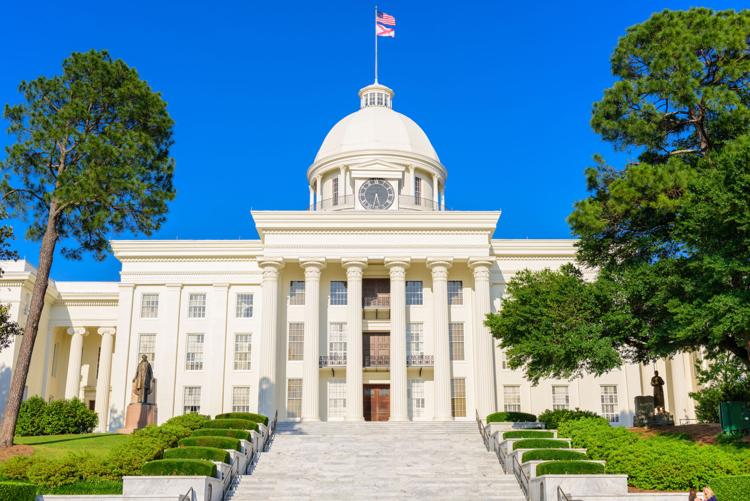
Federal funds and other revenue sources could be tapped to address ongoing deficiencies in broadband infrastructure, based on a pair of duplicate bills working through both chambers of the Alabama legislature. As the 2022 legislative session is underway, state Rep. Randall Shedd, R-Fairview, and state Sen. Clay Scofield, R-Guntersville, have introduced the mirroring HB2 and SB3, respectively. The pair of bills in their draft state call for a constitutional amendment that, if ratified, would give each unit of government – the state, counties or municipalities – the authority to allocate financial resources toward broadband expansion under a mixture of different scenarios. The proposed constitutional amendment includes a clause, “The state, a county or a municipality is authorized to grant federal award funds or any other source of funding designated for broadband infrastructure by state law to any public or private entity for the purpose of providing or expanding broadband infrastructure.” Another passage within the amendment adds, “The granting of funds by a county or a municipality to a private entity pursuant to this section must be approved at a public meeting held by the appropriate county or municipality.” Deficiencies in broadband infrastructure – particularly in Alabama’s rural areas – has been an ongoing topic of discussion during the pandemic, where more adults and students have been taking classes and working virtually. Scofield and Shedd have been discussing broadband expansion this past year, in advance of introducing the legislation. Last summer, Scofield shared his views on the issue in a news release detailing his chairmanship of the Alabama Digital Expansion Authority. “Providing high-speed Internet to rural and unserved communities in Alabama has been one of my top priorities since I was first elected to the Senate over a decade ago,” Scofield said in a statement. He added, “We have witnessed our state transform into an economic powerhouse over the years, cultivating industrial expansion, job growth, technological advancements and much more.” In a radio interview in early December, Shedd shared his hope for allocating some of the federal COVID-19 relief funding toward broadband expansion. The goal, he said, “is to identify how we can remove some of the barriers and streamline some of the process. We’re not going to get it all out of the way, but if we can identify what those barriers are, and streamline the process and get it to people faster, it’s something we’d like to do.” With supply chain interruptions and labor shortages ongoing issues, Shedd conceded a full rollout of the expansion plan could take time. “We’ve got some challenges to try and deal with,” he said. “But we also have the opportunity of a lifetime.” HB2 currently is in the House Urban and Rural Development Committee. SB3 is under review in the Senate Finance and Taxation General Fund Committee. The bills were introduced on January 19. By Dave Fidlin | The Center Square contributor Republished with the permission of The Center Square.
Alabama legislators file bills that seek to end grocery tax
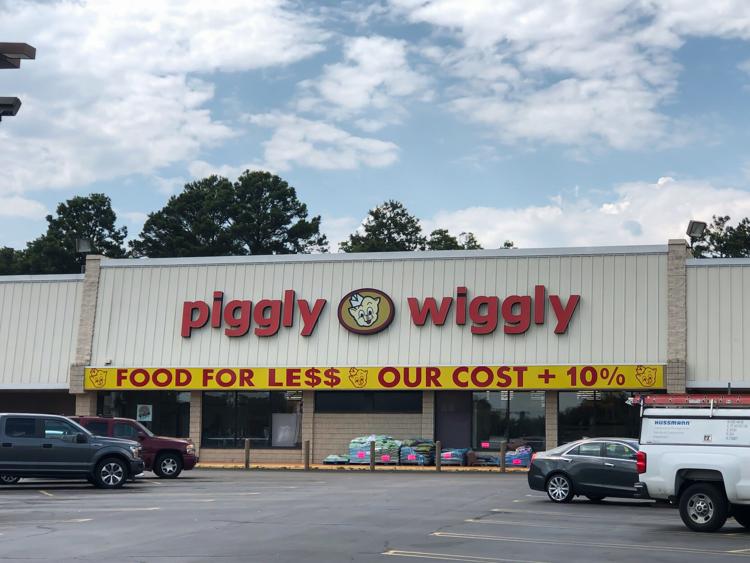
A pair of Alabama legislators have introduced bills in their respective chambers that would eliminate the state’s sales tax on groceries. HB 174, sponsored by Rep. Mike Holmes, R-Wetumpka, and SB 43, sponsored by Sen. Andrew Jones, R-Montgomery, would eliminate the state tax on food. Both bills are designed to put more money in the pockets of state residents. The bills, however, would take different paths to being enacted. HB 174 would be enacted through ratification by the Legislature and Gov. Kay Ivey’s signature, while SB 43 would appear on November’s ballot as a proposed constitutional amendment. Under the state’s existing law, a sales tax of 4% is assessed on food sales. Counties and municipalities throughout the state, however, levy their own local taxes on food, according to the United States Department of Agriculture. Under both bills, local municipalities would retain the power to excise taxes on food. Tuscaloosa and Cullman counties, according to the report, have the highest grocery tax rate in the state at 9%, which includes the 4% state grocery tax. Grocery taxes in the majority of the state’s counties are between 6% and 8%, while some counties have a 4% to 6% grocery tax. A handful of counties have a grocery tax between 8% and 9%. HB 174, if enacted, would exempt the sales of food from sales and use taxes beginning September 1. If SB 43 is enacted through a ballot referendum, it would go into effect on January 1, 2023. Holmes said he introduced the legislation to give state residents a tax break. “We wanted to be sure we didn’t try and replace the grocery tax revenue with a tax revenue stream from somewhere else,” Holmes said. “We didn’t want to shift a tax from one group to another.” Holmes said last year from tax sources, Alabama generated $7.6 billion in revenue. This year, he said, the state is anticipating $12.2 billion in tax revenue. “That is where it is going to hit the hardest,” Holmes said of the legislation benefiting all residents. “It will hit everyone equally. Everybody has to have groceries. That was a place I could go to help the working class, even down to the poverty level and even the upper class, to get everyone a tax break.” Holmes said counties and municipalities will still be able to have their own grocery tax. “I’m really hopeful we can get this done,” said Holmes, who is not running for re-election. “I’m hanging a lot on the fact we can get across-the-aisle support. We have a supermajority, but if we can get half of their votes, we can get it done and do it right.” The Alabama Policy Institute said it is in favor of repealing the grocery tax. “Groceries are exempt from state sales tax in most of the country, with only thirteen states taxing groceries at all,” API President and CEO Caleb Crosby said. “Out of thirteen states that do tax groceries, only Alabama, Mississippi, and South Dakota tax them at the full amount without any credit or rebate. “With state budgets hitting record high after record high, it is … time for Alabama to end this tax. The fact is that Montgomery is flush with cash. State leaders need not pretend that the sales tax on our bread and milk is essential.” Phil Williams, a former state senator who serves as the Institute’s chief policy officer, said, “it is time to pursue this matter without the old fallback of raising taxes elsewhere.” “This should be a matter of giving back, not amending to avoid a true tax cut,” he said. By Brent Addleman | The Center Square Republished with the permission of The Center Square.
Jury begins deliberations in Roy Moore defamation case

Jurors began deliberating Tuesday on dueling defamation claims filed by former U.S. Senate candidate Roy Moore and a woman who accused him of sexually molesting her decades ago when she was 14. An attorney for Leigh Corfman, whose account was first published by The Washington Post in 2017, told jurors in closing arguments that the case is ultimately about who they believe is telling the truth. “Who do you believe? Do you believe Leigh Corfman or do you believe Roy Moore?” attorney Jeff Doss asked. Corfman maintains that Moore sexually touched her in 1979 when she was a teen and he was a 32-year-old assistant district attorney. Corfman filed suit alleging Moore defamed her by branding her a liar when he denied the accusations. Moore countersued, claiming Corfman injured his reputation with false allegations meant to hurt him politically. Jurors will decide both claims at the trial. After meeting for about an hour, the jury asked to break for the day and view videos in evidence when they return Wednesday. The judge said they could. The panel did not indicate what videos they wanted to see. Moore attorney Julian McPhillips told jurors that the accusations, raised during the 2017 Senate race in Alabama, “put Mr. Moore and his family through holy hell.” “She couldn’t have hurt Roy Moore more if she had shot him with a gun, shot him through the heart,” McPhillips said of Corfman. Corfman said she met Moore at the Gadsden courthouse when he offered to sit with her while her parents were in a custody hearing. She said he asked for her telephone number and twice brought her to his home. On one occasion, she said, he took off her clothes and touched her over her bra and panties. Moore testified that the accusation was false and denied that he knew Corfman. Attorneys in closing arguments gave diverging views about the truth and who was damaged in the wake of the accusation that rocked the Senate race. “Your verdict will send a powerful message to Roy Moore that the truth still matters,” Doss said. Melody Eagan, another of Corfman’s attorneys, said Moore victimized Corfman twice: once in 1979 and again in 2017 when he “drug her good name through the mud.” Moore’s attorneys asked jurors to find that Corfman defamed the former Alabama judge with the accusation that seemingly brought an end to his political career and led to national scorn. McPhillips suggested the accusation was the product of either teenage imagination or politics. Moore is asking the jury to award him monetary damages. “If there was any truth to this or any motive that was good or decent, it would have come out long before — long before 32 days before an election,” McPhillips said. Corfman’s attorneys told jurors her account is corroborated by other testimony. Two childhood friends testified during the trial that Corfman as a young teen told them she was seeing an older, adult man, and one said she named Moore. Corfman’s mother and an attorney testified that Moore sat with Corfman outside a 1979 custody hearing, although attorney Charles Boyd conceded on cross-examination that he might be wrong about the year. Corfman’s attorneys presented the testimony of two women who said they dated Moore as teens and three others who said Moore asked them out when they were teens. Wendy Miller testified that Moore asked her out when she was 15 or 16, although she wasn’t sure if Moore knew her age. Another testified that Moore called her high school when she was in trigonometry class after meeting her at the mall. Moore’s attorneys noted in closing arguments that none of the women alleged wrongdoing by Moore. “I don’t know when it became a crime to date people,” McPhillips said during closing arguments. McPhillips appeared to downplay the accusation at one point, saying the alleged touching was “child’s play” to what two former presidents have been accused of doing. He did not elaborate. Eagan responded in her closing argument that she was horrified McPhillips used that phrase when discussing the touching of a 14-year-old girl “over her bra and over her panties.” Corfman’s allegations roiled Moore’s campaign and he ended up losing to Doug Jones, who became the first Alabama Democrat elected to the Senate in 25 years. Jones lost the next election to Republican Tommy Tuberville, who now holds the Senate seat. Republished with the permission of the Associated Press.
