
House to vote on allowing concealed handguns without permit
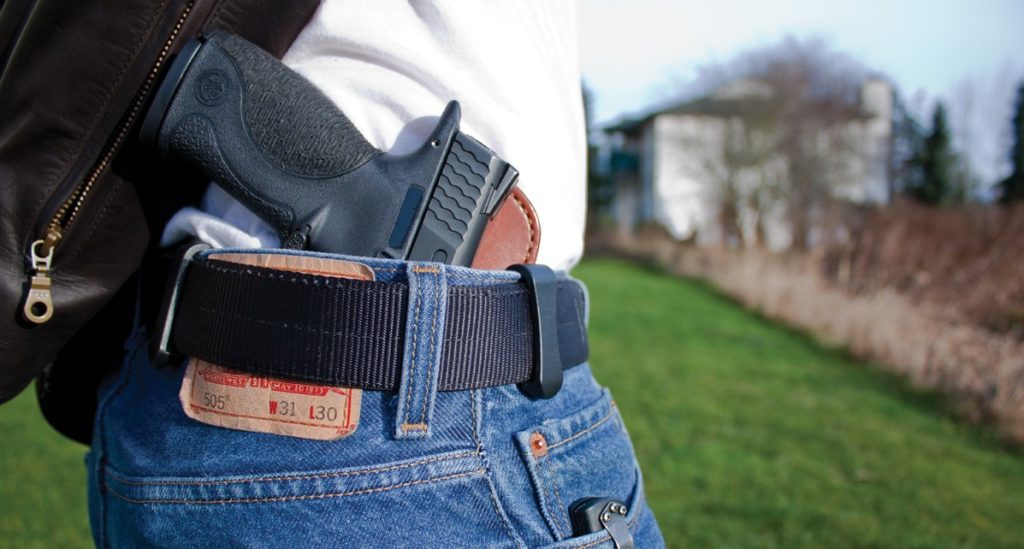
Alabama lawmakers are headed to an afternoon of contentious debate as representatives take up a proposal to allow people to carry concealed handguns without a state permit. The bill to do away with the permit requirement is at the top of a debate agenda in the Alabama House of Representatives. The agenda also has two other controversial bills. One proposal would change the definition of a riot and the penalties for participating in a riot. The other would require K-12 students to use bathrooms and locker rooms that correspond with the gender listed on their original birth certificate. To avoid an anticipated filibuster from opposed lawmakers, legislative leaders are seeking to limit debate on each bill to two hours. House Republicans, who hold a lopsided majority in the chamber, have named the handgun bill as a priority for the year. The bill would do away with the requirement to get a concealed carry permit to carry a handgun concealed under clothes or in a purse or bag. It would also do away with the current requirement for people without concealed carry permits to keep handguns unloaded and secured when driving. People could still choose to get a permit if they wanted to do so. The permitless carry bill has been championed by gun-rights groups who argue that people should not have to get a permit, which requires paying a fee, to carry a handgun they legally own. State sheriffs and other law enforcement officials have opposed the legislation, arguing that the permits provide a crucial tool to combat crime and enhance public safety. There are 21 states that allow concealed weapons in public without a permit, according to Stateline, an initiative of the Pew Charitable Trust. If approved in the House, the bill will then go to the Senate. Republished with the permission of the Associated Press.
Steven Reed and Jeremy Gray: To increase housing equity, renters need choices
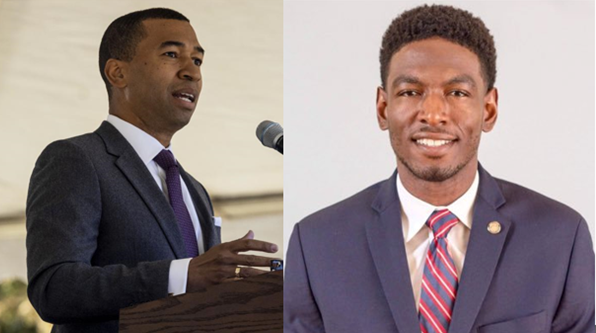
As Alabama continues recovering from the economic shocks caused by this unprecedented and seemingly endless pandemic, our leaders must work tirelessly to not only rebuild our economy, but to bring everyone up along with it and make sure our economy works for all Alabamians. Over the last two years, COVID-19 has upended our entire way of life, affecting everyone regardless of race, gender, or creed. Yet, due to decades of inequitable policies, Black Alabamians suffered the most with higher unemployment rates, higher COVID mortality rates, and even higher eviction rates. This has to change now, and the first place to start is by dramatically rethinking our approach to housing. Every day, thousands of Alabama renters fear eviction. Thousands of families face the dire prospect of unemployment. Thousands of children could be put on the streets. This is especially true for our communities of color, which face eviction at a rate nearly double that of their white neighbors. And the disparities don’t just end there. Since the beginning of the pandemic, more than 50% of Black and Brown renters were cost-burdened—meaning more than 30% of their income goes to paying for housing. Black renters fared even worse, spending 50% of their monthly income on average on housing costs. Across Alabama, thousands of folks are facing economic hardship and housing instability, with few ways to overcome these challenges to get access to affordable, safe housing. To combat these seemingly overwhelming adversities, so much needs to be done. One simple area where we can start is by upending the onerous cash security deposit. Traditionally, the way we rent apartments is simple and well-known: find a place, apply, get approved, then pay exorbitant upfront sums just to move in. The practice of requiring a security deposit prior to moving in essentially doubles the upfront cost of renting. This means that a working family living paycheck-to-paycheck will be priced out of most apartments, even if they can afford the monthly rent. According to a study conducted by the Federal Reserve, 40% of Americans do not have enough money set aside for a $400 emergency expense, all while the average cost of a security deposit in Alabama is over $1,000. The answer is simple: renters need more options when it comes to covering the cost of a security deposit. This will make housing more accessible, meaning that thousands—if not millions—of Alabamians can equitably access safe, secure housing and thrive in this economy. A little over a year ago, Atlanta, GA’s City Council passed a “Renter’s Choice” policy giving all renters the option to pay their security deposit through a lower-cost insurance policy offered by a company like Rhino. These alternatives are already available in Alabama today, and we would urge renters and property owners alike to encourage their use to help address our community’s ongoing economic challenges. Moreover, across the country, there is more than $45 billion in security deposits sitting dormant in escrow accounts. Landlords can’t touch it; renters can’t touch it. This money could be used to pay down debts, invest in our local economy, get access to better healthcare, and more. There is a better way. In 2022, accessing affordable, safe housing has never been more difficult. In Alabama, affordable housing remains scarce, while the existing units are often plagued by segregation and blight. It is time to challenge the way we rent in Alabama. Instead of being forced to pay typically exorbitant sums upfront, renters should have the choice to take out an affordable insurance policy, costing no more than a few dollars a month. This would allow renters to have more mobility, access to better jobs, and access to better schools for their children, all while having more money to contribute to the economy. Giving all renters the option to access security deposit insurance is one way that more Alabamians can take advantage of all of the opportunities this great state has to offer. To be frank, this is just common sense: housing security benefits renters, landlords, and businesses across our state. More opportunities means more equity, which means our economy will be stronger. Across America, leaders in government and housing are embracing options like these because they see the benefits that extend far beyond the ability for a family to move from one apartment to another. To combat the inequities we see across this state and this nation, we must act quickly. While Renter’s Choice is not the end, it is a beginning that we can get started on almost immediately. As members of this community, we must acknowledge the need for change. Renter’s Choice is an example of much-needed change, and it is time we roll our sleeves up and get this done. Steven L. Reed is the Mayor of Montgomery, Alabama, and Jeremy Gray is the representative for District 83 of the Alabama House of Representatives.
Reps. Barry Moore and Mo Brooks demand DOD halt involuntary discharges for vaccine refusal immediately
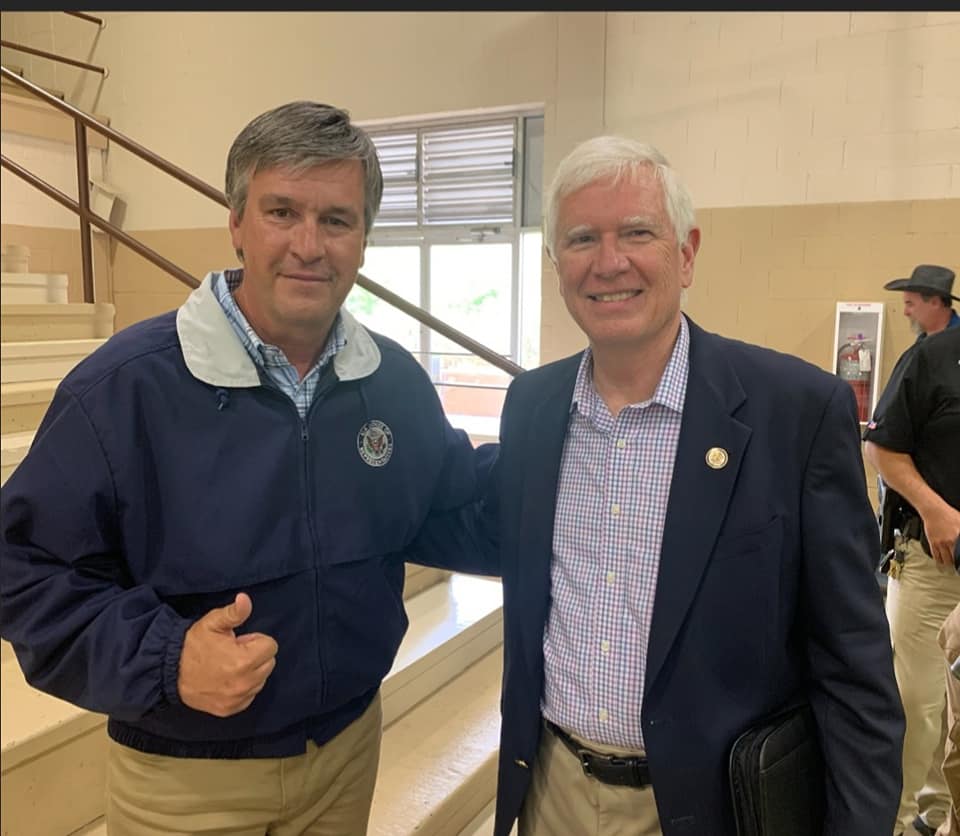
Reps. Barry Moore and Mo Brooks joined 40 of their colleagues in sending a letter to the Department of Defense (DOD) to demand that they halt efforts to involuntarily discharge members of the military who have refused COVID-19 vaccination. The letter requests that they stop until an in-depth review of natural immunity is complete, and the Department has issued uniform procedures for vaccine exemptions. According to Moore’s press release, Section 720 of the National Defense Authorization Act for Fiscal Year 2022 requires the DOD to establish uniform procedures for issuing exemptions and fully consider natural immunity. This includes eligibility timelines for consideration of exemptions for service members nearing separation and retirement in the development of uniform procedures relating to administrative exemptions. According to an NPR report, as of January 26, 96% of active troops had been completely vaccinated, while 3,350 soldiers had refused to get the vaccine. Nearly 5,900 have received temporary exemptions. “The DOD must immediately halt efforts to discharge our active-duty military members who refuse to get the vaccine just because overreaching politicians want to continue intervening in the private lives of the American people,” said Moore. “We must ensure that the DOD completes an in-depth review of natural immunity. I will continue to fight against the tyrannical vaccine mandate on our service members.” The letter states, “We are gravely concerned that the military services are proceeding with involuntary discharges when it is unclear to us whether uniform procedures have been issued by the Department of Defense. If the Department of Defense has not issued uniform procedures or reviewed the inclusion of natural immunity and the military services are moving forward with involuntary discharges, then we believe the Department is ignoring and violating Section 720. Congress included this language to protect our service members, and we expect the Department of Defense to abide by the law.” Additional members of Congress to sign the letter include Vicky Hartzler, Doug Lamborn, Elise Stefanik, Brian Mast, David McKinley, Darrell Issa, Kevin Hern, Rodney Davis, Bill Huizenga, Yvette Herrell, Michael Waltz, Bill Posey, Michael Guest, David Valadao, Thomas Tiffany, Pete Stauber, Mike Kelly, Andy Biggs, Neal Dunn, Gus Bilirakis, Dan Crenshaw, Randy Weber, Sr., Louie Gohmert, Lauren Boebert, Glenn Grothman, Alex Mooney, Joe Wilson, Scott DesJarlais, Jack Bergman, David Schweikert, Jeff Duncan, Ralph Norman, Bruce Westerman, Jim Banks, Rick Crawford, Jodey Arrington, Christopher H. Smith, Victoria Spartz, Ted Budd, and Gregory Steube.
Anson Knowles dropped from Primary election ballot for House District 10
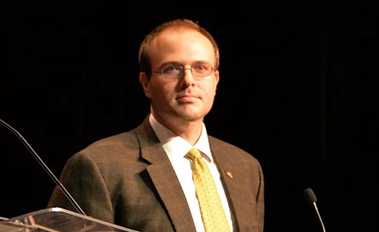
The Alabama Republican Party Candidate Committee voted to remove Anson Knowles from the Primary election ballot on February 18. Knowles was running for Alabama House of Representatives District 10. The GOP hearing was conducted in Birmingham after the ALGOP winter meeting. The decision to drop Knowles from the ballot was because of his prior Libertarian Party activity. In 2015, Anson was the Chairman of the Libertarian Party in Madison County, Alabama, for fifteen months. Additionally, after his time with the Libertarian Party, Knowles donated to a Libertarian candidate’s campaign. During the same meeting, Tuscaloosa businessman and Republican candidate Tripp Powell was dropped from the GOP Primary in Alabama Senate District 21. Dropping Powell effectively handed the Republican nomination to longtime incumbent Sen. Gerald Allen. The decision to drop Powell stemmed from a $500 donation given to the Democratic gubernatorial primary campaign of Mayor Walt Maddox in 2018. Knowles said he was left with more questions than answers when he found out that his name would not appear on the GOP primary ballot. Knowles spoke to Patch.com on Monday, arguing that he was never given a physical copy of the ballot challenge. Therefore, he doesn’t know who was responsible for the challenge. “The evidence presented against me was in closed session, so there’s no way to know what was said,” Knowles stated. “The challengers were given the opportunity to speak for five minutes, but I can’t speculate what that decision-making process was because I wasn’t in the room.” He referred to the GOP’s Steering Committee as a “kangaroo court,” arguing that although he had spent some time with the Libertarian Party, he has also contributed funds to Republican candidates for years. Since his time as a Libertarian, Knowles served as Secretary and Chairman of the Madison County Young Republican Club and is also an at-large voting member of the Madison County Republican Executive Committee (MCREC). “I am a Republican,” Knowles stated. “I just finished telling a room full of people Republicans that I am a Republican. I will not run unless the GOP allows it.” Both Powell and Knowles can appeal the Committee’s decision if they can get signatures from 50 members of the state executive committee. That would force the chair of the party to call a special meeting. If a quorum is reached at the special called party meeting, then the appeal of the decision of the Steering Committee could be voted on.
War fears grow as Vladimir Putin orders troops to eastern Ukraine
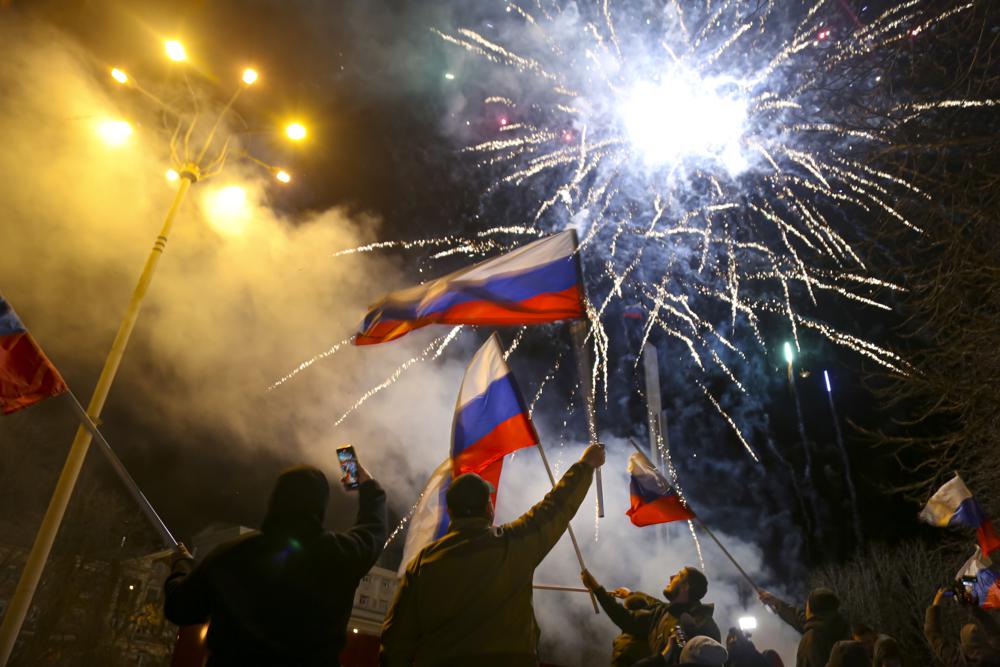
A long-feared Russian invasion of Ukraine appeared to be imminent Monday, if not already underway, with Russian President Vladimir Putin ordering forces into separatist regions of eastern Ukraine. A vaguely worded decree signed by Putin did not say if troops were on the move, and it cast the order as an effort to “maintain peace.” But it appeared to dash the slim remaining hopes of averting a major conflict in Europe that could cause massive casualties, energy shortages on the continent, and economic chaos around the globe. Putin’s directive came hours after he recognized the separatist areas in a rambling, fact-bending discourse on European history. The move paved the way to provide them military support, antagonizing Western leaders who regard such a move as a breach of world order and set off a frenzied scramble by the U.S. and others to respond. Underscoring the urgency, the U.N. Security Council set a rare nighttime emergency meeting on Monday at the request of Ukraine, the U.S., and other countries. Ukraine’s president, Volodymyr Zelenskyy, sought to project calm, telling the country: “We are not afraid of anyone or anything. We don’t owe anyone anything. And we won’t give anything to anyone.” The White House issued an executive order to prohibit U.S. investment and trade in the separatist regions, and additional measures — likely sanctions — were to be announced Tuesday. Those sanctions are independent of what Washington has prepared in the event of a Russian invasion, according to a senior administration official who briefed reporters on the condition of anonymity. The developments came amid a spike in skirmishes in the eastern regions that Western powers believe Russia could use as a pretext for an attack on the western-looking democracy that has defied Moscow’s attempts to pull it back into its orbit. Putin justified his decision in a far-reaching, pre-recorded speech blaming NATO for the current crisis and calling the U.S.-led alliance an existential threat to Russia. Sweeping through more than a century of history, he painted today’s Ukraine as a modern construct that is inextricably linked to Russia. He charged that Ukraine had inherited Russia’s historic lands and, after the Soviet collapse was used by the West to contain Russia. “I consider it necessary to take a long-overdue decision: To immediately recognize the independence and sovereignty of Donetsk People’s Republic and Luhansk People’s Republic,” Putin said. Afterward, he signed decrees recognizing the Donetsk and Luhansk regions’ independence, eight years after fighting erupted between Russia-backed separatists and Ukrainian forces, and called on lawmakers to approve measures paving the way for military support. Until now, Ukraine and the West have accused Russia of supporting the separatists, but Moscow has denied that, saying that Russians who fought there were volunteers. At an earlier meeting of Putin’s Security Council, a stream of top officials argued for recognizing the regions’ independence. At one point, one slipped up and said he favored including them as part of Russian territory — but Putin quickly corrected him. Recognizing the separatist regions’ independence is likely to be popular in Russia, where many share Putin’s worldview. Russian state media released images of people in Donetsk launching fireworks, waving large Russian flags, and playing Russia’s national anthem. Ukrainians in Kyiv, meanwhile, bristled at the move. “Why should Russia recognize (the rebel-held regions)? If neighbors come to you and say, ‘This room will be ours,’ would you care about their opinion or not? It’s your flat, and it will be always your flat,” said Maria Levchyshchyna, a 48-year-old painter in the Ukrainian capital. “Let them recognize whatever they want. But in my view, it can also provoke a war, because normal people will fight for their country.” With an estimated 150,000 Russian troops massed on three sides of Ukraine, the U.S. has warned that Moscow has already decided to invade. Still, Joe Biden and Putin tentatively agreed to a meeting brokered by French President Emmanuel Macron in a last-ditch effort to avoid war. If Russia moves in, the meeting will be off, but the prospect of a face-to-face summit resuscitated hopes in diplomacy to prevent a conflict that could cause massive casualties and huge economic damage across Europe, which is heavily dependent on Russian energy. Russia says it wants Western guarantees that NATO won’t allow Ukraine and other former Soviet countries to join as members — and Putin said Monday that a simple moratorium on Ukraine’s accession wouldn’t be enough. Moscow has also demanded the alliance halt weapons deployments to Ukraine and roll back its forces from Eastern Europe — demands flatly rejected by the West. Macron’s office said both leaders had “accepted the principle of such a summit,” to be followed by a broader meeting that would include other “relevant stakeholders to discuss security and strategic stability in Europe.” U.S. national security adviser Jake Sullivan, meanwhile, said the administration has always been ready to talk to avert a war — but was also prepared to respond to any attack. Putin’s announcement shattered a 2015 peace deal signed in Minsk requiring Ukrainian authorities to offer broad self-rule to the rebel regions, a major diplomatic coup for Moscow. That deal was resented by many in Ukraine who saw it as a capitulation, a blow to the country’s integrity, and a betrayal of national interests. Putin and other officials argued Monday that Ukrainian authorities have shown no appetite for implementing it. Over 14,000 people have been killed since the conflict erupted in the eastern industrial heartland in 2014, shortly after Moscow annexed Ukraine’s Crimean Peninsula. Potential flashpoints multiplied. Sustained shelling continued Monday along the tense line of contact separating the opposing forces. Unusually, Russia said it had fended off an “incursion” from Ukraine — which Ukrainian officials denied. And Russia decided to prolong military drills in Belarus, which could offer a staging ground for an attack on the Ukrainian capital, Kyiv. Ukraine and the separatist rebels have traded blame for massive cease-fire violations, with hundreds of explosions recorded daily. While separatists have charged that Ukrainian forces were firing on residential
Census director Robert Santos has faith in quality of 2020 numbers
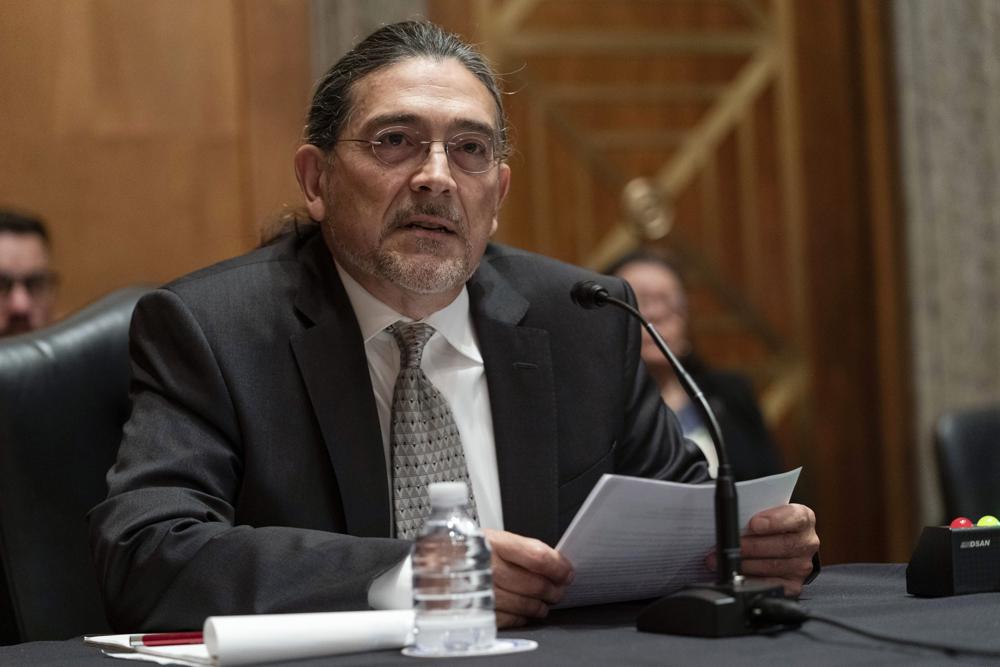
The new U.S. Census Bureau director said Monday that he is listening to the concerns of data users and policymakers, and the agency is making permanent community outreach efforts to restore any trust that was lost following attempts by the Trump administration to politicize the nation’s 2020 headcount. Despite those attempts and obstacles created by the pandemic, the Census Bureau did its job, and the numbers used to determine political power and allocate federal funding “are quality products, and they are fit for the purpose they were intended,” Robert Santos said in an interview with The Associated Press. “I have high confidence, and I’ve been incredibly pleased with the professionalism of the career staff at the Census Bureau, the job that they’ve done, and their dedication to the mission, the Constitution, and the rule of law,” Santos said. “They were doing their due diligence, and they made sure they did the job that needed to be done to get the 2020 census done, despite all the obstacles.” The Trump administration unsuccessfully tried to add a citizenship question to the 2020 census form, which opponents feared may have suppressed participation from immigrant groups. The Trump administration also named an unusually high number of political appointees to the bureau, and it tried to end the headcount early last October, after its schedule had been adjusted for the pandemic, in what opponents said was an effort to release the numbers used for divvying up congressional seats while President Donald Trump was still in office. Data from the once-a-decade head count also are used for drawing political districts and helping allocate $1.5 trillion in federal spending each year. The Urban Institute think tank last year estimated that 1.6 million people were missed in the 2020 census, with people of color, renters, noncitizens, children, and people living in Texas most likely to be undercounted. In 2019, a year and a half before he was nominated to lead the Census Bureau, Santos co-authored an Urban Institute report that said African Americans could be undercounted nationally by 3.6% and Hispanics could be undercounted by 3.5%, in worst-case scenarios in the 2020 census. Santos, speaking to The Associated Press from his hometown of San Antonio, Texas, said Monday he had “absolutely zero idea” if those projections were accurate. Next month, the Census Bureau plans to release a report card showing how good a job it did of counting different populations. Santos started a five-year term leading the nation’s largest statistical agency at the beginning of the year after being nominated for the job by President Joe Biden. In his new job, he is overseeing the release of more detailed data from the 2020 census later this year, as well as preparing for the next once-a-decade head count in 2030. Santos said Monday that he is “eager” to work with the Office of Budget and Management on exploring whether the race and ethnic background questions should be combined and whether a category for people of Middle Eastern or North African descent should be added to the 2030 census form. A previous study by the Suitland, Maryland-headquartered Census Bureau showed that combining the race and ethnic background questions increased response rates by Hispanics, who may be uncertain how to answer the race question because they often are from mixed racial and ethnic backgrounds. The Office of Budget and Management had considered pairing the questions for the 2020 census, but the Trump administration decided to keep the race question separate from the ethnicity one. A report released last month from three sociologists said that the current practice of categorizing people from the Middle East or North Africa as white “may not correspond to their lived experiences nor to others’ perceptions.” The Census Bureau director wouldn’t say if he personally supported adding questions on the 2030 census form about sexual orientation or gender identity, saying, “my personal feelings are not fodder for this type of conversation.” Sexual orientation and gender identity are asked about in a new Census Bureau survey formed during the pandemic, the Household Pulse Survey, but they have never been asked about in the much more comprehensive decennial census. “In principle, we need to think about how we can capture a better portrait of the American public,” Santos said. “The American public is nuanced. As time goes on, we are becoming more diverse. We are appreciating culture, language, our own identities in ways that really transcend what existed before.” Republished with the permission of the Associated Press.
University of Alabama VP Myron Pope resigns, accused of soliciting prostitution

A University of Alabama official has resigned after being arrested on a charge of soliciting prostitution. Tuscaloosa police said Former Vice President of Student Life Myron Pope, 50, is free on $1,000 bond after his arrest Thursday on the misdemeanor charge, news outlets reported. “I have difficult news to share today. Vice President of Student Life Myron Pope has resigned from the university following his recent arrest,” university President Stuart R. Bell said in a statement emailed Friday. Pope was among 15 men arrested during a prostitution sting Thursday and Friday, news outlets reported. Pope told The Associated Press on Monday that he is working on a statement that he probably will release Tuesday. Capt. Phil Simpson, commander of the West Alabama Human Trafficking Task Force, said in a press release on Saturday that the men had arranged through an app to pay for sex and were arrested after showing up at the agreed location and talking with an undercover officer. Pope was on the Alabama football team that won the Sugar Bowl after the 1992 season. He earned his bachelor’s, master’s, and doctoral degrees at Alabama. Bell said he will appoint an interim vice president of student life. Pope was Alabama’s director of recruitment programs/alternative certification and a clinical assistant professor in the higher education administrative program from 1997 to 2000 and became a vice president in May 2020. A native of Sweet Water, Pope was a walk-on tight end and linebacker under former Alabama coach Gene Stallings. His undergraduate degree was in history, and his graduate degrees were in higher education administration. As head of the school’s Division of Student Life, he worked to provide support for students through programs including health and recreation, career counseling, the student center, student media, and residential communities. Before returning to the university, he was chief of strategic engagement for the Oklahoma Department of Human Services. He also served 14 years in vice presidential positions at the University of Central Oklahoma. Republished with the permission of the Associated Press.
