
Mo Brooks applauds passage of occupational licensing reform bills, encourages Kay Ivey to sign them
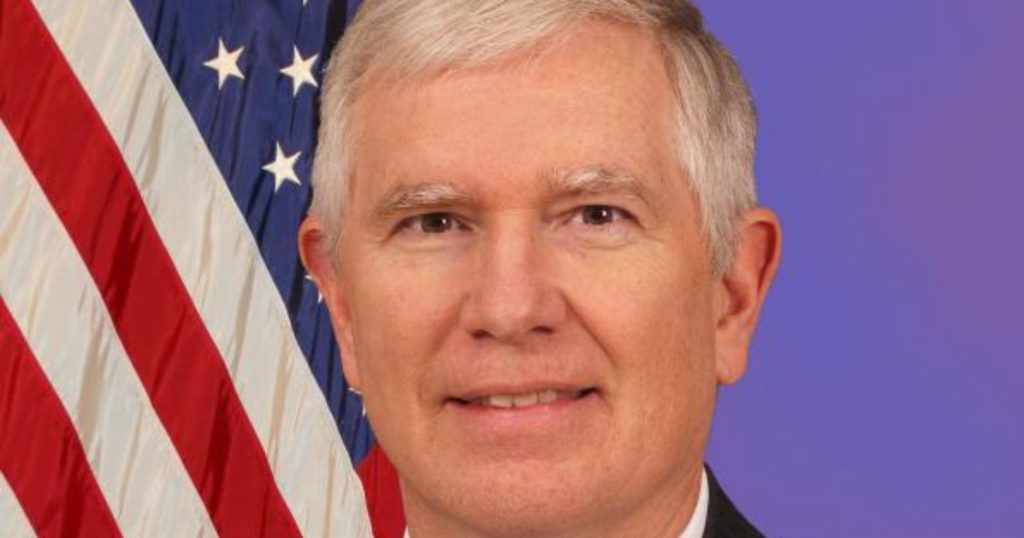
Rep. Mo Brooks has encouraged Gov. Kay Ivey to sign a series of bills passed by the Alabama legislature aimed at easing the transferability of occupational licenses for people who relocate to Alabama. Senate Bills 99, 141, and 167 all help military family members and service members transfer their occupational licenses when moving. “In January of last year, I had a phone conversation with then-Secretary of the Air Force Barbara Barrett about her decision to stand up Space Command H.Q. at Redstone Arsenal. On the call, she explained the Air Force’s analysis of both qualitative and quantitative factors that led to Redstone’s selection. Secretary Barrett emphasized that locating U.S. Space Command at Redstone Arsenal was in the long-term best interest of national security,” Brooks stated in a press release. Brooks continued, “When I discussed with Secretary Barrett where Alabama could improve for future competitions, Secretary Barrett said Alabama needs to improve the transferability of occupational licenses. It’s important to the military that military spouses be able to easily resume their licensed occupations when relocating from one state to another. I encouraged the Alabama legislature to take action to ease occupational license transfers at the time. Alabama legislators listened.” Brooks thanked legislators for their leadership. “Alabama is better off thanks to your leadership on this important issue. These reforms will help Alabama continue to recruit top talent from across America and will support the transition of military families into Alabama from across the country. Thanks to these reforms, Alabama is ready to support standing up Space Command H.Q.,” Brooks concluded. Senate Bill 99 by Sen. Andrew Jones would create the Interstate Counseling Compact, which would establish requirements and authorize licensed professional counselors to practice in Alabama and will provide accommodations for active-duty military and their spouses. Senate Bill 141 by Sen. Tom Butler revises and extends the timeframe for State Licensure Boards to grant various temporary permits for military spouses licensed to practice in other states. Senate Bill 167 by Sen. Shay Shelnutt creates flexibility for practicing occupational therapists in other states to practice in the State of Alabama. The bill provides special accommodations for spouses of active-duty service members and their families. The bill also creates the Occupational Therapy Compact Commission.
Political powerhouse commentator Jeff Poor leaves Yellowhammer News

Jeff Poor, host of the Jeff Poor show on FM Talk 1065 and editor of Breitbart TV, is leaving his position at Yellowhammer News and heading to 1819 News, where he will be a politics editor. Poor was a frequent contributor to Yellowhammer News, a Montgomery, Alabama-based conservative news outlet. His radio show boasts big-name guests from across the nation, from members of congress to some of the most prestigious and well-funded national grassroots groups and policy think tanks. State elected leaders line up for their chance to chat with him in his star-studded 3-hour show. Last year, ALToday listed Poor as one of Alabama’s most influential people. With over a decade of experience reporting on politics and the news media, Poor previously reported from Washington, D.C. for The Daily Caller and the Media Research Center. Poor manages a team of reporters to monitor and deliver highlights from radio and television news for Breitbart TV. Apryl Marie Fogel congratulated Poor on Twitter, stating, “Big Breaking News in #ALPolitics: @jeff_poor leaving @yhn to @1819News. Huge get for 1819 and there goes the only reason I ever went to YH after reading the 7 things list in the morning. Jeff is truly one of the best!” Bryan Dawson, President and CEO of 1819 News, congratulated Poor. “Very excited about adding Jeff to the team. He is an incredible journalist, he really understands Alabama politics, he knows what makes a good story, and he will no doubt help @raymelick and @EricaLynnThomas shape and mold our up and coming journalists,” Dawson wrote on Twitter. Craig Monger, a writer for 1819 News, also sent congratulations to Poor. “Welcome aboard, @jeff_poor! Super stoked to be on the same team as this legend!” Poor has appeared on the Fox News Channel, Fox Business Network, and CBN. His work and reporting have been featured at The Drudge Report, The Washington Times, and American Spectator, among many others. He grew up in Birmingham and has reported in all 67 counties in Alabama. He received his building science degree from Auburn University and a journalism degree from the University of South Alabama. Poor will start his new position at 1819 on February 28. *Apryl Marie Fogel is the owner and publisher of AL Today.
CDC revises optimal interval for some individuals to receive second COVID-19 mRNA vaccine
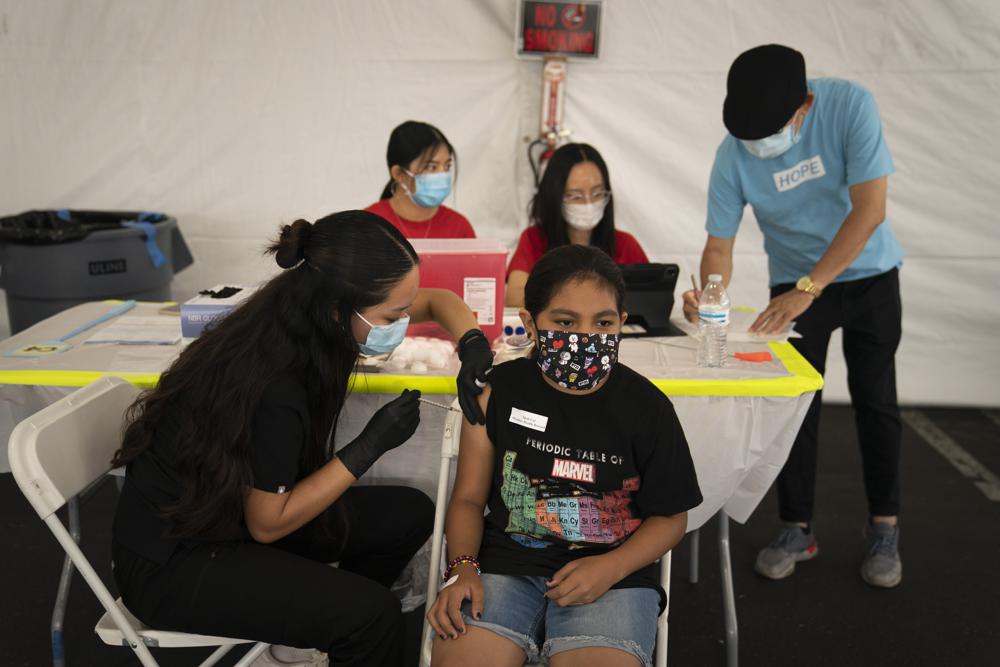
The Alabama Department of Public Health (ALDP) announced that the Centers for Disease Control and Prevention (CDC) has approved new guidelines for when certain people should get their second COVID-19 vaccine dose. An evaluation of the latest safety and effectiveness data and evidence from hundreds of millions of COVID-19 vaccines safely administered in the United States indicates that some people ages 12 through 64 years—and especially males ages 12 through 39 years—would benefit from getting their second mRNA COVID-19 vaccine dose 8 weeks after receiving their first dose. Extending the time interval between primary mRNA COVID-19 vaccine doses from the FDA-approved or authorized 3 weeks (Pfizer-BioNTech) or 4 weeks (Moderna) to 8 weeks may help increase how long protection lasts against COVID-19. Additionally, it may also help lower the very small risk of myocarditis (inflammation of the heart muscle) and pericarditis (swelling of tissue around the heart), which has been associated—mostly among adolescent and young adult males—with mRNA COVID-19 vaccination. According to the CDC, regardless of the interval between the first and second dose, mRNA vaccines are highly effective at reducing the risk of hospitalization and serious complications from COVID-19 infection. People who have already received their primary mRNA series at the 3-week or 4-week interval remain well-protected—especially if they have received a booster dose. Providers should continue to recommend the 3-week or 4-week interval for the following: Individuals who are moderately or severely immunocompromised Adults ages 65 years and older People who may need early protection due to concern about an increased risk of severe illness from COVID-19 or high levels of community transmission People ages 12 years and older who are moderate to severe immunocompromised should receive three doses in their mRNA primary vaccine series and should receive a booster dose with an mRNA vaccine at least 3 months after completing their third primary series dose.
Lawmakers to delay 3rd grade reading promotion requirement

Alabama lawmakers are close to approving a delay of a high-stakes requirement to hold back third-graders who don’t read on grade level. The Alabama House of Representatives on Wednesday unanimously voted to push back the requirement for two years. Instead of taking effect at the end of this school year, the legislation would delay implementation until the 2023-2024 school year. The Alabama Senate has approved similar legislation. Lawmakers in 2019 approved the Alabama Literacy Act that will require third graders to meet reading benchmarks before moving to the fourth grade. Students would have to make a minimum score on a reading assessment or demonstrate mastery of all third grade state reading standards. However, many lawmakers and educators pushed for a delay after the COVID-19 pandemic interrupted classrooms for two years. The state Board of Education in November set a cutoff score that third-graders must make on that Alabama Comprehensive Assessment Program in order to be promoted. State officials said 23% of students scored below that number on the latest assessment. Republican Rep. Terri Collins, the sponsor of the Literacy Act, said the two-year delay is a compromise. Collins said she believes the interventions and other measures in the law are already making a difference for students. Collins said the Senate bill will be in House committee next week. Republished with the permission of the Associated Press.
Alabama committee advances ban on abortion pill
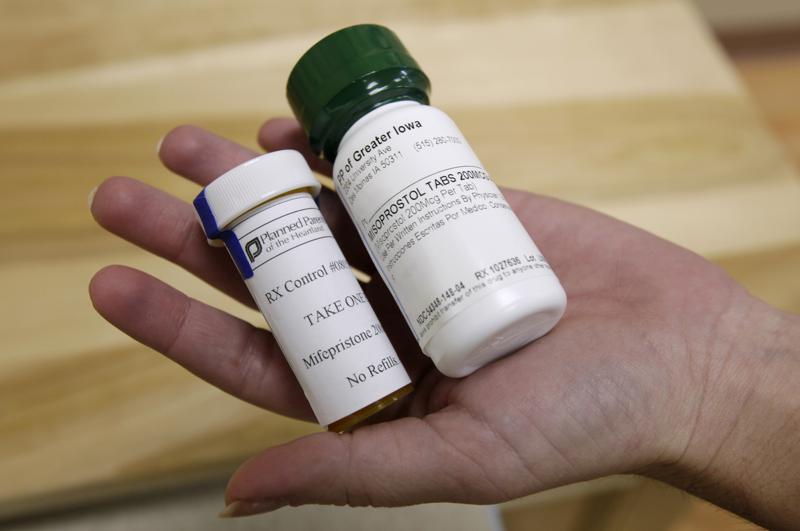
An Alabama legislative committee on Wednesday advanced legislation seeking to outlaw the use of abortion pills to end unwanted pregnancies. The House Judiciary Committee approved the bill that would make it a felony to prescribe or dispense the medications, such as RU-486, to induce an abortion. The bill now moves to the full House of Representatives, Abortion pills are an increasingly common method of terminating early pregnancies. The Centers for Disease Control and Prevention estimated that 42.3% of all abortions in 2019 were done by using medications. “We think of abortion as going to an abortion facility and having a surgical abortion. But the new trend in abortion is chemical abortion,” Rep. Andrew Sorrell, the Republican sponsor of the bill, told the committee.ADVERTISEMENT Kaitlin Welborn, reproductive rights staff attorney for the ACLU of Alabama, said the bill, “is not about women’s health.” “Study after study has found that this medication is safer than either Tylenol or Viagra. Let’s call this bill what it is: another excuse for the Alabama Legislature to play doctor and meddle in the healthcare options available to people in this state,” Welborn said in a statement. Some Republican-led states have attempted to put restrictions on the legal abortion method, including trying to ban providers from prescribing abortion medication via telemedicine. A federal judge this month granted a preliminary injunction against a South Dakota rule that would make the state one of the hardest places in the U.S. to get abortion pills. The rule would have required women to go to the doctor’s office to take both pills. Republished with the permission of the Associated Press.
Alabama seeks to remove racist language from Constitution
Alabama lawmakers have begun a process to remove racist language from the state’s 121-year-old Constitution. The Alabama House of Representatives on Thursday voted 94-0 for the resolution by Rep. Merika Coleman that streamlines the massive state document and removes lingering Jim Crow language. The legislation now moves to the Alabama Senate. If approved, it would go before voters in November. The proposal would strip language on segregated schools, poll taxes, and language that allowed a brutal convict lease system that sold Black men, often arrested under questionable circumstances, into forced labor. While those provisions have largely been invalidated by court rulings, the vestiges of Jim Crow remain in the state’s chief governing document, such as the fight to maintain segregated schools. The pending proposal also reorganizes the massive, sprawling document that has nearly 1,000 constitutional amendments to try to make it more user-friendly. The process began in 2020 after voters approved an amendment authorizing the streamlining of the state governing document. The proposal has bipartisan support. “For several years, we’ve been working on cleaning up the Constitution and the wording in it, and this will move us forward with helping to accomplish that. There is some racist terminology in there, and this is going to address some of that,” House Speaker Mac McCutcheon said. Proponents in Alabama are hopeful this effort will succeed where others have failed. Voters in the mostly white, conservative state had rejected similar proposals twice since 2000 after they became intertwined with school funding issues. State voters in 2000 did vote to remove a ban on interracial marriages, but about 40% of voters cast ballots to keep the interracial marriage ban in the Constitution. Republished with the permission of the Associated Press.
Senate approves budget, state worker raise
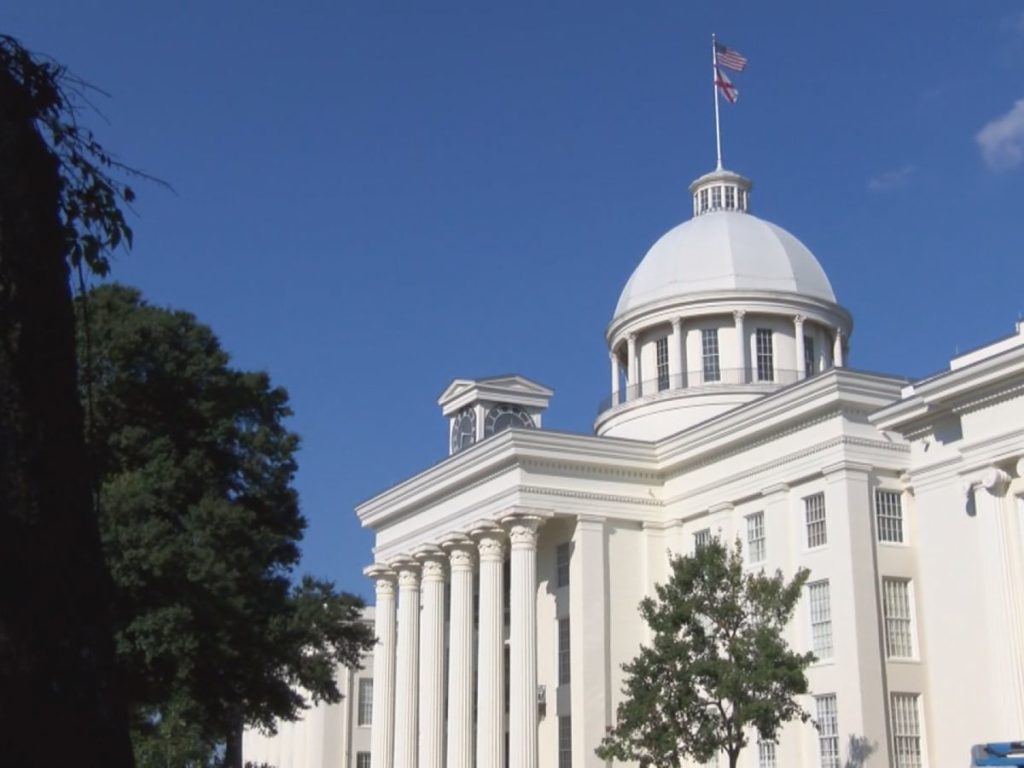
The Alabama Senate on Thursday approved a $2.7 billion general fund budget that includes a 4% pay raise for state employees. Senators voted 29-1 for the spending plan. It now moves to the Alabama House of Representatives. In addition to the employee raise, the proposed budget includes spending increases for mental health, state prisons, and pardons and paroles. “We’re trying to use the resources that Alabama entrusts with us in a way that we believe is going to have lasting effects in the future. We believe we’re doing that,” Sen. Greg Albritton, the Republican chairman of the general budget committee, said. Albritton said the spending increase, among other things, will fund the construction of three new mental health crisis centers in the state. The state general fund has gotten a boost from a rise in internet sales tax collections. Alabama lawmakers each year approve two budgets. One is for education programs and the second is the general fund which fuels state agencies. Republished with the permission of the Associated Press.
