
Lindy Blanchard: Alabama, U.S. are at a crossroads
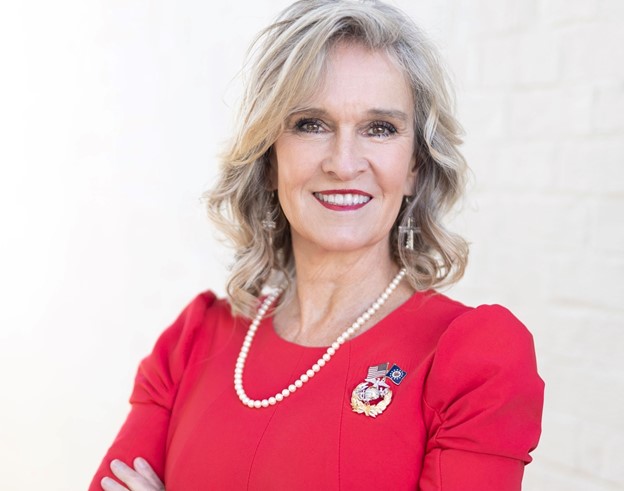
It’s time for a new leader in Alabama — a new leader who does not do things the way they have always been done because they have always been done that way. Our state and our nation are at a crossroads. As we face rising inflation and energy costs, borders wide open, election fraud, and a decided lack of transparency in our election process as seen in 2020, we need the new direction that only an outsider can bring. True leadership takes fearlessness and boldness, two qualities I have demonstrated throughout my life and career that I would take with me into the governor’s office as Alabama’s next governor. We are seeing the importance of fighters around the nation and world right now. There’s no time for empty words or gestures. We need action. We need decisiveness. I was honored to be asked to share my experience as a U.S. ambassador under President Donald Trump at the Conservative Political Action Conference (CPAC) last week. While there, I had the opportunity to meet and speak with conservative leaders from across the nation. Governors like Ron DeSantis are showing us how things can and should be done when running a state. U.S. Senators like Marco Rubio and John Kennedy and U.S. Representatives who are holding the line in D.C. — activists who love our country and value freedom were everywhere. They share our love for this nation and our concern for its future. I was able to share how my experiences as a mother of eight, business owner of 28 years, leader of our family’s foundation for 17 years, and, most recently, as the U.S. ambassador to Slovenia have prepared me for this moment. I know how to roll up my sleeves and work hard. Through our family business and foundation, I learned to focus on what matters most: results. On my CPAC panel, we discussed the need for energy independence to drive down the high prices that we are seeing as a result of liberal policies and tax increases. I know what it will take to ease the burden of these costs for Alabama families, like freezing and rolling back the gas tax to keep money in your pockets. I know what it takes to broker deals with European nations to sell Alabama goods because I’ve done it. As your governor, I have every intention of ripping the rug out from under our state’s dependence on trade with China and Russia. The governor should be the first line of defense from federal overreach. I am prepared to stand up to Joe Biden, China, and those who want to destroy our nation from within. Weakness and complacency are where we are. Showing weakness on a world stage is how our enemies know to act against us and our allies. President Donald Trump didn’t back down from a fight, not from foreign leaders or those within his own party. It’s no coincidence Vladimir Putin waited for Joe Biden to take office before pulling what he is now. He would not have done this under Trump! As an ambassador under President Trump, I worked to strengthen our partnerships with NATO nations while pursuing Trump’s agenda to take the cost burden off the American people and have other nations pay their own way. I brokered a first-of-its-kind banking deal. I returned home from my post to sell defense goods from Redstone Arsenal to European nations. These accomplishments are why President Trump, in a room full of our nation’s most accomplished conservative leaders, activists, and former administration appointees, singled me out and acknowledged my hard work from the stage during his keynote speech saying, “Thank you, Lynda. Good job.” I have worked relentlessly for decades before deciding to run for office myself. I’ve listened to you while on the campaign trail, and I will listen to you when I’m elected as the next governor of this great state. Lindy Blanchard is running for Governor of Alabama. Visit her website for more information: BlanchardforGovernor.com.
Kay Ivey awards $10 million to volunteer fire departments
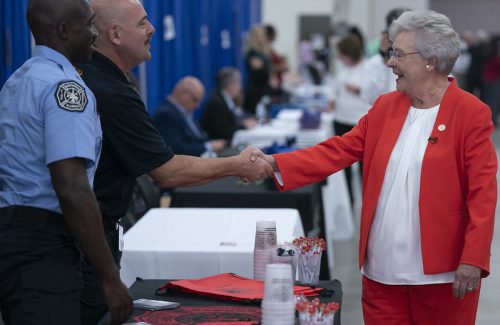
Gov. Kay Ivey awarded $10 million of the State Fiscal Recovery Fund from the American Rescue Plan Act (ARPA) to establish COVID recovery grants for volunteer fire departments. This program provides support to Alabama’s volunteer fire departments impacted by the covid-19 pandemic. “Alabama’s first responders, including our community’s volunteer fire departments, are vital in keeping our state safe. While states across the country and the entire globe dealt with the curveballs the pandemic threw, our volunteer fire departments kept going,” stated Ivey. “I am proud to have worked with the Alabama Legislature to direct these funds to good use as our local volunteer fire departments recover. I am pleased to support them and encourage them to take advantage of this grant program.” The state of Alabama will offer grants in an amount up to $10,320 for providers that meet eligibility requirements. The application period for the Alabama Volunteer Fire Department COVID Recovery Grant program will be open from noon, March 7 through noon, March 25, 2022. Alabama received $2.1 million in ARPA funds, and the Alabama Legislature appropriated $136,796,346 from Alabama’s State Fiscal Recovery Revenue Replacement Fund for this program.
Dan Sutter: Do sanctions work?
The United States and Europe imposed economic sanctions on Russia for its unprovoked invasion of Ukraine. I will let others debate the sufficiency of this response and consider the economics and effectiveness of sanctions. Economists have analyzed sanctions both theoretically and empirically. Theory helps us identify differences between observed outcomes and the unobserved alternative without sanctions. One immediate implication: a proper evaluation must include cases where the threat changed policy. In any model of negotiations and conflict – including wars, labor strikes, and sanctions – the costs of conflict push the parties to negotiate. Indeed, wars and strikes should not occur with perfect information. If Ukraine and Russia both knew the outcome of the invasion, they could negotiate a settlement based on the outcome and avoid death and destruction. Sanctions tend to be imposed when things break down. Sanctions temporarily block trade between parties. If we currently trade very little with a nation, a halt is not very impactful. And the potential for political or military conflict makes businesses less likely to establish trading relations. Choosing a supplier in a country likely to be sanctioned will only produce supply chain disruption. This produces a paradox. Sanctions would be most effective against allies yet are imposed against enemies. Although this is sensible, sanctions get employed when least likely to be effective. Sanctions can take a long time to work. South Africa’s racist Apartheid regime faced sanctions for 30 years before collapsing. If sanctions take years or decades to work, is this success? South Africa faced diplomatic, travel, and cultural sanctions in addition to economic sanctions. Separating the impact of economic and other sanctions is extremely difficult. Yet we need to assess the benefits of economic measures. Gary Hufbauer, Jeffrey Schott, and Kimberley Elliott have compiled the most extensive sanctions database through three editions of Economic Sanctions Revisited. For each case, they estimate effectiveness in achieving political goals (on a 16-point scale), the cost imposed on the target country’s economy, and cost to the initiating country. “Success” to varying degrees occurs in about one-third of cases. Sometimes sanctions have been notoriously ineffective, like the League of Nations sanctioning Italy for invading Ethiopia in 1935. The researchers define success relative to political goals. Alternatively, we might ask whether sanctions imposed significant costs on the offending nation. Will sanctions make Putin pay for invading Ukraine? Perhaps. Sanctions reduced the GDP of white-ruled Rhodesia (now Zimbabwe) by over 10 percent in the 1970s and Iraq’s GDP by nearly 50 percent after its 1990 invasion of Kuwait. International cooperation is crucial for effectiveness because most trade must be shut off for the greatest possible impact. Sanctions have been called the economic equivalent of carpet-bombing cities. They inflict pain on “noncombatants.” The Apartheid sanctions hurt oppressed black South Africans; incidental harm must factor into our evaluation. Many people see nations through a collectivist lens, justifying harm to any Russians since Russia invaded Ukraine. As a proponent of personal freedom, I reject all forms of collectivism. Thousands of Russians have reportedly been arrested for protesting the invasion. Again, incidental harm must be taken very seriously. Fortunately, sanctions are increasingly targeted. The Obama administration began targeting banks doing business with rogue regimes, and selected Russian banks have been banned from the SWIFT international payments system. Improved surveillance reduces the ability of banks to violate sanctions without penalty. I have focused on economics, but sanctions also have a moral dimension. Halting trade offers a way to denounce the invasion: we will not trade with barbarians. And Russian oil seems irredeemably stained with Ukraine’s blood. Sanctions and halting energy imports could impose nontrivial costs on Russia. Unfortunately, invasions are rarely launched on strict cost-benefit grounds, limiting their impact. Yet this should not diminish the economic and moral significance of sanctions. Daniel Sutter is the Charles G. Koch Professor of Economics with the Manuel H. Johnson Center for Political Economy at Troy University and host of Econversations on TrojanVision. The opinions expressed in this column are the author’s and do not necessarily reflect the views of Troy University.
Will Sellers: God save the Queen, Happy Birthday Aretha Franklin!
Had she lived, the Queen of Soul would have been 80-years-old this month. For at least 60 of her 76 years, Aretha Franklin shared her vocal gift all over the world. In addition to bringing her both critical and commercial success, her voice became a symbol for a new generation of Americans. Older generations rooted in staid and static smugness frowned upon popular culture for breeding new forms of entertainment and activism, which promoted an expression of unique, differing, and contrasting ideas. Utilizing the appeal of her voice, Aretha would challenge numerous pre-conceived notions, and the acceptance of her music would push boundaries that had previously limited others based upon race, sex, religion, and politics. She created a following that was first attracted to her vocal virtuosity but later came to accept her change agent status. After her birth in Memphis, her family joined the throngs of the Northern Migration to Detroit to escape the overt racism of the day and embrace the promise of greater economic opportunity. Her first performances were at the church that her father pastored, and while she considered Detroit her home, she never became part of the “Motown” sound. Commenting on her life, Barry Gordy recalled seeing her sing and play the piano as a little girl. How she escaped Gordy’s talent search is remarkable. Initially, her commercial success was not readily apparent as her first records under the Columbia label failed to chart. It was only when she switched to Atlantic records and the influence of Jerry Wexler that her career took off. After almost ten lackluster Columbia albums, Wexler paired her with Rick Hall’s Fame Studio in Muscle Shoals, Alabama. After that providential decision, her career took off, and she never looked back. Remembering Aretha requires focusing on more than just the appeal of her music; it is also about her as a person, the times in which she lived, and the influence she had. For most musicians, having a voice with a range of Aretha’s would be enough, but she also understood the nuances of music and how to write songs from her life experiences that conveyed strong emotions with a powerful cadence and drew people to her. She was also talented enough to realize that she could take the works of others, change them, and make them her own. In fact, her signature song, “Respect,” was written and initially recorded by Otis Redding. Aretha’s interpretation changed the song and the meaning to not merely ask for respect but to demand it. This respect was not limited to Redding’s spousal relationship but was about American society at large, the dignity of the individual, and being accepted as an equal. After all, what most people really want is respect, an acknowledgment that they are significant and that they matter. In the 1960s, that was strong medicine. Her songs increased the acceptance of the civil rights movement among baby boomers but also caused friction in families caught in the middle of cultural and social change. It is hard to believe now, but initially, her record covers avoided featuring her photo so as not to offend parents of white youngsters. But Aretha, like Miles Davis and other Black artists, demanded this “whitewashing” cease, and the album covers that followed removed another vestige of racism in the recording industry. Aretha’s support for social change was more subtle in that she crashed through racial barriers because her music appealed to all audiences. The clear implications of her concerts and the success of her records were that racial discrimination had no place among the new generation. Her support for racial equality would become more pronounced as she used her broad appeal to advocate for change and equal opportunities. And the breadth of her success and the popularity of her music would support the notion that raw talent could defeat discrimination. Her acceptance in the world at large helped spread American popular culture and promoted American values not only among our allies, but also our enemies. In fact, it was a custom among Russia and its Soviet Union to dwell on issues that divided Americans. The Kremlin was a master at sowing seeds of discord among and within western democracies. Popular culture was one vehicle to highlight the shortcomings of the West in general and America in particular. But culturally, Russia was unable to compete with American post-war pop culture. In the past, it was a matter of strategy to invite a Paul Robeson or Marian Anderson to perform and point out how they were mistreated in their home country, but Soviet youths, much like American teenagers, were ready for something different. Not everyone accepted Soviet entertainment, and any Soviet pop culture had a sell-by date of 1930 something. Aretha, among other artists, was their worst nightmare. From her style of music to her success and acceptance, there was nothing to exploit. The Soviets would try to create their own statist Russian pop culture, but it simply could not compete with Aretha and America. The sounds of young America flooded the worldwide airwaves, and there were not enough jammers to stop the infiltration of these new sounds and innovative musicians. Initially, there was an attempt to ban the music, but few could resist Aretha and so many others. But worst for Soviet ideology, she represented the democratic spirit of America that accepted musicians based on performance ability and popular appeal. There was no way to use Aretha as an example of talent suppressed based on race to contrast America and Russia. Even their young people liked what they heard and attempted to imitate the music and style of Aretha, but under the Soviet system, there was no chance for a Russian popular artist to achieve similar success. While there are myriad causes for the end of the Cold War, Aretha and other scions of American popular culture helped win the global culture war one note at a time. Will Sellers was appointed by Gov. Kay Ivey to the
Global death toll nears 6 million as pandemic enters its 3rd year

The official global death toll from COVID-19 is on the verge of eclipsing 6 million — underscoring that the pandemic, now entering its third year, is far from over. The milestone is the latest tragic reminder of the unrelenting nature of the pandemic even as people are shedding masks, travel is resuming, and businesses are reopening around the globe. The death toll, compiled by Johns Hopkins University, stood at 5,997,994 as of Sunday afternoon. Remote Pacific islands, whose isolation had protected them for more than two years, are just now grappling with their first outbreaks and deaths, fueled by the highly contagious omicron variant. Hong Kong, which is seeing deaths soar, is testing its entire population of 7.5 million three times this month as it clings to mainland China’s “zero-COVID” strategy. As death rates remain high in Poland, Hungary, Romania, and other Eastern European countries, the region has seen more than 1 million refugees arrive from war-torn Ukraine, a country with poor vaccination coverage and high rates of cases and deaths. And despite its wealth and vaccine availability, the United States is nearing 1 million reported deaths on its own. Death rates worldwide are still highest among people unvaccinated against the virus, said Tikki Pang, a visiting professor at the National University of Singapore’s medical school and co-Chair of the Asia Pacific Immunization Coalition. “This is a disease of the unvaccinated — look what is happening in Hong Kong right now, the health system is being overwhelmed,” said Pang, the former director of research policy and cooperation with the World Health Organization. “The large majority of the deaths and the severe cases are in the unvaccinated, vulnerable segment of the population.” It took the world seven months to record its first million deaths from the virus after the pandemic began in early 2020. Four months later, another million people had died, and 1 million have died every three months since until the death toll hit 5 million at the end of October. Now it has reached 6 million — more than the populations of Berlin and Brussels combined, or the entire state of Maryland. But despite the enormity of the figure, the world undoubtedly hit its six millionth death some time ago. Poor record-keeping and testing in many parts of the world has led to an undercount in coronavirus deaths, in addition to excess deaths related to the pandemic but not from actual COVID-19 infections, like people who died from preventable causes but could not receive treatment because hospitals were full. Edouard Mathieu, head of data for the Our World in Data portal, said that — when countries’ excess mortality figures are studied — as many as nearly four times the reported death toll have likely died because of the pandemic. An analysis of excess deaths by a team at The Economist estimates that the number of COVID-19 deaths is between 14 million and 23.5 million. “Confirmed deaths represent a fraction of the true number of deaths due to COVID, mostly because of limited testing, and challenges in the attribution of the cause of death,” Mathieu told The Associated Press. “In some, mostly rich, countries that fraction is high and the official tally can be considered to be fairly accurate, but in others, it is highly underestimated.” The United States has the biggest official death toll in the world, but the numbers have been trending downward over the last month. Lonnie Bailey lost his 17-year-old nephew, Carlos Nunez Jr., who contracted COVID-19 last April — the same month Kentucky opened his age group to vaccinations. The Louisville resident said the family is still suffering, including Carlos’ younger sibling, who had to be hospitalized himself and still has lingering symptoms. The aggressive reopening of the country has been jarring for them to witness. “For us, it is hard to let our guard down; it’s going to take a while for us to adjust,” Bailey said. The world has seen more than 445 million confirmed COVID-19 cases, and new weekly cases have been declining recently in all regions except for the Western Pacific, which includes China, Japan, and South Korea, among others, the World Health Organization reported this week. Although the overall figures in the Pacific islands seeing their first outbreaks are small compared to larger countries, they are significant among their tiny populations and threaten to overwhelm fragile health care systems. “Given what we know about COVID … it’s likely to hit them for the next year or so at least,” said Katie Greenwood, head of the Red Cross Pacific delegation. Tonga reported its first outbreak after the virus arrived with international aid vessels following the January 15 eruption of a massive volcano, followed by a tsunami. It now has several hundred cases, but — with 66% of its population fully vaccinated — it has so far reported people suffering mostly mild symptoms and no deaths. The Solomon Islands saw the first outbreak in January and now has thousands of cases and more than 100 deaths. The actual death toll is likely much higher, with the capital’s hospital overwhelmed and many dying at home, Greenwood said. Only 12% of Solomon Islanders are fully vaccinated, though the outbreak has provided new impetus to the country’s vaccination campaign and 29% now have at least one shot. Global vaccine disparity continues, with only 6.95% of people in low-income countries fully vaccinated, compared to more than 73% in high-income nations, according to Our World in Data. In a good sign, at the end of last month, Africa surpassed Europe in the number of doses administered daily, but only about 12.5% of its population has received two shots. The Africa Centers for Disease Control and Prevention is still pressing for more vaccines, though it has been a challenge. Some shipments arrive with little warning for countries’ health systems and others near the expiration date — forcing doses to be destroyed. Eastern Europe has been particularly hard hit by the omicron variant, and with the Russian invasion of Ukraine, a new risk has emerged as hundreds of thousands of people flee to places like Poland on crowded trains.
Volodymyr Zelenskyy’s ‘desperate’ plea to Congress: Send more planes

Fighting for his country’s survival, Ukraine’s leader made a “desperate” plea Saturday to American lawmakers for the United States to help get more warplanes to his military and cut off Russian oil imports as Kyiv tries to stave off the Russian invasion. President Volodymyr Zelenskyy opened the private video call with U.S. lawmakers by telling them this may be the last time they see him alive. He has remained in Kyiv, the capital, which has a vast Russian armored column threatening from the north. Appearing in what is now his trademark army-green shirt in front of a white wall with the Ukrainian flag, he told them Ukraine needs to secure its skies, either through a no-fly zone enforced by NATO or through the provision of more warplanes so Ukraine could better defend itself. Zelenskyy has been pleading for a no-fly zone for days, but NATO has refused, saying it could provoke a widespread war with Russia. The hourlong exchange with some 300 members of Congress and their staffs came as Russian troops continued to shell encircled cities, and the number of Ukrainians who have fled the country grew to 1.4 million. “President Zelenskyy made a desperate plea,” said Senate Majority Leader Chuck Schumer. He said Zelenskyy wants the U.S. to facilitate the transfer of planes from Eastern European allies. “I will do all I can to help the administration to facilitate their transfer,” Schumer said. The U.S. is considering sending American-made F-16s as backfill to former Soviet bloc countries in Eastern Europe that are now members of NATO. They, in turn, would send Ukraine their own Soviet-era MiGs, which Ukrainian pilots are trained to fly. There appears to be a logistical problem, however, in sending the F-16s to Poland or other East European allies because of a production backlog. These countries would essentially have to give their MiGs to the Ukrainians and accept an IOU from the U.S. for the F-16s. The situation is further complicated because the next shipment of F-16s is set for Taiwan, and Congress would be reluctant to delay those deliveries as it eyes China. Secretary of State Antony Blinken indicated the fighter jets are under consideration after meeting with Ukrainian Foreign Minister Dymtro Kuleba at the Poland-Ukraine border outside the town of Korczowa. “We are talking about and working on everything,” Blinken told reporters. Blinken reiterated that the U.S. support for Ukraine “not only has been unprecedented, not only is it going to continue, it’s going to increase.” The U.S. Congress is working on a $10 billion package of military and humanitarian aid to Ukraine. Schumer told Zelenskyy lawmakers hope to send it quickly to Ukraine, according to a person on the call, and granted anonymity to discuss it. When Senate Republican leader Mitch McConnell asked about the types of military support his country needs, Zelenskyy said drones as well as planes would be the most helpful. During the call, Democratic Sen. Joe Manchin of West Virginia asked Zelenskyy about the idea of banning the import of Russian oil to the U.S., according to two other people granted anonymity to discuss the private call. They said Zelenskyy indicated such a ban would be effective in putting pressure on Russia. Republicans and a growing number of Democrats, including Speaker Nancy Pelosi, back the idea of a Russian oil import ban. The Biden administration has so far resisted that step, worried about rising prices at the pump. Zelenskyy urged U.S. lawmakers to sanction Russia’s oil and gas sector, which has so far escaped the mounting sanctions imposed by the Biden administration and other countries. The Ukrainian leader also urged lawmakers to suspend Visa and Mastercard credit card access in Russia — and the two announced later Saturday that they were doing just that. Mastercard said cards issued by Russian banks will no longer be supported by its network, and any card issued outside the country will not work at Russian stores or ATMs. Visa said it’s working with clients and partners in Russia to cease all Visa transactions over the coming days. In a video posted to Twitter after the call, Sen. Lindsey Graham, R-S.C., said: “Anything that could hurt the Russian economy will help the Ukrainian people and may make this war more difficult for Putin.” Zelenskyy’s office said he also suggested the U.S. consider imposing an embargo on all Russian goods and stripping Russia of its most-favored-nation trade status. Lawmakers are concerned that Zelenskyy will be killed in the Russian invasion. They are also worried that a Ukrainian government under assault will be unable to function and to receive aid. When one lawmaker asked diplomatically what would happen if he was killed, Zelenskyy acknowledged the concerns but implored Congress to do whatever it can to help Ukraine fight off Russia’s assault on his country. Sen. Ben Sasse, R-Neb., said in a statement that Zelenskyy’s “message is simple: ‘close the skies or give us planes.’”
EPA chief tours sewage problems in Alabama’s Black Belt
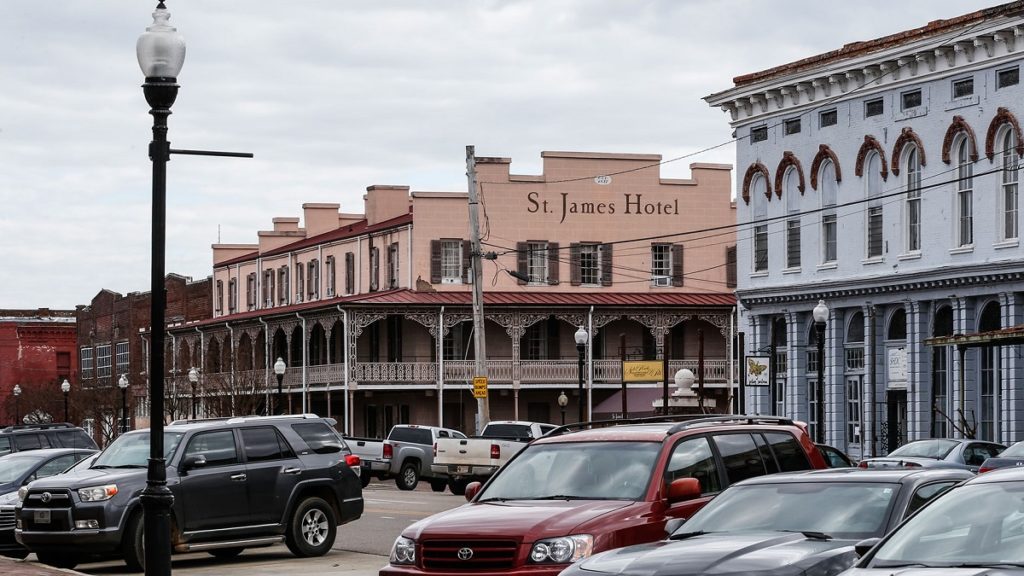
The head of the federal Environmental Protection Agency said he witnessed “unacceptable” problems with raw sewage fouling properties of residents of Alabama’s Black Belt. EPA Administrator Michael Regan got a firsthand look Saturday at homes in Lowndes County, where malfunctioning septic systems discharged sewage into backyards and between mobile homes. He was in the region ahead of the commemoration of the “Bloody Sunday” civil rights march in Selma that helped bolster support for the Voting Rights Act of 1965. Regan said it was “sobering” to see failing septic systems, raw sewage backing up into yards and homes, and children forced to walk gingerly in soggy front yards, al.com reported. “This is unacceptable,” Regan said. “Safe drinking water, safe sewer systems, you know, this is a basic right. These individuals deserve what every American deserves, which is clean water and a safe environment.” Wastewater treatment has been a decades-old problem in parts of Alabama’s Black Belt, where communities often lack traditional sewer lines. Septic tank systems have been a poor alternative because the region’s heavy clay soil traps water near the surface. Federal, state, and local officials have spent years seeking solutions. Regan and Agriculture Undersecretary for Rural Development Xochitl Torres Small, who was also on the Saturday tour, said the bipartisan Infrastructure Investment and Jobs Act of 2021 could help make solutions a reality. Among the residents speaking out during the EPA chief’s visit was 59-year-old Jerry Smith. “When it rains, all this whole area floods and the waste comes right behind,” Smith said. “That’s what we’ve been dealing with.” Smith added: “This is ridiculous that we, you know, we pay taxes on this property and the property is contaminated.” Republished with the permission of the Associated Press.
Kamala Harris marks ‘Bloody Sunday’ anniversary in Selma
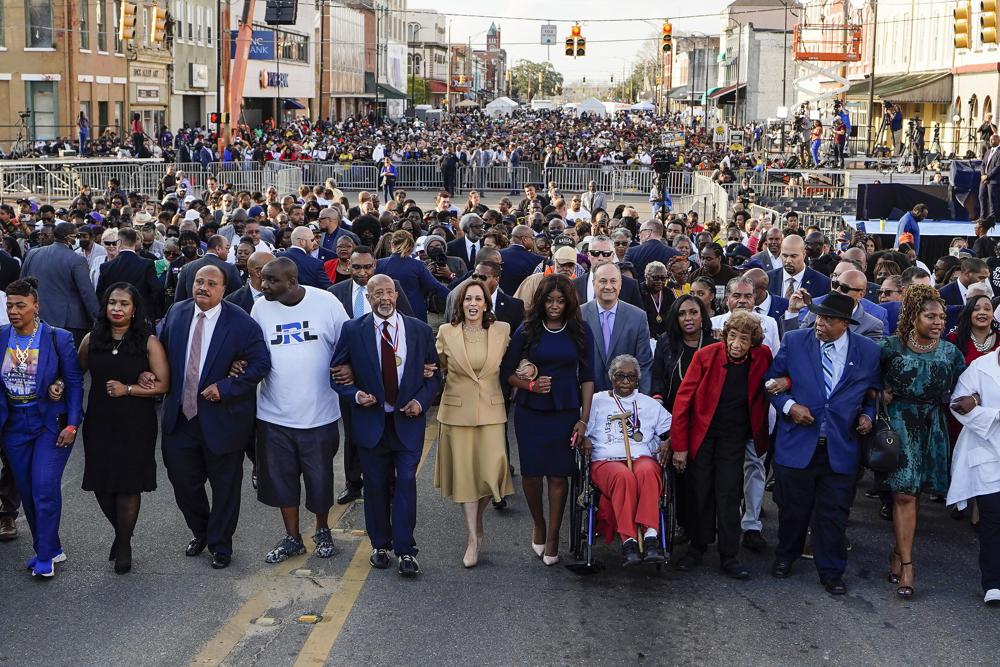
Vice President Kamala Harris visited Selma, Alabama, on Sunday to commemorate a defining moment in the fight for equal voting rights, even as congressional efforts to restore the landmark 1965 Voting Rights Act have faltered. Under a blazing blue sky, Harris linked arms with rank-and-file activists from the civil rights movement and led thousands across the bridge where, on March 7, 1965, white state troopers attacked Black voting rights marchers attempting to cross. The images of violence at the Edmund Pettus Bridge — originally named for a Confederate general — shocked the nation and helped galvanize support for the passage of the Voting Rights Act. Harris called the site hallowed ground where people fought for the “most fundamental right of America citizenship: the right to vote.” “Today, we stand on this bridge at a different time,” Harris said in a speech before the gathered crowd. “We again, however, find ourselves caught in between. Between injustice and justice. Between disappointment and determination. Still in a fight to form a more perfect union. And nowhere is that more clear than when it comes to the ongoing fight to secure the freedom to vote.” The nation’s first female vice president — as well as the first African American and Indian American in the role — spoke of marchers whose “peaceful protest was met with crushing violence. They were kneeling when the state troopers charged. They were praying when the billy clubs struck.” Police beat and tear-gassed the marchers, fracturing the skull of young activist John Lewis, a lion of the civil rights movement who went on to long and celebrated career as a Georgia congressman. President Joe Biden on Sunday renewed his call for the passage of voting legislation, saying the groundbreaking 1965 Voting Rights Act “has been weakened not by brute force, but by insidious court decisions.” The proposed legislation is named for Lewis, who died in 2020, and is part of a broader elections package that collapsed in the U.S. Senate earlier this year. “In Selma, the blood of John Lewis and so many other courageous Americans sanctified a noble struggle. We are determined to honor that legacy by passing legislation to protect the right to vote and uphold the integrity of our elections,” Biden said in a statement. Democrats have been unsuccessfully trying to update the landmark law and pass additional measures to make it more convenient for people to vote. A key provision of the law was tossed out by a U.S. Supreme Court decision in 2013. Among those gathered Sunday were rank-and-file activists from the 1965 march. Harris walked across the bridge beside Charles Mauldin, who was sixth in line behind Lewis on Bloody Sunday and was beaten with a nightstick. Two women who fled the violence said having a Black woman as vice president seemed unimaginable 57 years ago. “That’s why we marched,” said Betty Boynton, the daughter-in-law of voting rights activist Amelia Boynton. “I was at the tail end and all of the sudden I saw these horses. Oh my goodness, and all of the sudden … I saw smoke. I didn’t know what tear gas was. They were beating people,” Boynton said recalling Bloody Sunday. But Boynton said the anniversary is tempered by fears of the impact of new voting restrictions being enacted. “And now they are trying to take our voting rights from us. I wouldn’t think in 2022 we would have to do all over again what we did in 1965,” Boynton said. Ora Bell Shannon, 90, of Selma, was a young mother during the march and ran from the bridge with her children. Ahead of Bloody Sunday, she and other Black citizens stood in line for days at a time trying to register to vote in the then white-controlled city, facing impossible voter tests and long lines. “They knew you wouldn’t be able to pass the test,” Shannon recalled. The U.S. Supreme Court in 2013 gutted a portion of the 1965 law that required certain states with a history of discrimination in voting, mainly in the South, to get U.S. Justice Department approval before changing the way they hold elections. The supporters of the end of preclearance said the requirement — while necessary in the 1960s — was no longer needed. Voting rights activists have warned the end of preclearance is emboldening states to pass a new wave of voting restrictions. The proposed Freedom to Vote: John R. Lewis Act would restore the preclearance requirement and put nationwide standards for how elections operate — such as making Election Day a national holiday and allowing early voting nationwide. Republished with the permission of the Associated Press.
