
Tommy Tuberville joins colleagues demanding Russian companies be banned from U.S. capital markets

Sen. Tommy Tuberville joined Senators Jim Risch, John Cornyn, Rick Scott, Kevin Cramer, and Mike Braun in sending a letter to call on President Joe Biden to ban Russian companies from the United States financial system to ensure American investors are not invertedly providing capital to fund Russia’s war against Ukraine. The Senate Republicans also asked for secondary sanctions to block China or other adversaries from helping Russia skirt the requested sanctions on the U.S financial system. The letter states, “We write today urging you to protect American investors from unwittingly financing Vladimir Putin’s war crimes against Ukraine through their investments in index funds, ETFs, bonds, and other securities. Many Russian companies remain present in the U.S. financial system, posing a risk to investors and providing capital to the Kremlin’s war machine.” The senators commended what the Biden administration had done already, but asked for more to be done. Specifically they are asking to: Impose capital markets sanctions on all Russian owned or controlled companies and entities present in the U.S. financial system and prohibit the trading of their securities on regulated U.S. exchanges. Establish secondary sanctions to deter China or any other nations, entities, or individuals from helping Russia circumvent sanctions. “While we commend the actions being taken to remove Russian companies from U.S. markets, more must be done to ensure U.S. investors are not supporting Russian companies that currently enjoy access to U.S. capital markets,” the Senators wrote. The Senators concluded,“To pressure Russia to reverse course and end its occupation of Ukraine, all appropriate economic tools must be brought to bear.”
More than 20 states back South Carolina in fetal heartbeat bill appeal
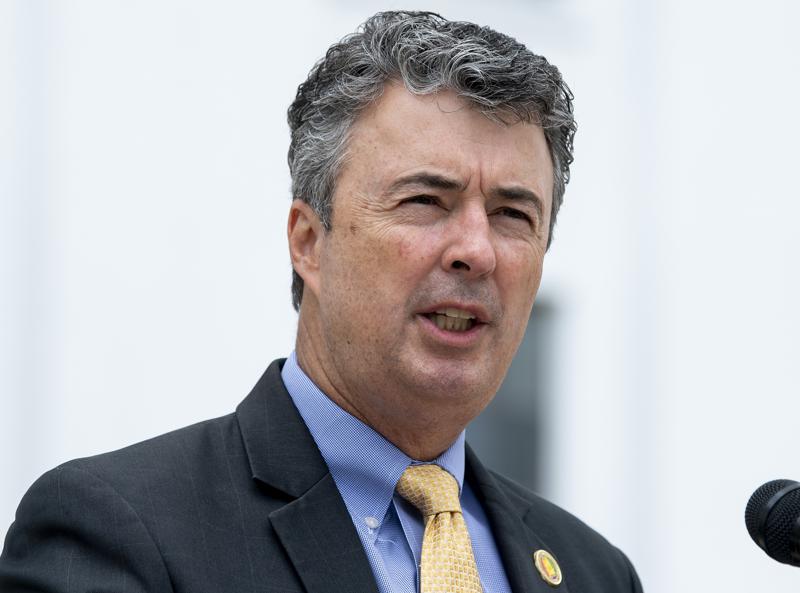
Twenty-one states filed a brief in support of South Carolina’s call for a Fourth Circuit Court of Appeals review of the state’s Fetal Heartbeat Act. The brief asks for the appeals court to review a preliminary injunction of a three-judge panel’s ruling to uphold the injunction against the law, which Gov. Henry McMaster signed into law in February 2021. The law limits abortions after a fetal heartbeat can be detected and requires the health care provider to offer a mother to view an ultrasound, hear the heartbeat and view information on the fetus’ development before an abortion. South Carolina previously banned abortions after 20 weeks. A fetal heartbeat can be detected after six to seven weeks, according to the American Pregnancy Association. “From the day I signed the Heartbeat bill into law, we knew it would be an uphill battle – but a battle well worth fighting,” McMaster said in a statement. “We’re grateful that Alabama Attorney General Steve Marshall and 20 other states share our goals of protecting the right to life and our concern with the three-judge panel’s apparent disregard for South Carolina’s sovereign authority.” Alabama Attorney General Steve Marshall led the amicus brief, which was joined by Alaska, Arizona, Arkansas, Georgia, Idaho, Indiana, Kansas, Kentucky, Louisiana, Mississippi, Missouri, Montana, Nebraska, North Dakota, Ohio, Oklahoma, Tennessee, Texas, Utah, and West Virginia. “The Fetal Heartbeat Law is about protecting the lives of unborn children, but it’s also about protecting the Constitution and the rule of law,” South Carolina Attorney General Alan Wilson said. “There’s nothing in the Constitution that justifies abortions and, in fact, we believe abortion violates the constitutional rights to life and equal protection.” The brief said 24 states currently require a provider to offer to display an ultrasound image to a mother. “Yet the courts enjoined South Carolina’s ultrasound disclosure law,” the brief read. “Same for South Carolina’s requirement that abortion providers make the fetal heartbeat audible for the pregnant mother if she would like to hear it – a law that at least 16 other states have also enacted. And same for South Carolina’s requirement that an ultrasound be performed before an abortion is conducted – a requirement shared by at least 12 other states.” Republished with the permission of The Center Square.
Donald Trump calls Mo Brooks ‘disappointing’; considers pulling Alabama Senate endorsement
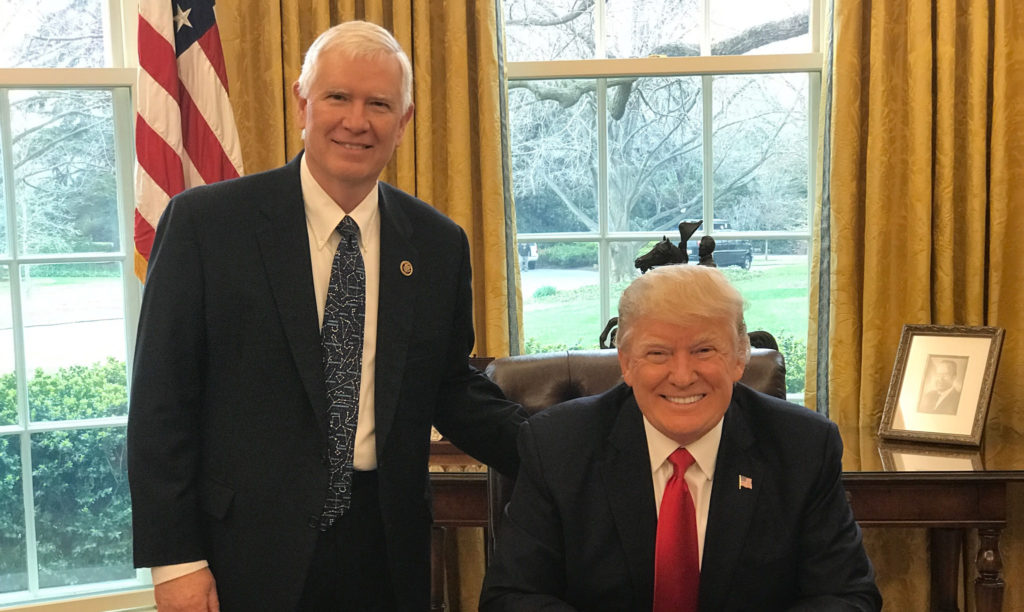
Former President Donald Trump recently expressed disapproval with Rep. Mo Brooks, whom he has endorsed for the Alabama Senate. According to a Washington Examiner report, Trump is even considering pulling his endorsement of Brooks and switching to Katie Britt or Mike Durant. “Mo Brooks is disappointing,” Trump told the Washington Examiner. “I’m determining right now, has Mo Brooks — has he changed?” The former president endorsed Mo Brooks early in 2021 before many candidates had even announced their campaigns, making him the frontrunner to succeed Senator Richard Shelby. In April 2021, Trump stated, “Mo Brooks has my Complete and Total Endorsement for the U.S. Senate representing the Great State of Alabama. He will never let you down!” During the interview, Trump said he endorsed Brooks because he believed Brooks shared his view that the 2020 election was stolen. However, Trump explained, if Brooks’s position has changed, he may take away the endorsement. Trump was referring to a rally last August when Brooks encouraged attendants to stop feeling “despondent” about 2020 and “look forward” to 2022 and 2024, a comment that made Trump doubt Brooks’s allegiance to him. “I’m disappointed that he gave an inarticulate answer, and I’ll have to find out what he means,” Trump said, referring to Brooks’s remarks at his rally in Alabama last August. “If it meant what he sounded like, I would have no problem changing [my endorsement] because when you endorse somebody, you endorse somebody based on principle. If he changed that principle, I would have no problem doing that.” Trump then backtracked and said he does not believe Brooks has changed his stripes. “I endorsed him because he felt strongly about election fraud. And he still does. But he was inarticulate in the way he said it,” Trump said. Yellowhammer News reported that a recently released poll showed Mike Durant leading the field with 33.8% and Britt close behind at 32%. Brooks was in third and trailing, with 17.6%. The March 10–13 survey for the Alabama Forestry Association was conducted by McLaughlin & Associates. “It’s a very tight race between the three of them right now, and I’m not particularly happy,” Trump said. Brooks campaign spokesman Will Hampson spoke to Yellowhammer News and dismissed the recent polling. “Here’s the deal: Katie Britt and her team put out a bogus poll, then lied to President Trump about it,” stated Hampson. “She’s still in third place where her pathetic campaign has always been, and that might explain the President’s mindset– they lied to him. The matter has been addressed, President Trump knows Katie Britt lied to him, he knows she’s Mitch McConnell’s candidate, and he’ll remember this episode.”
How higher interest rates will affect Americans’ finances
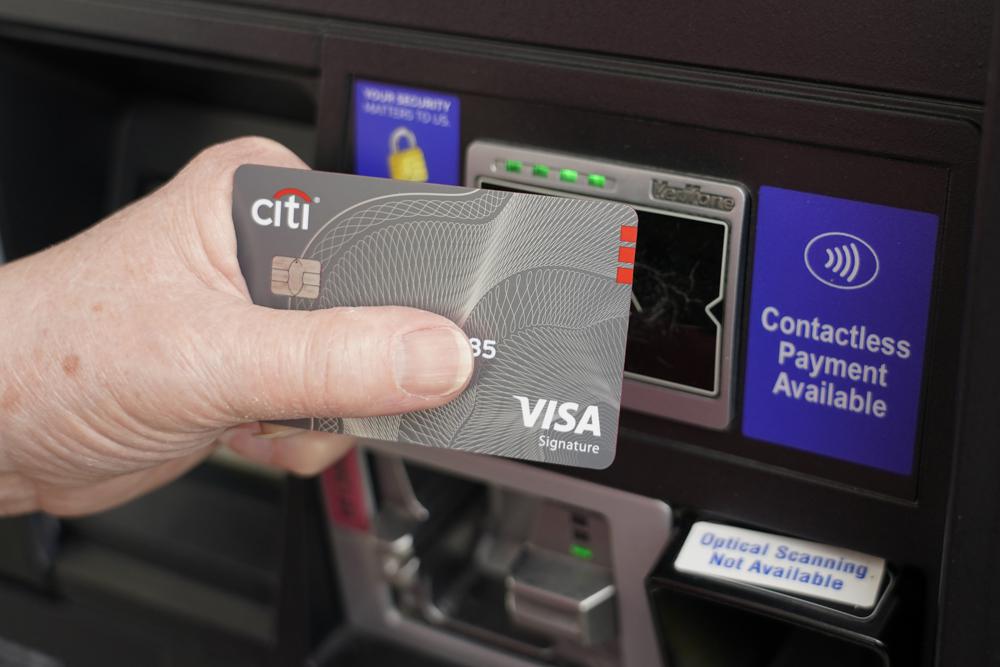
Americans who have long enjoyed the benefits of historically low interest rates will have to adapt to a very different environment as the Federal Reserve embarks on what’s likely to be a prolonged period of rate hikes to fight inflation. Record-low mortgage rates below 3%, reached last year, are already gone. Credit card interest rates and the costs of an auto loan will also likely move up. Savers may receive somewhat better returns, depending on their bank, while returns on long-term bond funds will likely suffer. The Fed’s initial quarter-point rate hike Wednesday in its benchmark short-term rate won’t have much immediate impact on most Americans’ finances. But with inflation raging at four-decade highs, economists and investors expect the central bank to enact the fastest pace of rate hikes since 2005. That would mean higher borrowing rates well into the future. On Wednesday, the Fed’s policymakers collectively signaled that they expect to boost their key rate up to seven times this year, raising its benchmark rate to between 1.75% and 2% by year’s end. The officials expect four additional hikes in 2023, which would leave their benchmark rate near 3%. Chair Jerome Powell hopes that by making borrowing gradually more expensive, the Fed will succeed in cooling demand for homes, cars, and other goods and services, thereby slowing inflation. Yet the risks are high. With inflation likely to stay elevated, in part because of Russia’s invasion of Ukraine, the Fed may have to drive borrowing costs even higher than it now expects. Doing so potentially could tip the U.S. economy into recession. “The impact of a single quarter-point interest rate hike is inconsequential on the household budget,” said Greg McBride, chief financial analyst for Bankrate.com. “But there is a cumulative effect that can be quite significant, both on the household budget as well as the broader economy.” Here are some questions and answers about what the rate hikes could mean for consumers and businesses: ___ I’M CONSIDERING BUYING A HOUSE. WILL MORTGAGE RATES GO STEADILY HIGHER? They already have in the past few months, partly in anticipation of the Fed’s moves, and will probably keep doing so. Still, mortgage rates don’t necessarily rise in tandem with the Fed’s rate increases. Sometimes, they even move in the opposite direction. Long-term mortgages tend to track the rate on the 10-year Treasury note, which, in turn, is influenced by a variety of factors. These include investors’ expectations for future inflation and global demand for U.S. Treasurys. Global turmoil, like Russia’s invasion, often spurs a “flight to safety” response among investors around the world: Many rush to buy Treasurys, which are regarded as the world’s safest asset. Higher demand for the 10-year Treasury would lower its yield, which would then reduce mortgage rates. For now, though, faster inflation and strong U.S. economic growth are sending the 10-year Treasury rate up. The average rate on a 30-year mortgage, in turn, has jumped almost a full percentage point since late December to 3.85%, according to mortgage buyer Freddie Mac. HOW WILL THAT AFFECT THE HOUSING MARKET? If you’re looking to buy a home and are frustrated by the lack of available houses, which has led to bidding wars and eye-watering prices, that’s unlikely to change anytime soon. Economists say that higher mortgage rates will discourage some would-be purchasers. And average home prices, which have been soaring at about a 20% annual rate, could at least rise at a slower pace. But Odeta Kushi, deputy chief economist at First American Financial Corporation, notes that there is such strong demand for homes, as the large millennial generation enters its prime home-buying years, that the housing market won’t cool by much. Supply hasn’t kept up. Many builders are struggling with shortages of parts and labor. “We’ll still have a pretty robust housing market his year,” Kushi said. WHAT ABOUT OTHER KINDS OF LOANS? For users of credit cards, home equity lines of credit, and other variable-interest debt, rates would rise by roughly the same amount as the Fed hike, usually within one or two billing cycles. That’s because those rates are based in part on banks’ prime rate, which moves in tandem with the Fed. Those who don’t qualify for low-rate credit cards might be stuck paying higher interest on their balances, and the rates on their cards would rise as the prime rate does. Should the Fed decide to raise rates ten times or more over the next two years — a realistic possibility — that would significantly boost interest payments. The Fed’s rate hikes won’t necessarily raise auto loan rates as much. Car loans tend to be more sensitive to competition, which can slow the rate of increases. WILL I BE ABLE TO EARN MORE ON MY SAVINGS? Probably, though not likely by very much. And it depends on where your savings, if you have any, are parked. Savings, certificates of deposit, and money market accounts don’t typically track the Fed’s changes. Instead, banks tend to capitalize on a higher-rate environment to try to thicken their profits. They do so by imposing higher rates on borrowers without necessarily offering any juicer rates to savers. This is particularly true for large banks now. They’ve been flooded with savings as a result of government financial aid and reduced spending by many wealthier Americans during the pandemic. They won’t need to raise savings rates to attract more deposits or CD buyers. But online banks and others with high-yield savings accounts will likely be an exception. These accounts are known for aggressively competing for depositors. The only catch is that they typically require significant deposits. If you’re invested in mutual funds or exchange-traded funds that hold long-term bonds, they will become a riskier investment. Typically, existing long-term bonds lose value as newer bonds are issued at higher yields. Republished with the permission of the Associated Press.
Tim James calls to repeal 2019 gas tax increase, sales tax on food
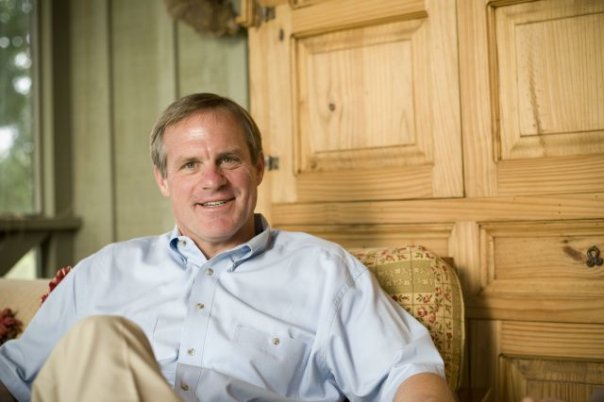
Republican gubernatorial challenger Tim James on Wednesday called for a repeal of Alabama’s 2019 gas tax increase — as well as an end to the state’s sales tax on groceries — saying families need relief from soaring prices. James, the son of former Gov. Fob James, is one of several GOP candidates challenging Gov. Kay Ivey in the upcoming Republican primary. He is seeking to use the gas tax increase that Ivey supported as a wedge issue with primary voters. James said he supports a repeal of the 10-cent-per-gallon gas increase approved in 2019, as well as a repeal of the state’s sales tax on food and business privilege tax. “The people of Alabama are fed up,” James said during a news conference in Montgomery. “It’s affecting whether they can fill up their car with gas or make a house payment or sign up their kids for baseball. That’s how serious this is,” James said. Alabama lawmakers in 2019 approved the increase on gasoline and diesel fuel taxes to fund road and bridge construction. The increase amounts to $6 per month for a person who uses 15 gallons of gasoline per week. James said he understands some people argue that “isn’t that big of a deal,” but repealing it would reduce what families and businesses pay in fuel costs. James is one of a number of Republicans challenging Ivey in the May 24 primary. The field also includes Lindy Blanchard, who served as ambassador to Slovenia under former President Donald Trump. A spokesman for Ivey’s campaign cited her record on job creation, unemployment as well as social issues, including an attempt to outlaw abortions in the state and a ban on transgender girls playing on female sports teams. “While others talk, Governor Ivey delivers …. Governor Ivey is a fighter, and she will remain focused on getting results for Alabamians and defending conservative Alabama values,” her campaign said. Some legislative leaders have said a repeal of the 10-cent increase would not have a major impact on prices at the pump but would interrupt the road and bridge construction being funded by the 2019 Rebuild Alabama Act. Ivey, after a morning appearance at the Montgomery Chamber of Commerce, said she did not support a temporary freeze on state gas taxes “at this time.” She put the blame for rising prices on “Biden policies.” “Under President Trump, you could go buy gas and not have to hold your breath,” Ivey said. Gas prices have soared in recent months partly because of global supply concerns following Russia’s invasion of Ukraine. The situation has prompted several states to pause gas taxes. James said he would also repeal the state’s 4% sales tax on food. Repealing the sales tax on groceries has often been proposed in Montgomery but has never been approved over concerns about the loss of the approximately half-billion dollars it provides for the state’s education fund. Alabama is one of only three states with no tax break on groceries, according to Alabama Arise. James also proposed a repeal of the state’s business privilege tax, a tax on entities doing business in the state, that generated $186 million last year. James said he would not replace the revenue, arguing that lawmakers could use a current budget surplus and then economic growth to maintain state services without cuts. The Legislative Services Agency has cautioned that the state is seeing an unusual growth in tax collections and that another economic downturn is likely. James previously staked out far-right positions, including criticizing legislation that allowed students to do yoga in public schools. James ran for governor in 2002 and 2010, when he narrowly missed making the GOP runoff, finishing about 200 votes behind the eventual winner, Robert Bentley, who was elected governor that year and later resigned. Serving as lieutenant governor at the time, Ivey took over as governor in 2017 upon Bentley’s resignation and was elected to a full term the following year. Republished with the permission of the Associated Press.
Niagara Bottling to build $112M production plant, to hire 50
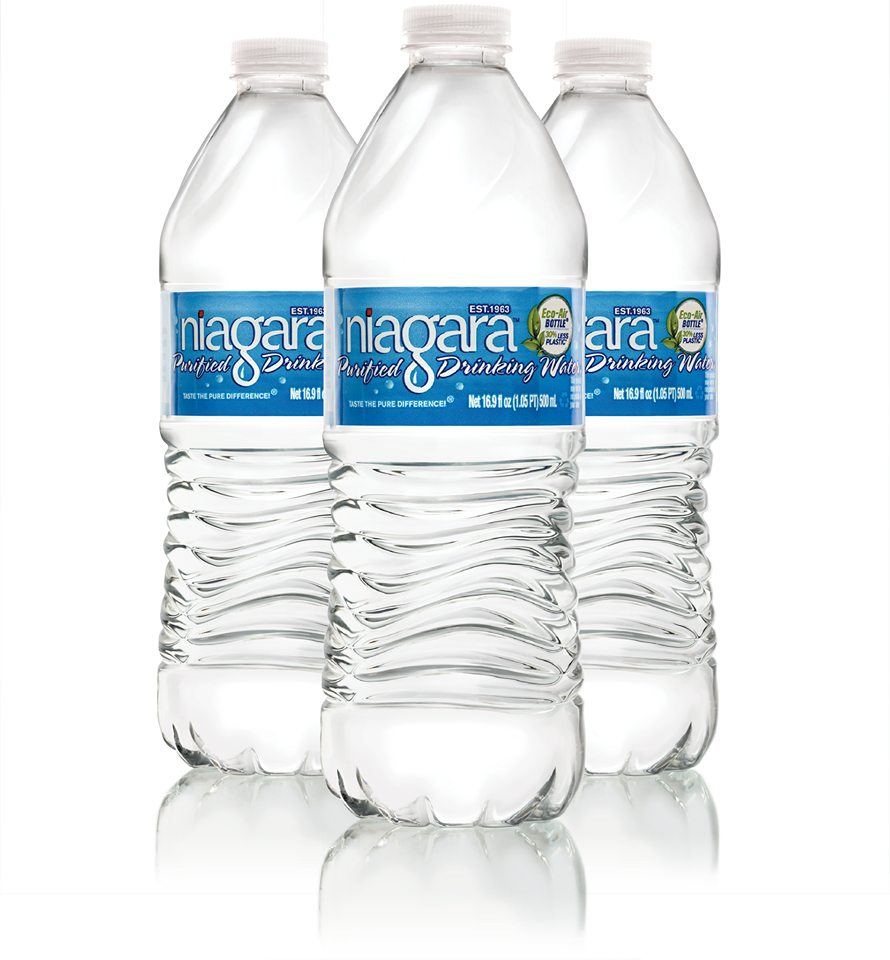
Niagara Bottling is planning to open a new $112 million production facility in Alabama and hire 50 employees. The California-based company will locate a bottling plant in the Northeast Opelika Industrial Park along Interstate 85. Gov. Kay Ivey announced the move Wednesday, calling it a “testament to Alabama’s strong business climate and the many advantages we can offer companies looking to energize their growth plans.” Alabama Commerce Secretary Greg Canfield called the company a great addition to the state’s business community, al.com reported. “The top-level priorities of Alabama’s economic development team are creating meaningful job opportunities for citizens around the state and bringing in new investment to invigorate communities,” Canfield said. “We look forward to seeing Niagara Bottling grow and thrive in Opelika because that perfectly aligns with our strategic economic development objectives.” Niagara Bottling has been family-owned and operated since 1963, with bottling facilities in the U.S. and Mexico. It offers bottled purified, distilled and spring water, water for infants, sparkling water, flavored vitamin water, and tea. “We value the highly competitive and attractive combination of location, infrastructure, logistics, and workforce in Opelika,” said Brian Hess, an executive vice president at Niagara Bottling. Opelika Mayor Gary Fuller said it is “truly an honor when an industry chooses to invest in our community.” “We are glad to assist Niagara Bottling in their continued success,” Fuller said. Republished with the permission of the Associated Press.
