
Jerry Carl co-sponsors legislation to encourage energy production and stop foreign oil dependence

Rep. Jerry Carl has co-sponsored legislation to help American energy production. The Unleashing American Energy Act would require a minimum of two oil and gas lease sales a year in the Gulf of Mexico and in the Alaska Region of the Outer Continental Shelf, and it prohibits future moratoriums or delays on oil and gas leasing. “At a time when fuel prices are at record highs, the Biden administration has not let up on its regulatory assault on American energy producers. As a result, Americans are paying more for fuel and nearly everything else. That’s why I’m proud to introduce the Unleashing American Energy Act, which would reverse Biden’s war on American energy and unleash domestic production. Although this bill won’t solve all our energy problems overnight, it will help lower energy prices and bring much-needed relief to millions of Americans. Under the Trump administration, we had regular oil and gas lease sales in the Gulf of Mexico, and the United States became energy independent. My bill would require two new oil and gas lease sales each year in the Gulf of Mexico and in Alaska, while also prohibiting oil and gas lease sales from being blocked or slowed down again,” said Carl. House Committee on Natural Resources Ranking Member Bruce Westerman argued that this legislation will help stop America’s energy dependence. “Today, we are taking a necessary step to end President Biden’s repeated assaults on American energy. The American people continue bearing the brunt of these disastrous policies. Enough is enough. The bills we introduced today will allow us to tap into the rich stores of resources America already has, and further both our energy independence and our innovation in the energy sector. Together with legislation promoting development of American critical minerals and energy independence that our members introduced earlier this Congress, we are advancing an all-of-the-above energy approach that will strength our nation and allow us to lead the world into the future,” said Westerman. According to Carl’s press release, the U.S. Department of the Interior is required by law to publish regular five-year leasing plans. The current plan expires on June 30, 2022. The Biden administration has not initiated the process to publish a new one. The Unleashing American Energy Act is cosponsored by House Committee on Natural Resources Ranking Member Bruce Westerman (R-AR), House Republican Conference Chair Elise Stefanik (R-NY), and Reps. Troy Balderson (R-OH), Russ Fulcher (R-ID), Garret Graves (R-LA), Yvette Herrell (R-NM), Doug Lamborn (R-CO), Tom McClintock (R-CA), Blake Moore (R-UT), Dan Newhouse (R-WA), Matt Rosendale (R-MT), Pete Stauber (R-MN), Chris Stewart (R-UT), Tom Tiffany (R-WI), Jeff Van Drew (R-NJ), Beth Van Duyne (R-TX), and Robert Wittman (R-VA).
City of Birmingham sues Trane for $25 million over unmet energy savings promise

The City of Birmingham filed a lawsuit March 30 against Trane U.S. Inc., asking for $25 million in damages, reported AL.com. The city is suing for $102 million in promised energy savings that never happened. The lawsuit states that financing and maintenance costs resulted in the project costing more than $100 million. The city also alleges that the cost shortfall and damages will exceed $25 million. “Trane engaged in nothing short of a bait-and-switch scheme that promised massive savings the company knew it could not deliver,” stated Birmingham Mayor Randall Woodfin. “We entered into this energy performance contract in good faith based on promises from Trane. Unfortunately, Trane has violated that trust, and the city now seeks full restitution from Trane for the citizens of Birmingham and the financial losses they have caused.” Trane promised energy-efficient upgrades to 119 city facilities that would be paid for by $80 million in energy savings. It promised an additional $22 million in operational savings over 18 years, for a total savings of $102 million. “Since entering into the contract, the city has discovered that Trane gave illusory savings estimates in order to secure this deal and avoid the public bidding process,” commented attorney Ashby Pate, a Lightfoot partner and counsel to the City of Birmingham. “As alleged in our complaint, Trane and its representatives had no intention of providing actual savings to the City but had every intention of enriching themselves in the process. The city has also incurred additional maintenance and operating expenses because Trane failed to provide fully functioning improvements.”
Andrew Conkling: National Kidney Month provides reminder of cost hurdles for dialysis patients

The month of March marks National Kidney Month in the U.S., an opportunity to bring awareness to something that affects more than one in seven adults and a chance to reflect on the struggles kidney patients across the U.S. face every day. Currently, kidney patients face an uneven playing field, and a lot still needs to be accomplished in order to ensure that all patients have access to the care they need. It’s an unlevel field that I’ve been operating in for most of my life. I was born with only one functioning kidney, meaning I knew early on that I would eventually need to start on dialysis. While I was able to defy doctors’ expectations and reach age 25 before I needed to begin the treatments, I quickly learned just how difficult it can be for patients to simply afford the life-saving care that dialysis treatments provide. While Medicare covers 80 percent of the cost of dialysis treatments, patients usually need to undergo treatment three or more times each week, meaning that the remaining 20 percent can rapidly add up and create an increasingly large financial hurdle for patients and their families. Despite this challenge, many states across the U.S. – including my home state of Alabama – don’t require insurers to make Medigap plans to cover the costs Medicare doesn’t pay for available at affordable rates for patients under the age of 65. It’s a serious issue that completely hamstrings what patients are able to do and limits the type of life they can lead. This issue was especially important to my long-time mentor and close friend Jack Reynolds. He lived on dialysis for 45 years and devoted his life to advocating for other patients. He credited the ability to do that to the fact that he had access to Medigap coverage. This coverage gave him the financial stability and freedom to live his life the way he wanted to, and he wanted every other dialysis patient to be able to say the same. Now, Congress is considering a bill named in his memory which would make that dream a reality. The Jack Reynolds Memorial Medigap Expansion Act, which Representatives Cindy Axne (D-IA-3) and Jaime Herrera Beutler (R-WA-3) introduced last year, would guarantee that patients across the U.S. could affordably access Medigap coverage, no matter where in the country they live. Patients would no longer have to worry about whether their state requires those plans to be available in order to pay for the treatments they need to live. Passing this bill would be both a life-saver and an enormous stress reliever for countless patients and their families. It would give them a greater sense of financial security, offer much-needed peace of mind, and make it easier for patients to become and remain eligible for a kidney transplant. This bill is a fitting commemoration of Jack’s life and legacy and would ultimately give patients the level of freedom he valued so much. Jack took me under his wing early on and showed me how public policy can have a real, tangible impact on dialysis patients’ lives. The Jack Reynolds Memorial Medigap Expansion Act is a remarkable opportunity to help a group of patients that has too often been left behind and would mark a milestone achievement for kidney care in the U.S. As we approach the close of National Kidney Month, I hope that lawmakers recognize this opportunity and pass this essential bill. Andrew Conkling is the president of the Dialysis Patient Citizens Board of Directors.
White House: Intel shows Vladimir Putin misled by advisers on Ukraine

U.S. intelligence officials have determined that Russian President Vladimir Putin is being misinformed by advisers about his military’s poor performance in Ukraine, according to the White House. The advisers are scared to tell him the truth, the intel says. The findings, recently declassified, indicate that Putin is aware of the situation on information coming to him and there now is persistent tension between him and senior Russian military officials. The U.S. believes Putin is being misled not only about his military’s performance but also “how the Russian economy is being crippled by sanctions because, again, his senior advisers are too afraid to tell him the truth,” White House communications director Kate Bedingfield said Wednesday. Earlier, President Joe Biden said in an exchange with reporters that he could not comment on the intelligence. The administration is hopeful that divulging the finding could help prod Putin to reconsider his options in Ukraine, according to a U.S. official. The official was not authorized to comment and spoke on the condition of anonymity. The war has ground to a bloody stalemate in much of the country, with heavy casualties and Russian troop morale sinking as Ukrainian forces and volunteers put up an unexpectedly stout defense. But the publicity could also risk further isolating Putin, who U.S. officials have said seems at least in part driven by a desire to win back Russian prestige lost by the fall of the Soviet Union. “What it does is underscore that this has been a strategic blunder for Russia,” Bedingfield said of the intelligence finding. “But I’m not going to characterize how … Vladimir Putin might be thinking about this.” Meanwhile, Biden told Ukrainian President Volodymyr Zelenskyy during a 55-minute call that an additional $500 million in direct aid for Ukraine was on its way. It’s the latest burst in American assistance as the Russian invasion grinds on. Asked about the latest intelligence, Secretary of State Antony Blinken suggested that a dynamic within the Kremlin exists where advisers are unwilling to speak to Putin with candor. “One of the Achilles’ heels of autocracies is that you don’t have people in those systems that speak truth to power or have the ability to speak truth to power, and I think that’s what we’re seeing in Russia,” Blinken told reporters during a stop in Algeria on Wednesday. The unidentified official did not detail underlying evidence for how U.S. intelligence made its determination. The intelligence community has concluded that Putin was unaware that his military had been using and losing conscripts in Ukraine. They also have determined he is not fully aware of the extent to which the Russian economy is being damaged by economic sanctions imposed by the U.S. and allies. The findings demonstrate a “clear breakdown in the flow of accurate information” to Putin and show that Putin’s senior advisers are “afraid to tell him the truth,” the official said. Biden notified Zelenskyy about the latest tranche of assistance during a call in which the leaders also reviewed security aid already delivered to Ukraine and the effects that weaponry has had on the war, according to the White House. Zelesnkyy has pressed the Biden administration and other Western allies to provide Ukraine with military jets, something that the U.S. and other NATO countries have thus far been unwilling to accommodate out of concern it could lead to Russia broadening the war beyond Ukraine’s borders. Prior to Wednesday’s announcement of $500 million in aid, the Biden administration had sent Ukraine about $2 billion in humanitarian and security assistance since the start of the war last month. Congress approved $13.6 billion that Congress approved earlier this month as part of a broader spending bill. Bedingfield said the latest round of financial assistance could be used by the Ukrainian government “to bolster its economy and pay for budgetary expenses,” including government salaries and maintaining services. Ukraine’s presidential website says Zelenskyy told Biden: “We need peace, and it will be achieved only when we have a strong position on the battlefield. Our morale is firm, there is enough determination, but we need your immediate support.” Zelenskyy, in a Twitter posting, said that he also spoke to Biden about new sanctions against Russia. Bedingfield said the administration is looking at options to expand and deepen current sanctions. The new intelligence came after the White House on Tuesday expressed skepticism about Russia’s public announcement that it would dial back operations near Kyiv in an effort to increase trust in ongoing talks between Ukrainian and Russian officials in Turkey. Russian forces pounded areas around Ukraine’s capital and another city overnight, regional leaders said Wednesday. The Pentagon said Wednesday that over the past 24 hours, it had seen some Russian troops in the areas around Kyiv moving north toward or into Belarus. Pentagon press secretary John Kirby said in interviews with CNN and Fox Business that the U.S. does not view this as a withdrawal but as an attempt by Russia to resupply, refit, and then reposition the troops. Putin has long been seen outside Russia as insular and surrounded by officials who don’t always tell him the truth. U.S. officials have said publicly they believe that the limited flow of information –- possibly exacerbated by Putin’s heightened isolation during the COVID-19 pandemic -– may have given the Russian president unrealistic views of how quickly he could overrun Ukraine. The Biden administration, before the war, launched an unprecedented effort to publicize what it believed were Putin’s invasion plans, drawing on intelligence findings. While Russia still invaded, the White House was widely credited with drawing attention to Ukraine and pushing initially reluctant allies to back tough sanctions that have hammered the Russian economy. But underscoring the limits of intelligence, the U.S. also underestimated Ukraine’s will to fight before the invasion, said Lt. Gen. Scott Berrier, head of the Defense Intelligence Agency, in recent testimony before Congress. Republished with the permission of the Associated Press.
Alabama lawmakers OK math initiative for elementary students

Alabama lawmakers on Tuesday gave final approval to a math initiative that will use instructional coaches, assessments, and interventions to try to boost the state’s perpetually lagging test scores. The Alabama House of Representatives voted 76-24 for the Senate-passed bill dubbed the Alabama Numeracy Act. The Alabama Senate accepted House changes to the bill that now goes to Alabama Gov. Kay Ivey. Sen Arthur Orr, the sponsor of the bill, said the goal is to make sure elementary students in kindergarten through fifth grades have an adequate foundation in math so they can succeed in school and later in adult life. “If we don’t provide a strong foundation for them in mathematics and in literacy, the problem becomes they get frustrated in school and tend to drop out or misbehave,” Orr, a Republican from Decatur, said. The bill would create an Elementary Mathematics Task Force to provide state education officials with recommendations for core instruction and mathematics intervention; use assessments to identify students in kindergarten through fifth grades; provide intervention and summer learning programs; and deploy instructional coaches to elementary schools. The math coaches, like current reading coaches, would work with teachers on improving instruction and not directly with students. Schools that continued to lag in performance could face state intervention if they do not meet progress targets. Alabama’s math performance in fourth and eighth grades ranked last among states in the 2019 National Assessment of Educational Progress, often called “The Nation’s Report Card.” “Doing nothing is not an option,” Rep. Barbara Drummond, a Democrat from Mobile, said during debate. The Legislative Services Agency estimates the Numeracy Act will cost the state $114 million each year. The hiring of math coaches would be the largest expense, costing about $80 million annually. Republished with the permission of the Associated Press.
Amazon, union organizers face off again in Alabama
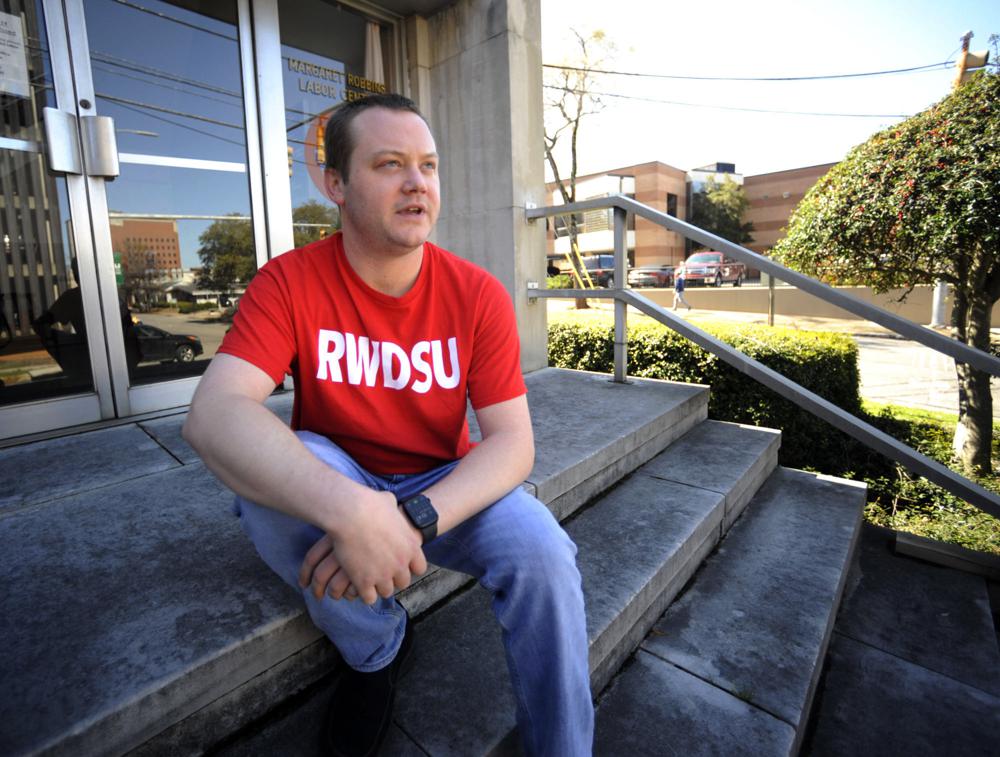
For union organizers at an Amazon warehouse in Bessemer, Alabama, the second time could be a charm — or not. After a crushing defeat last year, when a majority of workers voted against forming a union, the Retail, Wholesale and Department Store Union is hoping for a different outcome in a do-over election. The National Labor Relations Board on Monday began counting mail-in ballots that were sent to 6,100 workers in early February. Results could come as early as Thursday. If the vote goes in favor of the union, it would be Amazon’s first one ever in the U.S. Like last time, the RWDSU is driving the union campaign in Bessemer. Vaccines have made it easier for organizers to do face-to-face meetings during the pandemic as opposed to the texts, emails, and phone calls they relied on the first time around. “It’s been easier to spread the message this time, and we’ve had more support inside the building,” said Dale Wyatt, an Amazon worker at the Bessemer facility who’s assisting in the union push. “For example, more people are wearing T-shirts and pins and apparel, and more people are willing to come up and talk to us this time.” Amazon has had a chance to regroup as well after the NLRB determined that the company unfairly influenced last year’s election. The country’s second-largest private employer continues to hammer the message that it invests in both pay and benefits for its workers. Regular full-time employees in Bessemer earn at least $15.80 an hour, higher than the estimated $14.55 per hour on average in the city based on an analysis of the U.S. Census Bureau. They also get health care as well as a 401(k) with a company match. Amazon has also made some changes to but still kept a controversial U.S. Postal Service mailbox that was key in the NLRB’s decision to invalidate last year’s vote. Labor activists say the company is still relying on consultants and managers to hold mandatory staff meetings to talk about why unions are a bad idea. Such meetings stopped right before the ballots were sent, in accordance with labor laws. An Amazon spokesperson said the meetings give employees the opportunity to ask questions and learn what a union “could mean for them and their day-to-day life working at Amazon.” Prior to the Bessemer union drive, Amazon hadn’t faced a major union election in the U.S. since 2014 when the majority of the 30 workers at a warehouse in Delaware voted against organizing. In many European countries like France, Italy, Spain and Germany, where union membership is higher and there are fewer obstacles for labor groups, Amazon workers have long been unionized. Amazon also faces two union elections in the more labor-friendly New York City, though they’re being spearheaded by a nascent independent labor group. Amazon’s sprawling fulfillment center in Bessemer opened in 2020 just off an interstate exit where 18-wheelers painted with the Amazon logo come and go past small manufacturers, transportation companies, and the city’s high school. Bessemer itself is located about 20 miles southwest of Birmingham. The once-vibrant manufacturing town of 26,000 people fell on hard times after the area’s steel industry began slipping in the late 1900s. Today the city is more than 70% Black, with about a quarter of its residents living in poverty. Workers at the warehouse reflect Bessemer’s racial demographic — roughly 85% of them are Black, according to RWDSU. They drive to their jobs from as far away as metro Montgomery, nearly 100 miles to the south. RWDSU has been working with community organizations who have helped to frame the union push in Alabama in the context of the Civil Rights movement, focusing on the dignity and treatment of Amazon workers and linking their rights with human rights. “The community support has been essential, and it’s always been a part of the civil rights struggles in the South and other struggles in the South,” said Marc Bayard, the director of the Institute for Policy Studies’ Black Worker Initiative. Erica Iheme, deputy director of Jobs to Move America, said her organization honed its message from last year, going beyond pay. It visited barber shops, beauty shops, and other places where Black residents frequented and distributed 6,000 flyers. “For this election, what we have to get people to understand is it goes beyond bread and butter issues,” Iheme said. “Sometimes, your body has physical limitations. Sometimes you are tired. Sometimes you have children and you need to step away without losing your job. It’s about humanity of our community.” While unions are historically a tough sell in the South, Wyatt comes from a labor family. He began working at Amazon in August, taking items off incoming trucks and placing them into pods before they shipped to customers. “We need better working conditions, better hours, better pay,” Wyatt said. “We need longer breaks and more attention from management and a better HR system.” RWDSU’s first union campaign came in a year of widespread labor unrest at many corporations that has only reinvigorated the group’s cause. Workers at more than 140 Starbucks locations around the country, for instance, have requested union elections and several of them have already been successful. The pandemic spotlighted the plight of hourly workers who felt employers didn’t do enough to protect them from the virus. But labor shortages have only given workers more power to push for higher wages and better working conditions. Still, organizers are up against strong federal labor laws that favor corporations. Alabama itself is a right-to-work state, which means that companies and unions are prohibited from signing contracts that require workers to pay dues to the union that represents them. Labor activists also battle high turnover at the Bessemer facility. RWDSU estimates that roughly half of the 6,100 workers eligible to vote are new, making it difficult to organize. “It’s an uphill fight,” said Stuart Appelbaum, president of the RWDSU. “No matter what happens, we are not walking away. The first campaign initiated a global debate on the way Amazon
