
Terri Sewell only Alabama lawmaker to vote yes to Democrat led $35-a-month insulin cap bill
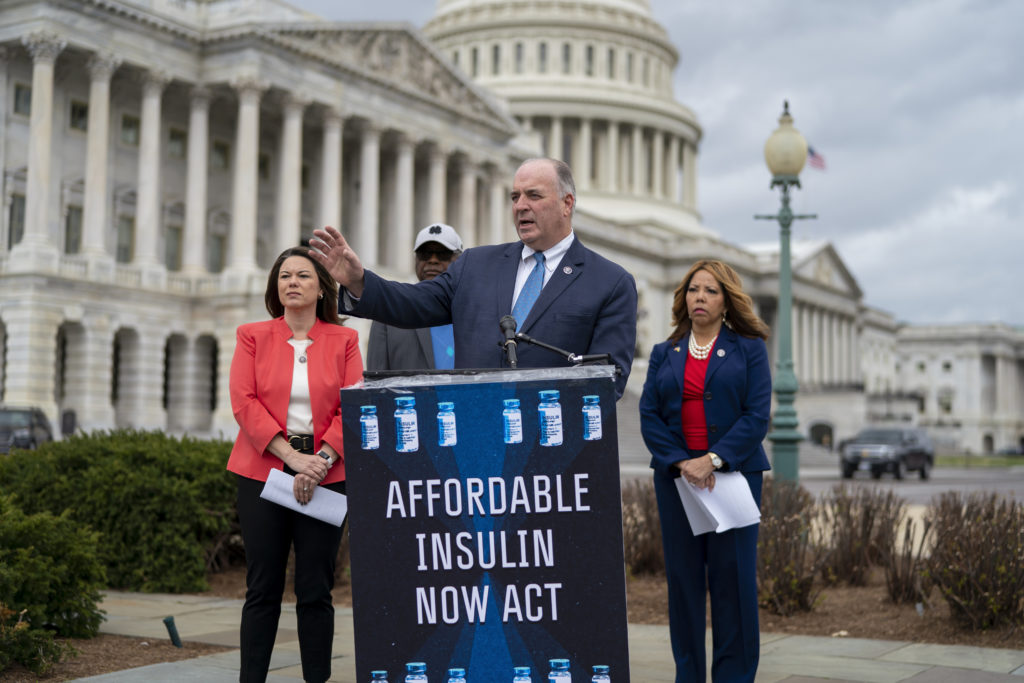
The House on Thursday passed a bill capping the monthly cost of insulin at $35 for insured patients, part of an election-year push by Democrats for price curbs on prescription drugs at a time of rising inflation. Rep. Terri Sewell was the only yea for the bill while the rest of the Alabama legislature voted nay. Experts say the legislation, which passed 232-193, would provide significant relief for privately insured patients with skimpier plans and for Medicare enrollees facing rising out-of-pocket costs for their insulin. Some could save hundreds of dollars annually, and all insured patients would get the benefit of predictable monthly costs for insulin. The bill would not help the uninsured. But the Affordable Insulin Now Act will serve as a political vehicle to rally Democrats and force Republicans who oppose it into uncomfortable votes ahead of the midterms. For the legislation to pass Congress, 10 Republican senators would have to vote in favor. Democrats acknowledge they don’t have an answer for how that’s going to happen. “If 10 Republicans stand between the American people being able to get access to affordable insulin, that’s a good question for 10 Republicans to answer,” said Rep. Dan Kildee, D-Mich., a cosponsor of the House bill. “Republicans get diabetes, too. Republicans die from diabetes.” Public opinion polls have consistently shown support across party lines for congressional action to limit drug costs. But Rep. Cathy McMorris Rodgers, R-Wash., complained the legislation is only “a small piece of a larger package around government price controls for prescription drugs.” Critics say the bill would raise premiums and fails to target pharmaceutical middlemen seen as contributing to high list prices for insulin. Sen. Chuck Grassley, R-Iowa, said Democrats could have a deal on prescription drugs if they drop their bid to authorize Medicare to negotiate prices. “Do Democrats really want to help seniors, or would they rather have the campaign issue?” Grassley said. The insulin bill, which would take effect in 2023, represents just one provision of a much broader prescription drug package in President Joe Biden’s social and climate legislation. In addition to a similar $35 cap on insulin, the Biden bill would authorize Medicare to negotiate prices for a range of drugs, including insulin. It would penalize drugmakers who raise prices faster than inflation and overhaul the Medicare prescription drug benefit to limit out-of-pocket costs for enrollees. Biden’s agenda passed the House only to stall in the Senate because Democrats could not reach consensus. Party leaders haven’t abandoned hope of getting the legislation moving again and preserving its drug pricing curbs largely intact. The idea of a $35 monthly cost cap for insulin actually has a bipartisan pedigree. The Trump administration had created a voluntary option for Medicare enrollees to get insulin for $35, and the Biden administration continued it. In the Senate, Republican Susan Collins of Maine and Democrat Jeanne Shaheen of New Hampshire are working on a bipartisan insulin bill. Georgia Democratic Sen. Raphael Warnock has introduced legislation similar to the House bill, with the support of Sen. Majority Leader Chuck Schumer of New York. Stung by criticism that Biden’s economic policies spur inflation, Democrats are redoubling efforts to show how they’d help people cope with costs. On Thursday, the Commerce Department reported a key inflation gauge jumped 6.4% in February compared with a year ago, the largest year-over-year rise since January 1982. But experts say the House bill would not help uninsured people, who face the highest out-of-pocket costs for insulin. Also, people with diabetes often take other medications as well as insulin. That’s done to treat the diabetes itself, along with other serious health conditions often associated with the disease. The House legislation would not help with those costs, either. Collins says she’s looking for a way to help uninsured people through her bill. About 37 million Americans have diabetes, and an estimated 6 million to 7 million use insulin to keep their blood sugars under control. It’s an old drug, refined and improved over the years, that has seen relentless price increases. Steep list prices don’t reflect the rates insurance plans negotiate with manufacturers. But those list prices are used to calculate cost-sharing amounts that patients owe. Patients who can’t afford their insulin reduce or skip doses, a strategy born of desperation, which can lead to serious complications and even death. Economist Sherry Glied of New York University said the market for insulin is a “total disaster” for many patients, particularly those with skimpy insurance plans or no insurance. “This will make private insurance for people with diabetes a much more attractive proposition,” said Glied. Republished with the permission of the Associated Press.
Bipartisan deal near on trimmed $10 billion COVID bill

Lawmakers moved to the brink Thursday of shaking hands on a scaled-back bipartisan compromise providing a fresh $10 billion to combat COVID-19, a deal that could set up final congressional approval next week. The price tag was down from an earlier $15.6 billion agreement between the two parties that collapsed weeks ago after House Democrats rejected cutting unused pandemic aid to states to help pay for it. President Joe Biden requested $22.5 billion in early March. With leaders hoping to move the package through Congress quickly, the lowered cost seemed to reflect both parties’ calculations that agreeing soon to additional savings would be too hard. The effort, which would finance steps like vaccines, treatments, and tests, comes as Biden and other Democrats have warned the government is running out of money to counter the pandemic. At the same time, the more transmissible omicron variant BA.2 has been spreading quickly in the U.S. and abroad. “We’ve reached an agreement in principle on all the spending and all of the offsets,” Sen. Mitt Romney of Utah, the lead Republican bargainer, told reporters, using Washington-speak for savings. “It’s entirely balanced by offsets.” Senate Majority Leader Chuck Schumer, D-N.Y., and others were more circumspect. “We are getting close to a final agreement that would garner bipartisan support,” Schumer said on the Senate floor. He said lawmakers were still finalizing the bill’s components and language and awaiting a cost estimate from the nonpartisan Congressional Budget Office. Sen. Patty Murray, D-Wash., chair of the Senate health committee and another bargainer, said, “I’m hoping,” when asked about Romney’s assessment. Once clinched, an agreement would represent a semblance of bipartisan cooperation in battling the pandemic that dissolved a year ago, when a far larger, $1.9 trillion measure proposed by the new president cleared Congress with only Democratic votes. That bill was laden with spending to help struggling families, businesses, and communities, while this one would be aimed exclusively at public health. Many Republicans have been willing to go along with the new expenditures but have insisted on paying for them with unspent funds from previous bills Congress has enacted to address the pandemic. Half the new measure’s $10 billion would be used for treatments, said Sen. Roy Blunt, R-Mo., who has helped negotiate the agreement. He said top federal health officials would be given wide discretion on spending the rest of it, but it would include research and other steps for battling the disease, which has killed around 975,000 Americans and millions across the world. Romney and others said savings the two parties had agreed to for the new bill would not include the cuts in state assistance that House Democrats opposed. He said some unused funds would be culled from another pandemic program that gives state and local governments funds for grants to local businesses. Blunt said both sides had also agreed to savings that include pulling back an unspent $2.2 billion for aiding entertainment venues closed during the pandemic and more than $2 billion still available for assisting aviation manufacturing. Romney said the $10 billion might include $1 billion for vaccines, treatments, and other support for countries overseas. Blunt said that figure seemed unresolved. One-third of the earlier $15.6 billion measure had been slated to go abroad. The lowered figure for assisting other countries encountered opposition in the House, where some Democrats wanted to boost the figure. Epidemiologists have cited the need to vaccinate more people around the world and reduce the virus’ opportunities for spinning off new variants. “It’s a problem,” House Speaker Nancy Pelosi, D-Calif., told reporters. “It’s a shame.” Kate Bedingfield, White House communications director, said officials were “very hopeful” an agreement would be reached and prodded lawmakers to include funds to help other countries cope with the disease. “We’re not going to be able to put this pandemic behind us until we stop the spread and proliferation of new variants globally,” Bedingfield said. Leaders hope Congress can approve the legislation before lawmakers leave for a spring recess after next week. Republicans have leverage in the Democratic-controlled, 50-50 Senate because 60 votes are needed to pass most major bills. Romney and Blunt both said they believed a finalized package they described would attract significantly more than the 10 GOP votes needed. Since the pandemic began, Congress has approved more than $5 trillion to address the economic and health crises it produced. Only a small fraction of that has been for public health programs like vaccines. In an interview earlier Thursday with Punchbowl News, Senate Republican Leader Mitch McConnell, R-Ky., said the measure’s price tag seemed to have fallen to $10 billion because Democrats weren’t agreeing to additional savings. Minutes later, Schumer took to the Senate floor and mentioned no figures but suggested its size could fall. “I’m pleading with my Republican colleagues, join us,” Schumer said. “We want more than you do, but we have to get something done. We have to get something done.” Asked if he thought an agreement could be reached before lawmakers’ recess, McConnell said, “We’ll see. Hope so.” Republished with the permission of the Associated Press.
Amazon staff reject union in Alabama, lean toward it in NYC
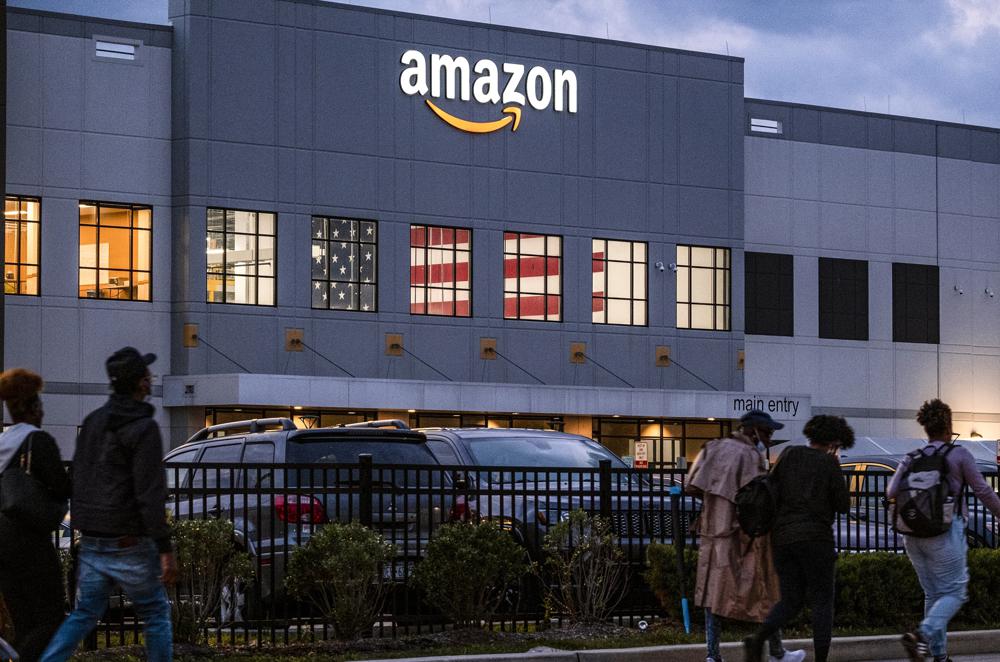
Amazon workers in Alabama appear to have rejected a union bid in a tight race, according to early results on Thursday. But outstanding challenged votes could change the outcome. In New York, union supporters have the edge in a count that will continue Friday morning. Warehouse workers in Bessemer, Alabama, voted 993 to 875 against forming a union. The National Labor Relations Board, which oversees the election, said that 416 challenged votes could potentially overturn that result. A hearing to go through the challenged ballots will occur in the next few days. Meanwhile, in a separate union election in Staten Island, New York, the nascent Amazon Labor Union is leading by more than 350 votes out of about 2,670 tallied. The close election in Bessemer marks a sharp contrast to last year when Amazon workers overwhelmingly rejected the union. “This is just the beginning, and we will continue to fight,” said Stuart Appelbaum, president of the Retail, Wholesale, and Department Store Union, which is organizing the union drive in Bessemer, at a Thursday press conference. “Regardless of the final outcome, workers have shown what is possible. They have helped ignite a movement.” Appelbaum said RWDSU will be filing objections to how Amazon handled the election but declined to be specific. He also took the opportunity to lash out at current labor laws, which he believes are rigged against unions and in favor of corporations. “It should not be so difficult to organize a union in the United States,” he said. If a majority of Amazon workers voted yes in either Bessemer or Staten Island, it would mark the first successful U.S. organizing effort in the company’s history. Organizers have faced an uphill battle against the nation’s second-largest private employer, which is making every effort to keep unions out. In New York, the ALU has led the charge to form a union along with Chris Smalls, a fired Amazon employee who now heads the fledging group. Turnout for the in-person election was unclear, but Smalls was hopeful of victory. “To be leading in Day One and be up a couple hundred against a trillion-dollar company, this is the best feeling in the world,” Smalls said after the conclusion of Thursday’s counting. While Smalls’ attention has been focused on securing victory in New York, similar efforts in Alabama also weighed heavily. “I’m not too sure what’s going in Alabama right now, but I know that the sky’s the limit if you can organize any warehouse,” he said, noting that the vote in Alabama could well end up differently. “I hope that they’re successful. I don’t know what’s going on yet, but we know we show our support and solidarity with them.” The warehouse in Staten Island employs more than 8,300 workers who pack and ship supplies to customers based mostly in the Northeast. A labor win there was considered difficult, but organizers believe their grassroots approach is more relatable to workers and could help them overcome where established unions have failed in the past. John Logan, director of Labor and Employment Studies at San Francisco State University, said the early vote counts in New York has been “shocking.” ALU has no backing from an established union and is powered by former and current warehouse workers. The group had also filed for a union election after getting support from about 30% of the facility’s workforce, a much lower percentage than what unions usually seek. “I don’t think that many people thought that the Amazon Labor Union had much of a chance of winning at all,” Logan said. “And I think we’re likely to see more of those (approaches) going forward.” Though RWDSU is currently lagging behind with challenged ballots outstanding, Logan said that the election was also remarkable because the union has made a good effort narrowing its margin from last year’s election. After a crushing defeat last year, when a majority of workers voted against forming a union, RWDSU is hoping for a different outcome in the Bessemer election, in which mail-in ballots were sent to 6,100 workers in early February. Federal labor officials scrapped the results of the first election there and ordered a re-do after ruling Amazon tainted the election process. The RWDSU said the election there had a turnout rate of about 39% this year, much smaller than last year. Appelbaum blamed the low numbers on high turnover — he believes thousands of people who worked for Amazon in January and were on the official list to be eligible to vote either quit or were fired. He also believes that an in-person election, which the RWDSU had asked for, would have made a difference. Amazon has pushed back hard in both elections. The retail giant held mandatory meetings, where workers were told unions are a bad idea. The company also launched an anti-union website targeting workers and placed English and Spanish posters across the Staten Island facility, urging them to reject the union. In Bessemer, Amazon has made some changes but still kept a controversial U.S. Postal Service mailbox that was key in the NLRB’s decision to invalidate last year’s vote. Both labor fights faced unique challenges. Alabama, for instance, is a right-to-work state that prohibits a company and a union from signing a contract that requires workers to pay dues to the union that represents them. The mostly Black workforce at the Amazon facility, which opened in 2020, mirrors the Bessemer population of more than 70% Black residents, according to the latest U.S. Census data. Pro-union workers say they want better working conditions, longer breaks, and higher wages. Regular full-time employees at the Bessemer facility earn at least $15.80 an hour, higher than the estimated $14.55 per hour on average in the city. That figure is based on an analysis of the U.S. Census Bureau’s annual median household income for Bessemer of $30,284, which could include more than one worker. The ALU said they don’t have a demographic breakdown of the warehouse workers on Staten Island, and Amazon declined to provide the information to The
Senate advances effort to resist Joe Biden’s gun actions

Alabama lawmakers on Thursday advanced legislation aimed at resisting a half-dozen executive actions by President Joe Biden to combat gun violence. The Alabama Senate voted 24-5 for legislation that would prohibit state and local officials from participating in the “administration or enforcement of any presidential gun control order.” However, the bill includes an exemption if doing so would jeopardize federal funding. The measure is part of red-state efforts to seek, both tangible and symbolic, resistance to federal gun control measures. The approval came over the objections of Democrats who derided the measure as unconstitutional and election-year pandering. The bill now moves to the Alabama House of Representatives. “The Second Amendment says the right to bear arms shall not be infringed upon, and this bill is about safeguarding our God-given rights to protect our families and homes,” Sen. Gerald Allen, a Republican from Tuscaloosa, said in a statement about his bill. Two Democratic senators sharply criticized the measure. “This is an election piece, here,” said Senate Minority Leader Bobby Singleton, a Democrat from Greensboro. Sen. Rodger Smitherman, a Democrat from Birmingham, said the bill, if approved, would almost certainly be challenged in court. “I’m telling y’all again that this is going to be unconstitutional. You are going to spend all these millions of dollars trying to defend this and we are going to lose and look bad,” Smitherman said. The president has limited ability to enact gun control measures without congressional approval. Biden last year issued an order that included moves to crack down on “ghost guns,” homemade firearms that lack serial numbers used to trace them and are often purchased without a background check and to tighten regulations on pistol-stabilizing braces. An original version of the Alabama law would have also applied to federal gun laws. Idaho and Missouri have approved similar measures. The Justice Department last year warned Missouri officials that the state can’t ignore federal law after the governor signed a bill that banned police from enforcing federal gun rules. The Alabama legislative action came the same week that lawmakers rejected a measure that would allow people with mental health issues to voluntarily place themselves on a “do not sell” list to temporarily block themselves from buying firearms. The bill failed on a procedural vote required to bring the measure up for debate in the Alabama House of Representatives. Alabama will also become the latest state to allow people to carry concealed handguns without first undergoing a background check and getting a state permit. Alabama Gov. Kay Ivey this month signed legislation ending the requirement for a person to get a concealed carry permit to carry a loaded handgun concealed under their clothes, in a purse or bag, or in a car. Republished with the permission of the Associated Press.
Alabama lawmakers advance historic pay raises for teachers

Alabama lawmakers are poised to approve the largest pay raises in a generation for experienced public school teachers in an effort to keep educators from leaving state classrooms. The Alabama Senate voted 32-0 Thursday for the budget that would raise minimum salaries for teachers with nine or more years experience. The raises would range from 5% to nearly 21%, depending on years of experience. Sen. Arthur Orr, the chairman of the budget writing committee, said the goal is to encourage experienced teachers to stay in the classroom and to attract more students to the field of teaching. The spending plan now moves back to the Alabama House of Representatives, where House leaders have expressed support for the raises. “Hopefully, seeing those pay raises, we’ll have more people staying in education rather than saying, ‘I’m out, I’m tired,’” Orr, a Republican from Decatur, said. The size of the raise would be based on a teacher’s years of experience. A teacher with a bachelor’s degree and 20 years of experience would see their salary rise from $51,810 to $57,214. A teacher with a master’s degree and 25 years of experience would see their pay rise from $61,987 to $69,151. Teachers with less than nine years of experience would see a 4% raise. Orr said the state has competitive salaries for new teachers compared to surrounding states, but the state is “falling behind” in salaries for mid-career educators. The proposal would also provide an automatic 1% yearly raise and do away with a salary cap that currently ends step raises after 27 years of teaching. Orr said that should give educators — and those considering teaching as a career — some minimum guarantee of how their salaries will increase over time. School systems in Alabama and across the country have reported concerns about teacher shortages, particularly as the coronavirus pandemic accelerated a wave of retirements. That has led states to look at pay increases and other measures to try to recruit and retain educators. Amy Marlowe, executive director of the Alabama Education Association, said the positive response from teachers has been “just overwhelming.” “This will do more to keep people in the classroom than what we originally thought,” Marlowe said. Marlowe said school systems are seeing a teacher shortage in all subjects and in all grades as educators leave the classroom for retirement or other jobs. She said the state is at the precipice of a staffing cliff unless something is done. Under the current proposal, teachers with 35 years experience would see a record-setting yearly raise of nearly 21%, Marlowe said. Marlowe said teachers last saw large pay raises in the 1980s when lawmakers approved 15% increases for two consecutive years during George Wallace’s last term as governor. Mississippi Gov. Tate Reeves on Wednesday signed legislation authorizing a pay raise for that state’s public school teachers, long among the lowest-paid in the nation. Republished with the permission of the Associated Press.
