
Mo Brooks questions top defense officials on unrealistic national security inflation rate
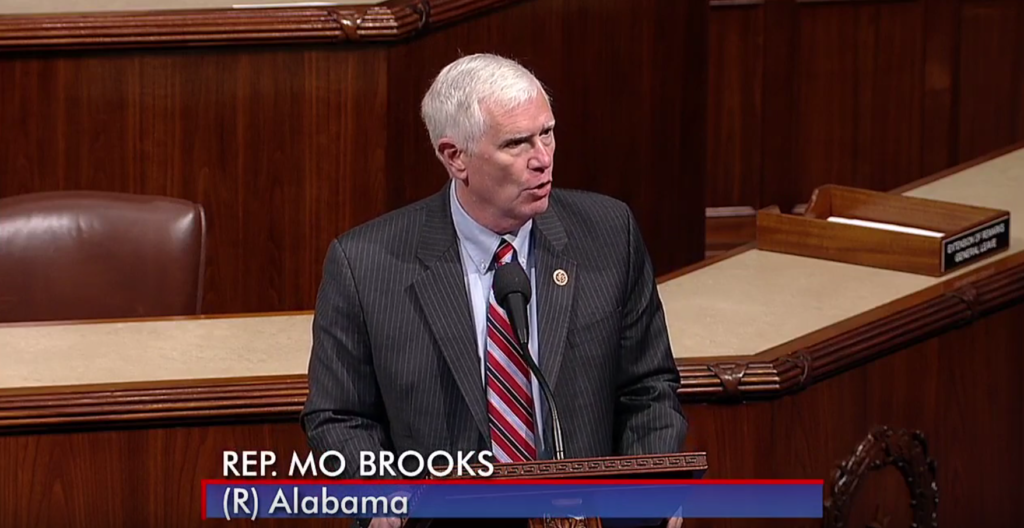
Today Rep. Mo Brooks questioned three top Biden Administration defense officials regarding the FY2023 Defense budget to Congress. Brooks and other legislators have been vocal about what they consider to be inadequate defense funding, arguing that not properly considering the inflation rate can severely underfund the Defense Department and cause national security issues. Brooks questioned Chairman of the Joint Chiefs of Staff Mark Milley, Secretary of Defense Lloyd Austin, and Department of Defense Comptroller Undersecretary Michael McCord in the House Armed Services Committee hearing and questioned the national security inflation rate. No one could answer the question, “What is the national security inflation rate?” “The Biden Administration’s official Consumer Price Index inflation rate is 7.9%, yet the Biden Administration wrongly and unjustifiably assumes a mere 2.2% inflation rate when proposing its national security funding. Hence, in real dollar terms, the Biden Administration’s proposed defense budget is a significant funding CUT in a world both Joint Chiefs of Staff Mark Milley and Secretary of Defense Lloyd Austin testified is increasingly dangerous and unstable,” Brooks commented. Brooks concluded, “I am extremely concerned by a Biden Administration budget that reduces America’s national security abilities in an increasingly dangerous world. In the past year alone, Communist China threatened to attack Taiwan and unleash nuclear weapons on Japan while Putin’s Russia invaded peaceful Ukraine. Now is the time to strengthen national security, not weaken it. America must maintain peace through strength. History has proven time and again that appeasement and weakness yield deadly and disastrous results.” The full transcript of Congressman Brooks’s questioning follows: Brooks: Thank you, Mr. Chairmen. This past year we’ve seen an Afghanistan withdrawal debacle, Russia invade the Ukraine, China threatening a nuclear attack on Japan if Japan helps defend Taiwan against the Communist Chinese attack, and that brings me to my question for General Milley and Secretary Austin; in your professional opinion, over the past year, is the world a more dangerous place, a less dangerous place, or about the same. General Milley? Milley: Thanks, Congressman. As I said in my opening statement, it is my observation, my analysis, that the world is becoming more unstable, not less unstable. Brooks: Secretary Austin? Austin: Yea, we’re trending towards greater instability. Brooks: Now the Consumer Price Index is increasing at a 7.9% rate according to the official federal government statistics. Of course, that’s an estimate. My personal belief is that it is probably worse than that. Certainly, talking anecdotally to the people in my district, they believe it is worse than that. What is the inflation rate for national defense costs? Manpower, bullets, fuel, everything that comprises national defense. What is the inflation rate for those items? General Milley? Milley: Well, personally I defer my Mike McCord down here who is an expert, but this budget assumes an inflation rate of 2.2%, which is obviously incorrect because it is almost 8%. It might go up it might go down, but most forecasts indicate it’s going to go up. It could level out at 9 or 10%. Who knows? But it is clearly higher than what the assumption was in this budget. Brooks: But when you say it assumes a 2.2% are you talking about a 2.2% consumer price index inflation rate, which is what we commonly look at, or are you talking about a 2.2% inflation rate increase for national defense costs? Milley: It’s the CPI. The budget assumes 2.2% inflation rate, CPI inflation rate. Brooks: When the official rate is 7.9%, why are we assuming 2.2%? Milley: Because the budget was produced quite a while ago. Those calculations were made prior to the current inflation rate that’s correct. I’d ask Mike McCord to make a comment on the specifics of that. Brooks: Well you would agree would you not then that the assumption, at least according to the official federal government inflation rate, is over 5% wrong? McCord: Congressman, we at the Department of Defense don’t use, have never used, the CPI as what is relevant for what we do. Brooks: Alright, Mr. McCord let me ask you the question then. What is the inflation rate for the things that the military has to purchase in order to provide adequate national security? McCord: What we saw last year was 4% and that’s what we built into our pricing going forward was to get that 2% up to 4%. Brooks: So, what is your degree of confidence that the 4% rate is going to hold true? McCord: That’s an unknown Congressman. Obviously, the fiscal year calculation that you’re citing that General Milley is discussing, of course, starts 6 months from now and ends 18 months from now so a lot can happen up or down, uh, to affect that. Brooks: Well, let me add some comment and then some data. If we don’t know what the inflation rate is for national defense procured products, then we can’t really know whether the President’s budget strengthens or weakens America’s national security in an environment that both General Milley and Secretary Austin believe is becoming more dangerous not the same or less dangerous. And I’ve just looked up a couple of items that I hope that y’all would take into account as you determine what ultimately will be the budget that the President would support for national security. Over the past 2 years, from January of 2020 to January of 2022, crude oil has gone up 137%. Now that’s a big-ticket item in national defense. Wholesale gas, another big-ticket item in national defense, has gone up 39%. Wholesale diesel has gone up 37%. There are probably other fuels like jet fuels or what-have-you, that have gone up significantly, so I would hope that y’all would take all these things into account and increase our defense spending in order to at least hold our own in real purchasing power and then I’ll add this final note. If I recall correctly, you’re looking at about a 4.6% pay raise for our military personnel, is that what I heard? McCord: That is correct Brooks: Well,
Tim James campaign launches new radio ads criticizing Magic City Acceptance Academy
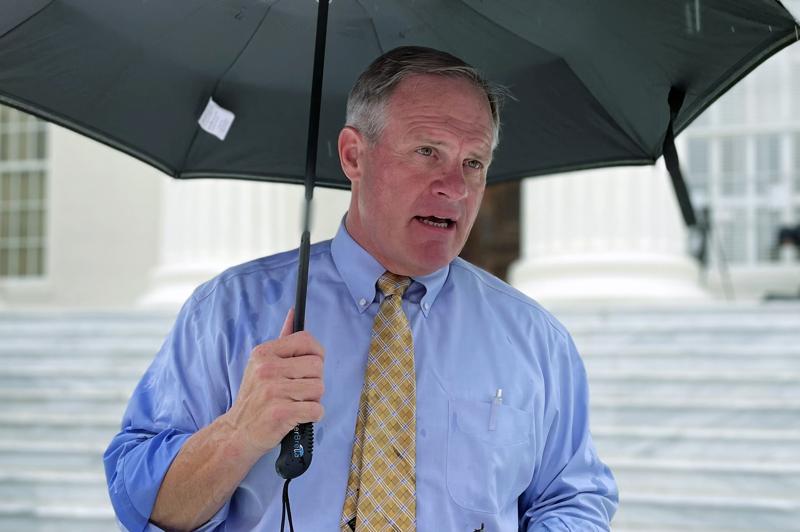
On Monday, the Tim James gubernatorial campaign released a new radio ad aimed at expressing his views on what James calls the ‘radical LGBTQ agenda.’ Last week, James released a television ad criticizing the Magic City Acceptance Academy and a student-attended drag queen show fundraiser. The Magic City Acceptance Academy (MCAA) is an LGBTQ-focused charter school that had its charter approved in November 2020 after three unsuccessful tries. Michael Wilson, the principal of MCAA, said that all kids are welcome at the school, not just LGTBQ youth; he also noted that “We are most likely one of the only schools in the nation to have the statement that we are LGBTQ affirming in our Mission Statement.” In a statement accompanying the TV ad release, James stated, “I wish that part of the title of this press release and the subject of our new tv ad were an April Fool’s joke. Joe Biden and the radical left have abandoned objective truth and scientific reality. They have lost the ability to make basic moral statements or choose between right and wrong. They nominated a woman for the Supreme Court who refuses to say what a woman is. They celebrate and push transgenderism on our youth without hesitation.” In the press release accompanying the radio ad, James stated that he was a strong supporter of charter schools but opposed charter schools funded by state taxes that embrace an LGBTQ agenda. “My heart is for the protection of our children, and this needs to be shut down. This isn’t education. It is exploitation, and it needs to stop,” James stated. The full script of the new radio ad is as follows: The Culture War has come to Alabama. Parents, grandparents. Are you watching? There’s a war going on between common sense and crazy. A Supreme Court nominee who can’t even tell you what a woman is. The best woman swimmer is actually a man. And recently, the first Transgender Public School in the South charted in Alabama with millions of your tax dollars. It’s called Magic City Acceptance Academy, and recently, the Faculty put on a drag show on campus for the children. It’s heartbreaking. It’s not education. It’s exploitation. It’s got to stop. What are we doing to our kids? Who let this happen? I’m Tim James. That’s enough. It’s time to Fight Back.
Will Sellers: The consensus justice
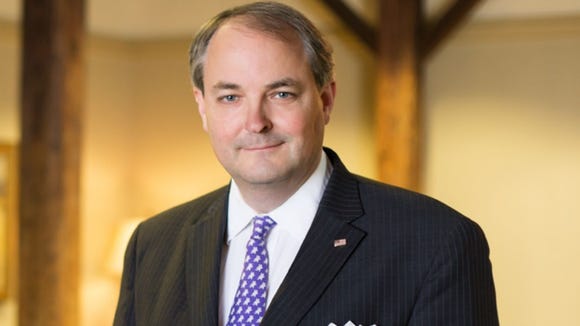
It was no surprise when 60 years ago President John F. Kennedy nominated Byron White as an Associate Justice of the United States Supreme Court. With few detractors and almost nationwide acclaim, White was almost everyone’s choice, and his confirmation was dizzying. Nominated on April 3, his judiciary committee hearing began just eight days later. After White testified for 15 minutes, his nomination was unanimously approved and immediately moved to the Senate floor, where he was confirmed by a simple voice vote. On April 16 – less than two weeks after his nomination was announced – White took the oath of office. During his 31 years on the Supreme Court, Justice White did his best to remain obscure. He loathed the press, rejected all attempts at biography, and even destroyed his personal papers. He considered his 994 opinions as the best expression of his judicial philosophy. Though little-known today, White was once a household name – a sports hero whose fame and name identification rivaled anyone appointed to the court before or since. Typifying what would now be referred to as a scholar-athlete, White was a halfback at the University of Colorado, leading his team to an undefeated regular season followed by post-season play in the Cotton Bowl. Nicknamed “Whizzer White” because of his swift rushing ability, White was the runner-up for the 1937 Heisman Trophy. At the ripe age of twenty-one, he faced a critical decision. He was nominated for a Rhodes Scholarship but was also drafted by the nascent NFL Pittsburgh Pirates and offered the highest salary in the league. White considered his options and decided to do both, committing to play professional football in the fall and then head to Oxford when the season ended. Solving this personal dilemma would portend his practical way of handling cases. White’s matriculation at Oxford was cut short when World War II began in Europe. He enrolled in Yale law school and used his earnings from professional football, which he continued to play, to fund his tuition. Following the Japanese attack on Pearl Harbor, White left law school and joined the navy. He served in the Pacific as an intelligence offer and was assigned to debrief a young John F. Kennedy when his PT boat sunk. At war’s end, White completed law school graduating first in his class and earning a clerkship with Chief Justice Fred Vinson. He eventually returned home to Colorado, where the economy was booming. White developed a successful law practice negotiating contracts and closing transactions for businesses and investors. His courtroom experience was limited to a handful of minor criminal cases. While never a candidate, White was active in the local Democrat Party, working on any number of campaigns and using his celebrity status as a football hero to lend credibility to the candidates he supported. One candidate, in particular, needed credibility by association. John F. Kennedy was a backbench U.S. senator from Massachusetts, and few in Colorado, much less the western United States, had any idea who he was. In searching for someone to organize his presidential campaign in the West, Kennedy’s advisors chose White. It turned out to be a brilliant decision, and as the campaign developed, White grew close to the Kennedy family, which came to rely upon him for solid, practical advice. Once Kennedy was elected, White’s raw organizational intelligence and managerial skill earned him a job in the administration. The Kennedys’ realized that White could run the Justice Department while Bobby held the title of Attorney General and worked on other matters. As Deputy Attorney General, White handled the day-to-day operations of the Justice Department, hired staff, and organized the bureaucracy to support President Kennedy’s agenda. His work gave him a very high profile, especially with members of Congress who wanted certain constituents appointed to positions within their states. And so, when a vacancy occurred on the Supreme Court, he was the president’s confidential first choice, but before White could be officially nominated, other candidates, for publicity’s sake, had to be vetted. As a result of this process, Kennedy was confronted with the opportunity to appoint the first African-American as a Supreme Court justice. During the presidential campaign, Kennedy had proactively worked to earn the support of Martin Luther King, Jr., and other prominent Black ministers throughout the South, but, in return, they demanded more than lip service to promoting civil rights and appointing minorities to office. With the first Supreme Court vacancy, Kennedy was worried that Dr. King might demand the nomination of Judge William Hastie, but King never expressed disappointment with White. While White’s nomination was well-received, a few detractors worried that his lack of courtroom experience and judicial service might prove detrimental. In addition, no one could determine if he would be a liberal or conservative jurist, and when asked to define the role of the Supreme Court, White simply replied, “to decide cases.” White became the justice liberals loved to hate, and conservatives hated to love. No doubt Kennedy supporters were disappointed in his dissenting opinions in landmark cases like Miranda and Roe. But conservatives, too, would find White’s jurisprudence hard to embrace when he approved affirmative action in higher education, agreed with campaign finance regulation, and ruled Georgia’s death penalty to be unconstitutional. When he announced his retirement, the press was elated to see him go. His decisions were viewed critically, and his career on the court seen as the one blight tarnishing the Camelot myth. The enigma of Byron White may be that in an age of celebrity judges, high stakes confirmation hearings, arguments over judicial philosophy, and national political groups funding campaigns to oppose and support a nominee, he was a judge who merely wanted to decide cases. He eschewed pontificating on various high-minded principles, did nothing to court favorable public approval, and left no record of his means or methods of reaching decisions. Much like Sir Christopher Wren’s tribute in St. Paul’s Cathedral in London, “If you seek his monument, look around you,”
Democratic, GOP Senate bargainers reach $10 billion COVID agreement

Senate bargainers reached an agreement Monday on a slimmed-down $10 billion package for countering COVID-19 with treatments, vaccines, and other steps, the top Democratic and Republican negotiators said, but the measure dropped all funding to help nations abroad combat the pandemic. The compromise drew quick support from President Joe Biden, who initially pushed for a $22.5 billion package. In a setback, he ended up settling for much less amid administration warnings that the government was running out of money to keep pace with the disease’s continued — though diminished — spread in the U.S. “Every dollar we requested is essential, and we will continue to work with Congress to get all of the funding we need,” said White House press secretary Jen Psaki. “But time is of the essence. We urge Congress to move promptly on this $10 billion package because it can begin to fund the most immediate needs.” Biden and Senate Majority Leader Chuck Schumer, D-N.Y., his party’s lead bargainer, also ended up agreeing to abandon Biden’s request to include $5 billion to help countries — especially poorer ones — where the disease is still running rampant. But the two sides could not agree on enough budget savings to pay for the larger amounts. Schumer said the pact would provide “the tools we need” to help the country recover from the economic and public health blows that COVID-19 has inflicted for the past two years. But he said while the $10 billion “is absolutely necessary, it is well short of what is truly needed to keep up safe” over time. He said members of both parties want to craft a second spending measure this spring that could include funds to battle COVID-19 and hunger overseas and more assistance for Ukraine as it continues battling the Russian invasion. The fate of such a measure is uncertain. Sen. Mitt Romney of Utah, the lead GOP bargainer, hailed the accord as one that would address “urgent COVID needs.” He also trumped the measure’s savings, which he said meant it “will not cost the American people a single additional dollar.” Romney also suggested an openness to considering future money. “While this agreement does not include funding for the U.S. global vaccination program, I am willing to explore a fiscally responsible solution to support global efforts in the weeks ahead,” he said. The agreement comes with party leaders hoping to move the legislation through Congress this week, before lawmakers leave for a two-week spring recess. It also comes with BA.2, the new omicron variant, expected to spark a fresh increase in U.S. cases. Around 980,000 Americans and over 6 million people worldwide have died from COVID-19. At least half the compromise would have to be used to research and produce therapeutics to treat the disease, according to fact sheets from Schumer and Romney. The money would also be used to buy vaccines and tests. At least $750 million would be used to research new COVID-19 variants and to expand vaccine production, the descriptions said. The deal is also a reduction from a $15 billion version that both parties’ leaders had negotiated last month. House Speaker Nancy Pelosi, D-Calif., abandoned that plan after Democratic lawmakers rejected proposed cuts in state pandemic aid to help pay for the package. Some people said the fate of the new agreement remained uncertain in the House, where Pelosi and liberal Democrats have expressed opposition to dropping the money for helping other countries. Rep. Pramila Jayapal, leader of the House Progressive Caucus, said it is “a big problem” to erase the global assistance from the package. “It’s really shortsighted to not spend money on making sure this virus is contained around the world,” Jayapal, a Washington state Democrat who worked in global public health for a decade, told reporters. The agreement will need to attract at least 10 GOP votes to move through the 50-50 Senate. The others said the needed Republican votes would be there. The measure is fully paid for by pulling back unspent funds from previous pandemic relief bills that have been enacted, bargainers have said. Romney’s fact sheet says those savings include $2.3 billion from a fund protecting aviation manufacturing jobs; $1.9 billion from money for helping entertainment venues shuttered by the pandemic; another $1.9 billion from a program that helps states extend credit to small businesses; and $1.6 billion from agriculture assistance programs. Republished with the permission of the Associated Press.
Hundreds of Alabama systems apply for water, sewer grants
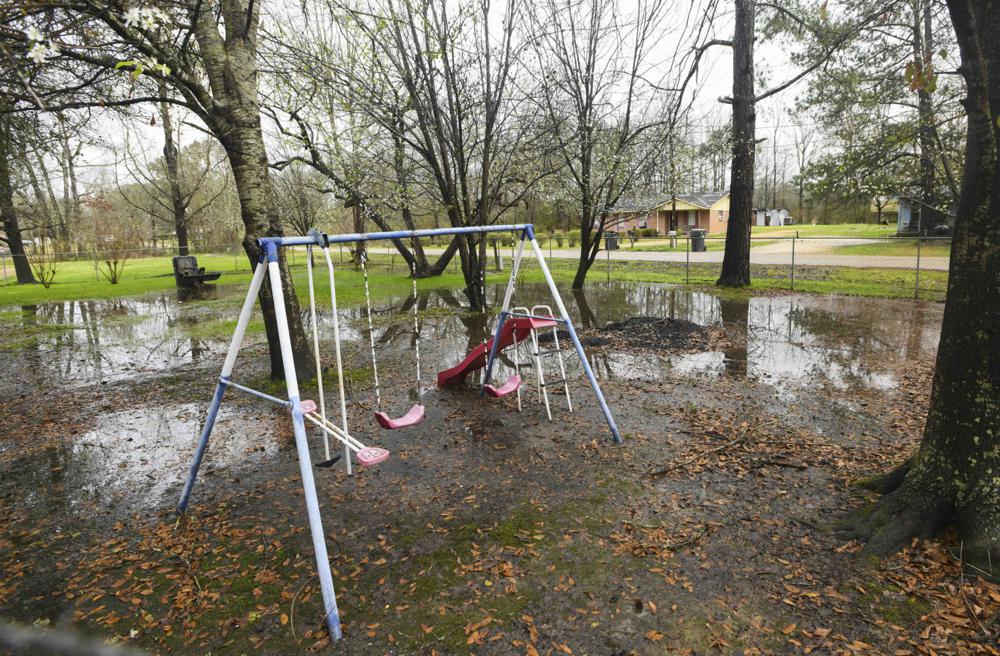
More than 400 Alabama water and sewer systems have applied for grants funded by pandemic relief money, according to the Alabama Department of Environmental Management. Alabama lawmakers this winter voted to use $225 million out of the state’s share of American Rescue Plan funding to fund high-need water and sewer projects. “This is an historic opportunity to address longstanding water, and sewer needs to benefit hundreds of thousands, and potentially millions, of Alabamians,” ADEM Director Lance LeFleur said in a statement. The state will use $120 million for previously identified emergency or high-need projects and will not require a local match; $100 million for grants that may require a local match based on ability to pay; and $5 million to address longstanding problems in the Black Belt region of the state. Rep. Kelvin Lawrence, a Democrat from Hayneville, said in a press release that the funding could be life-changing for many people in his Black Belt district. Wastewater treatment is a decades-old problem in parts of the area, where poor communities often lack traditional sewer lines. Septic tank systems are a poor alternative in some areas because the region’s heavy clay soil traps water near the surface. “Whether you’re rich, poor, young or old, black or white, it doesn’t matter. Every citizen in the state of Alabama should be afforded the opportunity to have clean drinking water and also to dispose of their waste in a proper way so they won’t have to worry about dealing with health issues,” Lawrence said. The Justice Department said it had started an environmental justice investigation into impoverished Lowndes County’s wastewater problems, which have left some residents with sewage in their yards. Republished with the permission of the Associated Press.
Major issues to be decided in session’s final days
Alabama lawmakers return to Montgomery on Tuesday with a number of large issues to be decided in the closing days of the legislative session. Legislators expect to conclude the session next week. Here’s a look at some of the proposals that could be decided in the session’s final days. TEACHER PAY RAISES Lawmakers are expected to give final approval to the largest pay raise in a generation for teachers with nine or more years experience. The Senate approved the raises as part of next year’s education trust fund budget. The House of Representatives must decide whether to accept Senate changes, but House leaders have expressed support for the raises. The raise would be based on the teacher’s experience. A teacher with a bachelor’s degree and 20 years of experience would see their minimum salary rise from $51,810 to $57,214. School systems in Alabama and across the country have reported concerns about teacher shortages, particularly as the coronavirus pandemic accelerated a wave of retirements. That has led states to look at pay increases and other measures to try to recruit and retain educators. READING PROMOTION REQUIREMENT The House of Representatives on Tuesday will debate a proposal to postpone a high-stakes requirement to hold back third-graders who don’t read on grade level. The requirement of the 2019 Alabama Literacy Act is now scheduled to start this spring but would be pushed back until the 2023-2024 school year under the proposal. Many lawmakers expressed concern after the pandemic interrupted classrooms for two years. There is broad support for a delay, although lawmakers have disagreed on how long that delay should be. To move on to fourth grade, students would have to make above a “cut score” on standardized testing or demonstrate mastery of reading standards through a reading portfolio. State officials earlier this year said 23% of students scored below the set cutoff score on the latest assessment. DIVISIVE CONCEPTS The bill by Republican Rep. Ed Oliver of Dadeville would prohibit a list of “divisive concepts” from being taught in schools and in diversity training for state entities. The banned concepts would include that the United States is “inherently racist or sexist” and that anyone should be asked to accept “a sense of guilt” or a need to work harder because of their race or gender. The Alabama House of Representatives approved the bill after an emotional night of debate. The House-passed bill is awaiting committee action in the Alabama Senate. The list in the bill is similar to a now-repealed executive order that former President Donald Trump issued regarding training for federal employees. Similar language has since popped up in bills in more than a dozen states. TRANS TREATMENT BAN The Alabama Senate has approved a measure by Republican Sen. Shay Shelnutt of Trussville to make it a felony, punishable by up to 10 years in prison, for doctors to give transgender minors puberty-blockers, hormones, or surgeries to help affirm their gender identity. Proponents of the bill said the decisions on the medications should wait until a person is an adult. Opponents say lawmakers are inserting themselves into decisions that belong with families and their doctors. The Senate-passed bill, along with similar legislation by Republican Rep. Wes Allen of Troy, is pending in the Alabama House of Representatives. The U.S. Department of Justice last week sent a letter to state attorneys general warning that laws and policies that prevent individuals from receiving gender-affirming medical care might be an infringement on a person’s constitutional rights. REDEFINING RIOT The Alabama House of Representatives approved a bill that would create a new crime of assault of a first-responder and change the definition of a riot in state law. The bill defines a riot as “the assemblage of five or more persons engaging in conduct which creates an immediate danger of and/or results in damage to property or injury to persons.” The legislation is pending in the Senate committee. Rep. Allen Treadaway, a retired Birmingham assistant police chief, proposed the bill after a protest turned violent in Birmingham in the wake of George Floyd’s killing by police in Minneapolis. Opposed lawmakers say the definition of a riot is subjective, and an officer could make arrests based on his or her presumptions about the people involved. Republished with the permission of the Associated Press.
