Mo Brooks: Steve Flowers, master deceiver
I have known Katie Britt, surrogate and “former” liberal Democrat Steve Flowers, for many decades. Flowers’ columns repeatedly attack Mike Durant and me or promote Katie Britt (the largest tax increase supporter of any Republican in Alabama history). Flowers argues in his Katie Britt attack piece, “A Mo Brooks Story,” that I “truly believe in less government even if that means cutting your district’s or state’s throat.” Flowers attack is 100% pure bovine excrement. While I believe a rising tide lifts all boats (and that a national bankruptcy sinks all boats), I challenge Flowers to name a part of Alabama that, during my Congressional tenure, has prospered better than the Tennessee Valley I represent. The Tennessee Valley’s prosperity is the exact opposite of Flowers’ claimed “least effective Congressman” image. Flowers falsely claims I “served one four-year term in the Alabama House and left in 1986”. The Alabama Secretary of State’s election records say different. I was elected to the legislature four times, with winning percentages of 57% (despite Democrats rigging 25% of the District’s voting machines to register votes for all candidates on the ballot – except Mo Brooks), 82%, 73%, and 100%. Flowers falsely claims I sat on the back row while a legislator. Not that it makes any difference (because someone has to sit on back rows), I never sat on a back row while a legislator. I am baffled why Flowers makes up such a silly thing. Flowers falsely claims “they cut [my] microphone off.” Wrong again. When the House sat in the old Capitol, no legislator had a microphone to cut off. When the legislature moved to the State House, the Speaker recognized me frequently and never cut me off while I addressed the House. Flowers falsely claims I was “relegated to not having any power,” which begs the question of why, then, did Alabama Magazine rank Mo Brooks one of the legislature’s Top 25 most effective legislators? Or why, if I was so ineffective, did I get elected House Republican Caucus Chair three different times? Flowers falsely claims that, while I was a Madison County Commissioner, “every vote during that time was five yes and one no,” and the one “no” vote was always me. Flowers fabricates yet another yarn with no supporting evidence. Why? Perhaps because telling the truth does not fit Flowers’ Katie Britt surrogate role. Flowers falsely claims Mo Brooks has “never passed a bill nor ever accomplished anything.” Flowers’ statement is 100% false (both with respect to the legislature and to Congress). Further, in Congress, there is more than one way to get the job done, and on 100+ occasions, I have successfully worked to get my legislative language embodied in other bills that passed Congress and became law. I also single-handedly killed illegal alien amnesty and citizenship for two years and led the fight in Congress against 2020 voter fraud and election theft. The most important thing a representative does is vote. In that vein, the Alabama Taxpayers Defense Fund ranked me #1 out of 140 legislators in the fight against higher taxes and, in Congress, my 11-year voting record is graded an “A+” on border security by NumbersUSA; “A” on the Right to Bear Arms by NRA and Gun Owners of America; “A” on abortion by National Right to Life; and near the top on national defense, conservative and moral values, free enterprise, and foundational principles by the National Taxpayers Union, American Conservative Union and Heritage Action. The Alabama citizens I represent best rebut Flowers’ deceits. I was the first Republican in history elected in Alabama House Districts 18 and 10. In 2010, I was the first Republican elected in the Tennessee Valley’s Congressional District in 136 years (despite being outspent $2.5 million to $160,000). Not once has a challenger in my 11 reelection efforts (as a legislator, commissioner, or Congressman) broken the 38% mark in a primary or general election. Stated differently, the people I represent have reelected me with an average 78% reelection percentage. That is a job well-done in anyone’s book, and an honorable Steve Flowers would say so. Mo Brooks is a U.S. Representative for Alabama’s 5th district and is currently running for U.S. Senate.
$4.2 million in YouthBuild grants awarded to greater Birmingham region

Rep. Terri Sewell announced that the greater Birmingham region will receive over $4.2 million in grant funding from the United States Department of Labor (DOL) for job training and educational opportunities for at-risk youth. The funding is awarded through DOL’s YouthBuild program and will be used to develop apprenticeship and other career pathway models that help prepare at-risk youth for jobs in construction and other in-demand industries. The awards are part of a $90 million investment to grow America’s clean energy workforce with education and training for young adults. Sixty-eight grants were awarded to organizations in 28 states and Puerto Rico. Participants will engage in classroom learning that will prepare them for work-based learning opportunities, building and rehabilitating affordable housing for low-income or homeless families in their communities. Additionally, the YouthBuild funding announcement included criteria that awarded bonus points to applicants that demonstrated their ability to provide training in green construction techniques, training the next generation of workers for resilience and clean energy careers of the future. The following organizations were named as recipients of DOL’s YouthBuild grant program: Bessemer Housing Authority – $1,500,000 Housing Authority of Birmingham District (HABD) – $1,500,000 Cornerstone Revitalization Foundation – $1,259,237 Sewell expressed excitement for the funding and its investment in youth. “I’m thrilled that the greater Birmingham region will be receiving over $4.2 million from the Department of Labor!” stated Rep. Sewell. “This announcement is truly a win-win for our community. By connecting at-risk youth with job training and education, this funding will provide our most vulnerable young adults with the resources they need to succeed, all while growing our green energy workforce. Once again, I applaud the Biden-Harris Administration for making transformational investments in our community!” “We are delighted to be awarded the Department of Labor YouthBuild Grant to help provide the youth of Bessemer, Alabama with additional resources, furthering their education and preparing them to become productive citizens in our community,” commented Courtney Coleman, Executive Director of the Bessemer Housing Authority. “We believe these funds along with our community partners will work together to ‘Build Better Lives’ and ‘Deliver Hope,’ which is the mission here at the Bessemer Housing Authority.” HABD Board Chairman Dr. Anthony Hood stated, “This is a monumental win for our agency. This award allows us to equip our most promising youth with the tools needed to thrive in an ever-competitive workforce. The demand for skilled trades and apprenticeships has never been stronger, and this grant allows us to place our young people on a direct path to the careers of the future.” YouthBuild programs also train young people for employment in healthcare, information technology, manufacturing and logistics, culinary arts, and hospitality.
Steve Flowers: A Mo Brooks Story
Over the years, I have shared a lot of stories about Alabama’s colorful political figures. We have had some characters like Big Jim Folsom and George Wallace. Big Jim was gregarious and fun-loving. Wallace was a political genius and, without question, the most prolific politician in Alabama history. Both Wallace and Folsom used theatrics to get elected governor, but both were effective once elected to office. Ole Mo Brooks will make the history books as a colorful Alabama political character. However, unlike Wallace and Folsom, Mo will never be considered effective or important, but Mo Brooks is no fool. He knows what he is doing. He is a graduate of Duke and Alabama Law School. He has always been a right-wing ideologue. He truly believes in less government, even if that means cutting your district’s or state’s throat. He does not want to be an effective emissary for his people. He is proud of the title of being the least effective congressman in Alabama history. He believes his role is to be the most conservative person in the halls of the Capitol. Mo and I were freshman legislators together in 1982. Mo served one four-year term in the Alabama House and left in 1986. He was immediately recognized as a right-wing nut who was driven by an ideological agenda rather than being an effective legislator for his constituents. He was laughed at and ridiculed by the entire House and placed on the back row by the Speaker. They would recognize him occasionally, his first year to make a reactionary speech on an issue. However, after a while, the Speaker would not recognize him to talk. Prior to that, if we had a bill we wanted to pass, and we knew Mo might be for it, we would quietly go back to Mo’s desk in the far-right corner and say, “Mo, I would like for you to vote for my bill. However, please do not speak for it.” We knew his speaking for it would be detrimental to the bill’s passage. Having been relegated to not having any power, which he preferred, he decided to become the Czar of conservatism in the House. He made himself the appointed keeper of all the House members voting records and would rank us on our conservatism based on how we voted on legislative issues. Mo got a computer, which was a rare device in those days, and sat at his desk keeping track of our daily voting record and ranking us. You can imagine how that upset some of the old crusty legislators, some of whom had been around since the early George Wallace segregationist days. They figured that the word conservative meant voting against Civil Rights and integration. I was one of the few who would visit with Mo. I would go back to his desk and ask how he was doing with his list. Some of the old-timers would ask me what Mo and I talked about. You can only imagine the indignation they had towards the young nut from north Alabama when I told them he was keeping their voting record and ranking them on their conservatism. Ole Mo moved on to the Madison County Commission for a decade or so. They say that every vote during that time was five yes and one no. Guess who the “no” vote was. He has continued that same consistency of longing to be a loud voice in the wilderness of ineffectiveness during his 11 years in Congress. Recently a respected fellow member of our 1982 Freshman Legislative Class and I were visiting, and the subject of Mo’s race for the Senate came up. He said, “You know, I have never known anyone besides Mo Brooks who has served nearly two decades in a legislative-congressional capacity and never passed a bill nor ever accomplished anything.” However, my 1982 colleague and I were from the old school that believed you should look after your district first. My perception of today’s Republican primary voters is that there are a good many who prefer a total less government conservative senator. If you are looking for a true long-term proven conservative, then Mo Brooks is your man. See you next week. Steve Flowers is Alabama’s leading political columnist. His weekly column appears in over 60 Alabama newspapers. He served 16 years in the state legislature. Steve may be reached at: www.steveflowers.us.
William Haupt III: If all government is local, so are elections
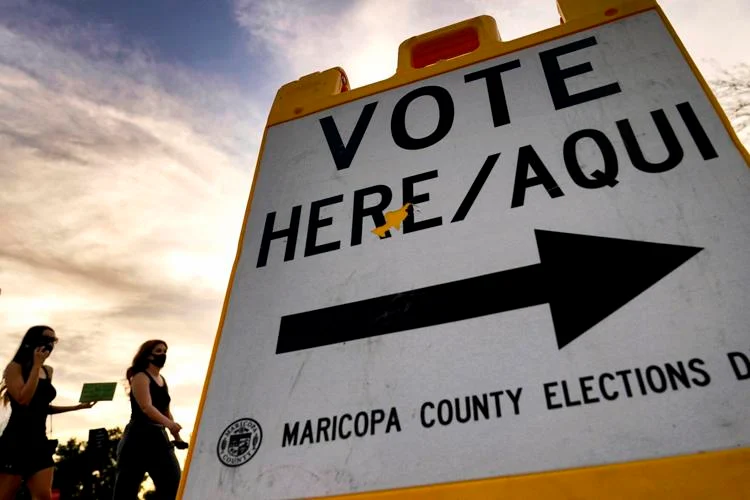
“In local government, you are only a few blocks away from those that you serve.” – Valerie Jarrett When you have a street light that goes belly up, a stop sign that’s hidden behind an untamed tree, or an intersection you cross daily with a prayer in heart, who do you turn to for help? Rather than shift through volumes of unfriendly municipal websites, you contact your local county or city official. When local elections are held with no state or federal races, they are a mere afterthought. Voters either don’t know there is an election or don’t care. Even when they are held during the general election in November, far too often, it is only special interests that know the issues and know the candidates. Turnout for presidential elections is considered low when it dips below 60% and in midterms when it is less than 40%. Yet local elections that draw a shameful 10% or 20% turnout are common across our nation. Turnout for local elections has always been historically low, but recent data show that it is getting even worse. “Elections are determined by people who don’t show up.” – Larry Sabato If it is so important who serves on your county commission or on city council, why is there such a low voter turnout for these offices? The number one reason why turnout is low for local elections is simply: most voters don’t even know there is an election, who is running, or where or when to vote? The 1965 Voting Rights Act states it is disenfranchisement not to inform voters of an election. Yet counties and cities either don’t know this or care. A Portland State University study finds the few who always vote are older and more affluent, while all others make up a fraction of the electorate. The Portland study found less than a third of voters cast ballots during a local election. This is easy to comprehend when voters aren’t notified of an election. If the election is not held during a general election, less than 50% of the electorate is even aware there is a local election and who is running. Our system doesn’t make it particularly easy to vote. It’s a familiar story. Most municipal elections are held during odd-numbered years, far away from November. Only five states, Arkansas, Oregon, Kentucky, Nebraska, and Rhode Island, hold local elections in November or with general elections. If local elections are held during a primary or general election, it is the candidates who are notifying voters about the election – begging people to vote for them, not the county or the city governments. “The only people bound by campaign promises are those who believe them.” – Christopher Hitchens Local governments started holding elections separately from state and federal elections during the 20th century Progressive Era. They hoped this would keep state and local elections from being overshadowed by national partisan races. That’s still an argument used today. But if we look closer, the devil is in the details. As the late, great Paul Harvey use to say, “Now for the rest of the story.” In her book, “Timing and Turnout,” Berkeley political scientist Sarah Anzia notes that not much has changed in local elections. “A small subset of voters who tend to be wealthier and older are those who vote during stand-alone municipal elections.” This enables special interest groups to “capture” local elections. “If something is broken but works for the right people, they won’t fix it?” – Gary Martin Rice University’s Melissa Marschall, head of the Local Elections Project, noted local governments are in no hurry to reform local elections. “When the political machines ran municipalities, isolated elections decreased the influence of immigrants breaking the political machines. When fewer non-English speakers turned out, this effectively allowed governments to shelter the political machines.” Marschall noted it is no accident that many “local school district elections” are held in standalone years. Since these elections draw so few voters to the polls, it is far easier to elect union-friendly candidates. She notes by isolating school district elections, they can limit turnout to supporters. The average teacher salary is 3% higher in these districts than in those that hold concurrent elections. Marschall believes that, “Holding local elections on separate dates has outlived its usefulness.” And although there is a growing interest for states and municipalities to move local elections to coincide with general elections, there is a lot of local resistance. This is especially true for special interests. Last month the California Assembly approved a bill to force localities with low turnout of less than 25% to move local elections to overlap with state or federal contests. What sounds like a good idea is not welcomed by everyone. There is steep resistance from school boards and local politicians. California State Rep. David Hadley is arguing against holding concurrent elections. He claims that this will hurt those vying for local support since it, “Forces them to compete with state and federal races for money, volunteers, and for voter attention. I believe this will hurt us more than help us.” During the 18th and 19th centuries, “political machines” ran large U.S. cities. They helped organize and build big cities, but they also controlled them. Special interests, business, and elected officials were all intricate parts in the machines. The key to their success was controlling the local elections. “The appearance of the law must be upheld – especially when it’s being broken.” – Boss Tweed Although the “political machines” of the past are gone, they’ve been replaced with political parties. The politics of local elections continues to favor incumbents, and they control local elections. Many of these offices are billed as “nonpartisan.” Party politics or not, it will always be politics as usual. Robert Ingersoll told us, “Ignorance is not bliss; it is punishment.” We hear about what is going on in Congress each day and what our state reps are doing also. But if we want to find
UAB ranked as national leader in racial, gender diversity representation in leadership
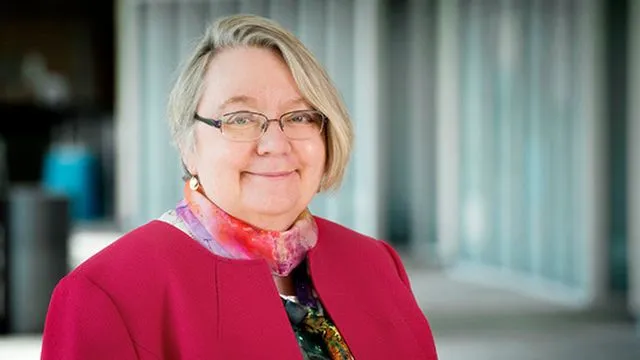
The University of Alabama at Birmingham is one of just 13 institutions ranked as national leaders in racial and gender diversity representation in leadership, according to a 2021 report by the Women’s Power Gap (WPG) Initiative at the Eos Foundation, in partnership with the American Association of University Women. WPG’s report, “The Women’s Power Gap at Elite Universities: Scaling the Ivory Tower,” ranks UAB 12th among 130 elite research universities. UAB was acknowledged for racial and gender-specific advancements among leadership, including: 50% of academic deans are women. Two of the university’s past presidents were women. The university’s provost is female. Women compose 38% of the president’s cabinet. 29% of tenured full professors are women. “Women have to advance one another on the path to leadership by empowering, nurturing, and contributing to women’s thriving and achieving, and I believe women benefit from having other women as role models and mentors,” said UAB Provost Pam Benoit. “I appreciate being able to bring a different perspective and approach into decision-making as a woman in leadership. It is not uncommon to be the only female in the room, and I have worked to counter stereotypes. I am fortunate to have supportive colleagues at UAB, where there is a true commitment to inclusivity.” According to UAB’s 2020-2021 Facts & Figures, women fill more than 58% of all leadership positions, including seven of the 13 deans identifying as female – an almost 7% increase since 2017. Since fall 2017, UAB has added 20% more female faculty – approximately three new female faculty for every one new male – and of the 492 faculty in fall 2021, 74% were female. WPG’s 2021 report detailed alarming statistics and noted the need for significant change as it relates to gender and racial diversity in leadership roles in academia. The findings note that, while women have outnumbered men in terms of enrollment in colleges for more than four decades, women make up 22% of university presidents, with 5% of presidents being women of color. As Black female dean of UAB’s largest entity in the school’s academic enterprise, College of Arts and Sciences Dean Kecia Thomas reflects on what UAB’s commitment to diversity meant to her as she considered accepting her role as dean in 2020. “Knowing that I would not have to contend with the spotlight nor the burden of being a first or a token at UAB certainly made coming here very attractive,” Thomas said. “The fact that there were already two successful and long-serving Black deans and multiple white women leading schools suggested to me that the institution lived its espoused values of inclusivity. Access is essential for recruitment, but equitable treatment is required for retention and advancement.” “Having women in leadership roles across UAB’s academic and medical campuses, throughout the UAB Medicine enterprise and among key positions in the president’s cabinet is a testament to our shared values of diversity and inclusiveness, excellence and achievement, as well as accountability,” said Dr. Selwyn Vickers, dean of UAB’s Marnix E. Heersink School of Medicine, CEO of the UAB Health System and CEO of the UAB/Ascension St. Vincent’s Alliance. “At UAB, we firmly believe that varied representation and equal access to leadership roles, particularly among racially and gender-diverse candidates, will continue to foster significant and positive trickle-down impacts. This will undoubtedly help us attract and retain strong talent that will keep moving UAB forward as a national leader in academics, medicine, and research.” The WPG Initiative was created by the Eos Foundation in 2018 to dramatically increase the number of women from diverse backgrounds among CEO and C-suite leaders nationally. WPG conducts and commissions actionable research on prominent sectors of the economy and measures the extent of the power and wage gaps at the company or institutional level to highlight those making fast progress and those falling behind. The AAUW, founded in 1881, is a nonprofit, nationwide network of 170,000 members and supporters, 1,000 local branches, and 800 college and university partners that advances gender equity for women and girls through advocacy, education, and research. This story originally appeared on the UAB News website. Republished with the permission of the Alabama News Center.
Kamala Harris positive for COVID-19, Joe Biden not a ‘close contact’
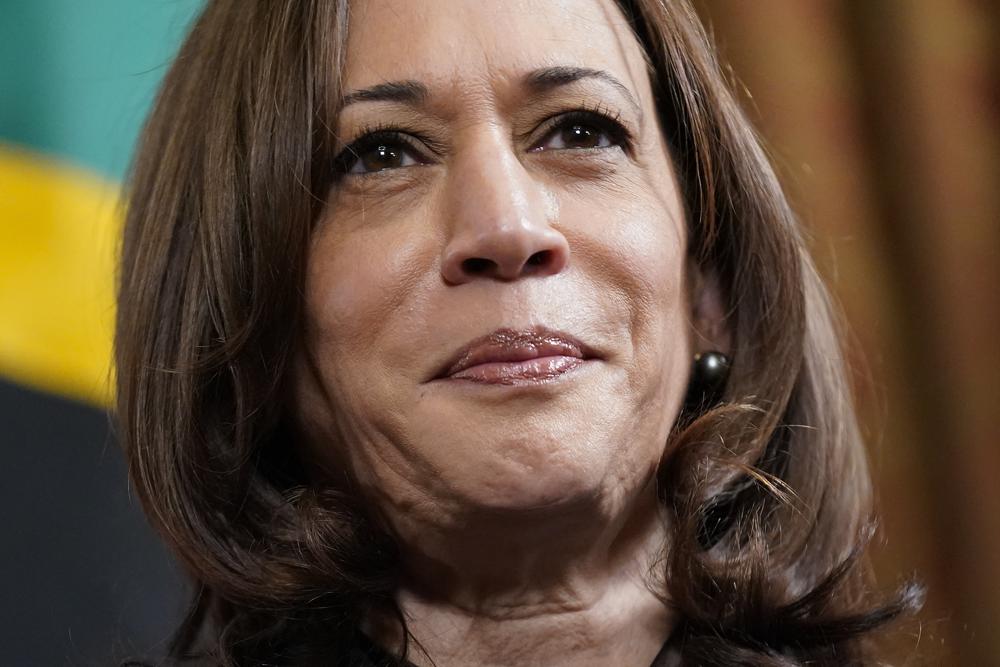
Vice President Kamala Harris tested positive for COVID-19 on Tuesday, the White House announced, underscoring the persistence of the highly contagious virus even as the U.S. eases restrictions in a bid to return to pre-pandemic normalcy. Neither President Joe Biden nor first lady Jill Biden was considered a “close contact” of Harris in recent days, said the vice president’s press secretary, Kirsten Allen. Harris had been scheduled to attend Biden’s Tuesday morning Presidential Daily Brief but was not present, the White House said. She had returned Monday from a weeklong trip to the West Coast. The last time she saw Biden was the previous Monday, April 18. “I have no symptoms, and I will continue to isolate and follow CDC guidelines,” Harris tweeted. “I’m grateful to be both vaccinated and boosted.” Biden phoned her Tuesday afternoon to make sure she “has everything she needs” while working from home, the White House said. Harris, 57, received her first dose of the Moderna COVID-19 vaccine weeks before taking office and a second dose just days after Inauguration Day in 2021. She received a booster shot in late October and an additional booster on April 1. Fully vaccinated and boosted people have a high degree of protection against serious illness and death from COVID-19, particularly from the most common and highly transmissible omicron variant. Harris’ diagnosis comes a month after her husband, Doug Emhoff, recovered from the virus, as a wave of cases of the highly transmissible omicron subvariant has spread through Washington’s political class, infecting Cabinet members, White House staffers, and lawmakers, including House Speaker Nancy Pelosi. Sens. Ron Wyden, D-Ore., and Chris Murphy, D-Conn., tested positive on Tuesday. Allen said Harris would follow Centers for Disease Control and Prevention guidelines “and the advice of her physicians.” It was not immediately clear whether she is being prescribed any antiviral treatments. The White House has put in place strict COVID-19 protocols around the president, vice president, and their spouses, including daily testing for those expected to be in close contact with them. Biden is tested regularly on the advice of his physician, the White House has said and last tested negative on Monday. “We have a very, very contagious variant out there,” said White House COVID-19 coordinator Dr. Aashish Jha on Tuesday. “It is going to be hard to ensure that no one gets COVID in America. That’s not even a policy goal.” He said the administration’s goal is to make sure people don’t get seriously ill. Jha added that despite the precautions, it is possible that Biden himself will come down with the virus at some point. “I wouldn’t say it’s just a matter of time, but of course, it is possible that the president, like any other American, could get COVID,” he said. “There is no 100% anything.” Psaki said she “would not expect” any changes to White House protocols. After more than two years and nearly a million deaths in the U.S., the virus is still killing more than 300 people a day in the U.S., according to the CDC. The unvaccinated are at far greater risk, more than twice as likely to test positive and nine times as likely to die from the virus as those who have received at least a primary dose of the vaccines, according to the public health agency. Harris’ diagnosis comes as the Biden administration is taking steps to expand availability of the life-saving COVID-19 antiviral treatment Paxlovid, reassuring doctors that there is ample supply for people at high risk of severe illness or death from the virus. Paxlovid, when administered within five days of symptoms appearing, has been proven to bring about a 90% reduction in hospitalizations and deaths among patients most likely to get severe disease. In addition to her husband’s diagnosis, Harris was identified as a “close contact” after her communications director tested positive on April 6. The Centers for Disease Control and Prevention defines “close contact” with an infected person as spending 15 minutes or more with them over a 24-hour period. The CDC says people with “close contact” do not need to quarantine if they are up to date on their vaccines but should wear well-fitting masks around other people for 10 days after the contact. Republished with the permission of the Associated Press.