Caleb Crosby: Alabama Policy Institute’s 2022 legislative scorecard
Alabama’s state government should be representative, transparent, and accountable. In 2018, Alabamians elected what was at the time considered to be the most conservative legislature in state history. Our government should reflect the conservative principles of the people it represents. But is that what citizens have gotten over the past four years? While there have been victories for those of us who are socially conservative, the historic expansion of government is far from conservative. Over the past four years, Alabama’s government grew by more than a third. That’s a faster pace than states like California and New York. Meanwhile, our neighbors in Mississippi have increased spending by just 5.5 percent, and Georgia has actually reduced the size of its government. That’s not what voters expected or hoped for back in 2018, and it impacts all aspects of our lives. The API Watchlist is intended to be a tool for accountability. It’s a way for the people of Alabama to know if their lawmakers are striving toward the conservative principles that so many Alabamians stand for or if they are ignoring them willingly. Through the API policy platform released earlier this year, lawmakers were warned that they would be held accountable for their out-of-control spending habits. Alabama’s government started the 2022 Regular Session with a historic revenue surplus: 1.5 billion dollars. That’s on top of tens of billions of federal dollars that have flowed directly and indirectly to the state through bloated federal stimulus bills. What did they do with that money? They passed the largest budgets in state history. Despite taking more taxes than ever from Alabamians’ pockets in 2021, our governor and legislators only sacrificed 1.3 percent of that revenue towards targeted tax cuts. Other southern states are lowering the tax burden of citizens. Georgia is cutting taxes by 2 billion dollars over the next few years. Mississippi began the process of phasing out its state income tax and reduced the grocery tax during the 2022 legislative session. Our legislature did not do enough. Many of us will see no benefit from these woefully inadequate tax cuts. While certain bills are listed as “key votes,” they are not an exhaustive list of bills API supported. The Vulnerable Child Compassion Act and Fiscal Responsibility and Economic Development Act are important wins for Alabamians. Another bright spot was the passage of Constitutional Carry legislation, a popular issue with most Alabamians. Linked below are the results to this year’s Watchlist. API is hopeful that this scorecard will be helpful to the people of Alabama. As the 2022 primary and general election season draws near, we hope it will help you determine if your legislator is representing your values. If they are not, in just a few weeks, you have an opportunity to let your voice be heard and start the process of reshaping Alabama’s government to align with its people’s values more closely. That is what the principles of democracy and conservatism are all about. Caleb Crosby is President and CEO of Alabama Policy Institute.
Paul DeMarco: Candidate debate unlikely in Alabama high profile races as Primary day nears
Alabama voters are trying to sort out who they are going to support in the next four weeks as we approach the upcoming primary elections in our state. The two high profile races in the state are that for Governor and the United States Senate. And usually by this late in the campaigns, we would see a debate on a stage to allow the voters to evaluate the candidates to determine who they will get behind. But both front runners in these two races have made it clear they do not intend to participate in any debates as we approach election day. Neither Governor Kay Ivey nor Mike Durant who have the lead in their respective elections according to polling must believe a debate with their opponents is not the right move. The other candidates asked for a debate with the front runners, but it does not appear it will happen. As we approach the finish line for the Republican Primary, the lack of debates should not surprise us as we have seen it in the past. We will see if voters care either as the May 24th election day is upon us. Paul DeMarco is a former member of the Alabama House of Representatives.
Alabama U.S. House races to feature the fewest open seats since 2018
The filing deadline for candidates running for Congress in Alabama this year was Feb. 11, 2022. Twenty-two candidates are running for Alabama’s seven U.S. House districts, including thirteen Republicans and eight Democrats. That’s 3.14 candidates per district, less than the 3.57 candidates per district in 2020 and 3.28 in 2018. Here are some other highlights from this year’s filings: This is the first election to take place under new district lines following the 2020 census. Alabama was apportioned seven districts, the same number it was apportioned after the 2010 census. Six districts are currently represented by Republicans, and one district – the 7th – is represented by a Democrat, Rep. Terri Sewell. This number has not changed since 2010 when Sewell was first elected. Sewell will face a general election challenger for the first time since 2012, making this year the first time in a decade that Democrats are not guaranteed to win a seat because no Republicans filed. Two districts – the 1st and the 6th – are guaranteed to Republicans since no Democrats filed for election, the highest number since 2016. One district – the 5th – is open, with incumbent Rep. Mo Brooks (R) running for the U.S. Senate. Brooks was first elected in 2010, and eight candidates – two Democrats and six Republicans – are running to replace him. The eight candidates running in the 5th district are the most running for one seat this year. That’s one less than in 2020, when nine candidates – two Democrats and seven Republicans – ran for the 2nd district. This year’s open seat is one more than in 2012, the previous post-redistricting election year. There were two open seats in 2020, no open seats in 2018 and 2016, and one open seat in 2014. There are two contested Republican primaries this year, the lowest number since at least 2012. There are three contested Democratic primaries, one more than in 2020 but one less than in 2018. Five incumbents – four Republicans and one Democrat – will not face any primary challengers. Alabama and two other states — Arkansas and Georgia — are holding primary elections on May 24. A primary candidate must win a majority of the vote in order to be declared the winner in Alabama. If no candidate wins a majority of the vote, the top two finishers will advance to a June 21 runoff. Republished with the permission of The Center Square.
COVID coverage for all dries up even as hospital costs rise
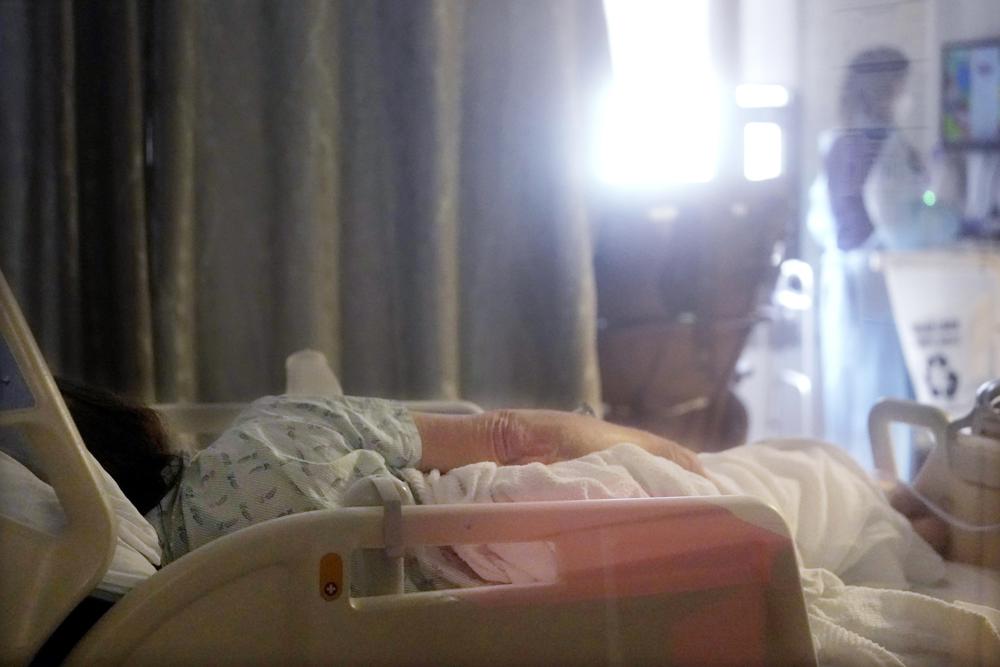
For the first time, the U.S. came close to providing health care for all during the coronavirus pandemic — but for just one condition, COVID-19. Now, things are reverting to the way they were as federal money for COVID care of the uninsured dries up, creating a potential barrier to timely access. But the virus is not contained, even if it’s better controlled. And safety-net hospitals and clinics are seeing sharply higher costs for salaries and other basic operating expenses. They fear they won’t be prepared if there’s another surge and no backstop. “We haven’t turned anybody away yet,” said Dr. Mark Loafman, chair of family and community medicine at Cook County Health in Chicago. “But I think it’s just a matter of time … People don’t get cancer treatment or blood pressure treatment every day in America because they can’t afford it.” A $20 billion government COVID program covered testing, treatment, and vaccine costs for uninsured people. But that’s been shut down. Special Medicaid COVID coverage for the uninsured in more than a dozen states also likely faces its last months. At Parkland Health, the frontline hospital system for Dallas, Dr. Fred Cerise questions the logic of dialing back federal dollars at a time when health officials have rolled out a new “test-to-treat” strategy. People with COVID-19 can now get antiviral pills to take at home, hopefully avoiding hospitalization. Vice President Kamala Harris, who recently tested positive but is back working at the White House, is an example. “Test-to-treat will be very difficult for uninsured individuals,” predicted Cerise, president and CEO of the system. “If it’s a change in strategy on the large scale, and it’s coming without funding, people are going to be reluctant to adopt that.” Officials at the federal Department of Health and Human Services say the new antiviral drugs like Paxlovid have been paid for by taxpayers, and are supposed to be free of charge to patients, even uninsured ones. But they acknowledge that some uninsured people can’t afford the medical consultation needed to get a prescription. “We hear from state and local partners that the lack of funding for the Uninsured Program is creating challenges for individuals to access medications,” said Dr. Meg Sullivan, chief medical officer for the HHS preparedness and response division. The nation has not pinched pennies on the pandemic before. “We’re well short of universal health coverage in the U.S., but for a time, we had universal coverage for COVID,” said Larry Levitt, a health policy expert with the nonpartisan Kaiser Family Foundation. “It was extraordinary.” Recently an urgent White House request for $22.5 billion for COVID priorities failed to advance in Congress. Even a pared-back version is stuck. Part of the Biden administration’s request involves $1.5 billion to replenish the Uninsured Program, which paid for testing, treatment, and vaccine-related bills for uninsured patients. The program has now stopped accepting claims due to lack of money. That program, along with a less known Medicaid option for states, allowed thousands of uninsured people to get care without worrying about costs. Bipartisan support has given way as congressional Republicans raise questions about pandemic spending. The Uninsured Program was run by the Health Resources and Services Administration, an HHS agency. Medical providers seeing uninsured people could submit their bills for reimbursement. Over the last two years, more than 50,000 hospitals, clinics, and medical practices received payments. Officials say they can turn the program back on if Congress releases more money. The Medicaid coverage option began under the Trump administration as a way to help states pay for testing uninsured people. President Joe Biden’s coronavirus relief bill expanded it to treatment and vaccine costs as well. It’s like a limited insurance policy for COVID. The coverage can’t be used for other services, like a knee replacement. The federal government pays 100% of the cost. Fifteen states, from deep blue California to bright red South Carolina, have taken advantage of the option, along with three U.S. territories. It will end once the federal coronavirus public health emergency is over, currently forecast for later this year. New Hampshire Medicaid Director Henry Lipman said the coverage option allowed his state to sign up about 9,500 people for COVID care that includes the new antiviral drugs that can be taken at home. “It’s really the safety net for people who don’t have any access to insurance,” said Lipman. “It’s a limited situation, but in the pandemic, it’s a good back-up to have. It makes a lot of sense with such a communicable disease.” With COVID cases now at relatively low levels, demand for testing, treatment, and vaccination is down. But the urgency felt by hospitals and other medical service providers is driven by their own bottom lines. In Missouri, Golden Valley Memorial Healthcare CEO Craig Thompson is worried to see federal funding evaporate just as operating costs are soaring. Staff have gotten raises, drug costs have risen by 20%, and supply costs by 12%. “We’ve now exited this pandemic … into probably the highest inflationary environment that I’ve seen in my career,” Thompson said. The health system serves a largely rural area between Kansas City and Springfield. In Kentucky, Family Health Centers of Louisville closed a testing service for uninsured people once federal funds dried up. The private company they were working with planned to charge $65 a test. Things are manageable now because there’s little demand, said spokeswoman Melissa Mather, “but if we get hit with another omicron, it’s going to be very difficult.” Floridian Debra McCoskey-Reisert is uninsured and lost her older brother to COVID-19 in the first wave two years ago. In one of their last conversations, he made her promise she wouldn’t catch the virus. McCoskey-Reisert, who lives north of Tampa, has managed to avoid getting sick so far. But she’s overshadowed by fear of what could happen if she or her husband get infected. “If either one of us get sick with COVID, we don’t have a way to pay for it,” she said. “It would
Merrick Garland: Escaped murder suspect, guard ‘extremely dangerous’
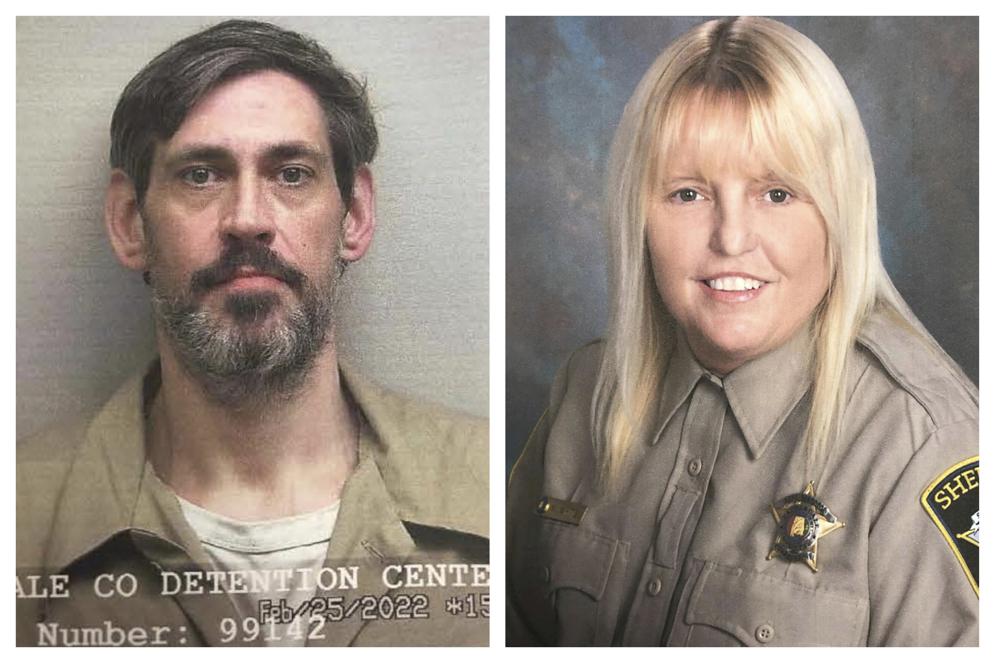
Attorney General Merrick Garland said Thursday that an escaped murder suspect and jail officer who aided him are “regarded as extremely dangerous” and the U.S. Marshals Service has taken over leading the search for the two fugitives. Law enforcement officials in Alabama have been looking for Casey White, who was awaiting trial on a capital murder case, and Vicky White, a jail official, since they vanished after leaving the Lauderdale County Detention Center last week. The two are not related, but had a “special relationship,” authorities said. Garland said they should be considered armed and dangerous and that anyone who spots them should not approach them. “They worked together in designing this plan to escape,” said U.S. Marshal Marty Keely, whose deputies are leading the hunt. Last Friday, Vicky White, 56, told her coworkers that the 38-year-old inmate needed to go to the courthouse for a mental health evaluation. She was escorting the inmate alone — a violation of the sheriff’s office policy. When she did not answer her phone or return in the afternoon, authorities realized the pair had gone missing. Authorities eventually learned that the evaluation was never scheduled and was just a charade to allow Vicky White to sneak Casey White out of the jail without suspicion. The two left in a patrol car, which was found abandoned nearby in a parking lot where investigators believe Vicky White had parked a getaway car. In the past week, authorities have learned that Vicky White purchased an array of weapons, including an AR-15 rifle in January and a shotgun two weeks before the scape. They also believe she has a 9 mm handgun with her and have received reports she may also have a .45 caliber handgun, Keely said. Federal investigators believe they had been planning the escape for at least several months, Keely said. Vicky White sold her house for $95,000 — nearly half of the market value — and had also sold her car just before the escape, he said. She had also filed paperwork to officially retire from her job. Police believe Vicky White had staged a getaway car nearby — a 2007 orange Ford Edge — that had no license plates. She bought the car just a few days before the escape and paid for it with cash, Keely said. “It was well planned,” Keely said of the escape. “She has a lot of knowledge about law enforcement procedures.” The Marshals Service and the sheriff’s office have interviewed a slew of associates, family members, and others who knew both Casey White and Vicky White and have received numerous tips in the investigation. But despite their best efforts, investigators have not come up with any solid leads to locate them. “We’ve vetted out all the leads and so far, we have no legitimate spotting,” Keely said. The Marshals Service is offering up to $10,000 reward for information leading to Casey White’s capture and a $5,000 reward for information leading to Vicky White. Authorities have said Casey White, who stands 6 feet, 9 inches (about 2 meters), should be recognizable by his size. Casey White was being held at the jail on capital murder charges in the 2015 death of Connie Ridgeway. He confessed to the slaying in 2020 while in state prison for other crimes. He’s been linked to home invasions, carjackings, and was also involved in a police chase, Keely said. Family members and colleagues said they are bewildered by the involvement of Vicky White, who had worked for the sheriff’s office for 16 years, with the inmate who was already serving a 75-year prison sentence for attempted murder and other crimes. Republished with the permission of the Associated Press.
Alabama’s new transgender care felony faces federal test
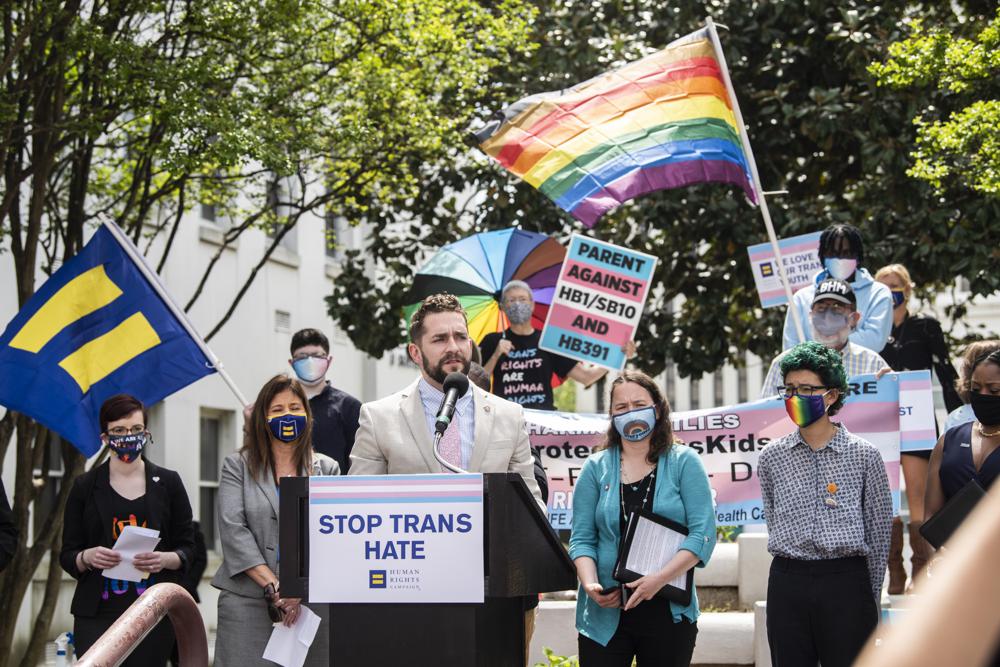
A doctor testified Thursday that there will be devastating consequences for transgender adolescents if Alabama outlaws the use of gender-affirming medications for them, and that their medical providers would face jail time for providing standard care. The testimony came in a federal court hearing as families with transgender children seek to block enforcement of the Alabama law banning the treatments. The Alabama Vulnerable Child Compassion and Protection Act, which is set take effect on Sunday, makes it a felony punishable by up to 10 years in prison for medical providers to give puberty blockers and hormones to people under age 19 to help affirm their gender identity. Lawmakers, who approved the bill this spring, said it is needed to protect children and that decisions on the medications should wait until adulthood. The legislation is part of a wave of bills in Republican-controlled states regarding transgender minors, but it is the first law to put criminal penalties on the doctors who provide the treatments to them. Dr. Morissa Ladinsky, a pediatrician who founded a Birmingham medical team that treats children with gender dysphoria, testified that the medications are part of well-established standards of care. She said her clinic is one of about 55 such clinics across the country. “This will force us into a place of risking a felony conviction for providing evidence-based care,” Ladinsky said of the impact on doctors. Ladinsky, who is not a plaintiff in the case, was testifying as a witness for families and other doctors challenging the law. Hormones, she said, are only given to older teens after a lengthy evaluation and input from multiple medical professionals. She described seeing teens transform from being sullen, and sometimes suicidal, to confident individuals ready to “join the world in ways they haven’t done before.” She testified that taking the medications away could cause an increase in mental health problems and suicidal thoughts in these youngsters. “That will take these youth to very dark places,” she said. An attorney for the state of Alabama asked Ladinsky if teens were able to comprehend the risks of the treatments. She replied that there is a lengthy conversation with teens and their parents about possible risks. The Alabama attorney general’s office, in defending the law, has argued that the treatments are motivated by ideology and that the science is unsettled. “If the court enjoins this act, Alabama children face irreversible damage from unproven, sterilizing, and permanently scarring medical interventions pushed by ideological interest groups,” lawyers for the state wrote. Twenty-three medical and mental health organizations, including the American Academy of Pediatrics, have asked to file a brief in the case urging the judge to enjoin the law. “Gender-affirming medical care is the well-recognized, accepted standard of care for adolescents at risk of or suffering from gender dysphoria,” an attorney wrote in the motion. Linda Hawkins, a counselor who co-founded the Gender and Sexuality Development Program at The Children’s Hospital of Philadelphia, testified that the treatments have shown clear benefits for children with gender dysphoria. “It would be like removing somebody’s cancer treatment and expecting them to be OK,” Hawkins testified, according to news outlets, on the impact of taking the medications away. A federal judge is hearing evidence on a request to block enforcement of the law while it’s challenged in court. The hearing will continue Friday. The judge has not indicated if he will rule before the law’s effective date. A parent of a transgender child and another doctor, both plaintiffs in the case, were set to testify Thursday afternoon, and the judge closed the courtroom for privacy reasons.