
Terri Sewell announces $3.6 million in funding to preserve Civil Rights sites
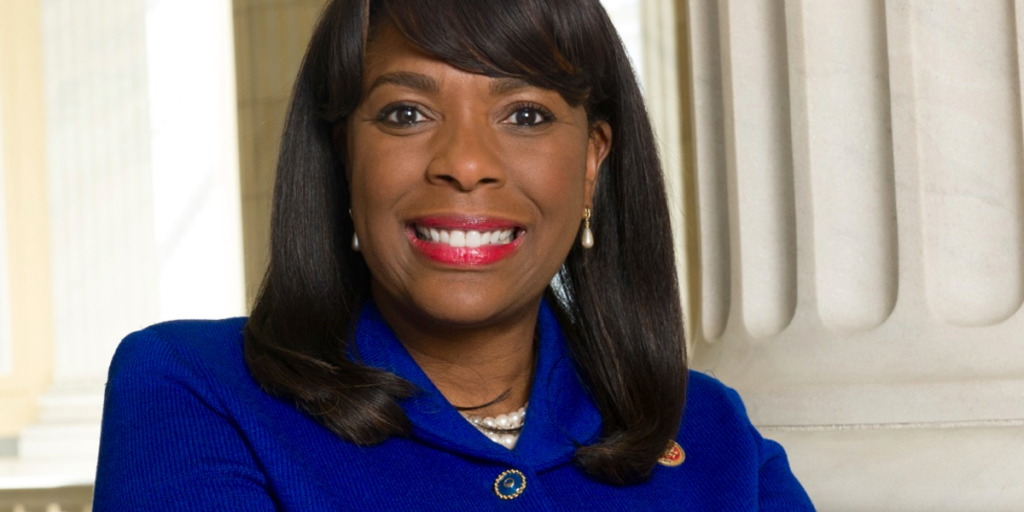
Rep. Terri Sewell announced over $3.6 million in funding from the National Park Service’s (NPS) African American Civil Rights Grant Program that is being awarded to preserve historic sites in Alabama related to Civil Rights and the African American struggle for equality. “I am thrilled that over $3.6 million in funding from the National Park Service is being invested into Alabama to preserve the living history of the Civil Rights Movement,” stated Sewell. “As the Representative of America’s Civil Rights District, I’m proud to lead the congressional effort every year to increase funding for the National Park Service Civil Rights Historic Preservation Grant Program to ensure that America’s civil rights history lives on. This is a big win for the State of Alabama and the many Foot Soldiers and Freedom Fighters on whose shoulders we stand.” According to Sewell’s press release, the grant program helps document, interpret, and preserve sites, and stories related to the African American struggle to gain equal rights as citizens. The grants are funded by the Historic Preservation Fund (HPF) and administered by the NPS. Established in 1977, the HPF is authorized at $150 million per year through 2023 and has provided more than $2 billion in historic preservation grants to States, Tribes, local governments, and nonprofit organizations. Administered by the NPS, HPF funds are appropriated annually by Congress to support various historic preservation projects to help preserve the nation’s cultural resources. Dr. Charles P. Everett IV, President of the Mount Zion AME Center Foundation, praised Sewell’s efforts to secure the funding. “The Genesis of our success began with Congresswoman Sewell,” stated Everett. “She provided information through grant workshops, which assisted our efforts in forming a team to work towards a successful application. We believe that when God gives you a vision, the provision will follow. We are grateful to the Congresswoman, God, and the entire Mount Zion A.M.E. Center Foundation Team.” The National Park Service has awarded the following grants, which total $3,665,408, for the following historic sites in Alabama: $500,000 to Birmingham’s Saint Paul United Methodist Church for preservation, restoration, and repair $50,000 to the Birmingham Black Radio Museum for the permanent exhibit at the Carver Theatre $499,799 to Auburn University for stabilization and exterior rehabilitation of the Tankersley Rosenwald School in Hope Hull $469,500 to the Alabama Historical Commission for stabilization and preservation of the Schooner Clotilda in Mobile, the Last-known Slave Ship to Import Enslaved Africans to the United States $500,000 to the Mount Zion Center Foundation, Inc. in Montgomery for the rehabilitation of the Mount Zion AME Zion Church Memorial Annex $50,000 to the Alabama Historical Commission for the Freedom Rides Museum Interior Exhibit Plan in Montgomery $50,000 to the City of Montgomery for the civil engineering of “The Civil Rights Movement in Montgomery, Alabama: The Planned Destruction of a Prosperous African American Community” $46,588 to Auburn University for “Memory and the March: Oral Histories with Selma’s Foot Soldiers” $500,000 to the Historic Brown Chapel AME Church Preservation Society, Inc. for the preservation of Selma’s endangered Historic Brown Chapel AME Church $500,000 to the Historic Tabernacle Baptist Church Selma AL Legacy Foundation, Inc. for critical systems and accessibility upgrades to Historic Tabernacle Baptist Church $499,521 to the Selma Center for Nonviolence, Truth & Reconciliation for rehabilitation of the Historic Sullivan Building for use as a community and culture center
Danny Garrett: Katie Britt is the best choice for Alabama

President Ronald Reagan was an iconic conservative politician. He was also an effective statesman and leader. Reagan’s conservatism was comprised of eleven principles: Freedom. Faith. Family. Sanctity and Dignity of Human Life. American Exceptionalism. The Founders’ Wisdom and Vision. Lower Taxes. Limited Government. Peace Through Strength. Anti-Communism. Belief in the Individual. Reagan’s conservative principles reflect the values held today by most Alabamians. In November, Alabama Republicans will select as our next Senator – either Katie Britt, Mo Brooks, or Mike Durant, who are all claiming a conservative platform and message. But which candidate is the best choice for Alabama? My analysis of the upcoming Senate race leads me to confidently conclude that Katie Britt is clearly the best choice for Alabama. Katie Britt is the only candidate who was born in Alabama, raised in Alabama, and educated in Alabama. Likewise, her husband and his family have deep Alabama roots. Katie’s story is a testimony to the fact that hard work and perseverance are important values and keys to success – traits I think are especially important for younger generations to embrace. Raised in Enterprise by parents who were small business owners, Katie worked in the family business at an early age and continued working for small businesses to help pay her college tuition. After graduating from the University of Alabama, she worked in Washington, D.C. for about two years on the staff of Senator Richard Shelby, one of the longest-serving and most effective members of Congress. In 2007, she returned to the University of Alabama to serve as special assistant to the President, after which she earned a law degree from the University. In 2016, Sen. Shelby called her back to D.C. – this time to serve as Chief of Staff for a little over two years. In 2018, Katie was selected as President and CEO of the Business Council of Alabama, an organization that had fallen upon hard times and needed a strong leader to resolve a myriad of issues. Katie assembled an impressive team that (1) reunited opposing factions within the organization; (2) significantly grew BCA’s membership; (3) increased recruitment and participation of small businesses in the BCA; and (4) restored the BCA to a strong financial position through fiscally conservative budgeting practices. For Katie to have earned the respect, cooperation, and confidence of powerful and influential leaders of both Alabama’s largest employers and small business owners is a remarkable accomplishment. Her leadership skills and her BCA experience demonstrate her potential to work with other members of Congress and be an effective Senator. In 2020, Katie was instrumental in helping develop reopening plans for small businesses in Alabama that had been shut down by the Governor’s COVID Executive Orders. Throughout her career, Katie has repeatedly demonstrated the tenacity needed to tackle hard tasks as well as an exceptional ability to work with others to achieve outstanding results. Her staunch advocacy for small businesses and hardworking Alabamians during the pandemic was vitally important, including her launch of the Keep Alabama Open movement. Second, Katie’s views and political associations are solidly conservative. As Sen. Shelby’s Chief of Staff, she joined the fight for President Donald Trump’s tax cuts, blocking excessive Federal regulations, confirming conservative judicial nominees, helping to secure the border, and standing up for the values held by most Alabamians. During his presidency, Alabama’s Senate and House delegation membersconsistently supported President Trump’s legislative agenda and judicial nominations. In fact, Sen. Shelby’s votes aligned with President Trump’s position 90.7% of the time, more than Congressman Brooks’ percentage of 88.6%. As Senator, Katie will join her Alabama Republican colleagues in Washington, D.C. to continue supporting and advancing conservative legislation while representing the values of the vast majority of Alabamians. Katie is a proven fighter, but she does more than just fight – her fighting produces results. Her impressive work record and achievements demonstrate her ability to lead, collaborate and successfully build consensus around good ideas. During her time with Sen. Shelby, she gained valuable experience working with multiple administrations to hone and develop these skills. Congressman Brooks has been elected to Congress six times by voters of the 5th Congressional District. During his tenure, he has co-sponsored many pieces of legislation. However, he has only sponsored one bill that passed into law: H.R. 6513, renaming a post office in Athens, Alabama. Durant has a distinguished military and government contracting career, but he lacks legislative experience and does not have a public record to adequately assess how he might perform as a Senator. The fact is, we just don’t know Mike Durant. Katie’s success in turning around the BCA convinces me that leadership is a strength that sets her apart from her competitors. I am convinced Katie will not only fight for conservative values and causes, but she will motivate colleagues and work with others in the Senate to build consensus and be a driving force for enacting conservative legislation that reflect the values and views of the majority of Alabamians. Finally, the U.S. Senate is a body where seniority is extremely important. Committee appointments, financial appropriations, judicial confirmations, and the ability to influence legislation are heavily dependent upon tenure. Sen. Shelby’s 36-year tenure has been extremely beneficial for Alabama, especially in his current role as top Republican on the powerful Appropriations Committee. However, upon his retirement, the next Alabama senator will be positioned at the bottom of the seniority list. Alabama’s delegation lost seniority in 2017 when Sen. Sessions resigned to become the U.S. Attorney General. Age alone is not the determinant of fitness for office, nor should it be in choosing our next Senator. However, the Senate seniority structure is an important consideration. Senator Tommy Tuberville is 68 years old. Congressman Brooks is 67. Mike Durant is 60. Katie Britt is 40. Alabama’s seniority in the Senate has the potential to be an ongoing issue for several election cycles. Katie is the best choice for Alabama to have the opportunity to retain leadership in the U.S. Senate for
Paul DeMarco: Alabama Republican party primary Senate contest a close one down to the wire

After months of crisscrossing the state, the candidates are down to their last days of campaigning before the May 24th Alabama party primaries. This has been another interesting election season with topsy turvy races up and down the ballot, but probably none more than the race for the United States Senate Republican Party Primary. Recent polling has now shown three lead changes in these candidates’ efforts to replace Senator Richard Shelby. First, Congressman Mo Brooks lead the race with the backing of former President Donald Trump. Then upstart Mike Durant took the lead with this strong military background and thousands of dollars in television advertisements. Now recent polls have shown Katie Britt has taken the lead in the Senate race. There is no question there will be a run-off in this race. It appears Britt will get the votes to move forward, but whether it will be Brooks or Durant is up for grabs. We will know next week who those two final candidates will be as we approach the finish line for the nomination. Paul DeMarco is a former member of the Alabama House of Representatives.
Daniel Sutter: What is wrong with San Francisco?

San Francisco is one of the most beautiful and affluent cities in the world. And yet San Francisco, Los Angeles, and Seattle have significant and growing homeless populations. Anyone interested in the ills of the West Coast should read Michael Shellenberger’s book San Fransicko: Why Progressives Ruin Cities. His answer: “Much of what I and other progressives had believed about cities, crime, and homelessness was all wrong.” First, some background on the author. Mr. Shellenberger has mostly written on environmental issues. He was a Time magazine “Hero of the Environment” and founded the Breakthrough Institute and Environmental Progress. His most recent book, Apocalypse Never, argued against climate change as an existential threat. How specifically do progressives destroy cities? For one, by tolerating lawbreaking and reducing or eliminating penalties for minor criminal offenses. Beyond this, progressives “prefer homelessness and incarceration to involuntary hospitalization for the mentally ill and addicted” and ignore the failures of “harm reduction” for drug addiction. They further object to temporary shelters or placing conditions on access to housing. And finally, they accuse anyone disagreeing with them of hating the poor and minorities. The closure of military bases after the Cold War ended factors in the exit of military families ended party competition; as Mr. Shellenberger notes, California voted for a Democrat for president just once between 1948 and 1988. Liberal dominance in Sacramento precludes any state check on cities. Perhaps the most fascinating element is the role of non-profit organizations. Proponents of voluntary society and minimal government, like myself, envision a major role for non-profits. Charities can provide virtually all welfare state services, probably more effectively than government. How then are non-profits part of the problem? Many influential progressives work for non-profits as opposed to holding elected office. Some non-profits will have bad ideas, just as some businesses do. But businesses with bad ideas lose money. A deli that tried selling mud sandwiches would quickly learn they need to adjust or go out of business. But as Mr. Shellenberger details, the non-profits never have to recognize their mistakes or bear any consequences. They receive funding from liberal foundations and government contracts to administer homelessness programs. The perverse logic of the public sector explains some of this; government failure often produces budget increases. The progressive non-profits also skillfully portray all dissenters as hating the homeless. The book also challenges libertarians on drug legalization. Libertarians believe that the harm from drug prohibition outweighs any potential benefits. Yet de facto legalization of hard drugs in San Francisco has not gone well, with staggering numbers of overdoses and poisonings. Let’s unpack this, starting with the mentally ill, who comprise a sizable portion of San Francisco’s homeless. I agree that “no sane psychiatrist believes that enabling and subsidizing people with schizophrenia, depression and anxiety disorders to use fentanyl and meth is good medicine.” Beyond the mentally ill, I view the opioid epidemic as a tragedy: America offers historically unparalleled wealth and opportunities, and yet too many Americans find life not worth living. That is a topic for another day. Would jailing drug abusers improve their lives? I agree with Mr. Shellenberger that people rarely address drug addiction until ready to change. But he argues that the prospect of prison often provides such motivation. Mr. Shellenberger ironically notes how progressives so badly fail the poor and powerless, whom they care so much about. I would offer a different take. Progressive planners intent on solving all the world’s problems do not truly care about real people. They care about their grand plans, which may or may not help living, breathing humans. I see this as behind the frequently documented friction between people helping the homeless and the progressive non-profits. California leads the nation in many trends, for better or worse. Let’s hope homeless encampments are not one. Liberals have long celebrated good intentions over results. San Fransicko details the consequences of decades of reckless disregard of the consequences of well-intentioned progressives. Daniel Sutter is the Charles G. Koch Professor of Economics with the Manuel H. Johnson Center for Political Economy at Troy University and host of Econversations on TrojanVision. The opinions expressed in this column are the author’s and do not necessarily reflect the views of Troy University.
Louisiana charter boat captains file suit involving GPS tracking
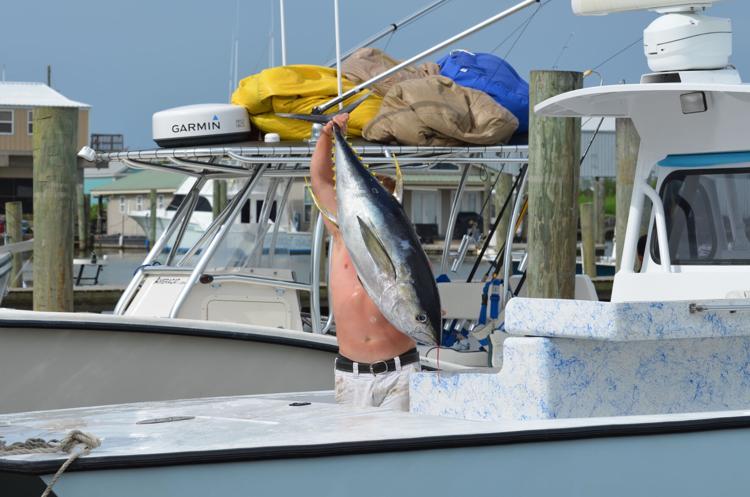
More than 1,300 federally permitted charter boat owners in the Gulf of Mexico are suing the federal government in a class-action lawsuit over an effort to force them to purchase GPS systems to track their movements. The charter boat captains, represented by attorneys at the New Civil Liberties Alliance, are suing the U.S. Department of Commerce, the National Oceanic and Atmospheric Administration, and the National Marine Fisheries Service over a requirement for owners to install GPS tracking devices on their boats at their own expense. The rule, adopted as law in July 2020, requires the owners or operators of permitted charter fishing boats in the Gulf of Mexico to submit an electronic fishing report and states each boat must be “equipped with NMFS-approved hardware and software with a minimum capability of archiving GPS locations.” The law also states, “the vessel location tracking device … must be permanently affixed to the vessel and have uninterrupted operation.” The tracking device must “archive the vessel’s accurate position at least once per hour, 24 hours a day, every day of the year,” and the device must continuously transmit the data to NMFS and the U.S. Coast Guard, according to the law cited in the lawsuit. The equipment necessary costs about $3,000, along with a monthly service fee of $40 to $75. The law became effective on January 5, 2021. Charter boat operators have been using a smartphone app they were required to download to report certain business data, including the charter fee, fuel usages, fuel price, number of passengers, and crew size, though the GPS-tracking requirement was initially “delayed indefinitely,” according to the lawsuit. NCLA filed suit on behalf of charter captains in August 2020, and on February 28, 2022, a district court denied a motion for summary judgement, as well as a request to halt the regulations. The GPS-tracking requirement became effective the next day, and NCLA immediately appealed the decision to the U.S. Court of Appeals for the 5th Circuit. NCLA filed its opening brief in the case last week, and the states of Louisiana, Alabama, Mississippi, and South Carolina, along with two public interest organizations, filed briefs with the court in support. NCLA argues the GPS tracking requirement violates the 4th and 5th amendments and imposes costly and burdensome regulations without articulating how the regulations improve conservation or fisheries management. The lawsuit notes that charter fishing accounts for less than 1% of the total catch in the Gulf of Mexico and less than 3% of the recreational fishery. NCLA also argues the “case poses complex questions regarding an agency’s obligations under the notice-and-comment and arbitrary-and-capricious requirements of the Administrative Procedure Act.” The supporting briefs center on the same issues. “The Final Rule plainly violates the prohibition of warrantless tracking via Government-installed devices recognized by the Supreme Court in U.S. v. Jones,” according to the joint brief filed by the states’ attorneys general. “While preserving the nation’s fisheries is a proper Government objective, the means by which Defendants-Appellees seek to do so must be constrained to constitutionally permissible methods. The Final Rule exceeds these bounds.” “No warrant exception, background principle of property law, custom, or common-law practice renders the physical installation and continuous operation of GPS tracking devices onboard charter fishing vessels reasonable in the absence of a warrant,” the Pacific Legal Foundation wrote. “Thus, without further examination of privacy expectations irrelevant to the Fourth Amendment’s property-rights baseline, [the Fifth Circuit] should enjoin the challenged rule mandating the installation and operation of these devices.” The Buckeye Institute argued the District Court’s decision should be reversed because the GPS tracking requirement “fails to pass constitutional muster” and “does not present an adequate substitute for a warrant because it is not limited in time or scope.” NCLA requested oral arguments in the case to “help the court navigate the complicated legal and factual issues presented.” Republished with the permission of The Center Square.
Transgender medication law in Alabama blocked by judge
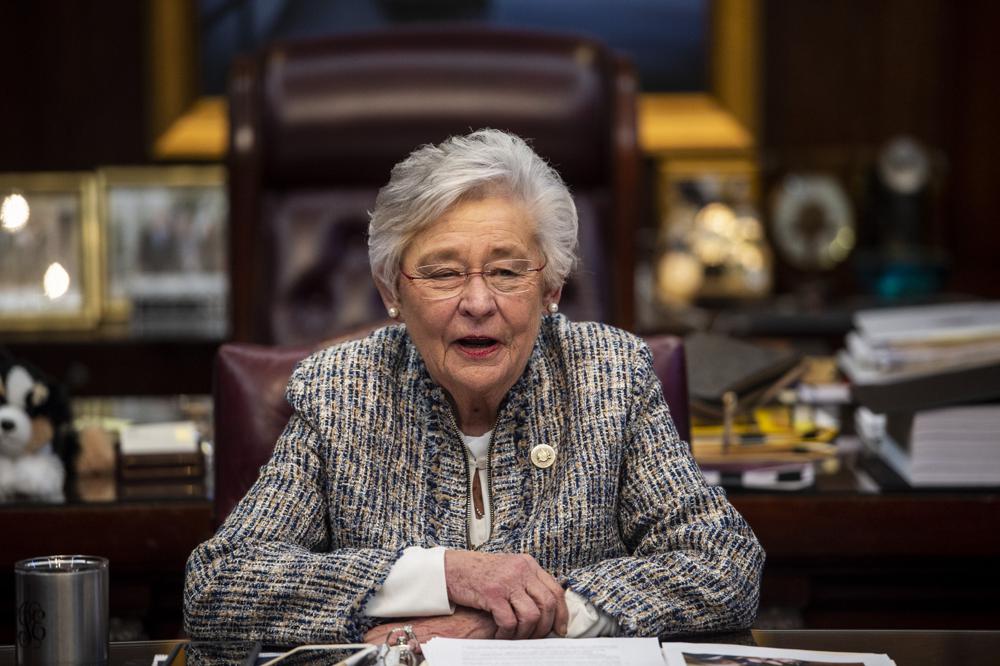
A federal judge on Friday blocked part of an Alabama law that made it a felony to prescribe gender-affirming puberty blockers and hormones to transgender minors. U.S. District Judge Liles Burke issued a preliminary injunction to stop the state from enforcing the medication ban, which took effect May 8, while a lawsuit goes forward. The ruling was a victory for families and advocacy groups who challenged the first-of-its-kind law as an illegal intrusion into family and medical decisions. Alabama Gov. Kay Ivey referred to the ruling as a “temporary legal roadblock.” Alabama’s state attorney general indicated he will appeal. “This ruling means that parents of transgender children in Alabama will continue to be able to make the healthcare decisions that are best for their families. It is an extraordinary relief. Parents should not be punished for wanting to do what’s best for their kids,” said Jennifer Levi, director of the transgender rights project for GLBTQ Legal Advocates & Defenders. The Vulnerable Child Compassion and Protection Act made it a felony, punishable by up to 10 years in prison, to prescribe or administer gender-affirming medication to transgender minors to help affirm their new gender identity. The judge left in place another part of the law that banned gender-affirming surgeries for transgender minors, which doctors had testified are not done on minors in Alabama. He also left in place a provision that requires counselors and other school officials to tell parents if a minor discloses that they think they are transgender. “We will continue fighting to protect Alabama’s children from these radical, unproven, life-altering drugs, despite this temporary legal roadblock,” Ivey said in a statement issued Saturday morning. “It is especially important while they are at such a vulnerable stage in life. We will continue to uphold our duty to ensure that children are free to grow up into the adults God intended them to be, even with today’s societal pressures and modern culture.” A spokesman said Alabama Attorney General Steve Marshall is disappointed in the court’s decision “and is already working on filing an appeal in defense of the law.” Four families with transgender children ranging in ages 12 to 17 had filed a lawsuit challenging the Alabama law as discriminatory, an unconstitutional violation of equal protection and free speech rights, and an intrusion into family medical decisions. The U.S. Department of Justice joined the lawsuit seeking to overturn the law. Burke — nominated to the court by former President Donald Trump in 2017 — ruled that Alabama had produced no credible evidence to show that transitioning medications are “experimental.” He added that “the uncontradicted record evidence is that at least twenty-two major medical associations in the United States endorse transitioning medications as well-established, evidence-based treatments for gender dysphoria in minors.” He noted testimony from a mother who said she feared her child would commit suicide if she lost access to the medications. “Enjoining the Act upholds and reaffirms the ‘enduring American tradition’ that parents — not the states or federal courts — play the primary role in nurturing and caring for their children,” Burke wrote in the opinion. Jeff Walker of Auburn, Alabama, told The Associated Press on Saturday that the ruling “took a lot of weight off our shoulders.” The Walker family is not one of the plaintiffs in the case but said they had been scrambling to figure out how to continue care for their 15-year-old daughter, Harleigh, and if they needed to move to another state. Harleigh Walker said the decision was a “huge stress relief.” The legislation was part of a wave of bills in Republican-controlled states regarding transgender minors but was the first to levy criminal penalties against the doctors who provide the medications. In Arkansas, a judge blocked a similar law before it took effect. Dr. Morissa Ladinsky, a pediatrician who founded a Birmingham medical team that treats children with gender dysphoria, said the decision was a “huge relief for transgender children and their families.” “The court’s decision recognizes that this is well-established care that has been endorsed by 22 major medical associations. This decision will ensure transgender children in Alabama and beyond can continue to receive this evidence-based well-known life-saving care,” she said. More than 20 medical and mental health organizations urged Burke to block the law. Fifteen states filed a brief in the case in support of Alabama’s law. The state attorney general’s office argued that the use of the medications is unsettled science, and thus the state has a role in regulation to protect children. During a court hearing before Burke, state attorneys argued European countries take a more conservative approach to the medications. Alabama lawmakers, who approved the bill this spring, said decisions on the medications should wait until adulthood. Republished with the permission of the Associated Press.
In early primaries, voters favor polling places over mail
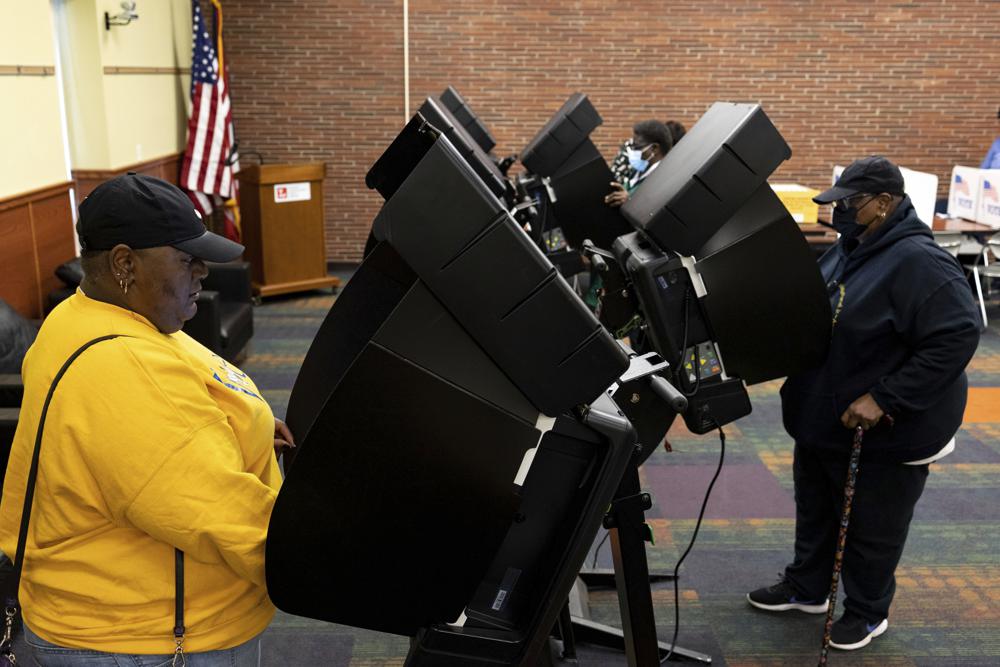
The great vote-by-mail wave appears to be receding just as quickly as it arrived. After tens of millions of people in the United States opted for mail ballots during the pandemic election of 2020, voters in early primary states are returning in droves to in-person voting this year. In Georgia, one of the most hotly contested states, about 85,000 voters had requested mail ballots for the May 24 primary as of Thursday. That is a dramatic decrease from the nearly 1 million who cast mail ballots in the state’s 2020 primary at the height of the coronavirus pandemic. The trend was similar in Ohio, Indiana, and West Virginia, which held primaries this month; comparisons were not available for Nebraska, another early primary state. A step back in mail balloting was expected, given easing concerns about COVID-19, but some election officials and voting experts had predicted that far more voters would seek out the convenience of mail voting once they experienced it. Helping drive the reversal is the rollback of temporary rules expanding mail ballots in 2020, combined with distrust of the process among Republicans and concerns about new voting restrictions among Democrats. And a year and a half of former President Donald Trump and his allies pushing false claims about mail voting to explain his loss to Democrat Joe Biden has also taken a toll on voter confidence. “It’s unfortunate because our election system has been mischaracterized and the integrity of our elections questioned,” said Ben Hovland, a Democrat appointed by Trump to the U.S. Election Assistance Commission. “Mail ballots are a safe and secure method of voting used by millions of Americans, including myself.” A record 43% of voters in the U.S. cast mail ballots in 2020, compared with 24.5% in 2016, according to the commission’s survey of local election officials. The number of voters who used in-person early voting also increased, although the jump was not quite as large as in mail ballots, the survey found. Before the November 2020 election, 12 states expanded access to mail ballots by loosening certain requirements. Five more either mailed ballots to all eligible voters or allowed local officials to do so, according to the National Conference of State Legislatures. This year, eight states will mail ballots to every eligible voter. In Georgia, state officials had adopted no-excuse mail ballots and three weeks of early, in-person voting before the pandemic. Laws surrounding mail voting changed after the 2020 election, amid Trump’s effort to discredit the outcome after his narrow loss in the state. There is no evidence to support Trump’s claims of widespread fraud or a conspiracy to steal the election. Judges, including some appointed by Trump, dismissed numerous lawsuits challenging the results. An exhaustive review by The Associated Press of every potential 2020 voter fraud case in the six states disputed by Trump found nowhere near enough instances to affect the result. That has not stopped Republican state lawmakers from citing election security concerns as justification for new restrictions to voting, and mail voting in particular. The changes have confused some voters. In Texas, voters were tripped up by new identification requirements in the state’s March primary, resulting in an abnormally high rate of mail ballot rejections. Requesting a mail ballot is significantly harder now in Georgia than in 2020 when voters could go online to request a ballot be sent to them without a printed request. Part of the 2021 voting law pushed by Republicans required voters to print or obtain a paper form, then sign it in ink before sending it in by mail, email or fax. Voters also must include their driver’s license number or some other form of identification after Republicans decided that the process of matching voter signatures was no longer enough security for an absentee ballot application. “I couldn’t even figure it out,” said Ursula Gruenewald, who lives in Cobb County, north of Atlanta. “Before, I used to just click a button on a website, and they’d send me my ballot. I don’t know what they want now.” Gruenewald said she usually votes by mail but decided last week to seek out a nearby early voting center, recalling she had waited in line for two hours to vote in person in 2016. Experts said it is too early to say whether voting patterns have shifted permanently. How people vote in primaries does not necessarily reflect how they will vote in a general election, when turnout will be heavier, and voters might be more worried about crowded polling places and long lines. Preliminary data from Ohio, Indiana, and West Virginia also shows the number of mail ballots cast this year is a fraction of what the states saw in the 2020 primaries and tracks closely to 2018 levels. In the Virginia governor’s election last year, the percentage of mail ballots cast was slightly larger than four years earlier but noticeably lower than in 2020, said Charles Stewart III, an elections expert and professor of political science at the Massachusetts Institute of Technology. “Elections are kind of going back to where they were,” he said. In Georgia, voting groups are concerned that a new earlier deadline to request a mail ballot will trip up voters if they wait too long. They also are closely watching the rate of ballot rejections. About 1,000 mail ballot applications have been rejected so far, or about 1.2% of all applications received. That is a lower rate than the 2018 primary and slightly higher than the 2020 elections. As of late last week, 195 mail ballots have been rejected, mostly because of missing or incorrect ID information, which are new requirements under state law. Common Cause Georgia deployed “self-help stations” around the state where voters could access a computer, printer, and scanner to print out a mail ballot application before Friday’s deadline. “People are believing political propaganda and not understanding this is creating more hurdles to voting,” said Aunna Dennis, the group’s executive director. Georgia voters instead are turning to early, in-person voting, which is setting records. About 305,000 ballots
