
Steve Flowers: Governor’s race down to the wire

We are down to the last few days in the 2022 Governor’s Race. For the first time in my memory, the governor’s race has been overshadowed by another race. The race to fill the void left by retiring senior U.S. Senator Richard Shelby has eclipsed the interest in the governor’s race. It is an obvious fact that our open senate seat is more competitive and interesting than a race with a popular incumbent governor running for reelection. Kay Ivey has been in control of this race since the get-go. National polls have ranked her as one of the most popular incumbent governors in the nation. Alabama’s polls have consistently shown her with a commanding lead. Most polls have her winning without a runoff. She has been bombarded by ads from two well-financed opponents. Lindy Blanchard has spent over $8 million of her own money and Tim James has spent over $4 million. They both have primarily run against transgenders. A recent Cygnal poll indicates that either Blanchard or James could force Ivey into a runoff Kay Ivey will be reelected governor. The question is whether she beats her eight opponents without a runoff. My guess is that she wins Tuesday without a runoff. However, I disagree with some Ivey naysayers and her opponents that forecast that if she does not win straight out with 50% plus one vote, she is in trouble in a June 21 runoff. My thoughts are that if she dips 45% to 48% that still does not make it a close race in the runoff. She would be at 48% and whoever finishes second will be at about 15%. She can pick up the phone as an incumbent governor and raise $2 million dollars for the six-week runoff in two days. Polling depicts a picture of the entire Republican electorate in the state. The polling is only skewed if there is a lighter-than-expected turnout. The turnout Tuesday is going to be largely due to the U.S. Senate race and the avalanche of Potomac money being spent in our state. Therefore, my belief is that Ivey’s polling numbers will hold. She will probably win outright Tuesday, if not she will win on June 21. Most of us thought Kay would not run for reelection when she won overwhelmingly in 2018. However, when she announced she was going to run for another four-year term, early polls revealed that she would be tough to beat. Those of us who follow and pontificate on Alabama politics felt that the only way she could lose is if she beat herself with a faux paus or misstep. She has avoided any potholes in this six-month campaign for reelection. Matter of fact, she has run a flawless and almost perfect campaign. Her media firm has done an excellent job with her television ads. The one with her saying, “Bless Joe Biden’s heart” and “No Way Jose” captured the essence of why she is popular. Her best attribute politically is that she comes across as your grandmama. How in the world can someone run negative ads about people’s grandmama? She has also been fortunate to have fielded a much weaker field of opponents than she had in 2018, which by the way, she beat without a runoff. Kay Ivey has done a good job as Governor and I think people, deep down, know this. They trust her as being honest and straight forward. She is running for the right reason. She has some more things she wants to accomplish for her state. You cannot say that Kay Ivey does not love Alabama. The only serious opponents that Kay has endured are Tim James and Lindy Blanchard. They have both run valiant campaigns and given it the old college try. It will be a close race to see who finishes second. However, finishing second only counts in horseshoes and it will be a distant second at best. This will be Tim James’ third try for the brass ring his father garnered twice. Three strikes and you are probably out. Lindy Blanchard has really given this race her all. She has spent a lot of her personal money, more than anyone expected. She has also crisscrossed the state campaigning hard every day. If you meet her, you cannot help but like her. However, the hill you must climb to defeat an incumbent governor is steep. We will see next Tuesday. See you next week. Steve Flowers is Alabama’s leading political columnist. His weekly column appears in over 60 Alabama newspapers. He served 16 years in the state legislature. Steve may be reached at www.steveflowers.us.
Majority of Americans say they are ‘falling behind’ rising cost of living
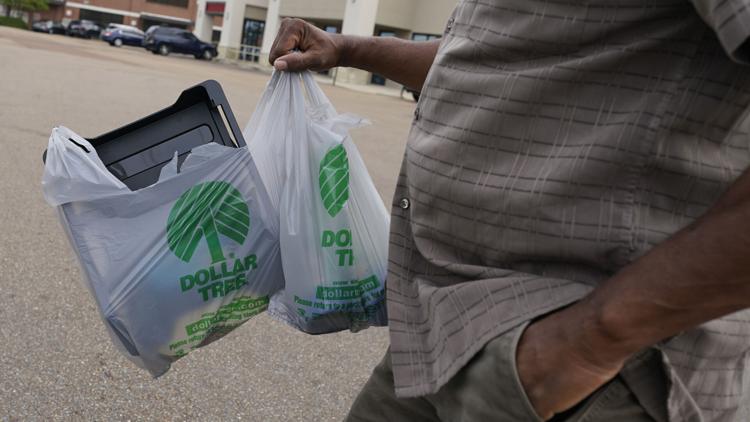
The majority of Americans feel they cannot keep up with the cost of living as inflation and the price of goods continue to rise, according to new polling data. A poll from NBC News asked Americans, “Do you think that your family’s income is … going up faster than the cost of living, staying about even with the cost of living, or falling behind the cost of living?” In response, 65% said they are falling behind, and 28% said they are staying about even with the cost of living. Only 6% said their income is going up faster than the cost of living.” The poll comes amid soaring inflation and gas prices. U.S. gasoline prices hit another record high Monday, with Americans paying $4.48 per gallon average for a gallon of regular gasoline. Gas prices have risen about 40 cents in the past month alone. The average price per gallon was $3.04 a year ago, a $1.44 increase. The latest inflation data has also shown a significant rise in prices since President Joe Biden took office, with price increases outpacing wage gains. Consumer prices have risen at the fastest rate in decades. “The Consumer Price Index for All Urban Consumers (CPI-U) increased 0.3 percent in April on a seasonally adjusted basis after rising 1.2 percent in March…” the Bureau of Labor Statistics says. “Over the last 12 months, the all items index increased 8.3 percent before seasonal adjustment.” Biden has defended his work on the economy, pointing to the jobs recovered since the pandemic. Republicans, though, point to inflation and problems with the labor market. “As Americans face record-high prices at the pump, President Biden is continuing his war on American energy by canceling oil and gas leases in Alaska and the Gulf of Mexico,” said Rep. Kevin Brady, R-Texas. “Working families are already suffering from Biden’s inflation crisis and harmful policies.” Republished with the permission of The Center Square.
William Haupt III: We need a new contract with America
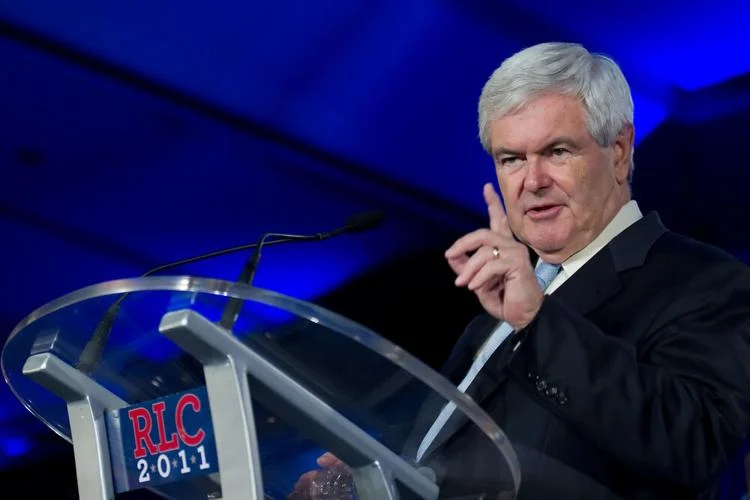
“Until someone is prepared to lay out the systemic problem, we will simply go through cycles of finding corruption, finding a scapegoat, and eliminating the scapegoat.” – Newt Gingrich Bill Clinton’s first term in office marked the beginning of the Republican Revolution. His promise to reform health care was soundly defeated. His executive order lifting the ban against gays in the military failed to energize leftist activists. And a barrage of political and personal scandals plagued the Clintons during his first term. The most deleterious scandal was that Clinton illegally profited from a back door involvement in a failed savings and loan on the Whitewater River in Arkansas. But none was more injurious to Clinton than the North American Free Trade Agreement (NAFTA). NAFTA created a common market for goods, services, and investments with Canada and Mexico. U.S. workers were forced to compete with global competition for jobs that hurt their standard of living and threatened their future. This ill-fated agreement angered the unions and labor-friendly Democrats who needed union support. And America turned to the GOP to right the sinking ship. Prior to 1994, Democrats controlled the House for 40 consecutive years, with a coalition of liberals in the north and east with southern blue-dogs. Since Democrats held the House for 58 of the last 62 years and the Senate for 34 out of 40 years, they had no fear of Republicans in the 1994 midterms. According to the University of Colorado’s Paul Teske, both Bill and Hillary Clinton were easy campaign targets for the GOP. From Hillary Clinton’s failed health care bill to numerous corruption cases in Congress and Bill Clinton’s foray into NAFTA, America was ripe for the GOP revolution. “Every revolution seems impossible at the beginning, and after it happens, it was inevitable.” – Bill Ayers It was obvious America needed a change. Liberal Democrats in the north and the good-ol-boy-left in the south had dictated Congressional policy for almost five decades – which wasn’t working. They were about to be reminded that the “political pendulum always swings both ways if it is balanced.” The late senator Bob Dole reminded Republicans that they had been the minority in Congress for so long that they had forgotten how to take charge and govern. He said in order to win, they needed a platform that had national appeal with universal solutions for all Americans, not just Republicans. In an effort to unite Americans under a common goal, six weeks before the 1994 midterm elections, House Reps. Newt Gingrich and Dick Armey introduced a “Contract with America.” As ballots were cast, this not only gave Republicans control of Congress, it would also save the Clinton presidency. The Contract with America was a legislative agenda by the Republican Party for all of America. It detailed the actions the GOP promised to take – if they became the majority in the U.S. House for the first time in four decades. This was a true bipartisan effort to solve major problems confronting our nation. “We are in a struggle over whether or not we are going to save America.” – Newt Gingrich The contract’s text included eight reforms the GOP promised to enact and ten bills they committed to bring to the floor if they took over the House. It included issues that had been polled during the first years of the Clinton administration that 60% of the American voters collectively wanted remedied. The text of the proposed bills included in the Contract was released before the election. They represented significant changes in federal policy that included a balanced budget requirement and tax cuts for businesses, families, and seniors. It also included term limits, reforms to Social Security, and tort and welfare reform. It avoided controversial matters such as abortion and school prayer. Gingrich purposely excluded how these bills and policies would be enacted and what they would cost. He did not want to distort his goals. He knew these issues concerned voters, and they wanted them fixed. And if he didn’t deliver, it would cost him his job. He only wanted to impress voters that if the GOP took over Congress, they would make changes in government that all of America wanted. Lou Cannon of the Washington Post wrote, “Democrats attacked the plan as extreme and radical, and its solutions would make America worse.” They claimed that a balanced budget, tax cuts, and welfare reform would hurt the poor and do irreparable damage to institutions that had been in place for decades.” Clinton confidant Vernon Jordan protested, “This contract is a ‘hit job’ on Americans!” Although the liberal media and the polls minimized the importance of “The Contract with America,” Election Day 1994 proved fatal for Democrats. According to Weekly Standard editor William Kristol, Gingrich was responsible for the “Republican Revolution,” with the GOP easily taking control of the House and the Senate. They also won 12 governorships and took control in 20 state legislatures. As predicted, many of the elements of Gingrich’s “contract” that passed in Congress were vetoed by Clinton, and the ones that he signed did not radically change America as the left had predicted. Although the proposed balanced budget Constitutional Amendment failed to pass, Newt Gingrich and the Republicans led the crusade to end 30 years of federal red ink and balanced the budget. Joe Biden’s regressive “contract for our nation” was to turn America into a progressive Shangri la, with no strings attached. He promised to redistribute wealth from the rich with punishing new taxes. He vowed to stop drilling for oil, increase welfare, pay people not to work, and to open our borders. “I promise that all increased spending on federal programs will be paid for by the rich.” – Joe Biden Last election, the liberal media convinced America to buy into Biden’s “contract with America” and take out Donald Trump. We are now energy dependent on rogue nations with record-high inflation, a broken supply chain, a labor shortage, and have security issues due
Buyers need 40% more income to purchase homes in top metro areas, report finds
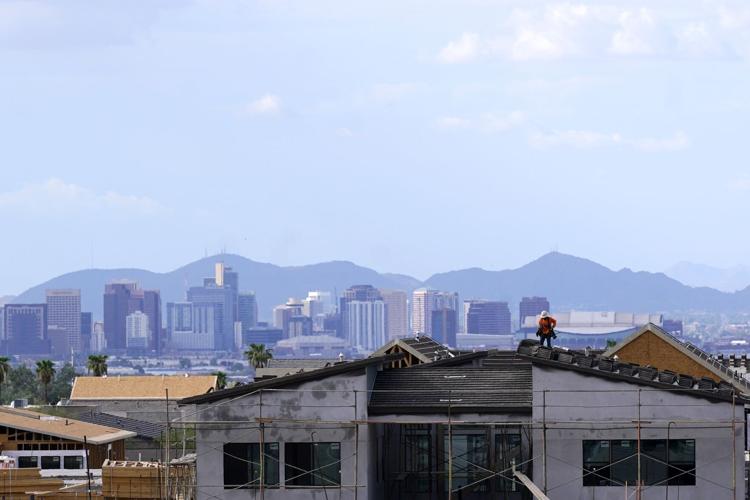
Demand for homes in certain areas of the country has caused supply to dwindle, prices to skyrocket and buyers needing nearly 50% more income than they would have last year to even enter top markets, according to a report by the real estate brokerage firm, Redfin. “Housing is significantly less affordable than it was a year ago because the surge in housing costs has far outpaced the increase in wages, meaning many Americans are now priced out of homeownership,” Redfin Deputy Chief Economist Taylor Marr said. Because more people are working remotely and can live anywhere to work, many are flocking to cities in the Sun Belt, with the most popular destinations being Tampa, Phoenix, and Las Vegas. They are also the most expensive, with potential homeowners needing more than 40% more in income than they did last year to buy. Buyers are flocking to the Sun Belt “partly because they’re relatively affordable compared to pricey coastal job centers, but the resulting rise in home prices may make them less popular in the future,” the analysis found. Tampa has quickly become the least affordable market, with homebuyers needing 47.8% more income than they did a year ago, more than in any other metro area in the U.S., the report found. Homebuyers in Tampa would need to earn $67,353 annually to afford a monthly mortgage payment of $1,684. Last year, they needed to earn $45,562. Most workers don’t make a $21,791 increase in their salary in one year, let alone in a decade. That means many who might have been able to afford to buy last year have been priced out. But those who can are buying with the median sale price hovering at $363,750. Phoenix home buyers need to earn $87,026, an increase of 45.7% from the previous year, to afford a monthly mortgage payment of $2,176 in the area. The median sale price is $470,000. Las Vegas buyers need to earn $79,620, up 45.6% from a year ago, to afford a monthly payment of $1,990. The median sale price is $430,000. Homeowners need nearly 40% or more income to buy in Orlando and Jacksonville, Florida, in Austin, Fort Worth, and Dallas, Texas, in Anaheim and San Diego, California, and in the metro areas of Nashville, Atlanta, and Charlotte, North Carolina. Redfin analyzed median home sale prices between March 2021 and March 2022. It focuses on affordability based on buyers taking out loans, not paying cash. It defines a monthly mortgage payment to be one that is no more than 30% of a homebuyer’s income. Nationwide, Americans are migrating despite high costs or because of them. A seller leaving New York with a median home sale price of $677,654, for example, is more likely to afford purchasing a home in Las Vegas or in Tampa even if the homes are overvalued there because they are far less expensive than in New York. Likewise, the cost of living is less, and Nevada and Florida levy no state income tax. A record 32.3% of Redfin.com users nationwide looked to relocate to a different metro area in the first quarter of this year, a separate Redfin analysis found. That’s up from 31.5% a year earlier, and up 26% from 2019. “Skyrocketing home prices and rising mortgage rates have made relocating to a more affordable area the only viable option for some prospective homebuyers,” the report notes. Nationwide, homebuyers need to earn $76,414 annually to afford a monthly mortgage payment of $1,910, an increase of 34.2% from the previous year. The national median home sale is $412,687, a 17.3% increase from last year. While housing costs skyrocket, wages are increasing but not at near the same pace. The average hourly wages in the U.S. grew by 5.6% last year, according to Bureau of Labor Statistics data. Over the last decade, median home prices increased by roughly 30% while household incomes increased by 11% over the same time period, a Bankrate analysis found. From 2019 to 2021, “the average house-price-to-income ratio increased from 4.7 to 5.4 — a 14.9% increase and more than double the recommended ratio of 2.6. In other words, homes cost 5.4X what the average person earns in one year,” an analysis by Clever Real Estate found. It also notes that since 1965, after accounting for inflation, home prices increased by 118% while household incomes increased by only 15%. As home prices outpace wages, inventory continues to decline. An analysis by the National Association of Realtors and Realtor.com points out that a household earning $75,000 to $100,000 can afford to buy 51% of the active housing inventory today compared to being able to purchase 58% of the homes for sale in 2019. One possible course correction could come from the Federal Reserve raising interest rates, and thereby mortgage rates. Marr notes, “The good news is that there’s a positive side to rising mortgage rates, too: They will likely slow price growth and curb competition for homes, providing a reprieve for some prospective buyers.” Republished with the permission of The Center Square.
