
Alabama sets new record low unemployment rate of 2.8%
On Friday, Gov. Kay Ivey announced that Alabama’s April unemployment rate is 2.8%, down from March’s rate of 2.9%, and well below April 2021’s rate of 3.6%. This is a new record-low unemployment rate for Alabama. “I am thrilled that after 202 years of trying, Alabama has once again reached a new record low unemployment rate, and this forward momentum is only continuing. The people of Alabama want to work, plain and simple, and that combined with our efforts helped us reach the lowest unemployment rate in our state’s history, yet again,” stated Ivey. “We have more people working today than at any other point in our state’s history. We are shattering record after record, and we’re just getting started!” According to Ivey’s press release, April’s rate represents 63,208 unemployed persons compared to 65,441 in March and 81,599 in April 2021. Additionally, 2,213,189 people were counted as employed which is also a record high. “Alabama is leading the nation, no doubt about it,” Ivey continued. “We will continue working hard to ensure our people are working. Folks, the best is yet to come.” Wage and salary employment increased in April by 6,000. Monthly gains were seen in the leisure and hospitality sector (+3,200), the manufacturing sector (+2,000), and the government sector (+1,500). Alabama Department of Labor Secretary Fitzgerald Washington commended the report indicated that the numbers for tourism were promising. “I can’t tell you the last time I’ve seen a jobs report with this many positives,” stated Washington. “This is great news for Alabama’s economy and especially for our coastal region as we move into the prime tourist season. On top of the other records, we’ve also increased wages to a new record high, with average weekly wages gaining over $21 dollars over-the-year. Additionally, the leisure and hospitality sector set yet another record for weekly wages, with a yearly increase of more than $28.” Counties with the lowest unemployment rates are Shelby County at 1.4%, Marshall County at 1.5%, and Morgan, Madison, Limestone, Elmore, Cullman, and Blount Counties at 1.6%. Counties with the highest unemployment rates are Wilcox County at 7.7%, Lowndes County at 5.5%, and Perry County at 5.4%. Major cities with the lowest unemployment rates are Homewood at 1.1%, Trussville at 1.2%, and Alabaster and Vestavia Hills at 1.3%. Major cities with the highest unemployment rates are Selma at 6.9%, Prichard at 4.5%, and Anniston at 4.0%.
Justin Bogie: Gas, grocery taxes crushing Alabama families; is this the leadership we want?
Next week, Alabama voters will cast their votes for the 2022 Primary Election. While the races for U.S. Senate and Governor are getting most of the media attention, who walks the halls of the State House for the next four years will have just as much, if not more, impact on your life. As we prepare to elect the next Alabama Legislature, it’s important to look back at what our legislators did in the last four years. Did they represent and protect the values and principles that they promised to back in 2018? Has your life improved in the last four years? For many Alabamians, the unfortunate answer to both of those questions is no, and some of the blame lies with the current legislature. Many of those same legislators’ names will appear on the ballot next week. There are two missteps by the legislature that stick out when making the argument that life has gotten harder in the past four years: the passage of the $.10 gas tax increase in 2019 and the unwillingness of our lawmakers to repeal the state’s sales tax on groceries. What our governor and some legislators might consider to be the “crowning achievement” of the past four years is the passage of the Rebuild Alabama Act (RAA) back in 2019. It was one of the first actions of the newly elected legislature and passed by a wide 111-26 margin. The RAA implemented a $0.10 per gallon gas tax increase and, by the end of this year, is projected to generate more than $320 million annually. The state keeps about two-thirds of the new revenues while counties and municipalities get the rest. Nearly $12 million per year is set aside for the Port of Mobile. When the bill was being debated, the Alabama Policy Institute argued that the gas tax increase should only be approved if some other tax, such as the grocery tax, was repealed. That didn’t happen, and the tax burden on citizens has continued to climb, culminating in Alabama’s government taking more taxes than ever from Alabamians in 2021. That extra $0.10 may have seemed absorbable to some back in 2019. It isn’t anymore. When the RAA passed, gas prices were $2.25 per gallon. Today, AAA reports that the average gas price in Alabama is $4.24 per gallon, an 88% increase in just over three years and the highest at any point in state history. The $0.10 gas tax increase approved by the current legislature and signed by the governor is hurting many Alabamians. What’s more, with the passage of a massive federal infrastructure bill last fall, Alabama will see hundreds of millions of additional transportation dollars flowing into the state over the next five years. The RAA should be repealed. Doing so would provide at least some relief from the pain at the pump that we are all experiencing, but it seems no one in Montgomery is willing to give up the revenue that it provides. In March, our current governor was asked if she would even be willing to suspend the $.10 tax increase. She responded with a resounding no and instead blamed high energy costs on President Joe Biden. Alabamians may blame Biden for many things, but he had nothing to do with raising Alabama’s gas tax. The Alabama Legislature’s failure to repeal the sales tax on groceries is much like the imposition of the new gas tax. It is hurting citizens now more than ever. This is a bipartisan issue that would immediately help all Alabamians, yet in the past four years, Alabama’s Republican supermajority has never brought a bill to repeal the grocery tax to the Alabama House or Senate floor for a vote. Thus, Alabama remains one of three states that still fully taxes groceries. The cost of groceries is up 9.3% in the last year. The price of meat, poultry, fish, and eggs has increased by over 14%. Americans haven’t seen inflation like this in 40 years, and it is having a crushing effect on family budgets. Our state government began this year with a $1.5 billion revenue surplus. That’s on top of tens of billions of federal dollars that have flowed to the state in the form of COVID-19 relief since 2020. Yet they weren’t willing to give up around $500 million in revenue to help literally every resident of this state. The fact that the Alabama Legislature has done nothing about the grocery tax is indefensible. Combined with raising the gas tax, the effects are even more damaging. Is this the kind of leadership that we want for the next four years? Justin Bogie is the Senior Director of Fiscal Policy for the Alabama Policy Institute.
Barry Moore blasts Democrats, blames them for energy crisis

Rep. Barry Moore issued a statement on H.R. 7688, the Consumer Fuel Price Gouging Prevention Act, a bill that Moore believes seeks to blame energy producers for high energy prices by outlawing price gouging. Price gouging is already illegal. According to Moore’s press release, this bill is an attempt by the democrats to distract and shift blame from the administration’s self-inflicted energy and inflation crisis and blame energy producers, despite no evidence of price gouging. At an Energy & Commerce hearing earlier this month when confronted with the question, Energy Secretary Jennifer Granholm said, “I’m not sure anyone is saying there is wholesale gouging”. “The Biden administration crippled American energy production, reducing supply and driving up prices, yet is blaming energy producers for the crisis by pushing a bill prohibiting price gouging, which is already illegal,” said Moore. “This outrageous hypocrisy is why Americans hate Washington and is the perfect illustration of why voters are increasingly losing trust in Democrats to offer solutions for the crises they face.” The Biden administration canceled the Keystone XL pipeline and suspended oil and gas leasing on federal lands. Additionally, the administration has discouraged development of American natural resources leading to a surge in U.S. oil and gasoline prices over the past sixteen months. Moore also argued that House Democrats have repeatedly blocked attempts by Republicans to bring bills to the floor that would actually address the problem and return the U.S. to the energy-independent nation it was during the Trump administration. “H.R. 7688 would take the unprecedented step to allow the FTC to investigate and take enforcement action against “unconscionable pricing” in consumer fuels, a term that is not defined by the bill and amounts to a socialist price-fixing scheme that hurts small businesses and consumers the most,” wrote Moore. “Democrats are further politicizing the FTC by giving these wide-ranging powers based on undefined parameters that will allow it to usurp market forces and set government-controlled gasoline prices, a step that history has shown will lead to less energy production and further exacerbate families’ pain at the pump.” Just last week, President Joe Biden canceled the three remaining oil and gas lease sales scheduled in Alaska and the Gulf of Mexico, and the Administration has failed to plan any future lease sales
Former sheriff William Ray Norris pleads guilty to federal charges
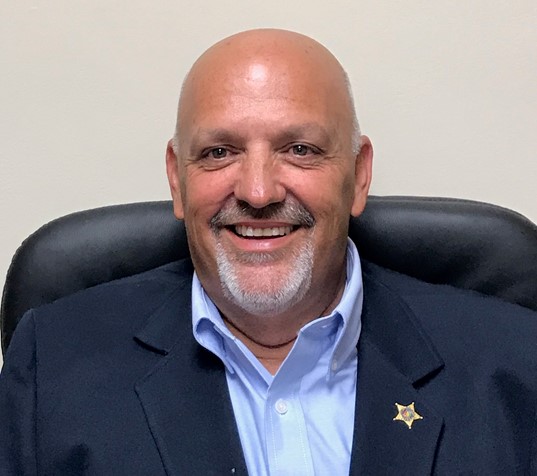
A former Alabama sheriff who resigned last year rather than face an impeachment inquiry said he is innocent of federal charges that he used improper loans to pay personal expenses, including gambling debts. Former Clarke County Sheriff William Ray Norris pleaded not guilty to charges of making false statements to federally insured banks during a hearing Wednesday, news outlets reported. Norris was accused of taking out nearly $50,000 in bank loans in 2017 and 2018 to pay personal debts while claiming the money was for expenses at the sheriff’s office, a federal indictment said. He was accused of seeking a nearly $70,000 loan for a piece of machinery in 2020 when the money actually went to personal expenses, it said. Norris and a friend, Danny Lee Beard Jr., also were accused of applying for additional loans worth tens of thousands of dollars, and Beard was separately accused of making false statements to obtain a pandemic relief loan of more than $74,000. Beard previously pleaded not guilty to the charges, and a judge scheduled a trial for both in July, records show. Norris resigned as sheriff a year ago before he was scheduled to appear in a hearing at the Alabama Supreme Court to respond to an impeachment complaint filed by the state attorney general’s office. Norris was accused of multiple acts of malfeasance, including filing false financial disclosure forms and taking thousands of dollars from a company whose owner got payments from the sheriff’s office. Republished with the permission of the Associated Press.
Election 2022: Nine Republicans, six Democrats in Alabama gubernatorial primary
A crowded field of Alabama gubernatorial candidates are on the ballot next week as voters head to the polls for the state’s partisan primary election. Nine Republicans and six Democrats are vying for the top-level post in the May 24 primary. The ultimate victor will be decided in the November 8 general election. Republicans Incumbent Gov. Kay Ivey is seeking reelection as her first term comes to a close. Two other Republican candidates have past or present political experience, meaning many of this year’s hopefuls are new to the political arena. Ivey has held other state-level positions in the past two decades. Prior to winning the governor’s race in 2018, she ran for two consecutive terms as lieutenant governor – 2010 and 2014 – and also had a stint as a state treasurer for two terms, beginning in 2002. “I believe in standing up for the little guy, and fighting for the forgotten,” Ivey wrote on her campaign website. “It’s what I’ve done all my life, and that’s not changing now.” Several other candidates on the Republican ticket have prior political experience at various levels of government. Stacy George, for example, served two terms as Morgan County commissioner, from 2000 to 2008. “For as long as I can remember, following in my father’s footsteps, I knew I wanted to dedicate myself to public service,” George wrote on his campaign website. “I want to work for the people of Alabama as governor and give the people a government that works for them.” Dave Thomas is another Republican challenger with past political experience. He served as a state legislator from 1994 to 2002. “You need a representative that will support your ideas, fight for the needs of your community and earn your respect,” Thomas wrote on his campaign page. A number of other Republican candidates have garnered the spotlight this campaign season, in terms of donations and political messaging, as the primary has drawn closer. Lindy Blanchard has touted her family’s deep Alabama roots, and Lew Burdette has noted his business acumen. Tim James has pointed to his namesake company – which specializes in infrastructure projects – as an asset. Rounding out the list of candidates on the Republican ticket are yoga instructor Donald Trent Jones, who has run on the platform of “Make Alabama Grateful Again”; Dean Odle, who is taking aim at so-called “fake Republicans”; and Dean Young, who aspires to bring faith back into government. Democrats One of the six Democratic gubernatorial candidates, Malika Sanders-Fortier, has a background in politics. Sanders-Fortier has represented District 23 in the Alabama State Senate since 2018. “It’s harvest time in Alabama,” Sanders-Fortier wrote in a campaign statement. “Let us encourage everyone to invest their time, talent and treasure in our state, so Alabama prospers, and the dream of the community comes true.” Other Democratic gubernatorial candidates on the ticket include Yolanda Rochelle Flowers, whose background includes speech pathology; Patricia Salter Jamieson, who has worked in clinical health and ministry; and Arthur Kennedy, an educator. Rounding out the list of Democratic candidates are Chad “Chig” Martin, who has worked in such disparate industries as hemp and mobile homes; and Doug “New Blue” Smith, a businessman and former political staffer. Issues This campaign season, a number of hot-button issues – many reflecting challenges seen across the country – have been bubbling to the surface as the candidates face off and vie for the top-level post in Montgomery. The list includes Alabama’s 10-cent gas tax, job growth, prison reform and education. Against the backdrop of skyrocketing gas prices, candidates have given different takes on the state’s fuel tax, which was implemented in 2019 and includes provisions of future 1-cent incremental increases. Ivey in recent statements on the topic has pointed the finger at the federal government and widespread inflationary pressures as reasons Alabama’s tax is a talking point this year. But other candidates have taken a more hard-lined stance on the issue. “I will repeal the gas tax of 2019 immediately,” George wrote on his campaign site. On her site, Blanchard wrote, “I will never participate in the kind of backroom deals that were the precursor to the gas tax increase that has been devastating to Alabama families.” The support of marijuana legalization also been raised this campaign season in Alabama. Supporters include Salter Jamieson, who indicated on her campaign page she favored it, along with ending the sentences of anyone found guilty in past nonviolent convictions. A candidate on either party ticket must receive more than 50% of the vote total on May 24 to advance to the fall general election November 8. If no candidate wins the majority, a runoff election will be held June 21 between the top two vote-getters.
Mark Mix: Big Labor fights dirty over control of Southeast port jobs
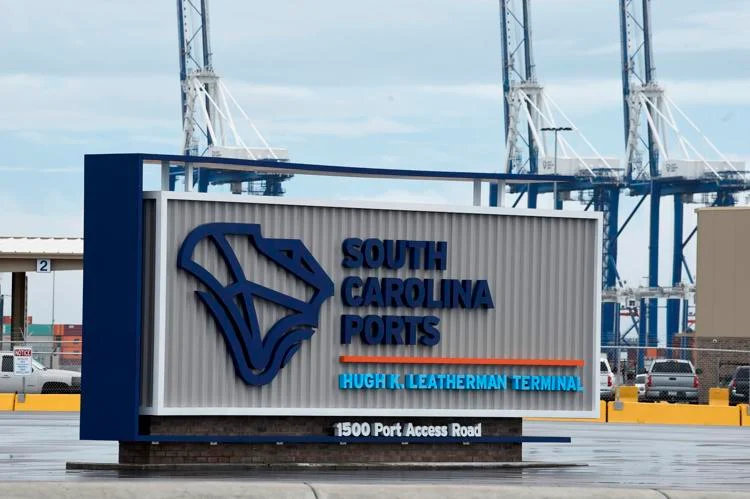
One might suppose that even the reflexively pro-Big Labor Biden Administration would want to keep its distance from International Longshoremen’s Association (ILA) union President Harold Daggett. For decades, ILA bosses like Daggett have, as the New York Daily News recently noted, “held a tight grip on who is hired” at seaports all along the East and Gulf Coasts of the U.S. And today, Daggett and his cohorts are allegedly wielding their substantial control over prime port jobs to benefit people with “direct connections to crime families or high-ranking ILA officials,” as reporter Clayton Guse wrote for the Daily News on March 13. A case in point are the “special deals” extracted from the New York Shipping Association by ILA negotiators on behalf of more than 200 longshoremen in New York and New Jersey, enabling them to be paid for up to 27 hours of “work” a day, seven days a week, if they show up for a total of 40 hours a week. Of course, terminal operators and shipping companies pass on the cost of such exorbitant and inequitable deals to ordinary consumers across the U.S. (Can you spell I-N-F-L-A-T-I-O-N?) Even worse, according to law enforcement sources who communicated with the Daily News, most of the longshoremen who rake in $400,000 a year or more thanks to “special deals” are relatives or cronies of mobsters and ILA kingpins. For example, according to payroll records obtained by the Daily News, one of the “highest-paid New York-area longshoremen” is Ralph Gigante Jr. – the nephew of deceased Genovese crime boss Vincent “The Chin” Gigante. In 2019, Gigante Jr. made more than $423,000 as a port maintenance man! Daggett, who personally has been accused, but never convicted, of “fraud, extortion, and other mob-related charges,” sees no problem with allegedly Organized Crime-connected ILA union bosses determining who gets the plummiest jobs at seaports located from Maine to Texas and who doesn’t. And he detests laws and policies that curtail union bosses’ power to reward their friends and punish their enemies. That’s why the “hybrid” work models that have long been in place at the ports of Wilmington, Charleston, and Savannah, located respectively in Right to Work North Carolina, South Carolina, and Georgia, are on the ILA hit list. At “hybrid” port terminals, union-free state employees operate ship-to-shore cranes and other heavy-lift equipment, even as other front-line jobs are performed by workers who are subject to ILA control. With the clear aim of ultimately driving all nonunion heavy-equipment operators out of the Wilmington, Charleston, and Savannah ports, the ILA is currently threatening to sue any carriers that dock at Charleston’s new Hugh K. Leatherman Terminal for hundreds of millions of dollars for supposedly violating the union’s contract with them. Rather than risk being hauled into court, most carriers are refusing to load and unload shipments at Leatherman. Consequently, roughly a year after its opening, the terminal stands mostly idle. And ILA officials gloat that it will stay that way until the South Carolina Ports Authority (SCPA) caves in and turns Leatherman’s heavy-lift equipment jobs over to the ILA union. But port officials who don’t want their entire front-line workforce to be corralled under union monopoly bargaining have ample reason to believe the law is on their side. Last September, National Labor Relations Board (NLRB) Administrative Law Judge Andrew Gollin rejected union lawyers’ claims and branded the Leatherman power grab as a bid to “acquire work not traditionally performed by unit employees,” which constitutes “unlawful, secondary activity.” Union officials are challenging Gollin’s ruling but have little legal ground to stand on. Meanwhile, the SCPA continues to press the NLRB to put an end to the illegal boycott of the Leatherman Terminal. Daggett and Co. are counting on pro-forced unionism bureaucrat Lauren McFerran, whom President Joe Biden elevated to the NLRB chairmanship last year, and two other NLRB members selected by Biden last year to sit on this case while they continue to break the law. If top ILA union bosses turn out to be right about the NLRB, then the hybrid work model that has greatly enhanced the competitiveness of the major North Carolina, South Carolina, and Georgia ports will be in grave jeopardy. Mark Mix is President of the National Right to Work Committee.
