
Alabama Conservative Party endorses Tim James for Governor
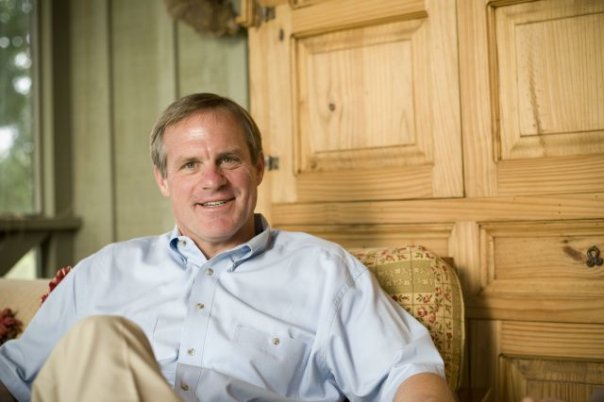
The campaign for Tim James announced today that The Alabama Conservative Party has endorsed James for Governor of Alabama. The Alabama Conservative Party is the exclusion state affiliate of the national political party, Conservative Party USA. “…There is a strong stand out in our opinion. That Stand out is Tim James. Tim has a very strong message backed with solid workable plans to address some of the real issues in Alabama. These set Tim apart from the rest,” the endorsement stated. The group emphasized how the “betrayal” of the Kay Ivey Gas Tax issue swayed their position. The Alabama Conservative Party stated that Ivey “must be defeated” as Alabama’s Governor in the GOP Primary. “Plans not just dry rhetoric on abolishing tax on essentials like food and to remove the Ivey gas tax plus stop the forever increases without a vote and how to pay for it all. Tim clearly shows respect for the U.S. Constitution in his policies and also holds the values we stand for in Conservative Party Alabama. For these Reasons Conservative Party proudly Endorses Tim James for Governor of Alabama in the upcoming 2022 May GOP Primary,” the endorsement continued. James expressed thanks for the endorsement. ”Conservative voices across the nation are being silenced, and it is an honor to receive the endorsement of The Alabama Conservative Party. Alabama needs a Governor who has the grit and the strength to fight back, and I stand ready to be a firewall for this state,” James commented. Additionally, the group has endorsed Mo Brooks for the U.S. Senate race, Jim Zeigler for the Secretary Of State position, Andrew Sorrell for State Auditor, and Brent Woodall for PSC Place 1.
Religious backers of abortion rights say God’s on their side
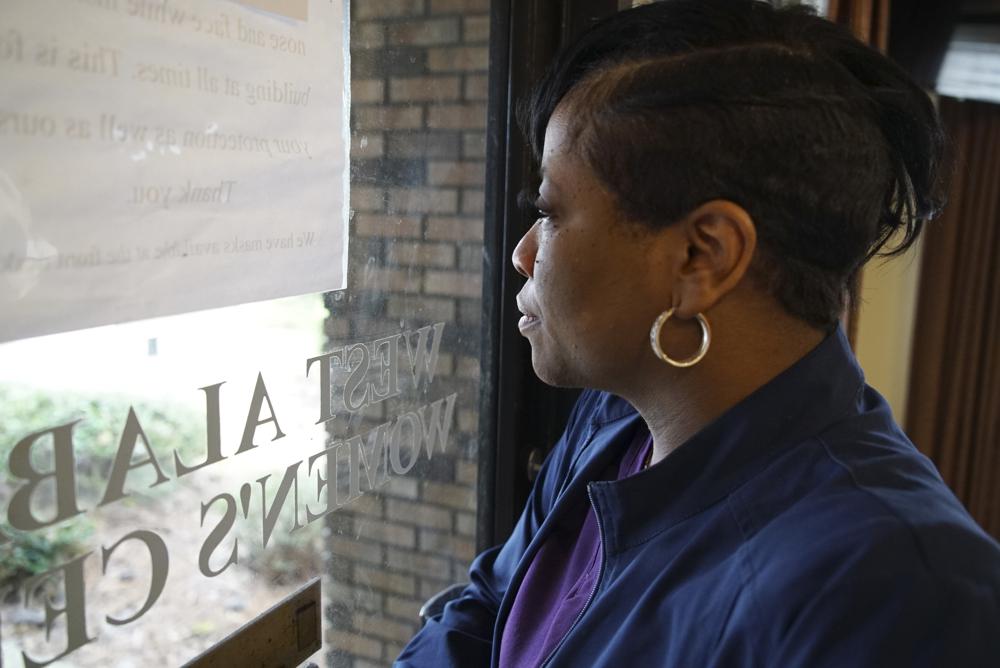
It was lunch hour at the abortion clinic, so the nurse in the recovery room got her Bible out of her bag in the closet and began to read. “Trust in the Lord with all your heart, and lean not on your own understanding,” her favorite proverb says, and she returns to it again and again. “He will make your paths straight.” She believes God led her here, to a job at the West Alabama Women’s Center, tending to patients who’ve just had abortions. “I trust in God,” said Ramona, who asked that her last name not be used because of the volatility of America’s abortion debate. Out in the parking lot, protesters bellowed at patients arriving for appointments, doing battle against what they regard as a grave sin. The loudest voices in the abortion debate are often characterized along a starkly religious divide, the faithful versus not. But the reality is much more nuanced, both at this abortion clinic and in the nation that surrounds it. The clinic’s staff of 11 — most of them Black, deeply faithful Christian women — have no trouble at all reconciling their work with their religion. And as the U.S. Supreme Court appears poised to dismantle the constitutional right to an abortion, they draw on their faith that they will somehow continue. God is on our side, they tell each other. God will keep this clinic open. Robin Marty, who moved from Minneapolis to Tuscaloosa a couple of years ago to help run this clinic, was surprised to hear nurses pray for guidance as the future of abortion grows uncertain. “That is one of the things that has caused a whiplash for me — I had this stereotype in my head of a Southern religious person,” said Marty. “I just assumed that there was no compatibility between people who are religious and people who support the ability to get an abortion.” Marty realized she was wrong. It’s a common error. “We need to have a real conversation about what we describe as Christianity,” said Kendra Cotton, a member of the Black Southern Women’s Collective, a network of Black women organizers, many of them from faith-based groups. The white evangelical worldview that abortion is murder has consumed the conversation, flattening the understanding of how religion and views on abortion truly intersect, she said. Before Roe v. Wade, faith leaders in many places led efforts to help pregnant women access underground abortions because they considered it a calling to show compassion and mercy to the most vulnerable. Now, Black Protestants have some of the most liberal views on access to abortion: Nearly 70% believe abortion should be legal in most or all cases, according to the Public Religion Research Institute. White evangelicals are the other extreme, with only 24% believing abortion should be allowed in most or all cases. For faithful women of color, there’s often a very different balancing act of values when confronting the question of whether women should be able to end unwanted pregnancies, Cotton said. “We know that Christianity supports freedom, and inherent in freedom is bodily autonomy. Inherent in Christianity is free will. When people talk about the body being a temple of God, you have purview over your body, there is nothing more sacred,” Cotton said. The idea of the state restricting what a person can do with their own body is in direct conflict with that, she said, and it is reminiscent of being under someone else’s control — of slavery. “You don’t get to tell me what to do,” Cotton said. In Tuscaloosa, the West Alabama Women’s Center sits on the edge of a nondescript medical plaza, a half-mile from the University of Alabama campus. Though many of the center’s clientele are college students, others come from all over the state and some surrounding ones — it is the only abortion clinic for two hours in every direction. Many of their clients are Black, many already have children, and more than 75% survive below the poverty line. Every patient comes into Ramona’s recovery room after their abortion. She keeps the lights low. Working here, to her, feels like a righteous calling. She believes the Christian way is to love people where they are, and that means walking kindly with them as they make the best decision for themselves. Sometimes they cry and tell her they didn’t want to be there. She’s heard stories of rape and domestic violence, but most talk about fear of having more mouths they can’t afford to feed. She always says, “I understand.” “I mean that. I do understand, I’ve gone through that myself,” she said. Ramona, 39, is a single mother of four children and had her first child at 16. She sometimes imagines what her life might have been had she started her family later. She had to drop out of college. There were times, when her children were young, when she couldn’t pay the gas bill, and she boiled water so they could have warm baths. “Women go through so much, it’s hard,” she said. “So you should have that choice, whether or not you’re ready to be a mother. No one else should choose for you.” Her daughter used to say “Mom, I want to be just like you,” and she would stop her. “No ma’am,” she’d say to her. “I want you to be better.” Her daughter is now 22 and studying to be a doctor. She clawed herself out of poverty and built a life she loves. Her co-worker at the front desk calls her Miss Wonderful — she’s at peace with God, she said, so every day is a great one. For a time, she tried to be friendly with one of the regulars who protested outside, trying to convince patients that abortion is murder and they shouldn’t go in. She’d visit on her breaks or as she was leaving for the day. They discussed Scripture, forgiveness, and sin. She’d say, “I can see where
Joe Biden: U.S. would intervene with military to defend Taiwan
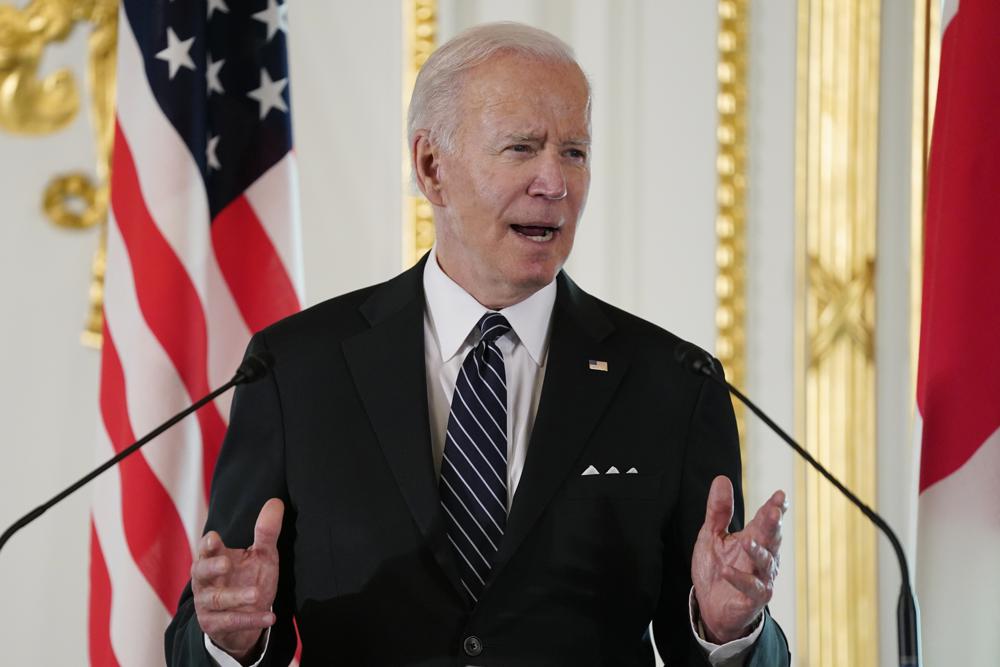
President Joe Biden said Monday that the U.S. would intervene militarily if China were to invade Taiwan, saying the burden to protect Taiwan is “even stronger’ after Russia’s invasion of Ukraine. It was one of the most forceful presidential statements in support of self-governing in decades. Biden, at a news conference in Tokyo, said “yes” when asked if he was willing to get involved militarily to defend Taiwan if China invaded. “That’s the commitment we made,” he added. The U.S. traditionally has avoided making such an explicit security guarantee to Taiwan, with which it no longer has a mutual defense treaty, instead maintaining a policy of “strategic ambiguity” about how far it would be willing to go if China invaded. The 1979 Taiwan Relations Act, which has governed U.S. relations with the island, does not require the U.S. to step in militarily to defend Taiwan if China invades but makes it American policy to ensure Taiwan has the resources to defend itself and to prevent any unilateral change of status in Taiwan by Beijing. Biden’s comments drew a sharp response from the mainland, which has claimed Taiwan to be a rogue province. Chinese Foreign Ministry spokesperson Wang Wenbin expressed “strong dissatisfaction and resolute opposition” to Biden’s comments. “China has no room for compromise or concessions on issues involving China’s core interests such as sovereignty and territorial integrity.” He added, “China will take firm action to safeguard its sovereignty and security interests, and we will do what we say.” A White House official said Biden’s comments did not reflect a policy shift. Speaking alongside Japanese Prime Minister Fumio Kishida, Biden said any effort by China to use force against Taiwan would “just not be appropriate,” adding that it “will dislocate the entire region and be another action similar to what happened in Ukraine.” China has stepped up its military provocations against democratic Taiwan in recent years aimed at intimidating it into accepting Beijing’s demands to unify with the communist mainland. “They’re already flirting with danger right now by flying so close and all the maneuvers that are undertaken,” Biden said of China. Under the “one China” policy, the U.S. recognizes Beijing as the government of China and doesn’t have diplomatic relations with Taiwan. However, the U.S. maintains unofficial contacts, including a de facto embassy in Taipei, the capital, and supplies military equipment for the island’s defense. Biden said it is his “expectation” that China would not try to seize Taiwan by force, but he said that assessment “depends upon just how strong the world makes clear that that kind of action is going to result in long-term disapprobation by the rest of the community.” He added that deterring China from attacking Taiwan was one reason why it’s important that Russian President Vladimir Putin “pay a dear price for his barbarism in Ukraine,” lest China and other nations get the idea that such action is acceptable. Fearing escalation with nuclear-armed Russia, Biden quickly ruled out putting U.S. forces into direct conflict with Russia, but he has shipped billions of dollars in U.S. military assistance that has helped Ukraine put up a stiffer-than-expected resistance to Russia’s onslaught. Taipei cheered Biden’s remarks, with Ministry of Foreign Affairs spokesperson Joanne Ou expressing “sincere welcome and gratitude” for the comments. “The challenge posed by China to the security of the Taiwan Strait has drawn great concern in the international community,” said Ou. “Taiwan will continue to improve its self-defense capabilities and deepen cooperation with the United States and Japan and other like-minded countries to jointly defend the security of the Taiwan Strait and the rules-based international order while promoting peace, stability, and prosperity in the Indo-Pacific region.” It’s not the first time Biden has pledged to defend Taiwan against a Chinese attack, only for administration officials to later claim there had been no change to American policy. In a CNN town hall in October, Biden was asked about using the U.S. military to defend Taiwan and replied, “Yes, we have a commitment to do that.” Biden’s comments came just before he formally launched a long-anticipated Indo-Pacific trade pact that excludes Taiwan. White House national security adviser Jake Sullivan confirmed Sunday that Taiwan isn’t among the governments signed up for the Indo-Pacific Economic Framework, which is meant to allow the U.S. to work more closely with key Asian economies on issues like supply chains, digital trade, clean energy, and anti-corruption. Inclusion of Taiwan would have irked China. Sullivan said the U.S. wants to deepen its economic partnership with Taiwan on a one-to-one basis. Republished with the permission of The Associated Press.
Monday is last day to return absentee ballot by hand for primary election

The Secretary of State website announced today that today is the last day to return absentee ballots by hand for the primary election. The absentee voting period for the May 24th Primary Election began on March 30, 2022. Ahead of the May 24th Primary Election, Secretary of State John Merrill would like to remind Alabama voters that today is the last day that the Absentee Election Manager can receive an absentee ballot by hand for the Primary Election. Voters have until the close of business today. However, the Absentee Election Manager may still receive absentee ballots by mail until noon on Election Day. Absentee ballot applications can be downloaded online or requested by visiting the local Absentee Election Manager’s office. Important absentee voting deadlines are listed below: May 17, 2022: The last day that absentee ballot applications can be returned by mail. May 19, 2022: The last day that absentee ballot applications can be returned by hand. May 23, 2022: The last day to return absentee ballots by hand to the Absentee Election Manager. May 24, 2022: Absentee ballots must be returned by mail to the Absentee Election Manager no later than noon. Voters who are eligible to vote pursuant to the Uniformed and Overseas Absentee Voting Act (UOCAVA) will have until May 24, 2022, to postmark an absentee ballot. If you have any questions or concerns, contact the Secretary of State’s Elections Division at 334-242-7210.
Alabama school workers sue over county’s demand for $55,000

Two school workers filed suit Friday claiming a central Alabama school system is wrongly trying to make them repay more than $55,000 total in salary that administrators claim they weren’t due. Christie Payne, a cafeteria manager at Verbena High School, and Shellie Smith, a career tech teacher, contend they didn’t realize they were being paid too much by Chilton County’s school system following promotions, and it was the central office’s duty to pay them the correct amount. Having to pay back the money now would cause an undue financial burden, their suit claimed. Superintendent Jason Griffin, who was named in the lawsuit, didn’t file an immediate response in court but has publicly defended the repayment demands in the past. A judge issued an order temporarily blocking the school system from trying to collect the money or firing the workers and scheduled a hearing for May 31. Payne received a letter from Griffin in April claiming she must repay $23,465 she received in excess pay after being promoted from assistant lunchroom manager to manager during the 2016-2017 school year, according to court documents. Smith received a similar letter demanding $32,948 for pay she received after she went from being a school nurse to a teacher in the 2018-2019 academic year. Both women were mistakenly credited with years of experience they didn’t have for the new positions, Griffin wrote. He proposed either lump-sum repayments or payment plans stretching over years. Both workers deny that they were overpaid and say they shouldn’t have to repay anything. The lawsuit, filed by the Alabama Education Association, contends Griffin acted on his own without going through proper procedures to demand the money. Smith’s husband is a member of the Chilton County School Board. Republished with the permission of The Associated Press.
GOP primary race for Alabama Senate seat turns bitter
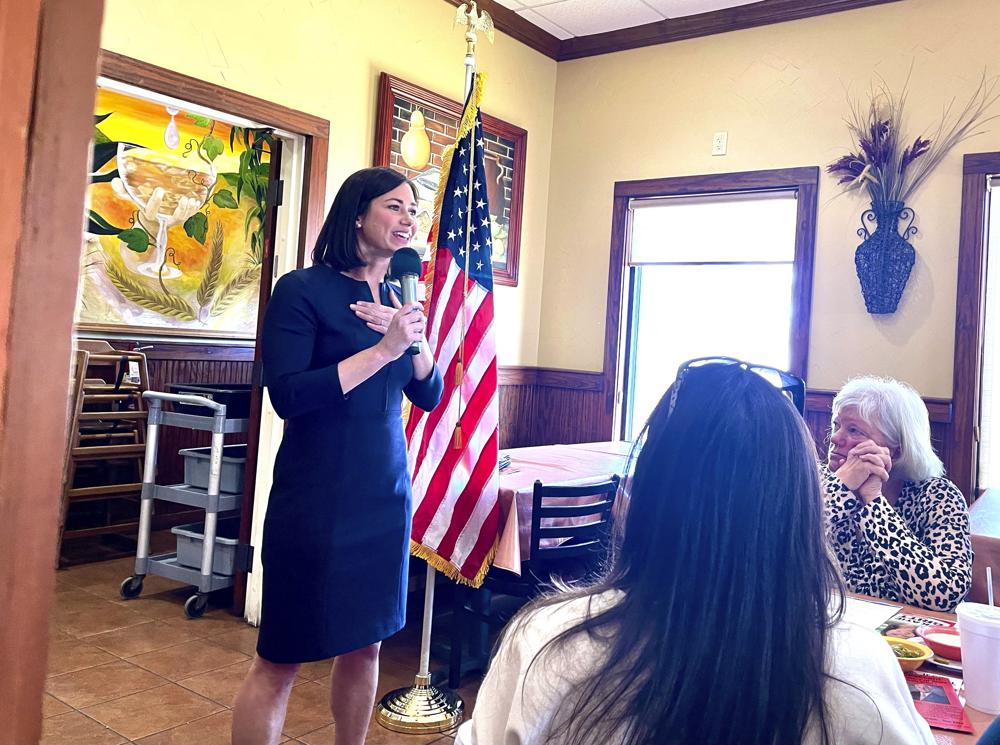
Alabama’s Republican primary for the U.S. Senate seat being vacated by retiring U.S. Sen. Richard Shelby has become a bitter high-dollar contest with the three strongest contenders jockeying for the nomination. The leading candidates are U.S. Rep. Mo Brooks, who won — and then lost — former President Donald Trump’s backing in the race; Katie Boyd Britt, the former leader of Business Council of Alabama and Shelby’s former chief of staff; and Mike Durant, an aerospace company owner best known as the helicopter pilot whose capture during a U.S. military mission in Somalia was chronicled in the “Black Hawk Down” book and subsequent movie. Lillie Boddie, Karla M. Dupriest, and Jake Schafer are also seeking the GOP nomination. Observers say it’s hard to predict whether the nomination will be settled in Tuesday’s primary. The fractured field increases the chances that the race will go to a June 21 runoff, which is required unless one candidate captures more than 50% of Tuesday’s vote. David Mowery, an Alabama-based political consultant, said the race has an up-for-grabs feel. “It’s anybody’s guess as to who’s in first and who’s in second in the runoff,” he said. As for the barrage of negative campaign ads in the primary’s closing days, Mowery said: “The gloves have come off.” The Alabama race is one of several bitterly contested GOP primaries for open Senate seats. Retirements also sparked heated races this season in Pennsylvania, North Carolina, and in Ohio. Trump further scrambled the Alabama race this spring when he rescinded his endorsement of Brooks. Both Britt and Durant have courted Trump’s nod, but he has so far stayed out of the Alabama race. “We look at this country and don’t recognize it right now. Unfortunately, under the Biden administration, every single thing in this nation is moving in the wrong direction,” Britt said during a speech to the Republican Women of East Alabama. Before leading the Business Council, Britt served as chief of staff to Shelby, one of the Senate’s most senior members and a traditional Republican known for his ability to bring home federal projects and funding to his home state. But in speeches Britt, running under a slogan of Alabama First, has leaned away from her hefty Washington resume. She said it’s important voters get to know her and the kind of senator she will be. Her experience, she said, gave her an opportunity to understand how the Senate works. “I can hit the ground running on day one. And for me, Alabama First is not just a slogan. It’s a mission,” she said. Brooks, a six-term congressman from north Alabama, is banking on his long history with Alabama voters to overcome his feud with Trump. “If you’re a conservative Republican, I would submit to you that I’m the only proven conservative in this race. With me, there is no rolling the dice to determine how I’m going to go on major public policy issues,” Brooks said, urging people to look up his ratings from the National Rifle Association, Heritage Action, and other groups. Despite losing Trump’s backing, he continues to run as “MAGA Mo,” invoking Trump’s Make America Great Again slogan, and his campaign website continues to include old video footage of Trump praising the north Alabama congressman. Trump initially endorsed Brooks last year, rewarding the conservative firebrand who whipped up a crowd of Trump supporters at the January 6, 2021 “Stop the Steal” rally that preceded the U.S. Capitol insurrection. “Today is the day that American patriots start taking down names and kicking ass,” Brooks said. But Trump withdrew the endorsement in March after their relationship soured. Trump cites Brooks’ languishing performance and accused the conservative congressman of going “woke” for saying it was time to move on from the 2020 presidential outcome and focus on upcoming elections. Brooks said Trump was trying to get him to illegally rescind the election. Trump has not made a new endorsement in the race. Both Durant and Britt have maintained they are the superior choice for Trump’s backing if the race goes to a runoff. At a speech in Phenix City, a town in the shadow of the U.S. Army’s Fort Benning, Durant pitched himself as the outsider in the race. He began a speech by describing his combat service — which included not just Somalia but Desert Storm and missions in Panama — and then working in the defense industry and founding an aerospace company. “I’m not a politician,” Durant said. “That is what people are tired of. That’s why people want outsiders. That is why people want straight shooters.” Durant said his military experience separates him from those in Washington who “don’t know what they’re talking about” when discussing deploying troops. “This is serious business. We don’t deploy troops, we don’t get in skirmishes, we don’t try to do nation-building unless we truly understand the commitment that we’re about to make, not only financially, but the lives of young men and women, our national credibility, all those things that are on the line.” Durant, a helicopter pilot who was held prisoner after being shot down, is seeking the endorsement of Trump, who once disputed that Sen. John McCain was a war hero because he was held as a POW. “I like people that weren’t captured,” Trump said in 2015. Asked about that, Durant said he thought the divisions between the two were “based on politics, not based on service.” Both Britt and Brooks have criticized Durant for “dodging debates” after his campaign declined three separate dates offered by the Alabama Republican Party. Durant said he is willing to debate but could not make it fit his schedule. Outside groups have pumped more than $20 million into the race to either support or oppose one of the frontrunners. The Super PACS have been responsible for many of the attack ads in the race. Alabama Patriots PAC spent $4 million to support Durant after receiving money from America’s Project, a Virginia-based PAC associated with Jacob Harriman,
Daniel Sutter: The predictable effects of price controls
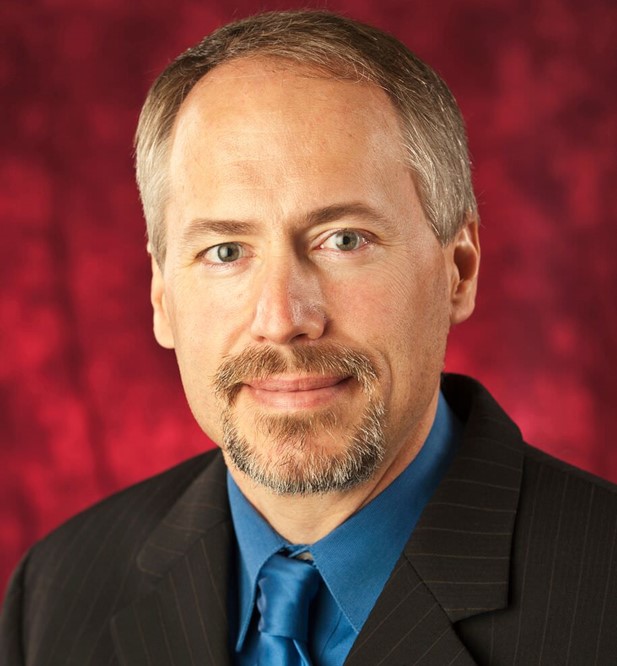
It’s a seemingly simple request. Surely Washington can lower the price of gasoline to provide Americans relief at the pump. Democrats in the House recently passed the Consumer Fuel Price Gouging Protection Act to this effect. Yet as 4,000 years of experience shows, governments have little ability to lower market prices through command. Markets are a system of voluntary social cooperation. No person can compel another to do anything in a market. Each sale of a good or service must involve a willing buyer and a willing seller, with willing defined relative to each party’s other options. I’ll return to some concerns about the voluntariness of market transactions shortly. Many critics believe big oil companies dominate the world economy. But ExxonMobil, Texaco, Shell, and others cannot force anyone to buy gas. And we must pay the station’s price to buy gas. Production of most goods involves contributions from many persons. Thus, “willing seller” means compensating each contributor (employees, suppliers, etc.) sufficiently to voluntarily participate. A market economy gives people the freedom to choose, which would be great even if markets left everyone poor. But free markets also produce unprecedented prosperity. The Consumer Fuel Act prohibits price gouging for gasoline during emergencies. Presumably, President Joe Biden will declare an emergency if the bill becomes law, so the Act would function as a price ceiling (legal maximum price) for gas. Government uses force. Price controls insert force into the voluntary market economy. If President Biden sets a maximum price of, say $3 per gallon, anyone selling gas for more than this could be fined or arrested. Price ceilings represent limited intervention into markets. No seller is forced to sell gas at the set price. Suppliers normally sell more at higher prices, which is the Law of Supply. Consequently, less is available under price ceilings than at the market price (the price where the quantity of gas drivers demand equals the quantity offered for sale). Before the pandemic in 2019, Americans purchased 140 billion gallons of gas. The Act implicitly promises Americans this much gas for a price below $4.60/gallon. This is a false promise. Exactly how much less gas will be available is debatable; the decline should be modest initially and increase over time. The gas provided under a price ceiling goes for less, so the drivers who buy this gas benefit. But price ceilings produce shortages; if you are my age, you might remember 1979’s gas lines. At high market-clearing prices, goods are still available for purchase. Shortages are very painful, as the ongoing baby formula shortage demonstrates. Is paying $5 a gallon worse than being unable to drive to work? Let’s return now to the voluntariness of market transactions. You might be reading this and thinking, “But I have to buy gas.” Or perhaps, “People have to work to eat.” Let’s examine these points. Life involves many decisions taken at different times. You choose to take a job, where to live, and to drive a car to work. This commits you to buying gas each week. It may feel like compulsion but is just the last part of the plan. Failing to buy gas massively disrupts your plan: you could lose your job and then your house. You buy gas today almost regardless of the price but can adjust if high prices persist. What about working? Yes, we need a job but not any specific job. Consequently, no employer – no other person – can command you. You can also work for yourself. And Nature, as opposed to other people, drives this necessity: people need food, shelter, and clothes to survive. Governments seem powerful, but our market economy consists of 330 million Americans and billions of others across the globe. The price of gas reflects oil market participants’ actions worldwide. Politicians cannot lower the cost of producing gasoline or other goods, although policies can artificially increase prices. Rising inflation prompted President Richard Nixon to impose wage and price controls in 1971, and the House wants to try again. Daniel Sutter is the Charles G. Koch Professor of Economics with the Manuel H. Johnson Center for Political Economy at Troy University and host of Econversations on TrojanVision. The opinions expressed in this column are the author’s and do not necessarily reflect the views of Troy University.
Deal could end desegregation case in Alabama school system

A federal judge will consider an agreement between the Justice Department, civil rights attorneys, and school officials in an east Alabama county that could end more than 50 years of federal desegregation oversight of the system. A consent decree between school officials in Chambers County, located on the Georgia line, the government, and attorneys with the Legal Defense Fund includes construction of a new school and more opportunities for black students in the county of roughly 35,000 people, officials said. The agreement was announced Friday to end a desegregation order that’s been in place since 1970. It followed a previous, interim agreement reached in 1993. “We are pleased to arrive at a consent decree that addresses the many concerns our clients raised as key to ensuring the effectiveness of the desegregation process in Chambers County,” said GeDá Jones Herbert, an attorney with the Legal Defense Fund. “It was particularly important that Black students in the district are afforded equal and high-quality educational opportunities in safe and modern facilities.” The agreement said the sides negotiated for years to reach the proposed settlement, announced nearly 70 years after the U.S. Supreme Court ordered the end of racial segregation of public schools. “This proposed consent order reinforces the Civil Rights Division’s unwavering commitment to ensuring that all students receive the equal educational opportunities to which they are entitled regardless of their race or color,” Assistant Attorney General Kristen Clarke said in a statement. Under the agreement, the school district will form an advisory committee on desegregation that will have input on issues including the consolidation of high school students and improved opportunities for students in science, technology, engineering, arts, and math. Before the end of the next school year, the district must pick a site to build a new, consolidated high school to replace LaFayette High School, which is heavily Black, and Valley High School, which has a large population of white students. The agreement said the new location “must not impose an unequal burden on students on the basis of race, to the extent practicable.” Students from LaFayette, a mostly black city, temporarily will be transferred to the school in Valley, which is majority white, but not before the start of the school year after construction begins, according to the agreement. The school system did not admit any purposeful segregation. Republished with the permission of The Associated Press.
Offices including secretary of state contested in Alabama

The campaigns for U.S. Senate and governor have gotten the most attention leading up to Tuesday’s primary in Alabama, but five other statewide races are on the ballot. With multiple candidates in some races, some nominations may not be decided until after runoff elections scheduled for June 21. Here are some of the key races to watch: SECRETARY OF STATE Four Republicans and one Democrat are on the primary ballot to succeed GOP incumbent John Merrill as Alabama’s top elections officer, secretary of state. Ed Packard, who worked in the secretary of state’s elections division for nearly 25 years, is seeking the Republican nomination in a field that includes Jim Zeigler, who was barred from running again as state auditor by term limits; state Rep. Wes Allen of Troy, who served nearly a decade as probate judge in Pike County; and Christian Horn, a GOP activist and business owner from Madison County. None of the four candidates has raised major complaints about election problems in Alabama, which is controlled by Republicans and voted heavily for President Donald Trump in 2020. But all have talked about measures needed to tighten election security, an issue popularized among conservatives by Trump’s false claims that the 2020 election was stolen by President Joe Biden. Merrill couldn’t seek the office again after serving two terms. The eventual Republican nominee will face Democrat Pamela J. Laffitte of Mobile in November. ATTORNEY GENERAL Alabama Attorney General Steve Marshall faces a single primary challenger as he seeks a second four-year term as the state’s main law enforcement official. First appointed to the position in 2017, Marshall is opposed by Harry Bartlett Still III, an attorney from Daphne. Marshall, who previously served as district attorney in Marshall County, regularly opposes initiatives launched by Democratic President Joe Biden, including vaccination requirements for COVID-19 and federal policies along the border with Mexico, and he testified against the nomination of now-Justice Ketanji Brown Jackson to the U.S. Supreme Court. Still contends corruption is rampant in state government, and that the agency that oversees police standards and training in the state needs to be reorganized to increase public trust in law enforcement. He also supports replacing Alabama’s heavily amended Constitution, passed in 1901 to ensure white supremacy. The winner will face Democratic nominee Wendell Major, police chief in the Birmingham-area city of Tarrant, in November. STATE AUDITOR Candidates for Alabama state auditor typically emphasize the importance of keeping track of state property, but three Republicans seeking the office this year added another talking point in the era of false claims about a stolen presidential vote — election security. Stan Cooke, a pastor from Kimberly; Rusty Glover, a former history teacher from Semmes who served in the state Senate; and state Rep. Andrew Sorrell of Muscle Shoals all are emphasizing the auditor’s role of selecting county registrar boards as they seek the office. Almost directly echoing false claims by former President Donald Trump, Cooke’s campaign website says the state must get ahead of Democrats before they “try and steal our elections as they did in Pennsylvania, Arizona, and even our neighbor to the east, Georgia.” The incumbent, Jim Zeigler, couldn’t seek re-election after serving two terms and is running for secretary of state. Winning the Republican nomination is tantamount to election since no Democrat qualified to run for auditor. SUPREME COURT One Republican candidate for the Alabama Supreme Court is trying to woo voters with a mix that includes his devotion to God and former President Donald Trump. The other is emphasizing her experience in the courtroom — and her gun. Greg Cook, an attorney from metro Birmingham, and Debra Jones, a circuit judge who hears cases in Calhoun and Cleburne, are seeking the Republican nomination for the Place 5 Supreme Court seat held by Justice Mike Bolin, who is retiring. Cook is portraying himself as a “Trump-tough” Republican who was a Trump delegate and represented conservative interests in the 2000 presidential recount contest in Florida between Al Gore and President George W. Bush. Aside from partisan and legal qualifications, Cook’s campaign resume features his longtime church membership and leadership. Jones released a commercial late in the campaign boasting of her support for Trump, her short stature — “She’s 5 feet of concrete” — and a case in which she sentenced a person convicted of child molestation to more than 1,000 years in prison. The spot shows her firing a handgun and saying the only reason she didn’t put the person “under the jail” was that “the liberals” wouldn’t let her. All nine members of the court are Republicans, and the winner of the Place 5 race will be a heavy favorite over Democrat Anita L. Kelly, a judge in Montgomery, in the general election. CONSTITUTIONAL AMENDMENT Voters will decide whether to let the state go into debt for $85 million in bonds to spruce up Alabama’s state parks and historical sites. A statewide constitutional amendment on the ballot would provide $80 million in funding for state park projects that include adding and improving camping sites, adding wireless service, upgrading electrical and water service, replacing playgrounds, constructing swimming pools, and repairing parts of Gulf State Park damaged by Hurricane Sally. The remaining $5 million would go to the Alabama Historical Commission for acquiring, renovating, and maintaining historical parks around the state. The agency wouldn’t be allowed to use the money at Confederate Memorial Park in Marbury. The park is funded by a tax that was originally intended for needy Confederate veterans. Republished with the permission of The Associated Press.
4 Republicans vying for secretary of state nomination

Four Republicans are vying for the nomination for Alabama secretary of state, the official responsible for overseeing state elections. Ed Packard, who worked in the secretary of state’s elections division for nearly 25 years, faces State Auditor Jim Zeigler, state Rep. Wes Allen of Troy, who served nearly a decade as probate judge in Pike County; and Christian Horn, a GOP activist and business owner from Madison County. The primary election will go to a June 21 runoff unless one candidate captures over 50% of the vote on Tuesday. The GOP nominee will face Democrat Pamela J. Laffitte of Mobile in November. Packard has worked in the elections division of the Secretary of State’s Office for nearly 25 years, helping to administer over 400 elections and training county and city election officials. He said he also worked to defend the state’s photo ID requirements. Maintaining election integrity is a primary function of the office, he said. Packard said he wants to see stiffer penalties for violating state election laws, noting some of the offenses are only misdemeanors. “There is a $500 fine for littering, a $500 fine for buying a vote. That needs to be changed,” Packard said at a candidate forum hosted by the League of Women Voters of Alabama. Packard said he would also like to give voters the ability to opt-out of the state selling their information to private groups. Separately, Packard in 2006 reported then-Secretary of State Nancy Worley to the attorney general for soliciting campaign contributions and support from her state employees. Worley later pleaded guilty to a misdemeanor charge. Allen, a state legislator and a former probate judge of Pike County, is also stressing his experience. “I’m the only candidate in the race that’s been a chief election official,” Allen said. He also pointed to his legislative work on election issues. Allen was appointed to serve as a probate judge of Pike County in 2009 by then-Gov. Bob Riley and won election in 2012. After being elected to the Alabama House of Representatives, he sponsored legislation to ban curbside voting as well as a bill to make it illegal for election offices to accept private donations for voter education, outreach, and registration programs. Alabama was one of several GOP-controlled states that banned such donations — a movement fueled by conservatives’ suspicion about donations by Facebook founder Mark Zuckerberg in 2020 to help offices deal with the coronavirus pandemic. Republicans argued it is needed to protect election integrity; opponents said it would hinder election administration in poor counties and have a chilling effect on efforts to help people register and vote. Zeigler was elected as state auditor in 2014 and cannot seek re-election because of term limits. The role of state auditor is to keep track of state property. However, Zeigler turned the office into a public platform to weigh in on other state issues, often serving as a gadfly to Republican administrations in the state. Zeigler in 2016 filed an ethics complaint against then-Gov. Robert Bentley, accusing him of misusing state resources after audio leaked of the governor having a romantically charged conversation with a top aide. “I will move the watchman role I played as state auditor to the secretary of state’s office as a watchman for election integrity,” Zeigler wrote in an email. He said he also wants to focus on the business organizations section and the role the office plays in paperwork for international adoptions. Horn, a GOP activist and business owner from Madison County, has stressed his outsider status and support for election security measures, such as voter identification requirements. Horn said he wants hand-count audits of every election as a means to fight election fraud. Horn, who is African American, noted his parents and ancestors had to fight for the right to vote, including his World War II veteran grandfather, but he also criticized what he called modern-day “woke politics” as destructive. “I will lead all people, as a son and grandson of parents who could not vote, and a brain aneurysm survivor who was paralyzed and cared for by women and men of all races, I want to use my platform to be a bridge to bring people together,” Horn said. Horn is chairman of the Tennessee Valley Republican Club and played football for the University of Michigan. Republished with the permission of The Associated Press.
