
Libertarian candidate Danny Wilson claims ‘media blackout’ hurts voters

Danny Wilson, an Alabama Libertarian Party leader, has expressed frustration over what he sees as a “media blackout” concerning libertarian candidates that aren’t being covered for the upcoming Alabama elections. Wilson is also a libertarian candidate for the Alabama Senate seat for the 19th district. Wilson stated on Twitter, “LPA (Libertarian Party of Alabama) will have 69 candidates in various races across the state. Fifty-five of those races that would have been unopposed-coronations with extra steps. Media Blackout hampers third-party candidates almost as much as ballot access and straight ticket voting. There are other options.” Wilson also commented, “Alabamians deserve to know they have those options. They deserve Reps not Rulers.” According to the Libertarian Party of Alabama website, the party is committed to individual liberty and personal responsibility, a free-market economy, and a foreign policy of non-intervention, peace, and free trade. LPA had until May 24 to turn in a petition with 51,588 signatures in order to achieve party status in Alabama and for their candidates to be on the ballot. The party was successful and turned in its list of candidates to Clay Helms on May 19. Wilson commented on an Alabama Daily News article that discussed Republican and Democrat candidates, but not LPA candidates. “Let’s talk about this statement in the runoffs registration article. Runoffs are NOT the decider. The Libertarian Party of AL has jumped through the hoops to achieve ballot access and will have a candidate in each of those two races, and every other statewide race except Atty Gen.” The primary runoff for Alabama is June 21, 2022.
Will Sellers: Saint Hannah and her sinner son
The summer of 1974 in Washington DC was a political bullfight; there was one bull, but a host of matadors, picadors, and spectators galore just waiting to watch President Richard Nixon in his last gasps of political power. Congressional hearings, articles of impeachment, and an administration completely insular and unstable were all coming to a simultaneous head. Secretary of State Henry Kissinger metaphorically described this as the highest pinnacles of success descending into the deepest valleys of distress. Over the course of the prior few years, President Nixon had won the largest landslide election victory to that point in history, successfully concluded American involvement in Vietnam, and achieved the monumental foreign policy objectives of detente with the USSR, stability in the Middle East, and rapprochement with China. But in August 1974, all these achievements were forgotten, and with an atmosphere of political intrigue thick with smiling hatred, the bull in the ring faced the final cut. Almost everyone had deserted him as key members of his staff faced indictment, trials, and prison. The Supreme Court unanimously ruled he had to provide tape-recorded conversations to prosecutors, the House Judiciary Committee passed the first article of impeachment for obstruction of justice, and a group of key legislators informed him that he didn’t have the votes in the Senate to avoid removal from office. Nixon even called Alabama Governor George Wallace to enlist his support, but Wallace refused to intervene on his behalf with members of the Alabama congressional delegation and other Boll Weevil Democrats. After the call with Wallace, Nixon turned to Chief of Staff Alexander Haig and said, “Well, Al, there goes the presidency.” And so the true “man in the arena” faced the final curtain all alone. The day before, on national television, Nixon announced his intention to resign, and now, on the morning of August 9, in an impromptu moment, Nixon addressed the White House staff for the last time as president. In what has been described as rambling, unprepared, and certainly unscripted remarks, Nixon, perhaps for the only time, opened his soul and summed up his life’s work. These off-the-cuff remarks were recorded, and for history’s sake, transcribed for all of see. In the midst of a rambling apology, Nixon reflected on his youth and his parents and then, out of the blue and with no context, said: “Nobody will ever write a book, probably, about my mother. Well, I guess all of you would say this about your mother – my mother was a saint. And, I think of her, two boys dying of tuberculosis, nursing four others in order that she could take care of my older brother for three years in Arizona and seeing each of them die, and when they died, it was like one of her own. Yes, she will have no books written about her. But she was a saint.” An old saying, perhaps, said to comfort women of a different age and justify their sacrifices states: “The hand that rocks the cradle, rules the world.” So, Nixon’s mother, Hannah Milhous, at least for five-and-a-half years, ruled the world. No book has ever been written about her, but the life of Hannah Nixon and the impact she had on her son and his consequential role in American politics and international affairs is worth consideration. Hannah Milhous was born in 1885 in Butlerville, Indiana, into a devout Quaker family of farmers. She was one of nine children; seven girls and two boys. Her father, Franklin, was an orchardist, who, seeing brighter days ahead, moved his entire family to California in 1897 to establish a tree nursery and orange grove with other Quakers in Whittier, California. While a “birthright” Quaker, Hannah’s branch of the faith expressed itself in a more evangelical bent, and at the age of 18, she had a religious experience that made her very devout and committed. Hannah was intelligent, and after completing high school, she attended Whittier College, where, by all accounts, she made good grades and was on the path to becoming a teacher. No stranger to hard work, she helped her mother with various household tasks, assisted with her father’s farm, and stayed up late each night studying. Her life would be forever changed when, at a Quaker Valentine’s Day party, she met Frank Nixon. They feel in love and married four months later. Hannah’s family never really approved of Frank and thought she had married beneath her. The fact that she married before finishing college was also a sore spot with Hannah’s family, who never seemed to warm up to Frank. But Hannah truly loved her husband, and, having completed her sophomore year of college, seemed ready to start her own family. Within a year of their marriage, Harold Nixon was born, followed by Richard in 1913. She had five sons in all, named after the early English kings; Richard, for the Richard the Lion-Hearted. By all accounts, Frank was uncouth, argumentative, and a tough father. Upon his marriage to Hannah, he converted to the Quaker faith but never truly left his Methodist roots. Hannah was the complete opposite – quiet and inclined to see both sides of an issue. She was also compassionate, and one area of disagreement with Frank was Hannah’s willingness to help the destitute. Frank wanted someone to work before receiving assistance, but Hannah would never turn away a tramp from the door and ran the household like a charitable operation. Even when the family had enough money to employ a “hired girl,” Hannah insisted that the servant eat with them at the table. Hannah was religious and committed to her faith, but she was also had a deep sense of privacy and was not a show-off when it came to piety. At night, she went into her closet to say her prayers. As was true of most Quakers, neither she nor Frank smoked, drank, or cursed, and she expected that her children would accept these same restraints. Hannah’s influence was so
Pledge of more oil heightens odds of Saudi trip for Joe Biden

The Biden administration praised Saudi Arabia on Thursday for its role in a promised boost in oil production and a cease-fire in Yemen, in warm tones that appeared to further raise prospects for a Joe Biden trip to Saudi Arabia and a meeting with the kingdom’s once-shunned crown prince. Biden has been leaning toward making his first trip as president to the Saudi kingdom later this month, a person familiar with the planning told The Associated Press. Such a visit would be politically fraught because it would likely bring the U.S. leader together with Crown Prince Mohammed bin Salman. Biden as a presidential candidate in 2019 pledged to make the crown prince a “pariah” for his in the killing of a U.S.-based journalist. In a statement Thursday, Biden took a far different tone, praising the kingdom’s “courageous leadership” for its role in extending a U.N. cease-fire in a Saudi-led war in Yemen. Biden administration officials have been working behind the scenes to repair relations, discussing shared strategic interests in security and oil with their Saudi counterparts, as a Saudi-Russia-brokered deal has kept global oil supply tight and prices at the pump painfully high. Appeals from the U.S. and its allies for OPEC nations to ease up on production limits in the Russia deal appeared to bear results Thursday. OPEC nations announced they would raise production by 648,000 barrels per day in July and August, offering modest relief for the struggling global economy. Rising crude prices have pushed gasoline to a record high in the U.S., raising fears that elevated energy prices could slow the global economy as it emerges from the coronavirus pandemic. Biden and Democrats face rising voter anger over the high prices, making the tight oil supply a top political liability. In a statement, White House Press Secretary Karine Jean-Pierre acknowledged what she said was Saudi Arabia’s role “in achieving consensus” among the oil producers’ bloc. She thanked the United Arab Emirates, Kuwait, and Iraq as well. “The United States will continue to use all tools at our disposal to address energy prices pressures,” Jean-Pierre added. The White House is weighing a Biden visit that would also include a meeting of the leaders of the Gulf Cooperation Council countries — Bahrain, Kuwait, Oman, Qatar, Saudi Arabia, and the United Arab Emirates — as well as Egypt, Iraq and Jordan, according to a person familiar with White House planning, who spoke on the condition of anonymity to discuss the yet-to-be finalized plans. Biden would be expected to meet with Prince Mohammed if the Saudi visit happens, according to the person. Such a meeting could also ease a tense and uncertain period in the partnership between Saudi Arabia, the world’s top oil exporter, and the United States, the world’s top economic and military power, that has stood for more than three-quarters of a century. But it also risks a public humbling for the U.S. leader, who in 2019 pledged to make a “pariah” of the Saudi royal family over the 2018 killing and dismemberment of U.S.-based journalist Jamal Khashoggi, a critic of Prince Mohammed’s brutal ways. Jean-Pierre has declined to comment on whether Biden will travel to Saudi Arabia. He is expected to travel to Europe at the end of June and could tack on a stop in Saudi Arabia to meet with Prince Mohammed, Saudi King Salman, and other leaders. If he does, Biden would also likely visit Israel. Israeli officials in their engagement with the Biden administration have pressed their point of view that U.S. relations with Arab capitals, including Riyadh, are critical to Israel’s security and overall stability in the region. The visit could also provide an opportunity to kick off talks for what the administration sees as longer-term project of normalizing Israel-Saudi relations. And while the Biden administration continues to be concerned about Saudi Arabia’s human rights record, the president’s advisers credit the Saudis for showing greater restraint in its conflict with Yemen since Biden takes office. White House officials expect criticism from Democratic allies and human rights advocates charging Biden is backtracking on human rights, but suggest that in the long-term a credible long-term Middle East strategy without key leaders in the kingdom is not tenable. Biden, through the early going of his presidency, has repeatedly said that the world is at a key moment in history where democracies must demonstrate they can out-deliver autocracies. The administration doesn’t want to see countries such as Egypt and Saudi Arabia with troubling human rights records to fall into the camp of Moscow and Beijing. Any Biden meeting with Prince Mohammed includes the potential for an embarrassing last-minute public rebuff from a still-offended crown prince known for imperious, harsh actions. Since Prince Mohammed became crown prince in 2017, that has included detaining his own royal uncles and cousins as well as Saudi rights advocates, and, according to the U.S. intelligence community, directing Khashoggi’s killing. Saudi Arabia denies his involvement. Moreover, any Biden climbdown from his passionate human-rights pledge during his campaign — that Saudi rulers would “pay the price” for Khashoggi’s killing — risks more disillusionment for Democratic voters. They have watched Biden struggle to accomplish his domestic agenda in the face of a strong GOP minority in the Senate. U.S. officials were recently in the region for talks with Saudi officials about energy supplies, Biden administration efforts to revive the Iran nuclear deal, and Saudi’s bogged-down war to oust Houthi rebels in Yemen. Fighting there was recently calmed by a cease-fire, which was extended further Thursday. Frequent, warm visits among Saudi, Russian and Chinese officials during the freeze between Biden and the Saudi crown prince have heightened Western concern that Saudi Arabia is breaking from Western strategic interests. Besides helping to keep gas prices high for consumers globally, the tight oil supply helps Russia get better prices for the oil and gas it is selling to fund its invasion of Ukraine. Russian Foreign Minister Sergey Lavrov visited the Saudi kingdom Tuesday. Officials in Saudi Arabia and the United Arab Emirates, for their part,
White House: 1st COVID-19 shots for kids under 5 possible by June 21

The Biden administration said Thursday that children under 5 may be able to get their first COVID-19 vaccination doses as soon as June 21, if federal regulators authorize shots for the age group, as expected. White House COVID-19 coordinator Aashish Jha outlined the administration’s planning for the last remaining ineligible age group to get shots. He said the Food and Drug Administration’s outside panel of advisers will meet on June 14-15 to evaluate the Pfizer and Moderna shots for younger kids. Shipments to doctors’ offices and pediatric care facilities would begin soon after FDA authorization, with the first shots possible the following week. Jha said states can begin placing orders for pediatric vaccines on Friday, and said the administration has an initial supply of 10 million doses available. He said it may take a few days for the vaccines to arrive across the country and vaccine appointments to be widespread. “Our expectation is that within weeks every parent who wants their child to get vaccinated will be able to get an appointment,” Jha said. The Biden administration is pressing states to prioritize large-volume sites like children’s hospitals, and to make appointments available outside regular work hours to make it easier for parents to get their kids vaccinated. Jha acknowledged the “frustration” of parents of young children who have been waiting more than a year for shots for their kids. “At the end of the day we all want to move fast, but we’ve got to get it right,” he said. Republished with the permission of The Associated Press.
Democrats, Republicans fight to a redistricting stalemate
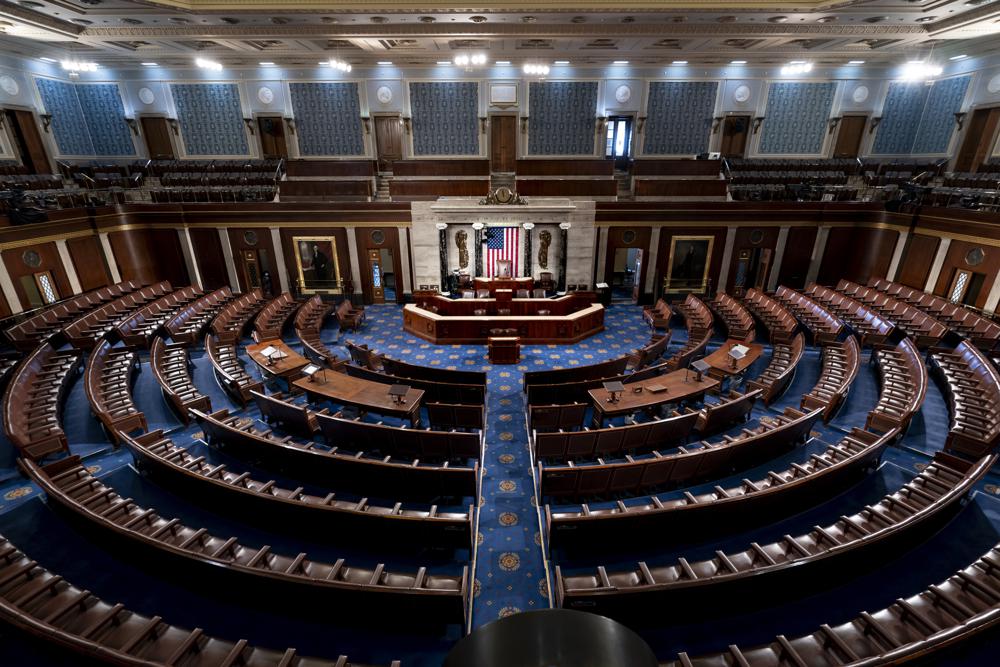
After nearly a year of partisan battles, number-crunching, and lawsuits, the once-a-decade congressional redistricting cycle is ending in a draw. That leaves Republicans positioned to win control of the House of Representatives even if they come up just short of winning a majority of the national vote. That frustrates Democrats, who hoped to shift the dynamic so their success with the popular vote would better be reflected by political power in Washington. Some Republicans, meanwhile, hoped to cement an even larger advantage this time. But both parties ultimately fought each other to a standstill. The new congressional maps have a total of 226 House districts won by Biden in the last presidential election and 209 won by Trump — only one more Biden district than in 2020. Likewise, the typical congressional district voted for Biden by about two percentage points, also almost identical to 2020. “It’s almost perfect stasis,” said Nicholas Stephanopoulos, a Harvard law professor who follows congressional redistricting. “If you compare the maps we had in 2020 to the maps we’re going to have in 2022, they’re almost identical” in terms of partisan advantage, he added. The specific lines of congressional districts have, of course, changed as some states added new ones — or lost old ones — to match population shifts recorded by the U.S. Census Bureau in 2020. Redistricting is the once-a-decade adjustment of legislative lines to match the Census’ findings. It is typically an extraordinarily partisan process, with each major party trying to scoop up enough of its voters to guarantee wins in the largest number of districts. This cycle was no different, but the end result is virtually no change to the overall partisan orientation of the congressional map. That leaves the map tilted slightly to the right of the national electorate since Joe Biden won the presidency by more than four percentage points. In a typical year, Democrats would have to win the national popular vote by about two percentage points to win a House majority, while the GOP could capture it, theoretically, with just under 50%. Republicans pointed to that as a victory. “If we’re fighting to a draw on a map that everyone agrees is good for Republicans, that’s good for Republicans,” said Adam Kincaid, executive director of the National Republican Redistricting Trust, which coordinates redistricting for the party. Democrats noted that it’s still a far better place than where they were after the last round of redistricting in 2011, fresh off a GOP sweep of statehouses that allowed them to draw a far more slanted series of congressional maps. “We are in a stronger position than in 2020 and in a way stronger position than in 2012,” said Kelly Ward Burton, executive director of the National Democratic Redistricting Committee. The assessment became possible this week after New Hampshire became the final state to adopt a congressional map on Tuesday. On Thursday, Florida’s Supreme Court ruled it wouldn’t consider a Democratic challenge to a map pushed by Republican Gov. Ron DeSantis before the November election, ending the last significant legal uncertainty over the maps this year. The odds are the national map will improve for the GOP after November, however. If Republicans do well in the election — as is widely expected — they could capture seats on state supreme courts in North Carolina or Ohio that’d allow them to redraw more slanted maps previous courts rejected. Similarly, if the GOP seizes power in some other state legislatures or governor’s mansions, the party could redraw new maps in those states in 2023 that would be implemented for the coming decade. And the U.S. Supreme Court’s conservative majority has indicated it will reconsider some of the guidelines that govern legislative line-drawing nationally next year, which could open the door to even further Republican gains. It’s a reversal from earlier this year, when Democrats were poised to lessen the partisan bias of the congressional map, at least in 2022. But the centerpiece of that effort — an intensely pro-Democratic map in New York state — was ruled an illegal partisan gerrymander by the state’s Democrat-appointed top court, and the court’s redrawn map favored the party less. A similarly pro-Democratic map in Maryland was replaced by a more equitable map. But Florida’s strongly pro-GOP map, which DeSantis pushed the Republican-controlled legislature into adopting, was not overturned by its majority-GOP-appointed high court, bringing the national partisan pendulum back to the center. Democrats were already fighting on an uneven playing field during this round of redistricting. They only controlled the drawing of maps in states representing 75 House districts, while Republicans held the pen in ones with 187 districts. That’s partly because of GOP statehouse gains in 2010 lingering, partly because many Democratic-controlled states like California, Colorado, and New Jersey ceded their power to draw lines to independent commissions to take partisan politics out of redistricting. The Democratic Party has embraced that approach nationally, pushing for it in all 50 states as part of its voting overhaul that floundered in the Senate earlier this year amid unanimous GOP opposition. But some members of the party have questioned whether it amounts to unilateral disarmament in the partisan cage match of redistricting. After this cycle, Stephanopoulos said, there’s no longer much debate. “If all the blue states reform and all the red states run wild, that’s not a good outcome,” he said. Though the map’s partisan lean didn’t change, the number of competitive House seats diminished. That’s partly because Republicans, who maximized their gains in the post-2010 redistricting cycle, focused on packing as many GOP voters as possible into the districts of some of their incumbents who had tough re-election campaigns. The number of House seats decided by a 10-point margin or less dropped from 89 to 76, largely by the GOP changing 14 of its competitive seats into safe ones, Kincaid said. Advocates of sweeping changes in redistricting warn the loss of competition is dangerous for democracy. “Partisan balance is one thing, but it’s much more important to think about how gridlock and extremism
