
5 days left to apply for absentee ballot by mail for primary runoff election
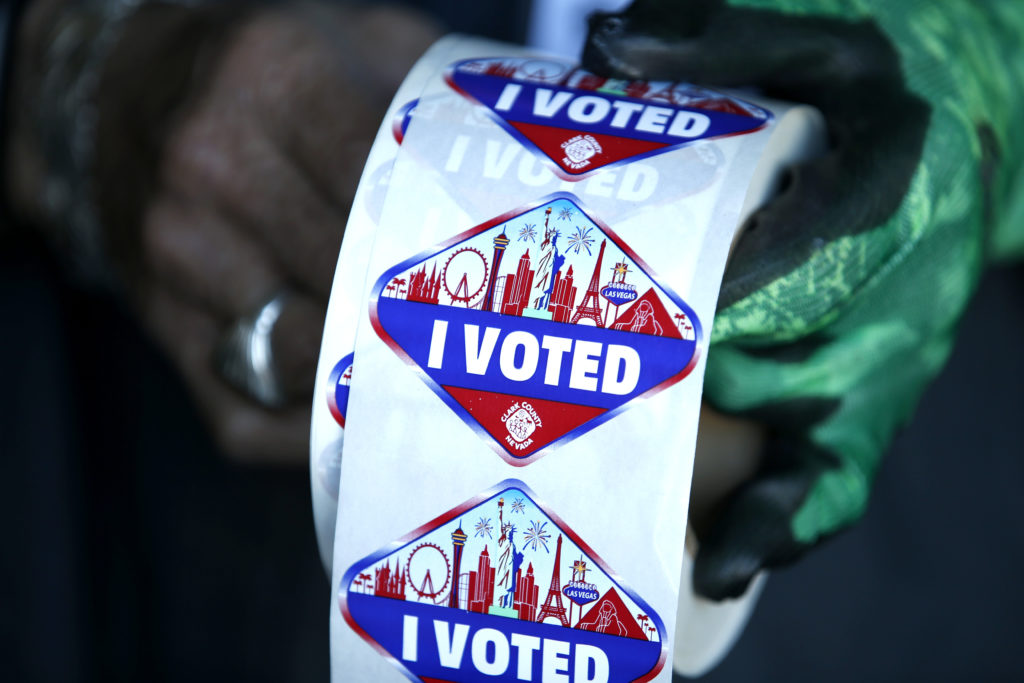
Secretary of State John Merrill today announced that there are 5 days left to apply for an absentee ballot by mail. The absentee voting period for the June 21st Primary Runoff Election began on May 25, 2022. Voters have an additional two days to apply for an absentee ballot by hand. The Secretary of State’s official Twitter page stated, “Secretary Merrill would like to remind Alabama voters that there are 5 days left to apply for an absentee ballot by mail. Voters have an additional two days to apply for an absentee ballot by hand.” Absentee ballot applications can be downloaded online or requested by visiting or calling the local Absentee Election Manager’s office. Voters may also contact the Secretary of State’s Elections Division at (334) 242-7210 to request an absentee ballot application. Important absentee voting deadlines are listed below: June 14, 2022: The last day that absentee ballot applications can be received by mail. June 16, 2022: The last day that absentee ballot applications can be returned by hand. June 17, 2022: The last day to return absentee ballots by hand to the Absentee Election Manager. June 21, 2022: Absentee ballots returned by mail must be received by the Absentee Election Manager no later than noon. Voters who are eligible to vote pursuant to the Uniformed and Overseas Absentee Voting Act (UOCAVA) will have until June 21, 2022, to postmark an absentee ballot. If you have any questions or concerns, contact the Secretary of State’s Elections Division at 334-242-7210.
Terri Sewell secures $33 million in water infrastructure funding for Alabama projects
Rep. Terri Sewell announced today that she voted to pass the bipartisan Water Resources Development Act (WRDA) of 2022. The legislation authorizes crucial investments in America’s ports, inland waterways, flood management systems, ecosystems, and other water resources infrastructure. Sewell secured funding of over $33 million in this legislation for the Selma River Stabilization Project and the Birmingham and Bessemer Valley Creek Flood Risk Management Project. WRDA passed the House today and will now make its way to the U.S. Senate. The bill aims to improve U.S. water infrastructure by authorizing the study and construction of locally-driven projects developed in cooperation and consultation with the U.S. Army Corps of Engineers. Additionally, it will strengthen the U.S. economy through investment in ports, harbors, and inland waterways and build more resilient communities by restoring natural infrastructure and ensuring new infrastructure helps to mitigate the effects of natural disasters, extreme weather, and sea-level rise. The $33 million in funding includes: $15,533,100 for the Selma Flood Risk Management and River Bank Stabilization Project, and $17,725,000 for the Birmingham and Bessemer Valley Creek Flood Risk Management Project. “I fought hard to include funding for the Selma River Erosion Project in the Water Resources Development Act, and I’m thrilled to announce that over $15 million was approved for this project by the House of Representatives today!” stated Sewell. “This critical funding will help assist the Army Corps of Engineers as they work to stabilize the Selma River Bank and mitigate flooding in our community.” “Our Birmingham and Bessemer communities know just how frustrating and dangerous Valley Creek’s frequent flooding can be,” Sewell continued. “That’s why I fought to include over $17 million in the Water Resources Development Act to address this flooding and find long-term solutions. I’m thrilled that this funding was approved by the House of Representatives and will continue to work to improve the resiliency of Valley Creek.”
Pressure grows for ALGOP response to Katie Britt’s alleged Democratic Party support
In a state like Alabama, the Republican Party rules supreme. Winning a primary is tantamount to winning an election because Republicans hold a supermajority in the state. “Crossover voting” during primaries allows Democratic voters to have a say in who will be the winner, given that the general election is often nothing more than a formality. Since 2010, crossover voting has not been allowed in primary runoff elections in Alabama. However, voters in Alabama are not required to register with a party prior to voting, so there is no mechanism to prevent crossover voting from happening in Republican primary elections because Alabama has open primaries. 1819 News reported that Mo Brooks has accused opponent Katie Britt of soliciting Democrat votes in last month’s primary. During a radio interview on WVNN’s “The Dale Jackson Show,” Brooks stated, “No question. Katie Britt had an activist effort, kind of behind the scenes, to encourage Democrats to crossover and to pollute our Republican primary.” Brooks also argued that she would do the same in the June 21 runoff. “It will probably happen to some degree on June 21 when we have to runoff. That’s not right,” Brooks continued. “The Democrats should never be participating in Republican primaries and vice-versa. But we’ll see how Republicans across the state react to Katie Britt’s outreach program that is coming to greater and greater light. By outreach program, I’m talking about getting Democrats to tamper in our elections.” Brooks’s accusations seem valid to some Republican leaders after Democratic Party executive director Wade Perry posted on Twitter, describing Britt as “pretty awesome” and “super helpful” during the Doug Jones 2017 win over Roy Moore. Additionally, Democrat U.S. Rep. Parker Griffith stated he supported Britt. “She’s running a great campaign,” Griffith commented last year on WVNN’s “The Dale Jackson Show.” “She’s got a lot of assets. I’ve got a Katie Britt sign in my front yard … because the Democrats cannot win in Alabama. We need good government. We’re going to have to vote for good people and start being Americans instead of Republican or Democrat, particularly in Alabama.” Michael Hoyt, the chairman of the Republican Party in Baldwin County, has called for closed primaries. During an interview on FM Talk 106.5’s “The Jeff Poor Show,” Hoyt stated, “Principally, I would be in favor of having a closed primary. I think the party and members of the party should choose who their nominees are. And that shouldn’t be people for Democrats, for Libertarians, or whatever coming over.” Hoyt also said he expected the ALGOP to look into the issue in the near future. “[I] support having a closed primary system, and I suspect that that’s something that will be addressed by the state party, perhaps even at the summer meeting this year, and certainly be taken up by the legislature,” Hoyt commented. “When you’re in an essentially one-party state, and they know the election is determined by the primary, you have to be careful of who is even running in those races, and we certainly don’t want Democrats coming in and voting in them. So, I agree with [that] 100%.” Jennifer Montrose, president of the West Alabama Republican Assembly, issued a resolution requesting the Republican Party Steering Committee conduct “a fully public hearing or meeting with notice to the public to consider the facts and potential sanctions against candidate Katie Britt.” Essentially, the resolution accuses Britt of supporting “a nominee of another political party,” an infraction that can “deny ballot access to a candidate for public office.” In February, the Alabama Republican Party’s candidate committee voted to remove three candidates from its primary ballot in state legislative races because of alleged affiliations with other parties. “[W]e take it extremely serious that we keep the Republican primary ballots pure,” ALGOP chair John Wahl stated. “And what I mean by that is we’re not going to let a Nancy Pelosi or Hillary Clinton come in and run on the Republican ticket. It’s not going to happen. Sometimes it gets hard. It’s very hard to know who is a Republican and who is not a Republican. The candidate committee makes those decisions, and I chair that committee. I choose not to take a vote because I feel like it is important for the chairman dispense all the information to provide the body information they need to make the best decision.” During the Republican primaries, Britt led opponent Brooks by a 45%-to-29% margin in votes.
House passes gun control bill after Buffalo, Uvalde attacks

The House passed a wide-ranging gun control bill Wednesday in response to recent mass shootings in Buffalo, New York, and Uvalde, Texas, that would raise the age limit for purchasing a semi-automatic rifle and prohibit the sale of ammunition magazines with a capacity of more than 15 rounds. The legislation passed by a mostly party-line vote of 223-204. It has almost no chance of becoming law as the Senate pursues negotiations focused on improving mental health programs, bolstering school security, and enhancing background checks. But the House bill does allow Democratic lawmakers a chance to frame for voters in November where they stand on policies that polls show are widely supported. “We can’t save every life, but my God, shouldn’t we try? America, we hear you, and today in the House, we are taking the action you are demanding,” said Rep. Veronica Escobar, D-Texas. “Take note of who is with you and who is not.” The push comes after a House committee heard wrenching testimony from recent shooting victims and family members, including from 11-year-old girl Miah Cerrillo, who covered herself with a dead classmate’s blood to avoid being shot at the Uvalde elementary school. The seemingly never-ending cycle of mass shootings in the United States has rarely stirred Congress to act. But the shooting of 19 children and two teachers in Uvalde has revived efforts in a way that has lawmakers from both parties talking about the need to respond. “It’s sickening, it’s sickening that our children are forced to live in this constant fear,” said House Speaker Nancy Pelosi, D-Calif. Pelosi said the House vote would “make history by making progress.” But it’s unclear where the House measure will go after Wednesday’s vote, given that Republicans were adamant in their opposition. “The answer is not to destroy the Second Amendment, but that is exactly where the Democrats want to go,” said Rep. Jim Jordan, R-Ohio. The work to find common ground is mostly taking place in the Senate, where support from 10 Republicans will be needed to get a bill signed into law. Nearly a dozen Democratic and Republican senators met privately for an hour Wednesday in hopes of reaching a framework for compromise legislation by week’s end. Participants said more conversations were needed about a plan that is expected to propose modest steps. In a measure of the political peril that efforts to curb guns pose for Republicans, five of the six lead Senate GOP negotiators do not face reelection until 2026. They are Sens. Bill Cassidy of Louisiana, Susan Collins of Maine, John Cornyn of Texas, Lindsey Graham of South Carolina, and Thom Tillis of North Carolina. The sixth, Pat Toomey of Pennsylvania, is retiring in January. It’s also notable that none of the six is seeking the Republican presidential nomination. While Cornyn has said the talks are serious, he has not joined the chorus of Democrats saying the outlines of a deal could be reached by the end of this week. He told reporters Wednesday that he considers having an agreement before Congress begins a recess in late June to be “an aspirational goal.” The House bill stitches together a variety of proposals Democrats had introduced before the recent shootings in Buffalo and Uvalde. The suspects in the shootings at the Uvalde elementary school and Buffalo supermarket were both just 18, authorities say, when they bought the semi-automatic weapons used in the attacks. The bill would increase the minimum age to buy such weapons to 21. “A person under 21 cannot buy a Budweiser. We should not let a person under 21 buy an AR-15 weapon of war,” said Rep. Ted Lieu, D-Calif. Republicans have noted that a U.S. appeals court ruling last month found California’s ban on the sale of semi-automatic weapons to adults under 21 was unconstitutional. “This is unconstitutional, and it’s immoral. Why is it immoral? Because we’re telling 18, 19, and 20-year-olds to register for the draft. You can go die for your country. We expect you to defend us, but we’re not going to give you the tools to defend yourself and your family,” said Rep. Thomas Massie, R-Ky. The House bill also includes incentives designed to increase the use of safe gun storage devices and creates penalties for violating safe storage requirements, providing for a fine and imprisonment of up to five years if a gun is not properly stored and is subsequently used by a minor to injure or kill themselves or another individual. It also builds on the Biden administration’s executive action banning fast-action “bump-stock” devices and “ghost guns” that are assembled without serial numbers. The House is also expected to approve a bill Thursday that would allow families, police, and others to ask federal courts to order the removal of firearms from people who are believed to be at extreme risk of harming themselves or others. Nineteen states and the District of Columbia currently have such “red flag laws.” Under the House bill, a judge could issue an order to temporarily remove and store the firearms until a hearing can be held no longer than two weeks later to determine whether the firearms should be returned or kept for a specific period. Republished with the permission of The Associated Press.
Armed man arrested for threating to kill Justice Brett Kavanaugh
A man carrying a gun, a knife, and zip ties was arrested Wednesday near Justice Brett Kavanaugh’s house in Maryland after threatening to kill the justice. Nicholas John Roske, 26, of Simi Valley, California, was charged with the attempted murder of a Supreme Court justice. During a court hearing, he consented to remain in federal custody for now. Roske was dressed in black when he arrived by taxi just after 1 a.m. outside Kavanaugh’s home in a Washington suburb. He had a Glock 17 pistol, ammunition, a knife, zip ties, pepper spray, duct tape, and other items that he told police he would use to break into Kavanaugh’s house and kill him, according to a criminal complaint and an affidavit filed in federal court in Maryland. Roske said he purchased the gun to kill Kavanaugh and that he also would kill himself, the affidavit said. Roske told police he was upset by a leaked draft opinion suggesting the Supreme Court is about to overrule Roe v. Wade, the landmark abortion case. He also said he was upset over the school massacre in Uvalde, Texas, and believed Kavanaugh would vote to loosen gun control laws, the affidavit said. The court currently is weighing a challenge to New York’s requirements for getting a permit to carry a gun in public, a case that could make it easier to be armed on the streets of New York and other large cities. When he got out of the taxi, Roske was spotted by two U.S. Marshals who are part of round-the-clock security provided to the justices following the leak of the draft opinion last month. But Roske was only apprehended after he called 911 in Montgomery County, Maryland, and said he was having suicidal thoughts and planned to kill Kavanaugh, having found the justice’s address online. Roske was still on the phone when Montgomery County police arrived on the scene, according to the affidavit. At his initial appearance in federal court in Greenbelt, Maryland, Roske paused several times before responding to routine inquiries from U.S. Magistrate Judge Timothy J. Sullivan during the 10-minute hearing. Asked if he understood what was happening and whether he was thinking clearly, Roske paused, then said, “I think I have a reasonable understanding, but I wouldn’t say I’m thinking clearly.” Roske said he is taking medication but did not say what it is or why he is on it. He also said he is a college graduate. Andrew Szekely, a federal public defender who is representing Roske, declined to comment on the case after the hearing. Roske’s next court date was tentatively set for June 22. The attempted murder charge carries a maximum term of 20 years in prison. Earlier Wednesday, Attorney General Merrick Garland told reporters, “This kind of behavior is obviously behavior we will not tolerate. Threats of violence and actual violence against the justices, of course, strike at the heart of our democracy, and we will do everything we can to prevent them and to hold people who do them accountable.” President Joe Biden praised authorities for quickly apprehending the man, deputy White House press secretary Andrew Bates said in an email. There have been protests at the homes of Kavanaugh and other justices, as well as demonstrations at the court, where a security fence rings the building, and nearby streets have been closed. A Homeland Security Department report said the draft opinion, leaked in early May, has unleashed a wave of threats against officials and others and increased the likelihood of extremist violence. Republished with the permission of The Associated Press.
Steve Marshall joins 16 attorneys general to file legal brief in support of Florida law banning sanctuary cities
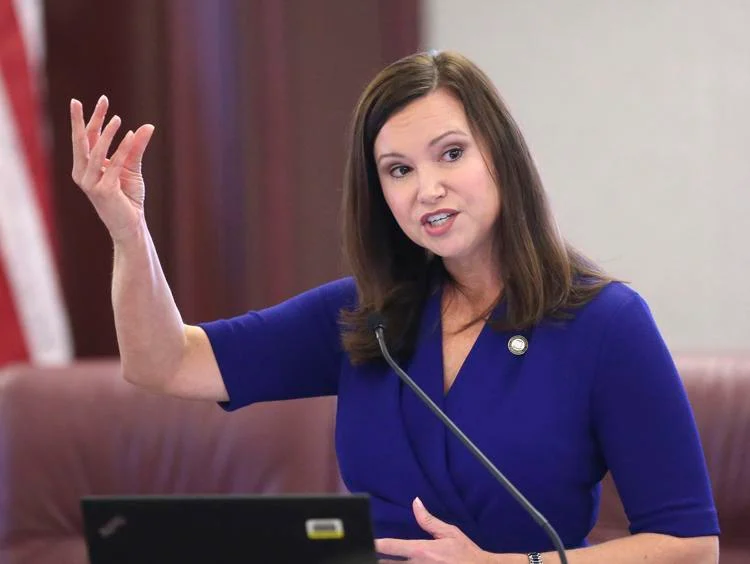
Seventeen Republican attorneys general have filed an amicus brief with the 11th Circuit Court of Appeals in support of a Florida law banning sanctuary cities. The brief was filed by the attorneys general of Alabama and Georgia, Steve Marshall and Christopher Carr. Joining them were the attorneys general of Alaska, Arizona, Arkansas, Indiana, Kansas, Kentucky, Mississippi, Missouri, Montana, Nebraska, Oklahoma, South Carolina, Texas, Utah, and West Virginia. The Florida case is currently on appeal from the U.S. District Court for the Southern District of Florida, Miami Division. In 2019, the Florida legislature passed a bill signed into law by Gov. Ron DeSantis requiring state and local government officials and employees to comply with federal immigration enforcement. DeSantis said he was proud to sign the bill “to uphold the rule of law and ensure that our communities are safe.” He thanked state legislators “and the Angel Parents for their commitment to seeing this bill across the finish line. Their leadership has made Florida safer.” Shortly thereafter, the city of South Miami sued, and later several other groups, claiming the law discriminated against foreign nationals living in Florida illegally. U.S. District Court Judge Beth Bloom granted the city’s request for an injunction, halting the law from going into effect. Florida then appealed. The attorneys general argue Bloom legislated from the bench and exceeded her constitutional authority. “The amici States must constantly defend against legal challenges to state statutes brought by those who oppose the results of the legislative process,” they argue in the brief. “These litigants invite federal courts to substitute their own judgment for that of the legislature. Too often, courts accept the invitation to usurp the legislative role by ascribing invidious intent to legislative enactments based on sheer policy disagreement, dressed up as supposed discrimination. “The Constitution forbids that, and for good reason. … Federal courts are poorly positioned to weigh the many interests at stake. Their decisions are rendered without public debate. And, because they are not elected, they cannot be held accountable by the people.” They argue Bloom “fell prey to exactly this temptation.” “A legislative judgment that the country’s existing laws should be enforced is not an extreme or suspect position,” they argue. “Yet the district court held the law facially invalid because it was supposedly enacted with discriminatory intent, even though the law specifically prohibits racial discrimination. The Court did not point to any discrimination apparent in the text of the law (there is none).” AG Marshall said, “An unelected federal judge apparently disagrees with Florida’s political judgment about whether immigration laws should be enforced, but that should not be relevant,” adding that he hopes the court undoes Bloom’s “troubling ruling and puts an end to this practice of legislation by judicial fiat.” In Florida, AG Ashley Moody’s brief filed with the 11th Circuit argued Judge Bloom “committed numerous errors to arrive at the remarkable conclusion that the Florida Legislature had secret racist motivations in enacting SB 168.” “The law promotes public safety in facilitating federal immigration enforcement against criminal aliens while expressly prohibiting racial discrimination in its implementation,” the brief states. “The district court found a hidden racist motive only by ignoring key provisions of the statute, failing to afford the Legislature a presumption of good faith and placing great weight on the thinnest of evidence.” There are currently more than 300 so-called sanctuary cities in the U.S. whose officials won’t cooperate with federal immigration enforcement, the Federation for American Immigration Reform (FAIR) estimates. “Many sanctuary policies restrict law enforcement agencies from cooperating with federal immigration officials, including prohibiting their compliance with immigration detainers,” it states. According to U.S. Immigration and Customs Enforcement estimates, more than 2.1 million illegal immigrants are living in the U.S., with more than 1.9 million of them having deportation orders from a judge. In a recent letter to Department of Homeland Security Secretary Alejandro Mayorkas, Florida Congressman Matt Gaetz estimates that it would take 14.5 years to deport “just the aliens DHS has released under the Biden Administration,” into the interior of the U.S., including Florida. This is in addition to the 1.9 million with deportation orders who haven’t been deported. He also recently cited DHS data indicating that the Biden administration has the lowest deportation rate in the history of the agency. According to DHS data, 48% fewer criminal illegal immigrants have been arrested, and 63% fewer convicted criminals have been deported under the administration, he said. Republished with the permission of The Center Square.
Former Alabama city leader Luther Upton gets probation for radio threat

A one-time leader in a south Alabama town was sentenced to probation after using his local radio show to threaten a police officer who pulled him over for drunken driving, authorities said Wednesday. Former Evergreen City Council member Luther James Upton, 74, also was ordered to undergo mental health and substance abuse treatment during the three-year period, records show, and he can’t drive until federal probation officials say so. Upton pleaded guilty to a charge of making a threatening interstate communication, records show. He could have received a maximum sentence of five years in prison and a $250,000 fine. Upton, who has had several traffic tickets through the years, went on a local radio show he hosted in May 2021 and urged Evergreen’s mayor and police chief to “get rid” of an officer who cited him for driving under the influence in late 2020. “I dare him to stop me again. ’Cuz when he pulls me over, I’m going to put him down. I’m just telling ya now, I’m tired of it.”’ an indictment quoted Upton as saying. Upton previously pleaded not guilty to the charge. The drunken-driving case was dismissed in February after Upton completed a pre-trial diversion program, records show. Republished with the permission of The Associated Press.
