
Tom Cotton: Katie Britt is a tough conservative fighter who will put America first

We need more conservative fighters like Katie Britt in the U.S. Senate — leaders who defend our rights, stand strong for the rule of law, and put Americans first. As Senator for Arkansas, I’ve been fighting every day to hold Joe Biden’s incompetent White House accountable, and secure our porous southern border. I need more fighters like Katie in the Senate. A lot of politicians can talk the talk, but Katie Britt walks the walk. She is a tough conservative fighter who will put hardworking American families first. Katie will work tirelessly with me to protect our values and to stop Democrats from permanently changing our country. Katie has released a detailed policy paper outlining how she will crack down on illegal immigration and fight for American workers, including her support of the RAISE Act. She will stand up to the Chinese Communist Party, back the blue, and work to combat the crushing inflation caused by the Left’s reckless spending and radical agenda. I have no doubt that Katie is the best choice for Alabama conservatives, and I’m all in to help her win. The stakes are too high—I’m asking you to join me and rally behind Katie’s candidacy and send another conservative fighter to shake things up in Washington and put America first. Together, we will save the country we know and love for our children and our children’s children. Let’s preserve the American Dream for generations to come. Tom Cotton represents Arkansas in the U.S. Senate. He is a veteran of the U.S. Army. Cotton currently serves on the Senate Committees on Armed Services, Intelligence, and the Judiciary.
Plans for Alabama rural center scrapped amid disagreement

Plans for a large agriculture center in central Alabama have fallen through, with leaders unable to agree on final details about a project that was delayed during the pandemic and projected to cost about $150 million. First announced in 2019, the Alabama Rural Economic Center, a joint effort between the city of Clanton, Chilton County, and the Alabama Farmers Federation, was projected to attract more than 900,000 visitors annually to Clanton for agriculture shows, festivals, and other events. Leaders said it could create about 400 jobs. But Chilton County Commission chair Jimmie Hardee said Tuesday the project was off after negotiations to reach a final agreement failed. He blamed the Federation for adding late demands and making changes to the project. “We are indeed disappointed that the farm center is not going forward. However, the commission has other sites and properties we are promoting for economic growth and opportunities in our county,” Hardee said. Local officials refused to sign a non-binding agreement aimed at keeping the project going by delaying some decisions until the center began producing revenue, said Jimmy Parnell, president of the Alabama Farmers Federation, which was backing the project through the Alabama Farmers Agriculture Foundation. “We remain committed to building the Farm Center and have begun evaluating other locations. The work we’ve done over the last two years has strengthened our resolve to develop a premier farm center and event complex in our state,” Parnell said in a statement. Initial plans for the project included a 5,000-seat air-conditioned arena, 150,000-square-foot (13,900-square-meter) exhibition building, and a 400-stall horse barn. Clanton is located roughly halfway between Birmingham and Montgomery, making it an easy drive from either city. Danny Jones, who owns Durbin Farms Market just off Interstate 65 in Clanton, said the center would have brought a lot of money to the area. “It creates more business for everybody. Not just us because we’re a market, and you know we’re already a tourist stop, but everybody needs more,” Jones told WBMA-TV. Republished with the permission of The Associated Press.
Justin Bogie: State government on pace for another record surplus; will it give Alabamians a break?

State government continues to take more money from Alabamians than ever before. Will it use that money to continue the historic expansion of state government or finally take less taxes from citizens? As first reported by Alabama Daily News, 2022 is on pace to be another banner year for state government. Through the end of May, state revenues totaled nearly $1.4 billion more than they did at this point last year. The state has already collected almost $8.7 billion in gross revenue. With four months remaining in the fiscal year, that revenue surplus will likely grow. If the current trend holds, lawmakers will have another historic opportunity to reduce taxes and take less from Alabamians next year. That should be priority number one. But remember, we found ourselves in this same situation just a few months ago. Alabama’s government began 2022 with a combined revenue surplus of $1.5 billion. Nearly all that surplus – excess tax dollars taken from you – went back into state government. The lone “victory” for taxpayers was around $160 million in targeted tax cuts, less than 1.3 percent of the total revenue available to the state. Most citizens saw no benefit from these tax cuts. Nothing was done to repeal the state’s sales tax on groceries, which could have mitigated some of the impacts of rising inflation. Nothing was done to suspend the state gas tax or repeal the governor and legislature’s 2019 tax increase, despite gas prices being at an all-time high. And while Alabama’s government hasn’t raised any tax rates since 2019, it has continued to collect record revenues on the backs of citizens. Gross income tax receipts are up almost 30% – more than a billion dollars – so far this year. Online sales tax collections are up over 20%. Our government is taking around 10% more in taxes from Alabamians every year than it needs to pay for an already bloated budget. Surely if the state finds itself with another massive revenue surplus heading into 2023, then that money will be used to tax citizens less, right? Don’t count on it. Based on comments made by lawmakers to Alabama Daily News, they are already looking for reasons to put any potential surplus back into government spending. Both Rep. Steve Clouse (R-Ozark) and Sen. Greg Albritton (R-Range), who are chairman of their respective General Fund Budget committees, pointed to rising inflation as a potential need for increased spending. Rep. Clouse said, “[We want to know] how inflationary pressures are hitting agencies and to see how they’re handling it.” Sen. Albritton indicated that lawmakers need more information from agencies so that they can better develop a plan to mitigate inflation impacts. While inflation may hurt the bottom line of state government, as it does Alabama families, state revenues are growing far faster than inflation. Through May, General Fund revenues had grown by 8.7 percent, while in the Education Trust Fund, which accounts for more than three quarters of state spending and receipts, revenues were up almost 22 percent. At the end of April, the U.S. inflation rate was 8.3 percent and is expected to gradually decline to around 3 percent by the end of next year. State revenue collections actually benefit from inflation at the expense of Alabama’s consumers. As the price of goods rises, so do tax collections. Through May, Alabama’s gross sales tax collections were up 8.5 percent, well above average. All the more reason for lawmakers to enact laws that will take less money from citizens. Sen. Albritton also pointed to federal stimulus funds as part of the reason for continued revenue growth. Albritton said, “That money is going to run out,” and questioned what will happen when revenues shrink. This could be the next line of reasoning that lawmakers use if they fail to pass meaningful tax cuts in the coming months. And while it is a valid concern that once all the federal intervention of the past few years wears off, state revenues will decline, this isn’t news to anyone. Lawmakers warned last year that revenue growth was unsustainable. That didn’t stop them from passing the largest budgets in state history for 2023 and adding another $1.5 billion in spending to the already then record-high 2022 budgets. If you really think that a downturn is fast approaching, why is Alabama growing spending more than California or New York? What was lost from Rep. Clouse and Sen. Albritton’s comments was how inflation, rising gas prices, increased home energy costs, and any number of other issues are impacting the citizens that they and their colleagues in Montgomery have been elected to represent. In the past few years, Alabama’s government has fared much better than many of the people it is supposed to serve. The state government continued to operate throughout the pandemic. All state employees received raises in the past two years. The same cannot be said of private businesses and their employees. It is time for the people of Alabama to demand that they be a higher priority than the government. Our neighbors are doing it, yet we continue to trail behind. Not one extra penny should be spent on Alabama’s government until the legislature enacts real tax relief that will benefit all Alabamians. Justin Bogie is the Senior Director of Fiscal Policy for the Alabama Policy Institute.
Will Sellers: Bending the universe towards justice

Dr. Martin Luther King argued that the arc of the moral universe is long and bends toward justice. This geometry lesson was used to illustrate a belief that history is pulled gravitationally towards freedom. One of the early “moral arcs” occurred 807 years ago this month when the Magna Carta was signed at Runnymede. This critical event would set in motion several important concepts now ingrained in our system of government. Perhaps the most important ideas acknowledged by the Magna Carter were that the British monarchs were not above the law, and their powers were neither limitless nor were they able to impose rules that violated established legal customs.One custom that seems to attract universal interest is the power to tax and exploit from others their property to benefit the prevailing concept of the common good. Even in 1215, people had a tolerance for an acceptable level of taxation, but they also had a concept of excessive taxation, which was always a source of acrimony between the governed and civil authority. While the Magna Carta addressed several issues, arbitrary taxation set in motion a fundamental concept that would be refined over time to require a process allowing taxpayers to consent or otherwise participate in the approval of any new taxes. To curtail the King’s power to tax was significant. The King, like any sovereign, depended on taxes to support his palace, prerogatives, and policies. Indeed, one hallmark of absolutism is the ability to squeeze as much revenue from as many people to create a government directed solely by the monarch and accountable to no one. Limiting the purse of the ruler was a mark along the road to greater liberty and freedom. It would be a stretch to argue that the Barons who forced King John to sign the Magna Carta were the first economic supply-siders. They were merely tired of funding royal initiatives that offered no local benefit while siphoning money and commodities out of their community. The effect of the Magna Carta was a step toward limiting the government and allowing communities to retain their crops, gold, and property. Kings, like any other authority, chafe at having their financial plans approved by others. In King John’s case, he reluctantly signed the Magna Carta and later repudiated it, which started a war with his nobles. This civil war ended only after his successor, King Henry III, agreed to confirm the terms of the Magna Carta and reissued it to show royal assent. The Magna Carta, by requiring some form of consent to levy and collect tax, indirectly created the need for a parliament to approve the King’s explanation of what taxes were necessary and why. Few societies in the 13th Century had any notion of assembling people together so the King could confirm his limited power by asking his subjects for taxes.The uniqueness of this system would create an expectation of a relationship to balance the interests of the government and the governed. As the arc of history moved forward with Parliament, the powers of the King eroded, and greater power was ceded to a representative body. While Parliament grew in authority, later, it too would come under scrutiny when it abused power and failed to recognize that it no longer represented the governed. With the industrial revolution and the growth of a middle class, the power in Parliament became more reflective of an elite class with little attention to changes in the country. And so it was that 190 years ago this month, the Great Reform Act was passed to correct how members of Parliament were elected. As Parliament developed, there was no uniformity in what constituted a district to elect a representative. In some cases, districts might be relatively small with limited land and population, while other districts would be much larger. By the same token, there was no set requirement of just who was eligible to vote in a district. Qualifications varied, which allowed the hierarchy to control both the voting district and the voters. So, in the 1830s, rather than a voice of the people, Parliament had become more like King John in 1215 and lost touch with the population. It now abused its power by imposing laws, taxes, and a system that had no accountability to an industrialized country. Like the nobles, the growing middle class wanted a say in how government impacted their lives.Proving once again the dynamic of the English system, Parliament reformed itself. In an appeal to liberty, the goodwill of all citizens, and belief in representative government, in 1832, Parliament accomplished two critical things in bending the arc of history toward justice. First, the act changed how districts were allocated within cities and counties. Gone were the abusive boroughs controlled by an elite, and in their place were districts with similar populations and interests. Though not even remotely approaching the concept of “one man, one vote,” it still served as the genesis of voting districts with proportional representation. Second, the franchise was expanded to allow a lower threshold of property ownership for eligibility to vote. This increased the eligible voting population by more than 55%. While women were not allowed to vote, and lower classes continued to be excluded in the march toward greater participation in government, it was a clear step toward justice.The act also created an objective system of voter registration that was the primary responsibility of local government. Additionally, boards were established to hear appeals for disputes about qualifications to vote, which further established a notion of due process by defusing power to allow a review of voting eligibility by a higher authority. Both the Magna Carta in 1215 and the 1832 Reform Act continued a process to allow greater liberty, more freedom, and expanded justice, and these two initiatives served as bright beacons along the arc of history, moving civilization towards greater self-determination. Will Sellers is a graduate of Hillsdale College and an Associate Justice on the Supreme Court of Alabama. He is best reached at jws@willsellers.com.
U.S. judge: Woman on Mississippi death row gets state appeal
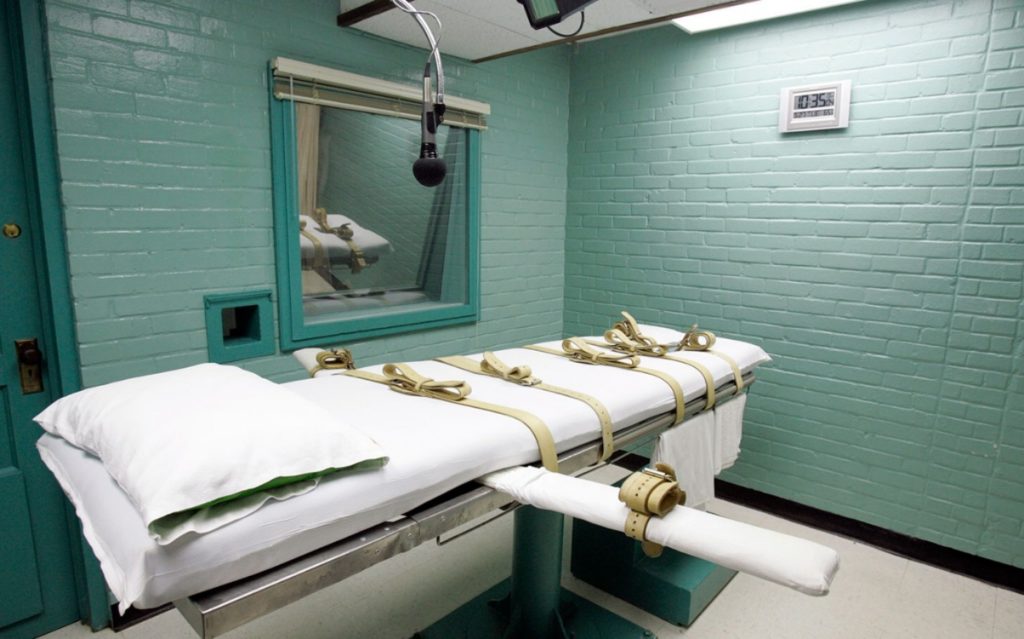
The only woman on Mississippi death row can go to state court to challenge her conviction and sentence, a federal judge has ruled. Lisa Jo Chamberlin, 49, intends to argue she has received ineffective legal representation, according to a ruling issued June 1 by U.S. District Judge Carlton Reeves. Chamberlin is in the women’s maximum-security unit at Central Mississippi Correctional Facility. She was sentenced to death in 2006 after being convicted on two counts of capital murder in the 2004 killing of two people in Hattiesburg. She appealed the verdict and sentence, and both were affirmed by the Mississippi Supreme Court in 2008. In 2015, Reeves ordered a new trial for Chamberlin, who is white, after her attorneys argued Black people had been improperly dismissed from the pool of potential jurors. A panel of the 5th U.S. Circuit Court of Appeals initially agreed with Reeves’ ruling. But in 2018, the full appeals court returned Chamberlin to death row, ruling that allegations of racial bias were insufficient to reverse her sentence. She has remained in prison, including during the appeal of the 2015 ruling. Evidence showed Linda Heintzelman and her boyfriend, Vernon Hulett, were killed after they argued with Chamberlin and her then-boyfriend, Roger Gillett, at a home they all shared. Hulett was hit in the head with a hammer, and his throat was slashed. Heintzelman was abandoned after being strangled and stabbed. When her assailants returned to find Heintezlman was still breathing, she was suffocated with plastic bags. Hulett was decapitated. The bodies were stuffed in a freezer and taken to Kansas, where Gillett and Chamberlin were arrested after state agents raided an abandoned farmhouse near the city of Russell. Gillett, now 48, also was convicted of two counts of capital murder and initially received a death sentence. His sentence also was overturned, and he was later resentenced to life in prison without parole. He is in the Mississippi State Penitentiary at Parchman. Chamberlin filed the federal appeal in her case in 2011. While her appeal was pending, the Mississippi Supreme Court ruled in another inmate’s case in 2013 that it would recognize a state’s right to effective post-conviction legal representation in death penalty cases “even years after the initial post-conviction petition was decided,” Reeves wrote in his June 1 order. That creates the path for Chamberlin’s next appeal in state court. “Chamberlin’s ineffectiveness claims will be dependent, at least in part, on the facts, and the Mississippi Supreme Court has demonstrated a willingness to review such claims when they return from this Court,” Reeves wrote. Appeals in death penalty cases typically last several years. Reeves wrote that he is “sympathetic to the State’s frustration” at delays in Chamberlin’s case. “Much of the reason for the recent delay is the difficulty in conducting an investigation during the pandemic; a situation that has affected almost all of the cases on this Court’s docket,” he wrote. Reeves wrote that he will monitor Chamberlin’s case to ensure she pursues the new state court appeal in a timely manner. Republished with the permission of The Associated Press.
Senate negotiators announce a deal on guns, breaking logjam

Senate bargainers on Sunday announced the framework of a bipartisan response to last month’s mass shootings, a noteworthy but limited breakthrough offering modest gun curbs and stepped-up efforts to improve school safety and mental health programs. The proposal falls far short of tougher steps long sought by President Joe Biden and many Democrats. Even so, the accord was embraced by Biden, and enactment would signal a significant turnabout after years of gun massacres that have yielded little but stalemate in Congress. Biden said in a statement that the framework “does not do everything that I think is needed, but it reflects important steps in the right direction and would be the most significant gun safety legislation to pass Congress in decades.” Given the bipartisan support, “there are no excuses for delay, and no reason why it should not quickly move through the Senate and the House,” he said. Leaders hope to push any agreement into law rapidly — they hope this month — before the political momentum fades that has been stirred by the recent mass shootings in Buffalo, New York, and Uvalde, Texas. Participants cautioned that final details and legislative language remain to be completed, meaning fresh disputes and delays might emerge. In a consequential development, 20 senators, including 10 Republicans, released a statement calling for passage. That is potentially crucial because the biggest obstacle to enacting the measure is probably in the 50-50 Senate, where at least 10 GOP votes will be needed to attain the usual 60-vote threshold for approval. “Families are scared, and it is our duty to come together and get something done that will help restore their sense of safety and security in their communities,” the lawmakers said. The group, led by Sens. Chris Murphy, D-Conn., John Cornyn, R-Texas, Thom Tillis, R-N.C., and Krysten Sinema, D-Ariz., produced the agreement after two weeks of closed-door talks. The compromise would make the juvenile records of gun buyers under age 21 available when they undergo background checks. The suspects who killed 10 Black people at a grocery store in Buffalo and 19 students and two teachers at an elementary school in Uvalde were both 18, and many perpetrators of recent years’ mass shootings have been young. The agreement would offer money to states to enact and put in place “red flag” laws that make it easier to temporarily take guns from people considered potentially violent, plus funds to bolster school safety and mental health programs. Some people who informally sell guns for profit would be required to obtain federal dealers’ licenses, which means they would have to conduct background checks of buyers. Convicted domestic abusers who do not live with a former partner, such as estranged ex-boyfriends, would be barred from buying firearms, and it would be a crime for a person to legally purchase a weapon for someone who would not qualify for ownership. Congressional aides said billions of dollars would be spent expanding the number of community mental health centers and suicide prevention programs. But they said some spending decisions are unresolved, as are final wording on juvenile records and other gun provisions that might prove contentious. Yet underscoring election-year pressures from Buffalo and Uvalde, the parties’ shared desire to demonstrate a response to those shootings suggested momentum toward enactment was strong. Senate Majority Leader Chuck Schumer, D-N.Y., called the accord “a good first step to ending the persistent inaction to the gun violence epidemic” and said he would bring the completed measure to a vote as soon as possible. Senate Minority Leader Mitch McConnell, R-Ky., who has supported the talks, was more restrained. He praised the bargainers’ work and said he is hoping for a deal that makes “significant headway on key issues like mental health and school safety, respects the Second Amendment, earns broad support in the Senate, and makes a difference for our country.” The agreement was quickly endorsed by groups that support gun restrictions, including Brady, Everytown for Gun Safety, and March for Our Lives, which organized rallies held around the country on Saturday. The National Rifle Association said in a statement that it opposes gun control and infringing on people’s “fundamental right to protect themselves and their loved ones,” but supports strengthening school security, mental health, and law enforcement. The group has long exerted its sway with millions of firearms-owning voters to derail gun control drives in Congress. The agreement represents a lowest common denominator compromise on gun violence, not a complete sea change in Congress. Lawmakers have demonstrated a newfound desire to move ahead after saying their constituents have shown a heightened desire for congressional action since Buffalo and Uvalde, but Republicans still oppose more sweeping steps that Democrats want and Sunday’s agreement omits. These include banning assault-style firearms such as the AR-15 style rifles used in Buffalo and Uvalde or raising the legal age for buying them. AR-15s are popular and powerful semiautomatic weapons that can fire high-capacity magazines and have been used in many of the nation’s highest-profile slaughters in recent years. One of them, the killing of 49 people at the Pulse nightclub in Orlando, Florida, occurred six years ago Sunday. Democrats have also wanted to ban high-capacity magazines and to expand required background checks to far more gun purchases. None of those proposals has a chance in Congress. Highlighting that, the Democratic-controlled House approved sweeping bills this past week barring sales of semiautomatic weapons to people under age 21 and large-capacity magazines and giving federal courts the power to rule when local authorities want to remove guns from people considered dangerous. Currently, only 19 states and the District of Columbia have red-flag laws. Those measures will go nowhere in the Senate, where Republicans can block them. The last major firearms restrictions enacted by lawmakers was the 1994 assault weapons ban, which Congress let expire ten years later. For years, congressional Republicans representing rural, pro-gun voters have blocked robust restrictions on firearms purchases, citing the Constitution’s Second Amendment. Democrats, whose voters overwhelmingly favor gun restrictions, have been reluctant to approve incremental steps that
Juneteenth marked as state holiday in Alabama this year
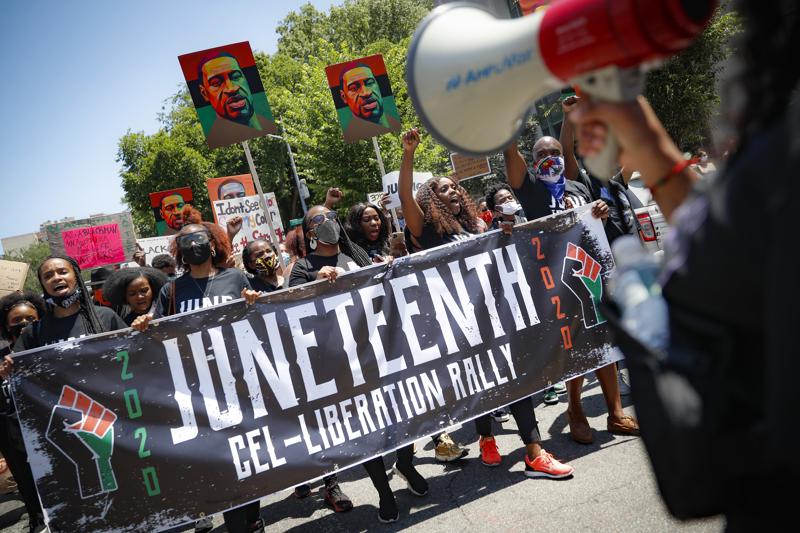
Alabama Gov. Kay Ivey has authorized Juneteenth Day — the federal holiday marking the end of slavery — as a holiday for state workers this year in Alabama. Ivey issued a memo earlier this month authorizing the day as a holiday for state workers. State offices will be closed on June 20 for the holiday. Juneteenth, or June 19, falls on a Sunday this year, so the holiday will be recognized the following Monday. President Joe Biden signed legislation last year to make Juneteenth, or June 19, a federal holiday to recognize the end of slavery. Ivey authorized the holiday for state employees since it’s designated at the federal level, spokeswoman Gina Maiola wrote in an email. “However, it is important to remember that ultimately the Legislature must decide if this will become a permanent state holiday,” Maiola wrote. Alabama law recognizes all other national holidays in the state as permanent state holidays, with the exception of Juneteenth. Juneteenth commemorates June 19, 1865, when Union soldiers brought the news of freedom to enslaved Black people in Galveston, Texas — two months after the Confederacy had surrendered. That was also about 2 1/2 years after the Emancipation Proclamation freed slaves in the Southern states. Alabama has three state Confederate-related holidays that close state offices for the day. Alabama marks Confederate Memorial Day in April and the birthday of Confederate President Jefferson Davis in June. The state jointly observes Robert E. Lee Day with Martin Luther King, Jr. Day in January. There have been various efforts to abolish or change the name of Confederate-related holidays, but none has been successful. Republished with the permission of The Associated Press.
