
Alabama voters return to the polls Tuesday in runoff elections
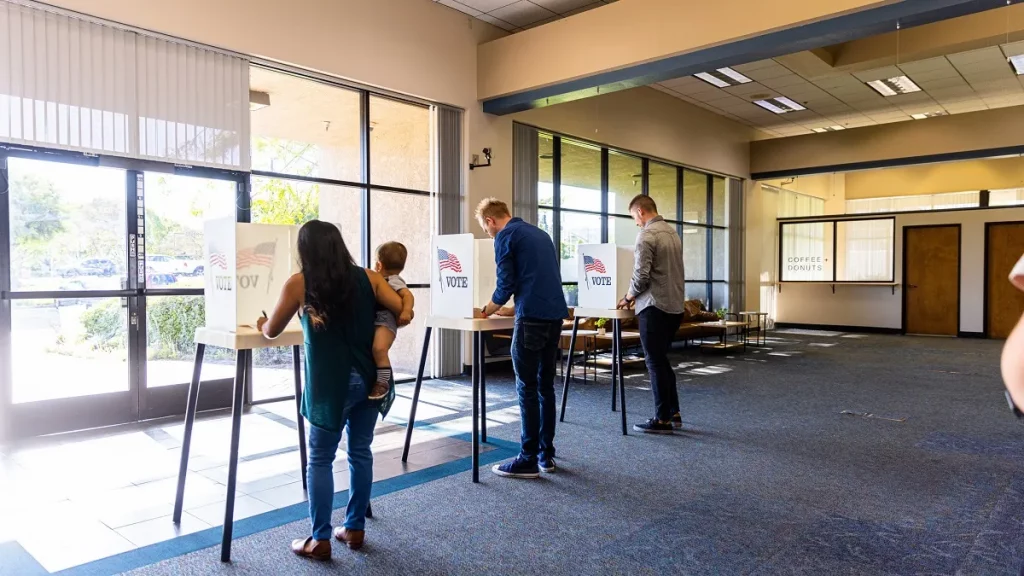
Alabamians head back to the polls on Tuesday, June 21, for the state’s primary runoff election to determine party nominees in a number of statewide and local races. Statewide candidates to be determined in Tuesday’s runoff are the Republican nominees for U.S. Senate, secretary of state, state auditor, two seats on the Public Service Commission, and the Democratic nominee for governor. The Republican nominee for a North Alabama congressional seat will also be selected, as well as both Republican and Democratic nominees in a number of legislative, county, and judicial seats around the state. Under Alabama law, the two top vote-getters face each other in a runoff if no candidate received a majority of votes in their respective party’s primary. The nominees from both parties then square off in the November 8 general election. To see a list of the top vote-getters in Alabama’s May 24 primary, click here. To see sample ballots for every county for Tuesday’s runoff election, click here. Polls open at 7 a.m. Tuesday and close at 7 p.m. To vote, residents must show an acceptable form of photo identification. Approved identification includes a valid Alabama driver’s license or non-driver ID, a U.S. passport or government employee ID, or a student, military or tribal ID. A voter on Tuesday can only cast a ballot for candidates seeking nominations in the same party that the voter selected in the primary election. “Crossing over” to vote in the other party’s runoff is prohibited. For more voter information, visit the Alabama Votes page on the Alabama secretary of state website. Republished with the permission of The Alabama Newscenter
What to watch in Alabama Senate runoff, DC mayor’s race

The two Republican candidates in Alabama’s U.S. Senate primary runoff on Tuesday can each boast that at one point, they had Donald Trump’s endorsement in the race. Trump first backed U.S. Rep. Mo Brooks in the spring of 2021. That endorsement stood for nearly a year until Trump rescinded it as the conservative firebrand languished in the polls. The former president took his time in issuing a second endorsement, supporting Katie Britt in the race only after she emerged as the top vote-getter in the state’s May 24 primary. In other races Tuesday, Washington, D.C., Mayor Muriel Bowser is facing voters amid growing concerns about crime. Runoffs in Georgia will resolve close contests in several congressional races and a secretary of state nomination, while primaries in Virginia will set up competitive congressional contests for the fall. Arkansas is holding primary runoffs for several legislative races. What to watch in Tuesday’s primaries: ALABAMA The Senate runoff will decide the GOP nominee for the seat being vacated by 88-year-old Republican Sen. Richard Shelby, who announced his retirement in February 2021 after serving six terms. Two months later, Trump announced his endorsement of Brooks, rewarding the six-term congressman who had objected to the certification of the 2020 presidential election and spoke at the “Stop the Steal” rally that preceded the January 6 insurrection at the U.S. Capitol. But Trump soured on Brooks as the primary campaign progressed, growing unhappy with his showing in the race and some of his comments urging the party to move on from the former president’s fixation on his 2020 election defeat. He pulled his endorsement last March. Britt, Shelby’s former chief of staff and a former leader of a state business group, won the most votes in last month’s primary, capturing nearly 45% of the ballots compared to Brooks’ 29%. Britt had needed to earn more than 50% of the vote to win outright and avoid a runoff. Another top candidate, Mike Durant, best known as the helicopter pilot who was held captive in Somalia during the 1993 battle chronicled in the book and film “Black Hawk Down,” finished in third place and failed to advance to the runoff. Brooks has been backed by Texas Sen. Ted Cruz and Kentucky Sen. Rand Paul, both of whom campaigned with him. Britt comes into Tuesday’s runoff with a fundraising advantage and a shiny new endorsement from Trump, which came a couple of weeks after the primary. The former president, who has a mixed record of success in backing winning candidates in this year’s midterm elections, waited to make an endorsement to help stave off the embarrassment of backing a losing candidate in a high-profile race. The winner of the GOP race will face Democrat Will Boyd in November, though Democrats have found limited success in the deep-red state in the last 20 years. GEORGIA A Democratic contest for secretary of state headlines the Tuesday runoffs in Georgia, while Republicans will settle three congressional nominations. State Rep. Bee Nguyen, backed by Democratic gubernatorial nominee Stacey Abrams, is trying to defeat former state Rep. Dee Dawkins-Haigler in the secretary of state’s race. The winner will face Republican Secretary of State Brad Raffensperger in the fall. Raffensperger beat back a challenge in his May 24 primary from U.S. Rep. Jody Hice, who was endorsed by Trump. Trump made Raffensperger a top target for rebuffing his efforts to “find” enough votes to overturn Joe Biden’s win in the state’s 2020 presidential election. In congressional runoffs, Vernon Jones, a Trump-backed candidate and former Democrat, is competing against trucking company owner Mike Collins for the Republican nomination for the 10th Congressional District seat east of Atlanta. Collins was endorsed by Republican Gov. Brian Kemp, who also won his primary over a Trump-backed challenger. In the 6th District in Atlanta’s northern suburbs, emergency room physician Rich McCormick is trying to hold off Trump-backed lawyer Jake Evans. That race has revolved around accusations by each candidate that the other is insufficiently conservative. The Republican winners in the 6th and 10th are heavy favorites in the November election over their Democratic opponents. Republicans also have high hopes of knocking off 30-year Democratic Rep. Sanford Bishop in southwest Georgia’s 2nd District. The GOP is choosing between former Army officer Jeremy Hunt and real estate developer Chris West. VIRGINIA In Virginia, voters will be picking Republican nominees to take on Democratic U.S. House incumbents in two of the most highly competitive districts in the country. In the coastal 2nd District, which includes the state’s most populous city, Virginia Beach, four military veterans are competing for the GOP nomination. With a big fundraising lead and the backing of the Congressional Leadership Fund, a super PAC dedicated to electing House Republicans, state Sen. Jen Kiggans is widely seen as the front-runner. The winner will face Democrat Elaine Luria, a retired Naval commander and member of the January 6 committee, in the general election. In central Virginia’s 7th District, six candidates are jockeying to take on Democratic Rep. Abigail Spanberger, a former CIA officer. WASHINGTON, D.C. Bowser, the two-term mayor of Washington, D.C., is trying to fend off challenges from a pair of Council members as the district contends with rising crime rates and homelessness concerns. Bowser has had a tumultuous second term that saw her repeatedly face off against Trump and walk a public tightrope between her own police department and a vocal coalition of activists led by Black Lives Matter. She is campaigning on the need for proven leadership and her history as one of the faces of Washington’s ongoing quest for statehood. Her primary challengers are Robert White and Trayon White, who are not related to each other. Both accuse Bowser of favoring developers as spiraling costs of living drive Black families out of the city and of mishandling public safety issues amid rising rates of violent crime, like a Sunday night shooting that left a 15-year-old boy dead and a police officer and at least two other adults wounded. The Democratic primary essentially decides the mayoral race in deeply blue Washington, D.C. Robert White has a history of successful insurgent campaigns, having unseated an entrenched incumbent for an at-large
Joe Biden considers gas tax holiday amid nearly $5 national average
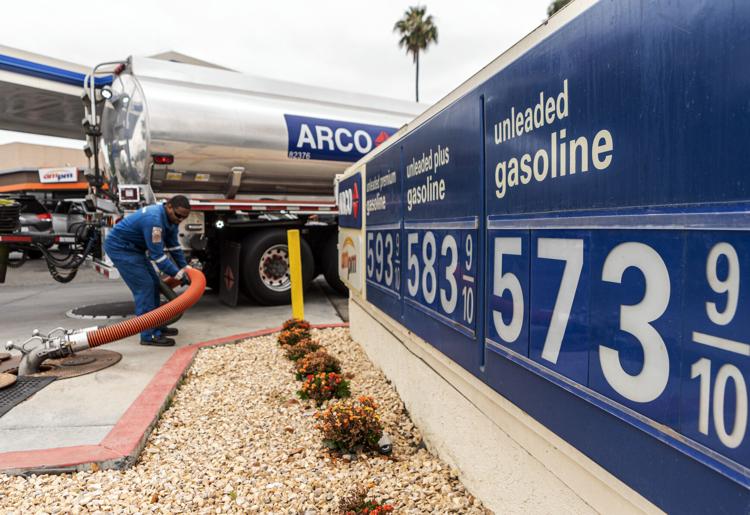
President Joe Biden said Monday he would decide on a potential gas tax holiday by the end of the week. Biden’s comments come after U.S. Treasury Secretary Janet Yellen made similar remarks during an interview with CNN’s “State of the Union” on Sunday. “That’s an idea that’s certainly worth considering,” Yellen said, referring to the gas tax holiday. Biden was asked about the holiday Monday when he told reporters about his coming decision. The federal gas tax is 18.4 cents per gallon. The president’s pledge comes after a string of record-breaking gas price benchmarks earlier this month with regular unleaded gas surpassing $5 per gallon nationwide. Regular gas took a slight dip to a national average of $4.98 per gallon Monday, according to AAA. Diesel is at a national average of $5.82 per gallon after hitting a record high again over the weekend. Some states have suspended their respective gas taxes because of the high prices, but those decisions raise additional problems since the levies are a key source of funding for infrastructure improvements. Critics have said the holiday will not address the root causes of the gas price hike, which they say is largely attributable to Biden’s restrictions on pipeline development and drilling. “Gasoline has more than doubled since Day 1 of the Biden presidency – from under $2.40 a gallon to more than $5 per gallon,” said Joel Griffith, an economic expert at the Heritage Foundation. “The president’s war on fossil fuels – including killing the Keystone XL oil pipeline, placing millions of acres of federal land off-limits to exploration, and regulatory hurdles blocking new pipelines and refineries – promises to suppress supply of abundant, affordable fuels for decades to come.” Griffith said the move would “allay just 1/10th of the surge in gas prices.” “Instead of borrowing $52 billion to mask a small fraction of this pain, the president should halt his war on energy and expand supply by unleashing American energy producers,” he said. “The massive federal spending financed by money printing at the federal reserve is causing prices in other sectors to soar as well, costing the typical American family more than $2,500 annually. It’s time for Biden to acknowledge the pain his policies are causing. A gas tax holiday does nothing to address this reality.” Other critics called it a short-term fix. “While policymakers seem to recognize the impact of rising energy costs on American families, some continue to turn to short-term fixes that aren’t likely to provide lasting relief for consumers,” said Frank Macchiarola, senior vice president of policy, economics, and regulatory affairs at the American Petroleum Institute. “The best way to ensure Americans have access to the affordable and reliable energy they need is to promote policies that incentivize U.S. production and send a clear message that America is open for energy investment.” Republished with the permission of The Center Square.
Barry Moore to join colleagues at D.C. hearing on ‘Bidenflation’
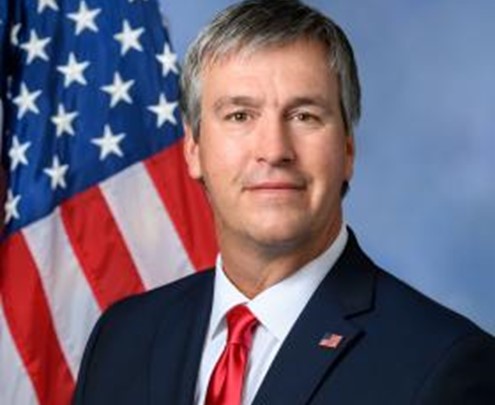
Congressman Andy Biggs will hold an off-site hearing on Tuesday to discuss what he terms “Bidenflation” and “Biden’s energy crisis.” Alabama Congressman Barry Moore will attend the hearing. The hearing will be at the Heritage Foundation in Washington D.C., from 3:00-5:00 pm EDT, and will feature nearly 20 prominent House Republican lawmakers. Four expert witnesses will provide testimony. According to the Heritage Foundation website, the group’s mission is to “formulate and promote public policies based on the principles of free enterprise, limited government, individual freedom, traditional American values, and a strong national defense.” According to the press release, this hearing will “examine the Biden Administration’s policies that have led to a disastrous economic and energy state for the country.” The hearing also aims to determine how Republicans in Congress can “hold Joe Biden more accountable for his reckless leadership.” Other congressional members attending the hearing are Reps. Chip Roy, Claudia Tenney, Dan Bishop, Marjorie Taylor-Greene, Lauren Boebert, Matt Gaetz, Louie Gohmert, Doug Lamalfa, Ralph Norman, Byron Donalds, Ben Cline, Yvette Herrell, Andrew Clyde, Bob Good, and Andy Harris. Witnesses include former Governor of Texas and former Department of Energy Secretary Rick Perry, Heritage Foundation Distinguished Fellow Stephen Moore, President of Western Energy Alliance Kathleen Sgamma, and Alex Epstein, President of the Center for Industrial Progress.
Alabama state pension funds down, facing challenges

Investments that are a key source of funding for Alabama’s Employees Retirement System have lost ground in the slumping financial markets this year, but officials say the pension fund is sound. The system’s Board of Control heard a presentation on the latest numbers at its quarterly meeting in Montgomery on Tuesday. Retirement Systems of Alabama chief executive David Bronner also talked more broadly about the global economy and said he could not remember when it faced such a multitude of challenges. The employee retirement system, with $15 billion in assets, served more than 139,000 members last year, including about 52,000 active and retired state employees and members from local government entities. Through April, its rate of return on investments was minus 5% for this fiscal year, which started October 1. Bronner, who has led the state pension program since 1973, said participants should not be concerned because they have a defined benefit plan, which means it is not dependent on the investment earnings. Plus, the long-range performance of the fund has been strong, Bronner noted, including a 22% return last fiscal year. The 9% rate of return over the last 10 years puts the ERS in the top one-third of comparable public pension plans, according to the financial firm State Street. Domestic stocks for the employee system are down about 4% for the fiscal year, while overall stocks are down 5%. Domestic stocks are the biggest portion of the investments. Fixed income investments, or bonds, are down by 10%. “Normally history will show you that if the stock market sells off a little bit, the bond market acts pretty good,” said Bronner. “In this situation, they’re both getting killed. I mean you’re getting hurt bad. How long does it last? Will it change? Well, of course, it will change. But when? That’s the question. The stock market and bond markets are being affected by the craziest confluence of different things that I’ve ever seen.” Among those factors are soaring fuel costs and the war in Ukraine and its crippling effect on grain supplies that are a vital food source for countries in Europe and Africa, Bronner said. Drought in Africa compounds the food shortage, he said. Bronner has led the pension system during previous economic downturns, like a stock market crash in 1987, the financial fallout after the 9/11 terrorist attacks, and the Great Recession of 2007 to 2009. The current situation is different, he said. “It’s unusual from the point of view of having a fuel crisis, thrown on top of a food crisis, thrown on top of inflation,” Bronner said. “It’s all working against us right now. It could turn around just as fast. And when we say fast, we don’t mean tomorrow, or the next day, or the next week. But certainly in a matter of months. “It’s just got to settle down. If we could settle the war, that would help immensely. It would help the food crisis, and probably it would also help with the gasoline prices and things like that.” State Treasurer Young Boozer, who serves on the board of the employee retirement system, said the global problems are substantial but expressed confidence in the health of the state’s pension funds. “The markets are in turmoil and they have been for several months,” Boozer said. “And Dr. Bronner talked about the causes of those. And they are here, they are active, and we’re going to be dealing with these things for months to come. “How is that going to impact the fund and RSA and the participants in the plan? The plan is in good shape. We are well funded. We are well-positioned. And if you look at our portfolios, we’ve got a great asset allocation. And I expect that this is just a period of turmoil that we will pass through and settle down. And I think we’re going to be in good shape going forward.” The Retirement Systems of Alabama also manages the Teachers Retirement System, a larger fund with $30 billion in assets. The quarterly numbers for the teacher’s system were released at a previous board meeting, showing a 5% loss on investments. But last fiscal year, teachers’ investments earned a 22.6% annualized return. Overall, the RSA manages 24 funds that had total assets of about $52 billion as of the end of last fiscal year. Bronner said the system’s investments, other than stocks and bonds, are generally doing well. These include the Robert Trent Jones Golf Trail, nine hotel resorts across the state, and 55 Water, the largest office building in New York City. “We’re making the most money we’ve ever made on the hotels today,” Bronner said. “Same way with the Robert Trent Jones Trail. We had the best year we’ve ever had last year (on the golf trail) and this year so far is better than last year.” Republished with the permission of The Associated Press.
