
Mo Brooks agrees to appear before January 6 Committee, if terms met

On Thursday, Congressman Mo Brooks sent a letter to members of the committee investigating the January 6th attack on the U.S. Capitol. Congressman Brooks said even though he has reservations about the Committee, he will voluntarily submit to a Committee deposition if certain requirements are met. According to the press release, Brooks is asking for the following terms: 1. Public Hearing. The deposition must be in public in a Capitol or House Office Building room of sufficient size and with sufficient resources to allow any interested media to attend and broadcast the event live, or otherwise transcribe and reveal (or play recordings of) the deposition. The Committee claims it is doing the public’s business. As such, the deposition should be in public. 2. January 6 Scope. The scope of deposition questions must be relevant to, and limited to, events surrounding the January 6, 2021, attack on the U.S. Capitol. 3. Questions by Congressmen. Questions may only be asked by Congressmen who serve on the Committee (no questions by staffers or other non-Congressmen). If a deposition is important enough to demand the time of a Congressman who is deposed, then it is similarly important enough to also demand the time of Committee Congressmen. 4. Document Disclosure. The Committee’s subject matter occurred 17 to 19 months ago. Everyone’s memory fades, little by little, with the passage of time. If the Committee is going to ask questions about content of any prior statements, electronic communications, written communications, or the like, for which there is electronic or written documentation, that documentation must be submitted to Congressman Brooks’ office in the Rayburn House Office building a minimum of seven days before the deposition, so that Congressman Brooks can refresh his memory of its contents. 5. Deposition Date Options. Congressman Brooks’ deposition must be conducted on a day when recorded votes are taken on the floor of the U.S. House of Representatives, i.e., a day when Congressman Brooks is already in Washington, DC for votes. The January 6 committee held its fifth meeting today and focused on Donald Trump’s sweeping pressure campaign that targeted not only statewide election officials but also his own executive branch agencies. “I understand the Committee wishes to depose me concerning January 6 events and have heard rumor the Committee “issued” a subpoena for my appearance. I have on countless occasions been in public venues in Alabama, in my Congressional office, on the House Floor, and numerous places in between, yet no Committee subpoena has been served. That is puzzling,” Brooks stated. “Quite frankly, I don’t believe I have knowledge of January 6 events that are not already known or that add to what the Committee already knows. As the Committee knows, I have already made multiple, lengthy sworn statements in the Eric Swalwell lawsuit in federal court and made multiple, lengthy written and oral statements elsewhere. Presumably, the Committee has already obtained and reviewed these statements,” Brooks continued. Brooks concluded, “I will voluntarily appear before the Committee to give sworn testimony providing the five requirements mentioned above are met. However, if the Committee rejects these basic requirements, then I hereby incorporate by reference all objections of each Congressman who has objected to and contested Committee subpoenas and, by this letter, hereby assert those objections to this Committee should this Committee properly serve a subpoena on me.”
Supreme Court expands gun rights, with nation divided

In a major expansion of gun rights after a series of mass shootings, the Supreme Court said Thursday that Americans have a right to carry firearms in public for self-defense, a ruling likely to lead to more people legally armed. The decision came out as Congress and states debate gun-control legislation. About one-quarter of the U.S. population lives in states expected to be affected by the ruling, which struck down a New York gun law. The high court’s first major gun decision in more than a decade split the court 6-3, with the court’s conservatives in the majority and liberals in dissent. Across the street from the court, lawmakers at the Capitol sped toward passage of gun legislation prompted by recent massacres in Texas,New York and California. Senators cleared the way for the measure, modest in scope but still the most far-reaching in decades. Also Thursday, underscoring the nation’s deep divisions over the issue, the sister of a 9-year-old girl killed in the school shooting in Uvalde, Texas, pleaded with state lawmakers to pass gun legislation. The Republican-controlled legislature has stripped away gun restrictions over the past decade. President Joe Biden said in a statement he was “deeply disappointed” by the Supreme Court ruling. It “contradicts both common sense and the Constitution, and should deeply trouble us all,” he said. He urged states to pass new laws. “I call on Americans across the country to make their voices heard on gun safety. Lives are on the line,” he said. The decision struck down a New York law requiring people to demonstrate a particular need for carrying a gun in order to get a license to carry a gun in a concealed way in public. The justices said that requirement violates the Second Amendment right to “keep and bear arms.” Justice Clarence Thomas wrote for the majority that the Constitution protects “an individual’s right to carry a handgun for self-defense outside the home.” That right is not a “second-class right,” Thomas wrote. “We know of no other constitutional right that an individual may exercise only after demonstrating to government officers some special need.” California, Hawaii, Maryland, Massachusetts, New Jersey, and Rhode Island all have laws similar to New York’s. Those laws are expected to be quickly challenged. Gov. Kathy Hochul, D-N.Y., said the ruling came at a particularly painful time, with New York mourning the deaths of 10 people in a shooting at a supermarket in Buffalo. “This decision isn’t just reckless. It’s reprehensible. It’s not what New Yorkers want,” she said. Gun control groups called the decision a significant setback. Michael Waldman, president of the Brennan Center for Justice and an expert on the Second Amendment, wrote on Twitter that the decision could be the “biggest expansion of gun rights” by the Supreme Court in U.S. history. Republican lawmakers were among those cheering the decision. Tom King, president of the plaintiff New York State Rifle and Pistol Association, said he was relieved. “The lawful and legal gun owner of New York State is no longer going to be persecuted by laws that have nothing to do with the safety of the people and will do nothing to make the people safer,” he said. “And maybe now we’ll start going after criminals and perpetrators of these heinous acts.” The court’s decision is somewhat out of step with public opinion. About half of the voters in the 2020 presidential election said gun laws in the U.S. should be made more strict, according to AP VoteCast, an expansive survey of the electorate. An additional one-third said laws should be kept as they are, while only about 1 in 10 said gun laws should be less strict. About 8 in 10 Democratic voters said gun laws should be made more strict, VoteCast showed. Among Republican voters, roughly half said laws should be kept as they are, while the remaining half closely divided between more and less strict. In a dissent joined by his liberal colleagues, Justice Stephen Breyer focused on the toll from gun violence. Since the beginning of this year, “there have already been 277 reported mass shootings — an average of more than one per day,” Breyer wrote. He accused his colleagues in the majority of acting “without considering the potentially deadly consequences” of their decision. He said the ruling would “severely” burden states’ efforts to pass laws “that limit, in various ways, who may purchase, carry, or use firearms of different kinds.” Several other conservative justices who joined Thomas’ majority opinion also wrote separately to add their views. Justice Samuel Alito criticized Breyer’s dissent, questioning the relevance of his discussion of mass shootings and other gun death statistics. Alito wrote that the court had decided “nothing about who may lawfully possess a firearm or the requirements that must be met to buy a gun” and nothing “about the kinds of weapons that people may possess.” “Today, unfortunately, many Americans have good reason to fear they will be victimized if they are unable to protect themselves.” The Second Amendment, he said, “guarantees their right to do so.” Justice Brett Kavanaugh, joined by Chief Justice John Roberts, noted the limits of the decision. States can still require people to get a license to carry a gun, Kavanaugh wrote, and condition that license on “fingerprinting, a background check, a mental health records check, and training in firearms handling and in laws regarding the use of force, among other possible requirements.” Backers of New York’s law had argued that striking it down would lead to more guns on the streets and higher rates of violent crime. Gun violence, on the rise during the coronavirus pandemic, has spiked anew. Gun purchases have also risen. In most of the country, gun owners have little difficulty legally carrying their weapons in public. But that had been harder to do in New York and the handful of states with similar laws. New York’s law, in place since 1913, says that to carry a concealed handgun in public, a person applying for a license has to show “proper cause,” a specific need to
Terri Sewell supports bipartisan bill to bolster mental health and substance use care
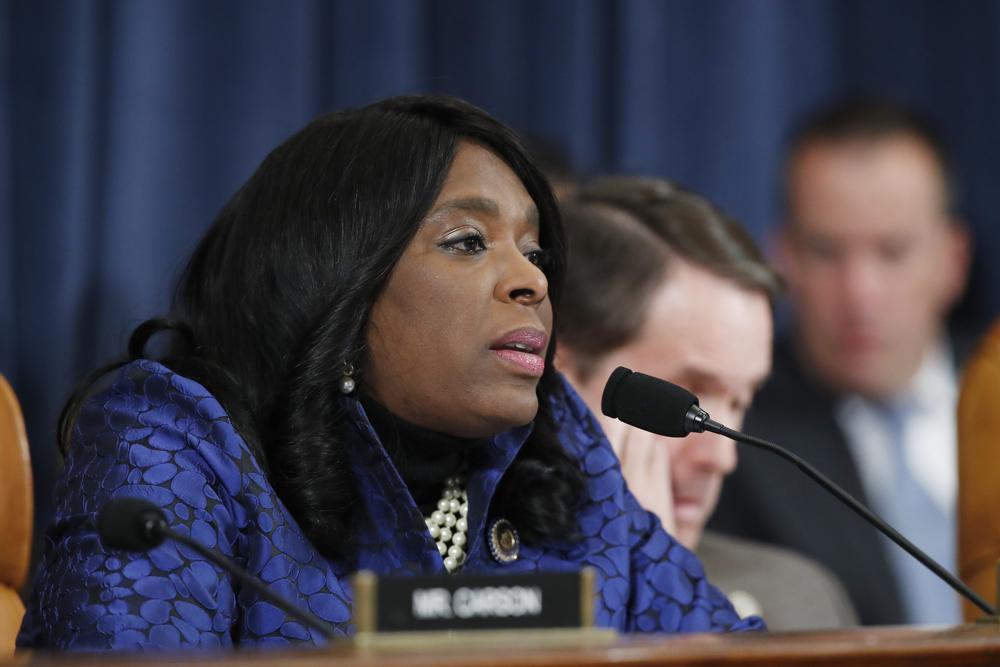
Yesterday Rep. Terri Sewell announced her support for a bipartisan legislative package that aims to strengthen access to care for mental illness and substance use disorders. Sewell has been committed to mental health access, previously voting for $4 billion of funding for mental health and substance use services through the American Rescue Plan. Sewell voted for the bipartisan bill called Restoring Hope for Mental Health and Well-Being Act. It will reauthorize key Substance Abuse and Mental Health Services Administration (SAMHSA) and Health Resources and Services Administration (HRSA) programs to address the national mental health and substance use disorder crises. The bill will expand more than 30 federal programs to address widespread shortages in mental health professionals and other barriers to care. This legislation passed the House with an overwhelmingly bipartisan vote of 402-20. “It’s no secret that our nation suffers from a mental health crisis which was only made worse by the hardship and isolation of the COVID-19 pandemic,” said Rep. Sewell. “Congress has a responsibility to provide the resources Alabamians need to seek care during times of need. Today, I proudly voted to strengthen Alabamians’ access to mental health and substance use services. This legislation marks a critical step toward addressing our mental health crisis by removing barriers to care and investing in our mental health workforce.” Suicide remains the second leading cause of death among young people between the ages of 10 and 34. Additionally, more than 2 million Americans suffer from an opioid use disorder, and nearly 108,000 Americans died due to a drug overdose last year. However, approximately 122 million Americans live in areas experiencing a shortage of qualified mental health professionals. The Restoring Hope for Mental Health and Well-Being Act will bridge these gaps and connect Americans to urgently needed health services: Strengthening Crisis Resources, including suicide prevention, mental health support, substance use disorder services, recovery housing, and other services. Addressing America’s Opioid Epidemic by easing access to life-saving treatments and strengthening training requirements for practitioners who prescribe controlled substances. Investing in the Behavioral Health Workforce through additional training grants and state funding. Supporting Young People’s Mental Health by strengthening pediatric mental health care, Medicaid behavioral health services, and suicide prevention resources for college students. The House is also preparing to advance the STRONG Veterans Act to strengthen mental health services and suicide prevention resources for veterans.
House Democrats argue wealthy aren’t paying their fair share, Republicans disagree
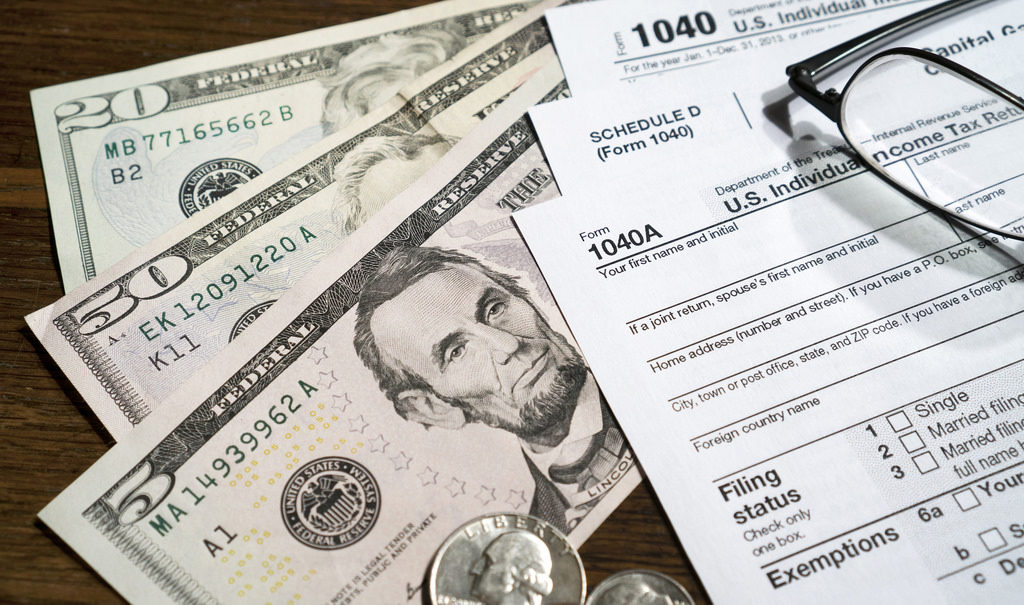
House Republicans and Democrats went after one another in a hearing Wednesday, arguing over whether America’s most wealthy are paying their fair share of income taxes. The U.S. House Select Committee on Economic Disparity and Fairness in Growth hosted a hearing on tax policy focused on inclusive growth, which led to the debate. “We have the most progressive tax code among any OECD nation, that means we’re taxing the rich a whole lot more than we’re taxing the folks on the lower income,” Rep. Jodey Arrington, R-Texas, said. Most Republicans argued a similar point, whereas Democrats argued that the uber-wealthy didn’t pay enough in income taxes due to tax breaks and needed to pay more. “It is unsustainable for working-class people to continue picking up the tab for tax breaks that the wealthy enjoy, in part due to the Republican Tax Cuts and Jobs Act,” U.S. Rep. Pramila Jayapal, D-Wash., said. To clarify, U.S. Rep. Bryan Steil, R-Wis., asked four witnesses what “fair share” would mean when applied to a federal income tax, asking how much of a billionaire’s income should be taxed. Georgetown Law Professor Dorothy Brown responded, “40-50%, I mean historically we’ve had as high as 70%.” William Gale from the Brookings Institute also said 40-50%. Seth Hanlon at the Center for American Progress and Amy Matsui from the National Women’s Law Center said they didn’t have a particular number in mind. Later, Steil asked the witnesses if the current U.S. tax code skews toward the wealthy, and all five witnesses present said yes. “Well, in some ways, yes, but I think we miss the point too that 40% of the bottom of the income distribution don’t pay income taxes at all,” Angela Rachidi of the American Enterprise Institute said. Near the closing of the hearing, U.S. Rep. Warren Davidson, R-Ohio, asked the witnesses if “deficits matter” when considering tax code. Except for Dr. Rachidi, every witness said that deficits do not matter. Republished with the permission of The Center Square.
State attorneys general ask Department of Justice to investigate violence against pro-life groups
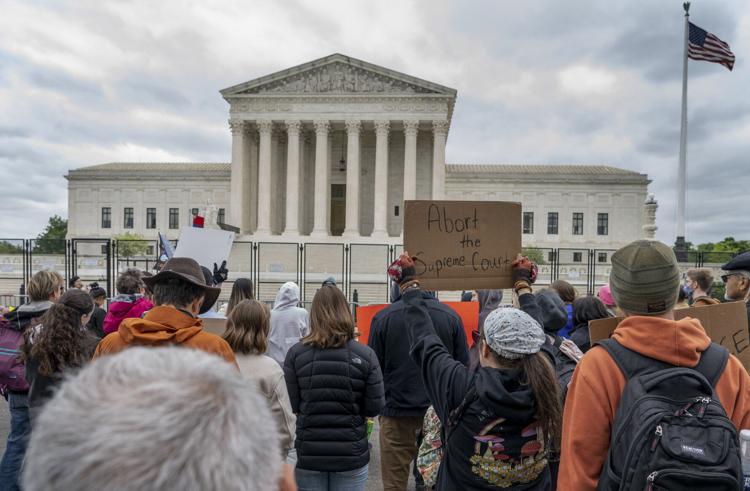
The attorneys general of 19 states want the U.S. Department of Justice to investigate what they say is growing violence targeting pro-life groups nationwide. Last month, Politico published a leaked draft U.S. Supreme Court opinion, apparently revealing the nation’s highest court is poised to overturn Roe v. Wade, which established abortion as a constitutional right, and Casey v. Planned Parenthood. The leaked opinion, purportedly penned by Justice Samuel Alito, comes in Dobbs v. Jackson Women’s Health Organization, a challenge to Mississippi’s 15-week abortion ban. Since then, groups have protested nationwide, including outside the homes of Supreme Court justices. Additionally, authorities arrested a California man who they say planned to murder Supreme Court Justice Brett Kavanaugh, and abortion advocates have firebombed or vandalized at least two dozen pregnancy centers nationwide. “Inaction is intolerable in our nation of laws, and it violates your oath of office,” the attorneys general wrote. “Yet, in recent weeks, you have continued to allow illegal actions seemingly because they advance (in the minds of some) the pro-abortion cause.” The letter added: “Intentional or not, budding domestic terrorists have apparently received the message: the Department of Justice is going easy on those who use violence in furtherance of favored viewpoints.” According to officials, the attacks began about a month ago, and the FBI said it planned to investigate last week. “President [Joe] Biden’s Department of Justice yet again has its priorities absolutely backward,” Georgia Attorney General Chris Carr said in an announcement. “They did not hesitate to investigate parents who spoke out at school board meetings but are now dragging their feet to address the violent crimes committed against pro-life organizations,” Carr added. “Public safety should not be a partisan issue, and it is past time for the U.S. Attorney General to take strong, uniform, and decisive action to hold accountable those who are responsible for these attacks.” Ohio Attorney General Dave Yost sent the letter to U.S. Attorney General Merrick Garland. In addition to Georgia and Ohio, attorneys general from Alabama, Alaska, Arizona, Arkansas, Florida, Indiana, Kansas, Kentucky, Mississippi, Missouri, Nebraska, Oklahoma, South Carolina, Texas, Utah, Virginia, and West Virginia co-signed the letter.
AG Steve Marshall and colleagues urge Supreme Court reverse California’s agricultural animal confinement law

Attorneys general from 26 states are urging the U.S. Supreme Court to overturn a lower-court decision upholding a California law banning the raising or importing pork, veal, or eggs if the animals are confined. The Supreme Court announced on March 28 that it would hear the pork industry’s challenge to California’s Proposition 12, a law restricting confinement practices in animal agriculture. The Supreme Court is scheduled to hear arguments on October 11. Prop. 12 was approved by 63% of California voters in 2018. The law established minimum space requirements based on square feet for calves raised for veal, breeding pigs, and egg-laying hens. It banned the sale of products from those animals if they were “confined in a cruel manner,” defined as in areas below minimum square-feet requirements. The case, National Pork Producers Council v. Karen Ross, the Secretary of the California Department of Food and Agriculture, focuses on the regulation of animal products outside of California by prohibiting the in-state sale of products traceable to the animal being confined in a “cruel manner.” The Pork Producers and others argue the law violates the Interstate Commerce Clause and general constitutional restrictions against “extraterritorial regulation.” The brief filed by the attorneys general states California consumes 13% of the nation’s pork and imports 99.87% of pork consumed. The attorneys general argue the “entire impact of Proposition 12 will be visited on out-of-state producers that, though they have no vote in California, must remodel their farms (or reduce their herds) to comply with the law.” “Under no circumstances should the state of California be allowed to dictate to Missouri farmers and ranchers how they can raise and confine breeding pigs, egg-laying hens, and veal calves,” Missouri Republican Attorney General Eric Schmitt said in a statement. “Further, California is attempting to impose their will on Missouri farmers and ranchers by threatening to deny entry into the California market if those farmers and ranchers don’t comply with their pointless regulations. Missouri’s farmers and ranchers have been tending to their land and livestock for generations. They don’t need Californian politicians telling them how to do their jobs.” Of the 19 briefs filed with the Supreme Court on the case last week, all urged the court to reverse the lower court’s decision, with the exception of two neutral parties providing economic information. A brief filed to persuade the Supreme Court not to hear the case was filed last year by The Humane Society of the United States, Animal Legal Defense Fund, Animal Equality, The Humane League, Farm Sanctuary, Compassion in World Farming USA, and Animal Outlook. They stated the Pork Producers’ argument uses a “dormant Commerce Clause” to stop in-state sales of certain pork products from “animals confined in cruel and unsanitary conditions that threaten the health of California consumers. … Because that prohibition applies only to sales inside California, moreover, producers outside California are free to confine animals however they choose for products sold outside the state.” States represented by the attorneys general are Alabama, Arizona, Arkansas, Georgia, Idaho, Indiana, Iowa, Kansas, Kentucky, Louisiana, Mississippi, Missouri, Montana, Nebraska, New Hampshire, North Dakota, Ohio, Oklahoma, South Carolina, South Dakota, Tennessee, Texas, Utah, Virginia, West Virginia, and Wyoming. Republished with the permission of The Center Square.
Capitol riot hearings to stretch into July, chairman says
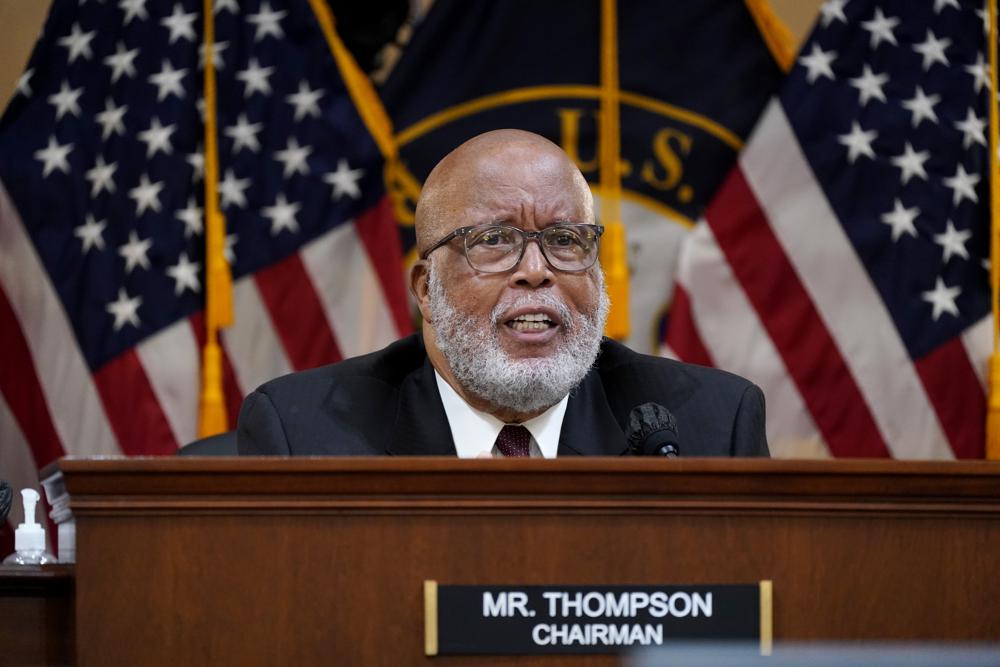
The House’s January 6 committee plans to continue its public hearings into July as its investigation of the Capitol riot deepens. The chairman, Rep. Bennie Thompson, told reporters Wednesday that the committee is receiving “a lot of information” — including new documentary film footage of Donald Trump’s final months in office — as its yearlong inquiry intensifies with hearings into the attack on January 6, 2021, and Trump’s efforts to overturn the 2020 election that Democrat Joe Biden won. Thompson, D-Miss., said the committee’s Thursday hearing, which is set to highlight former Justice Department officials testifying about Trump’s proposals to reject the election results, would wrap up this month’s work. The committee would start up again in July. “We have a new documentary from a person that we’re talking to, and we got to look through all his information,” Thompson said, referring to the British filmmaker whose never-before-seen interviews with the former president and his inner circle were turned over to the committee this week. The footage was taken both before and after the insurrection. For the past year, the committee has been investigating the violence at the Capitol and its causes and has interviewed more than 1,000 witnesses and produced some 140,000 documents. Nine people died in the attack and its aftermath. The committee had been scheduled to conclude this first round of public hearings in June. But additional information has come to the committee’s attention, and Congress is set to recess for two weeks of remote and district work into the Fourth of July holiday. The revelation about the film came to light Tuesday when British filmmaker Alex Holder revealed he had complied with a congressional subpoena to turn over all of the footage he shot in the final weeks of Trump’s 2020 reelection campaign. Rep. Jamie Raskin, D-Md., indicated on Tuesday that the investigation’s schedule may be changing. “I would just say the original hearings would have wrapped up in June, but we are picking up new evidence on a daily basis with enormous velocity,” Raskin said. “And so we’re constantly incorporating and including the new information that’s coming out.” He added: “But certainly, the hearings will conclude before the end of the summer.” The televised hearings launched with a prime-time session this month, and lawmakers said they continue uncovering new tips and information. Republished with the permission of The Associated Press.
