
Supreme Court limits EPA in curbing power plant emissions
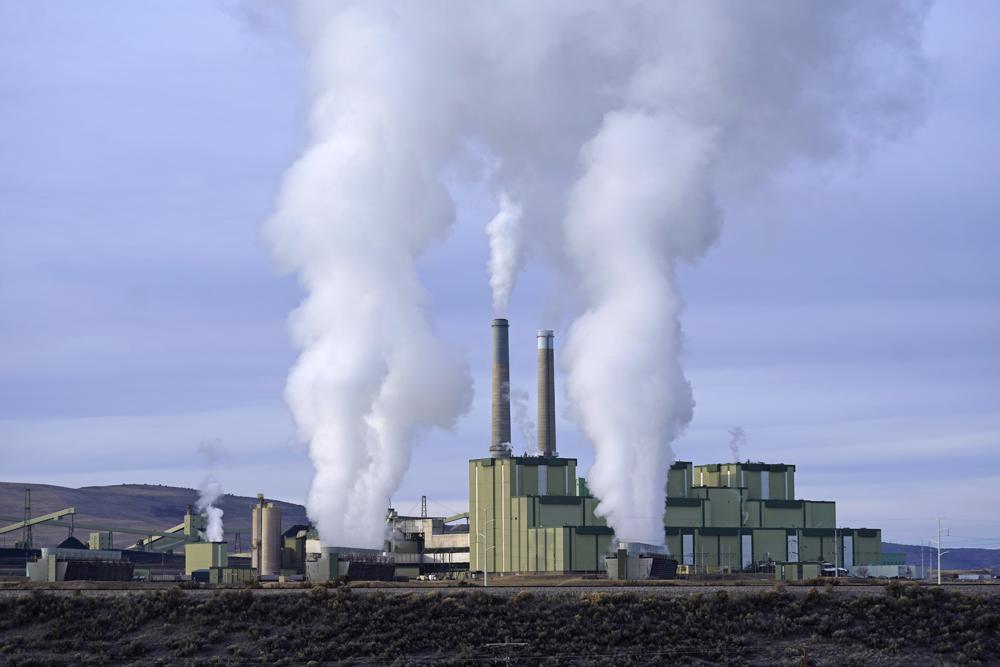
In a blow to the fight against climate change, the Supreme Court on Thursday limited how the nation’s main anti-air pollution law can be used to reduce carbon dioxide emissions from power plants. By a 6-3 vote, with conservatives in the majority, the court said that the Clean Air Act does not give the Environmental Protection Agency broad authority to regulate greenhouse gas emissions from power plants that contribute to global warming. The decision, said environmental advocates and dissenting liberal justices, was a major step in the wrong direction — “a gut punch,” one prominent meteorologist said — at a time of increasing environmental damage attributable to climate change amid dire warnings about the future. The court’s ruling could complicate the administration’s plans to combat climate change. Its detailed proposal to regulate power plant emissions is expected by the end of the year. Though the decision was specific to the EPA, it was in line with the conservative majority’s skepticism of the power of regulatory agencies, and it sent a message on possible future effects beyond climate change and air pollution. The decision put an exclamation point on a court term in which a conservative majority, bolstered by three appointees of former President Donald Trump, also overturned the nearly 50-year-old nationwide right to abortion, expanded gun rights, and issued major religious rights rulings, all over liberal dissents. President Joe Biden aims to cut the nation’s greenhouse gas emissions in half by the end of the decade and to have an emissions-free power sector by 2035. Power plants account for roughly 30% of carbon dioxide output. “Capping carbon dioxide emissions at a level that will force a nationwide transition away from the use of coal to generate electricity may be a sensible ‘solution to the crisis of the day,’” Chief Justice John Roberts wrote in his opinion for the court. But Roberts wrote that the Clean Air Act doesn’t give EPA the authority to do so and that Congress must speak clearly on this subject. “A decision of such magnitude and consequence rests with Congress itself, or an agency acting pursuant to a clear delegation from that representative body,” he wrote. In a dissent, Justice Elena Kagan wrote that the decision strips the EPA of the power Congress gave it to respond to “the most pressing environmental challenge of our time.” Kagan said the stakes in the case are high. She said, “The Court appoints itself—instead of Congress or the expert agency—the decisionmaker on climate policy. I cannot think of many things more frightening.” Biden, in a statement, called the ruling “another devastating decision that aims to take our country backwards.” He said he would “not relent in using my lawful authorities to protect public health and tackle the climate crisis.” And EPA head Michael Regan said his agency will move forward with a rule to impose environmental standards on the energy sector. West Virginia Attorney General Patrick Morrisey, who led the legal challenge to EPA authority, said the “EPA can no longer sidestep Congress to exercise broad regulatory power that would radically transform the nation’s energy grid and force states to fundamentally shift their energy portfolios away from coal-fired generation.” But University of Georgia meteorology professor Marshall Shepherd, a past president of the American Meteorological Society, said of the decision: “It feels like a gut punch to critical efforts to combat the climate crisis which has the potential to place lives at risk for decades to come.” Richard Revesz, an environmental expert at the New York University School of Law, called the decision “a significant setback for environmental protection and public health safeguards.” But he also said in a statement that EPA still has authority to address greenhouse gas emissions from the power sector. EPA Administrator Regan said the agency “will move forward with lawfully setting and implementing environmental standards that meet our obligation to protect all people and all communities from environmental harm.” Senate Democratic leader Chuck Schumer of New York said the consequences of Thursday’s decision “will ripple across the entire federal government, from the regulation of food and drugs to our nation’s health care system, all of which will put American lives at risk.” The court held that Congress must speak with specificity when it wants to give an agency authority to regulate on an issue of major national significance. Several conservative justices have criticized what they see as the unchecked power of federal agencies. Those concerns were evident in the court’s orders throwing out two Biden administration policies aimed at reducing the spread of COVID-19. Last summer, the court’s 6-3 conservative majority ended a pause on evictions over unpaid rent. In January, the same six justices blocked a requirement that workers at large employers be vaccinated or test regularly and wear a mask on the job. Underlying all these issues is a lack of action from Congress, reflecting bitter, partisan disagreements over the role of the federal government. On the environment, Biden’s signature plan to address climate, a sweeping social and environmental policy bill known as Build Back Better, is all but dead amid united opposition from congressional Republicans and conservative Democratic Sen. Joe Manchin from coal state West Virginia. Under a trimmed-down version, the legislation backed by Democrats would offer tax credits and spending to boost renewable power such as wind and solar and sharply increase the number of electric vehicles. The justices heard arguments in the case on the same day that a United Nations panel’s report warned that the effects of climate change are about to get much worse, likely making the world sicker, hungrier, poorer, and more dangerous in the coming years. The power plant case has a long and complicated history that begins with the Obama administration’s Clean Power Plan. That plan would have required states to reduce emissions from the generation of electricity, mainly by shifting away from coal-fired plants. But that plan never took effect. Acting in a lawsuit filed by West Virginia and others, the Supreme Court blocked it in 2016 by a 5-4 vote, with conservatives
Supreme Court: Joe Biden can end Donald Trump-era asylum policy
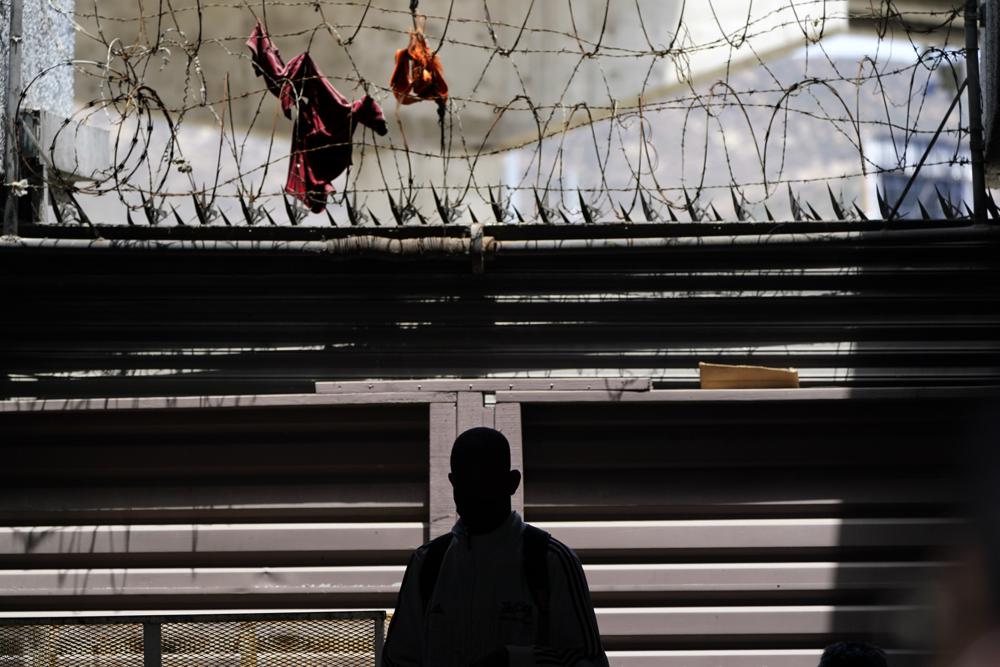
The Supreme Court said Thursday the Biden administration can scrap a Trump-era immigration policy that was at the center of efforts to deter asylum-seekers, forcing some to wait in Mexico. Two conservative justices joined their three liberal colleagues in siding with the White House. The justices’ decision came in a case involving former President Donald Trump’s “Remain in Mexico” policy, formally known as Migrant Protection Protocols, which enrolled about 70,000 people after it was launched in 2019. President Joe Biden suspended the program on his first day in office in January 2021. But lower courts ordered it reinstated in response to a lawsuit from Republican-led Texas and Missouri. The current administration has sent far fewer people back to Mexico than did the Trump administration. The ruling was released on the same day that the court dealt the administration a blow in an important environmental case about the nation’s main anti-air pollution law. That ruling could complicate the administration’s plans to combat climate change. The heart of the legal fight in the immigration case was about whether U.S. immigration authorities, with far less detention capacity than needed, had to send people to Mexico or whether those authorities had the discretion under federal law to release asylum-seekers into the United States while they awaited their hearings. After Biden’s suspension of the program, Homeland Security Secretary Alejandro Mayorkas ended it in June 2021. In October, the department produced additional justifications for the policy’s demise, but that was to no avail in the courts. Chief Justice John Roberts wrote that an appeals court “erred in holding that the” federal Immigration and Nationality Act “required the Government to continue implementing MPP.” Joining the majority opinion was fellow conservative Brett Kavanaugh, a Trump-appointee, as well as liberal justices Stephen Breyer, Sonia Sotomayor, and Elena Kagan. Kavanaugh also wrote separately and noted that in general, when there is insufficient detention capacity, both releasing asylum-seekers into the United States and sending them back to Mexico “are legally permissible options under the immigration statutes.” Cornell University law professor Stephen Yale-Loehr, an immigration expert, said the Biden administration does not need to take any further action to end the policy but that Texas and Missouri can pursue a challenge over whether the administration followed appropriate procedure in ending the program. Texas Attorney General Ken Paxton said in a statement that the decision was “unfortunate.” He argued it would make “the border crisis worse. But it’s not the end. I’ll keep pressing forward and focus on securing the border and keeping our communities safe in the dozen other immigration suits I’m litigating in court.” Because of lower court decisions, MPP resumed in December, but the administration has registered only 7,259 migrants in the program, about 6 of every 10 of them Nicaraguans. The administration has said it would apply the policy to nationalities that are less likely to be subject to pandemic-era asylum limits. Strained diplomatic relations with Nicaragua makes it extremely difficult for the U.S. to expel people back to their homeland under the pandemic rule, known as Title 42 authority. U.S. authorities stopped migrants 1.2 million times on the Mexico border from December through May, illustrating the limited impact that “Remain in Mexico” has had under Biden. Democratic-led states and progressive groups were on the administration’s side in the case. Republican-run states and conservative groups sided with Texas and Missouri. The case is Biden v. Texas, 21-954. Republished with the permission of The Associated Press.
Jim Zeigler: Shooter of two Bibb County deputies was not supposed to be out of prison

A 26-year-old who is accused of shooting two Bibb County Deputies Wednesday was not supposed to be out of prison, according to State Auditor Jim Zeigler. Austin Patrick Hall is the object of a manhunt after a shooting in the Brierfield, Alabama area of Bibb County near Montevallo. The two wounded deputies were transported to UAB hospital in Birmingham where both were admitted and one is in critical condition. Zeigler says Hall was criminally charged 46 times in the past nine years. He was approved for work release in 2019 while serving a 10-year sentence for theft of property in 2018. “This inmate was not appropriate for work release then, and he was not supposed to be out of prison now,” Zeigler said. Hall was indicted in Calhoun County, Alabama in May of this year on 10 charges of second-degree receiving stolen property, reckless endangerment, second-degree assault, certain persons prohibited from carrying a firearm, drug possession, resisting arrest, attempting to elude, and third-degree burglary. Hall had led police on a two-state chase in 2019. “Our criminal justice system needs to do a much better job of deciding which inmates to release under work release, parole, and any types of early release,” Zeigler said. “We need more accountability on the part of officials who make these decisions.” “Our prayers are with the two wounded deputies, their families, and fellow officers. We pray for the swift capture of the accused and that no further violence will be done to law enforcement and the public. After that, we need to use this shooting to prompt a hard look at all forms of criminal release. It appears that Hall was not supposed to be out of prison at this time. We need to tighten up accountability for the safety of the public and law enforcement,” Zeigler said.
Some Missouri hospitals briefly halt emergency contraception
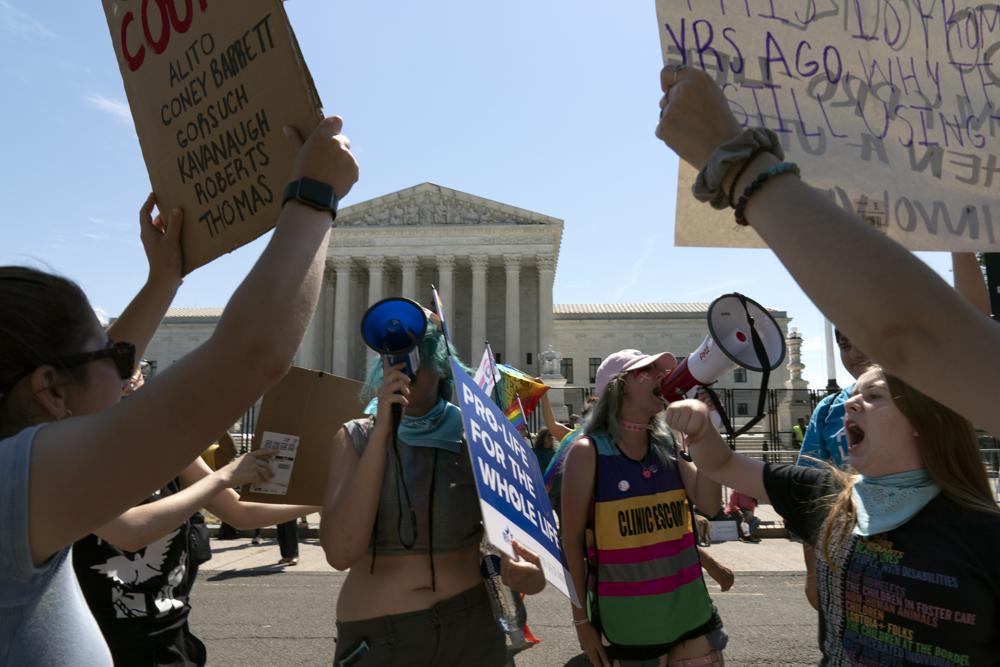
A large Missouri hospital chain briefly stopped providing emergency contraception amid confusion over whether the state’s abortion ban could put doctors at risk of criminal charges for providing the medication, even for sexual assault victims. St. Luke’s Health Kansas City said in a statement Wednesday that it would resume offering the medication known as the morning-after pill, a day after it told The Kansas City Star that its Missouri hospitals would halt emergency contraception. It did so after the state’s attorney general issued a statement stating unequivocally that emergency contraception is not illegal under an abortion ban that was enacted minutes after Friday’s U.S. Supreme Court decision overturning Roe v. Wade. The Missouri law bans all abortions except in cases of medical emergency. “Saint Luke’s Health System is aware of and continues to closely monitor legal developments regarding Missouri’s abortion trigger law, including recent comments from the Missouri Attorney General’s Office and the Governor of Missouri regarding the use of emergency contraceptives,” St. Luke’s said Wednesday. “Following further internal review, Saint Luke’s will now resume providing emergency contraceptives, under new protocols, at all Missouri-based Saint Luke’s hospitals and clinics.” The statement said the “ambiguity of the law, and the uncertainty even among state officials about what this law prohibits, continues to cause grave concern and will require careful monitoring.” Since the Supreme Court ruling, abortion rights supporters have warned about the ambiguity of some state abortion bans and that contraception could be targeted. Lawmakers in some states with majority-conservative legislatures have suggested that. Already in Idaho, emergency contraception was prohibited at school-based health clinics last year under a law banning public funding for “abortion-related services.” Adding to the worries were comments from Supreme Court Justice Clarence Thomas, who, in a separate concurring opinion, urged colleagues to overturn other high court rulings protecting same-sex marriage, gay sex, and the use of contraceptives. Emergency contraception can be taken after sex and generally works by delaying or preventing ovulation. The federally approved label also says it may prevent a fertilized egg from attaching to the womb. It’s been attacked by some abortion foes who believe life begins when an egg is fertilized. The Missouri law doesn’t mention birth control, including emergency contraceptives, which is sold under the brand name Plan B. Republican state Rep. Nick Schroer, who sponsored the bill, said the intent was never to restrict access to any contraception. “It’s not going to limit access to Plan B, and if we wanted to, then that would need to be a discussion this next legislative session,” Schroer said. It’s standard practice for health care providers to offer emergency contraception to sexual assault victims. Gretchen Borchelt, vice president of reproductive rights and health at the National Women’s Law Center in Washington, D.C., said it’s a “critically important part of a comprehensive medical response to sexual assault.” In its Tuesday statement to the Star, St. Luke’s spokeswoman Laurel Gifford said the hospital system “simply cannot put our clinicians in a position that might result in criminal prosecution.” Doctors convicted under the law could serve up to 15 years in prison and lose their medical licenses. St. Luke’s has 16 hospitals, some of which are in Kansas and were not impacted. Since the Supreme Court’s ruling, demand for emergency contraceptives rose so much that some retailers, including Amazon and Rite Aid, capped how many consumers can buy. “Retailers are being cautious. They are trying to manage it,” said Neil Saunders, managing director at GlobalData Retail. “But I don’t think there are chronic shortages.” Planned Parenthood health centers are experiencing an increased demand for information and family planning services, including contraception. “They’re worried birth control will be next,” said Kelly Hart, a spokeswoman for Planned Parenthood’s Dallas-based affiliate. So far, she said, the group has been able to meet the demand. “From our perspective, birth control is more important than it has ever been, and we’re doing everything we can to make that available,” Hart said. At Wellspring online pharmacy, U.S. sales totaled about 1,000 packages a day at the weekend peak, compared with 100 to 200 daily before the ruling, Koen Mullokandov, the company’s chief operating officer, said. The fervor has subsided to about six times higher than usual, but many purchasers are still buying four to six packages at a time, clearly “stocking up,” Mullokandov said. “Supply is challenging because nobody was expecting this,” he said, adding that so far, “we have enough inventory to support the demand.’’ Republished with the permission of The Associated Press.
Alabama roads, bridges in 10 locales getting $4.9 million in improvements

Alabama cities and counties are volunteering matching taxpayer funds to the state that will yield $4.9 million in improvements for road and bridge projects. Although not required by rules of the program, the matches of nearly $3 million will funnel with the $2 million provided by the Annual Grant Program. This is an initiative of the Rebuild Alabama Act, a 2019 legislative piece that has yielded some $27 million in roads and bridges improvement since inception, a release says. The Alabama Department of Transportation annually sets aside $10 million from the state’s share of new gas tax revenue. Republican Gov. Kay Ivey added, via the release, another round of local projects is expected to be awarded later this calendar year. Many will be under contract before Christmas. RAA rules require projects to be launched within a year of funds awarded. “Folks in all corners of Alabama and in areas big and small are seeing real results, and that will continue,” Ivey said in the release. Most of these projects are getting a quarter-million dollars from the state. Some, like a road resurfacing in Dallas County, are getting much more in the local match. In addition to Dallas, projects are slated for Clanton, Crossville, Scottsboro, Linden, Brundidge, Roanoke, Woodstock, Talladega County, and Wilcox County. Republished with the permission of The Center Square.
Groups oppose $725M Alabama bond sale for building prisons

A coalition of advocacy groups is opposing Alabama’s plan to sell $725 million in bonds to finance construction of two new supersize prisons. The Communities Not Prisons Coalition, a group formed to oppose the construction, and other organizations issued statements Monday opposing the looming bond sale. The state is expected to go to the bond market on Tuesday to provide financing for the construction plan. That money will be added to $135 million in state funds and $400 million in pandemic relief dollars that the state already agreed to put toward the construction project. The prisons are to house up to 4,000 inmates and replace existing facilities. Alabama Gov. Kay Ivey, and lawmakers who approved the plan last year, have touted it as a partial solution to the state’s longstanding prison woes. Critics argue the state is ignoring the bigger issues — prison staffing levels and leadership — to focus on buildings. The bonds would have a 2052 maturity date. “It means that this is a project to marry our state to mass incarceration for the better part of this century. It means that Alabamians, and Black Alabamians in particular, will continue to be incarcerated and brutalized by the Alabama Department of Corrections on a breathtaking scale,” Veronica Johnson, executive director of the Alabama Justice Initiative, said in a statement. The Alabama Corrections Institution Finance Authority, which is chaired by Ivey, met briefly at the Alabama Capitol last week to approve the sale of the bonds. The buildings would be leased by the Finance Authority to the state prison system and the bonds would be secured the lease payments from the state general fund budget. Activists previously helped halt the construction project. The bond sale comes after the construction plan — which was pursued under two different administrations — hit various snags over the years. An earlier version of the plan would have seen the state lease prisons built and owned by private companies. But that fell through after underwriters withdrew under pressure from activists to not be involved with private prison companies. The U.S. Department of Justice has an ongoing lawsuit against the state over prison conditions. Republished with the permission of The Associated Press.
Mom of U.S. veteran held in Ukraine speaks to son by phone

The mother of a U.S. military veteran who went missing after he traveled to help Ukraine in its fight against Russia has spoken with her son by telephone, the family said Wednesday. Lois “Bunny” Drueke, of Tuscaloosa, answered a call from what appeared to be a Russian exchange and talked to son Alex Drueke on Tuesday for nearly 10 minutes in their first conversation since he and Andy Huynh, another Alabama veteran who traveled to Ukraine, were captured after a fight earlier this month in Ukraine. Apparently, at the prompting of his captors, Drueke said the people holding him were anxious to begin negotiations and that he had food, water, and bedding, Bunny Drueke said in a statement released by her family. “He sounded tired and stressed, and he was clearly reciting some things he had been made to practice or read, but it was wonderful to hear his voice and know he’s alive and alright,” she said. Drueke said he hadn’t been in contact with Huynh for several days, according to the woman. The United States has said both men should be protected as prisoners of war under the Geneva Conventions. Huyhn’s fiance, Joy Black, said his family was thrilled that Drueke was able to speak with his mother. “We are still hoping to get a similar communication from Andy,” she said. Druke and Huynh didn’t return to a meeting spot after their group came under heavy fire in the Kharkiv region of northeastern Ukraine near the Russian border on June 9. The two traveled separately to help Ukraine and became buddies there in part because of their shared Alabama background, relatives have said. The U.S. State Department said it was looking into reports that Russian or Russian-backed separatist forces in Ukraine had captured at least two American citizens. If confirmed, they would be the first Americans fighting for Ukraine known to have been captured since the war began on February 24. Republished with the permission of The Associated Press.
