
Steve Flowers: Women and young folks prevail in 2022
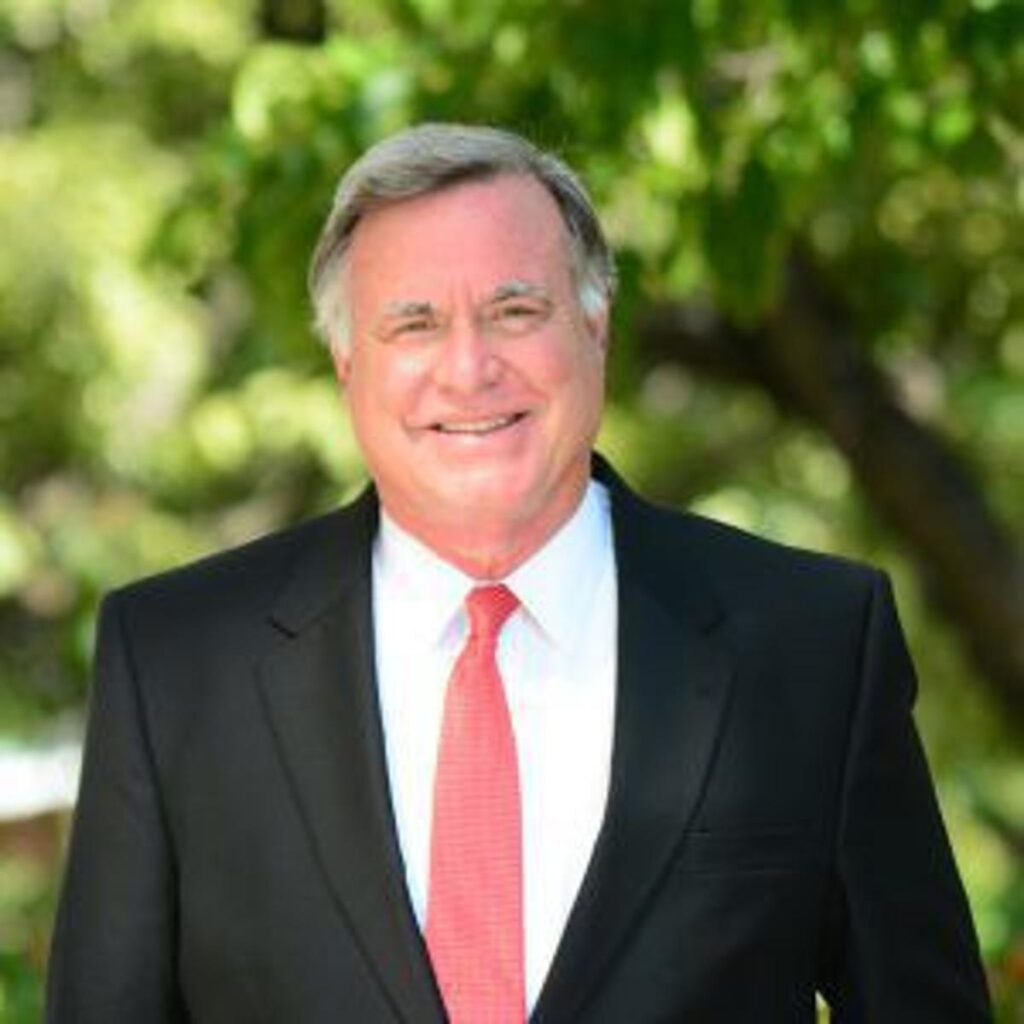
In my observations of Alabama politics, every election year brings an underlying election year surprise or two. The underlying prevailing theme emerging from the Alabama political arena this year is that women have arrived politically in the Heart of Dixie. Governor Kay Ivey is only the second female elected Governor of Alabama, Lurleen Wallace being the first in 1966. Governor Ivey won a decisive second-term nomination as the Republican nominee in May. She will face another female Democratic nominee, Yolanda Flowers, in the November General Election. This is the first time two women will face each other for governor. In fact, the first and second place finishers in both the Republican and Democratic primaries were women. Governor Ivey was followed by Lindy Blanchard, who finished second in the GOP primary. Dr. Yolanda Flowers, a retired Birmingham educator, was in a runoff with second place Democratic female State Senator Malika Sanders Fortier in the Democratic primary. Katie Britt emerged victoriously from the Republican U.S. Senate contest, and if elected in November, as is expected, she will be the first female elected to the U.S. Senate from Alabama. Katie Britt is the brightest young star in Alabama politics. She is the new rock star of the state. Not only will she be the first female senator, but she is also the headliner for the second theme of 2022. That is, we have a pair of new youthful stars arriving on the scene as the dust settles from the June 21 runoffs. Wes Allen and Andrew Sorrell have become the new stars on the scene. Wes Allen defeated veteran politico Jim Ziegler in the Secretary of State race. Andrew Sorrell bested Stan Cooke and Rusty Glover to become State Auditor. Both Sorrell and Allen were about to become freshmen members of the Alabama House this time four years ago. Now, they are the new stars on the statewide political block. They will be joining Lieutenant Governor Will Ainsworth as young constitutional officeholders with a future. You have four young stars on the horizon in the state. Rockstar Katie Britt is 40, superstar Will Ainsworth is 41, star Wes Allen is 46, and star Andrew Sorrell is 36. Another young superstar has arrived on the behind-the-scenes political consulting arena in Alabama politics. Twenty-seven-year-old Sean Ross ran the Katie Britt campaign masterfully. He is absolutely brilliant. He ran one of Twinkle Cavanaugh’s campaigns four years ago when he was just graduating from the University of Alabama. Katie did a good day’s work when she acquired his services with a recommendation from Twinkle. He is the hottest item in Alabama political consulting. There were four vacancies in the Alabama State Senate. State Representative Merika Coleman, a Bessemer attorney, won a very impressive victory for the seat of retiring Priscilla Dunn. She is young and brilliant and is going to be a star in the Alabama State Senate. Lance Bell won the seat of retiring state Senator Jim McClendon. Bell beat his opponent 73% to 27% in this Republican seat. Keith Kelley emerged victorious over Wendy Ghee Draper, in the Anniston-based Republican seat of retiring veteran state Senator Del Marsh. In probably the biggest upset surprise of the 2022 primary season was the victory of Josh Carnley to fill the Republican Southeast Alabama Senate Seat held for decades by the powerful and popular Jimmy Holley. This district is comprised of Coffee, Covington, Pike, and part of Dale counties. Twelve-year veteran State House member Mike Jones of Andalusia was expected to waltz to victory having every business group’s endorsement. Carnley carried his home county of Coffee overwhelmingly, and veteran political consultant David Mowery did a masterful job with Carnley’s ads. Popular first-term state senator, Dan Roberts, was challenged by a self-financed urologist in Roberts’ silk stocking Jefferson/Shelby district, but Roberts won handily. For the first time in 40 years, there will not be a Sanders representing the Black Belt in the Alabama Senate. Veteran Senator Hank Sanders failed in his bid to take back his seat he loaned to his daughter, the aforementioned Malika Sanders Fortier. Hank Sanders had served nine terms as the Black Belt’s senator. He was defeated by Robert Stewart of Selma. Jay Hovey won the coveted Lee/Tallapoosa/Russell County State Senate seat, prevailing over incumbent Tom Whatley by one vote. For the most part, the powerful 35-member State Senate will return intact with only a few new faces. See you next week. Steve Flowers is Alabama’s leading political columnist. His weekly column appears in over 60 Alabama newspapers. He served 16 years in the state legislature. Steve may be reached at www.steveflowers.us.
Justin Bogie: In the aftermath of Roe, Alabama should not rush to fully expand Medicaid
In the wake of the U.S. Supreme Court’s decision to overturn Roe v. Wade, will Alabama lawmakers make a renewed push to expand Medicaid in Alabama? The early indications suggest yes, but lawmakers should be in no rush to take action. Governor Kay Ivey and the Legislature have already expanded Medicaid coverage for new mothers, and full Medicaid expansion would come at a hefty cost to taxpayers. The day after the Supreme Court decision was released, the calls for Medicaid expansion began. Tuscaloosa Mayor Walt Maddox took to Twitter, saying that Medicaid expansion “would make quantum leaps for Alabama’s ability to ensure healthy pregnancies and births. The time must be now.” While not specifically referencing the Roe v. Wade decision, Alabama Arise Executive Director Robyn Hyden published a column renewing the call for Medicaid expansion. Other policymakers have followed suit. The call to expand Medicaid coverage for new mothers in a post-Roe world is understandable. While the specifics of how the decision will impact the number of births in Alabama are unknown, we can assume that the state’s ban on abortions, with limited exceptions, will result in more babies being born. But using the Roe decision as a means to push for full Medicaid expansion is disingenuous at best. Expanding Medicaid would almost certainly improve health outcomes for new mothers and their children. It would also provide relief from the financial burdens of having a child. But the reality that so many pro-Medicaid expansion advocates seem to ignore is that Alabama already expanded Medicaid coverage for new mothers and their children before the Roe decision. During the 2022 regular legislative session, the Legislature enacted a budget that extends Medicaid coverage from six weeks to 12 months for postpartum care. The General Fund budget signed by Governor Kay Ivey included $4 million in funding for the extension of care, and the Alabama Medicaid Agency had previously designated another $4.5 million for the program. As of now, the extension is part of a one-year pilot program, which will allow the Alabama Medicaid Agency to evaluate its cost, how many eligible mothers use the services, and whether it improves health outcomes. If the pilot program is successful, it will almost certainly be extended. This is a much more fiscally responsible and reasonable approach than bowing to the pressure of calls for full-blown Medicaid expansion. The cost of expanding postpartum care is $8.5 million. That could fluctuate based on how many mothers utilize the program over the coming years, but in the scope of a $2.7 billion General Fund budget, the costs to the state are negligible. The same cannot be said for full Medicaid expansion. The Public Affairs Research Council of Alabama (PARCA) recently estimated that full expansion would cost the state over $225 million per year on average. Total expansion costs would rise to $243 million by 2027, and the increases would likely continue thereafter. One common argument in favor of Medicaid expansion is that Alabama will receive more federal Medicaid funding and realize net savings from the expansion. PARCA estimated net savings to be over $1 billion from 2022-2027. Saying that the state will save money is an oversimplification of the issue though. While the state may see a net gain within the Alabama Medicaid Agency, it will be at the cost of other agencies funded by the General Fund budget. If the state expands Medicaid, nearly a quarter of a billion dollars from the General Fund budget will be going towards that by 2027. Most of the federal dollars that the state receives as a result of expansion would go back into the Medicaid program. Apart from potential new tax revenues, they could not be used to pay for Corrections, Mental Health, or other General Fund expenses. The decision to expand Medicaid would have ramifications far outside of the Medicaid budget. Despite the current period of record state revenues, if there is a gap left to be filled, lawmakers might turn to tax increases on the citizens of Alabama to pay the bill. Because of the required state matching funds to expand Medicare, it also means that lawmakers will have less autonomy in making budget decisions. The looming threat of an economic recession could mean less budget flexibility. While the U.S. Supreme Court’s decision to overturn Roe v. Wade may increase the need for postpartum Medicaid coverage, Alabama’s lawmakers have already addressed that issue, extending postpartum coverage from six weeks to 12 months. The Roe decision is not a reason to undertake full Medicaid expansion. Doing so could come at a high cost to Alabamians. Justin Bogie is the Senior Director of Fiscal Policy for the Alabama Policy Institute.
White House urges caution on COVID variants, pushes boosters

The Biden administration is calling on people to exercise renewed caution about COVID-19, emphasizing the importance of getting booster shots for those who are eligible and wearing masks indoors as two new highly transmissible variants are spreading rapidly across the country. The new variants, labeled BA.4 and BA.5, are offshoots of the omicron strain that has been responsible for nearly all of the virus spread in the U.S. and are even more contagious than their predecessors. White House doctors stressed the importance of getting booster doses, even if you have recently been infected. “Currently, many Americans are under-vaccinated, meaning they are not up to date on their COVID-19 vaccines,” said Dr. Rochelle Walensky, director of the Centers for Disease Control and Prevention. “Staying up to date on your COVID-19 vaccines provides the best protection against severe outcomes.” Walensky said the U.S. has seen a doubling in the number of hospitalizations due to COVID-19 since April, reflecting the spread of the new subvariants, though deaths remain steady around 300 per day. Dr. Anthony Fauci, the nation’s top infectious disease expert, said while the new variants are concerning, with boosters, indoor masking, and treatments the country has the tools to keep them from being disruptive. “We should not let it disrupt our lives,” he said, “but we cannot deny that it is a reality that we need to deal with.” He added that even if someone recently had COVID-19, they should get a booster. “Immunity wanes, so it is critical to stay up to date with COVID-19 vaccines,” he said. All Americans age five and over should get a booster five months after their initial primary series, according to the CDC, and those age 50 and over — or those who are immunocompromised — should get a second booster four months after their first. According to CDC, tens of millions of eligible Americans haven’t received their first booster, and of those over 50 who got their first booster, only 28% have received their second. “If you’re over 50 and you haven’t gotten the shot this year, you should go get a shot,” said White House COVID-19 coordinator Dr. Ashish Jha. “It’s going to save your life.” Jha and Fauci said the U.S. is regularly discussing expanding eligibility for a second booster shot to all adults but that no decision has been made yet. “It’s a regulatory decision on the part of the FDA,” Fauci said. Jha said people who are eligible for a booster but haven’t received one shouldn’t wait for forthcoming vaccines targeted at the omicron strain in addition to the original form of the coronavirus. The U.S. has ordered 105 million of those updated shots, which studies show provide better protection against omicron variants, but they won’t be available until the fall. “Let me be clear, if you get vaccinated today, you’re not going to be ineligible to get the variants specific vaccine, as we get into the later part of fall and winter,” Jha said. “So, this is not a tradeoff. We’ve got plenty. It’s a great way to protect yourself.” Added Fauci, “The threat to you is now.” Walensky noted that CDC data shows that about a third of Americans are living in areas the agency classifies as experiencing a high level of COVID spread, where the agency recommends people wear masks in public indoor spaces. Another 41% live in the CDC’s “medium” level, where it recommends that people consider their own individual risk and consider masking. Republished with the permission of The Associated Press.
Casey White charged with murder of jail official during escape
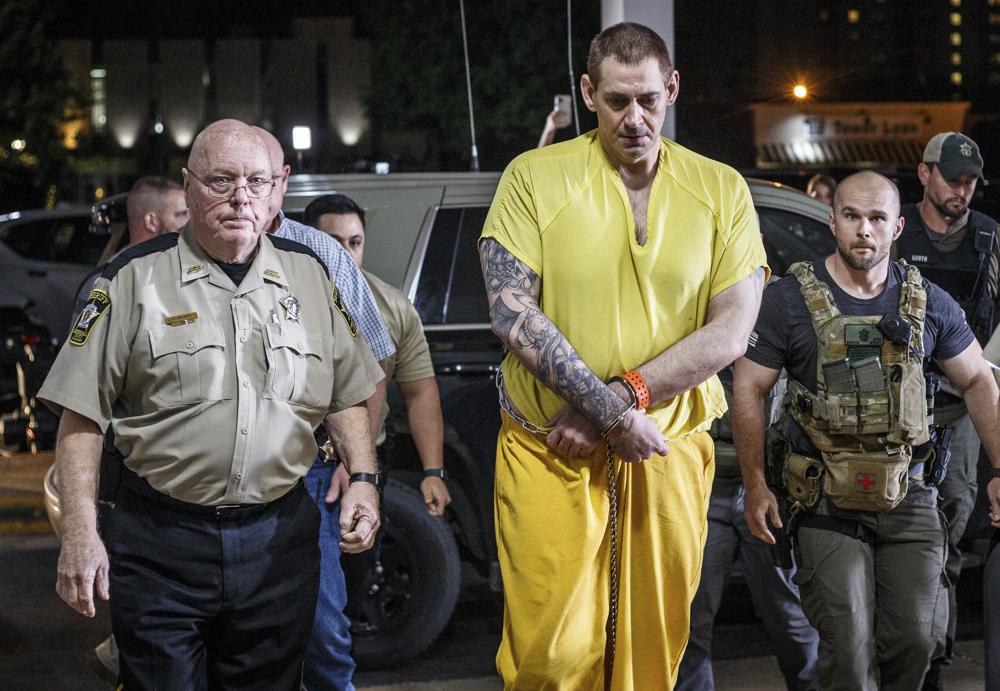
A prisoner who prompted a nationwide manhunt when he disappeared this spring from an Alabama jail has been charged with killing the corrections official authorities said helped him escape. Casey White, 38, has been indicted on a murder charge for the shooting death of Vicky White, Lauderdale County District Attorney Chris Connolly announced Tuesday. The pair’s disappearance from an Alabama jail in April sparked a national manhunt that came to a bloody end in Indiana, where Casey White was captured, and Vicky White died. The indictment alleges that during the escape, ”White caused the death of Vicky White, who died from a gunshot to the head.” The indictment does not specify who pulled the trigger. Authorities have said Vicky White died from a self-inflicted gunshot wound. White will plead not guilty at an arraignment hearing, defense attorney Mark McDaniel said in a statement. The defense previously pointed blame at Vicky White for the escape, saying Casey White was in her “care and custody” the entire time of his disappearance from jail. Casey White, in April, walked out of an Alabama jail in handcuffs in the custody of Vicky White, the assistant director of corrections at the facility, prompting a national manhunt for the pair. On the day of the escape, Vicky White, 56, told co-workers she was transporting the inmate to a mental health evaluation, but authorities later learned no such appointment existed. The two were eventually discovered in Indiana, where Casey White was captured. Authorities said Vicky White shot herself in the head. Alabama law allows a murder charge if someone, “causes the death of any person” while engaging in certain other felonies such as escape or if the person, “recklessly engages in conduct which creates a grave risk of death to a person.” Friends and colleagues had said they were bewildered by the involvement of Vicky White, who had worked for the sheriff’s office for 16 years, with the inmate who was already serving a 75-year prison sentence for attempted murder and other crimes. Republished with the permission of The Associated Press.
