
Justin Bogie: Legislature should not seek permanent solutions for temporary problems
Last week, the Alabama Legislature held the second in a series of informal budget hearings aimed at determining how inflation and the possibilities of a recession are impacting state agencies. Much like the first hearing, the general theme was that inflation is increasing the day-to-day operating costs of agencies and contributing to a shortage of workers. So, what is the solution to the perceived inflation problem? If you only listened to the officials presenting their case to legislators last week, you would think more funding is the answer. In reality, the current period of record inflation is temporary. Government spending increases tend to be permanent, leaving you, the taxpayer, on the hook to pay for the expansion of government. There is no doubt that inflation is hurting many Alabamians right now, whether they are public or private sector employees or business owners. In June, inflation rose to 9.1% year over year, with record high gas prices being the underlying cause. But no one expects that trend to last. The Congressional Budget Office projects that inflationary pressures will begin to ease later this year and fall to 3.1% in 2023. From 1960 to 2021, the average annual inflation rate in the United States was 3.7%. It is also important to recognize that the current rise in inflation was caused by the actions of the government, which pumped $4.5 trillion into America’s economy through COVID-19 stimulus legislation. The government is now attempting to correct the problem through monetary policy, namely interest rate hikes. Alabama Department of Mental Health Commissioner Kimberly Boswell spoke about how inflation is impacting her agency, saying that some employees had been forced to work second or third jobs to make ends meet. For the agency, this means that there are fewer workers willing and able to work overtime at the state’s mental health hospitals. The agency’s biggest need is for more nurses and mental healthcare technicians. But is inflation really the cause of the problem? Though the COVID-19 pandemic highlighted America’s nursing shortage, it began in 2012 and is expected to continue through 2030. The inflation rate was approximately 2% in 2012, meaning that inflation didn’t cause the shortage. The more important factor may be supply and demand. Nurses are currently in high demand. In general, nurses have a higher earning potential and greater flexibility when working in a private or for-profit healthcare setting, as opposed to working for a state agency. Boswell acknowledged these realities while speaking to the legislature, saying, “What people are really looking for is flexibility.” Traditionally the Department of Mental Health has not hired part-time workers or allowed employees to have more flexible work schedules. In today’s post-pandemic work environment, those factors may be just as, if not more, important than salary. Boswell said that “we at this point are considering looking at part-time employees as well as multiple flexible schedules so we can attract the folks that are looking for that flexibility.” Inflation has nothing to do with wanting a more flexible work schedule. And while the salary discrepancy between public and private sector jobs may play a role in shortages, the state is already taking steps to retain its workforce. The fiscal year 2022-23 enacted state budgets included permanent pay increases, at an annual cost of nearly $400 million to taxpayers, for all state employees. In addition to those already approved pay raises, in June, the State Personnel Board amended its pay schedule to add four new steps to the top of the pay scale for most state jobs. This means that some employees could see an additional 10% raise in two years, outpacing inflation and private sector wage growth projections. At last week’s budget hearing, state officials also addressed how inflation is impacting capital construction projects, saying that it has increased costs by about 25%. This should not come as a surprise to anyone. The legislature approved a $1.25 billion bond issue for school construction projects in May of 2020, the height of the pandemic. Construction prices were already on the rise. The legislature enacted $750 million in supplemental appropriations, mainly for more capital projects at Alabama schools, during the 2022 regular legislative session. Inflation was more than 8% when that bill was passed. In the meantime, Alabama’s government took more taxes from you and spent more of your money than ever before. Tax revenues are expected to continue to boom this year. Our government doesn’t need to spend more money to fight inflation. It needs to be a better steward of what it has already taken from us. Inflation is a temporary problem, created in no small part by the government. It is not a reason to extend the unprecedented expansion of state government. The lagging impacts of inflation will continue to hurt workers for several years. Shouldn’t the government have to share in the pain felt by so many Alabamians? Justin Bogie is the Senior Director of Fiscal Policy for the Alabama Policy Institute.
Alabama’s House delegation calls on FEMA to address supply chain shortages affecting Alabama’s electric cooperatives
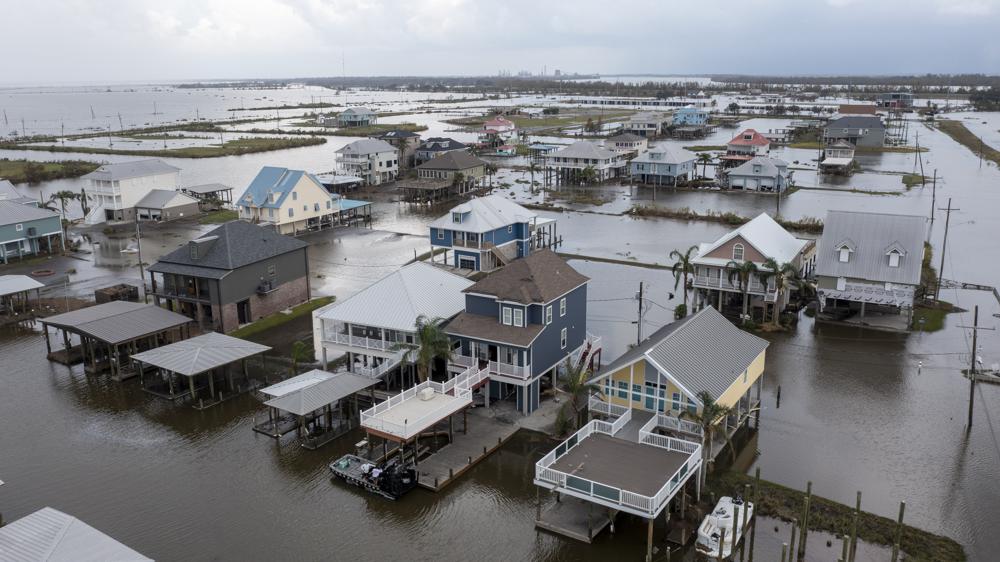
U.S. Rep. Jerry Carl issued the following statement regarding a letter he sent to FEMA Administrator Deanne Criswell regarding supply chain shortages affecting Alabama’s electric cooperatives and municipalities. The letter was cosigned by all seven members of Alabama’s House delegation. “Alabama is no stranger to severe weather. In the aftermath of serious storms, our local electric utility providers play a critical role in repairing and replacing damaged parts of the power grid,” Carl commented. “Unfortunately, supply chain issues have slowed down local utility providers’ ability to prepare for potential threats, leaving Alabama’s power grid more open to damage when disaster occurs.” The letter called on FEMA to provide electric providers with the equipment needed for hurricane season. “With the high chance of an above-average 2022 hurricane season, FEMA must do its part to ensure our local electric providers have access to important equipment before the first hurricane, tropical storm, or natural disaster impacts communities in Alabama. I’m grateful to all my Alabama colleagues for joining me on this letter, and I look forward to hearing back from FEMA Director Criswell with a detailed plan,” Carl concluded.
Long lines are back at US food banks as inflation hits high
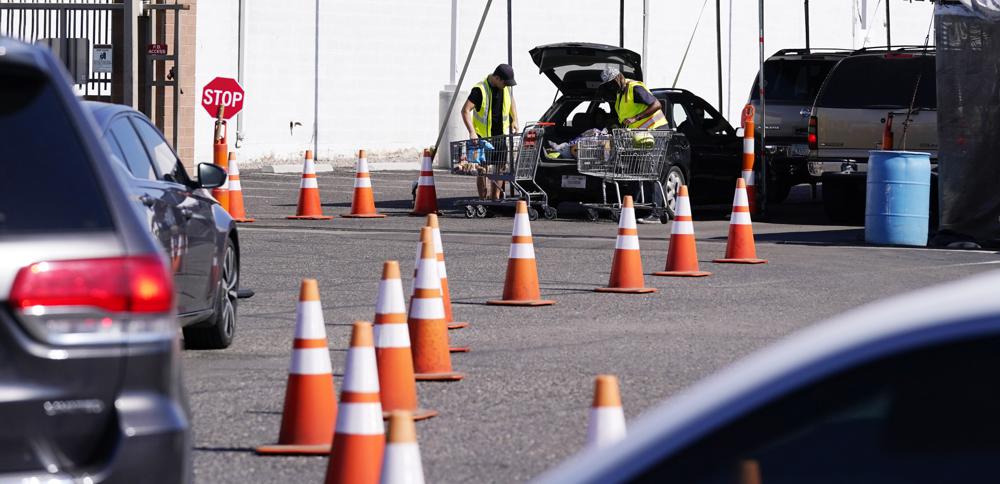
Long lines are back at food banks around the U.S. as working Americans overwhelmed by inflation turn to handouts to help feed their families. With gas prices soaring along with grocery costs, many people are seeking charitable food for the first time, and more are arriving on foot. Inflation in the U.S. is at a 40-year high, and gas prices have been surging since April 2020, with the average cost nationwide briefly hitting $5 a gallon in June. Rapidly rising rents and an end to federal COVID-19 relief have also taken a financial toll. The food banks, which had started to see some relief as people returned to work after pandemic shutdowns, are struggling to meet the latest need even as federal programs provide less food to distribute, grocery store donations wane, and cash gifts don’t go nearly as far. Tomasina John was among hundreds of families lined up in several lanes of cars that went around the block one recent day outside St. Mary’s Food Bank in Phoenix. John said her family had never visited a food bank before because her husband had easily supported her and their four children with his construction work. “But it’s really impossible to get by now without some help,” said John, who traveled with a neighbor to share gas costs as they idled under a scorching desert sun. “The prices are way too high.” Jesus Pascual was also in the queue. “It’s a real struggle,” said Pascual, a janitor who estimated he spends several hundred dollars a month on groceries for him, his wife, and their five children aged 11 to 19. The same scene is repeated across the nation, where food bank workers predict a rough summer keeping ahead of demand. The surge in food prices comes after state governments ended COVID-19 disaster declarations that temporarily allowed increased benefits under SNAP, the federal food stamp program covering some 40 million Americans. “It does not look like it’s going to get better overnight,” said Katie Fitzgerald, president and chief operating officer for the national food bank network Feeding America. “Demand is really making the supply challenges complex.” Charitable food distribution has remained far above amounts given away before the coronavirus pandemic, even though demand tapered off somewhat late last year. Feeding America officials say second-quarter data won’t be ready until August, but they are hearing anecdotally from food banks nationwide that demand is soaring. The Phoenix food bank’s main distribution center doled out food packages to 4,271 families during the third week in June, a 78% increase over the 2,396 families served during the same week last year, said St. Mary’s spokesman Jerry Brown. More than 900 families line up at the distribution center every weekday for an emergency government food box stuffed with goods such as canned beans, peanut butter, and rice, said Brown. St. Mary’s adds products purchased with cash donations, as well as food provided by local supermarkets like bread, carrots, and pork chops for a combined package worth about $75. Distribution by the Alameda County Community Food Bank in Northern California has ticked up since hitting a pandemic low at the beginning of this year, increasing from 890 households served on the third Friday in January to 1,410 households on the third Friday in June, said marketing director Michael Altfest. At the Houston Food Bank, the largest food bank in the U.S., where food distribution levels earlier in the pandemic briefly peaked at a staggering 1 million pounds a day, an average of 610,000 pounds is now being given out daily. That’s up from about 500,000 pounds a day before the pandemic, said spokeswoman Paula Murphy said. Murphy said cash donations have not eased, but inflation ensures they don’t go as far. Food bank executives said the sudden surge in demand caught them off guard. “Last year, we had expected a decrease in demand for 2022 because the economy had been doing so well,” said Michael Flood, CEO of the Los Angeles Regional Food Bank. “This issue with inflation came on pretty suddenly.” “A lot of these are people who are working and did OK during the pandemic and maybe even saw their wages go up,” said Flood. “But they have also seen food prices go up beyond their budgets.” A volunteer fills up a vehicle with food boxes at the St. Mary’s Food Bank in Phoenix. The Los Angeles bank gave away about 30 million pounds of food during the first three months of this year, slightly less than the previous quarter but still far more than the 22 million pounds given away during the first quarter of 2020. Feeding America’s Fitzgerald is calling on USDA and Congress to find a way to restore hundreds of millions of dollars worth of commodities recently lost with the end of several temporary programs to provide food to people in need. USDA commodities, which generally can represent as much as 30% of the food the banks disperse, accounted for more than 40% of all food distributed in fiscal year 2021 by the Feeding America network. “There is a critical need for the public sector to purchase more food now,” said Fitzgerald. During the Trump administration, USDA bought several billions of dollars in pork, apples, dairy, potatoes, and other products in a program that gave most of it to food banks. The “Food Purchase & Distribution Program” designed to help American farmers harmed by tariffs and other practices of U.S. trade partners has since ended. There was $1.2 billion authorized for the 2019 fiscal year and another $1.4 billion authorized for fiscal 2020. Another temporary USDA “Farmers to Families” program that provided emergency relief provided more than 155 million food boxes for families in need across the U.S. during the height of the pandemic before ending on May 31, 2021. A USDA spokesperson noted the agency is using $400 million from the Build Back Better initiative to establish agreements with states, territories, and tribal governments to buy food from local, regional, and underserved producers that can be given to food banks, schools,
Study: Alabama residents feeling hard impact of inflation
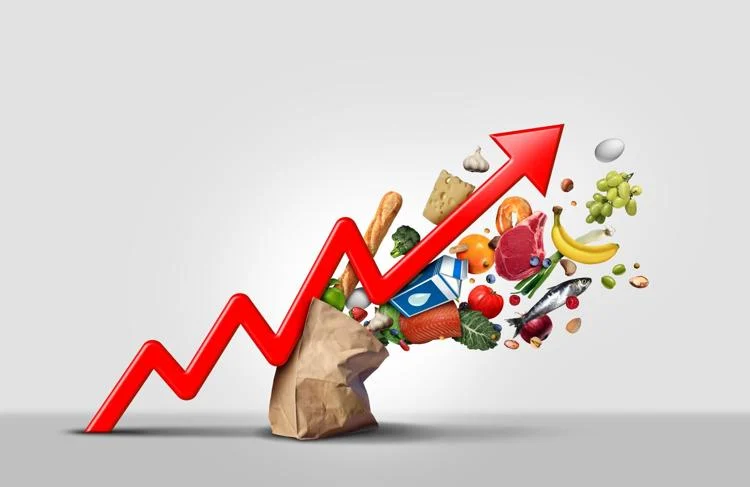
Alabama residents are feeling the crunch of inflation, a new report says. Merchant Maverick reports that a new study was conducted pertaining to how states are handling inflation, and Alabama ranked in the top 10, coming in at No. 7. The study, 10 U.S. States Where Inflation Is Hitting Consumers The Hardest, shows how inflation is affecting spending. While the study focuses on inflation and purchasing power, according to the release, it also takes into considering existing factors that can contribute to inflation affecting households in the state. The study focuses on the consumer price index change, regional price parity, state sales tax rates, and median household income when ranking each state. Alabama earned a score of 52.3, as rural portions of the state are feeling inflation the most through rising gas prices and fertilizer. Those costs are also impacting inflation for food prices. The study shows that areas like Barbour County are feeling the most impact from inflation, especially since that region has a median household income that is 32.8% lower than the state’s average. According to the study, Alabama has a low regional price parity paired with a high sales tax rate and a lower median income which inflation has affected in every household. The state received an overall score o 52.3 in the study and is seeing inflation rates in medical care (3.6%), recreation (3.8%), education and communication (1.2%), transportation (20.6%), housing (7%), food and beverages (8.9%), and apparel (7%). According to the study, the South is dealing with an influx of new residents from other parts of the country and has created a higher demand on housing, which has raised prices in the housing market past the national average. Republished with the permission of The Center Square.
Stark political divides loom as U.S. governors gather

With stark political divides on abortion, gun violence, and other issues threatening to overshadow their meeting, the nation’s governors sought to find common ground — on other issues. The National Governors Association formally kicked off its summer gathering Thursday, the first in-person meeting since 2019, before the COVID-19 pandemic. It follows recent U.S. Supreme Court rulings that have deepened the rift between red and blue states by overturning Roe v. Wade and striking down gun restrictions in New York. Leaders say there’s still room for bipartisanship. “It’s about trying to find things that we can work on together, and that’s plentiful,” said Arkansas Gov. Asa Hutchinson, a Republican who is wrapping up his yearlong term as the association’s chair. Hutchinson is handing the reins of the group to Democratic Gov. Phil Murphy of New Jersey, who will serve as its next chair. The two governors last month announced a bipartisan task force to make recommendations on preventing mass shootings following the massacre at a Texas elementary school that killed 19 children and two teachers. The task force was announced before President Joe Biden signed into law a sweeping, bipartisan gun violence measure that includes billions in new funding for mental health and school safety. The task force is comprised of eight governors, equally divided between Republicans and Democrats. Hutchinson said he sees the group helping shepherd that law’s implementation at the state level. Republican Gov. Spencer Cox of Utah, a member of the task force, acknowledged that any change to gun policy would invite controversy in his state, yet he encourages politicians to listen to proposals from across the political spectrum, including funding for school security, counselors, gun buybacks and red flag laws. “I’ve asked everyone to be open to every conversation,” Cox, the association’s incoming vice chairman, said in a press conference last month. The public agenda at the event in Maine avoided any high-profile partisan issues. Sessions on Thursday featured Intel CEO Patrick Gelsinger and the leader of a global robotics competition for a discussion of computer science education. Another session focused on travel and tourism. The governors also held several other events, including a mixer Wednesday evening and a scheduled lobster bake Thursday evening. Security was tight with road closures and a large police presence. Organizers declined to say if there was a specific threat or concern. Nineteen governors, including the governor of Puerto Rico, attended the event. Missing were governors of several large states, including California Gov. Gavin Newsom, Texas Gov. Greg Abbott, New York Gov. Kathy Huchul, and Florida Gov. Ron DeSantis. Hutchinson said he doesn’t see the governors association addressing abortion following the reversal of Roe. That ruling has pitted states against each other, with “trigger” bans taking effect almost immediately after the ruling in a number of states. Republicans in some states are looking at ways to prevent women from going out of state for abortions, steps that could include going after abortion providers. In response, some Democratic governors have signed measures banning their state’s law enforcement agencies from enforcing other states’ abortion bans. That includes Democratic Gov. Janet Mills, who formally welcomed the governors to her state on Thursday. When she signed an executive order last week, Mills said she “will stand in the way of any effort to undermine, roll back or outright eliminate the right to safe and legal abortion in Maine.” Partisanship was underscored on the eve of the gathering as New Hampshire Gov. Chris Sununu campaigned alongside fellow Republican Paul LePage, a former Maine governor who hopes to unseat Mills. Newsom, the governor of California, has even run a campaign ad in Florida criticizing that state’s Republican leaders. And protesters supporting reproductive choice gathered outside an event some of the governors attended on the Portland waterfront. Nonetheless, Hutchinson said the group has been able to work together on other issues, being a voice for the states during the COVID-19 pandemic and during negotiations over the bipartisan infrastructure package. Massachusetts’ Republican Gov. Charlie Baker said the governors tend to get along with each other — and they tend to focus on things where they can get results instead of areas of disagreement. “While we will disagree on different issues, we as a group have much more in common than what sets us apart,” said Mills, the host governor. Hutchinson’s chairmanship of the group has elevated his national profile as he considers running for president in 2024. The two-term governor, who leaves office in January, has criticized former President Donald Trump and has urged fellow Republicans to move on from the 2020 election. Murphy is coming into the chairmanship after narrowly winning reelection as governor last year. An unapologetic progressive, he recently signed legislation enshrining abortion rights into law and a new package of gun control bills. Even though they’re at opposite ends of the political spectrum, Hutchinson had words of praise for his successor. “Part of being a human being is that you recognize good quality that you see in people, even though we disagree fundamentally, and you’re on a different team. I think that’s needed in America today,” he said. Republished with the permission of The Associated Press.
Ivana Trump, first wife of former president Donald Trump, dies at 73
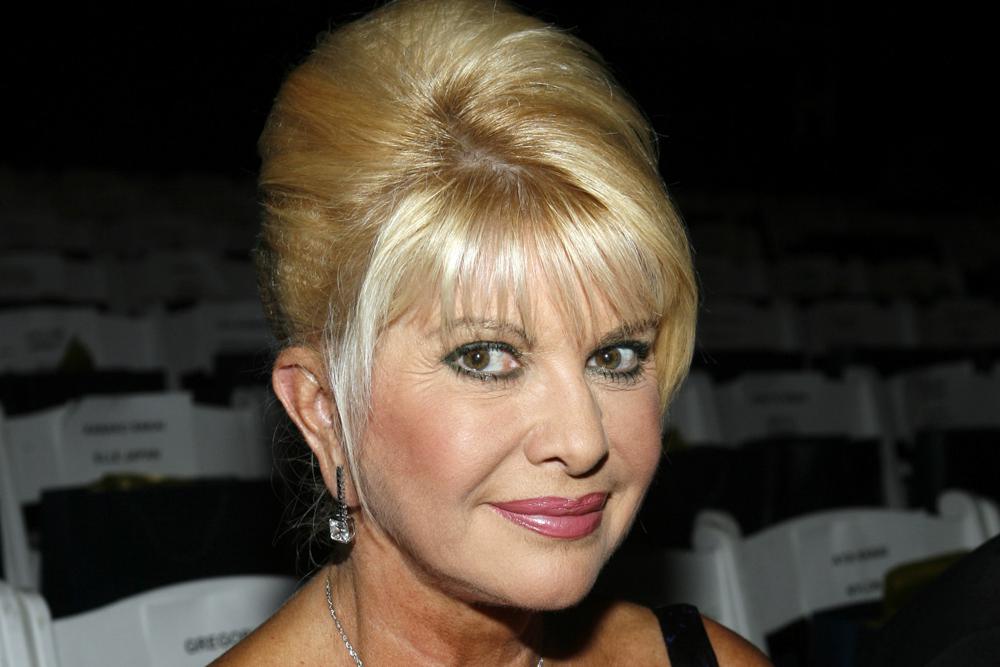
Ivana Trump, a skier-turned-businesswoman who formed half of a publicity power couple in the 1980s as the first wife of former President Donald Trump and mother of his oldest children, has died in New York City, her family announced Thursday. She was 73. The former president posted on his social media app that she died at her Manhattan home. “She was a wonderful, beautiful, and amazing woman, who led a great and inspirational life,” he wrote on Truth Social. The couple shared three children, Donald Jr., Ivanka, and Eric. “She was so proud of them, as we were all so proud of her,” he wrote. “Rest In Peace, Ivana!” Two people familiar with the matter told The Associated Press that police are investigating whether Ivana Trump fell down the stairs and believe her death was accidental. Republished with the permission of The Associated Press.
