
Richard Shelby announces $27 million for Alabama in transportation grants
U.S. Senator Richard Shelby announced yesterday that the U.S. Department of Transportation (DOT) has awarded Alabama three Rebuilding American Infrastructure with Sustainability and Equity (RAISE) grants, which total $27,179,948, to fund efforts for infrastructure improvements in Alabama – $20 million for the City of Huntsville, nearly $5.2 million for the City of Cordova, and $2 million for the Northwest Alabama Council of Local Governments. The DOT RAISE grant program awards funding annually for important transportation and infrastructure projects across the nation. The program provides an opportunity for the department to invest in road, rail, transit, and port projects that promise to achieve national objectives. “I am proud to announce that Alabama is receiving more than $27 million for local infrastructure improvement projects through DOT’s RAISE Grant Program. All three of these investments will support improved quality of life, safety, and experience in each of their respective communities,” said Senator Shelby. “I am particularly pleased that Huntsville has been awarded the funds to construct multiple pedestrian bridges that will soon provide greater access to businesses and vital services located downtown. This multimodal project has been in the works for quite some time, and I look forward to the finished product.” The City of Huntsville will receive $20,000,000 to design and construct multimodal improvements on approximately 1.2 miles of the Pedestrian Access and Redevelopment Corridor (PARC), linking downtown Huntsville to neighborhoods that are physically isolated by U.S. Route 231/431, Governors Drive, and the Pinhook Creek. Huntsville mayor, Tommy Battle stated, “Huntsville welcomes the RAISE grant, which will allow us to take property out of flood zones, enhance connectivity and improve our transportation grid along Pinhook Creek. We appreciate our partnership with the federal government and this grant, which will help us take Huntsville to the next level.” The City of Cordova will receive $5,179,948 for repairs and improvements to take place on more than 30 miles of deteriorating roadways throughout Cordova, Alabama. The grant for the Northwest Alabama Council of Local Governments will provide $2,000,000 for the Shoals Area Railroad Overpass in Colbert County. The project will produce a comprehensive corridor study and design plan for the roadway approaches and bridge structure over the Norfolk Southern Railroad near Montgomery Avenue in Sheffield, Alabama.
Steve Marshall joins 22 attorneys general, file brief in federal travel mask mandate case
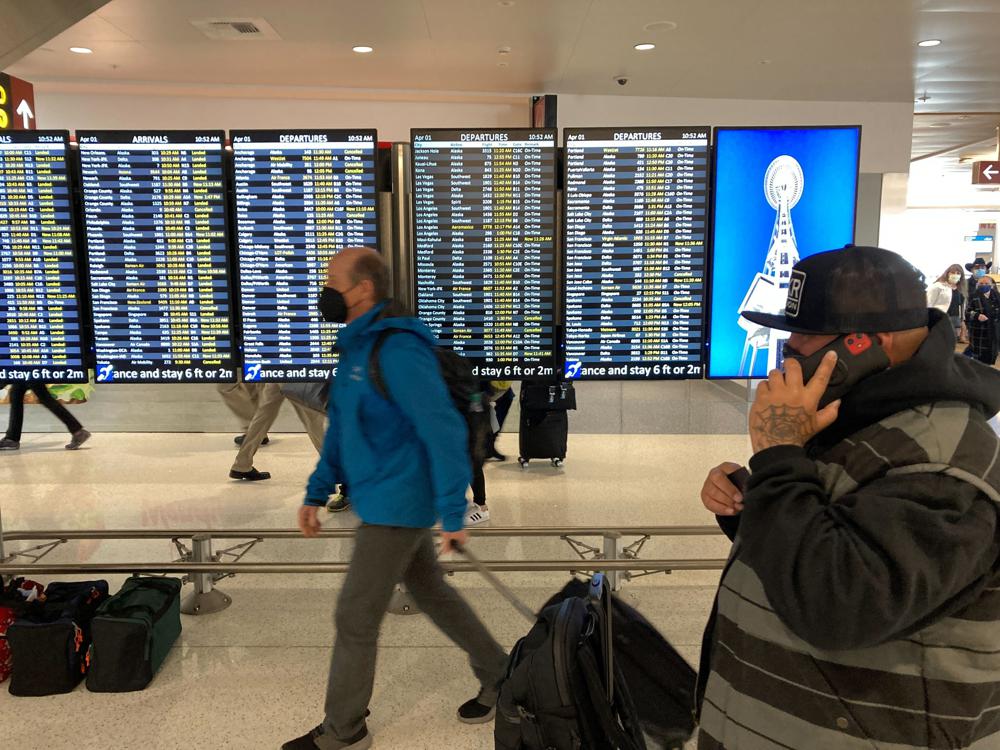
Attorneys general from 23 states have filed an amicus brief in a federal appeals court urging judges to uphold a ruling from earlier this year that struck down the mask mandate for interstate travel. Four months ago, Florida U.S. District Judge Kathryn Kimball Mizelle sided with the Health Freedom Defense Fund and two Florida residents. They claimed the restriction the Biden Administration announced January 29, 2021, as part of its COVID-19 guidelines exceeded federal authority. Led by Florida Attorney General Ashley Moody, the states’ attorneys general said in their 37-page filing that the U.S. Centers for Disease Control and Prevention pursued “expansive” measures in its handling of the pandemic. Officials from the states also remind the 11th Circuit Court of Appeals that federal judges set several other CDC guidelines aside. The states “share an interest in protecting their sovereign authority to enact quarantine measures of their choosing to combat the spread of disease in the manner best adapted to their distinctive local conditions – authority historically reserved to the states, as CDC’s own regulations reflect even today,” the brief states. The CDC now recommends passengers in such places as airports and airplanes wear masks, but the mandate is no longer in effect. Still, the Biden Administration has asked the circuit court to intervene. “It’s astonishing that Biden continues to fight to force mask passengers,” Moody said. “We are once again pushing back, in court, against his unlawful federal overreach.” The states also claim the mask mandate is unlawful because it goes beyond the CDC’s ability to enforce sanitation measures. They also claim the federal government failed to review what steps states were taking or determine if those measures were sufficient. Besides Florida, other attorneys general from Alabama, Alaska, Arizona, Arkansas, Georgia, Idaho, Indiana, Iowa, Kansas, Kentucky, Louisiana, Mississippi, Missouri, Montana, Nebraska, Ohio, Oklahoma, South Carolina, Texas, Utah, Virginia, and West Virginia signed on to the brief. “The district court’s ruling here correctly ended the Biden Administration’s mandate requiring all travelers to wear masks at airports, train stations, and other transportation hubs,” said Kentucky Attorney General Daniel Cameron. “We joined this brief to support the court’s important ruling and ensure this mandate is not reinstated.” Republished with the permission of The Center Square.
Steve Flowers: Jim Oakley
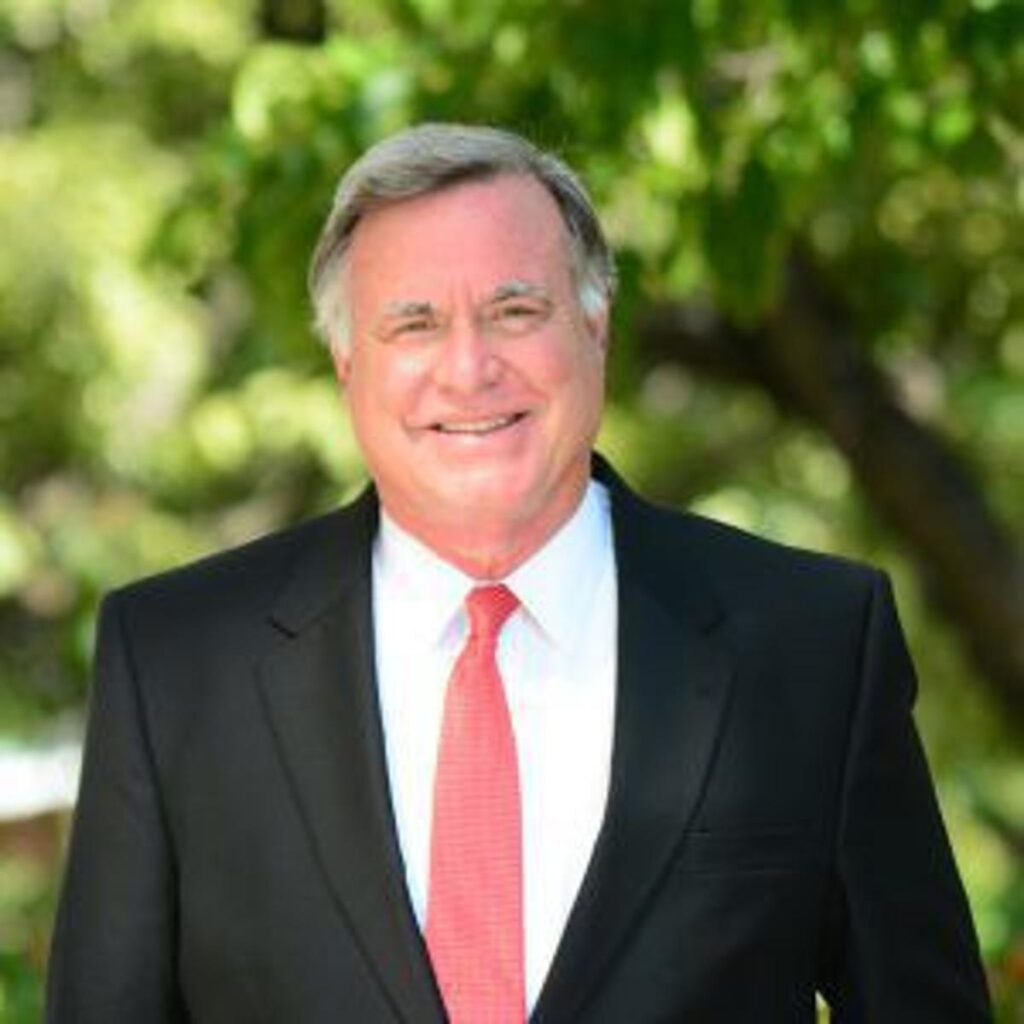
A legend in Alabama newspaper, educational, and political lore, Jim Oakley of Centreville, turned 87 last month. Jim is known statewide as the legendary owner, publisher, and editor of the Centreville Press newspaper. However, he has also been intertwined with Alabama politics for over six decades. If you only counted Jim Oakley, Jr.’s service to his city, Centreville, and his county, Bibb, he would be an icon. In addition, when you add his 33 years as an assistant dean and head of placement services at the University of Alabama, it qualifies him in my book and, in a good many Alabamian’s minds, as one of our state’s institutional legends. Jim Oakley grew up in the newspaper business. Around 1915, his grandfather bought two local papers and combined them into the Centreville Press. His father, Jim Oakley, Sr., eventually took over the paper, having been groomed for the job. Jim, Jr. always planned to follow his father. He went to the University of Alabama and, of course, majored in journalism. He met and married his wife, Shirley Ann Naramore of Prattville, at the University, and after graduation, he came back home to Centreville to run the family newspaper. Governor George Wallace appointed Oakley to the Alabama Commission of Higher Education (ACHE), where he served as chairman for 14 years. It was in this role when Kay Ivey was hired as executive director of ACHE. The person Kay Ivey looked to for help in her first campaign for state Treasurer was Jim Oakley. He has been her go-to person for Bibb County for all her campaigns for Treasurer, Lieutenant Governor, and Governor, including this last race this year. Jim sold the Centreville Press in 1985 but continued to write his marvelous column. Less than two months later, Joab Thomas, President of the University of Alabama and a longtime friend, called to ask Jim what he was planning on doing. Oakley replied, “I thought I would take up fishing.” Thomas told him he had been thinking that if he could find someone who had worked in the real world and really knew the newspaper business to come and teach students, it would be an asset to the journalism department. That began a career at the University of Alabama that would last 33 years. He started off teaching journalism, then became the Director of Freshman Orientation of all University of Alabama students, and culminated with being Head of Placement Services for the College of Communications. He helped hundreds of Alabama graduates find their first jobs in communications, TV, radio, digital, and print media. Many are famous, and most point to Jim Oakley as their mentor. The post where he had the most impact was as Director of Freshman Orientation. He greeted and made to feel at home thousands of freshman students. He welcomed each and every one of them as though he was their grandfather. He amazingly remembered them all by name and where they were from, and their parents’ names. I will never forget the day I first met Jim. I knew who he was. He was legendary. He knew me from the legislature. I was taking my younger daughter to register and move into the famous Tutwiler dormitory. There was Jim waiting in the parking lot, greeting every student. He gave me a warm handshake and hugged Allyson, and made her feel at home. He looked after her like a grandfather for the next four years. Another young lady from Enterprise named Katie Boyd arrived that same day to move into Tutwiler. Jim took her under his wing the same way; she has just been elected as our next U.S. Senator. The first person she sought in Bibb County when she began her race was Jim Oakley. There are a thousand more stories like those of Katie and Allyson. Jim loved and cared for each of them like they were his own. He has three children of his own, Mike, Bill, and Melanie Kay. His oldest son, Mike Oakley, is the Mayor of Centreville, as was his grandfather Jim Oakley, Sr. For over 60 years now, all candidates for major statewide offices have come to Bibb County to kiss the ring of Jim Oakley and cultivate his friendship and support. Oakley has been friends and confidantes to every governor, including George Wallace and Kay Ivey. He has been close friends with many of our U.S. Senators, especially Jim Allen and Richard Shelby. He has mentored and helped almost every state representative and state senator who have represented Bibb County over the years. His current Bibb County Senator, April Weaver, is one of his favorites. Jim Oakley has a lot of friends in Alabama. See you next week. Steve Flowers is Alabama’s leading political columnist. His weekly column appears in over 60 Alabama newspapers. He served 16 years in the state legislature. Steve may be reached at www.steveflowers.us.
Will Sellers: Sweden, NATO’s Newest Member
Prior to the American Revolution and more than a decade before the French Revolution, there was the Swedish Revolution, which marks its 250th anniversary this month. While often out of the orbit of discussions of western civilization, Sweden was and continues to be a repository of enlightened democratic values. With a remarkable history of military conquest and constitutional government, the semiquincentennial of the Swedish Revolution is worth noting. Sweden is known for having a divided government. It began in the Middle Ages with a Riksdag, a parliament of nobility, which elected a king and created a balance of authority between the legislative and royal branches. Realizing that electing a king wasn’t a road to stable government, the Riksdag eventually established a hereditary monarchy that remains in effect today. As with all silos of power, there exists tension, and in Sweden, there was a test of strength between the authority of the king and the power of parliament. Two-and-a-half centuries ago, the Riksdag had the upper hand, allowing the nobility to effectively govern the country with limited approval of the king. But the parliament became very dysfunctional, lost its way, and engaged in an internal struggle. To accrue power, one parliamentary faction decided to seek an alliance with Russia. Russia and Sweden have historically been natural enemies, so any link between the two was more than just a political issue for parliament. And once King Gustav III discovered this attempt, he organized his home guard, whipped his subjects into a patriotic fervor, and marched on the Riksdag. His success was far from certain. Gustav’s authority had diminished so much that his actual power was limited to his force of personality and rhetorical skills. But, if he knew one thing, it was that Sweden’s interests and Russia’s interests could never be aligned. For Sweden to remain sovereign and Independent, he had to act. So, against type and contrary to perhaps all other revolutions, the ruling king in power became the revolutionary. When the members of the Riksdag saw Gustav marching toward their chamber, they fled, and with no one left to oppose him, he asserted his rights as king and governed. This was a bloodless coup, the preferred form of revolution when it is so clear that one side has both the moral and popular authority to force the collapse of the opposition and win by acclamation. Gustav was the right monarch at the precise time when his country needed him. He was a product of the Enlightenment with very progressive views of government and the ordering of a country. He took his role seriously and used his power, which was initially only a title and an appeal to his forebears. But the people, led by an emerging middle class, rallied to his side, and once his status was confirmed, he took power and authority by simply inserting himself in the political process and acting like an absolute monarch. With no opposition of any consequence, he assessed the political landscape and called the parliament back into session.Using all the trappings of his office, he excoriated the members and accused them of neglecting their duty to their country by placing themselves above the law. His final act to complete the coup was to present the assembly with a new constitution. Once it was unanimously accepted, Gustav dissolved the parliament. He was now firmly in control of his country, and while he had the momentum and power to become an absolute monarch, he declined. Since the traditions of Sweden would not countenance despotism, he used his popularity to create a new parliament with less influence by the nobility and more responsive to the people. He moved to punish those who had compromised the country and went so far as to put corrupt judges on trial. While he could have dispensed justice himself, he understood the importance of the rule of law and forced judicial officers to answer in court for their misdeeds. His reforms were significant, quite progressive, and liberating to his people. While the Lutheran Church was the established church, he promoted greater religious freedoms by permitting other religions to practice their faith without fear of persecution.His economic reforms promoted free trade by abolishing export taxes which created economic growth. This contributed to a burgeoning middle class, and Sweden’s wealth increased significantly. Realizing Sweden’s place in the middle of Scandinavia, he bolstered his army and made his navy a force of reckoning. He was able to deal with Russia and prevent any of its nefarious intentions to thwart Sweden’s sovereignty or compromise relations with other nations.He also liberalized the press, which was not “free” in the manner we think of it today, but it was substantially changed so that censorship and regulations were more limited. Perhaps most interesting for Americans is that Sweden was the first country to diplomatically recognize the United States. Gustav not only recognized the United States but he was fascinated by American ideals indicating that if he were not king, he might go fight on their side. He also suggested that the principles spawning the revolution would make America a rival to Europe and usher in “an American Century.” His summary of the impact of the American Revolution was most prescient. But inasmuch as he supported the Americans, he was opposed to the French Revolution and worked to restore the monarchy. Like other progressives of the time, he understood that the French Revolution was not a move toward greater liberality but was, instead, a revolt against maturity. Many of Gustav’s reforms came at the expense of the nobles and diminished their power. His authority and cultural influence so infuriated them that they assassinated him. The current king of Sweden, Carl XVI Gustaf, calls his ancestor, Gustav III, his favorite. At a time when Sweden is once again forced to consider its place in the world and counter the continuing influence of Russia, the reign of Gustav is a good road map for championing freedom by isolating enemies. Welcome
FBI’s search of Donald Trump’s Florida estate: Why now?

The FBI’s unprecedented search of former President Donald Trump’s Florida residence ricocheted around government, politics, and a polarized country Tuesday, along with questions as to why the Justice Department — notably cautious under Attorney General Merrick Garland — decided to take such a drastic step. Answers weren’t quickly forthcoming. Agents on Monday searched Trump’s Mar-a-Lago estate, which is also a private club, as part of a federal investigation into whether the former president took classified records from the White House to his Florida residence, people familiar with the matter said. It marked a dramatic escalation of law enforcement scrutiny of Trump, who faces an array of inquiries tied to his conduct in the waning days of his administration. From echoes of Watergate to the more immediate House probe of the January 6 Capitol insurrection, Washington, a city used to sleepy Augusts, reeled from one speculative or accusatory headline to the next. Was the Justice Department politicized? What prompted it to seek authorization to search the estate for classified documents now, months after it was revealed that Trump had taken boxes of materials with him when he left the White House after losing the 2020 election? Garland has not tipped his hand despite an outcry from some Democrats impatient over whether the department was even pursuing evidence that has surfaced in the January 6 probe and other investigations— and from Republicans who were swift to echo Trump’s claims that he was the victim of political prosecution. All Garland has said publicly is that “no one is above the law.” A federal judge had to sign off on the warrant after establishing that FBI agents had shown probable cause before they could descend on Trump’s shuttered-for-the-season home — he was in New York, a thousand or so miles away, at the time of the search. Monday’s search intensified the months-long probe into how classified documents ended up in boxes of White House records located at Mar-a-Lago earlier this year. A separate grand jury is investigating efforts to overturn the results of the 2020 presidential election, and it all adds to potential legal peril for Trump as he lays the groundwork for a potential repeat run for the White House. Trump and his allies quickly sought to cast the search as a weaponization of the criminal justice system and a Democratic-driven effort to keep him from winning another term in 2024 — though the Biden White House said it had no prior knowledge and current FBI Director Christopher Wray was appointed by Trump five years ago. Trump, disclosing the search in a lengthy statement late Monday, asserted that agents had opened a safe at his home, and he described their work as an “unannounced raid” that he likened to “prosecutorial misconduct.” Justice Department spokesperson Dena Iverson declined to comment on the search, including whether Garland had personally authorized it. White House press secretary Karine Jean-Pierre said the West Wing first learned of the search from public media reports, and the White House had not been briefed in the run-up or aftermath. Jean-Pierre refused to say whether Biden wanted the attorney general to explain publicly the rationale for the search amid the concerns about politicization of the probe. “The Justice Department conducts investigations independently, and we leave any law enforcement matters to them,” she said. “We are not involved.” About two dozen Trump supporters stood in protest at midmorning Tuesday in the Florida summer heat and sporadic light rain on a bridge near the former president’s residence. One held a sign reading “Democrats are Fascists,” while others carried flags saying “2020 Was Rigged,” “Trump 2024,” and Biden’s name with an obscenity. Some cars honked in support as they passed. Trump’s Vice President Mike Pence, a potential 2024 rival, tweeted Tuesday, “Yesterday’s action undermines public confidence in our system of justice, and Attorney General Garland must give a full accounting to the American people as to why this action was taken, and he must do so immediately.” Trump was planning to meet Tuesday at his Bedminster, New Jersey, a club with members of the Republican Study Committee, a group headed by Rep. Jim Banks of Indiana that says it is committed to putting forth his priorities in Congress. The FBI reached out to the Secret Service shortly before serving a warrant, a third person familiar with the matter told The Associated Press. Secret Service agents contacted the Justice Department and were able to validate the warrant before facilitating access to the estate, the person said. The Justice Department has been investigating the potential mishandling of classified information since the National Archives and Records Administration said it had received from Mar-a-Lago 15 boxes of White House records, including documents containing classified information, earlier this year. The National Archives said Trump should have turned over that material upon leaving office, and it asked the Justice Department to investigate. There are multiple federal laws governing the handling of classified records and sensitive government documents, including statutes that make it a crime to remove such material and retain it at an unauthorized location. Though a search warrant does not necessarily mean criminal charges are near or even expected, federal officials looking to obtain one must first demonstrate to a judge that they have probable cause that a crime occurred. Two people familiar with the matter, speaking on condition of anonymity to discuss an ongoing investigation, said the search Monday was related to the records probe. Agents were also looking to see if Trump had additional presidential records or any classified documents at the estate. Trump has previously maintained that presidential records were turned over “in an ordinary and routine process.” His son Eric Trump said on Fox News on Monday night that he had spent the day with his father and that the search happened because “the National Archives wanted to corroborate whether or not Donald Trump had any documents in his possession.” Trump himself, in a social media post on Monday night, called the search a “weaponization of the Justice System,
Alabama GOP to vote on idea of recommending closed primaries

Alabama is one of 15 states that do not ask voters to register with a political party ahead of voting in a primary. Some Republicans argue it’s time to change that. The Alabama Republican Party will take a vote this weekend on whether to support a party registration requirement for primaries, also known as having a closed primary. Passage of the resolution would signal support for the idea, but the Alabama Legislature would have to enact legislation to make such a change. “I very much expect it to pass,” Alabama Republican Party Chairman John Wahl said of the party resolution. The state GOP approved a similar resolution in 2016. Currently, voters casting ballots in a primary election in Alabama simply tell a poll worker which ballot they want. Wahl said there is growing concern about possible cross-over voting. Republicans should be electing Republican nominees, he said. “I think this is an issue that has been highlighted by this election cycle. We’ve seen so much frustration from candidates, voters, as well as the members of the Republican Party, towards Democrats purposely trying to affect the outcome of our Republican primaries,” Wahl said. Wahl said the resolution endorses the idea of a closed primary but doesn’t recommend any specific method. States have different rules regarding primary voting and party registration. Only nine states have completely closed primaries where a voter seeking to vote in a closed primary must first be a registered party member, according to the National Conference of State Legislatures. Other states have partially open or partially closed primaries, where unaffiliated voters may be able to vote in a primary or where voters can change their party affiliation on primary day. House Minority Leader Anthony Daniels, a Democratic representative from Huntsville, said a closed GOP primary could lead to more extreme candidates. “From an Alabama standpoint, I think that’s dangerous because you end up getting the most extreme views in a primary,” Daniels said. But he said that could create more opportunity in general elections for the Democratic nominees who would appeal to more moderate voters. Republished with the permission of The Associated Press.
