
Canfor to invest $210 million in new Alabama sawmill complex

Canfor Southern Pine Inc. plans to invest $210 million to develop a new state-of-the-art sawmill complex for manufacturing and processing wood products in the Axis community near Mobile. “We are excited to be making this investment in a new state-of-the-art sawmill complex that will be built with next-generation, innovative technology and transform our workplace to offer employees a modern facility that will operate for generations to come,” said Tony Sheffield, president of Canfor Southern Pine. “This investment will allow us to continue our legacy of operations and long-term commitment to Mobile County, enhance our manufacturing ability to better align with the high-quality products our markets demand, and, importantly, it’s an investment in our people,” Sheffield said. The new sawmill will replace its existing facility in Mobile. This investment will allow the company to retain about 130 jobs in a modern work environment, according to an announcement by the Mobile Area Chamber of Commerce. “This expansion reinforces Canfor’s commitment to the Mobile area, this community and their local workforce,” said Mobile Chamber President and CEO Bradley Byrne. “We’re grateful they’ve chosen to continue investing in our local economy. “Canfor is an outstanding employer with a strong track record as a community partner,” Byrne said. ‘Strategic investment’ The new sawmill will produce 250 million board feet per year using leading technology. The facility’s design includes investments in a biomass-fueled lumber drying system to help the company meet sustainability and decarbonization goals. “The expansion of Canfor is a strategic investment in the community, sawmill industry, and economy of south Alabama,” Gov. Kay Ivey said. “As one of the most heavily forested states in the nation, Alabama has ample opportunity to attract significant new capital investment in the forest industry, and it’s apparent we’re doing just that. “Mobile — and all of Alabama — has been proud to be the host of Canfor’s U.S. headquarters, and we look forward to seeing their continued, nationwide success after this highly anticipated and much-needed facility growth,” Ivey said. Canfor expects the new facility to be open by the third quarter of 2024. “The Mobile County Commission is pleased to see Canfor make this significant business investment in north Mobile County” said Commission President Connie Hudson. “The new sawmill complex will incorporate cutting-edge technology in an industry that has played a very important role historically in our state and local economies. We look forward to their continued growth.” This story originally appeared on the Alabama Department of Commerce’s Made in Alabama website. Republished with the permission of The Alabama NewsCenter.
Liz Cheney loses Wyoming GOP primary, ponders 2024 bid
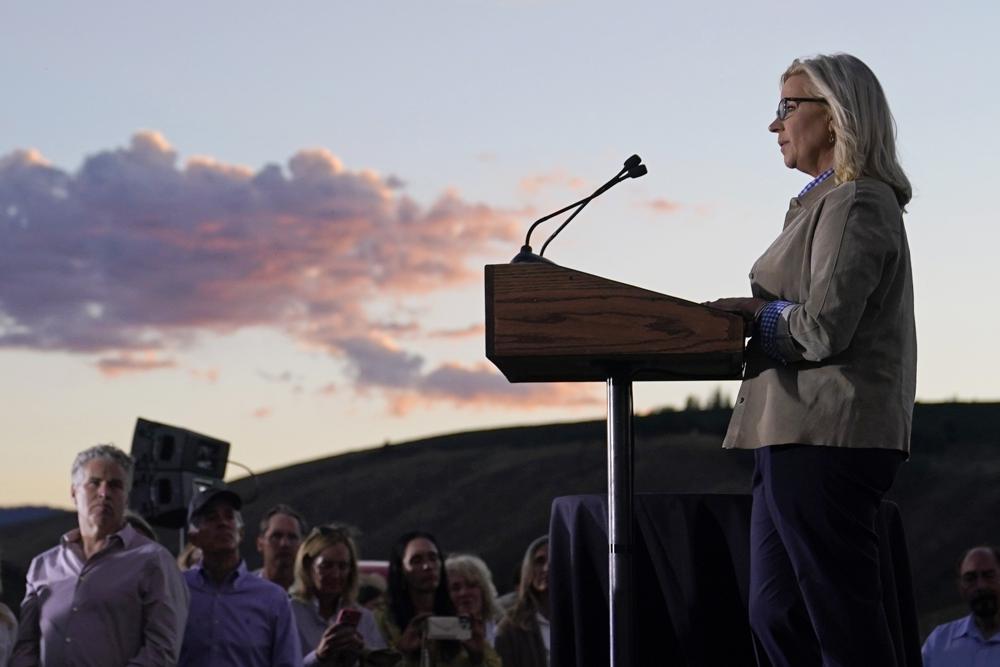
Wyoming Rep. Liz Cheney, Donald Trump’s fiercest Republican adversary in Congress, soundly lost a GOP primary, falling to a rival backed by the former president in a rout that reinforced his grip on the party’s base. The third-term congresswoman and her allies entered Tuesday downbeat about her prospects, aware that Trump’s backing gave Harriet Hageman considerable lift in the state where he won by the largest margin during the 2020 campaign. Cheney was already looking ahead to a political future beyond Capitol Hill that could include a 2024 presidential run, potentially putting her on another collision course with Trump. On Wednesday, calling Trump “a very grave threat and risk to our republic,” she told NBC that she thinks that defeating him will require “a broad and united front of Republicans, Democrats, and independents — and that’s what I intend to be part of.” She declined to say if she would run for president but conceded it’s “something that I’m thinking about.” Cheney described her primary loss on Tuesday night as the beginning of a new chapter in her political career as she addressed a small collection of supporters, including her father, former Vice President Dick Cheney, on the edge of a vast field flanked by mountains and bales of hay. “Our work is far from over,” she said, evoking Abraham Lincoln, who also lost congressional elections before ascending to the presidency and preserving the union. The primary results — and the roughly 30-point margin — were a powerful reminder of the GOP’s rapid shift to the right. A party once dominated by national security-oriented, business-friendly conservatives like her father now belongs to Trump, animated by his populist appeal and, above all, his denial of defeat in the 2020 election. Such lies, which have been roundly rejected by federal and state election officials along with Trump’s own attorney general and judges he appointed, transformed Cheney from an occasional critic of the former president to the clearest voice inside the GOP, warning that he represents a threat to democratic norms. She’s the top Republican on the House panel investigating the January 6, 2021, insurrection at the U.S. Capitol by a mob of Trump supporters, an attack she referenced in nodding to her political future. “I have said since January 6 that I will do whatever it takes to ensure Donald Trump is never again anywhere near the Oval Office — and I mean it,” she said Tuesday. Four hundred miles (645 kilometers) to the east of Cheney’s concession speech, festive Hageman supporters gathered at a sprawling outdoor rodeo and Western culture festival in Cheyenne, many wearing cowboy boots, hats, and blue jeans. “Obviously, we’re all very grateful to President Trump, who recognizes that Wyoming has only one congressional representative, and we have to make it count,” said Hageman, a ranching industry attorney who had finished third in a previous bid for governor. Echoing Trump’s conspiracy theories, she falsely claimed the 2020 election was “rigged” as she courted his loyalists in the runup to the election. Trump and his team celebrated Cheney’s loss, which may represent his biggest political victory in a primary season full of them. The former president called the results “a complete rebuke” of the January 6 committee. “Liz Cheney should be ashamed of herself, the way she acted, and her spiteful, sanctimonious words and actions towards others,” he wrote on his social media platform. “Now she can finally disappear into the depths of political oblivion where, I am sure, she will be much happier than she is right now. Thank you WYOMING!” The news offered a welcome break from Trump’s focus on his growing legal entanglements. Just eight days earlier, federal agents executing a search warrant recovered 11 sets of classified records from the former president’s Florida estate. Meanwhile, in Alaska, which also held elections on Tuesday, Sen. Lisa Murkowski, another prominent GOP critic of Trump, advanced from her primary. Sarah Palin, the GOP’s 2008 vice presidential nominee and a staunch ally of Trump, was also bound for the November general election in the race for Alaska’s sole U.S. House seat. But most of the attention was on Cheney, whose defeat would have been unthinkable just two years ago. The daughter of a former vice president, she hails from one of the most prominent political families in Wyoming. And in Washington, she was the No. 3 House Republican, an influential voice in GOP politics and policy with a sterling conservative voting record. Cheney will now be forced from Congress at the end of her third and final term in January. She is not expected to leave Capitol Hill quietly. She will continue in her leadership role on the congressional panel investigating the January 6 attack until it dissolves at the end of the year. And she is actively considering a 2024 White House bid — as a Republican or independent — having vowed to do everything in her power to fight Trump’s influence in her party. With Cheney’s loss, Republicans who voted to impeach Trump are going extinct. In all, seven Republican senators and 10 Republican House members backed Trump’s impeachment in the days after his supporters stormed the U.S. Capitol as Congress tried to certify President Joe Biden’s victory. Just two of those 10 House members have won their primaries this year. After two Senate retirements, Murkowski is the only such Senate Republican on this year’s ballot. Cheney was forced to seek assistance from the state’s tiny Democratic minority in her bid to pull off a victory. But Democrats across America, major donors among them, took notice. She raised at least $15 million for her election, a stunning figure for a Wyoming political contest. Voters responded to the interest in the race. With a little more than half of the vote counted, turnout ran about 50% higher than in the 2018 Republican primary for governor. If Cheney does ultimately run for president — either as a Republican or an independent — don’t expect her to win Wyoming’s three electoral votes. “We like Trump. She tried to impeach Trump,” Cheyenne voter
Steve Flowers: Legendary Alabamians
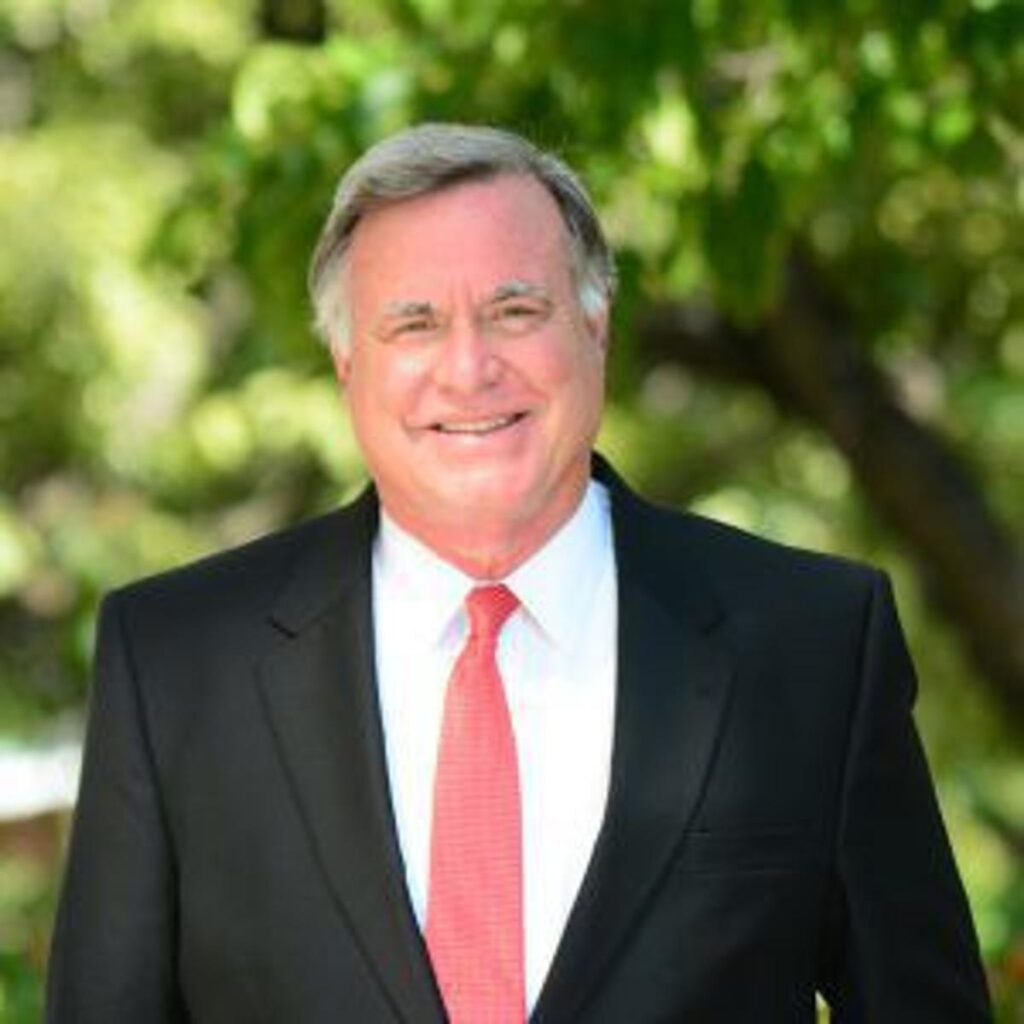
The longer I continue to write about Alabama politics, the more I realize that Alabama really is a “Big Front Porch” – a saying made famous by our legendary Alabama storyteller, Kathryn Tucker Wyndham. I have been involved in the world of Alabama politics for 60 years. I have been writing this column for over 18 years, and that is longer than I served in the legislature. I am sometimes asked whether I liked being in the Alabama political arena or writing about it better. The answer is easy. Writing is better. It is more fun to be able to throw stones than to have stones thrown at you. I am also asked at social or political events around the state what are some of my favorite political memories. Indeed, I have been blessed to have met and known some of Alabama’s best-known political and literary figures, and some of them well. I began paging in the Alabama Legislature at age 12 and met Governor George Wallace when he was in his first term as governor. Ironically, 20 years later, I was elected to the legislature, and Wallace was again governor for his fourth and final term. My legislative district included Pike, Barbour, and Dale Counties, so I represented Wallace in his home county of Barbour. Wallace loved the fact that I was now his representative. He would have me visit with him often in the governor’s office, and he would tell me political stories and maxims. He told me a lot of inside stories about the Civil Rights era, as well as pre-Civil Rights, some of which I have shared with you and some I will share later. One of my favorite friends in Alabama politics was the late Senator Howell Heflin. Heflin was a very straight-laced gentleman. His daddy was a Methodist minister. He was truly a great man and one of the wittiest and best storytellers I ever knew. He was a real Alabama hero and legend. He was a decorated World War II veteran, one of Alabama’s best lawyers, Chief Justice of the Alabama Supreme Court, and our U.S. Senator for 18 years. Most people who knew him well in Alabama and Washington simply referred to him as “Judge.” I wrote a glowing column about “Judge.” He appreciated the column. It really was like a eulogy. He liked to call me “Tree,” a nickname I acquired in college. After the column came out, he started getting calls from all over the state. He called to thank me. I told him, “Judge, I’m in about 60 papers, and about 30-40 of the papers send me copies of the paper, and why don’t I gather those up and bring them to you and read what title they gave to your column.” He said, “Would you do that, Tree?” I said, “Yes, I would enjoy a visit.” He had retired from the Senate and was back home in Tuscumbia. I drove to Tuscumbia for the day. Got there for breakfast and stayed all day. We perused the papers I had brought him, and I headed home. Ole Judge died a few weeks later, and I traveled back up to the Shoals for his funeral. I was proud when the preacher used some excerpts from my column for Judge’s eulogy. There was a throng of people at Judge’s funeral, including quite a few famous and powerful members of the U.S. Senate. I do not think that the Florence airport had ever seen that many private jets. I had already had my goodbye with Judge, and the line was very long to greet “Mrs. Mikie,” Judge’s wife, and Tom, his son. Judge’s wife was from a prominent North Alabama family, the Carmichaels. Thus he had coined her nickname “Mikie.” As I was leaving, I heard someone shout my name, “Tree, wait.” It was Tom Heflin, the only child of Judge and Mikie. Tom is a lawyer and a fraternity brother of mine from the University of Alabama. He said, “I want to tell you something. When we went into daddy’s bedroom the other morning and found him passed away, beside his bed was a large desk, and on the desk were all the papers you brought him the other day. He had read them just before he went to bed.” It made me feel very good. It is one of the most rewarding memories of my column writing days. I will continue with more stories next week. Steve Flowers is Alabama’s leading political columnist. His weekly column appears in over 60 Alabama newspapers. He served 16 years in the state legislature. Steve may be reached at www.steveflowers.us.
Liz Cheney braces for loss as Donald Trump tested in Wyoming and Alaska
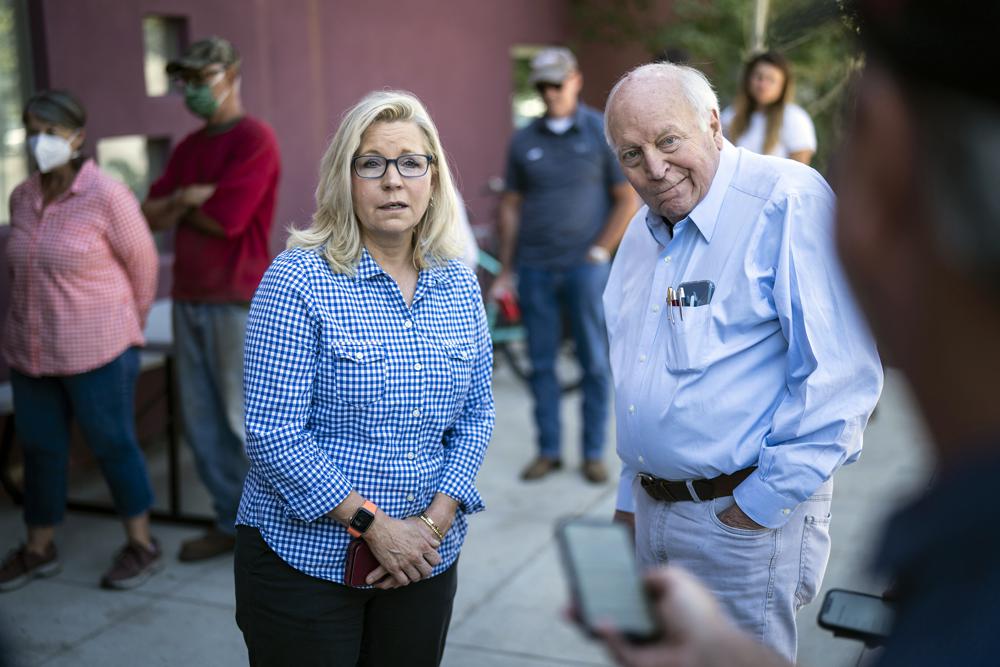
Wyoming Rep. Liz Cheney, a leader in the Republican resistance to former President Donald Trump, is fighting to save her seat in the U.S. House on Tuesday as voters weigh in on the direction of the GOP. Cheney is bracing for a loss against a Trump-backed challenger in the state in which he won by the largest of margins during the 2020 campaign. Win or lose, the 56-year-old daughter of a vice president is vowing to remain an active presence in national politics as she contemplates a 2024 presidential bid. But in the short term, Cheney is facing a dire threat from Republican opponent Harriet Hageman, a Cheyenne ranching industry attorney who has harnessed the full fury of the Trump movement in her bid to expel Cheney from the House. “Today, no matter what the outcome is, is certainly the beginning of a battle that is going to continue,” Cheney told CBS News after casting her vote Tuesday, standing alongside her father, former Vice President Dick Cheney. “We’re facing a moment where our democracy really is under attack and under threat. And those of us across the board — Republicans, Democrats, and independents who believe deeply in freedom and who care about the Constitution and the future of the country — have an obligation to put that above party.” Many of Wyoming’s voters don’t seem to agree with their three-term Republican congresswoman. “We like Trump. She tried to impeach Trump,” Cheyenne voter Chester Barkell said of Cheney. “I don’t trust Liz Cheney.” And in Jackson, Republican voter Dan Winder said he felt betrayed. “Over 70% of the state of Wyoming voted Republican in the last presidential election, and she turned right around and voted against us,” said Winder, a hotel manager. “She was our representative, not her own.” Tuesday’s contests in Wyoming and Alaska offer one of the final tests for Trump and his brand of hard-line politics ahead of the November general election. So far, the former president has largely dominated the fight to shape the GOP in his image, having helped install loyalists in key general election matchups from Arizona to Georgia to Pennsylvania. This week’s contests come just eight days after the FBI executed a search warrant at Trump’s Florida estate, recovering 11 sets of classified records. Some were marked “sensitive compartmented information,” a special category meant to protect the nation’s most important secrets. The Republican Party initially rallied behind the former president, although the reaction turned somewhat mixed as more details emerged. In Alaska, a recent change to state election law gives a periodic Trump critic, U.S. Sen. Lisa Murkowski, an opportunity to survive the former president’s wrath, even after she voted to convict him in his second impeachment trial. She is the only Senate Republican running for reelection this year who backed Trump’s impeachment. The top four primary Senate candidates in Alaska, regardless of party, will advance to the November general election, where voters will rank them in order of preference. In all, seven Republican senators and 10 Republican House members joined every Democrat in supporting Trump’s impeachment in the days after his supporters stormed the U.S. Capitol as Congress tried to certify President Joe Biden’s victory. Just two of those 10 House members have won their GOP primaries this year. The rest have lost or declined to seek reelection. Cheney would be just the third to return to Congress if she defies expectations on Tuesday. Murkowski is facing 18 opponents — the most prominent of which is Republican Kelly Tshibaka, who has been endorsed by Trump — in her push to preserve a seat she has held for nearly 20 years. On the other side of the GOP’s tent, Sarah Palin, the former Alaska governor and vice-presidential nominee, hopes to spark a political comeback on Tuesday. She’s actually on Tuesday’s ballot twice: once in a special election to complete former Rep. Don Young’s term and another for a full two-year House term starting in January. Back in Wyoming, Cheney’s political survival may depend upon persuading enough Democrats to cast ballots in her Republican primary election. While some Democrats have rallied behind her, it’s unclear whether there are enough in the state to make a difference. As of August 1, 2022, there were 285,000 registered voters in Wyoming, including 40,000 Democrats and 208,000 Republicans. Ardath Junge of Cheyenne, said she recently changed her registration from Democratic to Republican. “I did it just to vote for Cheney because I believe in what she’s doing,” said Junge, a retired schoolteacher. Many Republicans in the state — and in the country — have essentially excommunicated Cheney because of her outspoken criticism of Trump. The House GOP ousted her as the No. 3 House leader last year. And more recently, the Wyoming GOP and Republican National Committee censured her. Anti-Trump groups such as U.S. Rep. Adam Kinzinger’s Country First PAC and the Republican Accountability Project have worked to encourage independents and Democrats to support Cheney in recent weeks. They are clearly disappointed by the expected outcome of Tuesday’s election, although some are hopeful about her political future. “What’s remarkable is that in the face of almost certain defeat, she’s never once wavered,” said Sarah Longwell, executive director of the Republican Accountability Project. “We’ve been watching a national American figure be forged. It’s funny how small the election feels — the Wyoming election — because she feels bigger than it now.” Cheney has seemingly welcomed defeat by devoting almost every resource at her disposal to ending Trump’s political career since the insurrection. She emerged as a leader in the congressional committee investigating Trump’s role in the January 6 attack, giving the Democrat-led panel genuine bipartisan credibility. She has also devoted the vast majority of her time to the committee instead of the campaign trail back home, a decision that still fuels murmurs of disapproval among some Wyoming allies. And she has closed out the primary campaign with an unflinching anti-Trump message. “There is nothing more important she will ever do than lead the effort to make sure Donald Trump is
Mississippi businessman sentenced in pandemic relief fraud

A Mississippi businessman has been sentenced to more than six years in prison for misusing over $6 million in business loans through a coronavirus pandemic relief program. Christopher Paul Lick of Starkville received the 78-month sentence Friday from U.S. District Court Judge Glen H. Davidson. The sentencing took place in Oxford nearly two months after Lick pleaded guilty to wire fraud. Rather than use the money for his businesses, Lick admitted using it for personal investments in the stock market and to buy a home valued at more than $1 million, according to a news release Monday from Clay Joyner, the U.S. attorney for northern Mississippi. “The sentence imposed in this case was well deserved,” Joyner said. “For more than two years, the defendant was living lavishly on taxpayer dollars while millions of Americans were struggling during the pandemic.” Lick filed fraudulent loan applications to banks that were providing loans as part of the Paycheck Protection Program, according to court records. The records show Lick owned and managed four companies, including Aspen River Candle Co., based in Columbus, Mississippi. Joyner said Lick admitted overstating the number of employees and payroll expenses to receive money. Rather than use the Paycheck Protection Program money for his businesses, Lick admitted he bought a home valued at more than $1 million and used some of the money for personal investments in the stock market, the news release said. Paycheck Protection Program loans were guaranteed by the Small Business Administration under the federal Coronavirus Aid, Relief and Economic Security Act. Jermicha Fomby, special agent in charge of the FBI field office in Jackson, said in the news release that Lick “took very proactive steps to defraud the U. S. Government and the citizens of this nation.” Republished with the permission of The Associated Press.
Joe Biden signs massive climate and health care legislation
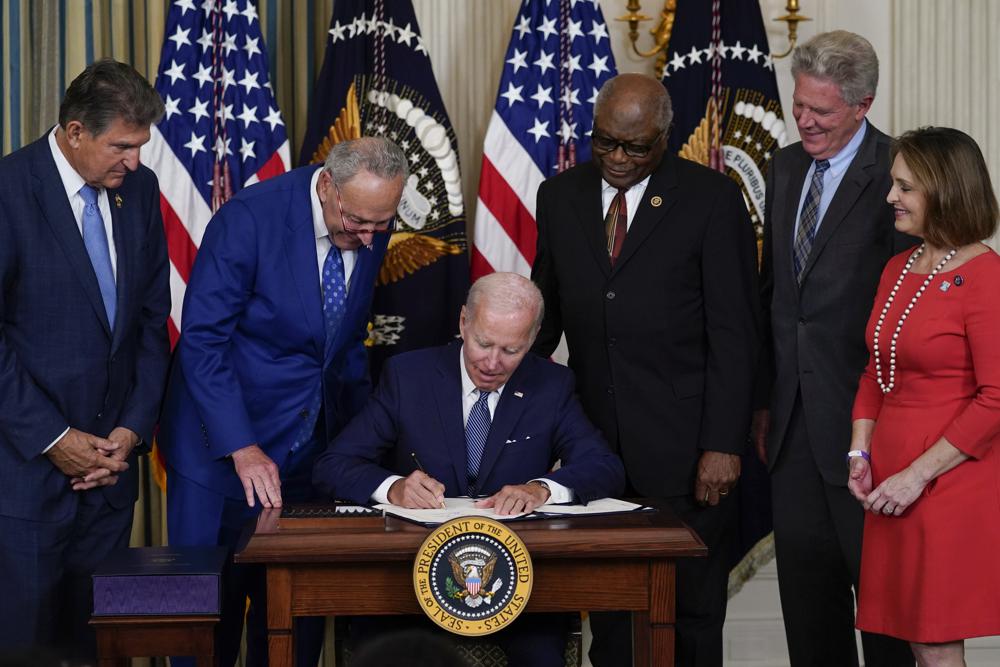
President Joe Biden signed Democrats’ landmark climate change and health care bill into law on Tuesday, delivering what he has called the “final piece” of his pared-down domestic agenda, as he aims to boost his party’s standing with voters less than three months before the midterm elections. The legislation includes the most substantial federal investment in history to fight climate change — some $375 billion over the decade — and would cap prescription drug costs at $2,000 out-of-pocket annually for Medicare recipients. It also would help an estimated 13 million Americans pay for health care insurance by extending subsidies provided during the coronavirus pandemic. The measure is paid for by new taxes on large companies and stepped-up IRS enforcement of wealthy individuals and entities, with additional funds going to reduce the federal deficit. In a triumphant signing event at the White House, Biden pointed to the law as proof that democracy — no matter how long or messy the process — can still deliver for voters in America as he road-tested a line he will likely repeat later this fall ahead of the midterms: “The American people won, and the special interests lost.” “In this historic moment, Democrats sided with the American people, and every single Republican in the Congress sided with the special interests in this vote,” Biden said, repeatedly seizing on the contrast between his party and the GOP. “Every single one.” The House on Friday approved the measure on a party-line 220-207 vote. It passed the Senate days earlier, with Vice President Kamala Harris breaking a 50-50 tie in that chamber. “In normal times, getting these bills done would be a huge achievement,” Senate Majority Leader Chuck Schumer, D-N.Y., said during the White House ceremony. “But to do it now, with only 50 Democratic votes in the Senate, over an intransigent Republican minority, is nothing short of amazing.” Biden signed the bill into law during a small ceremony in the State Dining Room of the White House, sandwiched between his return from a six-day beachside vacation in South Carolina and his departure for his home in Wilmington, Delaware. He plans to hold a larger “celebration” for the legislation on September 6 once lawmakers return to Washington. The signing caps a spurt of legislative productivity for Biden and Congress, who in three months have approved legislation on veterans’ benefits, the semiconductor industry, and gun checks for young buyers. The president and lawmakers have also responded to Russia’s invasion of Ukraine and overwhelmingly supported NATO membership for Sweden and Finland. With Biden’s approval rating lagging, Democrats are hoping that the string of successes will jump-start their chances of maintaining control in Washington in the November midterms. The 79-year-old president aims to restore his own standing with voters as he contemplates a reelection bid. The White House announced Monday that it was going to deploy Biden and members of his Cabinet on a “Building a Better America Tour” to promote the recent victories. One of Biden’s trips will be to Ohio, where he’ll view the groundbreaking of a semiconductor plant that will benefit from the recent law to bolster production of such computer chips. He will also stop in Pennsylvania to promote his administration’s plan for safer communities, a visit that had been planned the same day he tested positive for COVID-19 last month. Biden also plans to hold a Cabinet meeting to discuss how to implement the new climate and health care law. Republicans say the legislation’s new business taxes will increase prices, worsening the nation’s bout with its highest inflation since 1981. Though Democrats have labeled the measure the Inflation Reduction Act, nonpartisan analysts say it will have a barely perceptible impact on prices. Senate Minority Whip John Thune, R-S.D., on Tuesday continued those same criticisms, although he acknowledged there would be “benefit” through extensions on tax credits for renewable energy projects like solar and wind. “I think it’s too much spending, too much taxing, and in my view wrong priorities, and a super-charged, super-sized IRS that is going to be going after a lot of not just high-income taxpayers but a lot of mid-income taxpayers,” said Thune, speaking at a Chamber of Commerce event in Sioux Falls. The administration has disputed that anyone but high earners will face increased tax scrutiny, with Treasury Secretary Janet Yellen directing the tax agency to focus solely on businesses and people earning more than $400,000 per year for the new audits. The measure is a slimmed-down version of the more ambitious plan to supercharge environment and social programs that Biden and his party unveiled early last year. Biden’s initial 10-year, $3.5 trillion proposal also envisioned free prekindergarten, paid family and medical leave, expanded Medicare benefits, and eased immigration restrictions. That crashed after centrist Sen. Joe Manchin, D-W.Va., said it was too costly, using the leverage every Democrat has in the evenly divided Senate. During the signing event, Biden addressed Manchin, who struck the critical deal with Schumer on the package last month, saying, “Joe, I never had a doubt,” as the crowd chuckled. Later, outside the White House, Manchin said he has always maintained a “friendly relationship” with Biden, and it has “never been personal” between the two, despite Manchin breaking off his negotiations with the White House last year. “He’s a little bit more vintage than I am, but not much,” Manchin said of Biden. Though the law is considerably smaller than their initial ambitions, Biden and Democrats are hailing the legislation as a once-in-a-generation investment in addressing the long-term effects of climate change, as well as drought in the nation’s West. The bill will direct spending, tax credits, and loans to bolster technology like solar panels, consumer efforts to improve home energy efficiency, emission-reducing equipment for coal- and gas-powered power plants, and air pollution controls for farms, ports, and low-income communities. Another $64 billion would help 13 million people pay premiums over the next three years for privately bought health insurance under the Affordable Care Act. Medicare would gain the power to negotiate its costs for pharmaceuticals, initially in 2026, for only ten drugs. Medicare beneficiaries’ out-of-pocket prescription costs
