
Terri Sewell applauds $21+ million in funding for clean transit buses in Jefferson County and University of Alabama
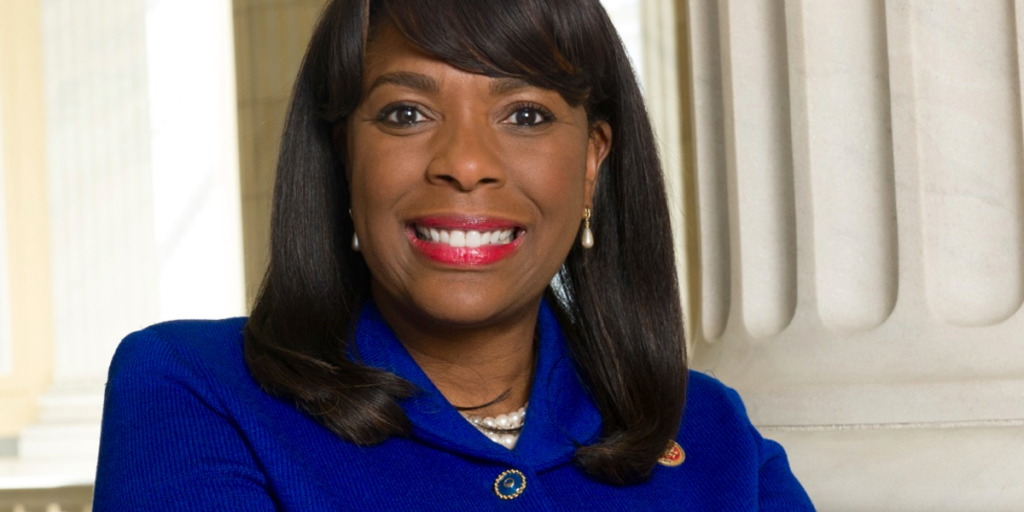
This week, U.S. Rep. Terri Sewell announced over $21 million in funding from the Bipartisan Infrastructure Law for clean transit buses in Alabama. The funding is part of a $1.66 billion investment by the Federal Transit Administration (FTA) in 150 bus fleets and facilities across the nation to reduce pollution and meet Joe Biden’s goal of net-zero emissions by 2050. This year’s funding alone will nearly double the number of no-emission transit buses on America’s roadways. In Alabama, this funding will improve the safety and reliability of transit services for residents of the Birmingham and Tuscaloosa regions. According to Sewell’s press release, the Birmingham-Jefferson County Transit Authority (BJCTA) will receive $13,654,636 to build a new maintenance facility and buy compressed natural gas, hydrogen fuel-cell, and battery electric buses and charging equipment. This project and the new vehicles will improve the safety and reliability of transit service for residents in Jefferson County. The University of Alabama will receive $7,890,065 to replace diesel buses with new electric buses, buy charging equipment, and train maintenance workers to support the new electric bus fleet. The project will ensure continued service reliability, maintain a state of good repair, improve air quality, and advance environmental justice in the Tuscaloosa community. Rep. Sewell applauded the bipartisan funding. “It’s hard to overstate the transformational impact that the Bipartisan Infrastructure Law is having here in Alabama,” said Rep. Sewell. “Once again, we’re seeing much-needed funding coming to our communities to upgrade our infrastructure, connect our communities, and clean up our environment. The Bipartisan Infrastructure Law is a true testament to what we can achieve when we put people over politics, and I was proud to be the only Member of Congress from Alabama to support it.” “With this announcement, we’re bringing millions of dollars to Jefferson County for brand new vehicles and a new maintenance facility to keep them running smoothly,” continued Sewell. “That means safer and more reliable bus services for the residents of the Birmingham region. For our University of Alabama campus community, this announcement means better, greener buses and a cleaner, healthier environment.” “BJCTA has a lot to look forward to in the coming years,” said BJCTA Executive Director and CEO Charlotte Shaw. “We are excited to be a part of positive change and growth. BJCTA’s Transit on the Grow mission is not only to connect people to places but also to provide life quality in our communities across the region.” “The transfer to electric Crimson Ride buses will reduce emissions and have an immediate impact on our area, thanks in great part to Rep. Terri Sewell and Sen. Richard Shelby’s strong support,” said University of Alabama President Stuart Bell. “This grant will improve air quality and promote well-being on our campus and will build a strong workforce to lead electric vehicle innovation consistent with our vision for the Alabama Mobility and Power Center.” “With today’s awards, we’re helping communities across America—in cities, suburbs, and rural areas alike—purchase more than 1,800 new buses, and most of them are zero-emission,” said U.S. Transportation Secretary Pete Buttigieg. “Funded through President Biden’s Bipartisan Infrastructure Law, this announcement means more good jobs for people across the country, cleaner air in our communities, and more affordable and reliable options to help people get to where they need to go.”
Justin Bogie: Why Medicaid expansion is a bad idea for Alabama
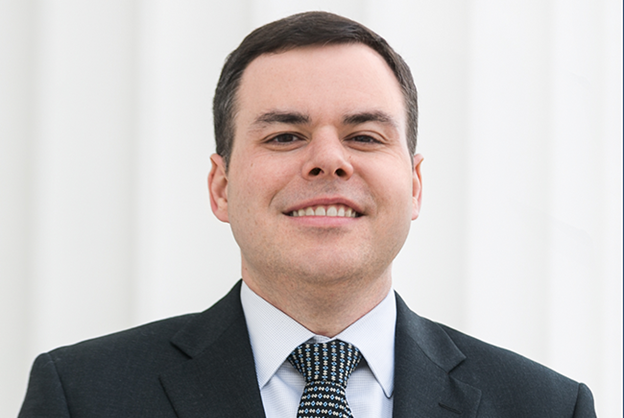
As the Legislature heads toward its 2023 regular legislative session, calls for Medicaid expansion are likely to increase. Alabama remains one of 12 states that has not expanded coverage under Obamacare. The question is, will state lawmakers continue to resist the pressure to expand Medicaid or go full speed ahead? For a state that has a Republican supermajority in the legislature, the answer should be a resounding “no” on fully expanding Medicaid. But given the rapid growth of Alabama’s state government over the past few years, the prospect of more federal dollars flowing into the state may be too much for limited government proponents to overcome. Under the provisions of Obamacare, states that expand Medicaid to adults with incomes at or below 138% of the federal poverty level receive a 90% federal matching rate. The American Rescue Plan Act (ARPA) of 2021 added an additional 5% match rate over two years for states that have not already expanded Medicaid coverage. According to The Public Affairs Research Council of Alabama (PARCA), Medicaid expansion would cost the state an average of $225 million per year through 2027. PARCA estimates that the additional federal funding, as well as new tax revenues, would allow the state government to realize net savings of more than $1 billion by 2027. Keep in mind that the state has already expanded coverage for new mothers from 60 days to 12 months. This would not affect them. Future expansion would make all adults who meet the income requirements eligible for Medicaid. On paper, it may look like a no-brainer. Expand coverage and bring an extra $1 billion into the state in the next five years. In reality though, it’s not that simple. It’s not that simple. First, there is the issue of costs and savings. If Alabama expands Medicaid, the state government will be putting nearly $250 million more per year into its program by 2027. While more money will be coming back to the state from Washington, most of it will be going into the Medicaid program. And $250 million will just be the start. These cost estimates are not dynamic. Because of rising healthcare costs and shifting demographics, Medicare is on pace to go insolvent by 2028. Medicaid will face similar cost and enrollment increases due to these factors. Federal matching rates could also change. Obamacare originally offered expansion states a 100% match rate. That was later reduced to 90%. The 5% additional match included in ARPA would go away two years after expansion. Without other healthcare reforms, Medicaid costs will continue to rise while federal matching rates could decrease, taking up a larger portion of the state budget each year. Where does that leave the Department of Corrections, Economic and Community Affairs, judicial system, and other agencies funded by the general fund? If there’s a shortfall, Alabamians will pay for it through higher taxes, despite the fact that the state government is already taking more from you than ever before. There is also this notion that federal money is somehow free money. It is not. It represents money that the government has already taxed from you, future taxes, and an ever-growing national debt. In 2008, the federal government spent $201 billion on the Medicaid program. Last year Medicaid spending grew to $521 billion, a 159% increase in 13 years. By 2032, the Congressional Budget Office (CBO) projects that Medicaid spending will hit almost $800 billion annually. CBO estimates the national debt will grow by $18 trillion over the same period. So, while Alabama’s government may see a “profit” from expanding Medicaid, you, your children, your grandchildren, and future generations will be giving more money to the federal government to pay for it. The issue of federalism is also at the heart of the Medicaid expansion debate. More money from the federal government means more strings attached. Alabama will have less say over how it runs its Medicaid program. This has already happened in other expansion states. Under the Trump Administration, the Centers for Medicare and Medicaid Services (CMS) generally approved waivers allowing states to put work requirements in place for able-bodied adults. At least six expansion states had work requirement waivers approved under Donald Trump, which were then withdrawn by CMS under the directives of the Biden Administration. Alabama filed such a waiver for its existing Medicaid program, which would have required most parents to work at least 35 hours per week to maintain eligibility. CMS never approved the waiver, and Alabama withdrew the application after Joe Biden became President. Estimates show that 200,000 to 340,000 people could become eligible for Medicaid if Alabama expands the program. The state would be able to set few requirements for benefit recipients, meaning they would have less incentive to contribute to the state’s workforce. Why would the state government want to create another disincentive to work when businesses are already struggling to fill positions? Before Alabama lawmakers bow to the pressures to expand Medicaid, they must carefully consider the long-term impacts on the state budget. More importantly than Alabama’s bottom line, they must consider how it will impact the people they represent. When the federal government offers something that sounds too good to be true, it probably is. Justin Bogie is the Senior Director of Fiscal Policy for the Alabama Policy Institute.
GOP group apologizes for mistakenly posting KKK image
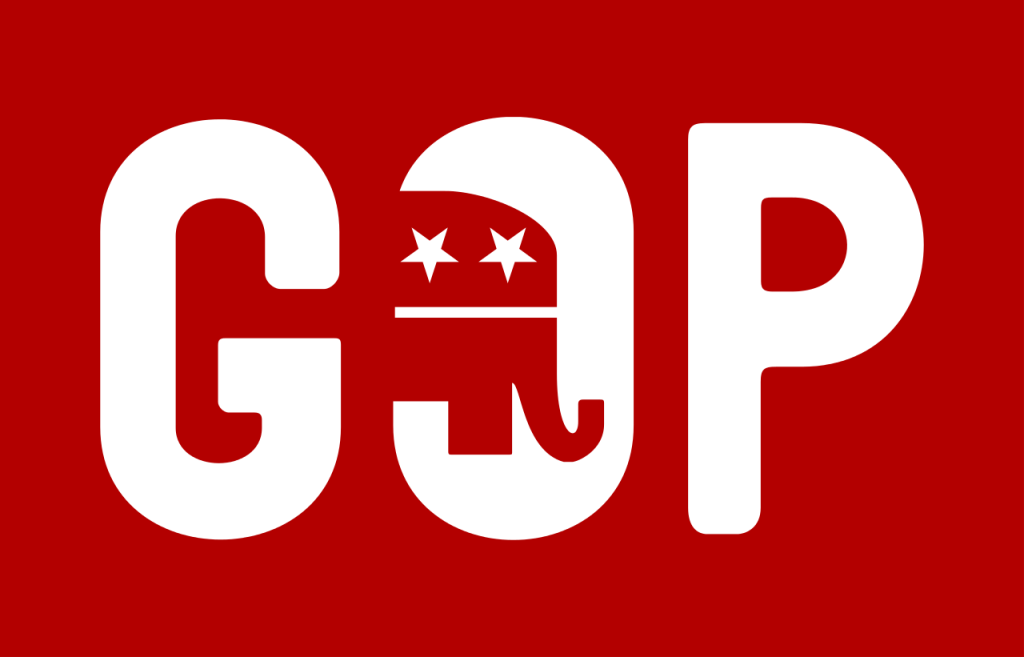
A Republican group in Alabama is apologizing after accidentally using a picture of the GOP elephant that contained Ku Klux Klan imagery. The Lawrence County Republican Party intended to post an image of the GOP elephant on its Facebook page but ended up using one in which the white spaces between the animal’s legs were drawn to resemble hooded Klansmen. A party official said the image was taken from the results of a Google search and that the image was immediately replaced once the mistake was detected. “I would like to offer a deep and sincere apology for a picture that temporarily appeared on this page last night. A google search picture of a GOP elephant was used and later found to have hidden images that do not represent the views or beliefs of the Lawrence County Republican Party,” Shannon Terry wrote in a Facebook post apologizing for the use of the image. “As chairman, I take full responsibility for the error,” Terry added. The image had been used in a 2020 article in Mother Jones accusing the GOP of racism. House Minority Leader Anthony Daniels, a Democratic legislator from Huntsville, blasted the use of the image. “Shame on the Lawrence County Republican Party for this disgusting image,” Daniels wrote on Twitter. Republished with the permission of The Associated Press.
Mike Pence tells GOP to stop lashing out at FBI over Donald Trump search
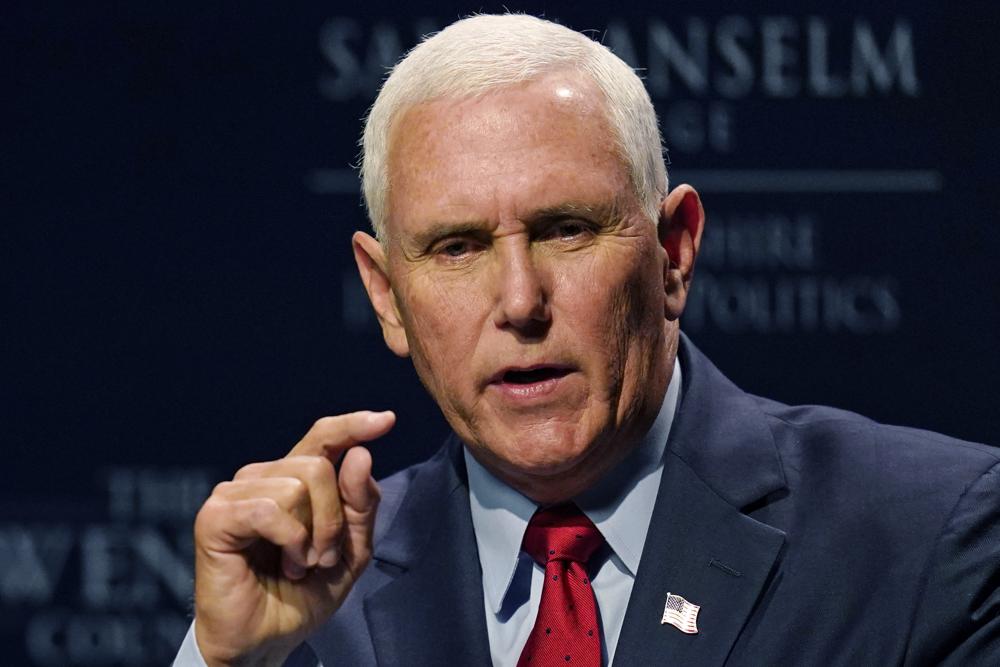
Former Vice President Mike Pence on Wednesday implored fellow Republicans to stop lashing out at the FBI over the search of Donald Trump’s Florida home and denounced calls by some of the former president’s allies to defund the FBI, saying that was “just as wrong” as a push by Democratic activists to shift money from police. Pence also said he would give “due consideration” if asked to testify before the House committee investigating the riot at the U.S. Capitol on January 6, 2021. His pleas for restraint come as law enforcement officials warn of an escalating number of violent threats targeting federal agents and government facilities since agents last week searched Mar-a-Lago as part of the Justice Department’s investigation into the discovery of classified White House records recovered from Trump’s estate earlier this year. Speaking in New Hampshire, Pence said he has been troubled by what he called the politicization of the FBI. He also said the Justice Department and Attorney General Merrick Garland should be more forthcoming about what led authorities to conduct the search. But Pence, who is trying to stake out his own political path as he and Trump both consider 2024 presidential campaigns, also had a message for the GOP. “I also want to remind my fellow Republicans, we can hold the attorney general accountable for the decision he made without attacking the rank-and-file law enforcement personnel at the FBI,” he said at the Politics & Eggs event, a breakfast gathering at St. Anselm College for business leaders that has become a customary stop for White House hopefuls in the early-voting state. “The Republican Party is the party of law and order,” Pence continued. “Our party stands with the men and women who stand on the thin blue line at the federal and state and local level, and these attacks on the FBI must stop. Calls to defund the FBI are just as wrong as calls to defund the police.” Trump and some other Republican lawmakers have tried to capitalize on the search by portraying it as an act of political persecution and an attack on the rule of law. For the onetime political allies, their paths diverged on January 6, 2021, when a mob of angry Trump supporters stormed the Capitol in an effort to stop Congress’ formal certification of Joe Biden’s presidential victory. Trump denounced his vice president, who was presiding over the Senate, for refusing to object or delay the certification — something Pence had no power to do. A fake gallows was constructed on the National Mall, and people who broke into the Capitol chanted, “Hang Mike Pence! Hang Mike Pence!” Before Wednesday, Pence had refused to say whether he would engage with the House committee investigating the insurrection if the panel requested his testimony. “If there was an invitation to participate, I would consider it,” Pence said, adding he would first reflect “on the unique role” he was serving as vice president. “It would be unprecedented in history for a vice president to be summoned to testify on Capitol Hill, but as I said, I don’t want to prejudge,” he said. “If ever any formal invitation was rendered to us, we’d give it due consideration.” A committee spokesperson declined to comment on Pence’s remarks. The committee and Pence’s team have had an open line of communication since Pence’s former chief of staff, Marc Short, agreed to testify in private in December 2021 after receiving a subpoena. Short was at the Capitol on January 6 and accompanied Pence as the then-vice president fled the Senate chamber and hid from rioters who were calling for his hanging. In Short’s recorded testimony, aired at the committee’s public hearings this summer, he described attending White House meetings before the insurrection, during which Trump allies discussed ways to overturn the results of the 2020 election. At one point, Trump had banned Short from the White House grounds because Short objected to the pressure on Pence to reject the legitimate election results. Committee members so far have not decided to seek Pence’s testimony, saying that Short and former Pence lawyer Greg Jacobs have provided investigators with plenty of evidence. Republished with the permission of The Associated Press.
