
Magazine ranks Alabama as the sixth best state for doing business

Area Development, a national economic development publication, reported that according to the site-selection professionals it surveyed, Alabama is the sixth best state for doing business. The survey cited a broad range of factors contributing to a fertile growth environment for Alabama. Alabama’s number six ranking is the same as the previous two years. Alabama earned top ten rankings in 11 out of the 13 different individual categories in the new Area Development survey. Greg Canfield is the Alabama Secretary of Commerce. “Companies from around the world have discovered that our state can offer them a favorable business environment, a motivated workforce, and a support system that helps make success possible,” said Canfield. “The message is clear: Alabama offers the advantages that growth-minded companies are looking for.” Economic Developer Dr. Nicole Jones told Alabama Today, “Area Development has been a leading publication in our industry for over fifty years. Alabama’s held position as Number 6 in the Top Ten States for Business survey is a testament to teamwork; the public and private sector have collaborated to create an environment conducive for business.” The publication said that it recruits site-selection professionals as serve as judges because they have accumulated deep experience in evaluating the factors that pave the way for business growth. “They’ve learned through experience which states are the standouts in various important factors for doing business, from costs to taxes and incentives to training to a welcoming and hassle-free government,” it notes. “The Alabama Department of Commerce unveiled competitive, fiscally responsible tax initiatives and workforce development programs designed from continuous dialogue with industry,” Jones said. “In addition, the speed of permitting, low energy costs, and AdvantageSite program managed by the Economic Development Partnership of Alabama (EDPA) in many cases simplifies the site selection process, which keeps Alabama in a competitive position. It takes a team to build Alabama. We are thankful that companies continue to choose Alabama and recognize the diversity of industries we have a population to support.” Alabama ranked number one in the speed of project permitting. Number three in energy availability and costs, number 3 in favorable regulatory environment, number four in the overall cost of doing business, number four in workforce development programs, number five in business incentive programs, number seven in available real estate, number seven in cooperate state government, number eight in corporate tax structure, and number ten in both competitive labor environment. Commerce data shows that companies announced new facilities and expansion projects involving $7.7 billion in new capital investment last year, creating ten thousand jobs across Alabama. To connect with the author of this story, or to comment, email brandonmreporter@gmail.com.
Court lifts hold on Mar-a-Lago records
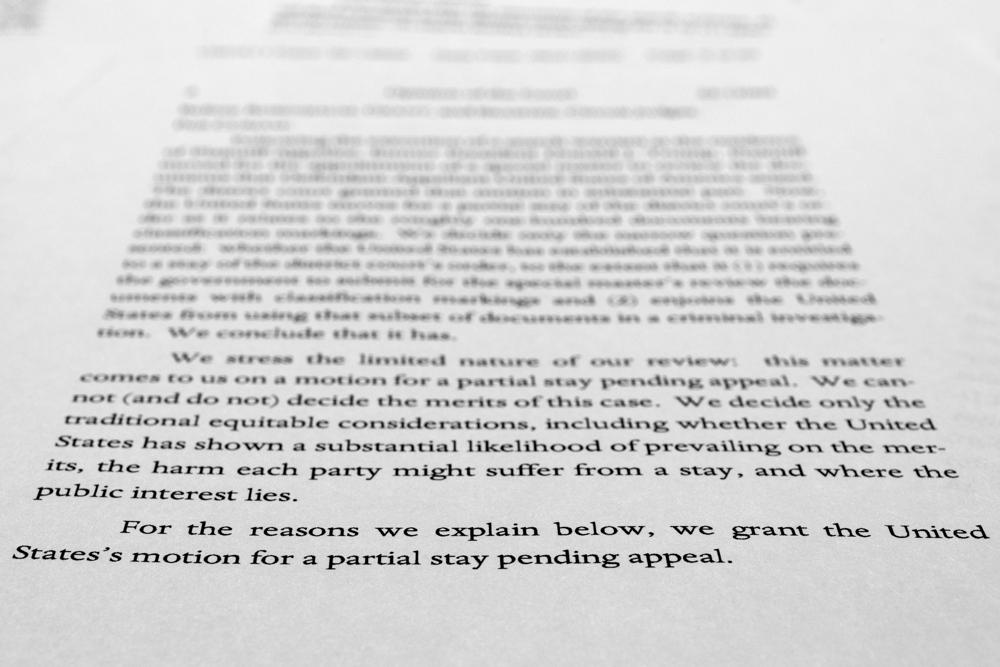
In a stark repudiation of Donald Trump’s legal arguments, a federal appeals court on Wednesday permitted the Justice Department to resume its use of classified records seized from the former president’s Florida estate as part of its ongoing criminal investigation. The ruling from a three-judge panel of the U.S. Court of Appeals for the 11th Circuit amounts to an overwhelming victory for the Justice Department, clearing the way for investigators to continue scrutinizing the documents as they consider whether to bring criminal charges over the storage of top-secret records at Mar-a-Lago after Trump left the White House. In lifting a hold on a core aspect of the department’s probe, the court removed an obstacle that could have delayed the investigation by weeks. The appeals court also pointedly noted that Trump had presented no evidence that he had declassified the sensitive records, as he maintained as recently as Wednesday, and rejected the possibility that Trump could have an “individual interest in or need for” the roughly 100 documents with classification markings that were seized by the FBI in its August 8 search of the Palm Beach property. “If you’re the president of the United States, you can declassify just by saying, ‘It’s declassified.’ Even by thinking about it…You’re the president; you make that decision,” Trump claimed in a Fox News Channel interview recorded Wednesday before the appeals court ruling. The government had argued that its investigation had been impeded, and national security concerns swept aside, by an order from U.S. District Judge Aileen Cannon that temporarily barred investigators from continuing to use the documents in its inquiry. Cannon, a Trump appointee, had said the hold would remain in place pending a separate review by an independent arbiter she had appointed at the Trump team’s request to review the records. The appeals panel agreed with the Justice Department’s concerns. “It is self-evident that the public has a strong interest in ensuring that the storage of the classified records did not result in ‘exceptionally grave damage to the national security,’” they wrote. “Ascertaining that,” they added, “necessarily involves reviewing the documents, determining who had access to them and when, and deciding which (if any) sources or methods are compromised.” An injunction that delayed or prevented the criminal investigation “from using classified materials risks imposing real and significant harm on the United States and the public,” they wrote. Two of the three judges who issued Wednesday’s ruling — Britt Grant and Andrew Brasher — were nominated to the 11th Circuit by Trump. Judge Robin Rosenbaum was nominated by former President Barack Obama. Lawyers for Trump did not return an email seeking comment on whether they would appeal the ruling. The Justice Department did not have an immediate comment. The FBI last month seized roughly 11,000 documents, including about 100 with classification markings, during a court-authorized search of the Palm Beach club. It has launched a criminal investigation into whether the records were mishandled or compromised, though is not clear whether Trump or anyone else will be charged. Cannon ruled on September 5 that she would name an independent arbiter, or special master, to do an independent review of those records and segregate any that may be covered by claims of attorney-client privilege or executive privilege, and to determine whether any of the materials should be returned to Trump. Raymond Dearie, the former chief judge of the federal court based in Brooklyn, has been named to the role and held his first meeting on Tuesday with lawyers for both sides. The appeals court ruling appears to substantially narrow the special master’s job description, enabling the Justice Department to avoid providing him with classified documents to review. Instead, Dearie would review the much larger tranche of non-classified government documents. The Justice Department had argued that a special master review of the classified documents was not necessary. It said Trump had no plausible basis to invoke executive privilege over the documents, nor could the records be covered by attorney-client privilege because they do not involve communications between Trump and his lawyers. It had also contested Cannon’s order requiring it to provide Dearie and Trump’s lawyers with access to the classified material. The court sided with the Justice Department on Wednesday, saying “courts should order review of such materials in only the most extraordinary circumstances. The record does not allow for the conclusion that this is such a circumstance.” Though Trump’s lawyers have said a president has absolute authority to declassify information, they have notably stopped short of asserting that the records were declassified. The Trump team this week resisted providing Dearie with any information to support the idea that the records might have been declassified, saying the issue could be part of their defense in the event of an indictment. The Justice Department has said there is no indication that Trump took any steps to declassify the documents and even included a photo in one court filing of some of the seized documents with colored cover sheets indicating their classified status. The appeals court, too, made the same point. “Plaintiff suggests that he may have declassified these documents when he was President. But the record contains no evidence that any of these records were declassified,” the judges wrote. “In any event, at least for these purposes, the declassification argument is a red herring because declassifying an official document would not change its content or render it personal.” Republished with the permission of The Associated Press.
Joe Guzzardi: DOJ May Intervene in Florida, Texas Transport Plans

Hillary Clinton, Yale Law School ’73, said on MSNBC that sending 50 illegal immigrants to Martha’s Vineyard was “literally human trafficking” by Florida Gov. Ron DeSantis, Harvard Law School, ‘05. The MSNBC co-host, Joe Scarborough, University of Florida School of Law ‘90, accused DeSantis of using innocent people as political pawns. Texas Sen. Ted Cruz, Harvard Law School ‘95, suggested that DeSantis and fellow Texan Gov. Greg Abbott, Vanderbilt University Law School, ’84, should send more migrants to blue cities and states. Cruz, pointing to the millions of illegal immigrants that the administration has admitted, bussed, and flown around the nation, called President Joe Biden, Syracuse University School of Law ’68 and former Senate Judiciary Chair, “the biggest human trafficker on the face of the planet.” Biden demanded that the governors stop their “un-American” political stunts. Clinton, Scarborough, and Biden have support from like-minded lawyers. Professors from Notre Dame, Georgetown, and other universities, along with civil rights advocates, came down hard on DeSantis and Abbott. The harshest criticism came from Calif. Gov. Gavin Newsom, who requested that the Department of Justice open an investigation into the Martha’s Vineyard flights on charges that the migrants were “kidnapped.” Move along. Nothing to see here; just angry lawyers going after each other, hammer and tongs. The voting public, however, is grappling with a contradiction. If the Biden administration can order Customs and Border Patrol to put thousands of aliens on buses and planes to send them throughout the interior of the United States, then the same flexibility should apply to the governors, assuming, of course, that the migrants agree to be flown to Martha’s Vineyard or driven to Washington, D.C. or New York. Jonathan Turley, George Washington University law professor, provided his perspective. Turley wrote that to call transporting aliens kidnapping is “to take a flight from one’s legal senses.” On his blog, Turley stated that human trafficking, a legal term, is altogether different than moving humans in traffic. The governors’ actions aren’t an attempt to put humans, through fraud, coercion, or force, into peonage, involuntary servitude, or sex slavery. In conclusion, Turley wrote that many objections could be made to the governors’ transport programs, but not kidnapping and human trafficking. The tensions between the states and the cities are just beginning. DeSantis promised to fly more migrants to other sanctuary cities, but not necessarily Martha’s Vineyard. That way, DeSantis explained, the sanctuaries can “put their money where their mouth is.” A possible 2024 presidential candidate, DeSantis may sense that while some American voters support immigration, they object to Biden-style open borders. Political expediency is at play in Texas, too. Abbott is up for re-election in November, and he’s counting on removing illegal immigrants as integral to his victory. The border invasion is expensive. As part of its $4 billion Operation Lone Star program, Texas has installed more than 42 miles of concertina wire along its Southern border near Eagle Pass and Del Rio, two communities through which millions have passed. A potential roadblock – a boulder, really – may stand in the governors’ way. In a statement, the Boston nonprofit, Lawyers for Civil Rights, promised to investigate “the inhumane manner in which they [the Martha’s Vineyard migrants] were shipped across the country, to determine the responsible parties, whether state or federal criminal laws against human trafficking and kidnapping were violated, and what other legal remedies are available.” Even though no evidence exists that the migrants were treated inhumanely, and as Turley warned, trafficking and kidnapping are specious charges, LCR will press on. The legal advocates hope to gather pro bono attorneys, immigration experts, law enforcement, and social services providers. If that’s not enough, Deputy Attorney General Lisa Monaco confirmed that the DOJ is reviewing inquiries like Newsom’s calling for an investigation. The DOJ’s involvement, inevitable in the Biden administration, especially if the governors escalate, would be the end of the line for the governors’ strategy to give sanctuary cities a tiny taste of their own medicine. Not a single voice among the many urged border enforcement. Joe Guzzardi is a nationally syndicated newspaper columnist who writes about immigration and related social issues. Joe joined Progressives for Immigration Reform in 2018 as an analyst after a ten-year career directing media relations for Californians for Population Stabilization, where he also was a Senior Writing Fellow. A native Californian, Joe now lives in Pennsylvania. Contact him at jguzzardi@pfirdc.org.
Libertarian Michael Crump running for Senate District 16

The Libertarian Party of Alabama, in conjunction with the Libertarian Party of Greater Birmingham Libertarians, recently held a candidates forum in Homewood where a number of Libertarian candidates appealed for support. Michael Crump is running for the Alabama State Senate. “I am running for Senate District 16, and I am running against Dan Roberts,” Crump stated. “I am an anarchist,” Crump added, explaining that he is not in favor of looting and burning. “If I win that office, I hope that you will not even know that I exist,” Crump explained. The FBI defines anarchy as a belief that society should have no government, laws, police, or any other authority. Crump favors a massive reduction in the size and scope of the Alabama government. “I do not believe in public schooling and public roads,” Crump continued. “This job pays $55,000 a year. I don’t want that,” Crump stated. “I don’t believe in public schools, public roads, or public health. I don’t want to pay taxes. I don’t want you to pay taxes.” Crump got into a heated discussion with Bruce Stutts, the Libertarian candidate in House District 47. Stutts believed in supporting the military, while Crump is not in favor of having national armed forces. “Defending the borders is a power in the Constitution,” Stutts said. “I am an anarchist. I don’t believe in the constitution or borders,” Crump replied. “What’s to stop Putin from rolling in?” Stutts asked. “We need to move beyond nation states and borders,” Crump replied. Crump is also in favor of moving away from national government-printed currencies. “I am here to make sure that you are aware that bitcoin exists,” Crump said. “It is divisible transactional. Look into bitcoin. Look into cryptocurrency. It is a separate economy,” Crump added. “It is a separate currency. You own your own autonomy.” “If I win, I am disappearing, and you can live your own life,” Crump stated. Crump is the Treasurer for the Greater Birmingham Libertarians. Crump and Roberts will be on the November 8 general election. To connect with the author of this story, or to comment, email brandonmreporter@gmail.com.
LEAD Academy is raising money to add a high school

Montgomery’s LEAD Academy launched its annual capital campaign on Tuesday. LEAD Academy is a public charter school separate from the troubled Montgomery Public School System. Alabama Today was given a guided tour of the campus by Chief Academic Officer Cody Shumaker and Principal Danielle Webster. The LEAD Academy has two separate school buildings on the campus, which are located off Montgomery’s Eastern Boulevard. Webster is the principal of the Pre-K thru grade 3 school. Jermaine Coleman is the principal of LEAD Intermediate school, which is the Grades 4 thru 8 school. Webster said the LEAD Academy was awarded a First-Class Pre-K classroom by the Alabama Department of Early Childhood Education. “There were 160 applicants for the 18 available spots,” Webster said. The school has been a heavy adopter of computers and technology. “Every child has a chrome book,” Webster said. “We have a device for every child.” “They do assignments over the internet,” Shumaker explained. “We teach Korean in the Fifth and Sixth grade,” Webster said. “Very few intermediate schools offer a foreign language.” “We have 702 students,” Shumaker stated. “We have been open for four years, and we just opened our eighth grade this year.” Erik Estill is the Executive Director of the LEAD Academy. “We are excited about Lead Academy and all of our scholars,” Estill said. “We are looking forward to providing them a rigorous course of study.” State Rep. Charlotte Meadows Chairs the Board that governs the school. Alabama Today asked Meadows whether students would return to their neighborhood schools for high school upon completion of 8th grade. “We hope not,” Meadows said. “We need a high school, but we are out of space on this site.” “We hope to have our high school open next year,” Estill said. “We do not have any place to put students on this property. We would have add more portable classrooms unless we get a new location.” Meadows said that while Montgomery parents pay taxes for schools, those local tax dollars do not follow the students. “We think we should get a share of local tax revenues, but the county sees it otherwise,” Meadows explained. “The state and federal dollars do follow the children.” “LEAD Academy is a public charter school,” Estill said. “We do not receive any local funds. We are expected to do better with less. We have shown that we can do that.” “We need help with funding,” Estill said, asking donors for money. “It is not a private school. It is tuition-free and provides the education of a private school. We accept any student that enrolls as long as we have a seat available in that particular grade level,” Estill explained. “It is great to have a school here in Montgomery that I would send my own child or grandchild to,” Meadows said. Shumaker explained that LEAD Academy is in a consortium with seven other charter schools and that one food service company prepares the meals for all the schools in the consortium. The school has also just opened its new school library as well as a dedicated playground for the pre-K children. “We can also use this space as an outside classroom,” Shumaker commented. Most parents in Alabama are not given any choices in the schools that their children can attend. Expanding school choice options for Alabama families are likely to be considered in the 2023 Alabama regular legislative session. The Alabama Education Association and the Alabama School Superintendents Association strongly opposed school choice legislation during the 2022 Alabama regular session. Meadows has been a vocal proponent of school choice. She faces a difficult re-election after the legislature redistricted her House District 74 to a majority-minority district. “It has been an uphill challenge,” Meadows said about getting to know her new voters in her re-election campaign. Meadows faces Democratic nominee Phillip Ensler in the November 8 general election. To connect with the author of this story, or to comment, email brandonmreporter@gmail.com.
House to vote on election law overhaul in response to January 6
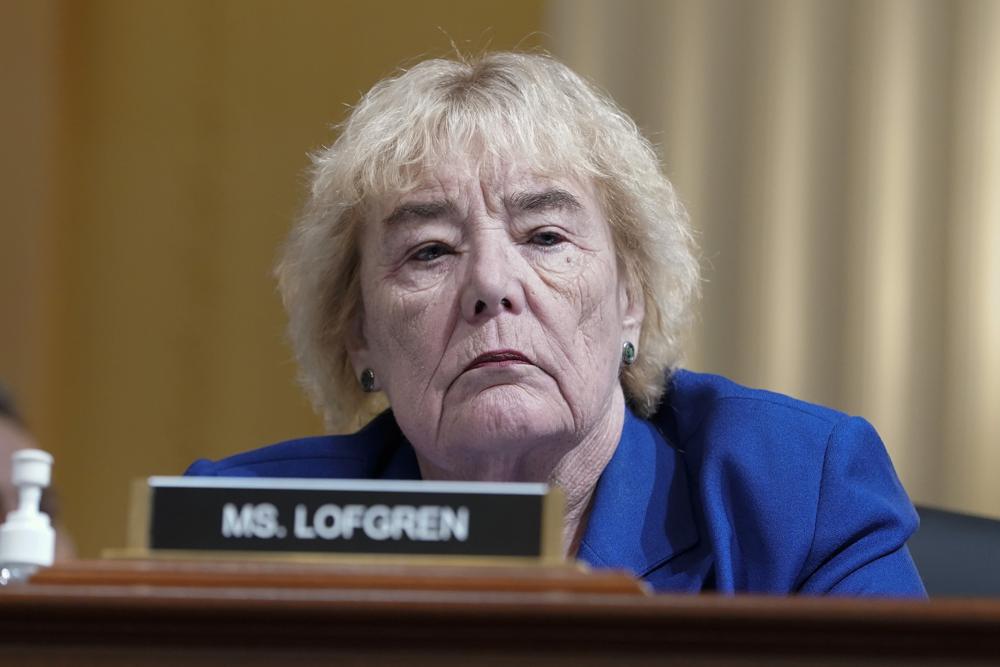
The House pushed ahead Wednesday with legislation that would revamp the rules for certifying the results of a presidential election as lawmakers accelerate their response to the January 6, 2021, insurrection and Donald Trump’s failed attempt to remain in power. The legislation would overhaul an arcane 1800s-era statute known as the Electoral Count Act that governs, along with the U.S. Constitution, how states and Congress certify electors and declare presidential election winners. The House planned a vote on the bill after afternoon debate. While that process has long been routine and ceremonial, Trump and a group of his aides and lawyers tried to exploit loopholes in the law in an attempt to overturn his defeat in the 2020 election. The bill would set new parameters around the January 6 joint session of Congress that happens every four years after a presidential election. The day turned violent last year after hundreds of Trump’s supporters interrupted the proceedings, broke into the building, and threatened the lives of then-Vice President Mike Pence and members of Congress. The rioters echoed Trump’s false claims of widespread fraud and wanted Pence to block Democrat Joe Biden’s victory as he presided over the joint session. The legislation intends to ensure that future Jan. 6 sessions are “as the constitution envisioned, a ministerial day,” said Wyoming Rep. Liz Cheney, a Republican who co-sponsored the legislation with House Administration Committee Chairwoman Zoe Lofgren, D-Calif. Both Cheney and Lofgren are also members of the House committee investigating the January 6 attack. Maryland Rep. Jamie Raskin, another member of the January 6 panel, said during the start of the House debate that the bill would modernize the elections law “to make sure that the will of the people is vindicated at every level.” The bill, which is similar to legislation moving through the Senate, would clarify in the law that the vice president’s role presiding over the count is only ceremonial and also sets out that each state can only send one certified set of electors. Trump’s allies had unsuccessfully tried to put together alternate slates of illegitimate pro-Trump electors in swing states where Biden won. The legislation would increase the threshold for individual lawmakers’ objections to any state’s electoral votes, requiring a third of the House and a third of the Senate to object to trigger votes on the results in both chambers. Currently, only one lawmaker in the House and one lawmaker in the Senate have to object. The House bill would set out very narrow grounds for those objections, an attempt to thwart baseless or politically motivated challenges. The legislation also would require courts to get involved if state or local officials want to delay a presidential vote or refuse to certify the results. The House vote comes as the Senate is moving on a similar track with enough Republican support to virtually ensure passage before the end of the year. After months of talks, House Democrats introduced the legislation on Monday and are holding a quick vote two days later in order to send the bill across the Capitol and start to resolve differences. A bipartisan group of senators introduced legislation this summer, and a Senate committee is expected to vote on it next week. While the House bill is more expansive than the Senate version, the two bills cover similar ground, and members in both chambers are optimistic that they can work out the differences. While few House Republicans are expected to vote for the legislation — most are still allied with Trump — supporters are encouraged by the bipartisan effort in the Senate. “Both sides have an incentive to want a set of clear rules, and this is an antiquated law that no one understands,” said Benjamin Ginsburg, a longtime GOP lawyer who consulted with lawmakers as they wrote the bill. “All parties benefit from clarity.” House GOP leaders disagree and are encouraging their members to vote against the legislation. They say the involvement of courts could drag out elections and that the bill would take rights away from states. The bill is an “attempt to federalize our elections,” Rep. Guy Reschenthaler, R-Pa., said on the House floor. He argued that voters are more focused on the economy and other issues than on elections law. “In my area of Pennsylvania, nobody is talking about this,” Reschenthaler said. Illinois Rep. Rodney Davis, Lofgren’s GOP counterpart on the House Administration Committee, said Tuesday that Democrats are “desperately trying to talk about their favorite topic, and that is former president Donald Trump.” Democrats said the bill was not only a response to Trump but also a way to prevent objections and mischief from all candidates in the future. “If you think that this legislation is an attack on President Trump, you simply haven’t read the legislation because there’s nothing in there attacking President Trump,” Raskin said. “This is about reforming the Electoral Count Act, so it works for the American people.” Republished with the permission of The Associated Press.
Alabama asks appeals court to let execution of Alan Miller go forward
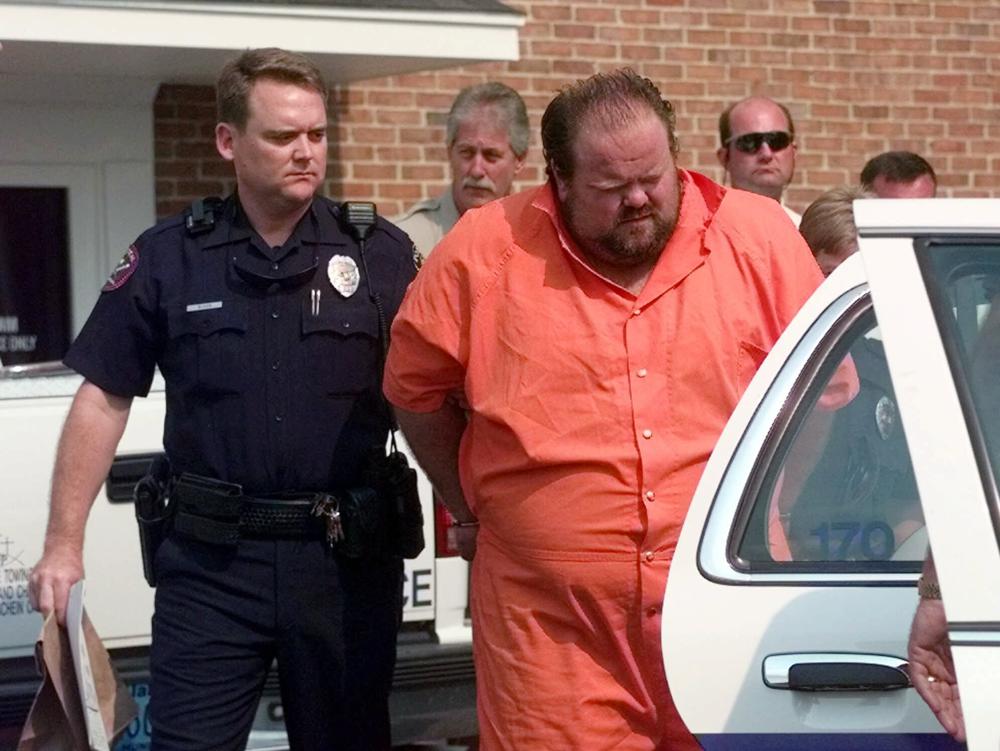
Alabama is asking a federal appeals court to let it proceed with a lethal injection this week, arguing there is no evidence to corroborate the prisoner’s claim that he selected another execution method. Alabama Attorney General Steve Marshall on Tuesday asked the 11th U.S. Circuit Court of Appeals to lift an injunction blocking the execution of Alan Miller. Miller was sentenced to die after being convicted of killing three people in a 1999 workplace shooting. The lethal injection was scheduled for Thursday until it was blocked by a judge. Miller testified that in 2018 he turned in paperwork selecting nitrogen hypoxia as his execution method, and his lawyers maintain the state lost the form. U.S. District Judge R. Austin Huffaker Jr. issued a preliminary injunction blocking the state from by any means other than nitrogen hypoxia. The state argued in the court filing that there is no reliable evidence that Miller elected nitrogen hypoxia. “Miller offers no evidence aside from a self-serving affidavit,” lawyers for the state wrote. Nitrogen hypoxia is a proposed execution method in which death would be caused by forcing the inmate to breathe only nitrogen, thereby depriving him or her of the oxygen needed to maintain bodily functions. Nitrogen hypoxia has been authorized as an execution method in Alabama, Oklahoma, and Mississippi, but no state has attempted to put an inmate to death by the untested method. When Alabama approved nitrogen hypoxia as an alternative execution method in 2018, state law gave inmates a brief window to designate it as their execution method. Miller, a delivery truck driver, was convicted in the 1999 workplace shootings that killed Lee Holdbrooks, Scott Yancy, and Terry Jarvis in suburban Birmingham. Miller shot Holdbrooks and Yancy at one business and then drove to another location to shoot Jarvis, evidence showed. Trial testimony indicated that Miller believed the men were spreading rumors about him, including that he was gay. A defense psychiatrist hired found that Miller suffered from delusions and severe mental illness, according to court documents, but he also said Miller’s condition wasn’t bad enough to use as a basis for an insanity defense under state law. Republished with the permission of The Associated Press.
Russian separatists release 10, including 2 Alabama veterans

Two U.S. military veterans who disappeared three months ago while fighting Russia with Ukrainian forces were among ten prisoners, including five British nationals, released by Russian-backed separatists as part of a prisoner exchange mediated by Saudi Arabia, officials said Wednesday. Alex Drueke, 40, and Andy Huynh, 27, went missing in the Kharkiv region of northeastern Ukraine near the Russian border on June 9. Both had traveled to Ukraine on their own and became friends because both are from Alabama. The families announced their release in a joint statement from Dianna Shaw, an aunt of Drueke. “They are safely in the custody of the U.S. embassy in Saudi Arabia, and after medical checks and debriefing, they will return to the states,” the statement said. Shaw said both men have spoken with relatives and are in “pretty good shape,” according to an official with the U.S. embassy. The Saudi embassy released a statement saying it helped secure the release of ten prisoners from Morocco, the United States, the United Kingdom, Sweden, and Croatia. Shaw confirmed that Drueke and Huynh were part of the group. The United Kingdom said five British nationals had been released, and lawmaker Robert Jenrick said one of them was Aiden Aslin, 28, who had been sentenced to death after he was captured in eastern Ukraine. “Aiden’s return brings to an end months of agonizing uncertainty for Aiden’s loving family in Newark, who suffered every day of Aiden’s sham trial but never lost hope. As they are united as a family once more, they can finally be at peace,” Jenrick tweeted. British Prime Minister Liz Truss heralded the release on social media. “Hugely welcome news that five British nationals held by Russian-backed proxies in eastern Ukraine are being safely returned, ending months of uncertainty and suffering for them and their families,” she tweeted. Russian state television had previously said Drueke and Huynh were being held by Russian-backed separatist forces in the Donbas region of eastern Ukraine. The U.S. does not recognize the sovereignty of the Donetsk People’s Republic and has no diplomatic relations with them, which made it necessary for others to lead efforts to get the men released. Drueke joined the Army at age 19 after the terror attacks of September 11, 2001, and he believed he could help Ukrainian fighters because of his training and experience with weapons, Shaw said previously. Drueke left in mid-April. Druke’s mother received a call from Saudi Arabia on Wednesday morning, and an embassy worker handed the phone to the man, Shaw said. “He got on the phone and said, ‘Hi mom, it’s your favorite child,’” she said. Huynh moved to north Alabama two years ago from his native California and lives about 120 miles (193 kilometers) from Drueke. Before leaving for Europe, Huynh told his local newspaper, The Decatur Daily, he couldn’t stop thinking about Russia’s invasion. “I know it wasn’t my problem, but there was that gut feeling that I felt I had to do something,” Huynh told the paper. “Two weeks after the war began, it kept eating me up inside, and it just felt wrong. I was losing sleep. … All I could think about was the situation in Ukraine.” Huynh told his fiance he wants a meal from McDonald’s and a Pepsi-Cola when he returns home, Shaw said. The two men bonded over their home state and were together when their unit came under heavy fire. Relatives spoke with Drueke several times by phone while the two were being held. Republished with the permission of The Associated Press.
